
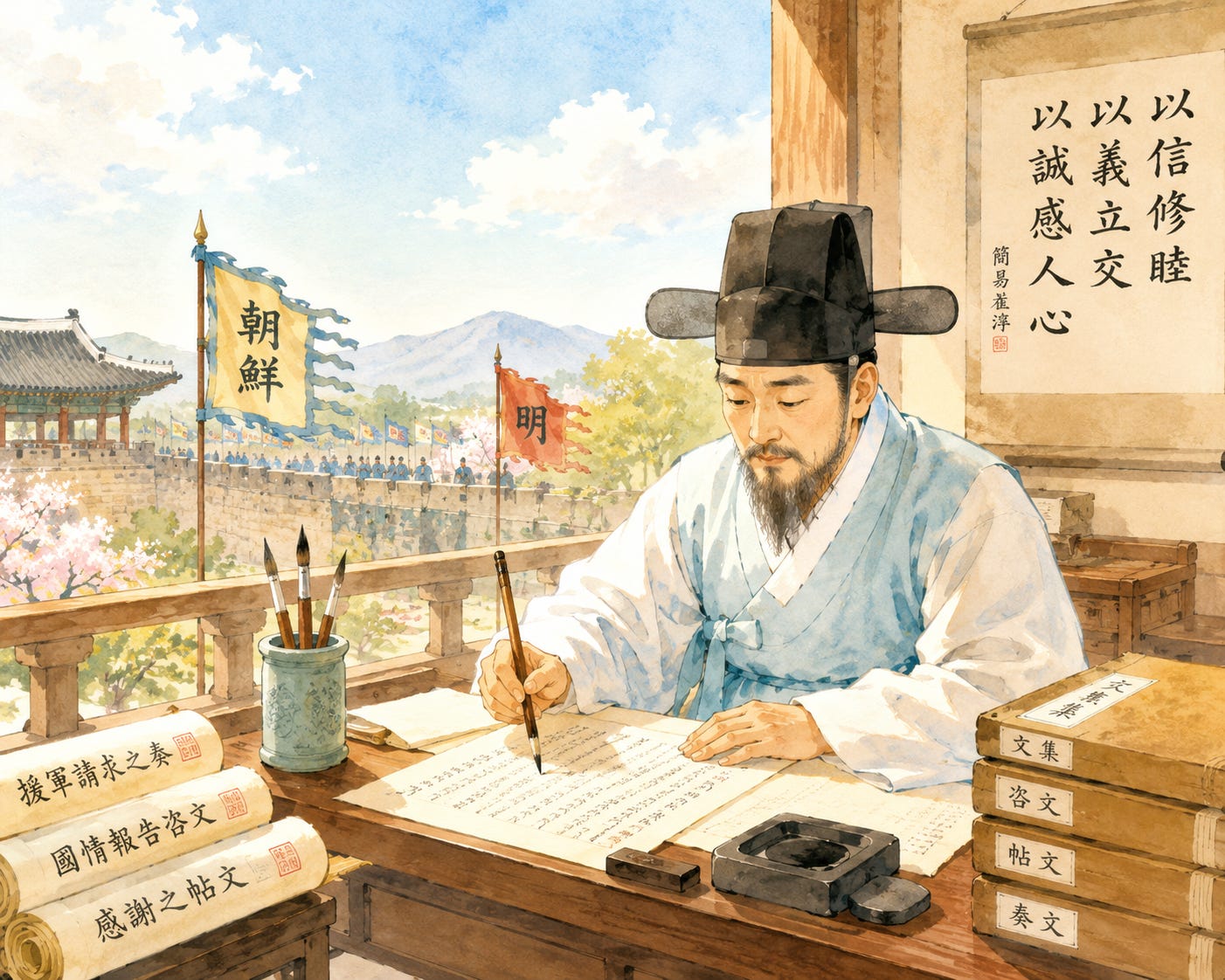
Reading Volume 5 of Gani-jip (Collected Works of Gani), titled Goewonmunrok (槐院文錄), written by the Joseon scholar and literary master Gani Choi Rip (崔岦), left me with deep admiration and reflection. At first, I assumed the book would simply be a collection of old diplomatic documents and official writings. However, as I continued reading, I realized that these writings were far more than administrative records. They were living testimonies showing how an intellectual endured a turbulent era, protected his nation, and persuaded others during one of the most difficult periods in Korean history.
Goewonmunrok contains many diplomatic memorials, official letters, petitions, and communications sent to Ming Chinese officials. In the beginning, the unfamiliar classical terminology and formal writing style felt difficult and distant. Yet gradually, I came to understand that behind every sentence lay the desperate reality of Joseon during the Imjin War. The nation stood on the brink of collapse, and Choi Rip worked tirelessly through diplomatic writings to explain Joseon’s situation, request military assistance, and maintain international relations.
What impressed me most was Choi Rip’s extraordinary writing ability and balanced judgment. He preserved courtesy and respect toward foreign officials while clearly conveying the suffering and urgency faced by Joseon. His writing was neither overly emotional nor coldly detached. Within his restrained and elegant sentences, one could naturally sense his concern for the nation and his deep responsibility toward the people. I believe such writing was not merely a technical skill, but the result of profound character and scholarship.
Reading Goewonmunrok also changed the way I think about scholars in the Joseon Dynasty. Today, we often imagine literary figures merely as poets or academics who devoted themselves to books and philosophy. Yet Choi Rip was much more than that. He was simultaneously a literary artist, diplomat, administrator, and strategist. With nothing but his brush and intellect, he fought to protect his country. Just as military generals defended the nation on the battlefield, scholars like Choi Rip defended it through diplomacy, persuasion, and communication. This realization gave me a renewed appreciation for the importance of intellectual leadership in times of crisis.
The writings in Goewonmunrok also reveal Choi Rip’s humanity and emotional depth. Some letters express gratitude, while others explain difficult circumstances or urgently report dangerous situations. Through them, I could feel that Choi Rip was not simply a rigid bureaucrat, but a warm-hearted individual who valued trust, sincerity, and human relationships. Even amid war and uncertainty, he never lost his dignity or courtesy.
As I reflected on this book, I found many connections to the modern world. International relations and diplomacy remain critically important today. In an era of global conflict, competition, and cooperation, the ability to persuade others with logic, respect, and wisdom is still essential. Although these writings were composed more than four hundred years ago, they continue to offer valuable lessons for our own time.
Another important realization I gained from reading this work was the “power of records.” If Choi Rip had not preserved these documents, we would not fully understand the struggles, anxieties, and efforts of Joseon during that turbulent period. Historical records are not merely archives of the past; they are vessels that carry the spirit of an age into the future.
Unlike emotional literary works that openly express personal feelings, Goewonmunrok speaks through restraint and discipline. Yet precisely because of this restraint, its emotional resonance feels even deeper. Through calm and measured language, the reader can sense patriotism, responsibility, dignity, and the quiet strength required to endure a painful era.
Through this reading experience, I came to understand that Choi Rip was not merely a talented writer but a practical intellectual who represented the spirit of the Joseon Renaissance. He never separated scholarship from reality, nor literature from public responsibility. His life offers an important lesson even for modern intellectuals: true learning should not remain isolated from society, but should contribute to solving the problems of the age and helping others.
Volume 5 of Gani-jip, Goewonmunrok, is therefore much more than a collection of diplomatic writings. It is a historical testimony to the responsibility, dignity, and resilience of an intellectual who struggled to protect his nation during one of its darkest hours. After reading this work, I found myself reflecting deeply on the meaning of responsibility, leadership, and moral integrity in both the past and the present. +++
{Solti}
June 16, 2026
《간이집》 제5권 『괴원문록(槐院文錄)』을 읽고
— 전란 속에서도 품격을 잃지 않은 지식인의 힘 —
조선 중기의 대학자이자 문장가였던 간이(簡易) 최립(崔岦)의 《간이집》 제5권 『괴원문록』을 읽으며 나는 깊은 감동과 놀라움을 느꼈다. 처음에는 단순히 오래된 외교 문서와 공문서의 모음일 것이라고 생각하였다. 그러나 책장을 넘길수록 이 글들은 단순한 행정 문서가 아니라, 나라가 가장 어려운 시기에 한 지식인이 어떻게 국가를 지키고 사람들을 설득하며 시대를 견디어 냈는지를 보여 주는 살아 있는 기록이라는 사실을 깨닫게 되었다.
『괴원문록』에는 명나라 관리들에게 보내는 자문(咨文), 첩문(帖文), 주문(奏文) 등이 매우 많이 등장한다. 처음에는 낯선 한자 용어와 딱딱한 형식 때문에 어렵게 느껴졌다. 하지만 차츰 내용을 이해하게 되면서, 그 문장 하나하나 속에 당시 조선의 절박한 현실이 담겨 있다는 사실을 알게 되었다. 임진왜란이라는 거대한 전쟁 속에서 조선은 국가의 존망이 흔들리고 있었고, 최립은 외교 문서를 통해 명나라의 지원을 요청하고 상황을 설명하며 조선을 위해 치열하게 노력하고 있었다.
특히 인상 깊었던 점은 최립의 뛰어난 문장력과 균형 감각이었다. 그는 상대를 존중하는 예의를 지키면서도 조선의 어려움을 분명하게 전달하였다. 지나치게 감정적이지도 않았고, 그렇다고 지나치게 냉정하지도 않았다. 절제된 문장 속에서도 나라를 걱정하는 마음과 백성을 생각하는 책임감이 자연스럽게 드러났다. 이것은 단순한 글쓰기 기술이 아니라, 깊은 인품과 학문의 힘에서 나온 것이라고 생각한다.
또한 『괴원문록』을 읽으며 조선 시대 선비들의 역할에 대해 다시 생각하게 되었다. 오늘날 우리는 문인을 단지 시를 짓고 학문을 연구하는 사람으로 생각하기 쉽다. 그러나 최립은 문학가이면서 동시에 외교관이었고, 행정가였으며, 전략가이기도 하였다. 그는 붓 하나로 나라를 지키기 위해 싸웠다. 전쟁터에서 칼을 드는 장수도 중요하지만, 국제 관계 속에서 국가의 입장을 설명하고 지원을 끌어내는 문인의 역할 또한 매우 중요하다는 사실을 새롭게 깨달았다.
『괴원문록』에는 전쟁과 외교의 긴장감뿐 아니라 인간적인 정서도 담겨 있다. 감사의 뜻을 전하는 글, 상황을 설명하며 이해를 구하는 글, 긴급한 소식을 전하는 글 등을 읽다 보면 최립이 단순히 차가운 행정가가 아니라 따뜻한 인간적 감성을 지닌 인물이었다는 점도 느낄 수 있다. 그는 어려운 상황 속에서도 품격과 예의를 잃지 않았고, 상대방과의 신뢰를 중요하게 생각하였다.
나는 이 책을 읽으며 오늘날의 시대와도 연결되는 부분이 많다고 느꼈다. 현대 사회 역시 국제 관계와 외교가 매우 중요하다. 국가 간 갈등과 협력이 끊임없이 이어지는 오늘날에도 상대를 존중하면서 논리적으로 설득하는 능력은 매우 중요한 가치이다. 최립의 글은 수백 년 전의 기록이지만, 오늘날에도 충분히 배울 점이 많다.
또 하나 깊이 느낀 점은 “기록의 힘”이었다. 만약 최립이 이러한 문서들을 남기지 않았다면 우리는 당시 조선이 어떤 고민과 노력을 했는지 제대로 알 수 없었을 것이다. 기록은 단순히 과거를 남기는 일이 아니라 시대의 정신을 후대에 전달하는 일이라는 사실을 새삼 깨닫게 되었다.
『괴원문록』은 화려한 문학 작품처럼 감정을 직접적으로 드러내지는 않는다. 그러나 오히려 절제된 문장 속에서 더 큰 울림이 느껴진다. 나라를 걱정하는 마음, 백성을 위한 책임감, 상대를 존중하는 태도, 그리고 어려운 시대를 견디어 내는 정신력이 조용하지만 깊게 전달된다.
이번 독서를 통해 나는 최립이 단순한 문장가가 아니라 조선 시대를 대표하는 실천적 지식인이었다는 사실을 깊이 이해하게 되었다. 그는 학문과 현실을 분리하지 않았으며, 문학과 행정을 함께 수행하였다. 이러한 모습은 오늘날 지식인들에게도 중요한 교훈을 준다. 진정한 학문은 현실과 동떨어진 곳에 존재하는 것이 아니라, 시대의 문제를 해결하고 사람들을 돕는 데 사용되어야 한다는 점을 최립은 몸소 보여 주었다.
《간이집》 제5권 『괴원문록』은 단순한 외교 문서집이 아니다. 그것은 전란의 시대 속에서 나라를 지키려 했던 한 지식인의 치열한 정신과 책임감을 담은 역사적 기록이다. 이 책을 읽고 나니 조선 시대의 선비 정신에 대해 다시 생각하게 되었고, 오늘날 우리 사회에도 필요한 품격과 책임감이 무엇인지 깊이 돌아보게 되었다. +++
{솔티}
2026년 6월 16일
Young Choi, a Professor at Regent University brings a rare combination of technical expertise and creative spirit to everything he does. A scholar in AI, cybersecurity, and network & telecommunications service management, he has published 38 books on AI, cybersecurity, and various topics, over 200 refereed research papers, and 20 book chapters. He proposed the world’s first global and universal Telecommunications “Service Order Handling (SOH)” Model (T-SOH Model) in 1995 with Dr. Adrian Tang. Beyond the academy, Dr. Choi is a passionate poet, essayist, calligrapher, and laser engraving artist whose reflective writing invites readers to rediscover life’s beauty through quiet contemplation(靜觀). He lives under the motto: “Study hard and give generously without holding back! (열심히 공부해서 아낌없이 남주자 !: 열공아남!)”
Published books: https://www.amazon.com/stores/Young-Choi/author/B0DMZ5S6R7?ref=ap_rdr&shoppingPortalEnabled=true