
The rapid advancement of automatic translation technologies is quietly but fundamentally transforming our daily lives. In particular, the real-time translation feature introduced on X (formerly Twitter) has made it common for people speaking different languages to communicate without any constraints. Language is no longer a barrier to communication; instead, it is becoming a mere formal difference that technology can effortlessly overcome.
However, this transformation is not simply about convenience. Machine translation is reshaping how humans communicate, how knowledge is accessed, and even how cultural identities are constructed. We are now living in a “translated world,” and its effects are already visible across multiple domains.
First, the global communication environment is undergoing a fundamental shift. English once functioned as the de facto global lingua franca, but with the widespread adoption of automatic translation, the dominance of any single language is gradually weakening. People using different languages can now participate on more equal footing, accelerating international cooperation and exchange.
Second, the boundaries of media and content distribution are rapidly dissolving. Content produced in one country can now be instantly translated and disseminated worldwide, effectively turning the media landscape into a single global market. This creates new opportunities, but it also increases the risk of misinformation spreading across borders without restriction.
Third, education is also being significantly transformed. Students now have access to lectures and research materials from around the world without language barriers. While this democratizes knowledge, it also raises concerns that over-reliance on translated materials may weaken critical thinking and depth of understanding.
Fourth, structural changes are emerging in industries and labor markets. Traditional translation jobs are being rapidly automated, and their role is shifting from translation itself to verification and interpretation. This is creating new professional domains while simultaneously restructuring existing occupations.
Fifth, issues of culture and identity are becoming increasingly important. Language is not merely a tool for communication but a vessel carrying the values and ways of thinking of a society. While automatic translation can convey meaning, it often struggles to fully capture cultural nuance and context. As a result, we may become more connected than ever before, yet also more prone to misunderstanding.
Automatic translation technologies are effectively dismantling one of humanity’s oldest and most persistent barriers: language. This is undoubtedly a historic achievement. However, we must recognize a critical reality—faster communication does not automatically lead to deeper understanding.
First, translated output should not be treated as absolute truth but as an “interpreted result.” Machine translation always involves selection, omission, and algorithmic interpretation. The same sentence can carry different meanings depending on context, which can lead to serious misunderstandings in diplomacy, law, and academia.
Second, both individuals and societies must develop critical linguistic awareness. Instead of passively accepting translated content, we must learn to interpret underlying intent and cultural context. Future education systems should prioritize not only foreign language proficiency but also the ability to critically evaluate and analyze machine-translated information.
Third, a balanced approach to technological dependence is essential. While automatic translation is a powerful tool, it should not replace human cognition. Rather, it should support and enhance our ability to construct and interpret meaning independently.
Fourth, at the societal level, there is a need to build a trustworthy translation ecosystem. Technology companies and research institutions must ensure not only accuracy but also transparency and accountability. At the policy level, mechanisms should be established to protect linguistic diversity and cultural context.
The central question of the automatic translation era is this: Are we becoming more connected—or are we understanding one another more deeply?
The answer does not lie in technology itself, but in human responsibility. In this new translated world, the direction we choose is clear: we must move beyond simply communicating faster and instead strive to understand more accurately, interpret more responsibly, and think more critically. ***
April 15, 2026
At Sungsunjae (崇善齋)
{Solti}
한국어 번역: 언어 장벽이 사라진 시대, 우리는 더 잘 이해하고 있는가
https://www.ktown1st.com/blog/VALover/349069
https://www.ktown1st.com/blog/VALover/349070
English translation: https://www.ktown1st.com/blog/VALover/349072
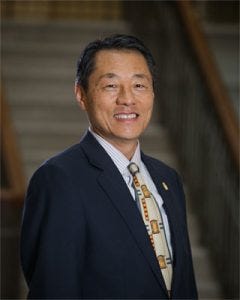
Prof. Dr. Young Choi — Regent University
Young B. Choi, PhD is a Professor at Regent University bringing a rare combination of technical expertise and creative spirit to everything he does. A scholar in cybersecurity, network management, and telecommunications, he has published 157 refereed articles, 13 book chapters, and a Cambridge Scholars Publishing volume on cybersecurity. Beyond the academy, Dr. Choi is a passionate poet, essayist, and wooden block engraving artist whose reflective writing invites readers to rediscover life’s quiet beauty.