Asian American Women’s Voices: Quiet Odyssey and Among the White Moon Faces
[Review Article]
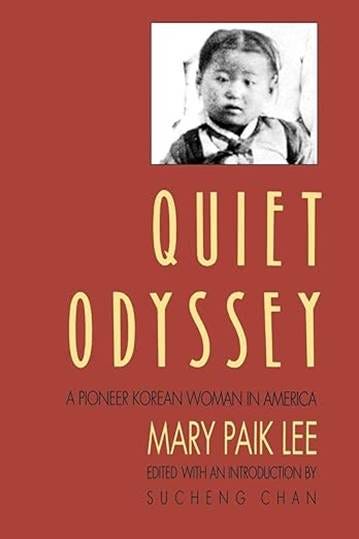
Lee, Mary Paik. Quiet Odyssey: A Pioneer Korean Woman in America. Edited by Sucheng Chan. University of Washington Press, 1990.
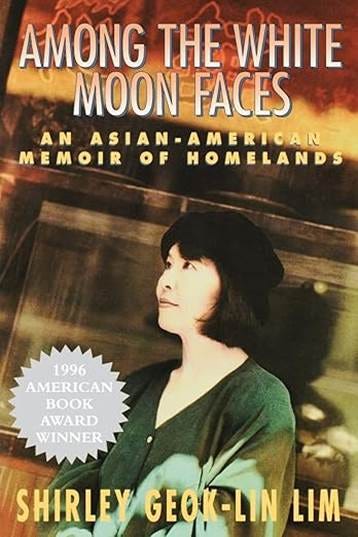
Lim, Shirley Geok-lin. Among the White Moon Faces: An Asian-American Memoir of Homelands. The Feminist Press, 1996.
In Asian American literature, there are many prominent and highly visible women authors—like Maxine Hong Kingston, Amy Tan, Celeste Ng, Min Jin Lee, and others—who have received significant critical and popular recognition. One reason they attract both critics and general readers is that their works center on distinctly female perspectives and experiences, exploring issues such as identity, family, cultural expectations, and the challenges of navigating multiple cultural worlds. Their narratives often give voice to the emotional and social complexities of women’s lives, highlighting both personal and communal struggles in ways that resonate widely. By foregrounding female experiences, these authors not only assert their own voices but also expand the scope of Asian American literature, contributing to broader conversations about gender, culture, and representation. This visibility and impact may explain why women writers in this field are often perceived as particularly prolific and influential compared to their male counterparts.
This essay examines Mary Paik Lee’s Quiet Odyssey: A Pioneer Korean Woman in America and Shirley Geok-lin Lim’s Among the White Moon Faces: An Asian-American Memoir of Homelands, focusing on how these two twentieth-century Asian immigrant women narrate identity across sharply different historical, stylistic, and thematic contexts. Both authors offer deeply personal accounts of migration and belonging, yet the circumstances of their lives and the literary strategies they employ reflect the distinct social, political, and cultural environments of their respective eras.
Lee (1900-1995) provides an early-twentieth-century account shaped by exclusion laws, racial hostility, economic hardship, and a strong Korean Christian community that offered both spiritual grounding and practical support amid constant adversity. Her memoir emphasizes survival, family responsibility, and the collective endurance of her immigrant community, offering a documentary-style narrative that records the lived realities of hardship and resilience. In contrast, Lim (born 1944) writes from a late-twentieth-century post-1965 landscape, when educational and professional opportunities became more accessible to Asian Americans. Lim’s memoir reflects a different set of possibilities and challenges, including negotiating hybrid identities, asserting intellectual and artistic ambitions, and engaging critically with both American and Asian cultural contexts.
The narrative styles of the two authors diverge as sharply as their historical contexts. Lee’s writing is straightforward and documentary in tone, focusing on practical survival and the daily rhythms of immigrant life. Lim, however, employs a lyrical, introspective style that blends feminist self-examination with postcolonial critique, exploring identity in a more fluid, reflective, and self-conscious way. These stylistic choices shape each author’s portrayal of identity: Lee emphasizes collective endurance through family, labor, and faith, while Lim foregrounds individual self-fashioning, highlighting personal desire, intellectual growth, and the negotiation of a hybrid ethnic identity. Together, these memoirs trace a historical shift from immigrant survival to diasporic self-creation, revealing how Asian American women writers navigate evolving social, cultural, and generational landscapes, and offering a nuanced view of how literary expression and identity formation intersect across different eras of immigration.
Endurance and Survival: Mary Paik Lee’s Quiet Odyssey
Mary Paik Lee’s Quiet Odyssey is valuable not only as a personal memoir but also as a sociohistorical document illuminating the lives of Asian immigrants in early twentieth-century America. The book offers firsthand insight into Korea under Japanese colonial domination, the influence of American Christianity on Korean communities, and the role of overseas Koreans in the national independence movement. Through Lee’s understated yet powerful narrative, private suffering becomes a lens through which broader histories of migration, racism, faith, and political commitment are revealed.
One of the central themes of the memoir is the harsh reality of immigrant life in the United States during the first half of the twentieth century. Like many Asian immigrants of her generation, Lee faced blatant racism, linguistic and cultural barriers, and persistent hunger. When Lee and her family arrived in the United States, Asians were widely regarded as racially inferior and were often treated as subhuman. Early in the book, Lee recalls the dehumanizing welcome she and her brother received at a California school, where white classmates mocked and physically assaulted Asian children under the guise of a playground chant:
The next day when I went to school with my brother the girls did not dance around us; I guess the teacher must have told them not to do it. I learned later than the song they sang was:
Ching Chong, Chinaman,
Sitting on a wall.
Along came a white man,
And chopped his head off.
The last line was the signal for each girl to “chop my head off” by giving me a blow on the neck. That must have been the greeting they have all the Oriental kids who came to school the first day (17).
The cruelty of the ritual—ending with a blow to the neck—exposes how racism was normalized and even ritualized among children, reflecting the prejudices of the broader society.
Racism followed Lee into adolescence and formal education. As a high school student, she courageously confronted her English teacher for systematically giving non-white students lower grades than their white peers. The teacher’s furious response, “If you don’t like it, get the hell out of here. We don’t want you here anyway” (56), reveals the institutional nature of racial discrimination and the hostility faced by those who dared to challenge it.
Another teacher expressed even more explicit racial contempt, referring to Chinese and Japanese people with slurs and claiming that Koreans were savages civilized only by Japanese colonizers:
My history teacher was something else. He was a young man in his thirties, a “good looker” and a “smart aleck.” When we came to the pages about China and Japan, he referred to them as the lands of “stinking Chinks and dirty Japs.” Looking straight at me in a taunting manner, he said that Korea was a wild, savage country that had been civilized by the “Japs.” (56)
When Lee confronted him, the teacher’s solution was not self-reflection but erasure: he simply skipped the section on Asian history altogether. These encounters underscore both the pervasiveness of racism and Lee’s quiet moral courage in resisting it.1
In addition to racial hostility, Lee’s family endured severe poverty and near-starvation. Despite living in America, a land often imagined as a place of abundance, the family frequently lacked sufficient food. Lee recalls drinking water to suppress hunger and her mother diluting milk until it barely resembled milk at all. One especially poignant scene describes Lee witnessing her parents holding hands and weeping at the dinner table, grieving their inability to provide adequately for their children. Rather than fostering resentment, this moment deepened Lee’s appreciation for her parents’ love and sacrifice, reinforcing the memoir’s emphasis on familial endurance rather than complaint.
Notably, despite enduring racism and hunger, Lee’s tone is never bitter or accusatory. Like her parents, she maintained a firm belief in the ideals of America, even when those ideals were contradicted by lived experience. Encounters with kind and compassionate white Americans reinforced her conviction that injustice was not universal or inevitable. Moreover, Lee understood her family’s struggles in relative terms: difficult as life was in the United States, it was still freer than life in Korea under Japanese colonial rule. This comparative perspective tempers the memoir’s critique and situates immigrant suffering within a global historical context.
Christian faith plays a crucial role in sustaining the family’s resilience. Lee and her older brother, Paik Meung Sun, were baptized by Dr. Samuel Austin Moffett (1864-1939), one of the early and most influential American Presbyterian missionaries to Korea (4).2 Lee’s father, a Presbyterian minister, instilled in his children a strong religious foundation that provided hope amid hardship. He urged Lee to understand American mistreatment of Koreans in historical context, noting that some Koreans had mistreated American missionaries in similar ways. This perspective allowed Lee to reconcile her gratitude toward American missionaries with her experiences of racial injustice. Throughout her life, she maintained a deep appreciation for Christian missions in Korea, even as her faith was often tested by the racially prejudiced attitudes of many American Christians. While American missionaries came to Korea with a desire to help, they were distinct from the broader society in the United States, where non-whites frequently faced disrespect and discrimination.3
Quiet Odyssey also sheds light on Korean immigrants’ enduring attachment to their homeland. Despite their own financial precarity, Korean Americans felt a strong sense of obligation to family members in Korea and to the independence movement abroad. Lee recounts how her father repeatedly sent money to a needy half-brother in Korea who assumed that all Korean Americans were wealthy. More broadly, Korean immigrants contributed financially to the nationalist cause, demonstrating a transnational sense of responsibility. Lee even recalls meeting Syngman Rhee, later the first president of South Korea, highlighting the close connections between everyday immigrant life and major historical movements.
At the end of the memoir, Lee reflects on her long life in the United States with quiet satisfaction and acceptance. After decades of service—including ten years working as an interpreter for Koreans—she retires at the age of eighty-five and turns her attention to rest and reflection. Her final sentence reads, “I attend a church regularly where most of the members are black, because it is there I feel most comfortable” (130). This choice is especially telling, suggesting a sense of kinship shaped not by race alone but by shared histories of marginalization and endurance. The closing reflection encapsulates the memoir’s central insight: survival is not merely a matter of perseverance, but of forging meaningful connections across boundaries of race and culture.
Self-Fashioning: Shirley Geok-lin Lim’s Among the White Moon Faces
Shirley Geok-lin Lim’s memoir is a lucid, often painful account of life across cultures, languages, and nations. Growing up in colonial-era Malaysia, Lim inhabits a complex social terrain shaped by Malay, Chinese, and British influences. Her reflections on language alone reveal the layered nature of her identity: Hokkien, the language of her ethnic community, is resisted; Malay, her mother’s tongue, becomes intimate; English, acquired through British schooling, feels natural and empowering. Lim does not disavow the colonial education that shaped her intellectual life; instead, she presents it with honesty, recognizing both its privileges and its inevitability for colonial subjects. This nuanced stance gives the memoir its distinctive voice—critical yet unsentimental, reflective without nostalgia.
Family dysfunction forms one of the memoir’s emotional cores. Lim’s mother’s desertion leaves a profound wound, one the author revisits with adult insight and restrained anguish. The mother’s absence is not sudden but gradual, a slow withdrawal that culminates in physical departure. The mother’s desertion of the family came as no surprise: “My mother may have resolved on escape long before she left us, but she shared nothing of herself with us in those final years. She was already absent, a weeping woman stripped slowly to some unknown other whose ultimate departure came to me as no surprise” (30). Lim’s assertion that “[m]aternal abandonment is unthinkable in human nature” (30) underscores the psychic rupture this loss creates.
Lim’s relationship with her father is equally complex: marked by emotional closeness that feels “illicit” (31) yet compromised by his emotional blindness and his decision to bring a cruel woman into the household as a stepmother. Lim’s awareness of Western fairy tales about wicked stepmothers adds an ironic layer, showing how colonial literature shaped her expectations even as it failed to protect her:
“Peng is going to be your stepmother,” Father said, beaming with genuine happiness. English-educated, I repeated the word “stepmother” to myself. Snow White and the Seven Dwarfs, Cinderella, Red Rose and White Rose, Hansel and Gretel, all the Western fairy tales in which wicked stepmothers and stepdaughters battled in moral conflict swam into mind. (58)
The household turns into a place where people feel distant from one another, both in how they speak and how they connect emotionally, with tension that is rarely voiced but always present.
Many years later, after her father’s death, Lim and her stepmother meet again. Peng suddenly breaks down crying, exclaiming, “E sie, E sie!”—“He’s dead, he’s dead!”—and embraces Lim, marking the first and only time they have ever touched (201). In that moment, it is the father who unites them; his lingering presence remains strong between two women who have shared the deepest and longest love for him (201). In this way, Lim’s life comes full circle with quiet irony: the two women who once harbored resentment toward each other now grieve together for the same man they both loved. Yet the father whose death reconciles them is also the central figure in the family’s earlier unraveling. Throughout the memoir, Lim traces how poverty and hunger puncture any illusion of middle-class security.
Earlier chapters recount how poverty and hunger puncture any illusion of middle-class security. Despite her father’s white-collar job, financial ruin—worsened by a pyramid scheme—pushes the family into prolonged deprivation. “For the first time in my life I felt hunger,” she writes, describing the “emptiness” that left her “giddy and weak” (43), alongside the steady refrain that “there was no money.” Yet hunger becomes so habitual that it sharpens appetite into gratitude: “The food was always delicious because we were always hungry” (54). Driven by need, Lim and her brothers stole fruit from neighbors’ trees; when one brother fell and dislocated his wrist, the bone “did not set well” because there was no money for proper treatment, and he hid “the ugly angle of the bone” beneath a bandage (55). Such scenes render hunger not as a passing hardship but as a formative condition—at once physical and existential—that shaped Lim’s acute awareness of vulnerability, injustice, and loss.
Perhaps the most disturbing sections of the memoir recount Lim’s sexual awakening and the sexual abuse she experienced as a child. Her recollection of childhood autoeroticism is rendered without shame, framed as a private response to boredom and solitude. This fragile innocence is violently disrupted by her uncle’s assault. Lim writes these scenes with restraint and precision, emphasizing the child’s instinct for self-protection through silence and feigned sleep. The adult narrator’s utter repugnance coexists with a clear-eyed understanding of how power and secrecy operate in abusive situations: “Disgust and revulsion stir my memories now. I see the child safe and alone in an autoerotic half-sleep, then a sudden weight of an older body, a wet kiss on the lips” (77). These passages are difficult but essential, revealing how trauma becomes embedded in memory and identity.
Beyond childhood, the memoir traces Lim’s transformation into an immigrant, scholar, and writer in the United States. Her academic growth and professional achievements do not erase the fractures of her early life but provide new frameworks for understanding them. As an Asian American who lives between Malaysia and the United States, Lim reflects on belonging and displacement. She resists simple labels, instead embracing a transnational identity shaped by migration, education, and language.
At the end of the memoir, Lim reflects on her experience as an Asian-born instructor of English and scholar in the United States, teaching first at a community college and later at four-year colleges and universities. At the community college, some students are surprised to find themselves in an English course taught by an Asian professor. Their evaluations include remarks such as “She pronounces ‘however’ as if there is a ‘r’ in it,” “Her long hair is very cute,” and “Although she is a foreigner, she teaches English good” (214). Such comments typify the mixed reactions that Asian American instructors often encounter—part curiosity, part fascination, part objectification, and part genuine respect. For her part, Lim admits that she also finds her students “exotic, inhabiting Raymond Carver’s world” (215). The sense of difference, in other words, is mutual: the gaze of curiosity moves in both directions.
As an accomplished scholar and writer, Lim believes that Asian American intellectuals contribute something vital to the United States, helping to shape it into “our world’s first world-civilization” (230). Unlike homogeneous nations, America’s diversity generates a creative synergy that strengthens rather than weakens it. To be both Asian and American is not without tension, yet Lim models a way of holding these identities together. She is often regarded as a foreigner in the United States, while her children—born of her marriage to a white man—feel compelled to assert that they are 100% American, a response to the persistence of racism. When they visit Malaysia, however, relatives teasingly label them Americans. This double consciousness may be common among ethnic minorities in the United States, but Lim demonstrates how such a hyphenated identity can become a source of insight and contribution, benefiting both the individual and the nation.
Ultimately, the memoir stands as a testament to survival and intellectual self-fashioning. It shows how a life marked by abandonment, hunger, and abuse can still yield clarity, agency, and moral authority. As a cross-cultural, trans-Pacific narrative, Among the White Moon Faces offers compelling insight into the experience of a hyphenated immigrant from Asia. Particularly illuminating are the chapters recounting her difficult childhood in Malaysia, her ambivalent feelings toward her first homeland, and her journey in the United States as an Asian-born academic.
Conclusion
Written by a non-academic immigrant with the assistance of a scholar, Quiet Odyssey is shaped less by theoretical reflection than by lived experience and moral testimony. Lee’s prose is plain, restrained, and quietly powerful, reflecting her commitment to bearing witness rather than interpreting her life through academic frameworks. The narrative foregrounds the everyday struggle for survival—racism, poverty, hunger, and displacement—while also documenting the historical realities of Korean immigration, Japanese colonial rule in Korea, and the sustaining role of Christianity within immigrant communities. In its simplicity and emotional restraint, Quiet Odyssey derives its authority from endurance and faith, offering readers an unembellished account of perseverance.
By contrast, Among the White Moon Faces offers a more analytically driven form of self-examination. Authored by a university professor deeply grounded in both Eastern and Western intellectual traditions, the memoir reflects Shirley Geok-lin Lim’s lifelong engagement with multiple cultures. Born to Chinese parents in Malaysia during the period of British colonial rule, Lim grew up navigating overlapping linguistic, cultural, and ideological worlds. Educated at a Catholic school, she was immersed in English while also maintaining ties to Chinese language and culture. This bilingual and bicultural upbringing profoundly shaped her literary voice, enabling sophisticated reflections on language, power, and identity that distinguish her memoir from more straightforward immigrant narratives.
Winner of the 1996 American Book Award, Among the White Moon Faces is both accessible to general readers and intellectually demanding. While it recounts Lim’s compelling life story—marked by family rupture, poverty, migration, and self-education—it also offers sustained, nuanced meditations on gender, race, and cultural belonging. Lim interrogates what it means to be a woman shaped by patriarchal structures in both Asian and Western contexts, as well as what it means to live in the United States as an Asian who is never fully assimilated nor entirely foreign. Moving fluidly between personal narrative and critical reflection, the memoir occupies a productive space between lived experience and scholarly inquiry, making it a distinctive and enduring contribution to Asian American literature.
Notes on Quiet Odyssey
1 Mary Paik Lee grew up in America during the era of the Chinese Exclusion Act, which was in effect from 1882 until its repeal in 1943 by the Chinese Exclusion Repeal Act. During this period, Asian immigrants endured many kinds of hardship. Some Americans tolerated and even welcomed them, but others resented and assaulted them. Below are two images from that era. The first drawing, published in Harper’s Weekly, depicts the “Yellow Peril,” an anti-Asian ideology. In the image, a group of white Christian warriors prepare to confront a demonized Asian culture, represented by Buddhism, across the ocean. Led by a male angel wielding a flaming sword, they carry swords, shields, and spears. Above them, beams of light forming a cross serve as both a guide and a symbol of protection.
Hermann Knackfuß, Peoples of Europe, Guard Your Dearest Goods!, 1895, lithograph print. Public domain. Courtesy of Wikimedia Commons.
Published in 1886 by the George Dee Magic Washing Machine Company, The Chinese Must Go – Magic Washer depicts Uncle Sam kicking a Chinese man off a cliff while others flee, under the slogans “Don’t Use This If You Want to Be Dirty” and “The Chinese Must Go.” The cartoon links anti-Chinese sentiment surrounding the 1882 Chinese Exclusion Act with a commercial advertisement.
The George Dee Magic Washing Machine Company, The Chinese Must Go – Magic Washer, 1886. Commercial/political cartoon. Public domain (PD-US). Courtesy of Wikimedia Commons.
2 Horace N. Allen is usually considered the first Protestant missionary to arrive in Korea, coming in 1884. A year later, in 1885, Horace G. Underwood, a Presbyterian, and Henry G. Appenzeller, a Methodist, followed and became key early leaders in Korean Protestant history. Samuel Austin Moffett (1864-1939) arrived in Korea in January 1890 and became one of the most influential early American Presbyterian missionaries, particularly in northern Korea. After beginning his work in Seoul, he concentrated his ministry in Pyongyang, where he planted churches, promoted evangelism, and in 1901 started a small theological class in his home that later developed into major Presbyterian institutions; he also served as the third president of Soongsil University. Following 46 years of service, ending when Japanese authorities expelled him for resisting their colonial policies, he returned to the United States in 1936 and died in 1939.
Samuel Austin Moffett in 1889. From the Moffett Korea Collection, Photographs. Albums of Selected Old Korea Images, Album D – Part 1: Moffett Family, 1889–1899 (Album D, Part 1), Princeton Theological Seminary – Theological Commons. Unknown photographer. This image was never published prior to January 1, 2003, and is in the public domain in the United States under 17 U.S.C. § 303 (author unknown; created before 1906).
3 With the arrival of Western missionaries—especially from the United States—Korean society began to change significantly. Missionary schools and hospitals were established, and the idea of the equality of all people began to take root. Not surprisingly, many Koreans embraced the Christian faith, helping to lay the foundation for Korea’s emergence as a largely Christian nation. Here is a photograph of Korean Christians from 1914:
Presbyterian Church in the U.S.A., Reports of the Missionary and Benevolent Boards and Committees to the General Assembly of the Presbyterian Church in the United States of America, 1914 (Philadelphia: Presbyterian Board of Publication). Image courtesy of Internet Archive Book Images via Wikimedia Commons. Public domain / no known copyright restrictions.
About the Author
Professor of English and Creative Writing and Associate Dean of the School of Humanities and Theology, Missouri Baptist University
John J. Han, PhD, is the author, editor, co-editor, or translator of 35 books. His forthcoming book, Echoes from the Hills: Critical Essays on Ozarks Literature (co-edited with C. Clark Triplett), will be published by the University of Arkansas Press. He has published nearly 3,000 poems in a variety of journals and anthologies. In addition to his long tenure at Missouri Baptist University, he has also taught at Kansas State University, the University of Nebraska–Lincoln, Nebraska Wesleyan University, and Washington University in St. Louis.