

Global Trade Analysis
Beyond the Chokepoint: Why the World Is Quietly Moving Past the Strait of Hormuz
Paul C. Hong, Distinguished University Professor · University of Toledo
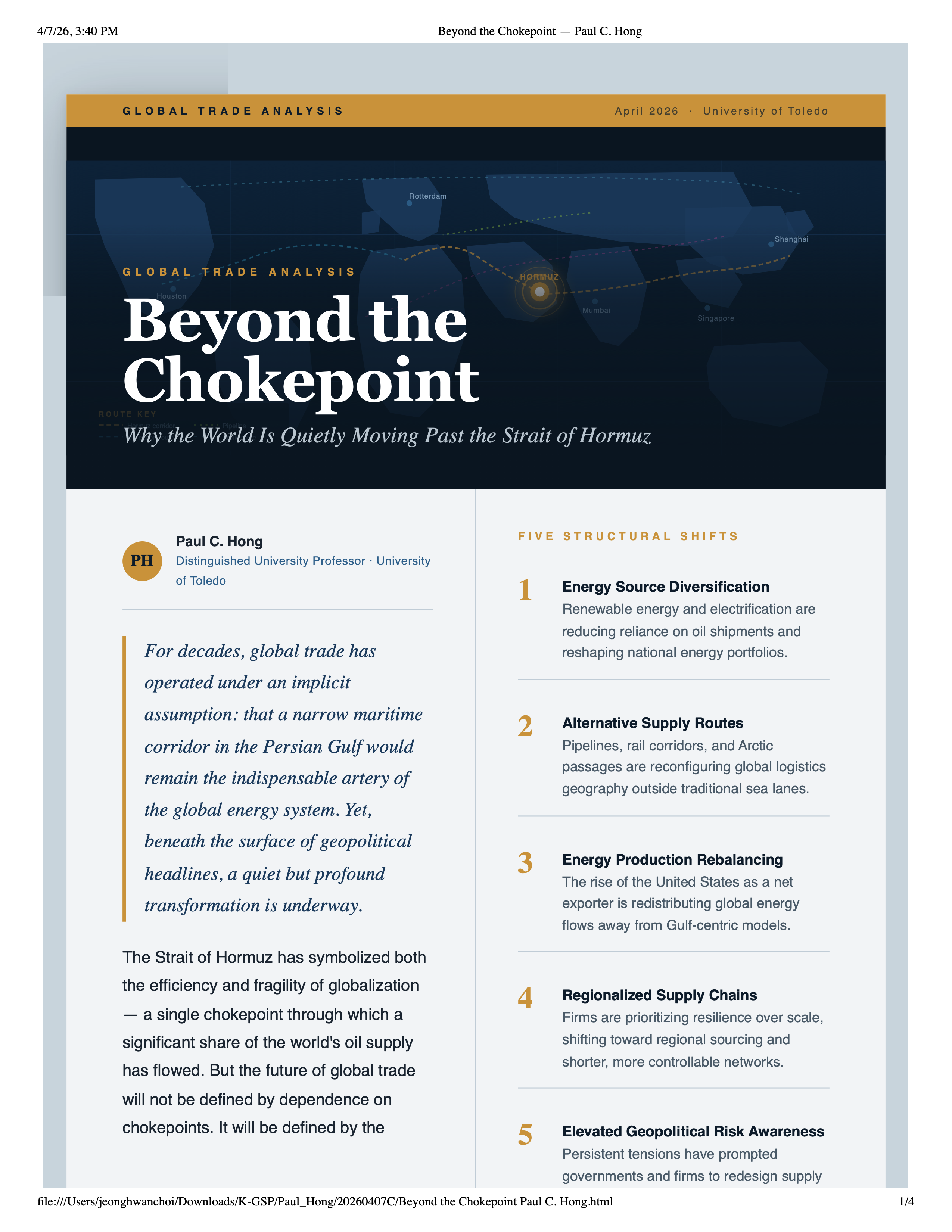
For decades, global trade has operated under an implicit assumption: that a narrow maritime corridor in the Persian Gulf would remain the indispensable artery of the global energy system. The Strait of Hormuz has symbolized both the efficiency and fragility of globalization — a single chokepoint through which a significant share of the world’s oil supply has flowed. Yet, beneath the surface of geopolitical headlines, a quiet but profound transformation is underway. The future of global trade will not be defined by dependence on chokepoints, but by the capacity to design systems that move beyond them.
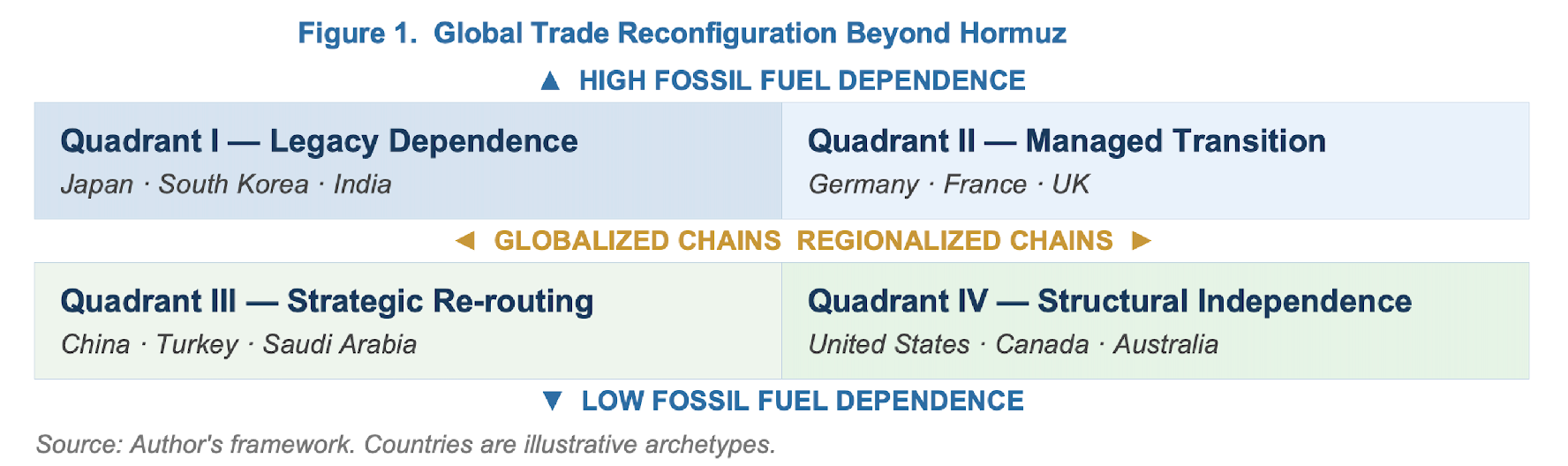
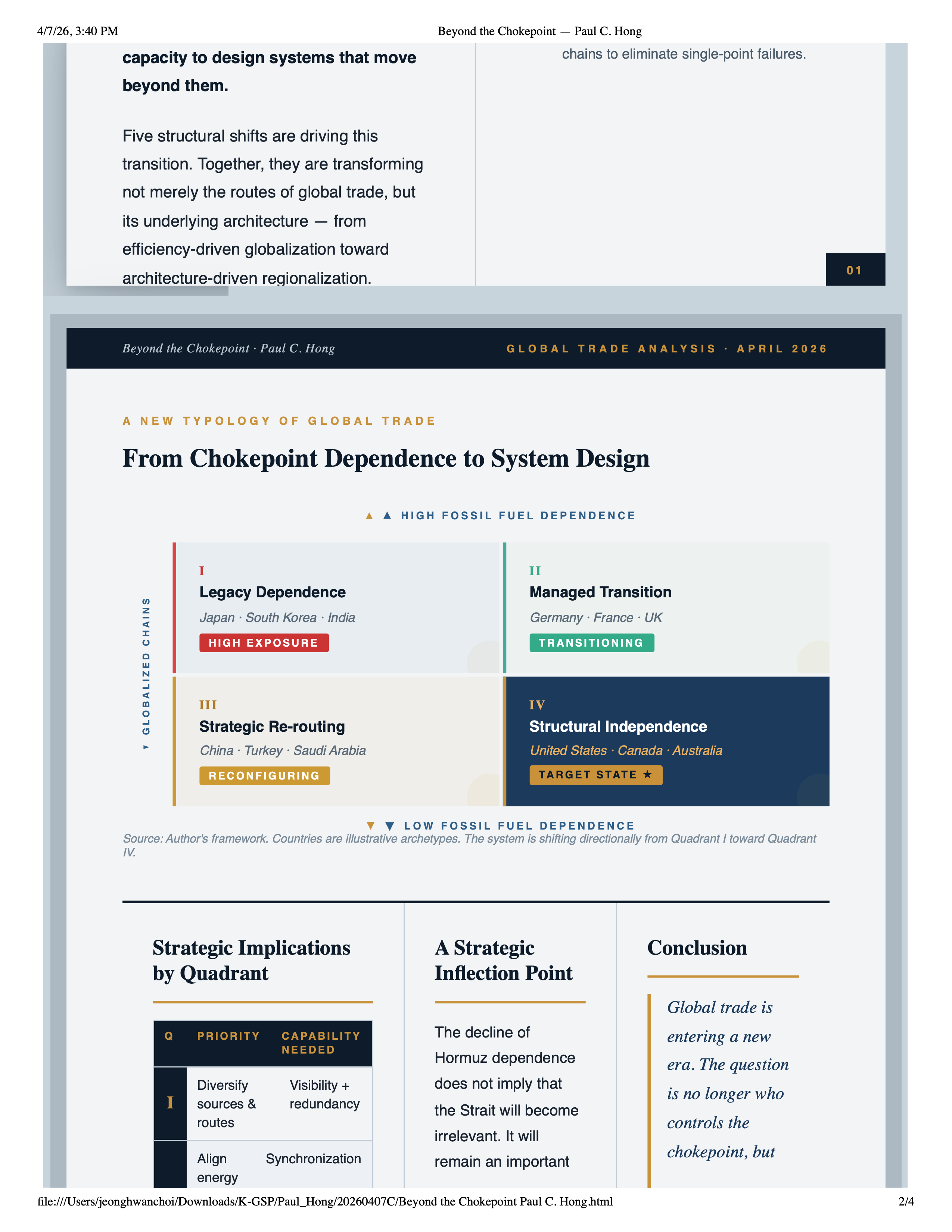
Figure 1. Global Trade Reconfiguration Beyond Hormuz
▲ HIGH FOSSIL FUEL DEPENDENCE
Quadrant I — Legacy Dependence · Japan · South Korea · India ◄ GLOBALIZED CHAINS · Quadrant II — Managed Transition · Germany · France · UK · REGIONALIZED CHAINS ►
Quadrant III — Strategic Re-routing · China · Turkey · Saudi Arabia ◄ GLOBALIZED CHAINS · Quadrant IV — Structural Independence · United States · Canada · Australia · REGIONALIZED CHAINS ►
▼ LOW FOSSIL FUEL DEPENDENCE
Source: Author’s framework. Countries are illustrative archetypes.
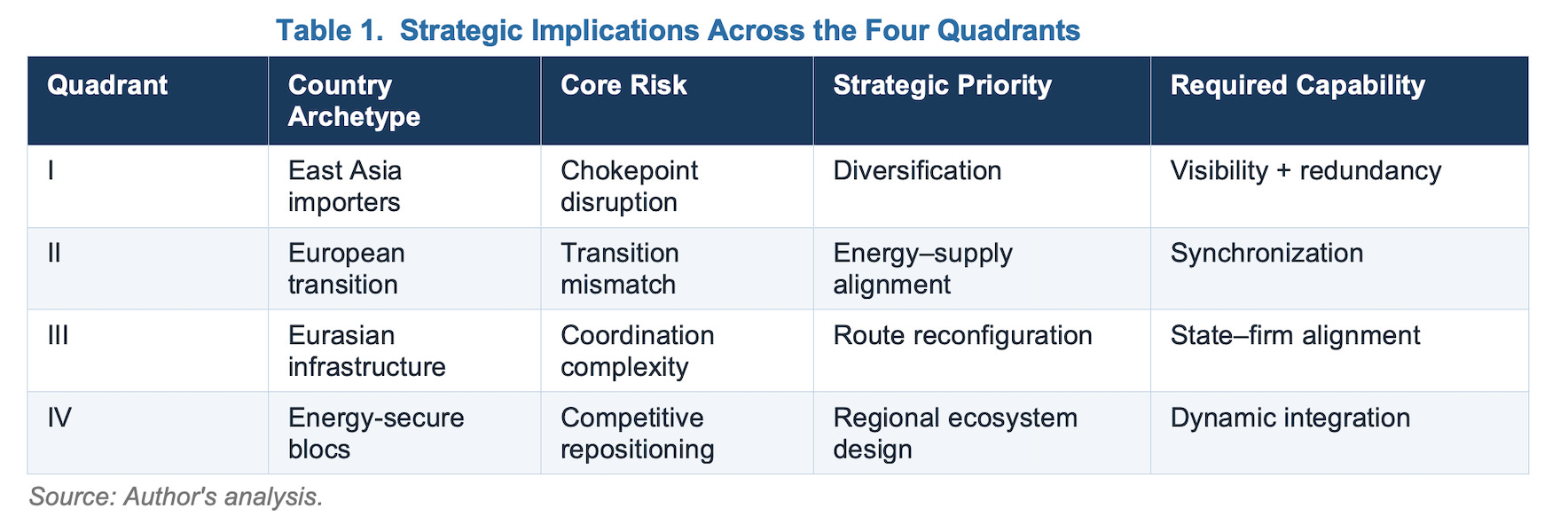
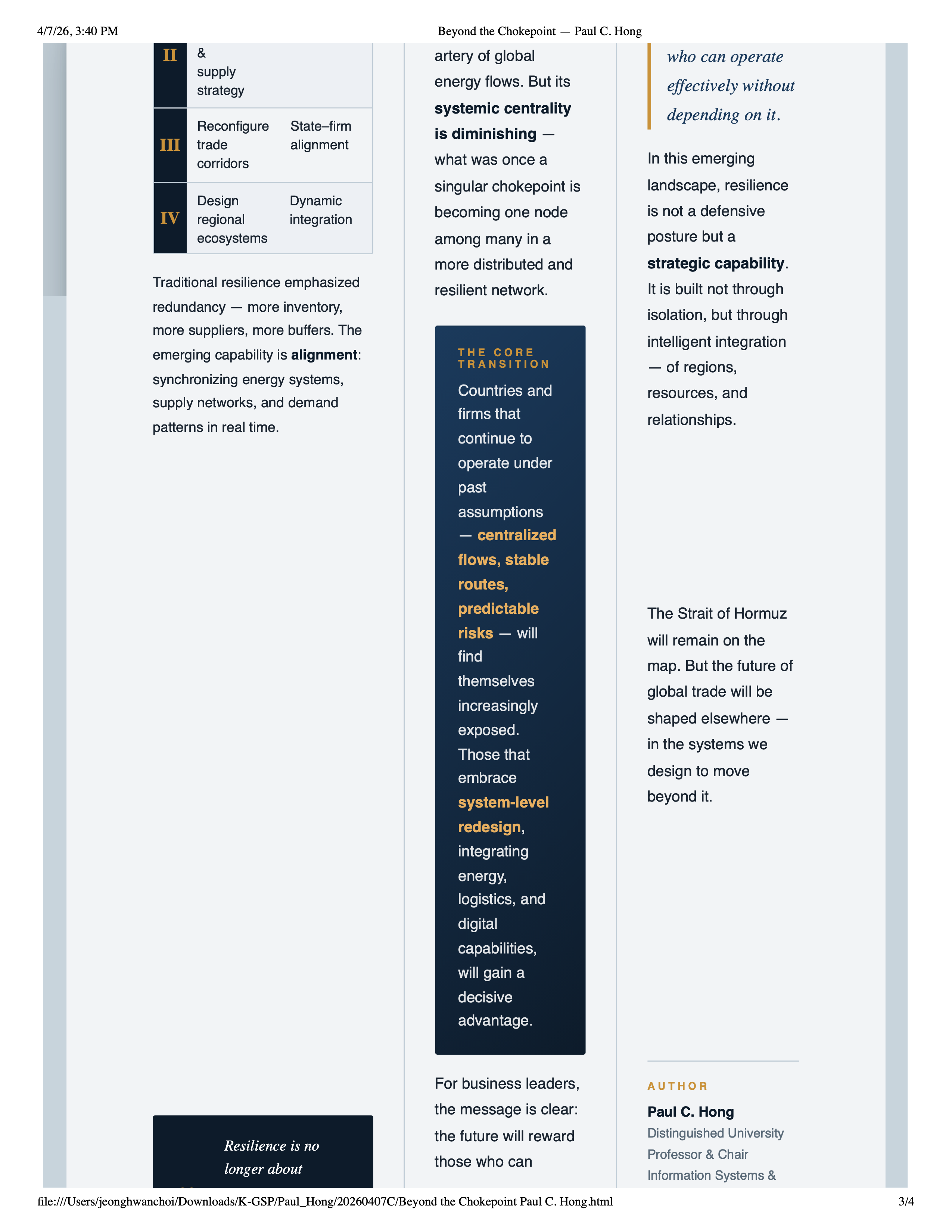
Table 1. Strategic Implications Across the Four Quadrants
Quadrant I · Country Archetype: East Asia importers · Core Risk: Chokepoint disruption · Strategic Priority: Diversification · Required Capability: Visibility + redundancy.
Quadrant II · Country Archetype: European transition · Core Risk: Transition mismatch · Strategic Priority: Energy–supply alignment · Required Capability: Synchronization.
Quadrant III · Country Archetype: Eurasian infrastructure · Core Risk: Coordination complexity · Strategic Priority: Route reconfiguration · Required Capability: State–firm alignment.
Quadrant IV · Country Archetype: Energy-secure blocs · Core Risk: Competitive repositioning · Strategic Priority: Regional ecosystem design · Required Capability: Dynamic integration.
Source: Author’s analysis.
“Resilience is no longer about protecting routes; it is about redesigning systems.”
Five Structural Shifts
Five structural shifts are driving this transition. First, the diversification of energy sources is reducing reliance on oil shipments, as renewable energy and electrification reshape national energy portfolios. Second, alternative supply routes — pipelines, rail corridors, and Arctic passages — are reconfiguring logistics geography. Third, the geographic rebalancing of energy production, particularly the rise of the United States as a net exporter, is redistributing global flows.
Fourth, firms are shifting toward regionalized supply chains, prioritizing resilience over scale. Finally, persistent geopolitical tensions have elevated risk awareness, prompting governments and firms to redesign supply chains to avoid single-point failures. These forces do not operate independently. Together, they are transforming the architecture of global trade.
A New Typology of Global Trade
To understand this transition, consider a simple but powerful 2×2 framework based on two dimensions: energy dependence and supply chain configuration (Figure 1 above).
Quadrant I represents the legacy system — highly globalized and fossil fuel dependent — where vulnerability to Hormuz disruption is greatest. Quadrant II captures economies in transition, where energy diversification is underway but global trade structures persist. Quadrant III reflects infrastructure-led resilience, where countries re-route flows through pipelines and regional corridors. Quadrant IV represents the emerging frontier: economies that combine energy diversification with regionalized supply chains, thereby minimizing structural dependence on chokepoints.
The movement across these quadrants is not linear but directional. The global system is gradually shifting from Quadrant I toward Quadrant IV.
From Chokepoint Risk to System Design
Firms operating in legacy environments must rethink their dependence on single corridors. Diversification — of suppliers, routes, and energy sources — is no longer optional. Meanwhile, firms in transition economies must align their energy strategies with their supply chain configurations. Partial adaptation can reduce risk, but it does not eliminate systemic exposure.
The table above highlights a critical shift. Traditional supply chain resilience emphasized redundancy — more inventory, more suppliers, more buffers. But in a world of increasing complexity, redundancy alone is insufficient. The emerging capability is alignment — the ability to synchronize energy systems, supply networks, and demand patterns in real time.
Strategic Implications
The key insight is simple: resilience is no longer about protecting routes; it is about redesigning systems. This shift aligns with a broader transformation in global trade — the system is moving from efficiency-driven globalization to architecture-driven regionalization.
A Strategic Inflection Point
The decline of Hormuz dependence does not imply that the Strait will become irrelevant. It will remain an important artery of global energy flows. But its systemic centrality is diminishing. What was once a singular chokepoint is becoming one node among many in a more distributed and resilient network.
This transition marks a strategic inflection point. Countries and firms that continue to operate under the assumptions of the past — centralized flows, stable routes, predictable risks — will find themselves increasingly exposed. Those that embrace system-level redesign — integrating energy, logistics, and digital capabilities — will gain a decisive advantage.
For business leaders, the message is clear: the future will reward those who can design adaptive systems, not those who merely optimize existing ones.
Conclusion
Global trade is entering a new era. The question is no longer who controls the chokepoint, but who can operate effectively without depending on it. In this emerging landscape, resilience is not a defensive posture but a strategic capability. It is built not through isolation, but through intelligent integration — of regions, resources, and relationships.
The Strait of Hormuz will remain on the map. But the future of global trade will be shaped elsewhere — in the systems we design to move beyond it.
“The future of global trade will not be decided by the narrowest strait, but by the broadest vision of system design.”
© 2026 KGSP Forum. All rights reserved. Content published in the KGSP Journal may not be reproduced, distributed, or transmitted in any form without prior written permission from the KGSP Forum, except for brief quotations with full attribution.