
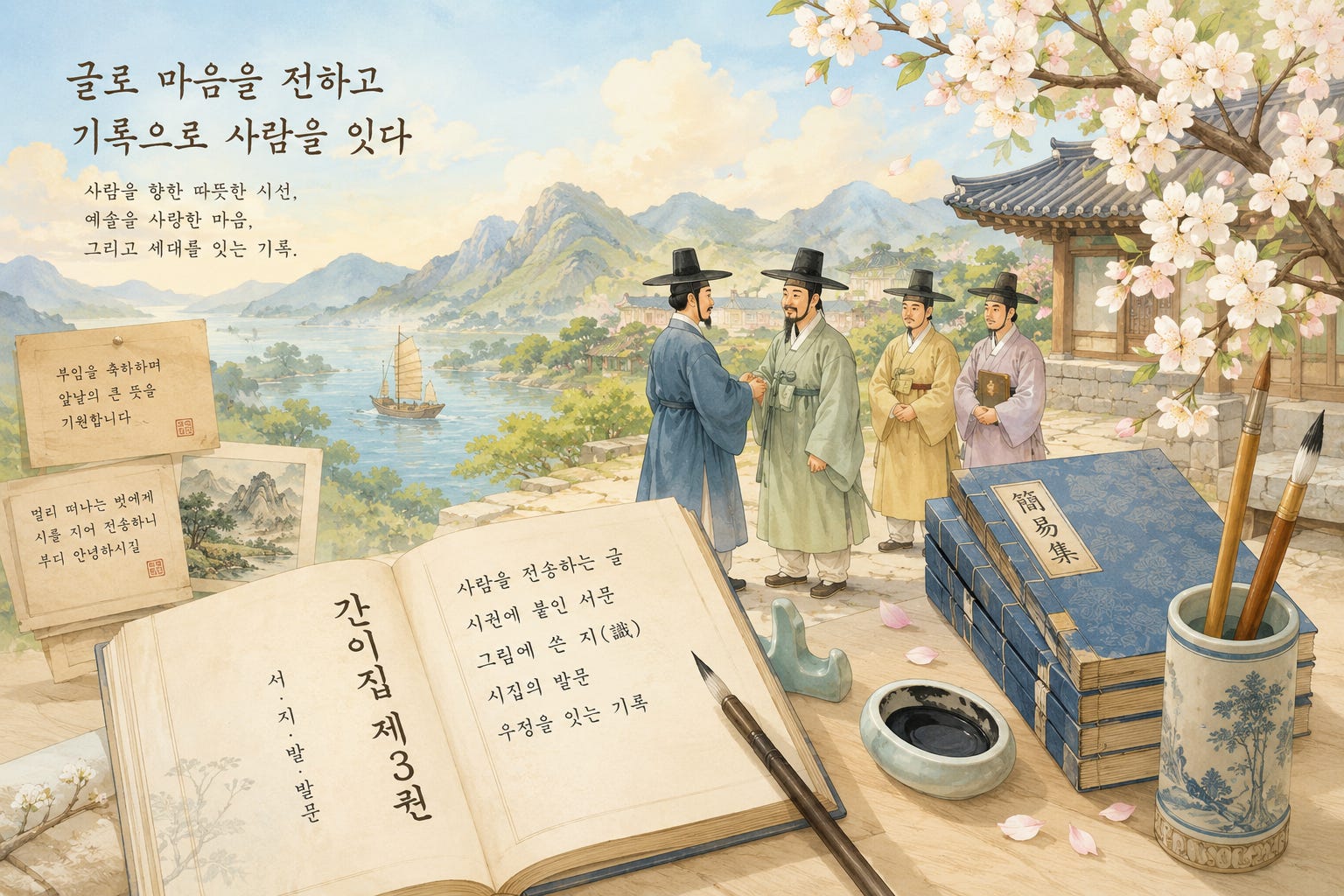
Some books move us through stories, while others enlighten us through knowledge. Ganijip (The Collected Works of Choi Rip), Volume 3, belongs to a different category altogether. When I first opened the table of contents, I found it filled with prefaces, inscriptions, postscripts, and commemorative writings. At first glance, these seemed somewhat dry and difficult for a modern reader. One might wonder what relevance a preface written for someone’s poetry collection or an inscription attached to a painting could possibly have today. Yet as I read through the volume, I gradually realized that it is far more than a collection of literary pieces. It is a living record of human relationships and a window into the intellectual spirit of an earlier age.
The first aspect that impressed me was Choi Rip’s attitude toward people. He wrote words of encouragement for officials departing for new appointments, composed farewell poems for friends embarking on long journeys, and offered thoughtful praise to scholars and artists. In many ways, these writings resemble modern recommendation letters or commemorative speeches. However, they contain something deeper: a sincere appreciation of another person’s character and talents. Reading these passages reminded me that the essence of human relationships remains unchanged despite the passage of centuries.
Volume 3 also reveals the extensive network of intellectual exchange during the Joseon Dynasty. Choi Rip interacted not only with government officials and scholars but also with Buddhist monks, artists, and envoys traveling to Ming China. Through these writings, we gain insight into a society that was intellectually vibrant and closely connected. Just as people today communicate through email and social media, the educated individuals of Choson exchanged ideas, friendships, and aspirations through poetry and prose. Choi Rip’s writings preserve these connections for future generations.
Particularly fascinating were the inscriptions attached to landscape paintings, folding screens, and calligraphic albums. At first, I assumed they were simply explanatory notes. In reality, they are sophisticated works of art criticism. Choi Rip did not merely describe the outward appearance of a painting; he sought to understand the spirit behind it and the character of its creator. His approach encourages readers to appreciate art not only for its technical excellence but also for its emotional and philosophical depth. In a world where art is often valued according to fame or market price, Choi Rip reminds us to seek the deeper meaning and vitality within a work.
Another lesson that emerged from this volume is the importance of record-keeping. Many of the writings in Volume 3 are relatively short. Yet because these records survived, we are able to reconstruct the relationships, cultural practices, administrative life, and artistic values of sixteenth- and seventeenth-century Korea. Without them, much of that world would have vanished into obscurity. The volume demonstrates how even brief pieces of writing can become invaluable historical treasures over time.
I was also struck by the elegance of Choi Rip’s prose style. His writing is neither excessively ornate nor unnecessarily complicated. Instead, it is concise, refined, and dignified. With a few carefully chosen words, he conveys respect, wisdom, and deep learning. This quality offers an important lesson for modern writers. Effective writing does not depend on complicated vocabulary or elaborate rhetoric; it grows from clarity of thought and sincerity of purpose.
As I continued reading, I came to admire Choi Rip not only as a literary figure but also as a person who celebrated the achievements of others. Rather than focusing solely on his own accomplishments, he devoted considerable attention to recognizing the virtues and talents of friends, colleagues, and younger scholars. In this sense, he served as both a mentor and a cultural bridge within his community. His writings reveal a man who understood that true greatness often lies in helping others flourish.
The book also carries a message that resonates strongly in the age of artificial intelligence and digital technology. Today we have unprecedented access to information, yet meaningful human connection sometimes seems more fragile than ever. Ganijip Volume 3 reminds us that respect for others, appreciation of beauty, and the preservation of meaningful experiences are timeless values. Technologies may evolve, but genuine human relationships remain at the heart of a fulfilling life.
Ultimately, Ganijip Volume 3 is much more than a collection of prefaces and postscripts. It is a treasury of humanistic wisdom that illuminates friendship, culture, art, and memory. Through its pages, Choi Rip emerges as a thoughtful observer of people, a perceptive critic of art, and a devoted recorder of his age. Closing the book, I felt that his writings are not merely relics of the past; they continue to offer guidance and inspiration for modern readers. They encourage us to value the people around us, to appreciate the deeper meaning of art, and to record the moments that give significance to our lives.
Reading Ganijip Volume 3 was an enriching experience that broadened my understanding of both Korean intellectual history and universal human values. Although written more than four centuries ago, its themes of friendship, respect, artistic appreciation, and historical memory remain remarkably relevant today. Choi Rip teaches us that words have the power to preserve relationships, inspire future generations, and give lasting meaning to ordinary moments. In an era dominated by rapid technological change, his writings remind us that the most enduring achievements are often found in our care for others and our commitment to preserving what truly matters. +++
{Solti}
June 13, 2026
『간이집 제3권』을 읽고
― 사람과 예술, 그리고 기록의 가치를 생각하며
책을 읽다 보면 어떤 책은 이야기로 감동을 주고, 어떤 책은 지식으로 깨달음을 준다. 그러나 『간이집』 제3권은 조금 다르다. 처음 목차를 펼쳐 보았을 때는 서문(序文), 지(識), 발문(跋文) 같은 제목들이 대부분이라 다소 어렵고 딱딱하게 느껴졌다. 현대인의 눈으로 보면 남의 시집에 써 준 서문이나 그림에 붙인 글, 또는 누군가를 전송하며 남긴 글들이 무슨 의미가 있을까 하는 생각도 들었다. 그러나 한 편 한 편의 글을 들여다보면서 나는 이것이 단순한 문집이 아니라 사람과 사람을 잇는 기록이며, 한 시대의 정신을 담은 살아 있는 역사라는 사실을 깨닫게 되었다.
가장 먼저 인상 깊었던 점은 최립이 사람을 대하는 태도였다. 그는 지방으로 부임하는 관리에게 글을 써 주고, 먼 길을 떠나는 친구를 전송하며 시를 남겼으며, 학문과 예술을 사랑하는 이들에게 격려의 말을 아끼지 않았다. 오늘날의 추천서나 축사와 비슷한 형식이지만, 그 속에는 상대방의 인품과 능력을 진심으로 인정하는 따뜻한 마음이 담겨 있었다. 글을 읽으며 인간관계의 본질은 시대가 달라도 크게 다르지 않다는 생각이 들었다.
또한 제3권은 조선 중기 지식인들의 폭넓은 교류를 보여 준다. 관료와 학자뿐 아니라 승려, 예술가, 그리고 중국으로 떠나는 사신들에게까지 글을 남긴 모습을 볼 수 있다. 이를 통해 당시의 지식인 사회가 생각보다 넓고 활발하게 연결되어 있었음을 알 수 있었다. 오늘날 인터넷과 이메일로 소통하듯이, 당시 사람들은 편지와 시문을 통해 사상과 우정을 나누었던 것이다. 최립의 글은 그 소통의 흔적을 고스란히 보존하고 있다.
특히 산수도나 병풍, 서첩에 붙인 글들은 매우 흥미롭게 다가왔다. 처음에는 단순한 그림 설명 정도로 생각했지만, 실제로는 작품 속에 담긴 정신과 예술적 가치를 해석한 비평문에 가까웠다. 최립은 그림의 형식만 보지 않고 그 안에 흐르는 기운과 작가의 마음을 읽어 내려고 노력했다. 이러한 태도는 오늘날 예술 감상에도 그대로 적용될 수 있다. 우리는 종종 작품의 가격이나 유명세에만 관심을 두지만, 최립은 작품이 전하는 정신적 울림을 더 중요하게 여겼다.
또 하나 감명 깊었던 점은 기록의 중요성이다. 제3권에 실린 글들은 대부분 짧은 글들이다. 그러나 그 짧은 기록 덕분에 우리는 400여 년 전 조선 사회의 인간관계와 문화, 행정과 예술의 모습을 구체적으로 알 수 있다. 만약 이러한 글들이 남아 있지 않았다면 당시 사람들의 생각과 감정을 이해하기 어려웠을 것이다. 작은 기록 하나가 역사를 만든다는 사실을 다시금 느끼게 되었다.
최립의 문체 역시 인상적이었다. 그의 글은 화려한 수사를 과시하기보다 간결하면서도 품격이 있다. 필요한 말만 담백하게 전하면서도 상대방에 대한 존중과 깊은 학문적 교양이 자연스럽게 드러난다. 그래서 읽는 사람은 부담 없이 글에 몰입할 수 있으며, 동시에 문장의 아름다움을 느끼게 된다. 이는 현대의 글쓰기에도 큰 교훈이 된다. 좋은 글은 복잡한 표현이 아니라 진심과 명확한 생각에서 나온다는 사실을 보여 주기 때문이다.
이 책을 읽으며 나는 성공한 사람보다 다른 사람의 성장을 기뻐할 줄 아는 사람이 더 위대할 수 있다는 생각을 하게 되었다. 최립은 자신의 업적만을 기록하지 않았다. 오히려 주변 인물들의 재능과 성취를 칭찬하고 기억해 주었다. 그는 사람들의 삶을 빛나게 만드는 조력자이자 기록자였다. 그런 점에서 그는 단순한 문인이 아니라 공동체를 연결하는 문화적 리더였다.
오늘날 우리는 인공지능과 디지털 기술의 발전 속에서 살아가고 있다. 정보는 넘쳐나지만 진정한 인간적 교류는 오히려 줄어들고 있다는 우려도 많다. 『간이집』 제3권은 이러한 시대에 중요한 메시지를 전해 준다. 사람을 존중하는 마음, 예술을 사랑하는 감성, 그리고 소중한 순간을 기록하려는 자세야말로 시대를 초월한 가치라는 것이다. 기술은 변하지만 인간의 진심은 변하지 않는다.
결국 『간이집』 제3권은 서문과 발문을 모아 놓은 고전 문집이 아니다. 그것은 사람을 향한 따뜻한 시선과 문화에 대한 깊은 이해, 그리고 기록의 힘을 보여 주는 인문학의 보고(寶庫)이다. 책을 덮으며 나는 최립이 남긴 글들이 단순히 과거의 유물이 아니라 오늘날 우리 삶에도 여전히 의미 있는 지혜를 전하고 있다는 사실을 느꼈다. 그리고 나 역시 주변 사람들의 소중한 순간을 기억하고 기록하는 삶을 살아가야겠다는 다짐을 하게 되었다. +++
{솔티}
2026년 6월 13일
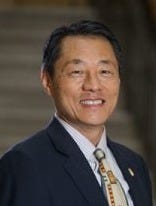
Young Choi, PhD is a Professor at Regent University bringing a rare combination of technical expertise and creative spirit to everything he does. A scholar in AI, cybersecurity, and network & telecommunications service management, he has published 38 books including AI and cybersecurity area books, over 200 refereed articles, and over 20 book chapters. Beyond the academy, Dr. Choi is a passionate poet, essayist, calligrapher, and wooden block laser engraving artist whose reflective writing invites readers to rediscover life’s beauty in quiet contemplation(靜觀). He lives under the motto: “Study hard and give generously without holding back! (열심히 공부해서 아낌없이 남주자 !: 열공아남!)”
Published books: https://www.amazon.com/stores/Young-Choi/author/B0DMZ5S6R7?ref=ap_rdr&shoppingPortalEnabled=true