
Book Review on Hyugarok (Record of a Vacation)
The Wisdom of Life Found in Rest
Reading “Hyugarok (휴가록(休暇錄))” (Record of a Vacation) in Volume 8 of Gani-jip reminded me that rest is an essential part of life. We often believe that working hard is the key to success, but this work gently teaches us that taking time to pause, reflect, and renew ourselves is just as important. True rest is not a sign of laziness but a source of strength for the future.
In this work, the author temporarily steps away from his busy official duties and spends time in nature, allowing both his body and mind to recover. His vacation is much more than a break from work. It becomes an opportunity to reflect on his life, reorganize his thoughts, and regain the energy needed for the responsibilities ahead. This message remains meaningful even in today’s fast-paced world.
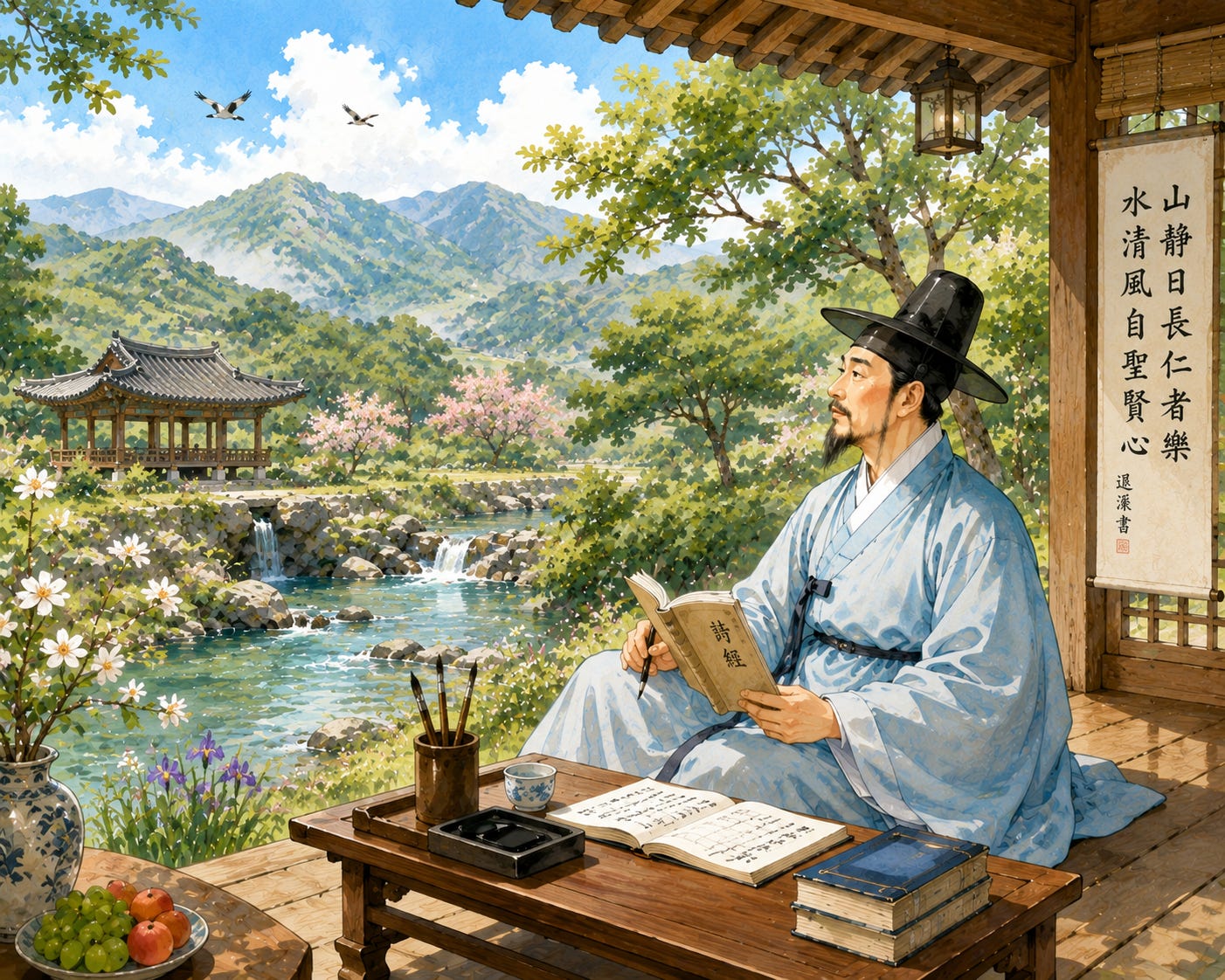
One of the most beautiful aspects of Hyugarok is its vivid description of nature. Green mountains, clear valleys, refreshing breezes, and the songs of birds are portrayed with remarkable elegance. As I read these passages, I felt as if I were standing beside the author, breathing the fresh air and enjoying the peaceful scenery. The book reminds us that nature has the power to heal not only our bodies but also our hearts.
Even during his vacation, the author never stops learning. He reads books, writes poetry, and spends time in thoughtful reflection. His example shows that genuine rest is not simply doing nothing; it is an opportunity for personal growth and intellectual renewal. Rest and learning can enrich one another rather than stand in opposition.
While reading this work, I found myself thinking about modern life. Many of us live under constant pressure, surrounded by smartphones, computers, and endless responsibilities. Even when our bodies are resting, our minds often remain busy. Hyugarok quietly encourages us to slow down, disconnect from constant distractions, and spend time reflecting on what truly matters.
Another quality that impressed me was the author’s humility. He does not treat his vacation merely as a time for personal pleasure. Instead, he uses it as an opportunity to become a wiser and better person. Standing before the beauty of nature, he remains humble and reflects honestly on his own strengths and weaknesses. His attitude offers a valuable lesson for readers today.
The work also expresses the author’s deep love and respect for nature. As he observes the mountains, forests, flowing water, and gentle wind, he recognizes the harmony that exists between humanity and the natural world. His reflections remind us that human beings are part of nature, and that caring for the environment enriches both our lives and our communities.
Another important lesson from Hyugarok is that rest and learning are not opposites. Instead, they complement each other. Meaningful rest allows us to think more deeply, and deeper reflection leads to wiser decisions and a more fulfilling life. Rest is therefore not a waste of time but an investment in our future growth.
Perhaps the greatest lesson I learned from this book is that true success is not measured by how constantly we work. Instead, it comes from maintaining a healthy balance between work and rest while caring for our physical, emotional, and spiritual well-being. A balanced life is ultimately a more meaningful life.
In conclusion, Hyugarok is far more than a simple record of a vacation. It is a thoughtful essay on life, self-reflection, and the importance of finding wisdom through rest. By encouraging readers to spend time in nature, examine themselves honestly, and continue growing even during periods of rest, this timeless work offers comfort and inspiration to modern readers. Its message is as valuable today as it was centuries ago. +++
{Solti}
July 29, 2026
「휴가록 (休暇錄)」 독후감
쉼 속에서 배우는 삶의 지혜
『간이집』 제8권의 「휴가록 (休暇錄)」을 읽으며 가장 먼저 떠오른 생각은 “쉼도 삶의 중요한 일부이다.”라는 것이었다. 우리는 흔히 열심히 일하는 것만 중요하다고 생각하지만, 이 작품은 잠시 멈추어 자신을 돌아보는 시간 또한 삶을 더욱 풍요롭게 만든다는 사실을 보여 준다.
저자는 바쁜 공무에서 잠시 벗어나 자연 속에서 몸과 마음을 쉬며 자신을 성찰한다. 휴가는 단순히 일을 쉬는 시간이 아니라 삶을 다시 정리하고 새로운 힘을 얻는 시간이라는 점을 차분하게 이야기한다. 이러한 모습은 오늘날을 살아가는 우리에게도 큰 공감을 준다.
이 작품에서 가장 아름다운 부분은 자연에 대한 묘사이다. 푸른 산과 맑은 계곡, 시원한 바람과 새소리까지 세밀하게 표현되어 있어, 글을 읽는 것만으로도 마음이 편안해지는 느낌을 받았다. 자연은 사람의 몸뿐 아니라 마음까지 치유해 준다는 사실을 다시 한번 깨닫게 되었다.
또한 저자는 쉬는 동안에도 배움을 멈추지 않는다. 책을 읽고 시를 짓고 깊이 생각하며 자신의 삶과 학문을 더욱 성숙하게 만든다. 진정한 휴식은 아무것도 하지 않는 시간이 아니라 자신을 성장시키는 시간이라는 점이 인상 깊었다.
이 글을 읽으며 현대인의 삶을 떠올리게 되었다. 우리는 늘 바쁘게 살아가며 충분히 쉬지 못하는 경우가 많다. 휴대전화와 컴퓨터, 끝없는 업무 속에서 몸은 쉬어도 마음은 쉬지 못하는 날이 많다. 「휴가록」은 그런 우리에게 잠시 멈추어 자신을 돌아보라고 조용히 이야기해 준다.
저자의 겸손한 태도 역시 큰 감동을 준다. 그는 휴식을 특별한 즐거움으로만 여기지 않고, 자신을 더 좋은 사람으로 만들기 위한 기회로 받아들인다. 자연 앞에서 겸손해지고 자신의 부족함을 돌아보는 모습은 오늘날에도 본받을 만한 자세이다.
이 작품은 자연을 사랑하는 마음도 깊이 전해 준다. 저자는 산과 숲, 물과 바람을 바라보며 자연과 사람이 함께 살아가는 아름다움을 느낀다. 인간은 자연의 일부이며 자연을 소중히 여길 때 더 행복한 삶을 살아갈 수 있다는 메시지가 담겨 있다.
또한 「휴가록」은 쉼과 배움이 서로 반대되는 것이 아니라 서로를 더욱 풍요롭게 만든다는 사실을 보여 준다. 충분한 휴식이 있어야 더 깊이 생각할 수 있고, 깊은 생각은 다시 더 의미 있는 삶으로 이어진다. 휴식은 게으름이 아니라 더 나은 내일을 준비하는 과정이다.
무엇보다도 이 작품은 성공적인 삶의 의미를 다시 생각하게 만든다. 진정한 성공은 끊임없이 일하는 것이 아니라, 일과 쉼의 균형을 이루며 자신의 마음을 건강하게 지키는 데 있다는 점을 깨닫게 되었다.
결국 「휴가록」은 휴가를 기록한 글이면서도 인생의 지혜를 담은 아름다운 수필이다. 자연을 가까이하며 자신을 돌아보고, 쉼을 통해 더 큰 배움을 얻는 삶의 자세를 보여 준다. 그래서 오늘날 바쁜 현대인들에게도 깊은 위로와 소중한 교훈을 전해 주는 훌륭한 고전이라고 생각한다. +++
2026년 7월 29일
{솔티}

Prof. Dr. Young Choi (Editor in Chief) — Regent University
Young B. Choi is a Professor in the Department of Engineering & Computer Science at Regent University. He published 38 books with ‘Selected Readings in Cybersecurity’ (2018) (over 800 copies archived globally at university/college libraries around the world) and ‘Cybersecurity Applications and Artificial Intelligence’ (2023) available in seven major world languages. He proposed the world’s first global and universal telecommunications “Service Order Handling (SOH)” Model (T-SOH Model) (1995) with Dr. Adrian Tang. With this innovative research work, he received the IEEE NOMS ’96 Best Paper Award and became the first recipient of the Outstanding Contribution Award of the TeleManagement Forum in 1998. His research areas include Natural Language Processing-focused AI, AI-applied cybersecurity, network and telecom service management, and Korean studies on Gani Choi Rip’s Jeonggwan (靜觀: Quiet Contemplation) philosophy and Shilhak ( 實學: Practical Learning).