
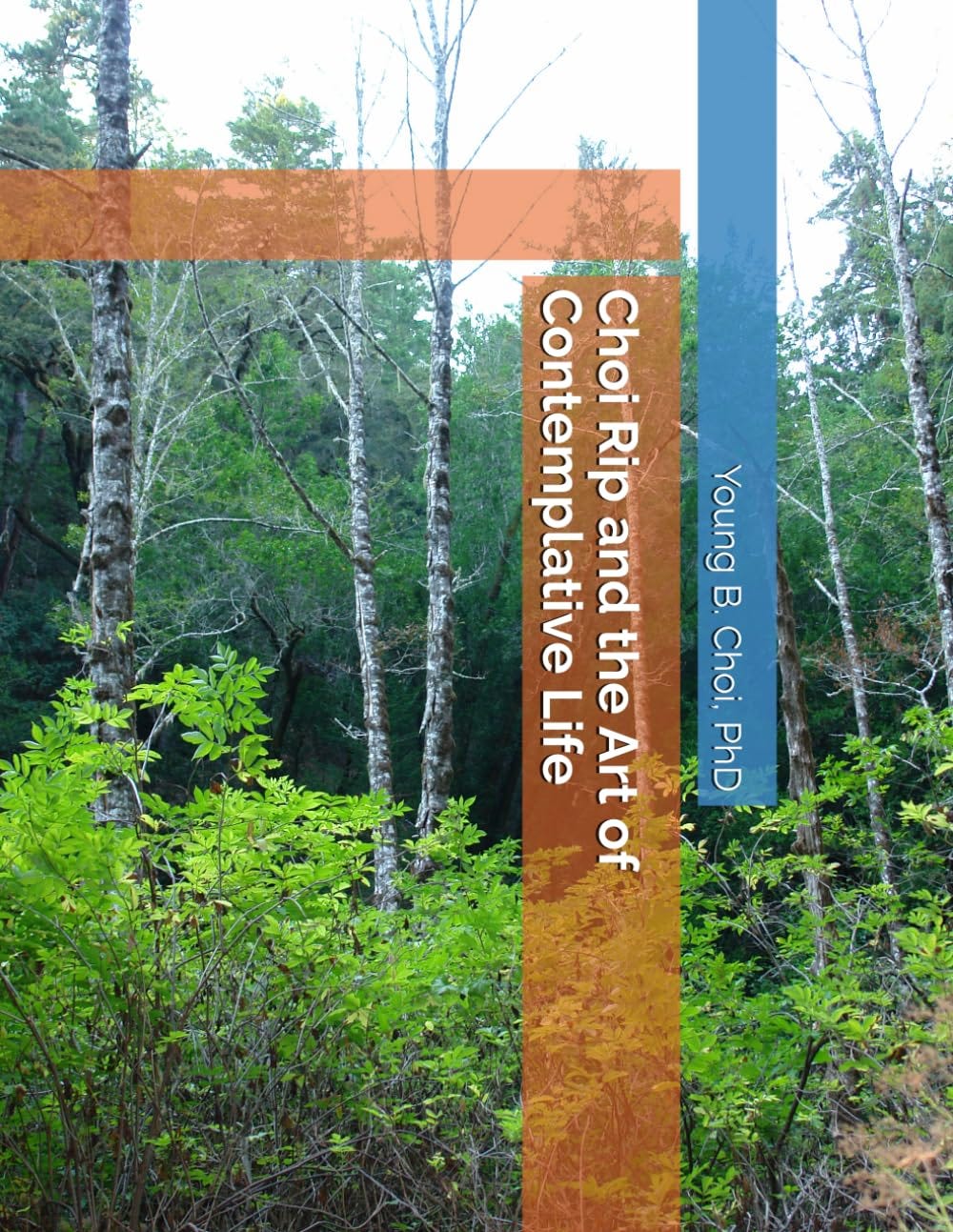
Choi Rip and the Art of Contemplative Life: 崔岦と観照的な生の芸術
https://www.amazon.co.jp/dp/B0GYJXP4J2
The Power of Quiet Seeing — Choi Rip and the Recovery of Humanity in the 21st Century
A Review of Choi Rip and the Art of Contemplative Life
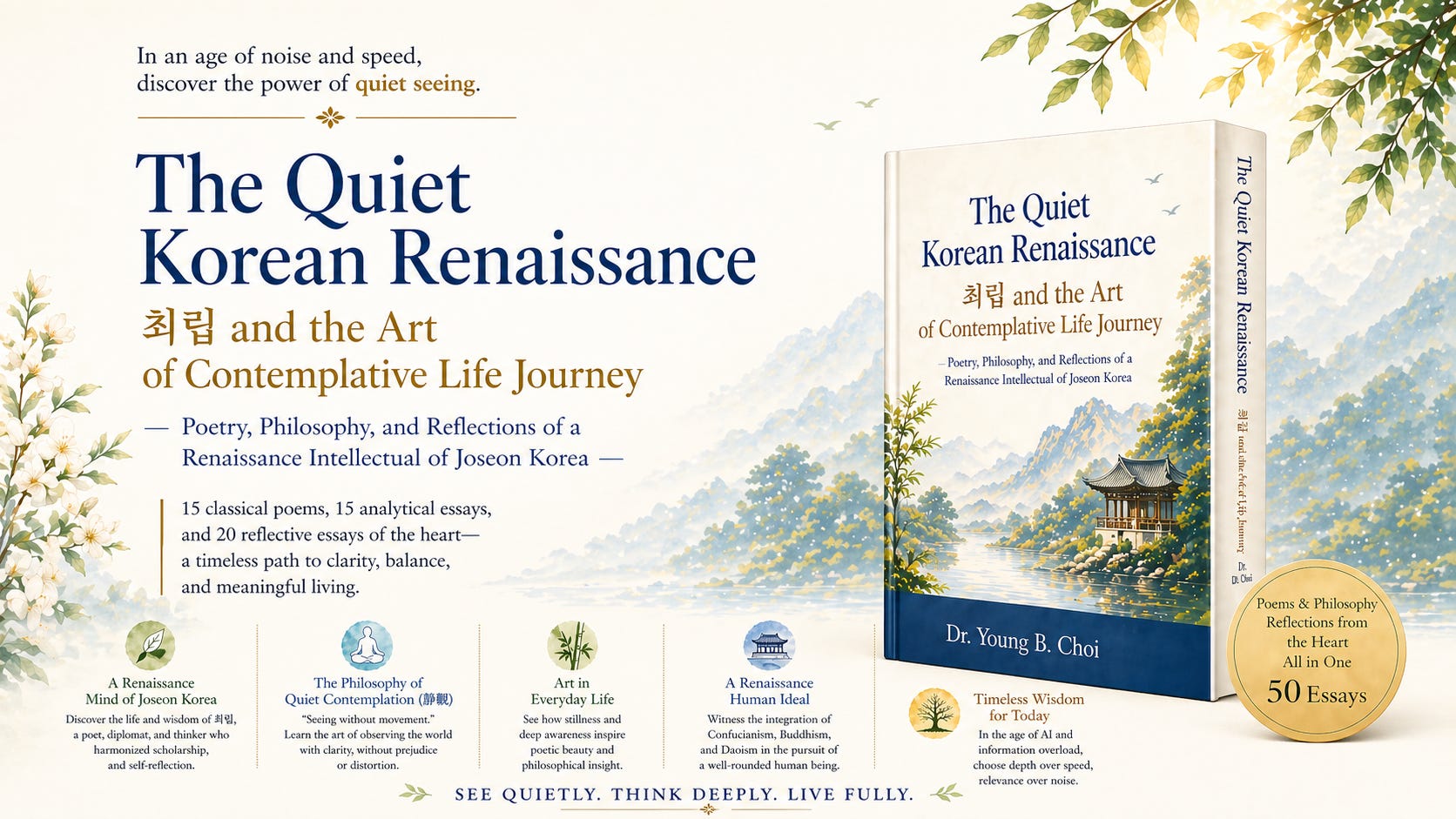
Choi Rip and the Art of Contemplative Life / By Young B. Choi / Published April 25, 2026
We live in an age that worships speed. Algorithms fragment our attention, and AI delivers answers before we have even finished forming a thought. In such a time, what meaning could a 400-year-old Joseon scholar’s lifelong practice of jeonggwan (靜觀) — the art of still, attentive seeing — possibly hold for us? That was the question I carried when I opened this book. By the time I closed it, the question had become a conviction.
A Giant Too Long Overlooked
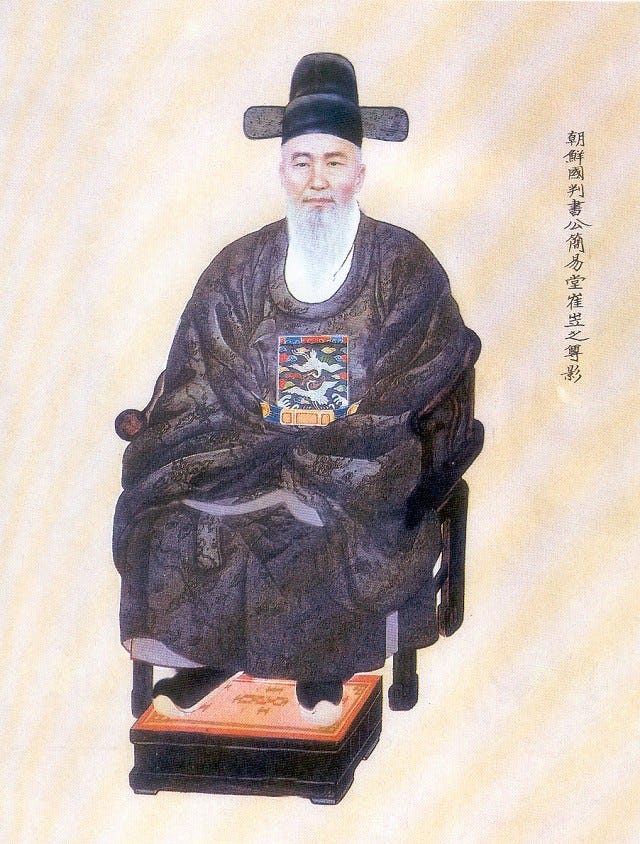
Choi Rip (崔岦, 1539–1612) stands among the defining Confucian thinkers of the Joseon dynasty. Yet his name remains far less familiar than those of his contemporaries — Yi Hwang (Toegye) or Yi I (Yulgok). He lived in the same era, earned distinction as a diplomat even in China, and left behind exceptional work across poetry, calligraphy, and prose. And yet history has not given him the recognition he deserves. This book is a serious attempt to fill that gap — and a remarkably timely act of restoration.
A Descendant Carrying the Ancestor’s Wisdom
What makes this book especially compelling is the identity of its author. Professor Young Choi (Regent University, USA) is a descendant of Choi Rip. He has spent his career as a computer scientist and business scholar, navigating the world of technology and data. Now, at the dawn of the AI era, he has turned toward something technology alone cannot provide — and he finds it in his ancestor’s philosophy. This is not family pride dressed up as scholarship. It is a question pulled from the deepest register of human experience, asked by a man who stands at the frontier of technological change. That tension gives the entire book its quiet urgency.
Jeonggwan (靜觀) — A Common Language Across Eastern Thought
The book’s central concept is jeonggwan (靜觀) — still, observant seeing. The author does not present this as a narrowly Confucian virtue. He shows how three great traditions of Eastern thought — Confucianism, Buddhism, and Daoism — each point, in their own idiom, toward the same inner practice. Confucianism names it seonggchal (省察), reflective self-examination. Buddhism calls it gwan (觀), clear seeing. Daoism expresses it as the watchful stillness of wu wei (無爲). Choi Rip was a rare figure who wove all three into a single life.
In the language of Western scholarship, this resonates deeply with Donald Schön’s concept of Reflective Practice — the capacity to observe oneself in action, and after action, as the mark that distinguishes a true professional from a mere technician. Choi Rip was living and writing that practice 400 years before Schön named it.
What the Humanities Ask of the Technological Age
In a world where AI writes, diagnoses, and decides on our behalf, we risk forgetting something essential: technology has no sense of direction. It can move very fast, but where to go remains a human question. The capacity to answer it — to see clearly, to reflect quietly, to resist the pressure to judge too soon — is precisely what jeonggwan offers the 21st century.
The author does not preach this point. He demonstrates it — through close readings of fifteen classical Chinese poems by Choi Rip, and through twenty of his own contemplative essays. He guides the reader toward the conclusion rather than announcing it. That is the mark of a good teacher.
Why This Book Deserves Your Time
I would press this book into the hands of two kinds of readers in particular.
First, leaders and practitioners wrestling with the balance between technology and humanity. Whether you work with AI, lead organizations, or design learning — the philosophy of jeonggwan can help you recover the inner compass that the pace of modern life so easily strips away.
Second, readers who have felt drawn to Eastern classical thought but put off by the barriers to entry. This book is designed to bring Choi Rip’s world within reach without requiring specialized knowledge of classical Chinese literature. Poetry and essay sit alongside each other, and the classical speaks in a voice that the present can hear.
Everywhere today, the conversation turns to what technology can and cannot replace in human beings. One capacity that Choi Rip spent a lifetime refining — the power to see oneself clearly and without hurry — is something no AI can replicate. Where that power comes from, and how it is cultivated, this book shows quietly and with great conviction.
Read it slowly. Choi Rip would have insisted on nothing less.
静かに見つめる力 — 崔岦と21世紀における人間性の回復
『崔岦と観照的な生の芸術』書評
私たちは今、速さを崇拝する時代に生きている。アルゴリズムは私たちの注意を細かく刻み、AIは思考が完成する前に答えを差し出す。そんな時代に、400年前の朝鮮の一人の儒者が生涯をかけて実践した「静観(靜觀)」という思索の様式が、はたして現代においていかなる意味を持ちうるのか。本書を開く前、私はそんな問いを抱えていた。読み終えた時、その問いは確信へと変わっていた。
長く見過ごされてきた巨人
崔岦(崔岦、1539–1612)は、朝鮮王朝を代表する儒学思想家の一人である。しかしその名は、同時代を生きた李滉(退溪)や李珥(栗谷)に比べ、はるかに知られていない。同じ時代に生き、外交官として中国でも名声を博し、詩・書・散文のすべてにわたって卓越した業績を残した。それでもなお、歴史は彼に十分な光を当ててこなかった。本書はその空白を埋めようとする真摯な試みであり、同時に、きわめて時宜を得た復元の作業である。
子孫が伝える先祖の知恵
本書をとりわけ特別なものにしているのは、著者の立ち位置である。崔榮培(ヤング・B・チョイ)教授(米国リージェント大学)は、崔岦先生の子孫である。コンピュータ科学者にして経営学の研究者として、長年にわたり技術とデータの世界を探究してきた人物が、AI時代の到来を前に、技術だけでは埋められない何かを直感し、先祖の哲学へと目を向けた。これは単なる家系への誇りではない。技術変革の最前線に立つ学者が、人間経験の最も深い場所から引き出した問いである。その緊張感が、本書全体を静かな切迫感とともに貫いている。
静観 — 東洋思想に共通する言語
本書の核心概念は「静観」、すなわち静かに、注意深く見つめることである。著者はこれを狭義の儒教的徳目として提示するのではない。儒教・仏教・道教という東洋の三大思想の伝統が、それぞれ異なる言葉をもちながらも、最終的に同じ内面の実践を指し示していることを明らかにする。儒教はこれを「省察(성찰)」と呼び、仏教は「観(觀)」と名づけ、道教は「無為(無爲)」の静かな見守りとして表現する。崔岦は、この三つの伝統を一つの生のなかに織り込んだ、稀有な存在であった。
西洋学術の言葉で言えば、これはドナルド・ショーン(Donald Schön)が提唱した「省察的実践(Reflective Practice)」と深く共鳴する。行為のなかで、そして行為の後に自己を観察する能力こそが、真の専門家を単なる技術者から区別するとショーンは論じた。崔岦はその実践を、ショーンがそれを名づけるはるか400年前に、詩と生き方をもって体現していた。
技術の時代に人文学が問いかけるもの
AIが文章を書き、診断を下し、判断を代行する世界において、私たちは容易に忘れてしまう——技術には方向感覚がない、という事実を。速く走ることはできても、どこへ向かうべきかを決めるのは依然として人間である。その問いに答えるための能力——明晰に見つめ、静かに省察し、急いで判断することを慎む力——こそが、静観が21世紀に届けるメッセージである。
著者はこの点を説教しない。崔岦の漢詩十五編の精読を通じて、そして自らの二十篇の観照的随筆を通じて、読者が自らその結論へと至るよう静かに導いていく。それは優れた教育者のやり方である。
この本があなたの時間に値する理由
私は特に二種類の読者に、この本を強く薦めたい。
一つ目は、技術と人間性のバランスに向き合うリーダーや実務家である。AIを扱う仕事であれ、組織を率いる立場であれ、学びを設計する役割であれ——静観の哲学は、現代の速度が容易に奪い去る内なる羅針盤を取り戻す助けとなるだろう。
二つ目は、東洋の古典思想に関心はあっても、入口の高さに戸惑ってきた読者である。本書は、漢文学の専門知識がなくても崔岦の世界へ自然に入っていけるよう設計されている。詩とエッセイが並び置かれることで、古典は現代の言葉で語りかけてくる。
技術が人間の何を代替できて何を代替できないか——その問いがあらゆる場所で交わされる今、崔岦が生涯をかけて磨き上げた一つの能力だけは、いかなるAIも模倣することができない。急がず、静かに自己を見つめる力。その力がどこから来るのか、どのように育まれるのかを、本書は静かに、そして力強く示している。
ゆっくりと読んでほしい。崔岦であれば、きっとそう言ったに違いない。
『崔岦と観照的な生の芸術』/崔榮培 (ヤング・B・チョイ)著/2026年4月25日刊行
고요히 바라보는 힘 — 최립과 21세기 인간성의 회복
『최립과 관조적 삶의 예술』 / 최영배 저 / 2026년 4월 25일 출간
『최립과 관조적 삶의 예술』을 읽고
우리는 지금 빠름을 숭배하는 시대에 살고 있다. 알고리즘은 우리의 주의를 분산시키고, AI는 우리가 미처 생각을 완성하기도 전에 답을 내놓는다. 이런 시대에 400년 전 조선의 한 선비가 평생 실천한 ‘정관(靜觀)’이라는 사유 방식이 무슨 의미를 가질 수 있을까. 이 책을 펼치기 전, 나는 그런 의문을 품었다. 책을 덮고 난 뒤, 그 의문은 확신으로 바뀌었다.
덜 알려진 거인
최립(崔岦, 1539–1612)은 조선을 대표하는 유학 사상가 중 한 명이다. 그러나 솔직히 말하자면, 그의 이름은 퇴계 이황이나 율곡 이이에 비해 훨씬 낯설다. 같은 시대를 살았고, 외교관으로서 중국에서도 문명을 떨쳤으며, 시·서·산문 모든 분야에서 탁월한 업적을 남겼음에도 불구하고, 그는 역사의 조명을 충분히 받지 못한 학자였다. 이 책은 그 공백을 채우려는 진지한 시도이며, 동시에 매우 시의적절한 복원 작업이다.
후손이 전하는 선조의 지혜
이 책을 더욱 특별하게 만드는 것은 저자의 정체성이다. 최영배 교수(Regent University, USA)는 최립 선생의 후손이다. 그는 컴퓨터 공학자이자 비즈니스 분야의 학자로, 평생 기술과 데이터의 세계를 탐구해온 인물이다.

Prof. Dr. Young Choi — Regent University
그런 그가 AI 시대를 맞아 기술만으로는 채울 수 없는 무언가를 직감하고, 선조의 철학으로 눈을 돌렸다. 이것은 단순한 가계(家系)의 자랑이 아니다. 기술의 최전선에 서 있는 학자가 인간 본성의 깊은 곳에서 길어 올린 질문이다. 그 긴장감이 이 책 전체를 관통한다.
정관(靜觀) — 동양 정신의 공통 언어
이 책의 핵심 개념은 정관, 즉 ‘고요히 바라봄’이다. 저자는 이것을 단순히 유교적 덕목으로 소개하지 않는다. 유교, 불교, 도교 — 동양의 세 주요 사상 전통이 표현 방식은 달라도, 결국 같은 내면의 실천을 가리키고 있음을 보여준다. 유교는 이것을 성찰(省察)로, 불교는 관(觀)으로, 도교는 무위(無爲)의 지켜봄으로 표현한다. 최립은 이 세 전통을 하나의 삶 속에서 통합한 드문 사례였다.
서양 학계의 언어로 말하자면, 이것은 도널드 쇤 (Donald Schön)이 말한 ‘성찰적 실천(Reflective Practice)’과 깊이 공명한다. 행동 속에서, 그리고 행동 이후에 스스로를 바라보는 능력 — 그것이 전문가를 단순한 기술자와 구별 짓는다고 쇤은 말했다. 최립은 그것을 400년 전에 이미 시(詩)와 삶으로 실천하고 있었다.
기술 시대에 인문학이 건네는 질문
AI가 글을 쓰고, 진단을 내리고, 판단을 대신하는 세상에서, 우리는 종종 잊는다 — 기술은 방향을 모른다는 사실을. 빠르게 달릴 수는 있지만, 어디로 달려야 하는지는 여전히 인간이 결정해야 한다. 그 결정을 위한 능력, 즉 깊이 바라보고, 조용히 성찰하고, 서두르지 않고 판단하는 힘 — 이것이 정관이 21세기에 전하는 메시지다.
저자는 이 점을 설교하지 않는다. 최립의 한시(漢詩) 열다섯 편을 분석하면서, 그리고 자신의 성찰적 수상(隨想) 스무 편을 통해서, 독자 스스로 그 결론에 이르도록 안내한다. 좋은 교육자가 하듯이.
이 책을 권하는 이유
이 책은 두 종류의 독자에게 특히 강하게 권하고 싶다.
첫째, 기술과 인간성의 균형을 고민하는 리더와 실무자들. 당신이 AI를 다루든, 조직을 이끌든, 교육을 설계하든 — 정관의 철학은 당신이 잃어버리기 쉬운 내면의 나침반을 다시 찾게 해줄 것이다.
둘째, 동양 고전에 관심은 있지만 진입 장벽을 느껴온 독자들. 이 책은 한학(漢學)의 전문 지식 없이도 최립의 세계로 자연스럽게 들어갈 수 있도록 설계되어 있다. 한시와 에세이가 나란히 놓이면서, 고전이 현재의 언어로 다가온다.
기술이 인간을 대체할 수 있는 것과 없는 것을 구분하는 논의가 어디서나 벌어지는 지금, 최립이 평생 갈고닦은 한 가지 능력만큼은 AI가 흉내 낼 수 없다. 고요히 자신을 바라보는 힘. 그 힘이 어디서 오는지, 이 책이 조용하고 단단하게 보여준다.
서두르지 말고 읽어라. 최립이라면 그렇게 말했을 것이다.

Prof. Dr. Jeonghwan (Jerry) Choi — Editor-in-Coordination, University of Maine at Presque Isle
Jeonghwan (Jerry) Choi, PhD is an Associate Professor of Business at the University of Maine at Presque Isle and Editor-in-Coordination of K-GSP Forum (contact: jeonghwan.choi@gmail.com). With over 25 years of industry and consulting experience, he specializes in leadership development, human resource management, organizational behavior, and social entrepreneurship. His research focuses on workforce resilience, organizational health, and self-directed leadership — bridging rigorous scholarship with practical insight to cultivate leaders who create meaningful, sustainable, and humane organizations .
© K-Global Schoalrs and Professionals Forum. All rights reserved. Content published in the K-GSP Forum may not be reproduced, distributed, or transmitted in any form without prior written permission from the K-GSP Forum, except for brief quotations with full attribution.