
Executive Summary
Baek-Kyoo Joo’s The Philosophy of Change (Parkyoung, 2026) argues that organizational change keeps failing because mainstream change theory assumes stability is normal and change is the exception. Drawing on Western process philosophy and East Asian thought, Joo proposes a process-dialogic approach to organization development built on five new concepts, with agilience at the center. This review reads the book as an important step toward a Korean and Asian voice in HRD.
Keywords: organizational change, organization development, process philosophy, East Asian thought, agilience
1. A Teacher I First Met Online
In the early 2000s, “human resource development” still sounded foreign to most people in Korea. Few companies used the term, and fewer people could explain what it covered. Around that time, Dr. Baek-Kyoo Joo began posting essays on talent development, leadership development, and organization development on Cyworld, the social network much of my generation lived on. For many readers, those posts were a first introduction to HRD as a field. I was one of them.
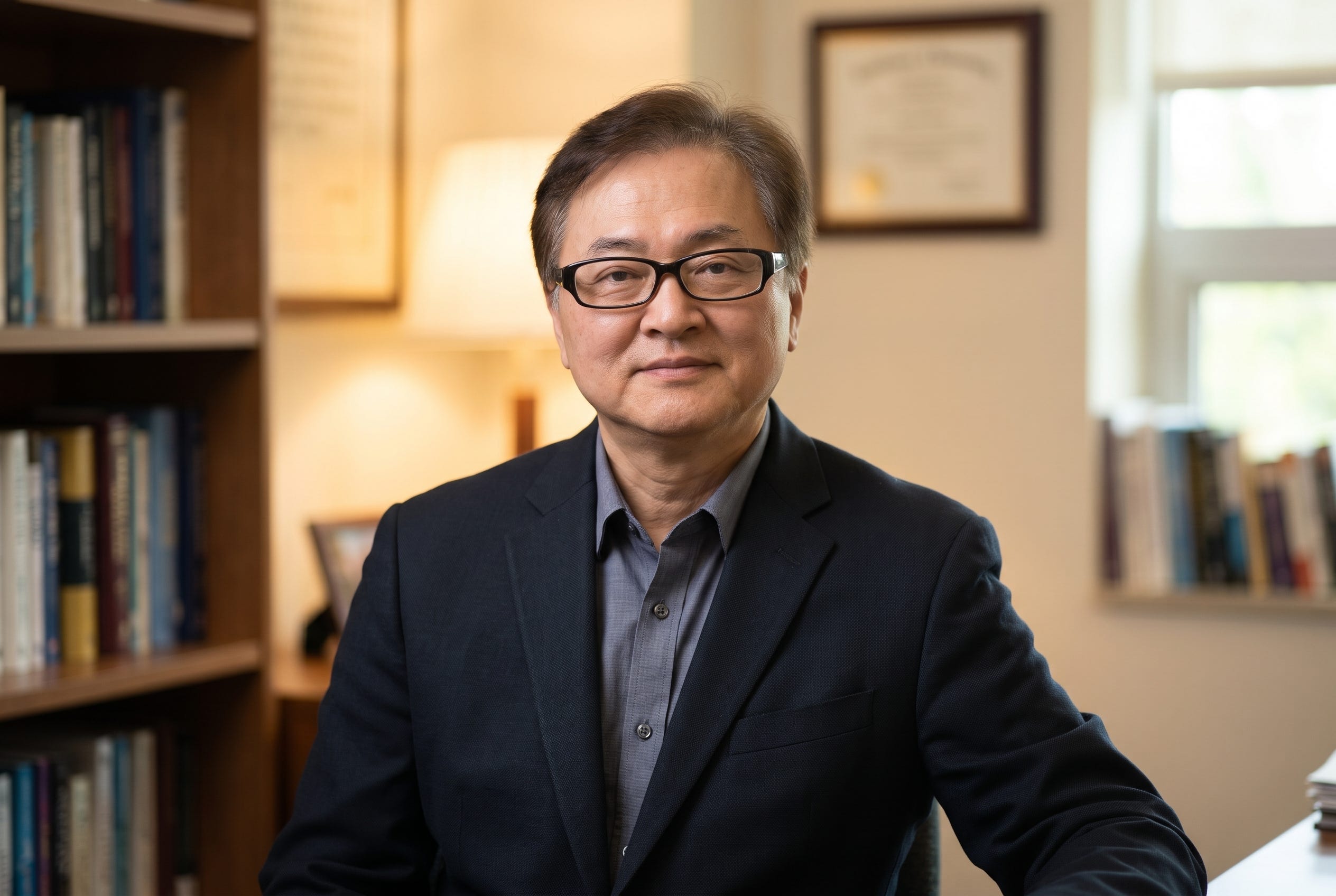
Photo: Prof. Dr. Baek-Kyoo Joo
His writing shaped my interest in developing people and leaders. Over time I followed a path much like his, to the United States, into HRD and leadership research, and into my work today as an HRD scholar and professor. When the K-GSP Forum began, he joined as one of our first invited authors, and he has stayed actively involved since.
So this review comes from a long-time reader, not a stranger. That is a reason to read his new book carefully rather than generously.
2. Rewriting Organizational Change from Its Foundations
The Philosophy of Change (변화의 철학), published by Parkyoung in January 2027, runs 364 pages across three parts and ten chapters. It starts from a plain question raised in the prologue: why are we so poor at change?
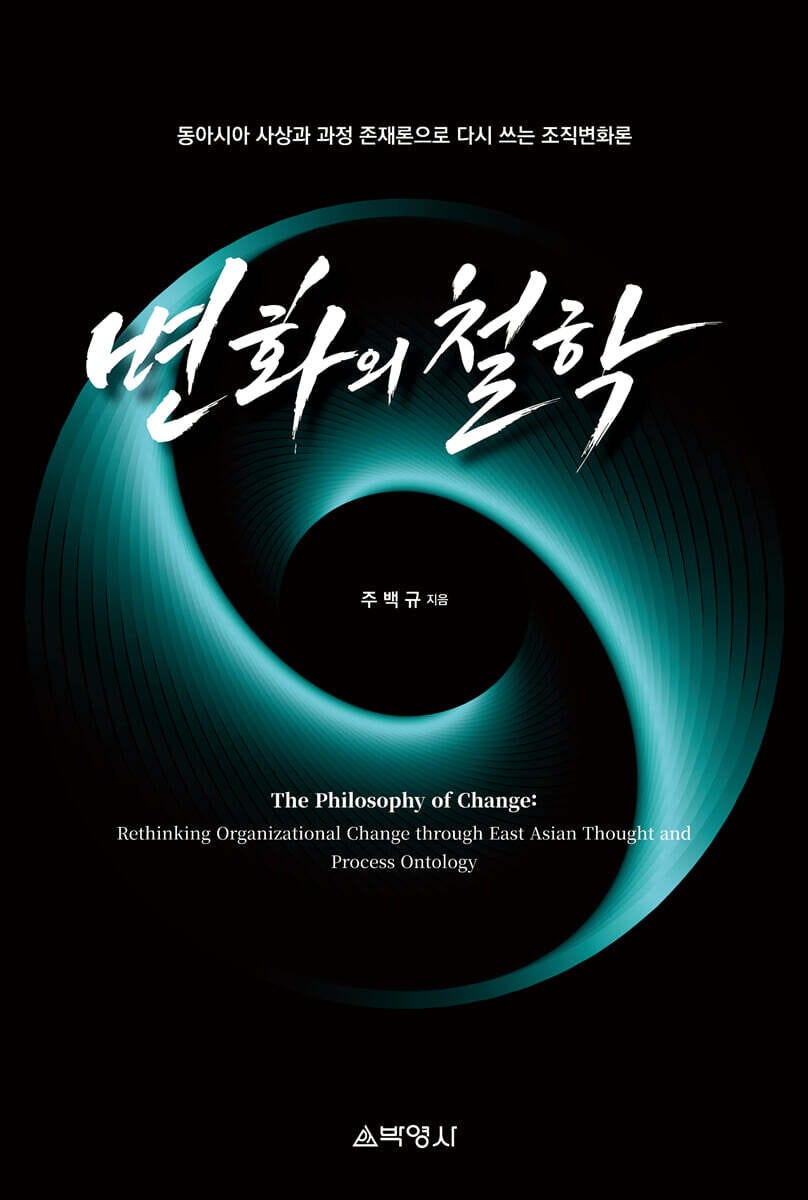
Figure 1: Book is available at Online Bookstore:
https://www.yes24.com/product/goods/201040705
2.1 The Hidden Premise Behind Change Management
Joo’s answer draws on 35 years inside change work. In 1989 he joined the newly created organization development section at Yukong, the predecessor of SK Innovation. After the 1997 financial crisis he moved to a U.S.-based HR consulting firm, and he later earned his master’s and doctoral degrees in HRD and OD at the University of Minnesota. In each setting he saw the same pattern. Workshops, surveys, and new systems seemed to produce change, and a few months later the organization looked much as it had before.
The book locates the trouble less in tools or people than in a shared premise. Lewin’s unfreeze-change-refreeze model, Kotter’s eight steps, Schein’s culture theory, and Senge’s learning organization all treat stability as the default and change as an exception applied from outside. Joo calls this premise substance ontology and traces it from Plato and Aristotle through modern science and management. Part 1 then follows a second Western line, the process philosophy of Heraclitus, Bergson, Whitehead, and Deleuze, which treats change as basic to reality. Chapter 5 reads Lewin, Kotter, Schein, Senge, Weick, and Dialogic OD through this lens. Weick comes closest to a process view, and Dialogic OD marks the most important shift, but Joo argues that both leave work unfinished.
2.2 East Asian Thought as a Partner, Not a Supplement
The book’s distinctive move comes next. Joo reads the Book of Changes, Daoism, Buddhism, and Confucianism, along with Korean thought such as Wonhyo’s hwajaeng (reconciling disputes) and the Donghak idea of gaebyeok (a new opening of the world), as working resources for organization theory rather than cultural decoration. His method is the mutual correction that Hall and Ames (1995) proposed for comparative philosophy, in which neither tradition wins and each fills the other’s gaps. In Joo’s reading, Whitehead is precise about how things become but says less about how to act within change, while East Asian thought is rich in ethical and practical guidance but less systematic.
From this meeting Joo coins five concepts, each given in Korean, Chinese characters, and English:
민응성 (敏應性), Agility: the capacity to respond quickly to signals of change
복탄성 (復彈性), Resilience: the capacity to recover from shocks and rise again
민탄성 (敏彈性), Agilience: the integration of agility and resilience, and the book’s central concept
지생력 (持生力), Sustainability as Regenerative Capacity: the capacity to sustain life while renewing oneself
공명자 (共鳴者), Resonator: a change facilitator who senses the flow of change and moves with it
Part 3 turns these ideas into practice: diagnosing organizations through the four capacities and a fifth item, resonance capacity; a developmental path for resonator leaders; five modes of change dialogue; and implementation through 90-day learning cycles that build over six and twelve months.
2.3 Where Readers Will Want More
The book’s diagnosis opens from the familiar claim that about 70 percent of change initiatives fail. Joo uses the figure with some care, stressing that the rate has not declined rather than the number itself. Readers should still know that Hughes (2011) found no valid and reliable empirical evidence for a single 70 percent failure rate. The argument does not depend on the exact figure, and it would stand more firmly without it.
The five concepts are also new. Their value will depend on whether researchers can define and measure them, and on whether agilience explains anything that agility and resilience do not explain separately. Joo appears aware of this. Several chapters end with sections on honest limits, and the conclusion names the follow-up work still needed. That candor is one of the book’s strengths.
3. Toward a Korean Voice in HRD
HRD grew up as an American field, and Korean scholars, myself included, mostly learned it in translation. Dr. Joo has long pushed in the other direction, asking what HRD and leadership development look like when they begin from Korean and Asian experience. This book is the fullest form of that effort so far.
Joo is modest about the larger claim. He writes that he does not want to raise a big K-management flag and would leave that to the next generation. As one of the readers who started with his Cyworld posts, I read the book as groundwork for exactly that next step: a vocabulary written in Korean, anchored in Chinese characters, and ready for English, for HRD and leadership development suited to a world where change is the normal condition.
The book’s conclusion states its thesis directly: change is not an object of management but a way of being. If that is right, the question for leaders and HRD professionals shifts. It is no longer how to control change, but whether we can learn to resonate with it.
References
Hall, D. L., & Ames, R. T. (1995). Anticipating China: Thinking through the narratives of Chinese and Western culture. State University of New York Press.
Hughes, M. (2011). Do 70 per cent of all organizational change initiatives really fail? Journal of Change Management, 11(4), 451–464. https://doi.org/10.1080/14697017.2011.630506
Joo, B.-K. (2027). 변화의 철학: 동아시아 사상과 과정 존재론으로 다시 쓰는 조직변화론 [The philosophy of change: Rewriting organizational change theory through East Asian thought and process ontology]. Parkyoung.
About the Author

Prof. Dr. Jeonghwan (Jerry) Choi (Managing Editor)
Full list of his K-GSP columns:
Jeonghwan (Jerry) Choi, PhD is Editor-in-Coordination of K-GSP Forum (contact: jeonghwan.choi at gmail.com). With over 25 years of industry and consulting experience, he specializes in leadership development, human resource management, organizational behavior, and social entrepreneurship. His research focuses on workforce resilience, organizational health, and self-directed leadership — bridging rigorous scholarship with practical insight to cultivate leaders who create meaningful, sustainable, and humane organizations.
Suggested Citation
Choi, J. (2026, November 17). Change is not the exception: Baek-Kyoo Joo’s The Philosophy of Change and the search for an East Asian voice in HRD. K-GSP Forum.
Original Article:

한글요약
주백규 박사의 『변화의 철학』과 HRD의 동아시아적 목소리
2000년대 초반, 인적자원개발(HRD)이라는 말이 아직 낯설던 시절에 주백규 박사님은 싸이월드에 인재개발, 리더십 개발, 조직개발에 관한 글을 올리며 많은 사람에게 HRD를 처음 알렸습니다. 필자도 그 글을 읽으며 이 분야에 관심을 키웠고, 그 길을 따라 미국에서 HRD 학자이자 교수로 일하고 있습니다. 주 박사님은 K-GSP Forum의 초기 초청 저자로 참여한 뒤 지금까지 함께하고 있습니다.
새 책 『변화의 철학』(박영사, 2027)은 왜 조직 변화가 이렇게 자주 실패하는지를 묻습니다. 저자는 그 원인을 도구나 사람이 아니라 전제에서 찾습니다. 레빈, 코터, 샤인, 센게의 변화 이론은 모두 안정이 기본이고 변화는 예외라고 보는데, 저자는 이것을 실체론이라고 부르고 플라톤과 아리스토텔레스까지 거슬러 올라가 살핍니다. 그리고 베르그송, 화이트헤드, 들뢰즈의 과정 철학과 주역, 도가, 불교, 유교, 원효의 화쟁과 동학의 개벽 같은 한국 사상을 서로 비추어 보며, 민응성, 복탄성, 민탄성, 지생력, 공명자라는 다섯 가지 새 개념을 내놓습니다.
그 중심은 민첩성과 회복력을 하나로 묶은 민탄성입니다. 계획된 변화 (Planned Change) 노력의 70퍼센트 실패율이라는 통계는 근거가 약하다는 연구가 있고, 새 개념들은 앞으로 측정과 검증이 필요합니다.
이 책은 한국과 아시아의 경험에서 출발하는 HRD와 리더십 개발의 언어를 처음으로 크게 정리했습니다. 저자는 K-경영이라는 큰 깃발은 다음 세대에 맡기겠다고 말하지만, 필자는 이 책이 바로 그 다음 걸음의 토대가 된다고 봅니다.
© K-Global Schoalrs and Professionals Forum. All rights reserved. Content published in the K-GSP Forum may not be reproduced, distributed, or transmitted in any form without prior written permission from the K-GSP Forum, except for brief quotations with full attribution.