
Throughout our lives, we encounter countless people. Some attain high office, some devote themselves to scholarship, and others quietly serve their families and communities without recognition. Yet as time passes, people depart, and memories gradually fade. How, then, can a person’s life endure beyond death?
While reading Volume II of Ganijip, I found myself reflecting on this very question. Choi Rip (1539–1612), one of the most distinguished writers of the Joseon Dynasty, seems to offer an answer. This volume is neither a collection of poetry nor a book of political essays. Rather, it is a remarkable compilation of memorial inscriptions, epitaphs, tombstone writings, and commemorative records that preserve the lives of people who once walked the earth. In modern terms, it may be described as a collection of biographies, memorial tributes, and historical narratives.
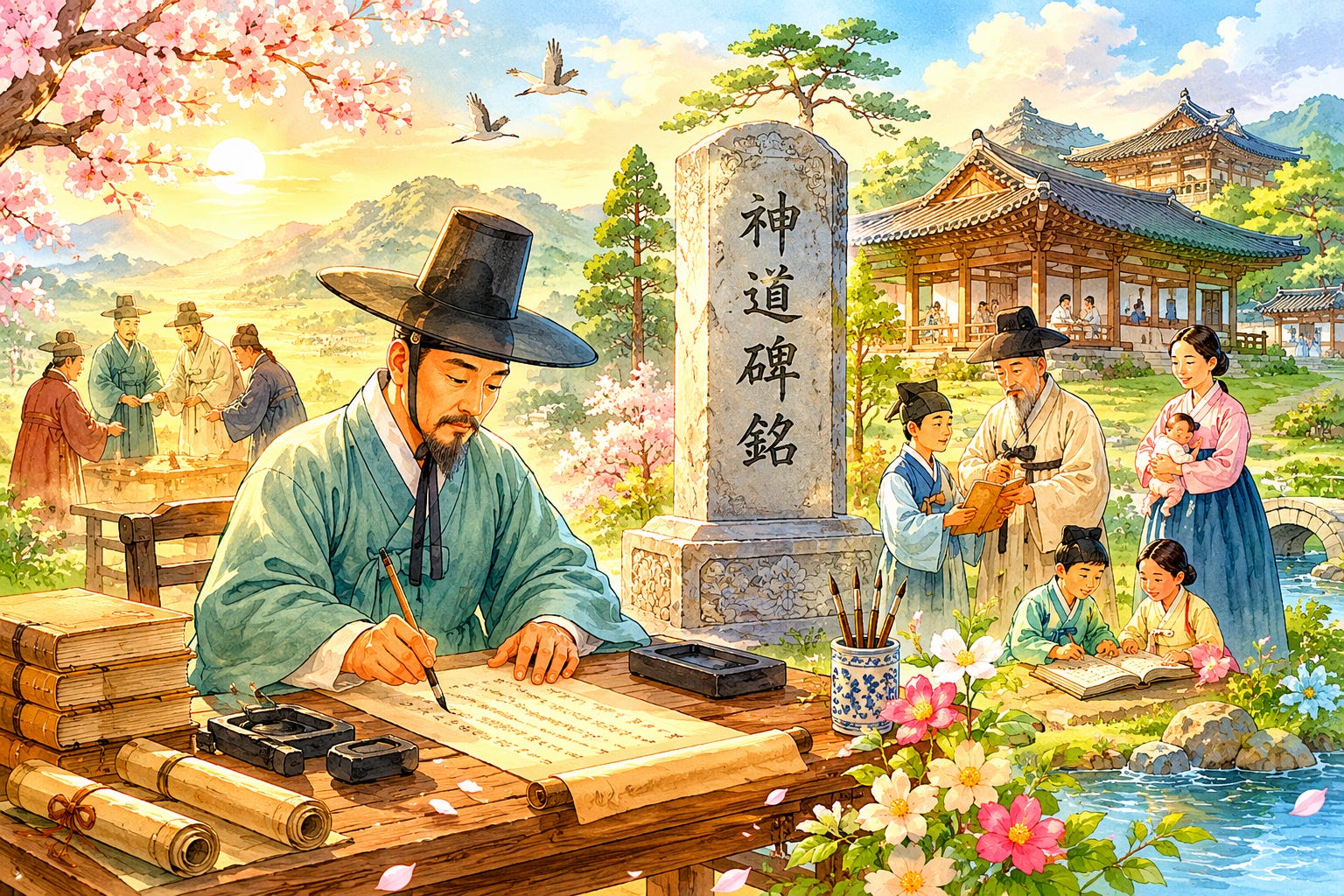
The volume opens with a series of memorial inscriptions written for notable individuals. In Joseon Korea, memorial steles were erected along the road leading to a person’s tomb to commemorate his life and achievements. Yet Choi Rip did far more than list official titles and accomplishments. He sought to reveal the character of each individual—the values they embraced, the virtues they practiced, and the reasons they deserved to be remembered. Reading these inscriptions feels less like studying a chronological record and more like encountering vivid portraits of living human beings.
One of the most striking aspects of Choi Rip’s writing is that he valued character above status. Those who occupied high positions were not automatically praised, while individuals of modest rank who lived with integrity and sincerity received his heartfelt admiration. His writings reveal a conviction that a person’s worth should be measured not by power or wealth but by moral character. Such a perspective remains deeply relevant in any age.
As the reader moves into the sections devoted to epitaphs and tomb inscriptions, Choi Rip’s understanding of humanity becomes even more apparent. He carefully records a person’s origins, education, public service, family relationships, and personal conduct. In doing so, he seems to speak directly to future generations: “This is how this person lived. Learn from the example they have left behind.” These inscriptions are therefore much more than funeral texts; they become lessons in the art of living a meaningful life.
Particularly noteworthy is the inclusion of memorial writings for women as well as men. Choi Rip believed that the lives of exemplary mothers and wives deserved preservation in historical memory. Considering the male-centered nature of Joseon society, this perspective is especially significant. He recognized that the moral strength of families and communities often rested upon the devotion, wisdom, and sacrifices of women. Their contributions, he believed, were no less worthy of remembrance than those of government officials and scholars.
The volume also reveals the depth of personal relationships in Joseon society. The bonds between teachers and students, friends and colleagues, superiors and subordinates extended far beyond formal obligations. Loyalty, friendship, filial devotion, and integrity formed the moral fabric of society. By recording these relationships, Choi Rip demonstrates his belief that trust and virtue are essential foundations for any flourishing community.
The later sections of the book contain a variety of commemorative essays describing academies, pavilions, studies, gardens, and other structures. These writings offer a different kind of pleasure. Rather than merely describing architecture, Choi Rip explains why these places were built and what ideals they embodied. As a result, readers come to see not simply buildings but the aspirations, values, and dreams of the people who created them.
Essays such as those on Yeongcheongdang, Ssangchwiheon, and other scholarly retreats illustrate that physical spaces were viewed as extensions of the human spirit. For Joseon scholars, a study hall or pavilion was not merely a place of residence; it was a setting for learning, reflection, self-cultivation, and friendship. The true beauty of a place lay not in its grandeur but in the virtues it encouraged and nurtured.
The greatest value of this volume lies in its exploration of what it means to live a worthy life. Choi Rip consistently admired those who lived rightly rather than those who merely achieved success. He respected integrity more than wealth, public service more than personal ambition, and devotion to the common good more than social prestige. Consequently, his memorial writings transcend their historical context and become reflections on the enduring values that define human excellence.
Today, in an age of artificial intelligence and digital technology, humanity possesses unprecedented capacity to record and store information. Yet the abundance of information does not guarantee meaningful remembrance. Ultimately, what future generations remember is not the titles people held or the possessions they accumulated, but the character they displayed and the lives they touched. This is precisely what Choi Rip sought to preserve in stone and in prose more than four centuries ago.
Volume II of Ganijip is therefore not simply a book about the dead. It is a book for the living. It asks a timeless question: What kind of life is worthy of remembrance? Choi Rip answers with quiet clarity. A meaningful life is not defined by power, wealth, or fame, but by virtue, responsibility, compassion, and service to others. For this reason, his writings continue to resonate across the centuries, reminding us that the true measure of human greatness lies in the goodness we leave behind. +++
{Solti}
June 3, 2026
[독후감] 돌에 새긴 인간의 품격
《간이집》 제2권을 읽고
우리는 살아가면서 수많은 사람을 만난다. 어떤 이는 높은 벼슬을 지내고, 어떤 이는 학문에 평생을 바치며, 또 어떤 이는 이름 없이 이웃을 위해 살아간다. 그러나 시간이 흐르면 사람은 떠나고 기억은 희미해진다. 그렇다면 한 사람의 삶은 어떻게 후세에 남게 될까?
《간이집》 제2권을 읽으며 나는 조선의 문장가 최립이 바로 그 질문에 답하고 있다는 생각이 들었다. 이 책은 시를 모은 책도 아니고 정치 논설집도 아니다. 오히려 한 시대를 살았던 사람들의 삶을 돌에 새기고 글에 남긴 기록의 집합체이다. 오늘날로 말하면 전기문, 추모문, 역사 기록을 한데 모은 책이라 할 수 있다.
제2권의 첫 부분은 여러 인물의 신도비명으로 시작된다. 신도비는 훌륭한 인물이 세상을 떠난 뒤 무덤으로 가는 길목에 세우는 비석이다. 최립은 이 비문들을 쓰면서 단순히 관직 경력만 나열하지 않았다. 그는 그 사람이 어떤 마음으로 살았는지, 어떤 덕을 실천했는지, 그리고 왜 후세 사람들이 기억해야 하는지를 이야기한다. 그래서 비문을 읽다 보면 죽은 사람의 연대기가 아니라 살아 있는 인간의 초상화를 만나는 듯하다.
특히 흥미로운 점은 최립이 벼슬의 높고 낮음보다 인품을 더 중요하게 여겼다는 사실이다. 높은 자리에 올랐더라도 덕이 부족하면 칭송하지 않았고, 비록 관직이 크지 않더라도 성실하고 청렴하게 살아간 사람은 정성껏 기록했다. 이는 사람의 가치를 평가하는 기준이 권력이나 재산이 아니라 인격이라는 그의 신념을 보여 준다.
묘지명과 묘갈명에 이르면 그의 인간관은 더욱 뚜렷하게 드러난다. 그는 한 사람의 출생과 성장, 학문과 관직, 가족과 인간관계까지 세심하게 기록한다. 마치 후손들에게 “이 사람은 이렇게 살았습니다. 여러분도 그의 삶에서 배울 점을 찾아보십시오.”라고 말하는 듯하다. 그래서 묘지명은 단순한 장례 문서가 아니라 인생 교과서가 된다.
흥미롭게도 이 책에는 남성 관료들뿐 아니라 부인들의 묘지명도 적지 않게 실려 있다. 최립은 훌륭한 어머니와 아내의 삶 또한 역사 속에 남겨야 할 가치가 있다고 생각했다. 당시 사회가 남성 중심이었음을 생각하면 이는 매우 의미 있는 일이다. 그는 가정을 지키고 자녀를 훌륭하게 키운 여성의 덕행 역시 사회를 지탱하는 중요한 힘으로 보았다.
제2권을 읽다 보면 조선 사회의 인간관계가 얼마나 깊은 신뢰와 의리로 연결되어 있었는지도 알 수 있다. 스승과 제자, 친구와 동료, 상관과 부하 사이의 관계가 단순한 업무 관계를 넘어 인격적 유대로 이어졌다. 최립은 그러한 관계 속에서 드러난 충성, 우정, 효도, 청렴을 기록하며 그것이 사회를 유지하는 도덕적 토대라고 믿었다.
책의 후반부에 실린 여러 기문(記文)은 또 다른 즐거움을 준다. 서당, 정자, 누각, 서재, 정원 등 다양한 건축물과 장소에 관한 기록들이 등장한다. 단순히 건물의 모양을 설명하는 것이 아니라 왜 그 건물이 세워졌고 어떤 정신을 담고 있는지를 설명한다. 그래서 독자는 건물을 보는 것이 아니라 그 안에 담긴 사람들의 꿈과 이상을 보게 된다.
예를 들어 연구당기, 영청당기, 쌍취헌기 같은 글들은 한 공간이 단순한 건축물이 아니라 학문을 닦고 인격을 수양하는 장소였음을 보여 준다. 조선의 선비들에게 공간은 곧 정신의 표현이었다. 좋은 집보다 좋은 마음이 중요하다는 생각이 그 배경에 깔려 있다.
이 책의 가장 큰 가치는 한 시대의 인물들을 통해 인간다운 삶이 무엇인지를 묻는 데 있다. 최립은 성공한 사람보다 올바르게 산 사람을 높이 평가했다. 부유한 사람보다 청렴한 사람을 존경했고, 권력 있는 사람보다 공동체를 위해 헌신한 사람을 기억하려 했다. 그래서 그의 비문과 묘지명은 단순한 역사 자료를 넘어 삶의 가치에 대한 성찰이 된다.
오늘날 우리는 인공지능과 디지털 기술의 발전으로 엄청난 양의 정보를 기록하고 저장한다. 그러나 정보가 많다고 해서 모두 기억되는 것은 아니다. 결국 후세에 남는 것은 그 사람이 어떤 직책을 가졌는가보다 어떤 사람으로 살았는가이다. 최립이 수백 년 전 돌에 새기고 글에 남기려 했던 것도 바로 그것이었다.
《간이집》 제2권은 죽은 사람들의 이야기를 담은 책이 아니다. 오히려 지금 살아 있는 우리에게 “어떤 삶이 기억될 만한 삶인가?”를 묻는 책이다. 그리고 최립은 조용하지만 분명한 목소리로 답한다. 인간의 참된 가치는 권력이나 재산이 아니라 덕성과 책임, 그리고 타인을 위한 삶에 있다고. 그래서 그의 글은 400년이 지난 오늘에도 여전히 깊은 울림을 전해 준다. +++
{솔티}
2026년 6월 3일

Young Choi, PhD is a Professor at Regent University bringing a rare combination of technical expertise and creative spirit to everything he does. A scholar in AI, cybersecurity, and network & telecommunications service management, he has published 38 books including AI and cybersecurity area books, over 200 refereed articles, and over 20 book chapters. Beyond the academy, Dr. Choi is a passionate poet, essayist, calligrapher, and wooden block laser engraving artist whose reflective writing invites readers to rediscover life’s beauty in quiet contemplation(靜觀). He lives under the motto: “Study hard and give generously without holding back! (열심히 공부해서 아낌없이 남주자 !: 열공아남!)”
Published books: https://www.amazon.com/stores/Young-Choi/author/B0DMZ5S6R7?ref=ap_rdr&shoppingPortalEnabled=true