Yun, Jung. Shelter: A Novel. Picador, 2016. ISBN 978-1-250-11809-1. 336 pages, $22.99.
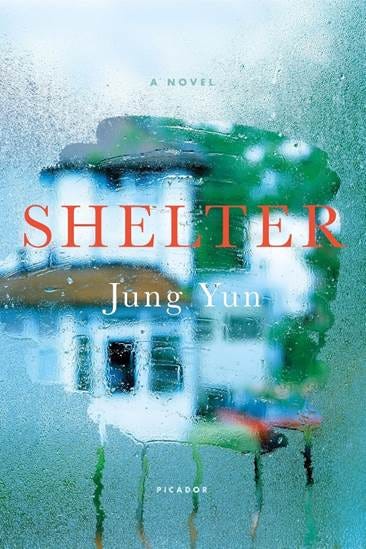
Cover image: Shelter: A Novel by Jung Yun. Image reproduced for purposes of review and commentary.
Shelter, a novel by Korean American author Jung Yun, combines the conventions of the thriller with those of the family drama to produce an emotionally compelling exploration of family, identity, and generational conflict. The novel portrays two generations of Korean Americans who have become estranged, reflecting the tensions that can emerge between first- and second-generation immigrants. Although they have lived apart for years, circumstances force them into close proximity following a violent invasion of the parents’ home, an event that leaves family members injured and their large mansion severely damaged. Kyung, the novel’s protagonist, must find a way to live with and reconcile with his parents despite having spent much of his life distancing himself from his Korean heritage. He speaks very little Korean and has married Gillian, a white American woman from an Irish American family whose parents and relatives include several police officers. Kyung’s efforts to construct an identity that is largely detached from his Korean background ultimately prove inadequate when the crisis forces him to confront the unresolved conflicts within his family and within himself. In this respect, Shelter moves beyond familiar narratives of immigrant achievement and the American Dream to ask a more difficult question: What happens to families once the dream has been achieved? Yun’s emotionally intense novel offers a deeply unsettling answer, suggesting that material success and social assimilation do not necessarily resolve the psychological wounds, cultural tensions, and intergenerational conflicts that families carry with them.
Jung Yun was born in Seoul, South Korea, and grew up in Fargo, North Dakota. She studied at Vassar College and the University of Pennsylvania before earning an M.F.A. in Creative Writing from the University of Massachusetts Amherst. Shelter, her debut novel, was a finalist for the Barnes & Noble Discover Great New Writers Award, the Center for Fiction’s First Novel Prize, and Goodreads’ Best Fiction Book of the Year. Her writing has appeared in Tin House, The Atlantic, The New York Times, and The Washington Post, among other publications. Her subsequent novels include O Beautiful (2021) and All the World Can Hold (2026). Yun currently lives in Baltimore and is an associate professor of English at George Washington University.
Kyung Cho, the protagonist of Shelter, is a thirty-six-year-old professor of biology who lives with his wife, Gillian, and their four-year-old son, Ethan. Kyung appears to have achieved many of the conventional markers of middle-class success, but beneath this outward appearance of fulfillment, his life is gradually unraveling. He and his wife are deeply in debt, and they are financially underwater in their expensive home, which is worth less than the amount they owe. At the same time, their marriage is increasingly strained.
Kyung’s financial circumstances are particularly troubling because his parents, Jin and Mae Cho, live only a few miles away in an affluent neighborhood in a house that is essentially a mansion. His parents have the financial resources to help him, but Kyung is deeply reluctant to ask for their assistance. His reluctance, however, is not simply a matter of pride or independence; it is rooted in the history of violence within his childhood home. His father, Jin, repeatedly abused his mother, Mae, and Kyung grew up experiencing the consequences of that abuse. Although his parents provided him with significant material advantages, including an excellent education, they failed to provide the affection, emotional security, and sense of safety that a child needs.
The central conflict of the novel begins when Kyung sees his mother walking toward his house naked and injured. She and Jin have been victims of a violent home invasion in which both were seriously injured, and their home was virtually destroyed. Because neither parent is capable of living independently in the aftermath of the attack, Kyung is placed in a position in which he has little choice but to take them into his home. The central irony of the novel is crucial: the son who has spent much of his adult life attempting to escape his parents must now provide them with shelter.
This situation brings three generations of the Cho family under one roof. Almost immediately, Kyung’s father, Jin, despite his history of violence, begins to develop a warm and affectionate relationship with his grandson, Ethan. Jin also contributes financially to the household, further complicating Kyung’s already conflicted feelings toward his father. Interestingly, Gillian begins to recognize qualities in Jin that Kyung either cannot or refuses to acknowledge. Rather than bringing the family together, however, their shared household intensifies Kyung’s resentment, jealousy, and anger.
The reader gains a deeper understanding of Kyung’s dilemma as the story develops. His childhood and complicated relationship with his parents reveal that the violence that initially appears straightforward becomes increasingly morally complex. Mae is a victim of Jin’s abuse, but she is not simply an innocent or sympathetic mother. Her treatment of Kyung during his childhood has contributed to his emotional wounds and shaped his understanding of family relationships. As a result, Kyung is simultaneously a victim of his parents and an adult capable of inflicting emotional pain on his own wife and son.
The novel resists making neat distinctions between victims and perpetrators. Within this family, violence becomes a form of inheritance, passed from one generation to the next in different forms. Kyung must therefore confront a question that has troubled him throughout much of his adult life: How can he become a good husband and father when he has never learned from his own parents what healthy love looks like? The possibility of forgiveness emerges, but Yun does not offer a simple resolution. Instead, the novel suggests that healing requires an acknowledgment of the complexity of the past without allowing that past to determine the future. Yun does not present this as an easy process, particularly when destructive attitudes and behaviors have been deeply ingrained over time. Life is messy, as Kyung’s family demonstrates, but despite its portrayal of violence and dysfunction, Shelter ultimately offers a measure of hope.
The title of Yun’s novel, Shelter, provides a nuanced thread running through the story. At first, Shelter appears to refer primarily to a physical place to live. Kyung’s home is threatened by the housing crisis, his parents lose their home to violence, and they are eventually forced to seek refuge under their son’s roof. Yun wrote the novel against the backdrop of the American housing and financial crisis, making economic and residential instability a significant dimension of the narrative. Yet the deeper emotional question is: What makes a house a home? Kyung has a home but does not feel secure within it. His parents possess an enormous mansion, yet they have created within it a profoundly unsafe emotional environment for Kyung during his childhood. Thus, Yun raises an important distinction between physical structures and the emotional environment that makes a place feel like home.
It is important to recognize that the economic crisis represented in the novel is not merely a historical backdrop. Kyung’s financial difficulties mirror his emotional instability. Just as his home loan is underwater, his relationships with his parents, his wife, and his son are also, metaphorically, underwater. This dynamic is particularly significant for an immigrant family. Jin and Mae have achieved many of the indicators of success, including wealth, status, and social respectability, attainments that many immigrants understandably desire. At the same time, however, their family life is deeply fractured, and the consequences of that dysfunction are transmitted to their son’s family. Yun thus makes an important moral distinction: material success and familial flourishing are not necessarily equivalent. The Cho family has accumulated many of the things associated with conventional success, but they have failed to develop the emotional relationships that are essential to human flourishing.
Perhaps the novel’s most powerful theme is the transmission of intergenerational trauma from parents to children. Kyung’s greatest fear is not simply that his childhood has damaged him, but that he will somehow reproduce that trauma within his own family. He has spent many years attempting to distance himself from his parents and the toxic emotional environment in which he was raised. However, when circumstances force his parents into his home, the emotional patterns of his childhood are reactivated. His anger, insecurity, and difficulty expressing affection reveal how deeply his upbringing has shaped his adult life. Another important question consequently emerges from the novel: Can a person ever escape the emotional and traumatic inheritance of the past? Yun demonstrates how complicated this question can be for immigrant families. Leaving one’s physical home does not necessarily sever the deep psychological and cultural connections to one’s family and culture of origin, even when those connections have become unhealthy or pathological.
This often-hidden connection to his culture of origin places Kyung in an uncomfortable position between two cultures, creating a profound contradiction within his life. Born in Korea but raised in the United States, Kyung speaks almost no Korean and considers himself American. Yet his understanding of family remains deeply influenced by Korean cultural expectations, particularly his sense of responsibility toward his parents. Although it is not clear that Yun intends to provide an ethnographic portrait of Korean American life, an understanding of the cultural context is essential to interpreting her portrayal of two generations of a Korean American family and Kyung’s continuing sense of obligation and filial responsibility toward his parents. Yun reveals how two competing moral principles can create an almost impossible tension: parents owe their children love and protection, while children owe their parents respect and care.
Yun’s ability to transform a family novel into a thriller that captures the reader’s attention from the beginning is an important literary device. The novel opens with a shocking image: Kyung’s battered mother approaches his house without clothes, frightened and vulnerable. Yun then continually introduces new revelations and reversals, sustaining suspense throughout the novel. This structure allows readers to experience the family in a manner similar to Kyung’s own experience; gradually readers discover that they do not know the family as well as they initially believed. Almost immediately, questions arise: What has happened to this family? What is this family ultimately capable of doing? As the story develops, the second question becomes more significant than the first, shifting the reader’s attention from the circumstances of the family’s crisis to the moral possibilities and limitations of its individual members.
The characters in Shelter are deeply flawed, and this is perhaps the greatest strength of Yun’s writing. Readers must move beyond these flaws to discover the deeper meaning of the story. Yun does not attempt to soften or redeem Kyung by making him more sympathetic. He is resentful, jealous, angry, and emotionally immature. Yet precisely because he is neither heroic nor easily sympathetic, his character seems more authentic and compelling. As a result, the novel resists simple solutions and easy moral conclusions. Jin is abusive, but he is not simply a monster; Mae is a victim, but she is not entirely innocent; and Kyung is deeply wounded, but he is not blameless. Yun’s characters have edges and scabbed-over wounds, but they also possess complexity and depth. The extreme circumstances of Shelter force these characters to confront the experiences and emotions they have spent a lifetime avoiding. In doing so, the novel creates the possibility, though not the certainty, of change.
Ultimately, Shelter is more than a story about a troubled Korean American family struggling with violence, financial insecurity, and the wounds of the past. Jung Yun uses the conventions of the thriller to uncover the deeper psychological and moral complexities of family relationships. The novel initially appears to ask what has happened to Kyung’s parents and why their lives have reached such a crisis. As the story unfolds, however, the more difficult question becomes whether people who have been shaped by violence, resentment, and emotional neglect can confront their past and imagine a different future. Yun refuses to provide easy answers. Instead, she places her characters in circumstances that expose their weaknesses while also creating the possibility of understanding and change.
Yun’s achievement is therefore not simply her ability to tell a compelling story but her willingness to resist the moral simplifications that often accompany stories of family trauma. Shelter asks readers to consider how people become both victims and perpetrators and how the wounds of one generation can be carried into the next. By refusing to make any of her central characters entirely innocent or entirely guilty, Yun leaves the reader with a more difficult but ultimately more meaningful understanding of family, responsibility, and forgiveness. The novel suggests that genuine shelter may not be found in escaping the past but in confronting it honestly and discovering whether damaged relationships can be transformed.
About the Author
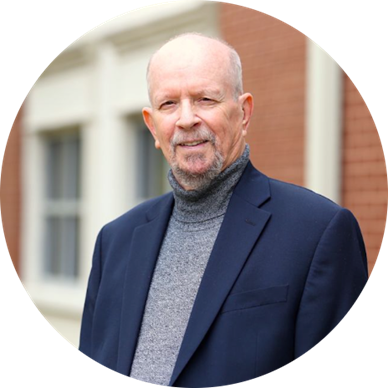
C. Clark Triplett is Emeritus Dean of Graduate Studies and Professor of Psychology at Missouri Baptist University. He served as co-editor of The Final Crossing: Death and Dying in Literature (Peter Lang, 2015), a co-editor of Worlds Gone Awry: Essays on Dystopian Fiction (McFarland, 2018), a co-editor of Certainty and Ambiguity in Global Mystery Fiction: Essays on the Moral Imagination (Bloomsbury Academic, 2024), and co-editor of Echoes from the Hills: Critical Essays on Ozarks Literature (forthcoming, University of Arkansas Press). Triplett’s poems have appeared in Cantos, Fireflies’ Light, and the Asahi Haikuist Network. He earned a BA from Southwest Baptist University, an MDiv from Covenant Theological Seminary, an MSEd from Southern Illinois University at Edwardsville, and a PhD from Saint Louis University.
© K-Global Scholars and Professionals Forum. All rights reserved. Content published in the K-GSP Forum may not be reproduced, distributed, or transmitted in any form without prior written permission from the K-GSP Forum, except for brief quotations with full attribution.