

Min Jin Lee's Pachinko is often described as a novel about belonging, but its deeper achievement lies in showing how exclusion persists across generations by adapting institutional forms. Spanning from colonial Korea to postwar Japan, the novel follows Sunja and her descendants as they confront a shifting system of constraints — legal, economic, and social — that redefines what survival and advancement mean in each generation. The metaphor of "pachinko," a game governed by both chance and structural limitation, reflects the novel's central insight: outcomes are shaped less by individual will than by the rules of the systems in which individuals are forced to operate.
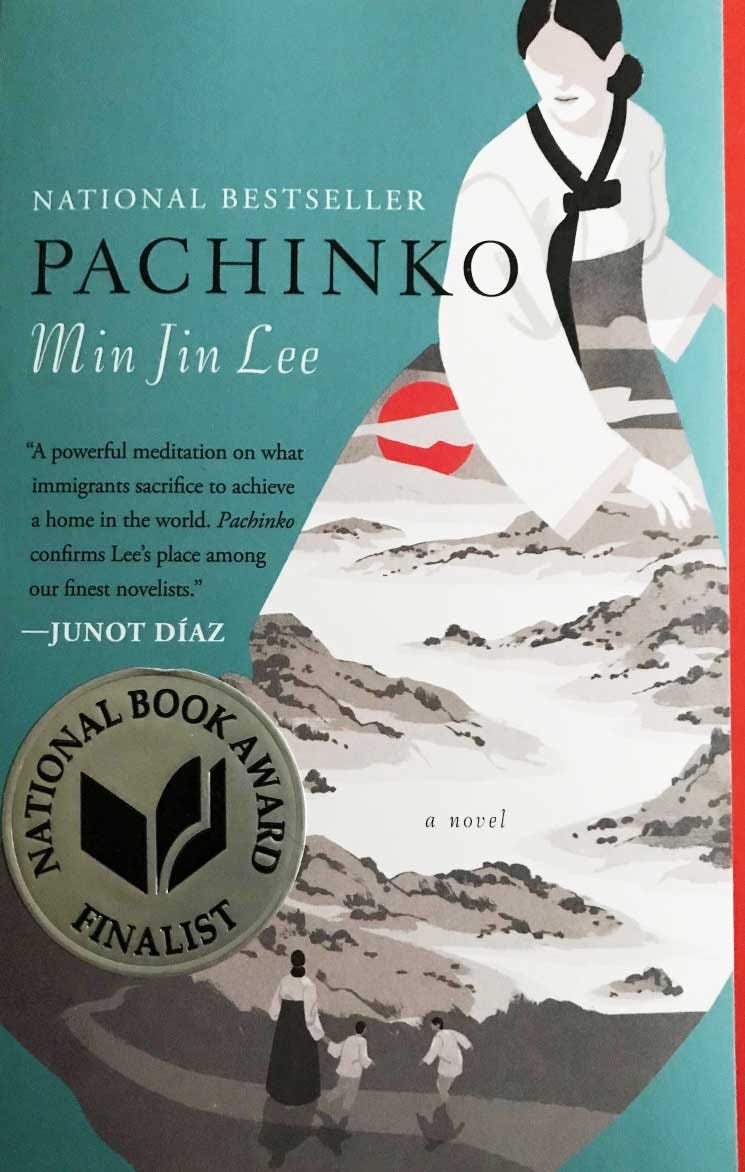
Photo source: Audible.com
The first generation encounters exclusion primarily as legal and national displacement. Sunja’s migration to Japan places her family outside the protections of citizenship, rendering even basic stability precarious. Here the novel aligns with John Lie’s argument that legal status structures opportunity. Lee renders this constraint through the intimate texture of marriage, work, and family obligation. These pressures shape everyday decisions, where moral agency persists within sharply limited conditions. Exclusion, in this phase, is overt and legible, enforced through the formal boundaries of the state.
By the second and third generations, exclusion mutates rather than disappears. Characters born and raised in Japan confront forms of exclusion that extend beyond legal statelessness, including economic segmentation and social invisibility. As Sonia Ryang has argued, Zainichi identity resists stable affiliation, remaining suspended between categories that refuse full acceptance. Lee captures this shift by tracing how her characters enter industries such as pachinko — domains of opportunity that are simultaneously stigmatized and structurally constrained. Advancement becomes possible, but only within narrow boundaries, revealing a persistent paradox: participation in the economy does not translate into full social inclusion. The novel thus charts a transition from exclusion by law to containment within market structures.
The novel’s reception underscores the stakes of this argument. While widely praised in the Anglophone world for bringing an overlooked history into view, responses in South Korea and Japan reflect unresolved tensions over historical memory and representation. Korean readers have often embraced the work as part of a broader diasporic reckoning, whereas some Japanese commentators have approached it with ambivalence, particularly regarding its portrayal of systemic discrimination. These divergent responses mirror the institutional fractures the novel exposes, revealing how narratives of marginalization are filtered through national frameworks of accountability and denial.

Photo source : Min Jin Lee - The New York Times
These dynamics are not confined to the past. Debates over Zainichi rights — ranging from residency status and access to social welfare to the treatment of ethnic Korean schools — continue to reflect a system that manages difference rather than resolves it. Cultural flashpoints such as the Aichi Triennale controversy, in which politically sensitive works on wartime memory were curtailed, illustrate how historical questions remain unsettled. Japan’s ongoing reluctance to issue unequivocal state apologies for aspects of its colonial labor regime further signals a broader pattern: acknowledgment remains partial, responsibility diffuse, and closure deferred. Pachinko does not argue policy, but it clarifies the stakes — showing how institutions adapt to criticism without relinquishing the structures that sustain exclusion.
Placed alongside other multigenerational epics, the novel’s distinctiveness becomes clearer. Works such as Land by Park Kyung-ni and Roots by Alex Haley trace generational continuity through land or lineage, offering frameworks in which identity can ultimately be recovered or reconstructed. Even War and Peace by Leo Tolstoy situates individuals within a historical order that, however vast, remains internally coherent. Pachinko, by contrast, presents a world in which continuity itself is unstable: each generation inherits not a stable identity, but a differently configured set of constraints. Its innovation lies in shifting the multigenerational epic away from continuity and toward institutional transformation as the driver of historical experience.
The story of “Global Korea” cannot be fully understood without the history the novel recovers.
For readers of the K-GSP Forum, Pachinko remains timely not simply as a historical novel, but as a lens through which to understand Korea’s evolving global presence. As Korean firms such as Samsung and Hyundai Motor Company expand their global reach, and as cultural exports — from BTS to Squid Game — reshape global perceptions of Korea, there is a risk that contemporary success obscures the historical conditions that made such transformations possible. Lee’s novel serves as a corrective to this amnesia, grounding the narrative of “Global Korea” in a past marked by colonialism, migration, and systemic exclusion.
The force of Pachinko lies in a stark recognition: exclusion endures because it adapts. The novel’s subject is not simply the fate of one family, but the design of a system capable of absorbing disruption without relinquishing control. What lingers is not how its characters survived, but how the society around them was arranged so that it never needed to change.
Original Document:

About the Author

Distinguished Professor, Dr. Paul Hong — University of Toledo
Paul C. Hong is a Distinguished University Professor and Chair of Information Systems and Supply Chain Management at the University of Toledo. His work focuses on leadership, governance, and decision-making in the AI era, integrating strategy, technology, and institutional trust. He has published extensively in leading academic journals and writes on how individuals and organizations navigate complexity, disruption, and global transformation.
© K-Global Scholars and Professionals Forum. All rights reserved. Content published in the K-GSP Forum may not be reproduced, distributed, or transmitted in any form without prior written permission from the K-GSP Forum, except for brief quotations with full attribution.