Park, Patricia. Re Jane: A Novel. Viking, 2015. ISBN 978-0-525-42740-7. 352 pages, $27.95.
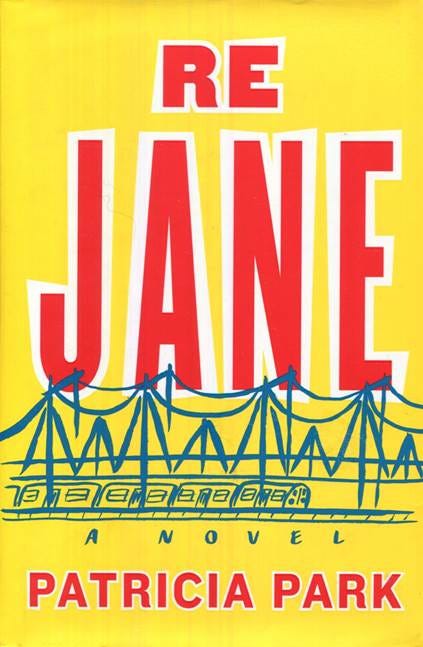
Cover image: Re Jane: A Novel by Patricia Park. Image reproduced for purposes of review and commentary.
Re Jane: A Novel is Patricia Park’s debut novel and a contemporary Korean American reimagining of Charlotte Brontë’s Jane Eyre. While the classic novel provides a template that serves as the scaffolding for her work, Park transforms the story into a distinctly modern exploration of immigration, cultural identity, family obligation, and the search for belonging. The novel is set in Queens and Brooklyn, New York, and Seoul, Korea, around the turn of the twenty-first century. It combines humor, romance, and social commentary into a coming-of-age story about a young woman trying to define herself while living between two worlds.
Patricia Park is an Associate Professor of Literature at American University. She has also taught writing at several other institutions, including Boston University, CUNY Queens, and Ewha Womans University in Seoul, South Korea. Park earned a B.A. in English from Swarthmore College and an M.F.A. in Fiction from Boston University. In addition to Re Jane, she is the author of the young adult novels Imposter Syndrome & Other Confessions of Alejandra Kim (2023) and What’s Eating Jackie Oh? (2025). A Fulbright Scholar, Edith Wharton Writer-in-Residence, and Jerome Hill Artist Fellow, Park has received numerous honors for her work. Her essays and articles have appeared in The New York Times, The New Yorker, The Guardian, and other major publications.
Jane Re is a Korean American woman in her twenties who has long felt like an outsider. After her Korean mother dies shortly after her birth and her American father abandons her, she is raised by her strict uncle and aunt in Flushing, Queens. As a honhyeol (of mixed Korean and American heritage), she never fully belongs within the Korean immigrant community. Although she earns a degree in finance, the collapse of the dot-com economy forces her to work in her uncle’s grocery store, symbolizing the limitations imposed by family obligation and immigrant expectations.
Seeking a new beginning, Jane accepts a position as an au pair for the affluent Mazer-Farley family in Brooklyn. Their liberal, multicultural lifestyle contrasts sharply with the traditional values of her upbringing. Jane eventually begins an affair with the family’s father, Ed Farley, placing her, like Brontë’s Jane Eyre, in an ethically compromised situation that forces her to confront difficult moral choices.
The affair ends when Jane is called to Seoul to visit her dying grandfather. There she meets relatives for the first time and uncovers family secrets that deepen her understanding of her parents and herself. Rather than finding a sense of belonging, however, she realizes she is as much a foreigner in Korea as in America. Returning to the United States, Jane recognizes that she has changed. No longer searching for escape, she begins to embrace an identity that acknowledges both her Korean and American heritage without allowing either to define her completely.
Perhaps the novel’s most important strength is its portrayal of identity as fluid rather than fixed. Jane exists between two worlds. Ultimately, Re Jane is less a love story than another example of the bildungsroman, a coming-of-age story, in Korean American literature. Jane’s major achievement is not winning the right partner but learning to define herself apart from the expectations imposed upon her by family, ethnicity, class, or romance. Perhaps Park shows through Jane’s story that identity is not something discovered once and for all, but something continually shaped and negotiated over time between cultures, generations, and personal choices. It is a story about what it means to grow into adulthood as a Korean American navigating and living in multiple worlds.
The instability of the novel’s main character’s identity is symbolized by Jane’s acute awareness of nunchi, the Korean concept emphasizing the importance of reading social situations and adjusting one’s behavior accordingly. From the beginning of the novel, it is evident that Jane believes successful living depends on the ability to interpret the expectations of others. Over time, she becomes an expert observer of others while hiding her own desires and wishes. As often occurs with overly dependent children, Jane struggles to replace externally imposed definitions of herself with her own sense of identity. This movement from accommodation to self-determination mirrors Brontë’s Jane Eyre while adapting that classic story to the context of immigrant culture.
The relationship between Jane and Ed Farley is where Park’s reinterpretation of Jane Eyre is most evident. Whereas Edward Rochester functions as a mysterious Gothic figure, Ed Farley appears more approachable, emotionally warm, and intellectually progressive. Nevertheless, both relationships are characterized by an unequal balance of power. Although Jane and Ed’s relationship initially seems innocent, emotional boundaries gradually begin to erode. Because Jane is economically dependent upon the family that employs her, the ethical complications created by their relationship resemble those found in Brontë’s original novel. The modern setting, however, alters the landscape considerably. Instead of dark secrets and Gothic mysteries, the conflicts in Re Jane arise from emotional dishonesty, marital dissatisfaction, and unequal power dynamics. Consequently, the romance in Re Jane is less conventional love story than an exploration of autonomy and self-respect.
In this novel, Park presents immigration as a condition that extends well beyond a particular geographical location. It is not simply the experience of first-generation immigrants arriving in a new and different country. Rather, every generation experiences the displacement of immigration in different ways. For instance, Jane’s uncle and aunt interpret life in terms of Korean traditions and values that emphasize duty, hard work, education, and family honor. Jane inhabits a completely different social reality. She has been educated in American schools, absorbs American popular culture, and perceives the world differently from her elders. The resulting conflicts between generations are not simply disagreements about the values of the old country but represent fundamentally different understandings of success, personal fulfillment, and the struggle for her own personal identity.
Park is careful not to portray either Korean or American culture as better than the other. Her Korean heritage provides Jane with a sense of community and moral responsibility. Yet, those traditions can become restrictive, particularly as they apply to gender roles and cultural expectations. At the same time, the liberal culture she experiences with the family in Brooklyn has its own prejudices in the form of privilege, exploitation, and paternalism. The Mazer-Farley family consider themselves enlightened but fail to recognize the unequal power relationships within their own family. Their attitudes toward Jane often reveal stereotypical assumptions about ethnicity, class, and employment status. Park has a keen perception of how each social structure has its own blind spots and invisible constraints.
Park does consider the issue of race, but she does so through subtle experiences rather than dramatic acts of discrimination. Jane is consistently aware of situations in which others stereotype her before getting to know her. Her label as honhyeol quietly reinforces her sense of outsider status. At the same time, within white American culture she is visibly Asian, regardless of her status as an American citizen. These repeated experiences contribute to a continuing uncertainty about who she is and where she belongs.
The expectations for gender roles reflect the multiple worlds that Jane inhabits. She attempts to develop a sense of independence, but this is difficult because of the expectations of both the Korean and American communities. Traditionally, Korean culture emphasizes obedience and family obligation for women. By contrast, the progressive environment in Brooklyn is more likely to celebrate feminism and personal freedom. However, Jane discovers that, despite these differing cultural expectations, gender inequality still exists regardless of culture. Her relationship with Ed Farley, for example, reveals how unequal power structures can exist even in so-called enlightened communities. In this respect, Park updates Brontë’s concerns by considering how gender intersects with race, class, and ethnicity.
Park’s literary style fits the subject matter of the novel. Her use of humor, for instance, is subtle and more often arises from stereotypes, cultural misunderstandings, and Jane’s own self-reflection. Underneath the humor, however, are deep psychological insights that reveal the complexity of Jane’s personal struggle. Park carefully balances humor with a profound sense of separation and loneliness, creating a narrative that is lighthearted for a moment before fading into emotional authenticity. This combination of wit and authenticity is what gives the novel its unique voice.
The structural use of Jane Eyre works well in the story of Re Jane. Park neither completely imitates nor abandons this classic work. Readers find many parallels, including the orphaned protagonist, her position as an au pair, a secret romance, and the search for self-fulfillment and self-respect. Instead of adhering slavishly to the classical narrative, Park engages in a conversation with the past about the ways women’s experiences have evolved over time. It is an adaptation that compares Brontë’s concerns about class and gender with contemporary concerns related to immigration, multiculturalism, and racial identity. Park shows how classic works can be reimagined from a different cultural perspective and thus remain relevant.
Re Jane succeeds both as an engaging novel and as an intelligent reinterpretation of one of English literature’s most enduring classics. Park demonstrates that the fundamental questions raised in Jane Eyre, identity, belonging, love, and moral independence, remain relevant when viewed through the experiences of contemporary Korean Americans. Without sacrificing the emotional appeal of the original, she broadens its concerns to include immigration, multiculturalism, race, and the complexities of bicultural identity. The result is a thoughtful and emotionally satisfying novel that stands comfortably on its own while rewarding readers familiar with Brontë’s work. Re Jane is highly recommended for readers interested in Korean American literature, contemporary immigrant fiction, feminist reinterpretations of classic literature, and coming-of-age novels that explore the enduring challenge of discovering where one truly belongs.
About the Author

C. Clark Triplett is Emeritus Dean of Graduate Studies and Professor of Psychology at Missouri Baptist University. He served as co-editor of The Final Crossing: Death and Dying in Literature (Peter Lang, 2015), a co-editor of Worlds Gone Awry: Essays on Dystopian Fiction (McFarland, 2018), a co-editor of Certainty and Ambiguity in Global Mystery Fiction: Essays on the Moral Imagination (Bloomsbury Academic, 2024), and co-editor of Echoes from the Hills: Critical Essays on Ozarks Literature (forthcoming, University of Arkansas Press). Triplett’s poems have appeared in Cantos, Fireflies’ Light, and the Asahi Haikuist Network. He earned a BA from Southwest Baptist University, an MDiv from Covenant Theological Seminary, an MSEd from Southern Illinois University at Edwardsville, and a PhD from Saint Louis University.
© K-Global Scholars and Professionals Forum. All rights reserved. Content published in the K-GSP Forum may not be reproduced, distributed, or transmitted in any form without prior written permission from the K-GSP Forum, except for brief quotations with full attribution.