Choi, Susan. The Foreign Student: A Novel. Harper Perennial, 1998. ISBN 0-06-019149-X. 335 pages, $13.00.
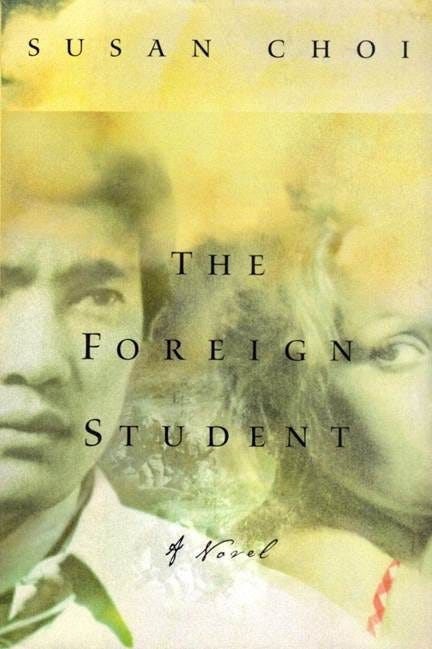
Susan Choi’s debut novel, The Foreign Student, is a love story between two people from vastly different worlds. Chang, nicknamed Chuck, is a young Korean man whose life has been damaged by the Korean War. He meets Katherine, a troubled woman from a wealthy Southern family, after enrolling as a new student at a small college in Sewanee, Tennessee. Although Chuck worked as a translator for the American Information Service in Seoul, his English remains halting, and his experiences during the political upheavals of the war ultimately forced him to flee for his life. Two years after the ceasefire, he finally escapes to America in search of a new beginning. Katherine, a beautiful but solitary twenty-eight-year-old woman, becomes his first friend. She, too, carries emotional wounds from her past. Drawn together by an unspoken recognition of each other’s suffering, these two strangers gradually discover the possibility that love and companionship may offer the redemption both have been seeking.
Susan Choi is an award-winning American novelist whose work has earned widespread critical acclaim for its psychological depth and literary craftsmanship. Born in the United States to a Jewish mother and a Korean father, she received a B.A. in Literature from Yale University and an M.F.A. from Cornell University. Since the publication of her debut novel, The Foreign Student, Choi has established herself as one of the leading voices in contemporary American fiction, writing six novels that have received numerous honors, including a Pulitzer Prize finalist designation for American Woman (2003), the PEN/W. G. Sebald Award for A Person of Interest (2008), the Lambda Literary Award for My Education (2013), the National Book Award for Trust Exercise (2019), and the Sunday Times Short Story Award for Flashlight (2025).
While The Foreign Student can be appreciated as an engaging love story set against the backdrop of postwar America, its enduring power lies in the complexity beneath its narrative surface. Choi uses the relationship between Chuck and Katherine not simply to explore romance across cultural divides but to examine the lingering effects of war, exile, and personal loss. As the novel gradually reveals the hidden histories carried by its central characters, it becomes clear that Choi is less interested in conventional plot than in the psychological and emotional burdens that shape identity. The novel’s measured pacing, shifting chronology, and careful attention to memory invite readers to look beyond its historical setting and consider the broader questions of belonging, displacement, and the possibility of human connection across profound cultural and emotional boundaries.
The novel alternates between two narratives. The story is set in 1955 only two years after the Korean Armistice. But instead of depicting combat scenes, Choi is more interested in what happens after the war. The historical context is important because the Korean War has often been defined as the “Forgotten War” in America. While the people in Sewanee treat the war as a distant event, Chuck carries a video of its violence in his head every day. Memories of execution, political terror, and survival are set against the peaceful rhythm of Southern academic life. The images create a striking contrast between external calm and internal trauma.
Katherine Monroe is Chuck’s American counterpart. A beautiful but emotionally damaged young woman, she has become trapped in a toxic relationship with a popular professor who was once her father’s college roommate and her mother’s closest confidant. What began years earlier develops into a sustained and deeply traumatic sexual relationship that leaves lasting psychological scars. When Katherine’s mother ultimately discovers the affair, the revelation creates an irreparable rift between them, and she refuses to speak to her daughter again. Isolated by shame and estrangement, Katherine retreats to her parents’ home, where she remains emotionally suspended, unable to move beyond her past. Like Chuck, Katherine is a prisoner of memory, her emotional wounds no less devastating than his wartime trauma. Choi presents both characters as haunted by experiences they cannot escape, and it is this shared suffering, more than romantic attraction, that draws them together.
Thus, the love story at the center of The Foreign Student becomes a vehicle for exploring the intersection of two distinct forms of trauma and two very different relationships to the past. The novel moves back and forth between the American South and South Korea, while also alternating between Katherine’s sexual awakening and Chuck’s horror-filled memories of the Korean War. In the present, Chuck is trying to build a new life in Tennessee through his academic studies, but his concentration is repeatedly shattered by vivid flashes of memory. The past refuses to remain in the past; it is as though he is condemned to relive the same scenes, even if only in recollection. His memories arrive involuntarily, with ordinary conversations or seemingly insignificant events suddenly triggering painful recollections. He finds it difficult to speak about these experiences because language itself proves inadequate to represent what he witnessed. Compounding this burden are the moral compromises imposed by war, whose consequences continue to haunt him long after the fighting has ended.
Katherine’s struggle is arguably no less complex than Chuck’s. Her greatest challenge in the present is freeing herself from an intense, long-term relationship with an older man that has left her emotionally depleted. Choi renders Katherine’s relationship with Charles with considerable psychological subtlety. Her dependence on him extends far beyond sexual intimacy: he exerts authority through his intellectual sophistication, his role as an educator, his greater emotional experience, and his capacity for manipulation. Yet Katherine is neither simply naïve nor merely a victim. Precocious from childhood, she often assumed adult roles long before she was emotionally prepared to do so. The profound imbalance of power in her relationship with Charles leaves her unable to distinguish genuine affection from emotional dependence. Even so, her gradual movement toward independence parallels Chuck’s growing willingness to confront the memories he has long struggled to suppress.
Choi writes with unusual restraint, carefully resisting the temptation to overdramatize the emotional weight of her characters’ past experiences. As a result, The Foreign Student unfolds gradually through reflection rather than action, privileging interiority over plot-driven momentum. Her understated dialogue and finely observed psychological descriptions temper emotions that might otherwise become overwhelming, allowing grief and trauma to emerge with quiet authenticity. At times, the novel’s pace can seem almost plodding, yet its measured narration ultimately serves both the story and its central concerns. Healing from profound psychological wounds is necessarily slow and uneven, and Choi’s deliberate pacing reflects that reality. Through this patient process, buried traumas are revisited, examined, and gradually integrated into the characters’ lives. As Chuck and Katherine cautiously draw closer to one another, the novel traces not only the evolution of their relationship but also a psychological progression in which emotional defenses are lowered, grief is acknowledged, and the possibility of genuine healing begins to emerge.
As is the case in many Korean American novels, Choi makes language a central theme and explores its crucial role in the formation of immigrant identity. Throughout The Foreign Student, language functions almost as another character, shaping relationships, revealing emotional distance, and reflecting the difficulty of belonging. Words are never merely instruments of communication; they become markers of memory, trauma, and cultural dislocation.
Chuck understands English well enough to have served as a translator for the American Information Services in Seoul. Yet when he arrives in Tennessee, his speech is tentative and halting. This apparent linguistic uncertainty reflects more than a limited command of English. It suggests the lingering psychological effects of war, as well as the pressure of navigating an unfamiliar culture whose social expectations remain difficult to decipher. Choi thus recalls a recurring theme in immigrant fiction: mastery of a new language does not erase feelings of estrangement or guarantee acceptance within the adopted culture.
Equally significant is Chuck’s silence, which often communicates more than his words. His reluctance to speak about his past is not simply reserve but a survival strategy born of trauma. Silence becomes both a refuge and a prison. By refusing to tell his story, Chuck shields himself from reliving the horrors of war, yet he also keeps others at an emotional distance. His silence postpones the intimacy that Katherine seeks and delays the healing that can come only through confronting painful memories. In Choi’s hands, language and silence become complementary forces, each shaping Chuck’s gradual movement toward self-understanding and human connection.
Several recurring themes make The Foreign Student a compelling and emotionally resonant novel. Perhaps the most significant is the enduring nature of trauma. Choi’s ability to make the novel’s structure mirror its subject is one of her greatest artistic achievements. The deliberate pacing, fragmented memories, and emotional restraint are not merely stylistic choices; they embody the painstaking experience of living with trauma and the slow, uncertain process of recovery. There is no quick or easy path toward healing, and the novel refuses to offer simplistic resolutions or sentimental consolation.
In the peaceful landscape of Tennessee, Chuck remains haunted by memories of wartime violence. The past continually intrudes upon the present, refusing to remain confined to isolated flashbacks. Instead, it shapes his daily life, his sense of identity, and his capacity to form meaningful relationships. Katherine’s trauma differs profoundly from Chuck’s. She bears the psychological scars of years of sexual exploitation, manipulation, and betrayal by a trusted authority figure. Her memories have likewise made intimacy and trust extraordinarily difficult. Yet Choi presents these two forms of suffering not as competing claims to sympathy but as parallel expressions of human vulnerability. With remarkable patience, she traces the slow and often agonizing work of grief, demonstrating that healing is neither immediate nor complete. By the novel’s conclusion, however, she suggests that renewal remains possible, not through forgetting the past, but by confronting it honestly and enduring its painful demands. Her narrative ultimately affirms that the only path beyond trauma is through the long, difficult labor of grief.
As with many Korean American novels, the formation of identity in the lives of immigrants is a central theme. In The Foreign Student, Choi portrays identity as fluid rather than fixed, shaped by history, trauma, language, and cultural displacement rather than by any stable sense of self. Chuck, for example, is constantly negotiating among multiple identities: the foreign student, the survivor of war, the translator for American forces, and a man struggling to reinvent himself in an unfamiliar country. Even his nickname, “Chuck,” symbolizes this fractured identity. The name is easier for Americans to pronounce than Chang, but it also distances him from his Korean heritage while reflecting the subtle pressures of American cultural dominance. His acceptance of an Americanized name represents both a practical adaptation and a quiet but significant loss, illustrating the compromises that often accompany assimilation.
Katherine’s struggle, though very different in origin, is similarly rooted in questions of identity. She longs to free herself from the roles imposed upon her by family expectations, an exploitative relationship, and the rigid social conventions of the American South. She seeks to define herself apart from her parents, her abusive lover, and the guilt and shame that have shaped her emotional life. In this respect, both Katherine and Chuck undertake parallel journeys of self-discovery. Their romance is distinctive not simply because it bridges two cultures, but because it becomes a space in which each can imagine an identity no longer constrained by the burdens of the past. Choi suggests that identity is not inherited or imposed but gradually forged through resilience, self-understanding, and the courage to embrace new possibilities.
Displacement is another motif that recurs throughout many Korean American novels. Chuck has left Korea for America, but he cannot emotionally escape the country he has abandoned. The American South, despite its warmth, hospitality, and relative peace, remains unfamiliar and emotionally distant. Korea, by contrast, continues to exert a powerful pull on his imagination, even though it is inseparable from memories of violence and loss. As a result, Chuck exists in a state of perpetual in-betweenness, unable to feel fully at home in either place. Like Suzy in The Interpreter and Henry in Native Speaker, he inhabits the uneasy space between two cultures, carrying the emotional burdens of both while belonging completely to neither.
Katherine experiences a different form of exile. Although she never leaves the American South, she becomes estranged within her own family and community. The emotional betrayal that has shaped her life transforms home into a place of isolation rather than security. Through Katherine’s experience, Choi broadens the concept of displacement beyond geography, suggesting that exile can be psychological as well as physical. Home emerges less as a fixed location than as an emotional condition shaped by memory, trust, and human connection. Ultimately, both Chuck and Katherine are forced to construct new definitions of belonging because neither can return to the homes they once imagined. Their relationship becomes an attempt to create a shared refuge, fragile though it may be, from the dislocations they have both suffered.
Susan Choi’s greatest strength is her nuanced exploration of what it truly means to be foreign. On the surface, Chuck is clearly the novel’s foreign student. He speaks English with an accent, comes from a vastly different cultural background, and is immediately marked as an outsider by his ethnicity. Yet Choi gradually broadens the meaning of foreignness, suggesting that it extends far beyond nationality or language. By the novel’s conclusion, it becomes apparent that nearly every major character exists in some form of exile.
Katherine, for example, is estranged from her own family, particularly from her emotionally distant mother. Her complicated relationship with Charles further separated her from the ordinary rhythms and expectations of adult life, leaving her isolated even within the community in which she has always lived. Chuck’s foreignness is initially geographical and cultural, while Katherine’s is emotional and psychological. Although their circumstances differ, both characters experience profound loneliness and a persistent sense of not fully belonging. In this way, Choi draws an illuminating parallel between the immigrant’s displacement and the quieter forms of alienation that can exist within one’s own home and culture.
This thematic parallel elevates The Foreign Student beyond the boundaries of a conventional immigrant novel or a sociological examination of cultural assimilation. Foreignness becomes an existential condition rather than merely a matter of citizenship or geography. Choi suggests that people can become strangers to their families, their communities, their memories, and even to themselves. The novel ultimately argues that the longing to belong is universal and that the search for home is as much an inward, psychological journey as it is a physical or cultural one. This deeper understanding of foreignness gives the novel much of its emotional resonance and philosophical depth.
The Foreign Student stands as a remarkable debut novel that combines historical fiction, psychological realism, and an intimate love story into a deeply moving meditation on survival and human resilience. Susan Choi refuses to reduce either war or romance to sentimentality. Instead, she explores the lasting consequences of violence with extraordinary emotional honesty, demonstrating that the deepest wounds often remain invisible and continue shaping lives long after the outward events have ended. The relationship between Chuck and Katherine never functions merely as a romantic subplot; rather, it becomes the means through which Choi investigates memory, identity, forgiveness, and the fragile possibility of renewal.
What distinguishes the novel most is Choi’s confidence as a literary artist. Her restrained prose, sophisticated narrative structure, and remarkable psychological insight allow readers to inhabit the inner lives of her characters without resorting to melodrama or easy emotional resolutions. The fragmented chronology mirrors the persistence of traumatic memory, while her careful pacing reflects the slow and uncertain nature of healing itself. Few first novels display such maturity of vision or such mastery of character development. By resisting simplistic moral judgments and allowing her characters to remain emotionally complex, Choi creates individuals who feel authentic rather than symbolic, inviting readers to understand rather than merely observe their suffering.
The novel also occupies an important place within Korean American literature. Like Richard E. Kim’s The Martyred, Chang-rae Lee’s Native Speaker, Suki Kim’s The Interpreter, and R. O. Kwon’s The Incendiaries, The Foreign Student examines the complicated intersections of history, culture, language, and identity. Yet Choi approaches these familiar concerns from a distinctive perspective by emphasizing the enduring psychological consequences of the Korean War and by broadening the meaning of foreignness beyond immigration alone. Her novel reminds readers that exile is not always geographical. Individuals may become strangers to their families, their communities, their memories, or even to themselves. In doing so, Choi transforms what initially appears to be a story about one Korean immigrant into a profound reflection on the universal human search for belonging.
Although readers expecting a fast-paced historical novel or a conventional romance may find its deliberate rhythm demanding, those willing to embrace Choi’s measured narration will discover a work of exceptional depth and emotional intelligence. The Foreign Student rewards patience, asking readers to linger over moments of silence, reflection, and emotional ambiguity. Its power lies not in dramatic plot twists but in its compassionate understanding of how ordinary people endure extraordinary suffering and gradually reclaim the possibility of hope.
In an era increasingly shaped by war, migration, cultural displacement, and conversations about trauma and identity, Choi’s novel speaks with remarkable freshness and enduring insight. It is an elegant, compassionate, and intellectually rich work that announces the arrival of one of America’s finest contemporary novelists. Both as an important contribution to Korean American literature and as a profoundly human exploration of love, loss, and resilience, The Foreign Student deserves to be read, studied, and remembered.
About the Author

C. Clark Triplett is Emeritus Dean of Graduate Studies and Professor of Psychology at Missouri Baptist University. He served as co-editor of The Final Crossing: Death and Dying in Literature (Peter Lang, 2015), a co-editor of Worlds Gone Awry: Essays on Dystopian Fiction (McFarland, 2018), a co-editor of Certainty and Ambiguity in Global Mystery Fiction: Essays on the Moral Imagination (Bloomsbury Academic, 2024), and co-editor of Echoes from the Hills: Critical Essays on Ozarks Literature (forthcoming, University of Arkansas Press). Triplett’s poems have appeared in Cantos, Fireflies’ Light, and the Asahi Haikuist Network. He earned a BA from Southwest Baptist University, an MDiv from Covenant Theological Seminary, an MSEd from Southern Illinois University at Edwardsville, and a PhD from Saint Louis University.
© K-Global Scholars and Professionals Forum. All rights reserved. Content published in the K-GSP Forum may not be reproduced, distributed, or transmitted in any form without prior written permission from the K-GSP Forum, except for brief quotations with full attribution.