
Jangwoon “Leo” Lee
Department of Mathematics, University of Mary Washington
1. Introduction
Kim Jin-myung has been a writer I have trusted for a long time. If I go back about 30 years, I clearly remember reading his well-known novel The Flowers of Mugunghwa Bloom. At that time, I was a typical math student who rarely read fiction outside of textbooks. However, that book caught my strong curiosity, so I bought it and stayed up all night reading it. It felt more than just a novel. It mixed real history, imagination, and political ideas in a way that stayed in my mind for a long time.
After that, I did not read much fiction for a while. But later, when I started reading again as a hobby, I came across his new novel The Country of King Sejong. As soon as I saw the book information, I ordered it without even reading reviews. It took about ten days for the book to arrive in the United States, and the wait felt very long because I was so excited. Once it arrived, I started reading immediately. I finished Volume 1 in one day and Volume 2 in two days, so I completed the whole book in three days.
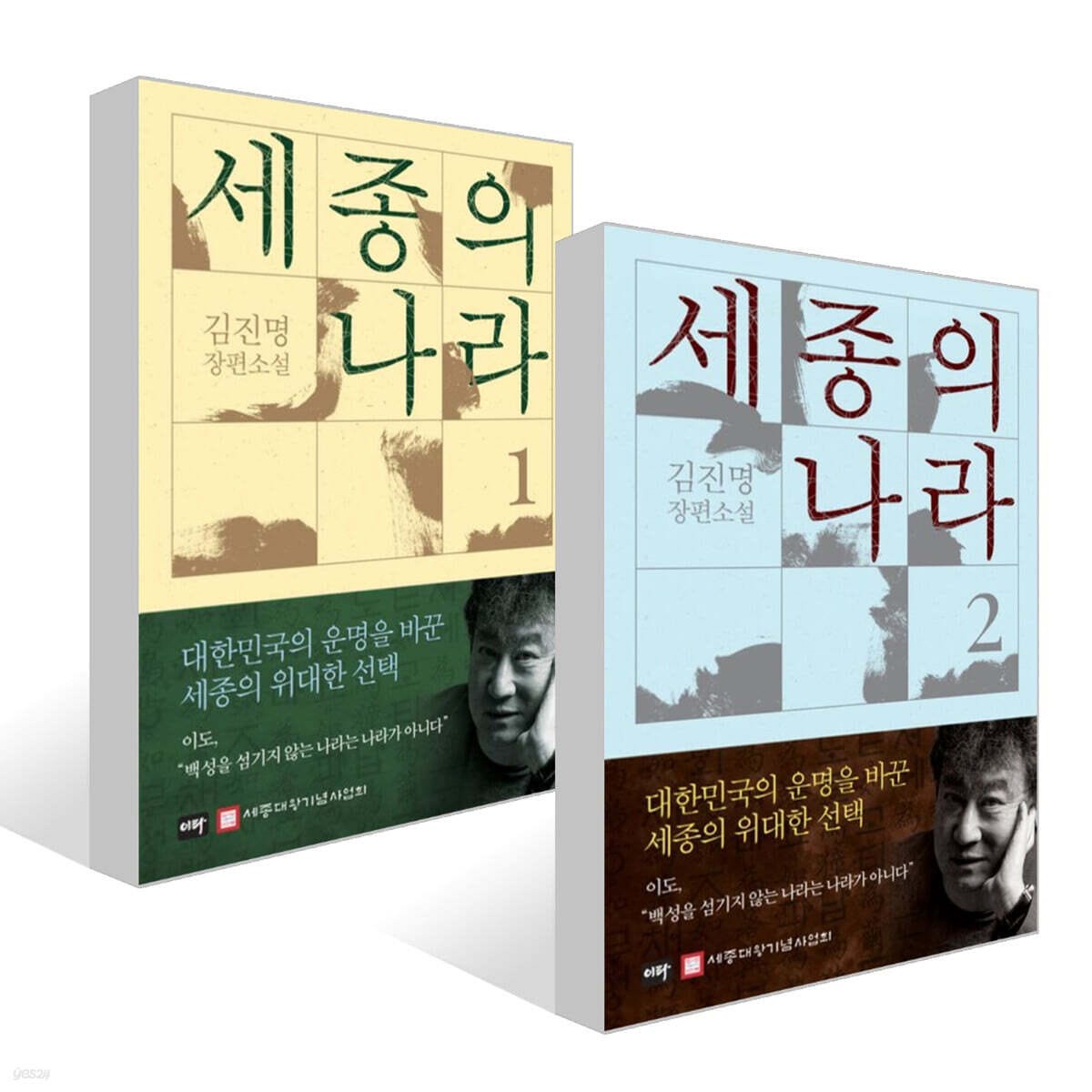
Photo source: yes24.com
Reading it around King Sejong’s birthday made the experience even more meaningful. This book is not just a historical story. It makes the reader think again about what we think we already know about King Sejong and the creation of Hangul.
The story is set in the early Joseon Dynasty during King Sejong’s time. However, instead of telling events in simple chronological order, the novel focuses on how the creation of Hangul was shaped by political and international conditions. At that time, Joseon was strongly influenced by its relationship with Ming China. Classical Chinese was the language of power, used mainly by the ruling class. Being able to read and write meant having power. Most ordinary people were excluded from written language.
2. Historical Background
What King Sejong tried to do was not simply create a new alphabet. He wanted to build a system where ordinary people could express their thoughts in writing. But this idea itself was a very big change for that time.
Scholars from the Hall of Worthies (Jiphyeonjeon) and many officials did not easily accept this idea. From their point of view, creating a new writing system was not just a matter of convenience. It could also disturb the existing world order centered on China. Considering the relationship with the Ming Dynasty, it could even create diplomatic problems. Because of this, many officials saw it as a very dangerous project.
In the end, the creation of Hangul was not just a language project. It became a complex issue involving politics, foreign relations, and the knowledge system of that time.
What I found most interesting while reading this novel was not only the events themselves, but the situation behind them. King Sejong’s will, the resistance from officials, the pressure from Ming China, and the Confucian system all worked together and produced one outcome. In other words, this book is more interested in “why something like this was possible” than simply “what was created.”
3. Main Idea of the Book
The main idea of this book is quite clear. Historical change is not created by one person alone. It happens when many conditions come together at the same time.
King Sejong is not shown as an all-powerful ruler who controls everything. Instead, he appears as someone who tries to find possible choices within many limitations. He must consider officials’ opinions, foreign pressure, and existing traditions, and constantly adjust his decisions.
From this perspective, the creation of Hangul is not only a personal achievement. It is also the result of many conflicts and compromises over time. At some moments there was strong opposition, and at other moments there was agreement. Through these repeated interactions, the final result slowly took shape.
Another important point is that language and knowledge are not just tools. The ability to read and write is closely connected to having a voice in society. Therefore, the creation of a new writing system is not only a technical change. It can also affect the power structure of society.
In this sense, the novel does not simply present King Sejong as a great hero. Instead, he is shown as a realistic leader who makes decisions within limits and changes situations step by step.
4. Impression and Analysis
One of the strongest points of this book is that it does not treat the Joseon Dynasty as a simple historical background. Instead, it feels like a living society that is constantly moving and changing. In particular, the description of Joseon’s relationship with Ming China clearly shows how many limitations the country had at that time.
It is also interesting that the creation of Hangul is not shown only as a cultural achievement. Instead, it is explained within the political and social conditions of that time. This helps the reader understand that the creation of a writing system is a much more complex process than it first appears.
However, in some parts, the story seems slightly exaggerated to make it more dramatic. Some characters or events may feel more emphasized than in real history. Still, since this is a historical novel rather than a history textbook, this is understandable.
5. Conclusion
After finishing this book, what I feel again is that the creation of Hangul was not a simple invention. It was not achieved by one person alone. It was the result of many political conflicts and historical conditions.
In world history, there are very few cases where the creator, the time of creation, and the principles of a writing system are clearly recorded. In this sense, Hangul is not just a language system, but a remarkable historical achievement.
This novel does not explain this process in a purely theoretical way. Instead, it shows it as something that naturally happened within real human life and society. In the end, history is not the story of one person, but the result of many people and conditions working together.
This book is meaningful not only for readers who are interested in history, but also for those who are interested in leadership, social structure, and the relationship between knowledge and power.
Finally, I would summarize the book in one sentence:
“The idea of turning sound into writing was, in the end, a political revolution that returned the power of expression to ordinary people.”
북 리뷰: 세종의 나라 1–2권 (김진명)
Jangwoon “Leo” Lee
Department of Mathematics, University of Mary Washington
1. 시작하며
김진명은 나에게 꽤 오랜 시간 신뢰를 주었던 작가다. 시간을 거슬러 올라가면 무려 30년 전, 그의 대표작 <무궁화 꽃이 피었습니다>를 읽었던 기억이 선명하다. 당시의 나는 전공 서적 외에는 문학책을 거의 들여다보지 않던 전형적인 수학도였지만, 그 책만큼은 강한 호기심에 이끌려 직접 구매해 밤을 새워 읽었다. 단순한 소설이라기보다 현실과 역사, 그리고 정치적 상상이 함께 섞여 있어 오래 남는 인상을 주었다.
그 이후 한동안 독서와 멀어졌다가 다시 책을 읽기 시작하면서, 그의 신작 <세종의 나라> 소식을 접하게 되었다. 책 소개를 보자마자 별다른 리뷰도 확인하지 않고 바로 주문을 넣었다. 미국에서 책이 도착하기까지 열흘 정도 걸렸는데, 그 시간이 유난히 길게 느껴질 만큼 기대가 컸다. 결국 책을 받자마자 몰입해서 1권은 하루, 2권은 이틀 만에 읽어 총 3일 만에 완독했다.
특히 세종대왕 탄신일 시기와 겹쳐 읽게 되면서 이 책은 더 특별하게 다가왔다. 이 작품은 단순히 과거를 설명하는 소설이 아니라, 우리가 당연하게 알고 있는 세종과 한글 창제라는 사건을 다른 시각에서 다시 보게 만든다.
소설의 배경은 조선 초기 세종 시대다. 하지만 사건을 시간 순서대로 나열하는 방식이 아니라, 한글 창제가 만들어지는 과정이 당시 정치 상황과 국제 관계 속에서 어떻게 영향을 받았는지를 중심으로 보여준다. 조선은 명나라와의 관계 속에서 여러 제약을 받던 시기였고, 한문은 사실상 권력을 가진 사람들만 사용할 수 있는 언어였다. 글을 쓸 수 있다는 것은 곧 권력을 가진다는 의미였고, 대부분의 백성은 문자에서 멀리 떨어져 있었다.
2. 시대적 배경
세종이 하려 했던 일은 단순히 새로운 글자를 하나 만드는 것이 아니었다. 백성들이 자신의 생각을 직접 글로 표현할 수 있는 환경을 만들고 싶어 했다. 하지만 이 생각 자체가 당시로서는 상당히 큰 변화였다.
집현전 학자들과 신하들은 한글 창제를 쉽게 받아들이지 않았다. 새로운 글자를 만든다는 것은 단순한 편의의 문제가 아니라, 당시 중국 중심의 질서를 흔들 수 있는 일로 보였기 때문이다. 명나라와의 관계를 고려하면 자칫 외교 문제로 이어질 수도 있었다. 그래서 많은 신하들은 이 일을 매우 위험한 시도로 여겼다.
결국 한글 창제는 단순한 언어 개발이 아니라, 정치, 외교, 그리고 당시의 지식 체계가 모두 얽힌 문제로 커지게 된다.
이 소설을 읽으면서 흥미로웠던 점은 사건 자체보다 그 뒤에 있는 상황들이었다. 세종의 의지, 신하들의 반대, 명나라와의 관계, 그리고 당시의 유교적 질서가 서로 맞물리면서 하나의 결과가 만들어진다. 즉 이 책은 “무엇이 만들어졌는가”보다 “왜 그런 일이 가능했는가”에 더 관심을 둔다.
3. 작품의 본질
이 책이 말하고 싶은 핵심은 비교적 분명하다. 역사적인 변화는 한 사람의 힘만으로 만들어지기보다는, 여러 조건이 맞아떨어질 때 비로소 가능해진다는 점이다.
세종은 모든 것을 마음대로 결정하는 절대적인 인물이라기보다는, 여러 상황 속에서 가능한 선택을 만들어가는 사람으로 그려진다. 신하들의 의견, 외교적인 부담, 기존 질서 등 다양한 조건 속에서 그는 계속 조율을 해야 했다.
이런 점에서 한글 창제도 단순한 개인의 업적이라기보다는, 여러 갈등과 타협이 쌓여 만들어진 결과로 볼 수 있다. 어떤 순간에는 반대에 부딪히고, 어떤 순간에는 설득이 이루어지면서 결국 하나의 방향으로 흘러간 것이다.
또 하나 인상 깊었던 점은 문자와 지식이 단순한 도구가 아니라는 점이다. 글을 읽고 쓸 수 있다는 것은 단순한 능력이 아니라, 사회에서 자신의 목소리를 낼 수 있는 힘과 연결된다. 그래서 새로운 문자의 등장은 단순한 기술 변화가 아니라, 기존의 권력 구조에도 영향을 줄 수 있는 변화였다.
이런 관점에서 보면 이 소설은 세종을 특별한 영웅으로만 그리지 않는다. 대신 그는 제한된 조건 속에서 선택을 만들어가며 상황을 바꿔 나가는 현실적인 지도자에 가깝다.
4. 감상과 분석
이 책의 가장 큰 장점은 조선 시대를 단순한 과거의 배경으로 보지 않고, 실제로 움직이는 사회처럼 느끼게 만든다는 점이다. 특히 명나라와의 관계 속에서 조선이 얼마나 많은 제약을 받고 있었는지를 보여주는 부분은 설득력이 있었다.
또 한글 창제를 단순한 문화적 성취로 보지 않고, 당시 사회와 정치 상황 속에서 이해하려는 시도도 흥미로웠다. 하나의 문자가 만들어지는 과정이 이렇게 복잡한 조건 속에서 이루어진다는 점을 다시 생각하게 된다.
다만 일부 장면에서는 이야기를 더 흥미롭게 만들기 위해 실제 역사보다 조금 과장된 설정도 보인다. 하지만 이 책이 역사 교과서가 아니라 역사적 상상을 바탕으로 한 소설이라는 점을 고려하면 충분히 이해할 수 있는 부분이다.
5. 글을 맺으며
이 책을 읽고 다시 느낀 것은 한글 창제가 단순한 발명이 아니라는 점이다. 그것은 한 사람의 결단만으로 이루어진 것이 아니라, 당시의 정치적 상황과 여러 갈등 속에서 만들어진 결과였다.
세계 문자 역사에서 창제 과정과 원리가 비교적 명확하게 기록된 경우는 많지 않다. 그런 점에서 한글은 단순한 문자를 넘어 하나의 중요한 역사적 성취라고 할 수 있다.
이 소설은 그 과정을 거대한 이론으로 설명하기보다, 사람이 살아가는 현실 속에서 자연스럽게 만들어진 결과처럼 보여준다. 결국 역사는 한 사람의 이야기가 아니라 여러 사람과 조건이 함께 만든 결과라는 생각이 다시 떠오른다.
이 책은 역사에 관심 있는 사람뿐 아니라, 사회 구조나 리더십, 그리고 지식과 권력의 관계에 관심 있는 사람들에게도 충분히 의미 있게 읽힐 수 있는 작품이다.
마지막으로 이 책을 한 문장으로 정리하면 다음과 같다.
“소리를 문자로 만든다는 발상은, 결국 백성에게 생각을 표현할 수 있는 권리를 돌려주는 정치적 혁명이었다.”
About the author:

Jangwoon “Leo” Lee is a Professor of Mathematics at the University of Mary Washington, specializing in the numerical analysis of stochastic partial differential equations. His research has appeared in leading journals, including SIAM Journal on Numerical Analysis, and he has developed open educational resources to support undergraduate mathematics education. Dr. Lee actively mentors undergraduate researchers, often resulting in co-authored publications, and has held two sabbatical awards as a visiting professor at Sogang University and Yonsei University in Korea. He previously served as Associate Editor-in-Chief of KAUPA Letters and now serves on the editorial board of the K-GSP Forum.
세종대왕님 고맙습니다.
리뷰 잘 읽었습니다. 다음 리뷰도 기다려집니다.