
BOOK INTRODUCTION:
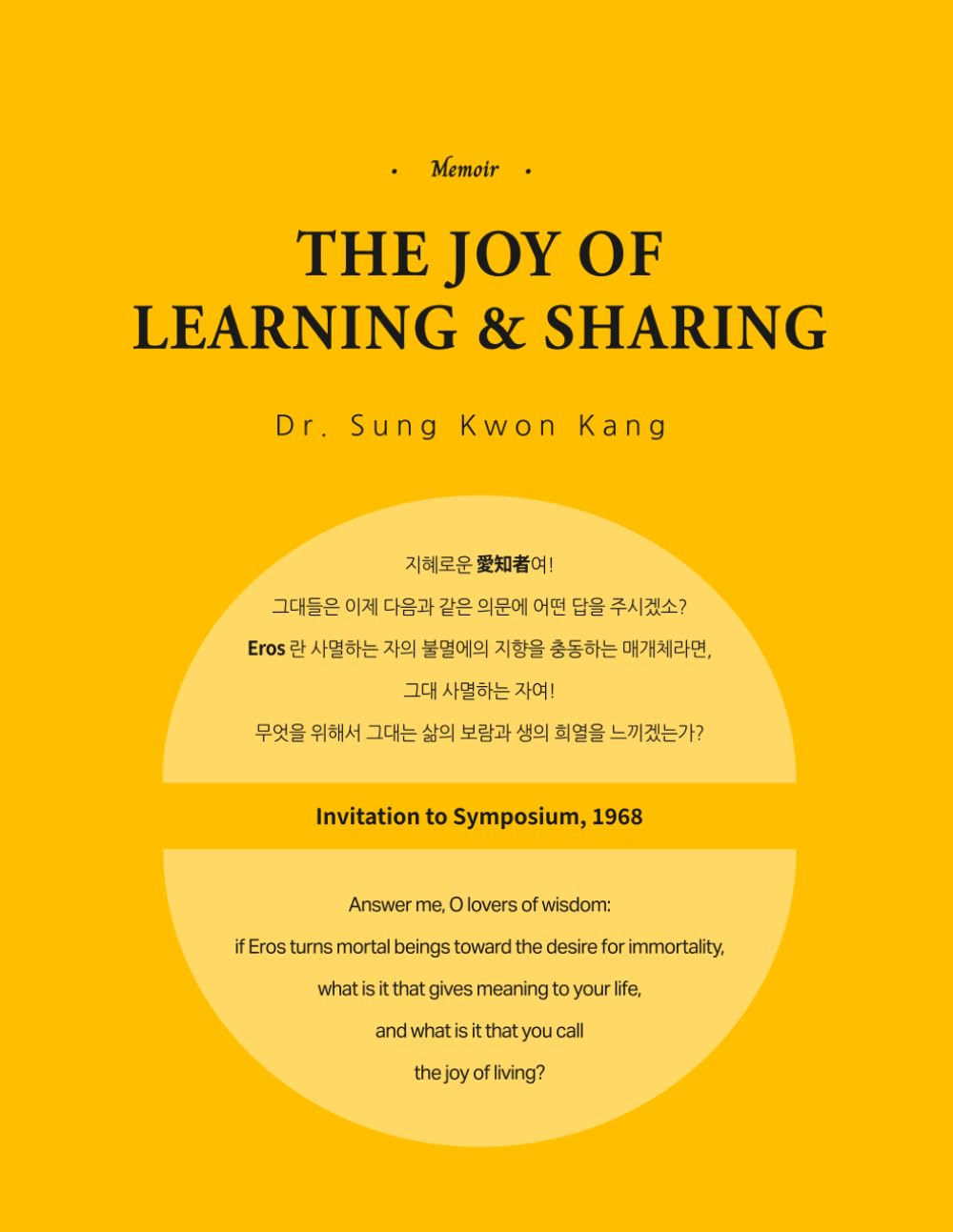
(Image source: Amazon, © Sung Kwon Kang, 2026)
From postwar Korea to the research laboratories of America, this memoir traces a life shaped by perseverance, curiosity, and quiet conviction.
In this deeply reflective and richly layered narrative, Dr. Sung-Kwon Kang recounts his journey from his early years in Korea—marked by discipline, family devotion, and handwritten letters from his father—to graduate studies in the United States and a distinguished career at IBM Research.
Spanning more than three decades in advanced materials and microelectronics packaging, his professional life unfolded at the intersection of science and collaboration. Yet this memoir is not merely the story of a scientist. It is the story of a husband, father, grandfather, teacher, and lifelong learner.
Through vivid recollections of academic mentorship, international research partnerships, Korean-American community leadership, and the enduring influence of family, Dr. Kang reflects on what it means to build a life across cultures. Along the way, he explores themes of identity, responsibility, mentorship, aging, and the evolving meaning of success.
Woven into the narrative are personal letters, historical moments, community service with KSEA, and philosophical reflections inspired by science, literature, and lived experience. The result is a memoir that speaks not only to scientists and engineers, but to anyone who has crossed borders—geographical or generational—in search of purpose.
At its heart, this book is a tribute: to parents who sacrificed, to mentors who guided, to a lifelong partner who walked beside him, and to the next generation who will carry the story forward.
BOOK LINK: https://a.co/d/03fivYC3
BOOK REVIEW:
In today’s age of artificial intelligence and hyperconnectivity, information is everywhere, yet the time to reflect on the true meaning of learning seems to be diminishing. In such an era, The Joy of Learning & Sharing: 배움과 나눔의 즐거움 (by Dr. Sung Kwon Kang) is far more than a simple self-improvement or educational guidebook. It invites readers to reconsider one of humanity’s most fundamental questions: “Why do we learn?” Drawing from extensive research and educational experience and profound life insights, the book warmly and thoughtfully explores the joy of learning and the value of sharing that knowledge with others. In particular, its effort to connect higher education, lifelong learning, and human growth is especially impressive.
One of the book’s greatest strengths is that it does not treat learning merely as a tool for improving grades or preparing for employment. Instead, the author understands learning as a lifelong process of human maturation. This perspective naturally echoes Confucius’ famous saying: “Is it not a pleasure to learn and practice what is learned at due times?” The book thoughtfully critiques the anxiety-driven and competition-centered educational environment that many students experience today, while emphasizing that the essence of learning lies in self-discovery and inner growth.
The book also presents the relationship between professors and students in a deeply humanistic way. In today’s academic culture, many students often view professors simply as evaluators. However, the author portrays educators not merely as transmitters of knowledge but as companions in life’s journey. The numerous anecdotes and reflections drawn from years of teaching experience resonate strongly with readers. These personal stories provide a persuasive power that often surpasses abstract educational theories. Reading the book feels much like engaging in a quiet conversation with a wise mentor.
Particularly noteworthy is the discussion of what it means to become a “smart student.” Yet the author’s definition of intelligence is not limited to test-taking skills or short-term memorization. Instead, greater importance is placed on the ability to ask meaningful questions, think independently, cultivate consistent reading habits, and learn through failure. These qualities are especially crucial in the AI era. Artificial intelligence can rapidly provide information, but the ability to determine which questions truly matter remains uniquely human.
The author also argues that the purpose of higher education should not be confined to vocational preparation alone. Students, the book insists, should become lifelong learners who continue growing even after graduation. This message is profoundly relevant in modern society. As technological change accelerates, no single body of knowledge can sustain a person throughout an entire lifetime. Ultimately, the most important competitive advantage in the future will be the ability to continue learning.
Another meaningful aspect of the book is its seamless integration of Eastern educational philosophy with contemporary educational realities. The author skillfully connects Confucian values of learning with the direction modern higher education should pursue. Traditional wisdom, the book suggests, is not merely a relic of the past but a valuable source of insight for addressing today’s educational challenges. This perspective offers a refreshing alternative for readers accustomed primarily to Western-centered educational discourse.
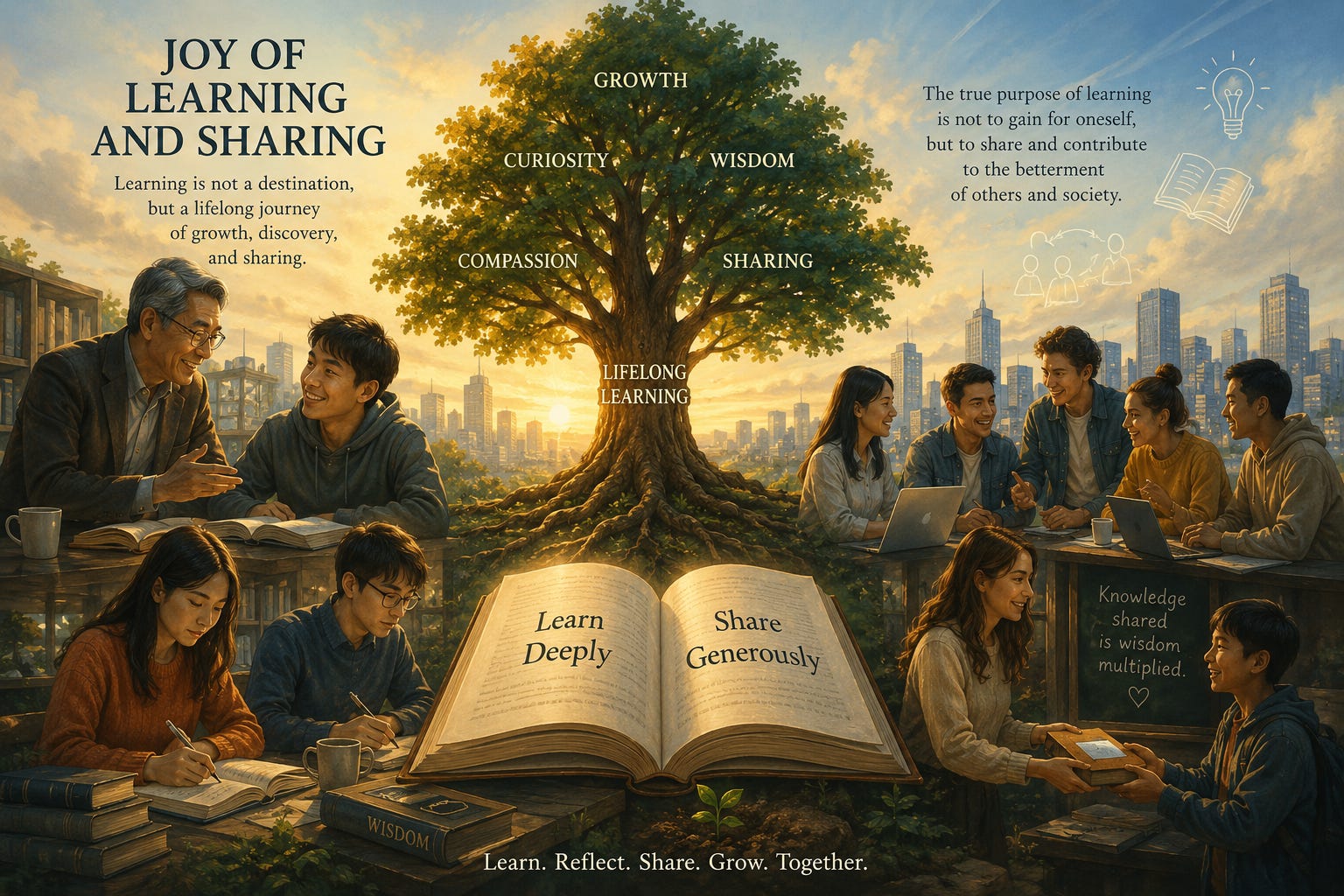
Equally compelling is the book’s philosophy of sharing. It emphasizes that the completion of learning ultimately lies in giving and sharing with others. True knowledge becomes more meaningful not when it is possessed individually, but when it is shared collectively. This idea aligns closely with today’s open-source culture, collaborative research, and global academic networks. Indeed, many of the world’s most significant innovations have emerged not from isolation and competition, but from cooperation and shared wisdom.
The writing style itself is another major strength of the book. Although it deals with educational philosophy and academic themes, the prose never becomes excessively technical or rigid. The author’s warm perspective and sincere storytelling naturally draw readers into the text. Students, parents, professors, and general readers interested in lifelong learning can all find something meaningful within its pages. In this sense, the work functions less as a specialized academic text and more as an educational essay that bridges generations.
Viewed within the context of the AI age, the book’s message becomes even more significant. Today’s students can quickly access information through generative AI systems such as ChatGPT. Yet as information becomes increasingly accessible, the question “Why do we learn?” grows even more important. This book offers a deeply human and philosophical answer to that question. Learning, it argues, is not merely the accumulation of information, but the cultivation of humanity, wisdom, and a sense of community.
Above all, the book offers readers a quiet sense of hope. Even in an age dominated by competition and anxiety, it reminds us that learning itself can still be a source of joy. The author values growth over achievement, continuity over speed, and contribution to the community over individual success. Such messages help restore the very essence of education that modern society often risks losing.
In conclusion, Joy of Learning and Sharing is not simply a book about education. It is a humanistic reflection on the meaning of learning and a philosophical guide to the future direction of education in the age of artificial intelligence. For students, it provides academic and personal direction; for professors, it reawakens the true purpose of teaching; and for general readers, it rekindles the joy of lifelong learning. In a rapidly changing world, the book quietly yet powerfully reminds us that the goal is not merely to learn more, but to learn more deeply and to share more generously. +++
{Solti}
May 17, 2026
[서평] 배움과 나눔의 기쁨
— 배움의 본질은 결국 ‘나눔’에 있다 (한국어 서평)
오늘날 우리는 인공지능과 초연결 사회 속에서 살아가고 있다. 정보는 넘쳐나지만, 진정한 배움의 의미를 성찰하는 시간은 오히려 줄어들고 있다. 이러한 시대에 『Joy of Learning and Sharing: 배움과 나눔의 기쁨 (강 성권 박사 지음)』은 단순한 자기계발서나 교육 지침서를 넘어, “왜 배우는가?”라는 가장 근본적인 질문을 다시 던지게 만드는 책이다. 이 책은 오랜 연구 및 교육 경험과 삶의 통찰을 바탕으로, 배움의 기쁨과 그것을 타인과 나누는 삶의 가치를 따뜻하면서도 깊이 있게 전달한다. 특히 대학 교육과 평생학습, 그리고 인간 성장의 본질을 연결하려는 시도가 매우 인상적이다.
이 책의 가장 큰 장점은 ‘학습’을 단순한 성적 향상이나 취업 준비의 도구로 보지 않는다는 점이다. 저자는 배움을 인간 존재의 성숙 과정으로 이해한다. 이는 공자의 “배우고 때때로 익히면 또한 기쁘지 아니한가(學而時習之 不亦說乎)”라는 가르침과도 자연스럽게 연결된다. 실제로 책은 현대 대학생들이 흔히 겪는 불안과 경쟁 중심의 교육 현실을 지적하면서도, 배움의 본질은 자기 발견과 내면 성장에 있다고 강조한다.
또한 이 책은 교수와 학생의 관계를 매우 인간적으로 바라본다. 오늘날 많은 학생들은 교수를 단순한 평가자로 생각하지만, 저자는 교수를 ‘지식 전달자’를 넘어 ‘삶의 동반자’로 이해한다. 특히 오랜 강의 경험 속에서 만난 다양한 학생들의 사례와 에피소드는 독자에게 큰 공감을 준다. 이는 단순한 교육 이론보다 훨씬 강력한 설득력을 지닌다. 독자는 책을 읽으며 마치 인생 선배와 조용히 대화를 나누는 듯한 느낌을 받게 된다.
책에서 특히 주목할 부분은 ‘스마트한 학생’이 되는 방법에 대한 논의이다. 그러나 여기서 말하는 스마트함은 시험 기술이나 단기 암기 능력이 아니다. 저자는 질문하는 능력, 자기주도적 사고, 지속적인 독서 습관, 그리고 실패를 통해 배우는 태도를 더 중요하게 여긴다. 이는 AI 시대에 더욱 절실한 가치이다. 인공지능은 정보를 빠르게 제공할 수 있지만, 무엇이 중요한 질문인지를 결정하는 능력은 결국 인간에게 달려 있기 때문이다.
저자는 또한 대학 교육의 목적을 단순한 직업 준비에 한정하지 않는다. 그는 학생들이 졸업 이후에도 계속 배우는 사람, 즉 lifelong learner가 되어야 한다고 강조한다. 이는 현대 사회에서 매우 중요한 메시지이다. 기술 변화의 속도가 빨라질수록, 한 번 배운 지식만으로 평생을 살아갈 수 없기 때문이다. 결국 미래 사회에서 가장 중요한 경쟁력은 “계속 배울 수 있는 능력”이다.
이 책은 동양적 교육 철학과 현대적 교육 현실을 자연스럽게 연결한다는 점에서도 의미가 크다. 특히 유교적 배움의 가치와 현대 대학 교육의 방향성을 함께 논의하는 부분은 매우 흥미롭다. 저자는 전통적 지혜가 단순히 과거의 유산이 아니라, 오늘날의 교육 문제를 해결하는 데에도 중요한 통찰을 제공할 수 있다고 본다. 이는 서구 중심 교육 담론에 익숙한 독자들에게 신선한 시각을 제공한다.
또 하나 인상적인 점은 ‘나눔’의 철학이다. 책은 배움의 완성이 결국 나눔에 있다고 강조한다. 진정한 지식은 혼자 소유할 때보다 타인과 공유할 때 더욱 가치가 커진다는 것이다. 이러한 관점은 오늘날 오픈소스 문화, 협업 연구, 글로벌 학술 네트워크와도 깊이 연결된다. 실제로 현대 혁신의 많은 사례들은 경쟁보다 협력과 공유에서 탄생하고 있다.
문체 역시 이 책의 중요한 매력이다. 학술적 내용을 담고 있으면서도 지나치게 어렵거나 딱딱하지 않다. 저자의 따뜻한 시선과 진솔한 경험담은 독자가 자연스럽게 책 속으로 빠져들게 만든다. 특히 학생뿐 아니라 학부모, 교수, 그리고 평생학습에 관심 있는 일반 독자들도 충분히 공감할 수 있도록 구성되어 있다. 이러한 점에서 이 책은 특정 계층만을 위한 전문서가 아니라, 세대를 연결하는 교육 에세이에 가깝다.
AI 시대라는 맥락에서 보면, 이 책의 메시지는 더욱 중요하게 다가온다. 오늘날 학생들은 ChatGPT와 같은 생성형 AI를 통해 빠르게 정보를 얻을 수 있다. 그러나 정보 접근성이 높아질수록 오히려 ‘왜 배우는가’라는 질문은 더욱 중요해진다. 이 책은 바로 그 질문에 대해 인간적이고 철학적인 답을 제시한다. 배움은 단순한 정보 축적이 아니라 인간성과 공동체 의식을 키우는 과정이라는 것이다.
무엇보다 이 책은 독자에게 조용한 희망을 준다. 경쟁과 불안이 지배하는 시대 속에서도, 배움 자체를 즐길 수 있다는 가능성을 보여주기 때문이다. 저자는 성취보다 성장, 속도보다 지속성, 그리고 개인적 성공보다 공동체적 기여를 강조한다. 이러한 메시지는 오늘날 교육이 잃어버리기 쉬운 본질을 다시 떠올리게 만든다.
결론적으로 『Joy of Learning and Sharing: 배움과 나눔의 기쁨』은 단순한 교육 서적이 아니다. 그것은 배움의 의미를 다시 성찰하게 하는 인문학적 에세이이자, AI 시대에 인간 교육이 나아가야 할 방향을 제시하는 철학적 안내서이다. 대학생들에게는 학업의 방향성을, 교수들에게는 교육의 본질을, 그리고 일반 독자들에게는 평생학습의 기쁨을 다시 일깨워 준다. 빠르게 변하는 시대일수록 우리는 더 많이 배우는 사람이 아니라, 더 깊이 배우고 더 넓게 나누는 사람이 되어야 한다는 사실을 이 책은 조용하지만 강하게 말해주고 있다. +++
{솔티}
2026년 5월 17일

Young Choi, PhD is a Professor at Regent University bringing a rare combination of technical expertise and creative spirit to everything he does. A scholar in AI, cybersecurity, and network & telecommunications service management, he has published 38 books including AI and cybersecurity area books, over 200 refereed articles, and over 20 book chapters. Beyond the academy, Dr. Choi is a passionate poet, essayist, and wooden block laser engraving artist whose reflective writing invites readers to rediscover life’s beauty in quiet contemplation(靜觀). He lives under the motto: “Study hard and give generously without holding back! (열심히 공부해서 아낌없이 남주자 !: 열공아남!)”
Published books: https://www.amazon.com/stores/Young-Choi/author/B0DMZ5S6R7?ref=ap_rdr&shoppingPortalEnabled=true