

When Two Worlds Meet
Imagine a quiet study where a Confucian scholar in a traditional Korean gat sits across from a colonial American thinker with ink-stained fingers and a curious smile. Choi Rip and Benjamin Franklin never met in history, yet in the age of artificial intelligence, their ideas seem to speak directly to one another.
At first, they appear very different. Choi Rip reflects deeply on harmony, ethics, and the interconnectedness of all knowledge. Franklin experiments, invents, and tests ideas in the real world. But beneath these differences lies a shared concern: how should intelligence serve humanity?
As AI becomes more powerful, their perspectives feel less like relics of the past and more like guiding voices for the future.
Two Ways of Seeing Intelligence
Choi Rip would likely say that intelligence is not just about knowing things—it is about understanding how everything fits together. Knowledge, for him, is woven into a larger moral and contextual fabric. Intelligence without ethics or awareness of context is incomplete.
Franklin, on the other hand, might smile and point to a practical result. For him, intelligence proves itself through usefulness—through inventions, improvements, and tangible benefits to society. If something works and helps people, it is intelligent.
One sees intelligence as deeply integrated wisdom, the other as effective problem-solving. Both are right—just from different angles.
Knowledge: A Web or a Toolbox?
For Choi Rip, knowledge resembles a living web. Every idea connects to others—ethics to language, nature to human behavior. To understand one part, you must understand the whole.
Franklin treats knowledge more like a toolbox. Each idea is a tool that can be tested, improved, and used. He learns by doing, experimenting, and refining.
In today’s AI systems, we see both approaches. Some models try to integrate vast knowledge across domains, while others are designed for specific tasks. The future may depend on blending these two views—building systems that are both deeply connected and practically useful.
Ethics: Built-In or Built Over Time
Choi Rip would insist that ethics must be part of intelligence from the beginning. You cannot separate knowing from doing what is right. For him, morality is not an add-on; it is the foundation.
Franklin takes a more personal route. He famously worked on cultivating virtues—discipline, honesty, humility—through daily practice. Ethics, in his view, grows through habit and effort.
In AI terms, this becomes a crucial question:
Should machines be designed with ethics built into their core, or should ethical behavior emerge through use and correction?
Choi Rip leans toward designing ethics into the system. Franklin leans toward developing ethics through iteration and experience.
The Importance of Context
Choi Rip pays close attention to context. Meaning changes depending on situation, culture, and relationships. Nothing exists in isolation.
Franklin values context too, but he tends to rely more on general principles—ideas that work across situations. His focus is on what consistently produces results.
Modern AI still struggles here. It can process enormous data, yet often misses subtle context. Choi Rip’s perspective suggests that true intelligence requires sensitivity to the situation, not just pattern recognition.
Innovation: Ideas vs. Inventions
Choi Rip’s contributions are philosophical. He builds frameworks for thinking—ways to understand the world as an integrated whole.
Franklin builds things. Lightning rods, bifocals, public libraries—his ideas take physical form and directly change daily life.
If we think about AI, Choi Rip helps us ask, What should AI be?
Franklin helps us answer, How can we make it work?
Human-Centered Intelligence
Both thinkers ultimately care about people.
Choi Rip envisions a world where intelligence supports harmony—between individuals, society, and nature. AI, in this view, should reflect human values and deepen understanding.
Franklin envisions a world where intelligence improves life—making it easier, safer, and more productive. AI should solve problems and expand human capability.
One emphasizes meaning, the other impact.
Learning and Growth
Choi Rip emphasizes reflection and self-cultivation. Learning is a lifelong process of becoming wiser and more aligned with ethical principles.
Franklin also values lifelong learning, but his method is active and experimental. He learns by trying, failing, and improving.
In AI development, both approaches matter:
Reflection → designing better systems
Experimentation → improving them through use
Two Paths, One Direction
If we step back, a pattern emerges.
Choi Rip offers a philosophical compass—guiding direction, purpose, and ethical grounding.
Franklin offers a practical engine—driving innovation, application, and progress.
Modern AI already reflects echoes of both:
Systems thinking and integration resemble Choi Rip
Engineering and experimentation resemble Franklin
Even pioneers like Alan Turing and Norbert Wiener stand somewhere between these two traditions.
Intelligence Needs Both Roots and Wings
As we move deeper into the AI age, the question is no longer just how to build intelligent systems—but how to build meaningful ones.
Choi Rip reminds us that intelligence must be grounded—in ethics, context, and human values.
Benjamin Franklin reminds us that intelligence must move—creating, solving, and improving the world around us.
Without Choi Rip, AI risks becoming powerful but directionless.
Without Franklin, it risks becoming thoughtful but ineffective.
Together, they show us something essential:
True intelligence needs both roots and wings—
the depth to understand, and the ability to act.
And perhaps that is exactly what the future of AI requires.
{Solti}
April 30, 2026

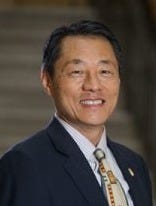
Young Choi, PhD is a Professor at Regent University bringing a rare combination of technical expertise and creative spirit to everything he does. A scholar in AI, cybersecurity, and network & telecommunications service management, he has published 38 books including AI and cybersecurity area books, over 200 refereed articles, and over 20 book chapters. Beyond the academy, Dr. Choi is a passionate poet, essayist, and wooden block engraving artist whose reflective writing invites readers to rediscover life’s beauty in quiet contemplation(靜觀). He lives under the motto: “Study hard and give generously without holding back! (열심히 공부해서 아낌없이 남주자 !)”
Published books: https://www.amazon.com/stores/Young-Choi/author/B0DMZ5S6R7?ref=ap_rdr&shoppingPortalEnabled=true