
The AI age is often described as a technological rupture—an era defined by algorithms, data-driven cognition, and machine intelligence that increasingly mediates human decision-making. Yet beneath this surface of novelty lies a deeper continuity: the enduring human quest to integrate knowledge, ethics, and creativity into a unified way of thinking. In this broader intellectual horizon, the thought of Choi Rip (1539–1612), a Korean Renaissance scholar, offers an unexpectedly relevant lens for interpreting and guiding the AI age.
Choi Rip is traditionally recognized for his synthesis of Confucian learning, practical governance, and literary expression. However, when reinterpreted through the epistemological demands of contemporary artificial intelligence, his intellectual architecture reveals something more fundamental: a model of integrated intelligence that resonates with modern attempts to build human-centered AI systems.
At the core of Choi Rip’s philosophy is the principle of integration without fragmentation. In his approach to learning and interpretation—particularly in his readings of classical texts such as the Book of Changes (I Ching)—knowledge was never treated as isolated domains. Instead, ethics, cosmology, language, and human conduct formed a single dynamic system. This holistic orientation parallels current efforts in AI system design, where multimodal models attempt to unify language, vision, reasoning, and action into coherent architectures. Just as Choi Rip resisted intellectual compartmentalization, modern AI research seeks to overcome siloed representations of intelligence.
Equally significant is Choi Rip’s emphasis on practical wisdom (pragmatic ethics). For him, knowledge was not valuable unless it informed action in governance, education, and daily life. In the AI age, this principle directly aligns with the need for responsible AI governance—systems that are not only powerful but also aligned with human values, social norms, and ethical constraints. Issues such as algorithmic bias, transparency, and accountability echo Choi Rip’s concern that intellectual insight must ultimately serve the stability and flourishing of human society.
Another dimension of his contribution lies in what might be called context-sensitive interpretation. Choi Rip’s scholarship emphasized that texts and principles cannot be understood outside their situational and relational contexts. This anticipates a central challenge in artificial intelligence: contextual reasoning. Modern large language models, for instance, depend heavily on contextual embeddings to interpret meaning dynamically rather than rigidly. In this sense, Choi Rip’s interpretive philosophy can be seen as an early analogue to context-aware intelligence systems.
Moreover, Choi Rip’s intellectual life reflects a form of human-centered cognitive integration, where reasoning, emotion, and aesthetic sensitivity coexist. His engagement with poetry and classical commentary was not merely decorative but constitutive of his epistemology. This resonates strongly with current debates in AI about affective computing and the need to design systems that understand not only logical structure but also human emotion and cultural nuance.
From a broader perspective, Choi Rip’s legacy suggests that intelligence—whether human or artificial—cannot be reduced to computation alone. It must also incorporate ethical orientation, contextual awareness, and integrative synthesis. In this sense, he offers a pre-modern philosophical framework that unexpectedly complements post-modern technological development.
In conclusion, Choi Rip’s contributions to the AI age are not technological in a direct sense, but conceptual and philosophical. He represents an early articulation of what we now call integrated intelligence—a form of thinking that refuses fragmentation, insists on ethical grounding, and embraces contextual complexity. As artificial intelligence continues to evolve, revisiting such intellectual traditions may help ensure that the future of AI remains not only more powerful, but also more humane and meaningfully connected to the depth of human thought.
{Solti}
April 28, 2026

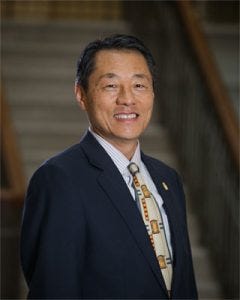
Young Choi, PhD is a Professor at Regent University bringing a rare combination of technical expertise and creative spirit to everything he does. A scholar in AI, cybersecurity, and network & telecommunications service management, he has published 38 books including AI and cybersecurity area books, over 200 refereed articles, and over 20 book chapters. Beyond the academy, Dr. Choi is a passionate poet, essayist, and wooden block engraving artist whose reflective writing invites readers to rediscover life’s beauty in quiet contemplation. He lives under the motto: “Study hard and give generously without holding back! (열심히 공부해서 아낌없이 남주자 !)”
Published books: https://www.amazon.com/stores/Young-Choi/author/B0DMZ5S6R7?ref=ap_rdr&shoppingPortalEnabled=true