

Most academics have heard the advice to achieve better work-life balance. Few have found it particularly useful. The phrase implies that work and life are opposing forces to be managed against each other — a framing that rarely matches the lived reality of faculty who carry teaching, research, service, and personal commitments all at once, often within the same hour.
Robert Talbert, Ph.D., offered a more honest and more useful alternative at the University of Maine at Presque Isle’s November Lunch & Learn Series. His seminar, titled “The Coherent Professor,” proposed replacing the pursuit of balance with the cultivation of coherence — and the distinction is worth sitting with.
Talbert, known for his work on intentional academic practice and humane productivity, built his talk around three principles that are simple to state and genuinely difficult to live.
The first is what he calls the Law of the Whole Person.
Rather than treating professional and personal commitments as competing forces, Talbert invited participants to pursue alignment — between values, responsibilities, and daily practice. Coherence, in his framing, is what allows an academic to function as an integrated human being rather than a fragmented task manager perpetually behind on everything.
The second principle is that consistency beats performance.
Talbert illustrated this with a comparison that will be familiar to anyone who has encountered compounding-effect thinking: 1.01³⁶⁵ versus 0.99³⁶⁵.
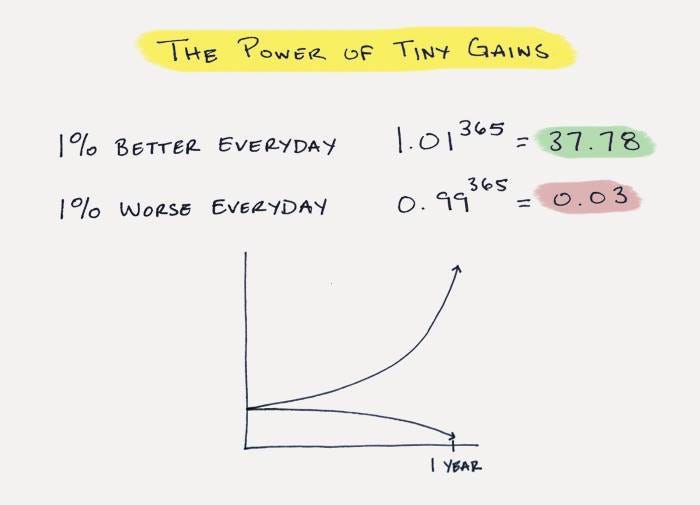
The math is striking, but the message is simpler. Small, consistent actions accumulate into substantial results over time. Intermittent bursts of high performance, however impressive in the moment, do not. Show up, even in small ways, and let consistency do the heavy lifting.
The third principle follows naturally: small steps matter most when they fit inside a coherent system.
Talbert encouraged participants to build environments — whether through digital tools like Todoist and Obsidian or analog practices like bullet journaling — that reduce cognitive load, reinforce intentional choices, and reflect personal values. The goal is not optimization for its own sake but the creation of systems that make sustainable progress feel natural rather than heroic.
The seminar was accompanied by a rich set of curated resources, from Talbert’s own Intentional Academia Substack to GTD workflows, PARA organization methods, and research on email overload and attention residue. Taken together, these materials made a coherent argument: faculty thrive when they design their environments to protect focus, reduce friction, and honor human limits rather than override them.
(see more detail information in this PDF file)

What made Talbert’s session worth returning to was not its novelty but its honesty. Academic life is genuinely demanding, and most productivity advice either minimizes that difficulty or responds to it with systems so elaborate they become burdens of their own.
Talbert’s framework is different. It asks not how to do more, but how to do what matters — with less waste, more intention, and the kind of steady consistency that compounds quietly into a meaningful life.
Prioritize coherence over balance.
Trust the power of consistent effort.
Build systems that help small steps accumulate into something lasting.
That is advice worth carrying into the week.
Author:

Prof. Dr. Jeonghwan (Jerry) Choi — Editor-in-Coordination, University of Maine at Presque Isle
Jeonghwan (Jerry) Choi, PhD is an Associate Professor of Business at the University of Maine at Presque Isle and Editor-in-Coordination of K-GSP Forum (contact: jeonghwan.choi@gmail.com). With over 25 years of industry and consulting experience, he specializes in leadership development, human resource management, organizational behavior, and social entrepreneurship. His research focuses on workforce resilience, organizational health, and self-directed leadership — bridging rigorous scholarship with practical insight to cultivate leaders who create meaningful, sustainable, and humane organizations .
© K-Global Scholars and Professionals Forum. All rights reserved. Content published in the K-GSP Forum may not be reproduced, distributed, or transmitted in any form without prior written permission from the K-GSP Forum, except for brief quotations with full attribution.