

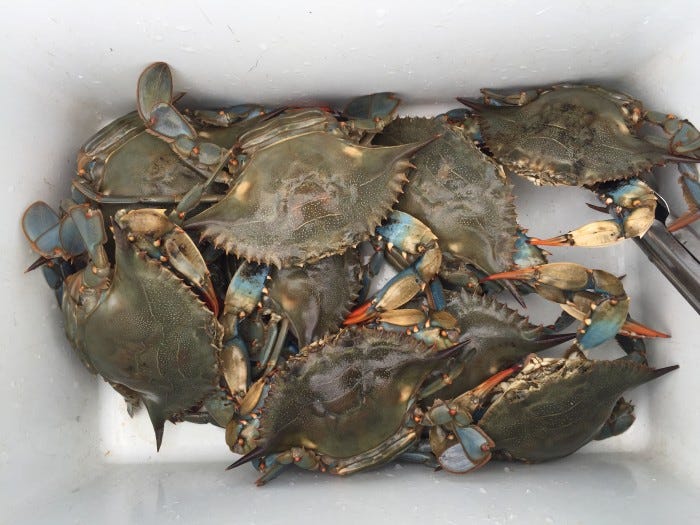
This year, I heard the news that the population of blue crabs, which are abundant in the Chesapeake Bay, has increased by more than 40 percent compared with previous years. Having grown up eating various crab dishes such as gejang (soy-marinated raw crab), steamed crab, and crab soup, following my parents’ taste, I became very curious about how people catch crabs in the United States.
Although I had heard about crabbing several times, my curiosity to see it with my own eyes remained. Then, yesterday, while I happened to visit the seaside alone to enjoy the fresh ocean breeze, I finally had the opportunity to witness people crabbing.
The blue crab is called by that name in America because of its bluish shell. Interestingly, when it is steamed, its color changes into a bright orange. A few days ago, while visiting a grocery store, I noticed that many female crabs carrying eggs were being sold, probably because May is their spawning season.
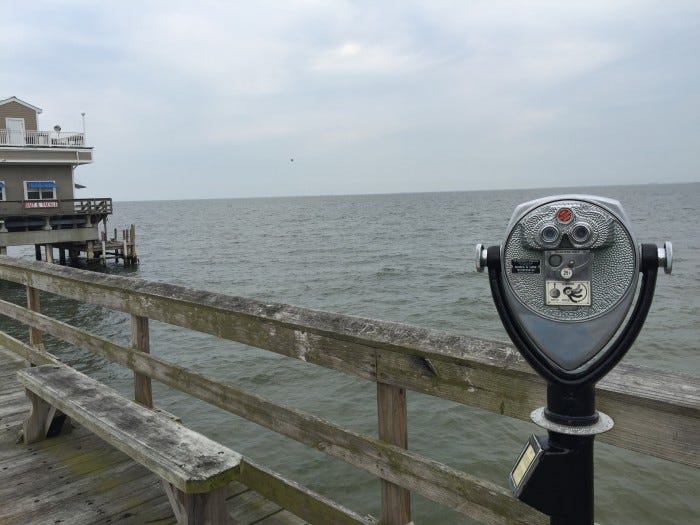
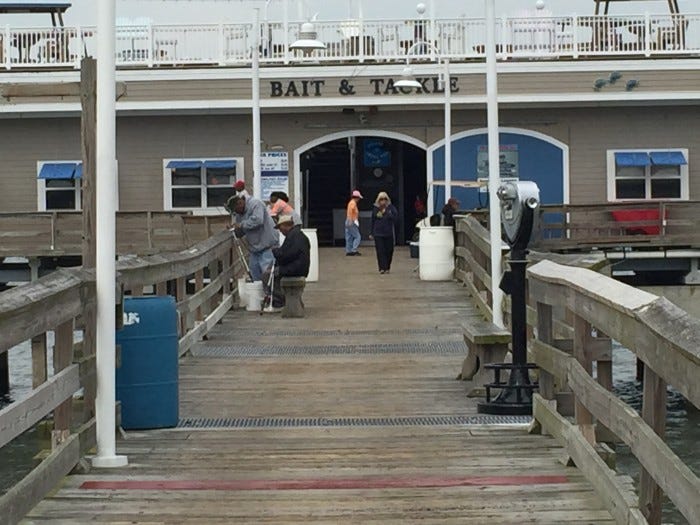
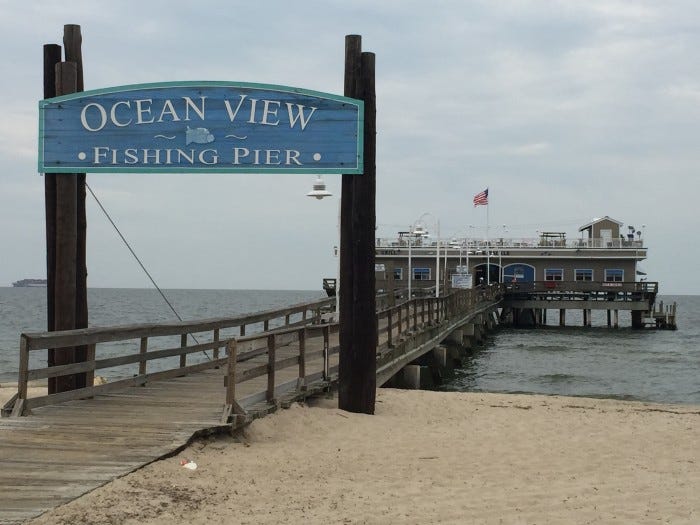
In Norfolk, Virginia, there is a place called Ocean View. There, wooden structures have been built over the ocean, creating a pier-like area where people can walk out above the water and enjoy crabbing along the pier.
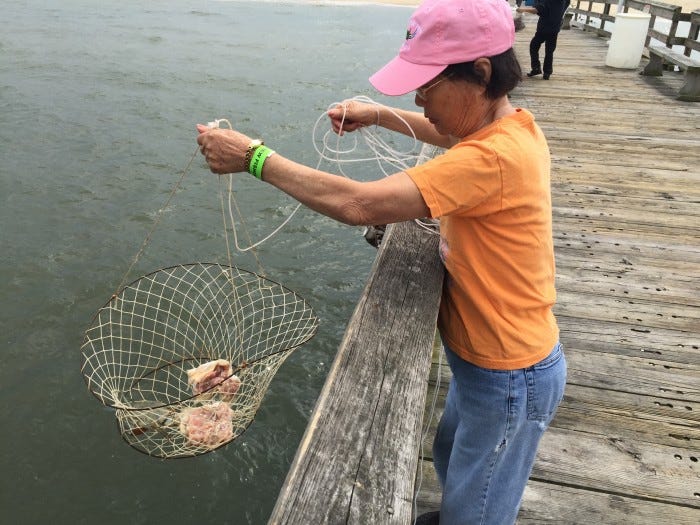
To go crabbing, people first prepare simple bait, such as raw chicken legs or chicken breasts, and place them in an ice cooler. They also need a special crabbing tool—a circular net with a diamond-shaped weight attached underneath to help it sink. These tools were being sold at local stores for about nine dollars each.
The method of catching crabs is surprisingly simple. The prepared chicken is tied inside the crab net, and the line is slowly lowered into the water until the tool reaches the ocean floor. The end of the line is then secured to the railing of the pier. Occasionally, when one feels a slight movement suggesting that a crab has grabbed the bait, the line is gently pulled up, bringing the crab trap out of the water.
By coincidence, I met a Korean American woman who told me that she had originally lived in Busan, Korea. She happened to be crabbing there that day, and she kindly explained many things about the process. With her permission, I was also able to take several photographs.
Watching her closely, I noticed that crabs were being caught quite successfully in a short period of time. She explained that people can also rent a boat and go farther out into the ocean for crabbing. Nearby, some people were fishing for small yellow croakers, and everyone seemed to be enjoying themselves. They proudly showed each other what they had caught, smiling with the simple happiness that comes from connecting with nature.
I came to think that occasionally going out to the sea to catch crabs could be beneficial for both physical and mental health. It provides a chance to clear one’s mind, enjoy the outdoors, and perhaps even cook a delicious spicy crab stew with the catch. Wouldn’t that be at least a two birds with one stone experience?
Crabbing in America? It was not something I had ever seriously imagined, even while living in Korea. Yet, seeing people enjoy crabbing here made me realize that, regardless of cultural background, people everywhere share a common appreciation for gathering food from the ocean, nature’s boundless treasure chest.
The sea connects people across cultures. Whether in Korea or America, the simple joy of catching something from the water, sharing it with others, and appreciating the gifts of nature remains a universal human experience. +++
{Solti}
체사피크 만(Chesapeake Bay)에서의 게잡이: 자연이 주는 기쁨의 작은 발견
올해는 Chesapeake Bay에서 많이 서식하는 Blue Crab이 예년에 비해 개체수가 약 40% 넘게 늘어났다는 보도를 들었다. 어릴적부터 부모님 입맛을 따라 게장, 게찜, 게탕 등등을 많이 먹고 자란 나로서는 미국에서 게잡이(crabbing)를 어떻게 하는지 매우 궁금하기도 하였다.
게잡이에 대해 말로는 몇번 듣기는 하였지만 직접 보고 싶은 호기심(好奇心)은 여전하였다. 그러다 어제 우연히 바닷가에 혼자 바람을 쐬러 갔다가 드디어 crabbing하는 것을 보게 되었다.
Blue crab은 등껍질이 푸르러서 그런지 미국에서는 그 이름으로 불리고 있는데 게를 찐다든가 하면 그 색깔이 주황색으로 변한다. 며칠 전에 식료품 점에 갔더니 5월에는 산란기라 그런지 알이 많이 벤 암게를 팔고 있는 것을 보았다.
버지니아의 Norfolk에는 Ocean View라는 곳이 있는데 바다 위로 나무 구조물로 인공물을 만들어 선착장 같이 교각(橋脚, pier)을 만들어 놓았다. 사람들이 교각을 따라 게잡이를 할 수 있게 만들어 놓은 것이다.
게잡이를 할려면 우선 ice cooler에 간단하게 생닭다리나 닭가슴살을 준비하여 넣어 가지고 간다. 동그란 그물 밑에 다이몬드 형의 추(錐)가 달린 게잡이 도구도 게를 잡기 위해 필요한데, 상점에서 하나에 $9에 팔고 있었다.
게를 잡는 방법은 아주 간단한데 준비해 간 닭고기를 그 게잡이 도구 안에 묶고 바다를 향해 아래로 슬슬 줄을 내려가면서 바다 바닥에 닿으면 줄의 끝을 교각 난간에 묶어 놓았다가 가끔 게가 문것 같은 “느낌”이 오면 줄을 잡아당겨 게잡이 도구를 끌어 올리기만 하면 되는 것이다.
우연히 부산(釜山)에 사시다가 이민오셨다는 아주머니 한분께서 마침 거기서 게잡이를 하고 계셔서 게잡이에 관한 여러가지 설명을 들었고 허락을 얻고서 사진을 몇장 찍게 되었다.
옆에서 유심히 지켜보니 짧은 시간 안에 게가 상당히 잘 잡히는 것 같았다. 원하면 배를 빌려 타고 바다로 나가 잡을 수도 있다고 한다. 어떤 사람들은 옆에서 조기를 낚시로 잡고 있기도 하였는데 잡는 재미가 쏠쏠하여 자기들이 잡은 것들을 서로 자랑하면서 모두들 싱글벙글이었다.
가끔 바다로 나가 게잡이를 하는 것도 아주 육체건강(肉體健康)과 정신건강(精神健康)에 모두 좋겠다는 생각이 들었다. 머리도 식힐 겸 게를 잡아서 맛있는 매운탕도 끓여 먹게되면 적어도 일석이조(一石二鳥)는 아닌가? 미국(美國)에서 게잡이라? 한국(韓國)에서도 별로 생각해보지 않았는데 미국에서 게잡이하는 사람들을 보니 동서양(東西洋)사람들 구분 없이 모두 자연(自然)의 무한(無限)한 식량창고(食糧倉庫)인 바다에서 뭘 잡아 올리는 것은 다들 좋아하는 모양이다. +++
2016년 5월 11일
{솔티}

Prof. Dr. Young Choi (Editor in Chief) — Regent University
Young B. Choi is a Professor in the Department of Engineering & Computer Science at Regent University. He published 38 books with ‘Selected Readings in Cybersecurity’ (2018) (over 800 copies archived globally at university/college libraries around the world) and ‘Cybersecurity Applications and Artificial Intelligence’ (2023) available in seven major world languages. He proposed the world’s first global and universal telecommunications “Service Order Handling (SOH)” Model (T-SOH Model) (1995) with Dr. Adrian Tang. With this innovative research work, he received the IEEE NOMS ’96 Best Paper Award and became the first recipient of the Outstanding Contribution Award of the TeleManagement Forum in 1998. His research areas include Natural Language Processing-focused AI, AI-applied cybersecurity, network and telecom service management, and Korean studies on Gani Choi Rip’s Jeonggwan (靜觀: Quiet Contemplation) philosophy and Shilhak ( 實學: Practical Learning).
톱날꽃게인 것 같은데, 맛있다고 유명하던데 먹으러 가야겠습니다. ^^