

Five Ways to Have a Pleasant Professorial Career in America: Five Haibun (Part 3)

Image credit: Illustration generated with OpenAI’s ChatGPT image-generation tool, 2026.
Poet’s Note:
The Haiku Society of America defines a haibun as “a terse, relatively short prose poem in the haikai style, usually including both lightly humorous and more serious elements, and typically ending with a haiku.” (Haiku Society of America: Haiku Definitions. https://www.hsa-haiku.org/hsa-definitions.html)
This is the third installment in my series “Five Ways to Have a Pleasant Professorial Career in America.” The first installment, published on October 2, 2026, offered five tips: smiling, having a sense of humor, saying thank you, saying sorry, and avoiding negativity. The second installment, published on October 9, 2026, focused on answering emails promptly and politely, being an asset rather than a liability, saying hi on campus, respecting students, and getting along with people. This installment presents five more tips worth considering. These principles have also guided my own professional conduct and personal life over the years.
#1: Keep Up with Technology
Institutions of higher learning expect their employees to keep up with new educational technologies. For those who are not particularly excited about technology, especially those who are old school, learning new tools can be a burden. One more thing to learn? they often ask.
When COVID-19 struck, schools shifted their instruction online. My university quickly decided to deliver classes through Canvas LMS and hold faculty meetings on Zoom. I had used Blackboard Learn and later Canvas LMS, so teaching online was not a problem. Zoom, however, concerned me. I had heard about it a couple of years earlier, but as someone approaching retirement age, I was gleeful that I did not have to learn it. With the onset of the pandemic, however, learning it became a requirement. I am glad I did because Zoom is useful for more than academic purposes. It allows people far apart to talk face-to-face on screen for free!
Once I learned to use Zoom, I thought I would not have to learn anything new. A couple of years later, however, my university introduced Microsoft Teams and began using it. Some people said it was better than Zoom, and learning it became another requirement. After all, America is a land of constant innovation, with little patience for the status quo. After taking a deep breath, I learned this new technology. For some people, especially those who enjoy experimenting with technology, learning new tools comes easily. For people like me, it can be a tall order. Teams does not seem particularly better than Zoom, but at least I now know how to use it. The important thing is that I can function technologically as a member of an academic community.
New instructional technologies are constantly emerging, and instructors are often required or encouraged to learn them. I cannot keep up with every tool that technology enthusiasts are eager to explore. However, I know enough to function well as an instructor and administrator. I can use Blackboard Learn, Canvas LMS, Zoom, Teams, Interfolio, Data Hub, and Stoplight, among others. That is enough to get by. In fact, I am proud of myself for learning all these tools, given that I am a hillbilly at heart.
old-school professor
afraid of clicking
wrong icons
#2: Avoid Sarcasm
It is one thing to be humorous and make people laugh with a pleasant comment. Self-deprecating comments are often welcome because they poke fun at the speaker rather than hurt someone else. They also encourage listeners to nod in recognition of their own weaknesses.
It is another thing to make people laugh with a barbed comment at someone else’s expense. When the target of the joke is absent, the situation can be even worse. The person being mocked has no opportunity to respond, and those who listen may wonder if they will be the target next time. A wise approach is to avoid negative conversations about absent colleagues, even among people we have known for years.
Avoiding such conversations is not always easy, especially when others initiate them. Nevertheless, sarcasm at someone else’s expense rarely leaves everyone feeling good afterward. After all, many colleagues will eventually go their separate ways through retirement or relocation to another institution. It would be nice to be remembered for graciousness and kindness rather than a sharp tongue.
a barbed remark—
some feel obliged
to laugh
#3: Do Not Brag about Your Accomplishments
Most professors do not brag about their accomplishments, but it can be tempting to announce publications, awards, invited lectures, and other professional achievements repeatedly. These accomplishments are the results of hard work and sustained academic effort, and they have their place in university life. Administrators need to document faculty accomplishments for institutional records and reports. Such achievements are also important evidence when an institution undergoes accreditation review, so university leaders have good reason to recognize and publicize them.
However, it is often better to let your work speak for itself. People are busy with their own lives, and repeated announcements of personal achievements can make others uncomfortable. Our grandparents and parents used to celebrate our accomplishments with us. Once they are gone, we can share our joy with surviving family members and a couple of close friends. That is more than enough.
my latest book
I place it before
my mom’s portrait
#4: Take Good Care of Yourself
Academics tend to be diligent. They do not necessarily act out of vain ambition or a desire to outdo others. Rather, dedication is part of their academic DNA. In a way, they compete with themselves. If their efforts bring recognition, so be it.
Although hard work can improve productivity, it can also take a toll on one’s health. I have always been diligent, but having survived a health scare in 1996, near the end of my doctoral studies, I keep in mind that no professional success is worth risking one’s life.
To stay healthy, I avoid strenuous exercise. I do not go to the gym, run, or try to walk 10,000 steps a day. I have tried all these things, but they did not work for me. Instead, I park my car in the farthest parking area from my campus building, walk for about fifteen minutes along a paved trail, and then walk down the hill to my office, which takes another ten minutes. I could reach my office from the nearest parking lot in just three minutes, but I intentionally take the longer route to incorporate more physical activity into my daily routine. On campus, I take the stairs instead of the elevator and look for reasons to walk around. I even take a longer route to and from the bathroom to add more steps to my daily routine. This practice may not necessarily extend my life, but I am glad to be doing something good for my body.
Although I have always leaned toward a vegetarian diet, carbohydrates and cheese are hard to resist. I know, however, that it is important to consume both in moderation. As I grow older, I pay more attention to getting enough protein, so I eat chicken or fish and take protein powder every day. The sharp, fizzy taste of classic soft drinks is tempting, so when I eat at the campus diner, I take a small sip before pouring unsweetened tea into my glass. On Fridays, or when I have accomplished something worth celebrating, I treat myself to cheese pizza, sausage, and classic Pepsi. Throughout the day, I carry a water bottle to stay hydrated and reduce the risk of fainting from dehydration.
I do not drink alcohol or smoke. Instead, I unwind by listening to deep sleep music, old-time mountain music, or bluegrass tunes. At other times, I watch funny YouTube videos, including AI-generated clips in which a warthog taunts lions or a lioness smacks her mate for mistreating their cubs.
The bottom line is that we should find sustainable ways to take care of ourselves. What works for one person may not work for another. The important thing is to protect our health while making room for the things that bring us pleasure.
conference trip
a big burger and Coke
my own reward
#5: Stop Comparing Yourself with Others
Academics tend to be competitive. They want to do well, sometimes even better than their colleagues. Eventually, however, they realize that no matter how hard they work, some people will surpass them in their achievements. This realization can be disheartening. Indeed, academic accomplishments do not necessarily bring happiness. They may instead lead to disappointment, as the applause of others can ultimately seem hollow.
The key to happiness is not to compare yourself with others, because such comparisons rarely bring anything positive. A better approach is to live your life in pursuit of meaning and purpose as you define them. You know who you are, and if you have lived to the best of your ability under the circumstances, you should feel good about yourself. Perhaps this is what matters most when we look back on our lives near the end, as fragments of memory flicker through our minds, often in solitude.
leaving books
in the hallway
no one takes them
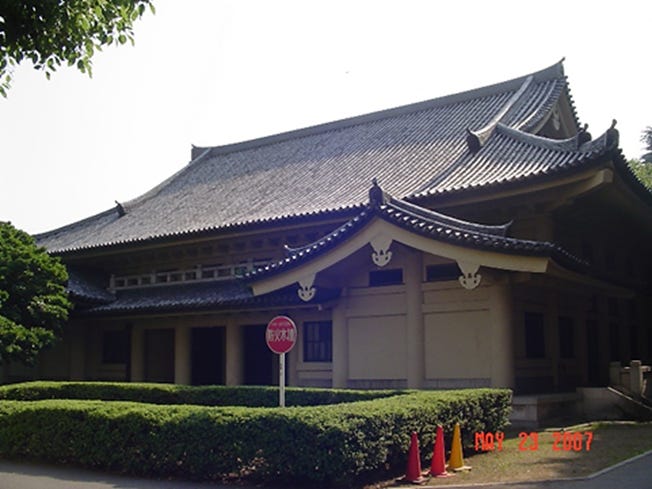
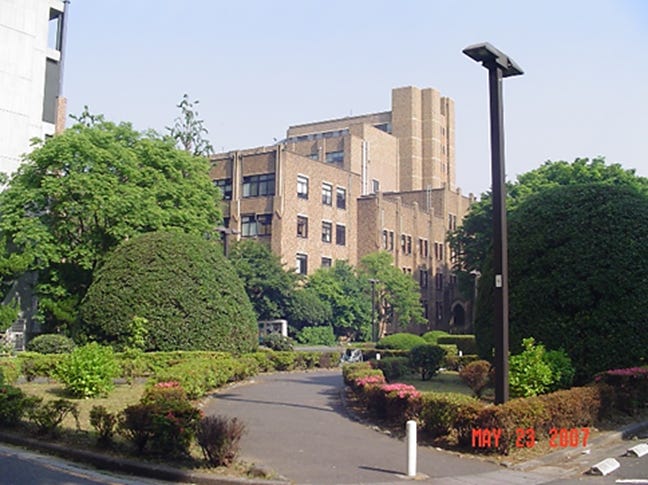
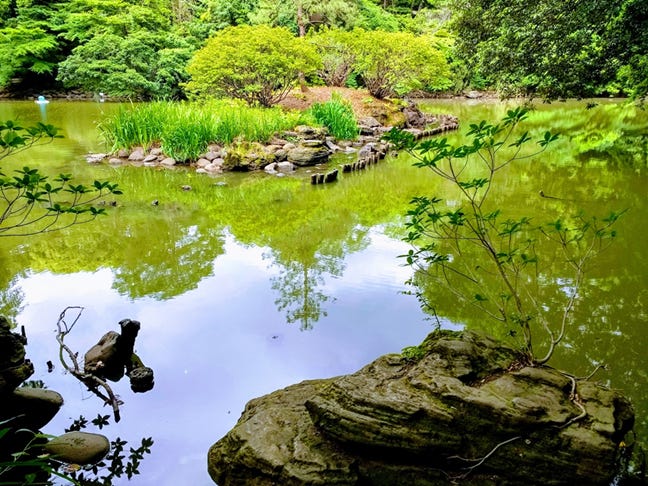
University of Tokyo, Japan. Photos by John J. Han.
Top and Middle: East meets West on the University of Tokyo’s main campus, as illustrated by the coexistence of different architectural styles.
Bottom: Sanshirō Pond at the University of Tokyo, named after the protagonist of Natsume Sōseki’s novel Sanshirō (translated by Jay Rubin). Sanshirō is a young man from Kumamoto, on the island of Kyushu, who moves to Tokyo to attend the university. As a new student, he enjoys strolling around the pond, which was later named after him. Below are two passages from the novel.
[Sanshirō] stared at the surface of the pond. The reflection of many trees seemed to reach the bottom, and down deeper than the trees, the blue sky. No longer was he thinking of streetcars, or Tokyo, or Japan. A sense of something far-off and remote had come to take their place. The feeling lasted but a moment, when loneliness began to spread across its surface like a veil of clouds. The solitude was complete, as if he were sitting alone in Nonomiya’s cellar. (p. 22)
The University was really big and the buildings were really beautiful. There was a pond in the middle of the campus. [Sanshirō] enjoyed walking around it. (p. 32)
About the Author

Professor of English and Creative Writing and Associate Dean of the School of Humanities and Theology, Missouri Baptist University
John J. Han, PhD, is the author, editor, co-editor, or translator of 38 books published by Rodopi, Peter Lang, McFarland, Bloomsbury Academic, and other presses. He has published hundreds of scholarly articles and more than 3,000 poems, mostly haiku, in journals and anthologies around the world. His forthcoming book, Echoes from the Hills: Critical Essays on Ozarks Literature, co-edited with C. Clark Triplett, will be published by the University of Arkansas Press. He is in his 28th year as a full-time faculty member at Missouri Baptist University, where he has taught since 1999. He has also taught at Kansas State University, the University of Nebraska–Lincoln, Nebraska Wesleyan University, and Washington University in St. Louis. He has served as a visiting scholar at Georgia College & State University and the University of Ljubljana in Slovenia.
© K-Global Scholars and Professionals Forum. All rights reserved. Content published in the K-GSP Forum may not be reproduced, distributed, or transmitted in any form without prior written permission from the K-GSP Forum, except for brief quotations with full attribution.