

How we Die: Encounters with Finality in Literature [Ten Haibun]
There are many themes that literary works explore, but few are more prominent than death. The reason is simple: death is an inevitable part of human existence, and it has intrigued people throughout history. Religions seek answers to the ultimate questions of why people die and what happens afterward. Unlike religion, which tends to approach death from a transcendental, theological, or speculative perspective, literature generally strives to come to terms with it from an existential point of view. There are exceptions, of course. Religious literature, written to embody or defend a particular spiritual position, is one example. Ideological literature, written to support a particular sociological position, such as Marxist literature, is another. Mainstream literature, however, tends to approach death from an existential or experiential perspective. In some works, death is a tangential theme; in others, it serves as the central theme.
The following ten haibun each feature an imaginative story that deals with death, either indirectly or directly. One of the pleasures of reading literature is discovering how an author’s worldview shapes the portrayal of death. The more fiction we read, the more we come to understand the different ways people perceive death. It is also interesting to consider how an author’s life experiences and social environment influence that perspective. After all, people from different family and social backgrounds often have different attitudes toward death. Having read and taught many fictional stories throughout my teaching career, I would like to share ten selected stories that illustrate the diversity of perspectives on death. They range from ancient to modern times and come from both Western and Eastern literary traditions.
#1: The Failed Search for Immortality: The Epic of Gilgamesh (circa 2150-2000 B.C., Sumer)
Over his friend, Enkidu, Gilgamesh cried bitterly, roaming the wilderness.
“I am going to die!—am I not like Enkidu?!
Deep sadness penetrates my core,
I fear death, and now roam the wilderness—
I will set out to the region of Utanapishtim, son of Ubartutu,
and will go with utmost dispatch! […]
—The Epic of Gilgamesh, trans. Maureen Gallery Kovacs
The Epic of Gilgamesh, one of the earliest surviving literary works, originated in ancient Mesopotamia, present-day Iraq. Its earliest Sumerian poems date to approximately 2150–2000 B.C., followed by an Old Babylonian version in Akkadian around 1700 B.C. and the Standard Babylonian Version between 1300 and 1000 B.C. Since George Smith published the first English translation in 1876, numerous translations have made the epic accessible to modern readers. Stephen Mitchell’s version is particularly appealing for its lucid and poetic style.
Although the story contains supernatural events and larger-than-life heroes, its central concerns remain familiar: the pursuit of glory, the bonds of friendship, the fear of death, and the desire to overcome human mortality. The episode of Utnapishtim, who survives the Great Flood and receives immortality, also invites comparison with the biblical story of Noah in Genesis.
Gilgamesh is a complex and often unlikable hero. At the beginning of the epic, he is a cruel, violent, and egotistical ruler who seeks personal glory. His friendship with Enkidu and, especially, Enkidu’s sudden death force him to confront his own mortality. Although his strength and royal status set him apart from ordinary people, he cannot escape the fate that awaits every human being. His long journey in search of eternal life ultimately fails, suggesting that physical immortality is beyond human reach. Yet the epic does not offer a simple lesson about accepting death. Gilgamesh returns home with a changed understanding of his limitations, but he still takes pride in the splendor of his kingdom and the accomplishments he has left behind. His story suggests that human beings cannot live forever, but their deeds, wisdom, and contributions to civilization may outlast them. Despite being more than three millennia old, The Epic of Gilgamesh remains worth reading because it explores questions about human destiny that continue to concern us today.
an old gravestone
the inscriptions
illegible
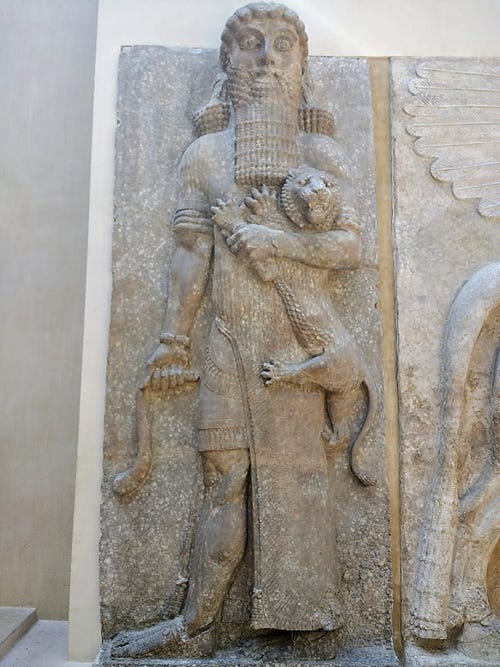
A statue of Gilgamesh in the Louvre in Paris depicts him as a hero of superhuman strength who has subdued a lion. Yet, in the epic, he finds himself powerless in the face of death. Photo by John J. Han, June 21, 2025.
#2: The Universality of Death: Edgar Allan Poe’s “The Masque of the Red Death” (1842, USA)
“The figure was tall and gaunt, and shrouded from head to foot in the habiliments of the grave. The mask which concealed the visage was made so nearly to resemble the countenance of a stiffened corpse that the closest scrutiny must have had difficulty in detecting the cheat.”
—“The Masque of the Red Death”
In “The Masque of the Red Death,” a deadly plague sweeps across the land, causing its victims to suffer severe pain, dizziness, and bleeding before dying within half an hour. Prince Prospero and a thousand wealthy nobles retreat into a fortified abbey, sealing its entrances to protect themselves from the disease. Several months later, Prospero holds a lavish masquerade ball in seven rooms decorated in different colors. The final room, however, is decorated in black and illuminated by a blood-red light, creating an eerie atmosphere. At midnight, a mysterious guest dressed and masked like a victim of the Red Death appears. Offended by the stranger’s presence, Prospero pursues him through the rooms and confronts him in the final chamber, where he suddenly dies. When the guests attempt to remove the stranger’s costume, they discover that there is no person underneath it. The Red Death has entered the abbey, and all the revelers eventually die.
This tale is typical of Edgar Allan Poe: bizarre, ironic, and surprising. Despite its allegorical elements, the story portrays the universality of death, which claims even those who try their best to avoid it. Prince Prospero and his guests use their wealth and privileges to hide within the abbey, believing that their seclusion will protect them from the plague. However, their efforts prove futile, and they discover that they are no different from the common people outside the abbey. Death makes no distinction between the rich and the poor, between the powerful and the powerless. In the end, no amount of wealth, privilege, or physical protection can save anyone from death.
Halloween midnight
a demonic laugh
from nowhere
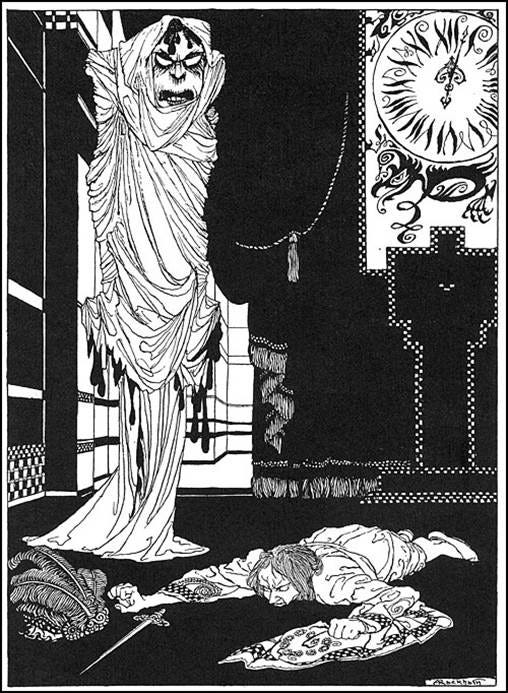
Illustration by Arthur Rackham for Edgar Allan Poe’s “The Masque of the Red Death,” from Poe’s Tales of Mystery and Imagination (1935). Public domain.
#3: The Fatal Obsession with Physical Beauty: Nathaniel Hawthorne’s “The Birthmark” (1843, USA)
“Even Pygmalion, when his sculptured woman assumed life, felt not greater ecstasy than mine will be.”
—“The Birthmark”
In “The Birthmark,” Aylmer, a scientist, marries Georgiana, a beautiful woman whose only apparent imperfection is a small, crimson birthmark shaped like a hand on her cheek. Aylmer becomes obsessed with this mark, which he regards as a blemish that prevents his wife from achieving physical perfection. Although Georgiana once considered it a charming feature, Aylmer’s reaction makes her uncomfortable with her appearance. Aylmer eventually takes her to his laboratory and conducts various experiments to remove the birthmark. Georgiana trusts her husband and agrees to drink a potion that he has prepared, despite the possible danger. The potion gradually makes the birthmark disappear, but as the mark fades, Georgiana realizes that she is dying. Aylmer succeeds in removing the mark but loses his wife in his attempt to achieve an impossible ideal of physical perfection.
This story is about a man’s obsession with physical beauty in a woman. Georgiana once thought that the birthmark on her face was something charming, but when her husband identifies it as a blemish, she agrees to undergo his scientific procedures to remove it. She goes along with his experiments, and as a result, she dies. The story can be read as an allegory warning against the dangerous desire to eliminate natural human imperfections. It also recalls the serious, sometimes life-threatening complications of cosmetic surgery in Korea. Obsessed with physical attractiveness, some people go to extremes to alter their faces and bodies, sometimes facing serious complications and regrettable consequences. Like Aylmer, who cannot accept his wife’s natural appearance, they risk losing something far more important in their pursuit of an idealized form of beauty. People in premodern Korea would have had a hard time understanding today’s standards of female beauty in East Asia.
plastic surgeries
after all the Buddha said
there is no self
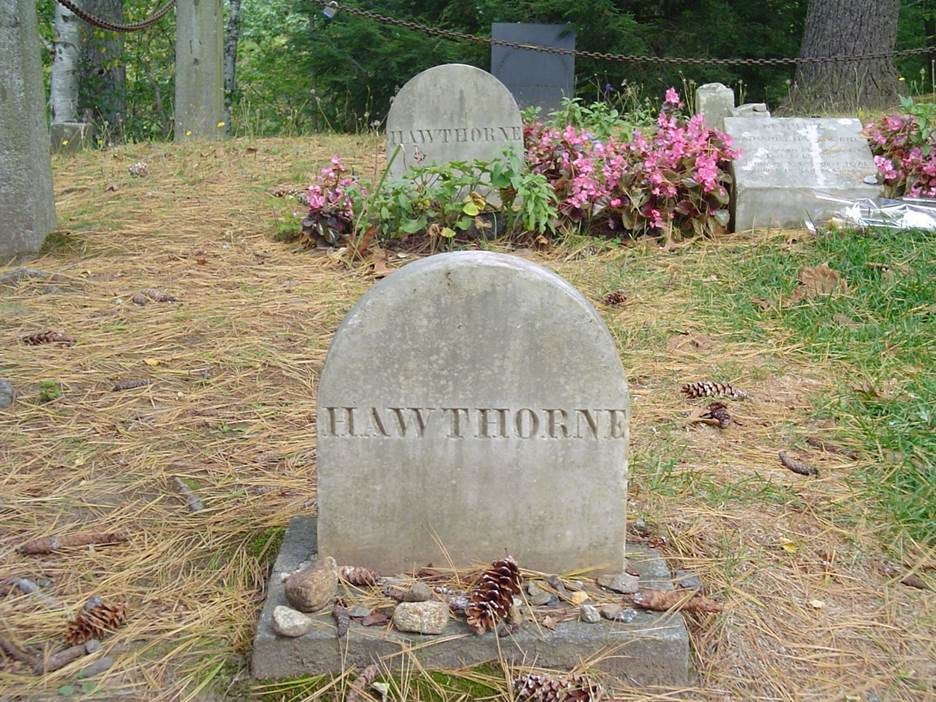
Grave of Nathaniel Hawthorne at Sleepy Hollow Cemetery. Located on Bedford Street, Concord, Massachusetts. Photo by John J. Han, Sept. 2006.
#4: Deaths in Siberia: Fyodor Dostoyevsky’s Notes from the House of the Dead (1862, Russia)
“He died in prison.”
—The House of the Dead or Prison Life in Siberia, introduction by Julius Bramont
In Notes from the House of the Dead, death and dying are closely associated with the harsh realities of penal life in Siberia. Through the narrator, Alexander Petrovich Gorianchikov, Dostoyevsky provides keen insights into the inmates’ extreme feelings of hopelessness and despair. Violence pervades the prison, and even the most violent convicts eventually have their willpower shattered by the harsh prison conditions. Inmates are subjected to vicious corporal punishment, and some are beaten as many as 4,000 times in a single punishment. Each blow can “cut the guilty body like a razor” (trans. Boris Jakim), and some beatings result in death or insanity. In one episode, a quiet man who has been reading the Gospel from midnight until morning for a whole year suddenly attacks a high-ranking official. He is arrested and severely punished, and three days later, he dies in the hospital. The title of the book suggests a record of harsh experiences, but it also captures the inmates’ loss of freedom and the despair of their existence.
Despite the prevalence of violence, the inmates learn to sustain themselves emotionally, mentally, and spiritually. Hope, in whatever form, is an indispensable ingredient of survival for them. No matter how grim the future looks, they continue to hope for better days ahead. Some find meaning in religious faith, while others turn to hedonistic pleasures or find their self-worth in completing assigned labor. Moments of happiness may be fleeting and illusory, but they help the inmates keep their sanity for one more day. Near the end of the novel, the narrator reflects on the benefits of his years of imprisonment. He recalls that “only a passionate desire for resurrection, for renewal, for a new life gave me the strength to wait and hope” (trans. Boris Jakim). His experience of suffering has given him an opportunity to examine his past life, judge himself, and prepare for the future. For the narrator, life in exile proves to be a blessing in disguise. Thus, although the overall mood of the novel is gloomy and sad, Dostoyevsky offers a glimpse of the possibility of redemption through suffering.
high prison walls
he envies birds
outside the window
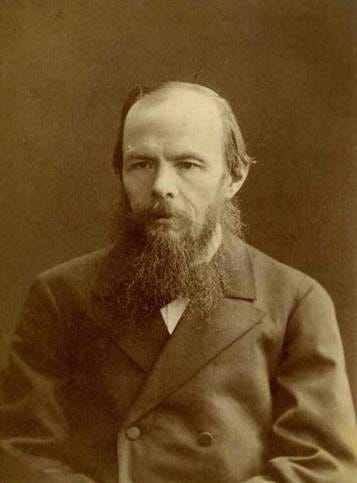
Fyodor Dostoyevsky, portrait photograph by Constantin Shapiro (1879). Cropped version. Public domain.
#5: Freedom-Turned-Death: Kate Chopin’s “The Story of an Hour” (1894, USA)
“When the doctors came they said she had died of heart disease—of the joy that kills.”
—“The Story of an Hour”
In “The Story of an Hour,” Louise Mallard, a woman with a heart condition, receives news from her sister Josephine that her husband, Brently Mallard, has died in a railroad accident. Overcome with grief, Louise retreats to her room, where she gradually realizes that her husband’s death may bring her freedom. She sometimes loved him, but she begins to imagine a future in which she can live for herself rather than according to the expectations of marriage. This realization fills her with unexpected happiness, and she looks forward to a long life of independence. However, when she comes downstairs with her sister, Brently unexpectedly enters the house, having survived the accident. Louise collapses and dies, and the doctors later attribute her death to the joy of seeing her husband alive.
At only two or three pages in print, this story models excellence in short fiction writing. Its use of foreshadowing, its exploration of Louise Mallard’s complex psychology upon hearing of her husband’s supposed death, and the surprising irony of her husband’s return and her own death are superb. No word is wasted in this work of fiction. The ending, in which Louise dies upon discovering that her husband is still alive, is both ironic and tragic. Many critics view Louise’s brief experience of freedom as a demonstration of her desire for independence. The story also challenges the traditional expectations placed upon women in marriage and raises questions about their right to live according to their own desires.
funeral
a mixture of tears
and smiles
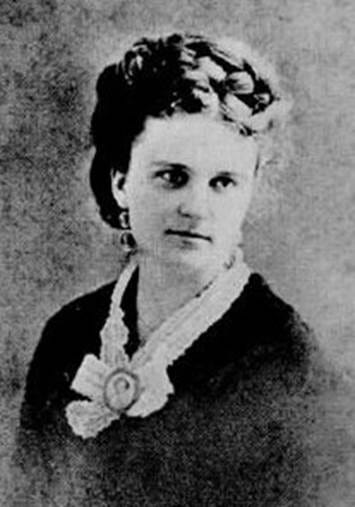
Kate Chopin, photographed in 1894. Public domain.
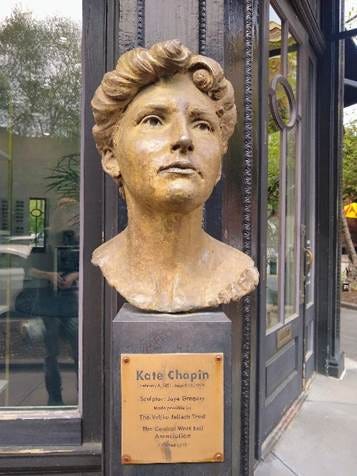
The bronze bust of Kate Chopin stands at Writer’s Corner in St. Louis, Missouri. Kate Chopin (1850–1904), born Katherine O’Flaherty, was a native of St. Louis. She and her husband, Oscar Chopin, moved to Louisiana in October 1870. After Oscar’s death in 1882, she returned to St. Louis in 1884. She is buried in Calvary Cemetery in St. Louis. Photo by John J. Han, April 18, 2024. Note: This statue was stolen by a man around 2:10 a.m., February 18, 2026, but it was recovered two days later. The bust was rededicated on May 31, 2026.
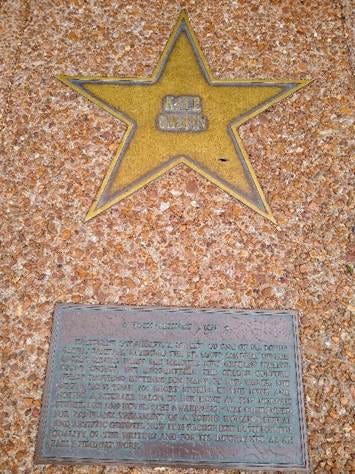
Kate Chopin’s star on the St. Louis Walk of Fame, located on the Delmar Loop in St. Louis. Photo by John J. Han, April 18, 2024.
#6: One Final Act of Kindness: Leo Tolstoy’s “Master and Man” (1895, Russia)
“The thought that he [Nikita] might, and very probably would, die that night occurred to him, but did not seem particularly unpleasant or dreadful. It did not seem particularly unpleasant, because his whole life had been not a continual holiday, but on the contrary an unceasing round of toil of which he was beginning to feel weary. And it did not seem particularly dreadful [….]
—“Master and Man,” trans. Louise and Aylmer Maude
In “Master and Man,” Leo Tolstoy explores the destructive power of greed and the possibility of spiritual redemption through self-sacrifice. Vasili Andreevich Brekhunov, a wealthy church elder, is dissatisfied with his possessions and eager to acquire more wealth. His desire to purchase a grove before a competitor can buy it drives him to travel with his servant, Nikita, despite the approaching danger of a severe snowstorm. Even when they have opportunities to spend the night in safety, Vasili insists on continuing the journey. Eventually, the two men lose their way and become stranded in the freezing wilderness. At one point, Vasili manages to escape with their horse, leaving Nikita behind, but his attempt to save himself fails. He returns to his servant, and the two men try to survive by sharing their body heat. As Vasili gradually loses consciousness, he realizes that his body may keep Nikita alive. He dies knowing that his servant will probably survive, and Nikita lives for another twenty years.
Although the story is somewhat allegorical, Tolstoy portrays the men’s ordeal in the snowstorm with remarkable realism. The contrast between the wealthy master and his poor servant is central to the story. Initially, Vasili appears to be motivated entirely by self-interest, while Nikita seems to embody the simple faith and patience of an ordinary peasant. Readers might expect Nikita to sacrifice himself for his selfish master, but Tolstoy reverses that expectation. The man who once abandoned his servant ultimately gives his life to save him. Vasili’s transformation is not presented as an abstract moral lesson; it emerges from his physical suffering, fear, guilt, and growing awareness of another person’s life. His final act of self-sacrifice suggests that genuine human worth lies not in material possessions or social status but in compassion for others. Through this redemptive ending, Tolstoy shows how a man consumed by greed can discover a more meaningful way to live, even at the moment of death.
a rich man’s deathbed
his tight hands
now open
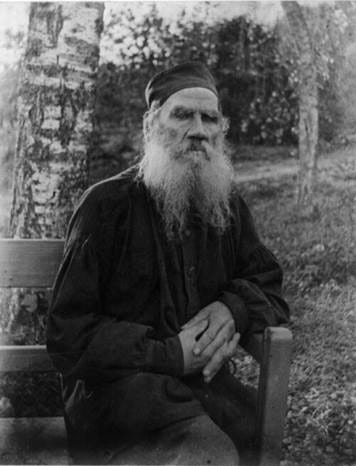
Leo Tolstoy seated, circa 1897. Photograph courtesy of the Library of Congress, Prints and Photographs Division (digital ID: cph.3b46059). Public domain.
#7: Working for Family Till Death: Franz Kafka’s The Metamorphosis (1915, Austria-Hungary)
“He [Gregor] remained in this state of empty and peaceful rumination until he heard the clock tower strike three in the morning. He watched as it slowly began to get light everywhere outside the window too. Then, without his willing it, his head sank down completely, and his last breath flowed weakly from his nostrils.”
— The Metamorphosis, trans. David Wyllie
In The Metamorphosis, Gregor Samsa, a traveling salesman who supports his parents and younger sister, wakes up one morning to discover that he has been transformed into a monstrous insect-like creature. Rather than worrying about his physical condition, he worries about missing his train and being late for work. When his family discovers his transformation, they are horrified. Unable to work and provide financial support, Gregor becomes a burden to his family. His sister Grete initially takes care of him by bringing him food, but as time passes, the family grows resentful and neglects him. His father injures him by throwing an apple at him, and Gregor’s condition continues to deteriorate. Eventually, Grete declares that the family must get rid of the creature. Gregor understands that he is no longer wanted and dies alone in his room. Rather than grieving his death, his family feels relieved and takes an excursion to the countryside, looking forward to a new beginning.
The Metamorphosis is a fascinating modern story with universal appeal. The grotesque transformation of a human being into a giant insect is already familiar to many readers, but what is particularly intriguing is what goes through the main character’s mind as he gradually becomes a monstrous figure. At first, his family sympathizes with him, but they come to regard him as a burden. When he dies, the family feels relieved and moves on with their lives. Gregor may have wondered during his descent toward death, “Why did I work so hard for my family? What have I done for my own well-being?” Such regrets may be shared by numerous people, some of whom do not openly express them. Kafka’s story raises questions about the value of a person whose worth is measured mainly by one’s ability to provide for others.
midnight shift
his family
asleep
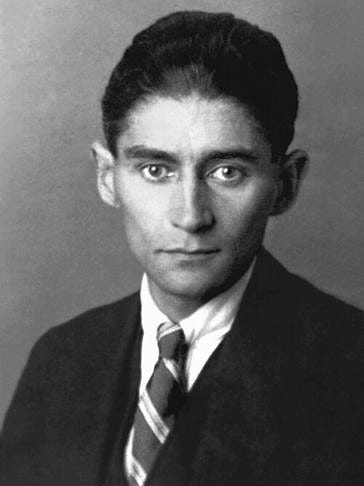
Franz Kafka, portrait photograph, probably taken in September 1923 at the Wertheim Department Store in Berlin. Photographer unknown. Public domain.
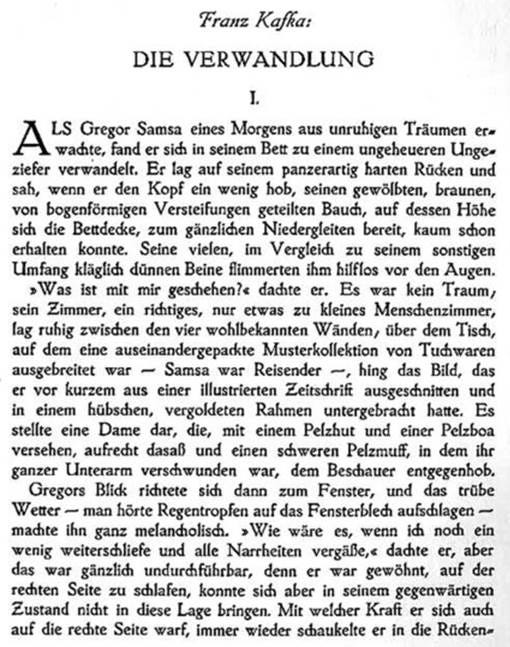
First publication of Franz Kafka’s The Metamorphosis (Die Verwandlung) in Die weißen Blätter, October 1915, Leipzig. Image cropped to fit the page. Public domain.
#8: Redemptive Death for a Better Society: John Steinbeck’s The Grapes of Wrath (1939)
“Death was a friend, and sleep was Death’s brother.”
—The Grapes of Wrath
In Steinbeck’s The Grapes of Wrath, Jim Casy’s death becomes a catalyst for a new social awareness in Tom Joad. An ex-preacher who has abandoned conventional religion, Casy dedicates himself to fighting for the defenseless and oppressed. He volunteers to go to prison in Tom Joad’s place and later becomes involved in the labor struggle of migrant workers. Before his death at the hands of vigilantes, Casy speaks to his killer in words that recall Jesus’ prayer for forgiveness on the cross. His death is thus portrayed in quasi-religious terms, presenting him as a modern-day Christ figure who sacrifices himself for the welfare of others. More importantly, his death has a profound effect on Tom, who begins to understand Casy’s teachings about the importance of collective action. As Tom recalls, Casy once taught that an individual does not possess a soul entirely separate from others but is part of a greater collective soul. Tom now understands that a person cannot achieve much in isolation.
Jim Casy’s redemptive death creates a voluntary disciple in Tom. Although Tom is initially unsure of exactly what he will do, he decides to leave his family and dedicate his life to the cause of the marginalized. He understands Casy’s social teachings only after the ex-preacher’s death, much as Christ’s disciples come to understand their master’s teachings after his passing. Casy’s death also changes Tom’s parents, both of whom remember him as a good man. His teachings, expressed in biblical language, become a new gospel of humanism and humanitarianism. In this sense, Casy’s death is not simply the end of an individual life but a powerful event for those who continue to live. Through Tom’s transformation, Steinbeck shows how the death of a master figure can inspire others to begin a new life modeled after his example.
darkening prairie
light flickers
from a distant house
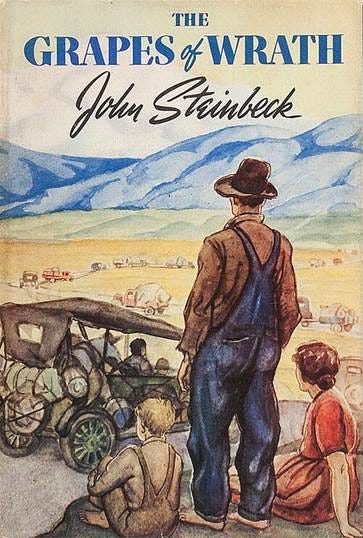
First-edition dust jacket of John Steinbeck’s The Grapes of Wrath (1939), illustrated by Elmer Hader. Public domain.

Weedpatch Camp (Arvin Farm Labor Supply Center), established in 1935-1936 in Kern County, California, served as a model for the government camp depicted in John Steinbeck’s The Grapes of Wrath (1939). Photo by John J. Han, Nov. 2014.
#9: Dying with Rage: Gabriel García Márquez’s “Death Constant Beyond Love” (1970, Colombia)
“Six months and eleven days later he would die in that same position, degraded and repudiated because of the public scandal with Laura Farina, and weeping with rage at dying without her.”
—“Death Constant Beyond Love,” trans. Gregory Rabassa
In this work of magical realism, widely taught in college literature courses, Senator Onésimo Sánchez learns that he has only six months and eleven days to live because of a terminal illness. Rather than sharing the news with his family, the 42-year-old career politician continues his political activities and travels to the desert village of Rosal del Virrey to campaign for reelection. His campaign relies on theatrical props and false promises. During his visit, he meets Laura Farina, a 19-year-old woman whose father, Nelson Farina, wants the senator to obtain a false identity card for him. Nelson sends Laura to the senator wearing a locked chastity belt, hoping to use her beauty to charm him. The senator is captivated by Laura and eventually grants her father’s request. Their encounter leads to a public scandal that tarnishes his reputation. He is consumed by rage at the prospect of dying without Laura, six months and eleven days after learning about his illness.
In this story, García Márquez portrays a man who has spent his life exercising political power but finds himself powerless in the face of death. Even after learning that his life is coming to an end, Sánchez continues to manipulate others and pursue his personal desires. His involvement with Laura seems to offer him a final opportunity to experience something beyond his approaching death. However, his desire to possess her only exposes his desperation. The politician who once relied on deception and public appearances cannot negotiate with death or control what happens after he is gone. His final response is not acceptance but rage. He dies weeping because Laura will survive him. Through this darkly comic ending, García Márquez suggests that political influence, personal desire, and worldly power are ultimately no match for the finality of death.
winter night
the empty chair
a cat occupies
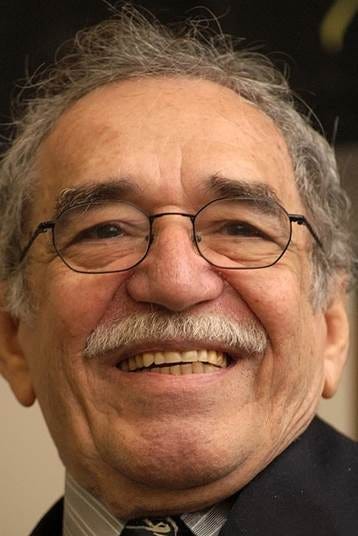
Gabriel García Márquez (2002). Photograph by Jose Lara. Licensed under Creative Commons Attribution-ShareAlike 2.0 (CC BY-SA 2.0).
#10: Freedom as Emptiness: V. S. Naipaul’s “One Out of Many” (1971, Trinidad and Tobago and England)
“And it was strange, I thought, that sorrow lasts and can make a man look forward to death, but the mood of victory fills a moment and then is over.”
—“One Out of Many”
In V. S. Naipaul’s (1932-2018) “One Out of Many,” Santosh, a man from Bombay, India, moves to Washington, D.C., with his Indian employer. Finding himself in a place very different from his homeland, he feels uncomfortable and does not quite fit in. He has a difficult time adjusting to life in the city and feels very much alone because his new surroundings are so unlike his home in India. He eventually leaves his employer and begins working for Priya, who arranges for him to marry an African American woman.
Although Santosh becomes a husband and a citizen of the United States, he continues to feel alone and empty inside. As a free man in the United States, he has a job and a wife, but these things do not give him a sense of purpose or belonging. At the end of the story, he looks at himself in the mirror and sees only a body that needs to be clothed and fed. He imagines continuing this routine for the rest of his life until he dies. He sees his newfound freedom not as an opportunity for a meaningful life but as a kind of emptiness. Naipaul thus portrays a man who has gained freedom but has not found happiness or a sense of identity.
immigrant’s spring
watching a bird’s nest
in silence
About the Author

Professor of English and Creative Writing and Associate Dean of the School of Humanities and Theology, Missouri Baptist University
John J. Han (PhD, University of Nebraska-Lincoln) is the author, editor, co-editor, or translator of 38 books published by Rodopi, Peter Lang, McFarland, Bloomsbury Academic, and other presses. He has published hundreds of scholarly articles and more than 3,000 poems, mostly haiku, in journals and anthologies around the world. His forthcoming book, Echoes from the Hills: Critical Essays on Ozarks Literature, co-edited with C. Clark Triplett, will be published by the University of Arkansas Press. He is in his 28th year as a full-time faculty member at Missouri Baptist University, where he has taught since 1999. He has also taught at Kansas State University, the University of Nebraska–Lincoln, Nebraska Wesleyan University, and Washington University in St. Louis. He has served as a visiting scholar at Georgia College & State University and the University of Ljubljana in Slovenia.
© K-Global Scholars and Professionals Forum. All rights reserved. Content published in the K-GSP Forum may not be reproduced, distributed, or transmitted in any form without prior written permission from the K-GSP Forum, except for brief quotations with full attribution.