
“Record of the Animal Conference” (1908): A Short Story by An Guk-seon
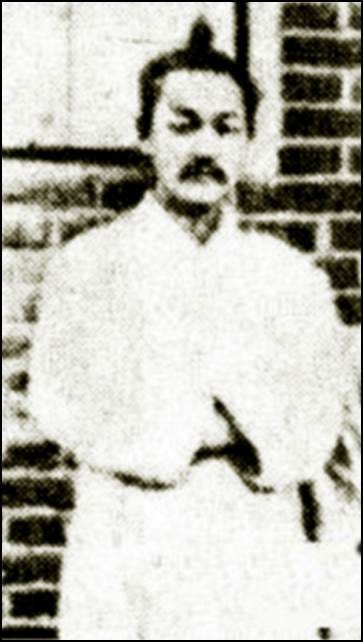
A photograph of An Guk-seon as a political prisoner under Japanese colonial rule.
Translator’s Introductory Notes
An Guk-seon (안국선, 安國善, 1878-1926) was a Korean short story writer, nonfiction writer, and government official whose career spanned the final years of the Joseon dynasty and the early period of Japanese colonial rule. Born on December 5, 1878, in what is now Gosan-myeon, Anseong, Gyeonggi Province, he received a government-sponsored education in Japan. In 1895, he entered the regular course at Keio Gijuku in Tokyo and graduated the following year. He then studied political science at Tokyo Senmon Gakko, the predecessor of Waseda University, graduating in 1899. After returning to Korea, however, An became involved in a political case connected with Park Yeong-hyo and spent several years in prison and exile. Sentenced to life imprisonment in 1904 and exiled to Jindo, he was released in March 1907.
After his release, An pursued both a government career and literary activities. He participated in several political and educational organizations and was appointed an official in the Imperial Household Property Settlement Bureau in 1907. He subsequently served in the Ministry of Finance, becoming a secretary in 1908 and head of the National Treasury Division of the Tax Bureau in 1909. During this period, he also established himself as a writer. His best-known work, “Record of the Animal Conference” (Geumsuhoeuirog, 금수회의록, 禽獸會議錄), was published in 1908. Written as an allegorical debate among animals, the story criticizes the moral failings of human society. The colonial authorities designated the work a banned book in 1909. An later published Gongjinhoe (The Exhibition, 공진회, 共進會) in 1915, a collection of three short stories that is often regarded as the first modern Korean short-story collection. Two additional stories originally intended for the collection were removed by order of the police authorities.
An’s later life was closely intertwined with the institutions of Japanese colonial rule. From 1911 to 1913, he served as county magistrate of Cheongdo in North Gyeongsang Province, and in 1912 he received a medal commemorating the annexation of Korea. After leaving government service, he continued to participate in economic, social, and political organizations, including groups that promoted Korean-Japanese cooperation and colonial-era autonomy movements. His activities in the 1920s included participation in organizations whose goals ranged from economic development and cultural exchange to cooperation with the Japanese colonial government. Thus, An’s life presents a complex intersection of literary achievement, political involvement, government service, and colonial collaboration. He died in Seoul on July 8, 1926, at the age of forty-seven, leaving behind “Record of the Animal Conference,” Gongjinhoe, and several works on politics, diplomacy, and public speaking.
“Record of the Animal Conference” is an allegorical short story in which the narrator dreams of attending a conference of animals who denounce the moral failings of humankind. The work consists of a series of speeches delivered by eight animals, each exposing a particular human vice, especially in the context of Confucian Korea in the early twentieth century. The crow condemns filial impiety, the fox denounces hypocrisy and collaboration with Japanese imperialism, the frog criticizes narrow-mindedness, the bee rebukes the inconsistency between words and deeds, the crab censures those who submit passively to oppression, the fly ridicules sycophancy and the pursuit of selfish gain, the tiger attacks the greed and brutality of corrupt officials, and the mandarin duck condemns sexual immorality. By placing these moral indictments in the mouths of animals, An Guk-seon satirizes the corruption of contemporary Korean society while urging readers to repent and embrace a life grounded in Christian ethics. The short story concludes with a call to repentance, affirming that salvation remains possible for those who heed the teachings of Christ.
Published by the Hwangseong Book Association (a Seoul-based booksellers’ association) in 1908, shortly after the 1905 Eulsa Treaty (Japan-Korea Treaty) and amid Japan’s accelerating encroachment on Korean sovereignty, “Record of the Animal Conference” reflects the political crisis and moral uncertainty of the late Korean Empire. Through animal allegory, An Guk-seon criticizes Japanese imperial aggression, official corruption, social injustice, and the moral decline of the nation while avoiding direct political polemic. It is widely regarded as Korea’s first Christian short story. Converted to Christianity while imprisoned through the influence of Methodist missionaries such as Henry G. Appenzeller and Dalzell A. Bunker, An drew inspiration from missionary literature, particularly the Korean translation (1895) of John Bunyan’s The Pilgrim’s Progress. The dream framework, biblical allusions, emphasis on repentance and salvation, and Christian moral worldview distinguish the work from traditional Korean fables. At the same time, the story incorporates Confucian virtues such as filial piety, fraternal harmony, and marital fidelity, presenting Christianity not as a rejection of Korean ethical traditions but as their spiritual fulfillment in an era of national crisis.
___________________
1. Preface (序言)
Lifting my head, I gazed up at the heavens, where the sun, moon, and stars had not lost their eternal radiance through the ages. Opening my eyes and looking down upon the earth, I saw that rivers, seas, and mountains had not changed their ancient forms. In which spring do flowers fail to bloom, and in which autumn do leaves fail to fall?
The universe remains constant through countless generations, yet why is it that human affairs differ so greatly between past and present? Looking at people in the world today, I find them sorrowful, pitiful, and worthy of sighing and lamentation.
Whether we listen to the words of the ancients or examine history, we see that people of former times possessed conscience and followed the principles of Heaven, drawing near to God. But in the present age, human culture has collapsed: morality has disappeared, righteousness has vanished, shame and integrity have been lost, and loyalty and steadfastness have all but disappeared. Everyone is sinking into filthy and murky waves, unable to find their way out, and the whole world has become corrupt. As a result, people can no longer distinguish right from wrong. Notorious bandits such as Docheok1, infamous for their evil deeds, ride openly in broad daylight into the royal palace, and no one finds it strange. Meanwhile, virtuous men like Yan Hui2 live in narrow alleys, surviving on a single box of rice and a ladle of water, unable to endure hardship, and yet no one pities them. Alas! The good and the evil have been reversed, and loyalty and treachery have been exchanged.
In such a world that has strayed from the principles of Heaven, lacking virtue and righteousness, filthy, dark, ignorant, and wicked—worse even than beasts—what shall we do? As one of humankind, I have long been troubled by the corruption of human society and often read the writings of the sages to model myself on their minds. One day, while I was sleeping soundly in my study under the spring breeze, I was overcome by a pleasant drowsiness and fell into a dream. Unable to restrain my wandering delight, I took up my bamboo staff and straw sandals and followed the green waters in search of green mountains.
After traveling some distance, I arrived at a place where strange flowers and beautiful grass grew thickly, where the sound of a stream rang clearly, and where there was no trace of human presence. Amid white clouds and green forests, I saw a wooden signboard hanging. Looking closely, I saw five large characters: “Hall of the Beast Assembly,” and beside it a notice reading “Matters Concerning the Critique of Humanity.” Another placard announced: “Whatever exists between Heaven and Earth, if it has an opinion, it may speak freely; those who wish to attend may do so freely.” There I saw gathered all kinds of beings—beasts of the land, birds of the air, insects, fish, grasses, trees, and even stones.
As I reflected upon this, I thought that among all things under Heaven, humans are the most noble and spiritually endowed. They assist in the transformation of Heaven and Earth and govern all creatures on behalf of Heaven. Thus, when a person behaves wickedly, they are called beast-like; and when a person is foolish and inactive, they are insulted as being like plants or trees. In other words, beasts and plants are considered lowly, while humans are noble; beasts and plants are considered ignorant, while humans are enlightened.
Yet now the world has been turned upside down: beasts and plants are about to criticize the moral corruption of human beings. At this thought, I was filled with shock, shame, anguish, and indignation so intense that I stood frozen, unable even to close my open mouth.
Notes
[1] Docheok: Dodao/Daozhi, the legendary Chinese bandit.
[2] Yan Hui (顔回): Confucius’ famously virtuous disciple.
2. Purpose of the Meeting (開會趣旨)
Suddenly, something from behind pushed me forward.
“Come in quickly. It’s time,” it said.
In its haste, I followed and took a seat in the audience section. Various creatures—beasts of the land, birds of the air, insects, fish, and all kinds of beings—kept pouring in and filling the hall, standing and sitting so densely that there was hardly any space left. Though the gathered beings were of many shapes and colors, the seating arrangement was orderly and solemn. As if the meeting were about to begin, the sound of a gavel rang sharply.
Then a certain creature, seemingly the chairman, rose to the podium. It wore a large golden crown that glittered brilliantly on its head and an iridescent robe of many colors. After bowing once, it stood with solemn dignity and composed bearing, and addressed the assembled members:
Ladies and gentlemen, I have invited you today to convene this unprecedented assembly in history, and I wish to state briefly the purpose of this meeting. I ask that you listen attentively.
This world we inhabit did not exist from the beginning. It was created through divine transformation by the most holy and almighty God. The Creator of all things is called God, the master of all principles. He created the world and all beings within it, bringing forth every kind of existence into being. The purpose of this creation was to manifest His glory and to allow all living things to receive His gracious blessings and attain eternal happiness.
Therefore, all things in the world—whether human beings, animals, or plants—are equally precious, with no inherent distinction between noble and lowly. How could there be anything fundamentally high or low among them? All have arisen by receiving the vital energy of Heaven and Earth and live according to their original principles. Thus, each should follow its inherent nature and fulfill its proper duty according to the will of God, enjoying its own happiness on one hand while manifesting the glory of God on the other.
Among these beings, humans were created specially by God and endowed with a soul and moral conscience, distinguishing them from all other creatures. Therefore, humans should especially obey the will of God, uphold the Way of Heaven, and manifest divine glory through good deeds and virtuous conduct. Yet when we observe the behavior of people today, we see that their actions are entirely wicked and unjust. Far from glorifying God, they defile His glory and repay His grace with wrongdoing.
Some flatter foreigners only to obtain official positions, caring not whether their country collapses or their compatriots perish—traitors indeed. Some deceive their rulers and harm the people, bringing ruin to the nation. Parents fail to love their children, and children fail to serve their parents with filial piety. Siblings fight and harm one another over property, and husbands and wives fail to live in harmony due to licentious thoughts. There are many such people among humankind.
If even angels who once served God could fall from grace and become demons through evil deeds, how much more, then, can be said of human beings? In the beginning, when humans were created, they were given souls and moral virtue and were granted the privilege of being the noblest among all creatures. But since they have abandoned this dignity and lost their original nature, they may still retain human form, yet they can no longer be said to possess the true status of humanity as the most noble of beings.
You, the animals and plants, though considered lowly by humans, follow the laws established by God: those who crawl, crawl; those who fly, fly; those who dwell in burrows do not intrude upon nests; those who nest do not take over burrows. They are born in spring and die in autumn; they emerge in summer and retreat in winter. All follow the principles of Heaven and Earth without deviation. Compared with you, humans are in fact lower and more corrupt, while you may be regarded as higher and more honorable.
Yet humans, having lost their proper nature, still arrogantly claim to be the noblest, highest, and most spiritual of beings, despising us. How then can we endure such arrogance? I have therefore convened this meeting with your approval and submitted it to God. The matters to be discussed in this assembly are as follows:
First, to clarify and define the responsibilities of human beings.
Second, to examine human conduct and judge what is right and wrong.
Third, to investigate which among present-day humans still possess the true qualifications of humanity and which do not.
By debating these three issues, we shall clarify the relationship between humans and yourselves. If humans persist in their evil ways and refuse to repent, we shall petition God to strip them of the name “human” and instead assign them the title of “second-class demons.” I hope you will embrace this intention and carry out the resolutions of this assembly.”
After the chairman finished speaking and returned to his seat, a loud voice suddenly called out from one corner, and a creature stood up and ascended the podium.
3. First Speaker, “Filial Piety in Return” (Crow)
Dressed in a frock coat, its entire body pitch-black and its round eyes bright and alert, it took a small sip of water and began its speech:
I am a crow. I shall now express my thoughts concerning humankind, focusing briefly on the matter of filial piety in return. Humans claim to be the highest among all creatures, but if one examines their conduct, it is entirely contrary to the principles of Heaven, and there is nothing in it worth praising.
If I were to list all their wrongdoings, it would be endless, so I will speak only of their lack of filial piety. The sages of the East long ago said that filial piety is the root of virtue and the foundation of all conduct, and that it governs the world. The teachings of Christianity also command children to honor their parents. Thus, filial piety is a natural duty that children ought to fulfill.
We crows, for our part, bring food back to nourish our parents and repay their boundless care with the utmost devotion. We uphold the natural order established by God and pass down this family tradition from generation to generation without change. For this reason, the poet Bai Juyi3 once called us the “Confucius among birds,” and the Bencao Gangmu4 refers to us as “kind birds.” “Confucius among birds”5 refers to Confucius, renowned for his filial devotion, while “kind birds” means affectionate birds—those who love their parents and are loved in return. Such is the law of God.
We follow this law without fail, yet humans today, though they speak as if they are all filial, are consumed by wine, lust, and frivolous pleasures, disobeying their parents and quarreling among siblings over property, thereby breaking their parents’ hearts. They care only for themselves and neglect their parents even when they are starving. Women, once they gain a little learning or pride, become arrogant, forget the virtues of gentleness and obedience, and treat their in-laws as though they were ignorant beings—or even enemies.
Thus, filial piety, the foundation of all moral conduct, has disappeared from human society more than ever before. What more needs to be said? Since we are by nature devoted to filial piety, when we encounter truly filial people, we are moved to joy and assist them. We helped the noble Laolaizi6 bring joy to his parents throughout the day, and we gathered around the hat of Zengzi,7 preserving his name for posterity.
Moreover, we have performed many deeds recorded in history. When we fly down in flocks to the fields, we do so to eliminate insects that harm the crops, yet humans foolishly think we are damaging the grain. However, in 1874, an American ornithologist named Pierce dissected 2,258 crows and discovered that we do not harm crops but instead eat harmful insects.
Our visits to fields benefit agriculture rather than harm it. Our cawing at night is not meaningless either. When laws are unjust or when people are suffering, and disasters loom over the world, we cry out in warning so that humans may awaken, correct their faults, and restore peace.
In Jiangsu’s Hanshan Temple,8 when a bell was struck on a frosty night under a setting moon, we pecked at it with our beaks, repaying the kindness of one who once saved us from death. When Emperor Xiaowu of the Han dynasty,9 at the age of nine, fled after his parents were killed in Wang Mang’s rebellion10 and lost his way at dusk, we guided him. When Crown Prince Dan of Yan11 was held hostage in the Qin state, we turned our heads white to help him return home. When Duke Wen of Jin12 set Mount Mianshan13 afire in search of Jie Zitui,14 we surrounded the smoke and protected him from harm. Later, people built a hall called “Grateful Swallows Pavilion”15 on that mountain in our honor. The statesman Yi Yibu16 of the Tang dynasty wrote poems about planting trees in the forest to honor us. In Aesop’s17 fables, we were rewarded for dropping stones into a jar, and in Franklin’s18 stories, we were praised for drinking from a bottle. Our deeds are thus many.
Yet humans, hearing our cries, interpret them as omens of either good or ill at their own convenience. In truth, whether fortune is good or bad has nothing to do with us. It depends entirely on the minds of those who hear us. When humans fall ill with plague or epidemic and are on the verge of death, they blame our cries rather than their own ignorance of medicine and hygiene. Thus, they curse us, saying, “Crows bring death.” How utterly ignorant humans are! There is no creature in the world more ignorant than they.
Even in the time of Yao and Shun, the phoenix appeared and was regarded as an auspicious sign, while in the time of Wang Mang it appeared and was taken as a bad omen. The same bird was interpreted differently depending on human circumstances. Whether something is seen as auspicious or ominous depends not on the object itself, but on the mind of the observer. Humans, however, do not understand this and instead detest us crows, calling us ill omens. How can one argue with such ignorance?
We rise before dawn each morning and fly in all directions in search of food, feeding our parents, building our nests from branches, and catching insects that harm crops—all in accordance with the will of Heaven. At sunset, we return home without fail, never missing our appointed time. Humans, however, sleep until noon and wander about wasting time gambling, drinking, and idle pleasures, neglecting their parents and families. How could such people ever compare them to us crows?
Humans prefer comfort without labor and desire to eat and dress well without effort. We, however, live by the principle that one must earn one’s own living. Therefore, we cannot possibly imitate human behavior. I ask you all to recognize that there is no reason for us to be looked down upon by humans.
As he finished speaking, applause broke out, and he descended from the podium. From another corner, a soft yet somewhat irritating voice called out to the chairman, and a delicate creature began to ascend the platform with quick, mincing steps—its charming appearance enough to captivate others, yet its coy demeanor hinting at its true nature.
Notes
[3] Bai Juyi (白居易): The famous Tang-dynasty Chinese poet (772-846).
[4] The Bencao Gangmu (本草綱目): Li Shizhen’s sixteenth-century Chinese pharmacological and natural-history work, commonly translated as Compendium of Materia Medica.
[5] “Confucius among birds”: An epithet for the crow based on its reputation for filial devotion.
[6] Laolaizi (老萊子): A legendary filial son from ancient China, traditionally listed among the Twenty-Four Filial Exemplars (二十四孝). According to the traditional story, he entertained his elderly parents by dressing in colorful clothes and behaving like a child to make them happy.
[7] Zengzi (曾子), also called Zeng Shen (曾參): A disciple of Confucius and an important early Confucian thinker known especially for his devotion to his parents. The reference to his hat alludes to a story in which Zengzi’s filial conduct is associated with preserving his reputation and name for later generations.
[8] Hanshan Temple (寒山寺): A Buddhist temple in Suzhou, Jiangsu Province, China, famous for its bells and for the poem “A Night Mooring by Maple Bridge” by Zhang Ji. The temple’s association with the poem made its midnight bell a celebrated literary image.
[9] Emperor Xiaowu of the Han dynasty (漢孝武帝) — Liu Che (劉徹): The seventh emperor of the Western Han dynasty, who reigned from 141 to 87 BC.
[10] Wang Mang (王莽): A Chinese statesman who seized the Han throne and established the short-lived Xin dynasty (AD 9-23). His rule was followed by widespread warfare and the restoration of the Han dynasty.
[11] Crown Prince Dan of Yan (燕太子丹): The crown prince of the ancient state of Yan during the Warring States period. He is famous for arranging the assassination attempt on the Qin ruler, Ying Zheng, later known as Qin Shi Huang.
[12] Duke Wen of Jin (晉文公) — Chong’er (重耳), ruler of the state of Jin during the Spring and Autumn period (r. 636-628 BC). He is one of the most celebrated rulers in early Chinese history.
[13] Mount Mianshan (綿山): A mountain in present-day Shanxi Province associated with the story of Jie Zitui, the loyal follower of Duke Wen of Jin.
[14] Jie Zitui (介子推): A legendary loyal retainer of Duke Wen of Jin. According to tradition, he withdrew to Mount Mianshan rather than accept an official position. When the duke set fire to the mountain to force him out, Jie Zitui died in the flames.
[15] “Grateful Swallows Pavilion”: A pavilion said to have been built on Mount Mianshan in honor of the birds’ supposed role in protecting Jie Zitui.
[16] Yi Yibu (伊義甫): A Tang-dynasty statesman and poet mentioned in the source as having written poems commemorating the crows.
[17] Aesop: A legendary ancient Greek storyteller traditionally associated with a collection of moral fables. The reference is to the familiar fable in which a crow drops stones into a vessel to raise the water level so that it can drink.
[18] Franklin — Benjamin Franklin (1706-1790): American statesman, writer, and publisher. The reference is likely to one of Franklin’s writings or adaptations involving a crow drinking from a bottle.
4. Second Speaker: “The Fox Borrowing the Tiger’s Might” (Fox)
The fox stepped up to the podium, coughed once as a courtesan clears her throat before singing a sijo, and then began speaking in a sly, ingratiating voice:
I am a fox. It may seem impertinent for one such as I to speak before this honorable assembly, but since I have something to say concerning humankind, I will briefly address the matter of borrowing the tiger’s might. Though my words may lack learning, I ask for your indulgence.
From ancient times, humans have called us foxes deceitful and cunning, and when they see someone among themselves who is sly or treacherous, they say that person is “fox-like.” We have long endured such defiled and disgraceful names. Yet in truth, we are not deceitful or cunning at all. It is human beings who are truly deceitful and corrupt. If one compares our behavior with theirs, it would be more appropriate to reverse our names entirely.
Humans call us cunning because of a story recorded in The Strategies of the Warring States.19 A tiger once sought to devour all the beasts. It happened to encounter a fox, and the fox said to the tiger, “Heaven has appointed me ruler over all beasts. If you do not believe me, follow me and see how all creatures tremble before me.” The tiger followed the fox, and indeed all the animals fled in fear. The tiger, deceived by the fox’s words, dared not attack. Yet the animals were not afraid of the fox—they were afraid of the tiger behind it. The fox merely borrowed the tiger’s authority to frighten others.20
Humans use this story to condemn us as cunning, but what is wrong with surviving by whatever means one can when one’s life is in danger? The tiger, though called the hero of the mountains, was merely foolish to be deceived. If we deceived it, what wrongdoing is there in that?
Yet look at humans today: they ought to rely on the authority of God, but instead they borrow foreign power to protect themselves and obtain office, even betraying their own country and oppressing their compatriots. Are such people any better than us foxes? No, they are far inferior to us.
Moreover, in the case of nations, countries use the power of cannons and guns to threaten others, turning them into colonies or protectorates. This is no different from bandits entering a house with swords and guns to rob property and violate women. Nations claim to preserve peace, yet they do not rely on divine authority or moral order; instead, they depend entirely on military force. How, then, is this different from a fox borrowing the tiger’s power to escape death?
People also call the nine-tailed fox evil and sinister, but this is a great misunderstanding. Ancient texts say otherwise. In some writings, the nine-tailed fox is considered an auspicious being: in Zam Hak Geo Ryu Seo,21 it is said that when the Way prevails, the nine-tailed fox appears and brings written blessings; in Wang Bao’s Four Men Discussing Virtue,22 it is recorded that King Wen of Zhou23 responded to the nine-tailed fox and thereby brought the eastern barbarians into submission; and in The Classic of Mountains and Seas,24 it is said that in the land of Qingqiu,25 the nine-tailed fox appears when virtue is present. These accounts show that there is no basis for calling us evil or seductive.
Humans, however, ignorant as they are, spread false stories that a fox becomes a witch-like woman after living for a thousand years, or that immoral women are reborn as foxes after death. What nonsense! Humans themselves are full of lust and corruption, while we foxes are not. We keep to our own kind and do not mingle indiscriminately with others. Yet humans are endlessly immoral. In some countries, women have even been known to have relations with dogs or horses. Though such cases may be rare, a single spoonful of soup reveals the taste of the whole pot.
In recent times, virtue and moral order have disappeared entirely, and the Way of humanity has collapsed. The depravity of human behavior is beyond words. Women of noble households wander about in public, seducing this man and that; courtesans are entertained in government offices; students from prestigious schools visit pleasure quarters; and even children of one’s own blood are sold for a few coins out of greed. When I speak of such things, my very mouth feels defiled.
Ah, how filthy, how wicked, how deceitful human beings are! We foxes are not like that. And yet when humans see a cunning person, they call that person a fox. If that is so, then among humans today, how many are not foxes? If they insist on using such names, then from now on they should no longer call themselves humans, but foxes, and call us foxes “humans.” That, I believe, would be the proper order of things.
Notes
[19] The Strategies of the Warring States (戰國策): A collection of historical anecdotes, speeches, and political strategies from the Warring States period (c. 475-221 BC), traditionally attributed to Liu Xiang (劉向).
[20] “The fox borrows the tiger’s authority” (狐假虎威): A traditional Chinese idiom derived from this story. It describes someone who uses another person’s power or authority to intimidate others.
[21] Zam Hak Geo Ryu Seo (Korean: 잠학거류서): The name of a fictional book that appears in An’s text. It is not an actual book that can be found in bookstores or libraries.
[22] Wang Bao (王褒, c. 90-51 BC): A prominent Western Han poet and writer, best known for works such as Four Men Discussing Virtue (四子講德論), which is preserved in Xiao Tong’s Wenxuan (文選).
[23] King Wen of Zhou (周文王): The founder of the Zhou dynasty’s royal house and a major figure in early Chinese tradition. He is traditionally portrayed as a virtuous ruler whose conduct exemplified the Way (道) and whose reign preceded the establishment of the Zhou dynasty.
[24] The Classic of Mountains and Seas (山海經): An ancient Chinese compilation of geographic, mythological, and supernatural accounts. It describes strange creatures, distant lands, and legendary peoples and is one of the earliest important sources concerning the nine-tailed fox.
[25] Qingqiu (青丘): A legendary region described in The Classic of Mountains and Seas and traditionally associated with the nine-tailed fox.
5. Third Speaker: “A Frog in the Well Talking about the Sea” (Frog)
As the fox finished his speech and glanced about with sidelong looks before returning to his seat, another voice called to the chairman. Waddling forward, a frog sprang onto the platform with a single leap. His eyes bulged from his head, his belly was plump, and his body was short and squat. Blinking rapidly and opening and closing his mouth, he began his address:
There is no need for me to tell you my name, for you all know who I am. Since I have never ventured beyond the water-parsley marsh, I know little of the wider world. Living beside the narrow-minded, narrow-mouthed toad, I have heard a fair amount of the old learning—“Mencius said this, Confucius said that”—but I know very little of the new learning. Nevertheless, I should like to offer a few remarks on the human world under the theme “A Frog in the Well Talking about the Sea.”
Human beings are exceedingly arrogant. They proclaim themselves the greatest creatures under heaven and the noblest of all living things. Yet they scarcely understand the affairs of their own country, while waving their arms and making grand speeches, boasting loudly beyond all measure. They mock us frogs with the saying, “A frog in a well cannot discuss the sea.” Indeed, a frog confined to a well knows only that the well is small. Having never seen the sea, he cannot tell whether it is great or small, wide or narrow, long or short, deep or shallow. Yet he does not pretend to know what he has never seen. Human beings, however, possess only narrow understanding. They know nothing of foreign lands, fail to grasp the course of world affairs, yet chatter endlessly as though they knew everything. Even while their own nation collapses around them, they continue uttering stale ideas and empty opinions.
Some people do not even understand the affairs of their own country, yet they boast of knowing everything about distant lands they have neither seen nor heard. How absurd and ridiculous! Some years ago, a high official met a foreign diplomat. The diplomat asked, “Since you now serve as Minister of the Interior, do you know the population and the number of households in your country?”
The minister stood speechless.
Then the diplomat asked again, “You formerly served as Minister of Finance. Do you know the total amount of cultivated land, and the government’s annual revenues and expenditures?”
Again, the minister could say nothing.
The diplomat finally remarked, “It is lamentable for your country that one born here and serving as one of its highest ministers should know so little about it.”
Last year, the Ministry of the Interior of another country instructed every district to survey its real estate holdings. One county magistrate reported, “There is no real estate in this county,” and became the laughingstock of the nation. Such are the people who know absolutely nothing about their own country, whether great matters or small, yet chatter endlessly about Japan, Russia, Europe, and America as though they alone possessed perfect knowledge. It is enough to leave one speechless.
The principles of Heaven and Earth are infinite, and none but God, the Lord of all creation, fully knows them. The Analects says that if one sins against Heaven, there is nowhere to turn for help. The commentary explains that Heaven is nothing other than Principle itself. Thus, God is Principle, and God is the Lord of all principles governing the universe. He is the Creator and the sovereign Lord of Heaven and Earth, knowing all their mysteries. But how can man, who is merely one creature among countless others, hope to comprehend them all?
If people devoted themselves to study and acquired genuine knowledge, they ought to use it for the benefit of society and for works that bring blessing to the world. Instead, the moment they learn a little more than others, they use their knowledge to conquer foreign lands, oppress other peoples, and invent warships and cannons for wicked purposes. Such nations would almost have been better off had they never been given human souls.
Even worse, those who think themselves slightly wiser than others claim to teach their neighbors, yet they harm them. They pretend to guide others while seeking only their own advantage. Some, though ignorant of their own country’s affairs, pretend to be experts in foreign nations. They curry favor with foreigners, deceive their king, betray their country, oppress the people, steal public wealth, and obtain government offices through dishonest means. Calling themselves enlightened, they dress in Western suits, carry walking sticks, smoke cigarettes, wear watches and spectacles, ride rickshaws or bicycles, and behave as though they themselves were foreigners while oppressing their own countrymen. They consider association with foreigners a mark of honor, flatter them shamelessly, presume to instruct others about matters they scarcely understand themselves, and, merely to obtain a salary or an official appointment, become spies for foreign powers, falsely accuse innocent people, and intimidate the simple. Is not their supposed knowledge itself their greatest disease?
We frogs keep our proper place. If we dwell in a well, we remain content in a well. If we live in a water-parsley marsh, we keep to the marsh. If we belong to the sea, we remain in the sea. Are we not, then, superior to human beings? (Loud applause.)
Furthermore, it is God’s ordinance that every creature’s offspring resemble its parents. Among frogs, children resemble their fathers, and grandchildren resemble their grandfathers. Their appearance and disposition remain the same generation after generation without the slightest deviation. Human children, however, seldom resemble their fathers. Emperor Yao’s26 son was unlike Yao; Emperor Shun’s27 son was unlike Shun. Yu the Great28 and King Tang29 were sages, yet among their descendants arose tyrants such as Jie30 and Zhou.31 King Taejo Wang Geon32 was a great hero, yet descendants such as Wang U33 and Wang Chang34 disgraced his line. Thus, frogs beget frogs, but human beings do not necessarily produce worthy human offspring. Those who live according to the laws of nature need not compare themselves with humankind. If children, unlike their fathers, are to be called the children of the devil, then all human children must surely be so called.
Wherever we frogs dwell, we cry out faithfully for the land to which we belong. Yet once a man gains public office, he forms political factions, struggles for power, flatters influential families, extorts money from the people through torture, accepts bribes whenever disputes arise, embezzles public funds, and lives by sucking the lifeblood of the common people. If you asked me to arrest thieves, nearly every government official would end up in prison.
As for us, we croak when it is time to croak, leap when it is time to leap, and sleep when it is time to sleep, all in accordance with the order of Heaven and Earth. Yet the gentlemen of France once found our croaking so offensive that they ordered the people to destroy every frog. Before long, a revolutionary movement arose and plunged the nation into turmoil. Where in the world can one find creatures as lawless as human beings?
During the Tang dynasty, one poet wrote that frogs seemed to understand the flavor of the Way as they sang from the depths of the lotus ponds. Even people recognize that we possess moral sense. Why, then, should we submit to mankind?
The sage Confucius taught that true knowledge consists in admitting what one knows and acknowledging what one does not know. Yet human beings, armed with shallow learning, make deceiving others their chief occupation and pretend to understand everything under heaven. We frogs tell no such lies.
Since human beings neither understand God’s order nor cease from doing evil, I believe it would be entirely fitting to strip them, from this day forward, of the honorable name human.
His words poured forth with such eloquence that even the famed persuaders Su Qin35 and Zhang Yi36 could scarcely have surpassed him. Having finished, he stepped down from the platform, and at once another speaker called upon the chairman and swiftly mounted the stage.
Notes
[26] Emperor Yao (堯): A legendary sage ruler of ancient China, traditionally regarded as one of the Three Sovereigns and Five Emperors (三皇五帝). He was celebrated for his virtue and wise government. His son, Danzhu (丹朱), was traditionally considered unworthy to succeed him.
[27] Emperor Shun (舜): Another legendary sage ruler and one of the Five Emperors. According to tradition, Shun succeeded Yao because of his exceptional virtue rather than through hereditary succession.
[28] Yu the Great (大禹): The legendary founder of the Xia dynasty, famous for controlling the great floods that threatened ancient China. He is traditionally celebrated as a model of diligence and public service.
[29] King Tang (湯王) — Tang of Shang (商湯): Founder of the Shang dynasty. Traditionally regarded as a virtuous ruler, he overthrew the tyrannical King Jie of Xia.
[30] Jie (桀) — King Jie of Xia (夏桀): Traditionally regarded as the last ruler of the Xia dynasty and an archetype of tyranny and moral corruption in Chinese historical tradition.
[31] Zhou (紂) — King Zhou of Shang (商紂王): Traditionally regarded as the last ruler of the Shang dynasty and another archetypal tyrant in Chinese tradition. He was overthrown by the Zhou.
[32] King Taejo Wang Geon (王建) — Wang Geon (877-943): Founder and first king of the Korean Goryeo dynasty (918–1392). “Taejo” (太祖) means “Great Ancestor” and is his posthumous royal title.
[33] Wang U (王禑): The 32nd king of Goryeo (r. 1374–1388). He was the son of King Gongmin and is traditionally remembered as a troubled ruler during the declining years of Goryeo.
[34] Wang Chang (王昌) — also known as King Chang of Goryeo (r. 1388-1389): The last ruler of Goryeo from the royal line descended directly from King Gongmin. He succeeded Wang U but was deposed after a short reign.
[35] Su Qin (蘇秦): Famous Warring States-period strategist and diplomat, traditionally known for persuading the six states to form an alliance against Qin. He was renowned for his skill in political persuasion.
[36] Zhang Yi (張儀): Influential Warring States-period strategist and diplomat, famous for advocating alliances with Qin and renowned for his exceptional persuasive oratory.
6. Fourth Speaker: “Honeyed Speech, Hidden Blade” (Bee)
The bee, with a slender waist and small frame but broad shoulders, stepped onto the platform. Nodding its head slightly, it began to speak in a clear and resonant voice:
I am a bee. I will briefly speak on the subject called honeyed speech, hidden blade. Before I begin, I will tell a short story from Western texts.
In the beginning, when Heaven and Earth were created, God prepared the Garden of Eden, placed various plants and animals there, and created human beings to live in it. The man was called Adam, and his wife Eve, and they are the ancestors of all people in the world. Humans were created in the image of God, with a mind like His as well. Therefore, humans should never forget that they are, in a sense, God’s children, and they ought to imitate His heart and become supremely virtuous. But Adam and Eve sinned and were expelled from Eden.
Our ancestors, the bees, committed no sin and obediently followed God’s will. We turned the flowers of all kinds of plants into our fields, cultivated honey as our livelihood, and lived in joy. From ancient times, we have been better than humans. As time passed, humans became further removed from God. Today, they still appear human in form, but in reality, they have become like jackals and demons—fighting, killing, and devouring one another. The weak become food for the strong; the powerful oppress the weak, stealing others’ rights, deceiving others’ property, seizing land, threatening nations, and destroying them. How can such cruelty even be described?
People compare us bees to those with honey in their mouths and daggers in their bellies, but our honey is not to deceive others; it is simply our means of producing food. Our sting is not for unprovoked attack but for legitimate self-defense when we are threatened. Unlike humans, we are not creatures whose mouths are sweet with honey while their bellies hide knives.
Human speech itself is constantly changing—sometimes sweet like honey, sometimes bitter like chili, sometimes sharp like a blade, and sometimes poisonous like arsenic. When face to face, they pour out sweet words like honey, but once they turn away, they criticize, curse, and rage. When relations are good, their words are as pleasant as a jar of sesame seeds, but at the slightest dissatisfaction, they shout, “Kill him!” or “He deserves death!” and are ready to destroy others at once. What kind of cruelty is this?
So, tell me, everyone, are there truly creatures among animals as vicious as humans? (Applause shakes the hall.)
When I hear humans insulting one another, it is unbearable to listen. There are countless vile expressions. Words like “idiot” or “gd—dn”37 are not even the worst. Expressions such as “you cursed wretch”38 or “may you suffer from disease and never recover” pollute the speaker’s own mouth and reveal their corrupt hearts. How can such language exist?
Human speech contains very little that is moral or good; instead, it is filled with useless and ugly noise. And yet these beings are called “humans,” the noblest among all creatures? We, though small beings of nature, are not like that.
We serve our leaders with loyalty and obey the clear commands of our commanders. Each of us performs our duties diligently, and none of us ever goes hungry. Yet in some countries, people kill their own rulers, commit treason, disobey military orders, and rebel against authority. Ordinary people are lazy and idle, doing no work but wandering aimlessly in search of food, drink, clothing, pleasure, gambling, visits to brothels, and other amusements. As a result, their homes fall into poverty and their nations into hardship. In what way, then, are such humans superior to us bees?
A certain Western scholar39 once wrote a poem about us:
In morning dew and evening sun
We visit each blooming flower
Busily gathering nectar
And return to our home
Half we eat, half we store
Saving food for winter
When endless joy is ours
We praise the grace of Heaven
With shining wings and beautiful sound
We sing in reverent praise
So, tell me—how many truly human beings are there among humans? We have no reason to be judged by them. If I were to speak of human wickedness further, it would never end, but time is limited, so I shall stop here.
Notes
[37] The profane expression in the original has been minimally obscured for propriety.
[38] The expression translated as “you cursed wretch” renders the archaic Korean insult nemil buteul nom (네밀 붙을 놈). Although some scholars trace its origin to a highly obscene expression referring to incest, by the late nineteenth and early twentieth centuries it functioned primarily as a conventional vulgar epithet. The present translation preserves its abusive force while avoiding an anachronistically modern English obscenity.
[39] The Bee introduces the poem by saying that it was composed by “a certain Western scholar.” No corresponding Western original has been identified. Accordingly, the poem is translated from the Korean text rather than from an extant Western-language source.
7. Fifth Speaker: “The Lord of No Intestines” (Crab)
The crab, just as the bee finished speaking and before it had even stepped down from the platform, called out for the chairman and came forward. Its appearance was strange, with a certain brilliance in its eyes, and it spread its arms wide like a strong warrior, shrugging its shoulders as it began to speak:
I am a crab. I will speak on the subject called the Lord of No Intestines. The term “lord without intestines” means a creature without a stomach or bowels. In ancient times, Ge Hong, known as Baopuzi,40 referred to our kind as “lords without intestines,”41 which is quite an insult.
But tell me—yes, we have no intestines, but do humans truly have them? Among people living in the world today, how many can be said to have a clean and righteous “gut”? Human intestines are in fact rotten, murky, and filthy. They dress themselves in fine silk garments so that they appear elegant on the outside, but they are nothing more than human skin; inside, there is nothing but filth. If one were to cut open a human body with a sharp blade, a foul stench would immediately pour out.
Look at governments today—how many of them have anything like a clean intestine? Even though newspapers criticize them, society condemns them, the people resent them, and foreigners ridicule them, they pretend not to know. Can such beings be said to have “intestines”? And among those who serve in government, who has a truly upright heart? If even one exists, let him step forward.
Their grand political plans are nothing but schemes to deceive kings, exploit the people, and sell out the nation. With such rotten, filthy, foul-smelling intestines, it is better that we have none.
There are many people who do not know how to become angry even when insulted, nor how to rejoice when they see good things. Even when they suffer oppression to the point of unbearable hardship, they feel no indignation. Even when humiliated by others, they do not resist; instead, they are content to live as slaves. Even when officials oppress them unjustly, they have no desire to seek freedom. Can such people truly be said to have intestines?
We, even without intestines, will fight back if someone tries to harm us—we will seize the offender with our claws and die resisting if necessary.
Once, when I was traveling through a certain country, I saw foreign soldiers passing through and harassing a woman, even groping her. When she cried out and cursed them, the soldier kicked and struck her violently. Yet the local people merely stood by watching; not a single person came to defend her. They either thought it was none of their concern or were too afraid. But was it not their fellow countrywoman being abused? Should they not have been outraged? Instead, they laughed and watched.
Do they not realize that the humiliation suffered by that woman today may fall upon their own mothers or wives tomorrow? Such people claim to have intestines, yet they are unbearable.
We crabs, though said to have no intestines, at least know joy. When there is a national celebration, we know how to rejoice, even if only by hanging a small flag.
And let me tell you of our deeds. In the Song dynasty, when a man named Chiu-hao was captured and exiled to Suzhou, we rescued him. At another time, we saved a young woman in danger by cutting down a giant serpent with our claws. We also fought mountain spirits, rescued a man’s body from disgrace, and exposed the wrongdoing of a corrupt woman. All our actions are just and honorable. We do not do filthy deeds like humans.
People themselves even have a proverb about us: “A crab never enters a hole that is not its own.” Indeed, it is true. No matter how urgent the situation is, we only enter proper places. We do not go where we do not belong.
But look at humans: they abandon their parents and become monks in the mountains; women enter temples under the guise of devotion while harboring impurity; so-called gentlemen waste money in pleasure houses; others abandon the right path and enter wrongdoing. Some enter false religions, some rush into fire, some embrace rocks and jump into wells—countless forms of ruin.
They cannot even distinguish between proper and improper places, yet they ridicule us for having no intestines. In truth, human intestines are already rotten, and soon there may be none left at all. Perhaps in the future, it will be humans who are called “lords without intestines.”
The crab finished speaking, and its words were so forceful that even seasoned orators like Su Qin and Zhang Yi would not have surpassed it. It stepped down from the podium, and from another side, yet another creature called for the chairman and rushed up to the platform as if flying.
Notes
[40] Baopuzi (抱朴子): The sobriquet of Ge Hong (葛洪, 283-343), a Chinese scholar, alchemist, and Daoist thinker of the Eastern Jin dynasty. Baopuzi is also the title of his major work, which discusses Daoism, alchemy, medicine, and other subjects.
[41] “Lord without intestines” (無腸公): A traditional name or epithet for the crab, referring to the belief that a crab has no true intestines or digestive tract. The expression is found in classical Chinese literature and is used here humorously as the crab’s self-designation.
8. Sixth Speaker: “Extreme Busyness” (Fly)
The fly, as the crab’s mouth foamed and its speech subsided in a torrent of words, slowly crawled down. Then it called for the chairman and darted up to the podium as if flying. Rubbing its two hands together repeatedly, it began to speak:
I am a fly. People say that we flies are crafty petty villains. But in truth, human beings never examine their own faults and are always quick to speak ill of others. Those who possess the nature of petty deceit are humans themselves. We are certainly not such creatures.
In the Book of Songs,42 there is a line about “restless green flies settling on a perch,”43 but that is not referring to us—it is a metaphor for humans. Likewise, the saying that “no matter how you drive flies away in a room, they never disappear”44 does not refer to us either; it refers to cunning petty people among humans.
We have never done anything deceitful, but among humans there are many true villains. Just as Zhao Gao once called a deer a horse to deceive his ruler, so too are many modern governments filled with such Zhao Gao-like traitors. And just as Cao Cao was not the only one who used the emperor as a tool to command feudal lords, the whole world today seems filled with petty schemers like him.
In a world where morality has fallen and social customs have grown thin and corrupt, everyone smiles with a knife hidden behind their laughter and carries a gun in their words. Friends betray friends for personal gain; comrades destroy one another to succeed; those who once shared poverty abandon each other once they become wealthy. Some betray lifelong friends, others falsely accuse righteous people and send them to prison—all for their own advancement.
Is this truly what a human being is? Even we flies do not eat alone when we eat. We invite our companions and gather our friends to share food in harmony. Yet humans, when they see profit, even brothers lose their righteousness, and families lose their bonds. In extreme cases, they slaughter even their own flesh and blood. It is unbearable to witness.
Humans claim to love their fellow beings, but do they truly love their compatriots? In reality, they rob, fight, envy, slander, shoot, and stab one another; they drink one another’s blood and consume one another’s flesh. We do none of this.
People say dung is the filthiest thing, yet even when we defecate, we do not try to deceive others—we simply do so openly, whether on white or dark surfaces. Humans, however, commit deeds far more disgusting than dung, though they hide them for fear of being seen or spoken about. But Heaven, who knows all things, already knows their deeds.
In the past, a man named Yuxing tried to drive us away with a fan while sitting on a melon, and another named Wangsha drew a sword to kill us while we fed. Even though they drove us away, they grew angry when we did not leave, saying, ‘Flies return even when driven away.’ But they are the ones who chase what should not be chased and fail to chase what should be chased.
Humans should not be trying to drive us away. Instead, they should listen to my words. Put down your fans and swords and hear me: what you should truly drive away is the demons troubling your own hearts. Drive away the greed within you. Drive away the rotten thoughts in your mind. Drive away the corrupt officials in your government. Drive away the petty villains in your world.
What is a melon? What is food? Human beings, we tens of billions of flies plead together, rubbing our hands in supplication: do not hate us. Instead, drive away the demons that Heaven itself hates. If you will not listen with your hands, then I will beg with my feet.
Full of righteous indignation, the fly finished its speech, scolding humans as less than even its own dung, and stepped down while offering both rebuke and exhortation.
Notes
[42] Book of Songs (Shijing, 詩經): The earliest surviving collection of Chinese poetry, traditionally compiled during the Zhou dynasty. It is one of the Five Classics of Confucianism.
[43] “Restless green flies settling on a perch”: An allusion to the poem “Qing Ying” (青蠅, “Green Flies”) in the Book of Songs. The flies symbolize slanderers or treacherous people who corrupt and disturb society.
[44] “No matter how you drive flies away in a room, they never disappear”: A traditional proverbial expression comparing persistent flies to troublesome or petty people who are difficult to get rid of.
9. Seventh Speaker: “Harsh Governance Is More Ferocious Than a Tiger” (Tiger)
A mighty voice summoned the chair, and the mountains and rivers seemed to tremble in response. As he stepped onto the platform and slowly shook his head, he surveyed the audience. His eyes shone like lanterns, his bearing was majestic, and with his crimson mouth opened wide and his fangs grinding, he began to speak. The audience fell silent:
My name is Tiger, also known as the Mountain Lord.45 Some of you may already know me. I will now speak briefly on the subject of “Harsh governance is more ferocious than a tiger.” As you know, these are the words of the great sage Confucius of ancient times. The meaning is that oppressive rules are more terrifying than a tiger. There is also a similar saying by Yang Zhu,47 who said that harsh officials are like winged, horned tigers.48
From time immemorial, people have called us the most violent and fearsome of beings. But how many people have truly suffered harm from us? In truth, it is humans who destroy one another and slaughter one another in countless numbers. Even if we act violently, it is only within deep mountains, deep valleys, and dense forests. We do not, like humans, commit murder and robbery in broad daylight in palaces and capital cities.
Humans kill other humans in daylight, seize property, and imprison innocent people in jails—releasing them only when money is paid, and killing them when it is not. Even when a benevolent ruler issues pardons, corrupt officials manipulate justice unfairly. Officials sell offices for money, and those who buy them exploit their positions to the fullest. In the end, all political schemes exist only to harm others.
A certain English scholar named Fins once said that because humans are cruel to one another, millions suffer tragic fates. Long ago, when King Jin of Qin invited King Huai of Chu, a minister named Qu Ping warned him: “Qin is a tiger-like state; it cannot be trusted.” Yet Qin was not the only tiger-state. Today, across all five continents, which nation is without greed? Which nation is without cruelty? Where is a government that truly follows righteousness? Every nation is Qin; every human is a tiger.
People say tigers are cruel, but that is ignorance. By nature, we repay kindness and understand righteousness. Anyone who has studied the classics may know this. In ancient times, a man named Guo Wu saved a bone stuck in a tiger’s throat, and the tiger later repaid him with a deer. The minister Ziming was cast out into Mount Mengze, and a tigress nursed and raised him. These stories show that we understand gratitude and righteousness.
But how many humans truly know gratitude or righteousness? There is a saying, “Raising a tiger leaves future trouble,” but in truth, raising unworthy human offspring is the real source of disaster. Some raise tiger cubs and gain virtue in return, but few raise human children and receive goodness in return.
Another proverb says, “The tiger dies leaving its skin; man dies leaving his name.” Yet how many truly honorable people exist today? Human life is short—“seventy years is rare”—and there is hardly enough time to do all the good one intends. And yet people cling desperately to life while harboring dark intentions to do evil. Some block a tiger at the front gate while inviting a wolf through the back door—how pitiful!
In ancient times, people wore tiger skins when committing theft, but today humans wear human skins while possessing tiger hearts, becoming even more brutal and vicious. The Heavenly Lord is perfectly just and impartial; how could such wicked and savage beings be granted the honor of being called the most noble of creatures? It would be better, I think, to eliminate the offspring of those who do evil.
With that, he finished speaking and stepped down.
Notes
[45] Mountain Lord (山君): A traditional honorific or epithet for the tiger in Chinese literature and folklore, reflecting the tiger’s status as ruler of the mountains.
[46] “Harsh governance is more ferocious than a tiger” (苛政猛於虎): A famous saying attributed to Confucius (孔子) in the Book of Rites (Liji, 禮記). It means that oppressive government can be more terrifying and destructive than a tiger.
[47] Yang Zhu (楊朱): A philosopher of the Warring States period, known for teachings emphasizing individual life and self-preservation. His statement comparing harsh officials to “winged, horned tigers” reinforces the image of ruthless officials as especially dangerous predators.
[48] “Winged, horned tigers” (為政者虎翼角): A figurative expression portraying cruel or oppressive officials as tigers made even more dangerous by possessing wings and horns.
10. Eighth Speaker: “Coming and Going in Pairs” (Mandarin Duck)
As the tiger finished speaking and stepped down, a beautiful mandarin duck49 with a composed appearance and dignified bearing stepped onto the platform. With a sorrowful voice, it began to speak:
I am a mandarin duck. What you have said in attacking human wrongdoing is largely justified; however, the gravest evil among humans is sexual immorality. When Heaven50 created humans, it made one man and one woman. The union of one man and one woman who do not betray each other is the natural order51 and the proper human relationship.52 It is not right for a man to have multiple wives, nor for a woman to have multiple husbands.53
Yet people in the world think that it is fine for men to keep many women and live in luxury. Some keep two or three wives and concubines; some keep five or six. Some remarry two or three times after marriage without ever caring for their first wife. Others abandon their lawful wife and favor concubines, only to end in ruin. A man taking multiple wives is a violation of Heaven’s principle.
If a woman has two husbands, people regard it as a grave scandal; but when a man has two wives, they see it as ordinary. Why is there such double standard? Men are not condemned for stealing another man’s wife, yet when a woman is involved with another man, it is treated as a major outrage. Is this not unjust?
According to the natural principle established by Heaven, a man should have only one wife, and a woman should have only one husband. No matter the gender, it is wrong to serve two partners. Yet people today are immoral, corrupt, and unfaithful. For the sake of a single willow branch by the roadside, they forget a lifelong spouse; for the sight of a single flower in a garden, they cast aside their lawful wife.
There are even cases where a husband, while ill and bedridden, is betrayed by his wife and her doctor-lover. Some women disguise adultery as religious devotion when they visit Buddhist monks under the pretense of prayer. Others, after their husbands die, immediately begin arranging remarriage within days. In short, human beings have no sense of loyalty, no moral obligation—only lustful desire.
We mandarin ducks, though small creatures of this world, do not behave in such filthy ways. We understand the order of male and female and the sacred bond of marriage, and therefore we never act immorally. There are even stories among humans about our fidelity.
Once, a hunter captured a mandarin duck. The female duck, having lost her mate, remained faithful and mourned for a year. Later, she also was struck by the hunter’s arrow. When the hunter brought her home and plucked her feathers, he found something beneath her wing: the head of the male duck he had killed the year before. It turned out that the female duck had carried her mate’s head beneath her wing all that time, unable to forget her bond even in grief. Moved by such loyalty, the hunter did not eat them and instead buried them in a clean place, and from then on never hunted mandarin ducks again.
Even among animals, fidelity is like this. Yet human behavior is far more vulgar and shameful than ours. How many men mourn their wives sincerely when they die? How many husbands remain faithful after losing their spouse? I have never heard of such a thing. Most remarry immediately or take concubines, bringing disorder and disharmony into their households.
As for women, while many may observe widow chastity outwardly, some secretly engage in affairs or, barely days after their husband’s death, rush to find another partner. Some even abandon their children at bridges or doorways. Others, seduced by lovers, leave their living husbands or go so far as to poison them.
Human wrongdoing is so varied and vile that it cannot all be spoken. Truly, the most corrupt and disgraceful beings in the world are human beings. If I were to continue, even my mouth would become defiled, so I shall stop here.
Having finished its speech, the mandarin duck stepped down from the platform. The chairperson rose again to speak.
Notes
[49] Mandarin duck (鴛鴦): A pair of mandarin ducks traditionally symbolizes marital fidelity and conjugal harmony in Chinese and Korean literature and culture.
[50] Heaven (天): In traditional East Asian thought, Heaven represents the cosmic and moral order underlying human life and society.
[51] Natural order (천리, 天理): Literally “the principle of Heaven,” referring to the moral and cosmic order believed to govern human conduct, especially in Neo-Confucian thought.
[52] Proper human relationship (인륜, 人倫): The moral order governing proper relationships among human beings, a central concept in Confucian ethics.
[53] “One man and one woman”: This formulation reflects the Christian ideal of monogamous marriage more closely than historical Confucian practice, in which polygyny and concubinage were permitted in many East Asian societies. Although Confucian ethics emphasized marital fidelity, family order, and proper relationships between husband and wife, it did not categorically prohibit a man from having multiple wives or concubines.
11. Closing Session (閉會)
The remarks you have all made are, in truth, entirely reasonable. Human beings are said to be the most precious and most spiritual of all creatures in the world, but I would say they are, in fact, the most foolish, the most corrupt, and the most monstrous.54 If one were to list their actions, there would be no end to them, and since time is already late, I hereby declare the meeting closed.
With that, all the assembled beasts at once dispersed: those that fly took to the air, those that crawl crept away, those that leap sprang off, and among them were those that cried, those that barked, and those that danced—each returning to its own place.
Alas! After listening to the speeches of the beasts and reflecting quietly, I came to think that the most pitiful being in the world is man. How did I come to be born as a human, only to be subjected to such shame? Humans are said to be the most precious among all beings, the most spiritual, the most gifted, and the most intelligent—yet in truth, they are the evilest, the most grotesque, the most licentious, the most deceitful, the most impure, and the most foolish.
They do not know filial piety like the crow, nor do they know how to keep their place like the frog. They are more cunning than the fox, more brutal than the tiger, less honest than the bee, less compassionate toward their fellow beings than the fly. In matters of greed, they are worse than the crab, and in moral depravity, they put the mandarin duck to shame.
When the animals delivered their speeches, I thought I might rise to defend humankind—but upon reflection, I found no words with which to do so. I tried to argue against them, yet even the most eloquent rhetoric would be useless here. Humanity has fallen below the beasts, and the beasts have risen above humanity. What is to be done?
Yet I hear the words of Jesus that God still loves human beings. Even if they have committed many evil deeds, there remains a path to salvation through repentance. Therefore, all brothers and sisters in this world, reflect deeply upon this.
The meeting was adjourned.
Note
[54] This hyperbolic, tongue-in-cheek argument recalls one Mark Twain makes in his “The Lowest Animal.”
About the Author

Professor of English and Creative Writing and Associate Dean of the School of Humanities and Theology, Missouri Baptist University
John J. Han, PhD, is the author, editor, co-editor, or translator of 38 books. His forthcoming book, Echoes from the Hills: Critical Essays on Ozarks Literature, co-edited with C. Clark Triplett, will be published by the University of Arkansas Press. He has published more than 3,000 poems, primarily haiku, in a wide range of journals and anthologies. He is in his 28th year as a full-time faculty member at Missouri Baptist University and has taught at Kansas State University, the University of Nebraska–Lincoln, Nebraska Wesleyan University, and Washington University in St. Louis. He has served as a visiting scholar at Georgia College & State University and the University of Ljubljana in Slovenia.
© K-Global Scholars and Professionals Forum. All rights reserved. Content published in the K-GSP Forum may not be reproduced, distributed, or transmitted in any form without prior written permission from the K-GSP Forum, except for brief quotations with full attribution.