

Redemption and Exclusion: Race, Class, and Eugenics in Harold Bell Wright’s Social Vision
Abstract
This essay examines the tensions between Harold Bell Wright’s Christian idealism and the exclusionary assumptions embedded in his social vision. Although Wright’s fiction reflects many of the central concerns of the Social Gospel movement, including redemption, moral reform, the dignity of labor, and the transformative power of education, his novels extend these ideals selectively rather than universally. Focusing on three interrelated dimensions of Wright’s fiction—race, class, and eugenics—this study argues that his narratives reserve redemption primarily for white, respectable, and hereditarily privileged protagonists. The near absence of non-white characters, the distinction between the “deserving” and “undeserving” poor, and recurring references to blood, lineage, and inherited strength reveal the limitations of Wright’s reformist vision. While Wright never explicitly advocates eugenics, his emphasis on hereditary worth reflects broader cultural currents of the early twentieth century. By situating Wright’s novels within the historical context of the Social Gospel and Progressive Era thought, this essay demonstrates that his fiction both affirms Christian compassion and reinforces racial, class, and biological hierarchies. Wright’s enduring significance lies not only in his inspirational portrayals of moral transformation but also in the contradictions that illuminate the cultural assumptions of early twentieth-century American Protestantism.
Keywords: Harold Bell Wright; Social Gospel; Race, class, eugenics; Redemption; Protestantism; Ozarks literature; American popular fiction; Early twentieth-century American literature.
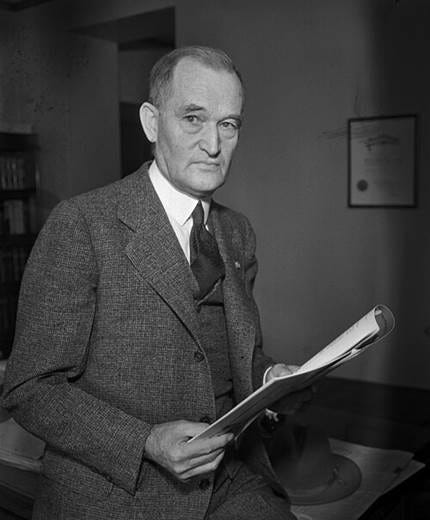
Fig. X. Harold Bell Wright in Los Angeles. Photograph by Los Angeles Daily News, between 1926 and 1941. UCLA Library Digital Collections. CC BY 4.0.
Introduction
Harold Bell Wright (1872-1944) was one of the most widely read American novelists in the early twentieth century. At his peak, he was a household name; his books often outsold those of contemporaries like Jack London and Zane Grey, and several were adapted into successful films. Wright was particularly famous for his Ozarks novels, including That Printer of Udell’s (1903) and The Shepherd of the Hills (1907). These works are imbued with strong moral messages: redemption, the value of honest work, charity toward the less fortunate, the spiritual power of rural life, and the transformative promise of education. For many readers, especially in the first decades of the twentieth century, Wright’s novels functioned almost as sermons in fictional form, dramatizing the power of Christian faith to reshape lives and communities.
These themes align Wright in significant ways with the Social Gospel movement, which emerged in late nineteenth- and early twentieth-century Protestantism. The Social Gospel emphasized Christian-inspired social reform, encouraging believers to address systemic injustices such as poverty, exploitation, and urban squalor. Figures like Washington Gladden (Applied Christianity, 1886), Charles Sheldon (In His Steps, 1896), and Walter Rauschenbusch (Christianity and the Social Crisis, 1907) shaped the movement, urging Protestants to live out the Kingdom of God on earth. Wright’s novels share this ethos: they portray the transformative power of Christian love and insist that social problems must be addressed through moral reform as well as individual regeneration.
Yet Wright’s vision of redemption and social uplift is not unqualified or universal. Beneath the surface of his redemptive narratives lie exclusionary assumptions about who is worthy of redemption and who possesses the necessary moral and intellectual potential. The egalitarian rhetoric of the Social Gospel is undercut by racial and class hierarchies and by ideas that resonate with eugenic thinking, a powerful cultural current in the early twentieth century. Wright’s novels suggest that redemption and social elevation are available, but primarily for those who already belong within certain racial, social, or biological boundaries.
This paper examines three interrelated dimensions of Wright’s exclusionary vision—race, class, and eugenics—demonstrating how his fiction both reflects and reinforces the limitations of the Social Gospel. By analyzing key passages from Wright’s novels and situating them within their historical context, I argue that Wright’s version of the Social Gospel is selective: moral virtue, social improvement, and Christian redemption are reserved mainly for those already situated within the boundaries of whiteness, respectable class standing, and biologically inflected notions of worth.
Race and the White Boundaries of Redemption
Wright’s novels feature almost exclusively white protagonists and center their moral journeys around them. Non-white characters rarely appear in central roles, and when they do, they tend to reinforce racial hierarchies rather than challenge them. The absence of Black, Native, or immigrant characters from Wright’s central plots is itself telling: the redemptive universe of his novels is implicitly a white universe. The Ozarks landscape, populated with white settlers and their descendants, becomes the site where redemption is possible, and Wright does little to imagine spiritual or social renewal for non-white communities.
When non-white characters do appear, they are often framed in ways that reinforce whiteness as the standard of virtue. Contemporary reviews and anecdotes sometimes recall Wright’s tendency to praise loyal Black servants in language that associated moral worth with possession of a “white soul.” Even when this is framed as a compliment, it implies that moral purity is synonymous with whiteness and that non-white individuals are noteworthy precisely when they approximate white moral standards. Such characterizations reflect the pervasive racial assumptions of Wright’s era, when the Social Gospel itself often struggled to include Black churches, Asian immigrants, or Native communities within its reformist vision. Developed largely by white, middle-class Protestant leaders, the Social Gospel could unintentionally reinforce racial hierarchies even as it championed social justice. [1]
A passage from The Shepherd of the Hills illustrates how Wright valorizes the moral virtues associated with his rural white protagonists. Describing an elderly mountain woman, Aunt Mollie, Wright writes, “The old scholar looked at the sturdy figure in its plain calico dress; at the worn hands, busy with their homely task; and the patient, kindly face, across which time had ploughed many a furrow, in which to plant the seeds of character and worth” (Wright, Shepherd 34). Here virtue is presented as physically embodied in a poor rural white woman. Wright transforms the signs of age, labor, and hardship into evidence of inner goodness and moral strength. Aunt Mollie’s lifelong work and endurance become symbols of spiritual value, while her whiteness functions as the assumed standard of virtue. Nowhere in Wright’s corpus, however, do we see comparable admiration directed toward non-white figures. The moral significance attached to labor, suffering, and simplicity is reserved primarily for white characters and communities.
Wright also links rural whiteness to spiritual clarity through his contrast between city and countryside. In another passage, he observes, “We, who live in the cities, see but a little farther than across the street. We spend our days looking at the work of our own and our neighbors’ hands. Small wonder our lives have so little of God in them, when we come in touch with so little that God has made” (29). Here Wright contrasts the artificiality of urban life with the authenticity of rural experience. Implicit in this contrast is the assumption that rural, white, Protestant America—figured in the Ozarks—is closer to God’s design. Spiritual depth is accessible through contact with nature and simplicity, yet Wright rarely acknowledges that non-white rural communities might also embody such virtues. By ignoring them, he constructs a spiritual geography in which redemption belongs primarily to white rural folk.
The absence of Black, Native, or immigrant characters from Wright’s central plots is itself telling: the redemptive universe of his novels is constructed primarily as a white universe. By presenting a world in which white characters alone serve as the primary agents of redemption, Wright naturalizes a racial hierarchy. His Social Gospel vision, therefore, fails to address the racial inequities that were pervasive in his time and instead affirms whiteness as the locus of moral and spiritual life.
Class and the Moral Boundaries of Redemption
If Wright’s fiction excludes along racial lines, it also enforces sharp class distinctions. Wright was sympathetic to the poor, and his novels frequently dramatize the dignity of rural labor and the virtue of struggling families. Yet his sympathy is selective: only certain kinds of poor people are redeemable, namely those who exhibit honesty, humility, and a willingness to accept education and moral cultivation. Others—especially the violent, lawless, or unrefined—remain outside his circle of redemption.
In That Printer of Udell’s, Wright presents the story of Dick Falkner, an orphan who overcomes hardship through faith, perseverance, and the assistance of mentors. The narrative highlights education and moral purpose as prerequisites for social mobility and meaningful relationships. Wright writes, “This was the beginning. The end is easily foreseen; for, given a young man of Dick’s temperament, longing for companionship, and another young man of Charlie’s make-up, with a legitimate business to bring the two together, and only a friendship of the David and Jonathan order could result” (Wright, That Printer 69). The passage emphasizes personal character and respectable occupation as the foundations of meaningful relationships. Moral worth is intertwined with social markers such as industry, education, and propriety. Those who lack these qualities are not simply presented as less fortunate; they are often portrayed as morally deficient.
Similarly, Wright often distinguishes between “good” poor whites—law-abiding, humble, open to education—and “bad” poor whites, associated with violence, idleness, or vice. The virtuous poor are redeemable because they embody traits that can be cultivated into middle-class respectability. The unvirtuous poor, by contrast, resist cultivation and thus remain outside redemption. This hierarchy mirrors the broader Social Gospel tendency to valorize the “deserving poor” while pathologizing the “undeserving.”
The earlier description of the rural woman’s “worn hands” also reinforces this class-based moral economy. Manual labor, endured with patience, is evidence of character. But Wright rarely portrays the systemic causes of poverty or exploitation. Instead, poverty is moralized: it becomes a test of virtue that some pass and others fail. By embedding class distinctions into the very structure of his redemption narratives, Wright reinforces the idea that not all social groups are equally capable of uplift.
Eugenics and the Biological Foundations of Worth
The early twentieth century was the heyday of eugenics in the United States. Prominent scientists, reformers, and politicians advocated measures to “improve the race” through selective breeding, sterilization, and immigration restriction. Although Wright never explicitly endorsed eugenic policies, his novels often resonate with eugenic assumptions. He frequently links moral and intellectual worth to inherited traits, physical strength, or lineage, suggesting that character is at least partially biologically determined.
Professor John P. Ferré of the University of Louisville was among the first scholars, and perhaps the only one to date, to identify elements of eugenics in Wright’s The Shepherd of the Hills. In his book on three Social Gospel novelists, including Harold Bell Wright, he comments:
There is a sense of determinism, both biological and social, in The Shepherd of the Hills. […] The narrative repeatedly speaks of good blood, bad blood, old blood, and blue blood, as if a person’s biological lineage has moral characteristics. The novel does not exactly preach eugenics, but from place to place it does advocate selective human breeding” (72).
Indeed, it is difficult to overlook the presence of eugenic thinking in Wright’s Ozarks novels. A particularly revealing passage in The Shepherd of the Hills depicts Sammy Lane, a mountain girl admired by the title character:
Her splendid form, glowing with the rich life and strength of the wilderness, showed in every line the proud old southern blood. Could she learn to be a fine lady? Mr. Howitt thought of the women of the cities, pale, sickly, colorless, hot-house posies, beside this mountain flower. What would this beautiful creature be, had she their training? What would she gain? What might she not lose? (Wright, Shepherd 72).
Through Mr. Howitt’s reflections, Wright presents Sammy’s physical strength and beauty as expressions of her Southern ancestry and natural environment. He contrasts her vitality with the perceived weakness and artificiality of urban women, suggesting that formal education and refinement might improve her social status while also threatening the qualities that make her exceptional. The passage implies that character, beauty, and moral potential are connected to inherited qualities preserved through family lineage and regional identity. Such language reflects ideas associated with eugenic discourse, which emphasizes the transmission of desirable traits through heredity.
Another passage highlights the connection between physical strength and moral aspiration: “Young Matt felt a strong man’s contempt for the things Ollie had gotten out of the world, but he stood in awe before Mr. Howitt. He told himself, now, that he would look for and find the things yonder that made Dad the man he was. He would carry to the task his splendid strength. Nothing should stop him” (Wright, Shepherd 140). The phrase “splendid strength” functions almost as a hereditary symbol of worth. Physical vigor is not merely a bodily trait but a moral resource, enabling Young Matt’s pursuit of character and wisdom. By linking redemption to inherited strength, Wright suggests that only those with the right “stock” can achieve true moral stature.
While Wright never advocates eugenics explicitly, his narratives reflect the cultural milieu in which eugenic ideas were pervasive. His emphasis on blood, stock, and physical vigor indicates an underlying belief in biologically inflected worth. In this way, Wright’s novels participate in a discourse that implicitly excludes those deemed biologically inferior from the promise of redemption.
Conclusion
Harold Bell Wright’s novels are often remembered for their inspirational messages of redemption, faith, and the dignity of rural life. They aligned him with the Social Gospel movement, which sought to bring Christian principles to bear on social reform in the early twentieth century. Yet a closer examination reveals that Wright’s social vision was deeply selective. His stories privilege white protagonists, valorize certain kinds of poor people while condemning others, and resonate with eugenic assumptions about inherited worth.
From a racial perspective, Wright’s redemptive narratives are overwhelmingly white. Non-white characters are absent, marginal, or praised only when they approximate white standards of virtue. This absence reflects the broader racial exclusions of the Social Gospel itself, which often failed to incorporate Black or immigrant communities into its vision of social reform.
From a class perspective, Wright upholds a moral hierarchy in which the virtuous poor are redeemable while the unvirtuous poor are condemned. Education, refinement, and a willingness to accept cultivation become markers of worth. Poverty is not portrayed as a systemic problem but as a moral test, reinforcing class distinctions rather than challenging them.
Finally, in his treatment of eugenic ideas, Wright’s frequent emphasis on blood, stock, and physical vigor suggests that moral and intellectual worth are tied to biological inheritance. While never explicitly endorsing eugenic policy, his novels resonate with eugenic thinking by implying that only those of the right lineage and strength can fully embody Christian virtue.
Taken together, these exclusions demonstrate that Wright’s version of the Social Gospel is selective and limited. Redemption and social uplift are offered, but only to those who already belong within the boundaries of whiteness, respectable class standing, and biologically inflected worth. Wright’s fiction thus reflects both the promise and the limitations of early twentieth-century Protestant reform: a gospel of redemption that is inspiring in its moral fervor but exclusionary in its scope.
The study of Wright’s novels today reminds us of the need to interrogate not only what redemption narratives promise but also what they withhold. Wright’s fiction challenges us to see how ideals of virtue and uplift can be intertwined with structures of exclusion and how the language of redemption itself can reinforce hierarchies of race, class, and heredity. His works remain important, not simply as sentimental bestsellers of a bygone era, but as windows into the cultural and moral assumptions of early twentieth-century America—assumptions whose legacies continue to shape American literature, religion, and social thought. [2]
Notes
[1] For a related discussion of the characterization of African Americans in Wright’s fiction, see my paper, “The Blind Side of the Social Gospel: Blacks in Harold Bell Wright’s Ozarks Fiction,” published in POMPA: Publications of the Mississippi Philological Association, vol. 2025, pp. 12-25.
[2] An earlier version of this paper was delivered at the 18th Annual Ozarks Studies Symposium, Missouri State University-West Plains, on 18-20 Sept. 2025.
Works Cited
Ferré, John P. A Social Gospel for Millions: The Religious Bestsellers of Charles Sheldon, Charles Gordon, and Harold Bell Wright. Popular Press, 1988
Wright, Harold Bell. The Shepherd of the Hills. 1907. A Harold Bell Wright Trilogy: The Shepherd of the Hills, The Calling of Dan Matthews, God and the Groceryman, Pelican, 2007, pp. 17-191.
_______. That Printer of Udell’s. 1903. Pelican, 2011.
About the Author

Professor of English and Creative Writing and Associate Dean of the School of Humanities and Theology, Missouri Baptist University
John J. Han, PhD, is the author, editor, co-editor, or translator of 35 books. His forthcoming book, Echoes from the Hills: Critical Essays on Ozarks Literature (co-edited with C. Clark Triplett), will be published by the University of Arkansas Press. He has also published more than 3,000 poems in a wide range of journals and anthologies. In addition to his long tenure at Missouri Baptist University, he has taught at Kansas State University, the University of Nebraska–Lincoln, Nebraska Wesleyan University, and Washington University in St. Louis. He has also served as a visiting scholar at Georgia College & State University and the University of Ljubljana in Slovenia.
© K-Global Scholars and Professionals Forum. All rights reserved. Content published in the K-GSP Forum may not be reproduced, distributed, or transmitted in any form without prior written permission from the K-GSP Forum, except for brief quotations with full attribution.