


Industry 4.0, initially developed as a German-led framework, was positioned as a transformative approach to manufacturing through the integration of cyber-physical systems, Internet of Things (IoT) applications, and advanced data analytics (Kagermann, Wahlster, & Helbig, 2013). Over time, however, certain corporations, such as BOSCH, halted or scaled back their participation, prompting questions about Industry 4.0’s sustainability and core principles. A key factor in the reconsideration of Industry 4.0 has been the concept of “decentralizing decisions,” also understood as “democratizing production capability,” which essentially calls for opening proprietary industrial systems to broader public access. This paper discusses the roots of Industry 4.0, assesses the significance of democratizing production capability, considers opposing viewpoints, and explores the implications for workforce training and education.
Industry 4.0 and Its Transformative Ambitions
The notion of Industry 4.0, introduced in Germany, was predicated on leveraging digital technologies to enhance production efficiency, reduce costs, and improve the flexibility of manufacturing processes (Kagermann et al., 2013). In principle, the fusion of real-time data, highly automated robotics, and an integrated value chain was envisaged to benefit both large corporations and smaller enterprises (Brettel, Friederichsen, Keller, & Rosenberg, 2014). German manufacturing companies, driven by global competitive pressures, initially exhibited enthusiasm for this initiative. Industry 4.0 embraced a range of guiding principles, such as:
Interconnection: Linking machines, devices, sensors, and humans through networks.
Information Transparency: Gathering and analyzing data from all parts of the production cycle.
Technical Assistance: Supporting operations through automated decision-making tools.
Decentralized Decisions: Empowering autonomous, distributed decision-making processes.
Although companies recognized the transformative potential, some began to question the feasibility of fully embracing each principle, especially the call to decentralize decisions (Kagermann et al., 2013). The concept of decentralized decisions can be interpreted as democratizing industrial capacity—allowing external stakeholders to access what were once solely corporate-owned technologies and processes.
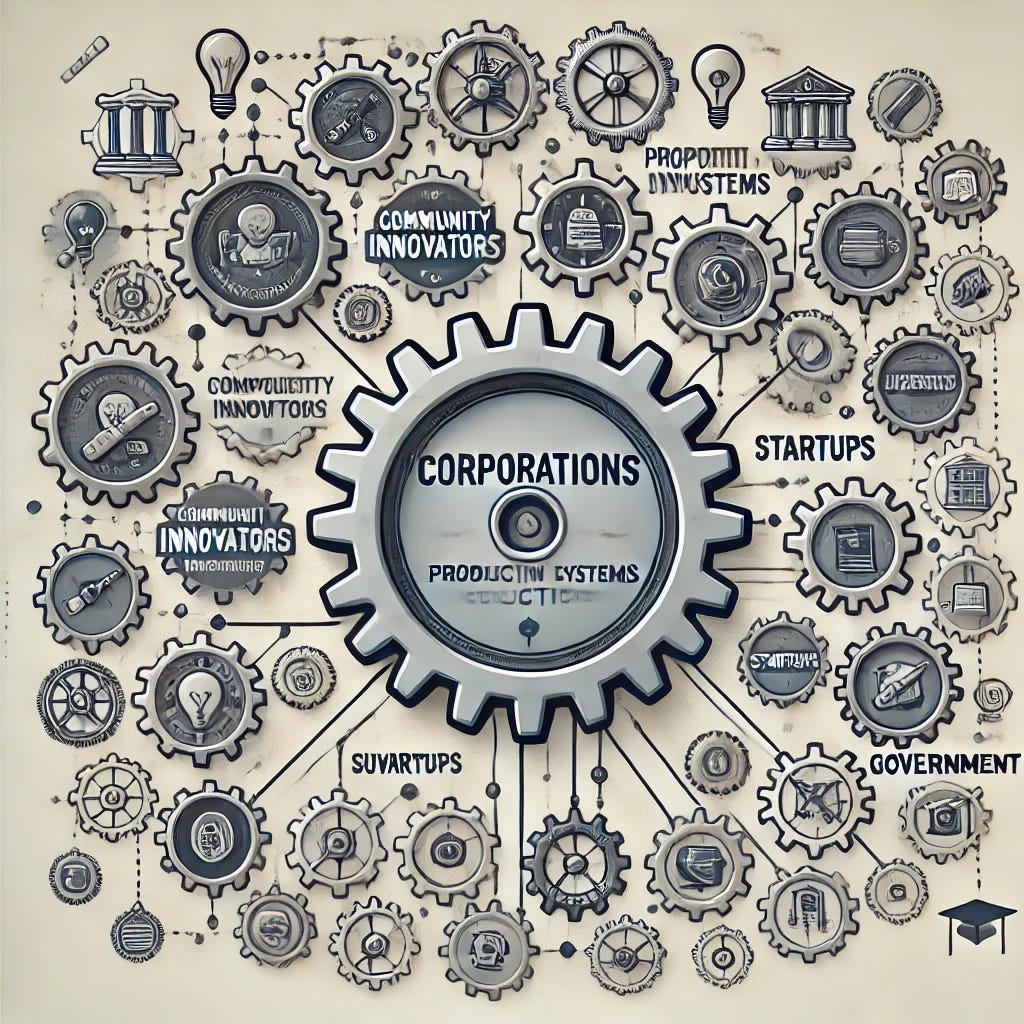
Decentralized Decisions and Democratizing Production Capability
Decentralization, in this context, suggests transferring certain production and strategic decisions from central authorities to broader groups. Beyond just deferring routine choices to autonomous systems, this concept, in its most expansive form, implies that core production capabilities—machines, data, and expertise—could be shared widely (Chesbrough, 2003). Proponents liken this to the logic of open-source software, contending that greater inclusivity fuels broader innovation and diffuses monopolistic power. By enabling smaller entities, entrepreneurs, or even community innovators to access sophisticated technologies, one might spur diverse developments that large corporations alone may not pursue.
Nevertheless, BOSCH and other organizations opted to discontinue select Industry 4.0 activities upon recognizing the implications of this “open access” paradigm. If proprietary manufacturing models were exposed to a wide range of users, firms might see their competitive edge diluted (Kagermann et al., 2013). For instance, companies devote significant resources to research and development, often expecting to recoup their investments through exclusive ownership of production systems and processes.
Assessing the Tradeoffs: Exclusivity Versus Democratization
The debate surrounding “democratizing production capability” reveals two possible trajectories:
Exclusive Control of Production: In this scenario, few corporations retain and strengthen their hold on industrial power. Maintaining exclusive control could, in the short term, preserve robust profit margins and incentivize proprietary research investments. However, it risks perpetuating economic disparities by reinforcing a small group’s dominance over essential resources and limiting access for emerging innovators (Brettel et al., 2014).
Broad-based Production Access: Advocates for openness or enforced democratization argue that making production systems accessible to a wider array of stakeholders may produce societal benefits, such as reduced inequality, grassroots innovation, and more dispersed wealth creation (Chesbrough, 2003). Yet mandating access might erode corporate willingness to invest in uncertain, long-term R&D. Researchers and policymakers may need to craft legal and regulatory frameworks that strike a balance between legitimate private interests and broader social considerations (Kagermann et al., 2013).
Whether to commit fully to democratizing production capability has implications for competition, efficiency, and fairness. Some critics caution that rushed or poorly designed enforcement of openness might hamper innovation if organizations perceive their breakthroughs are insufficiently protected. Conversely, leaving production capabilities entirely in the hands of a few companies could intensify market concentration and exacerbate income disparities (Prahalad & Ramaswamy, 2004).
Reconciling Ownership and Accessibility
Reconciliation between exclusive ownership and openness seems possible but may require sustained dialogue among corporate executives, policymakers, labor representatives, and community interest groups. One avenue involves legally binding or incentivized mechanisms that combine limited intellectual property protections with structured opportunities for external collaboration (Prahalad & Ramaswamy, 2004). Companies might, for example, grant non-commercial licenses or research-focused access to production infrastructure under certain conditions, ensuring that startups, academics, or community initiatives can experiment without infringing on corporate profit models.
In tandem, public institutions could provide tax incentives or financial support to companies that selectively open their factories to external developers. Strategic alliances, knowledge-sharing consortia, and co-creation platforms already exist in the realm of software development; such concepts may be replicated and scaled in physical manufacturing contexts (Chesbrough, 2003).
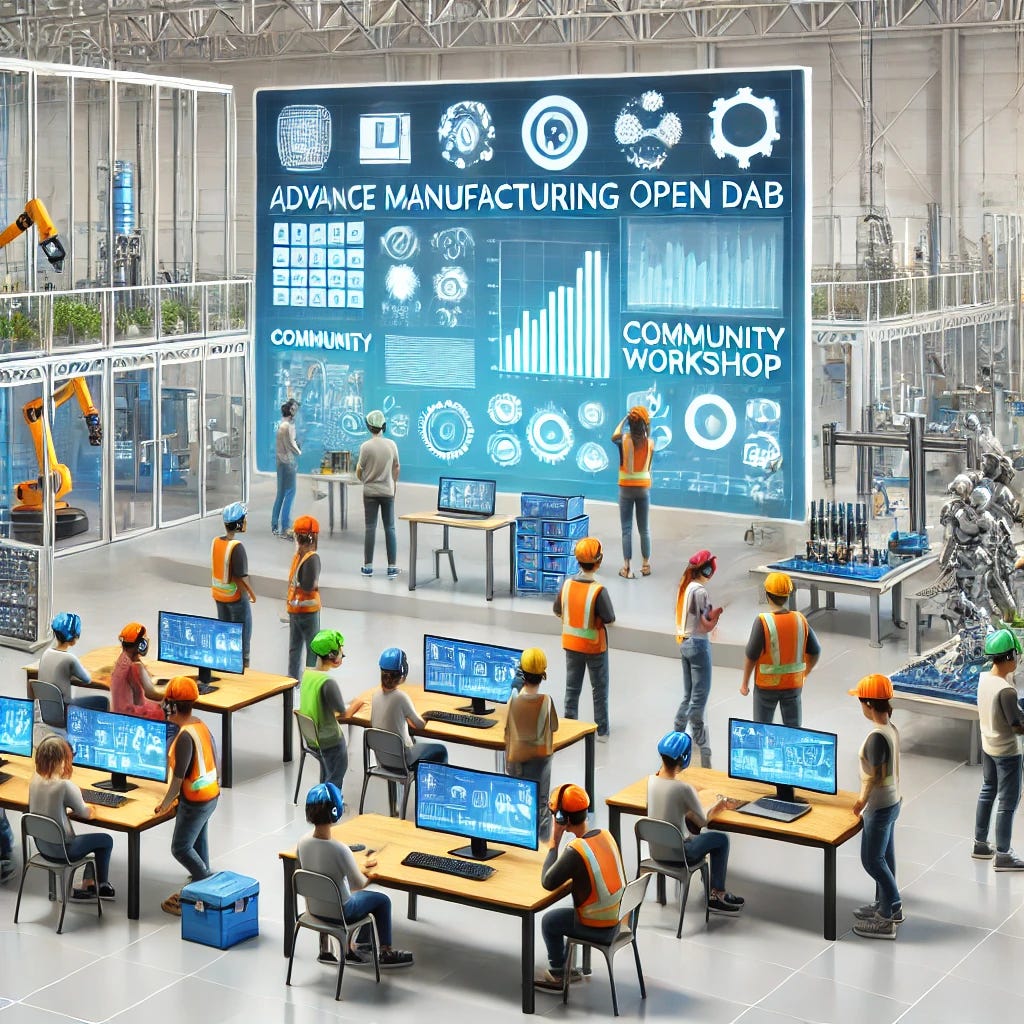
Future Workforce Training and Education
Should a balanced form of democratized production capability emerge, educational programs would require adaptation. Rather than focusing solely on standard industrial engineering, students may need to learn about collaborative design, data-sharing protocols, and open innovation frameworks. Training in negotiation, intellectual property rights, and ethical considerations around access to proprietary tools might also become more important (Kagermann et al., 2013).
In this evolving landscape, interdisciplinary skill sets could prove vital: graduates who understand both automation technologies and the collaborative ethos of open innovation may have a competitive edge. Universities and vocational institutes could partner with industries and governments to create specialized curricula that integrate technical competence with the social and legal complexities of shared production systems (Brettel et al., 2014).
Conclusion
Democratizing production capability stands at the intersection of technological progress, corporate strategy, and social responsibility. The German Industry 4.0 initiative, which spotlighted decentralizing decisions, highlights the ambivalence many firms face when asked to open proprietary production models. The choice between exclusivity and enforced democratization involves tension regarding competitiveness, innovation, and fairness. Striking a nuanced balance may hold the key to reconciling private interests with public benefits. By actively engaging in dialogue, crafting robust regulatory schemes, and refining educational pathways, stakeholders can shape a future in which production capabilities are neither withheld by monopolies nor rendered ineffectual by forced, indiscriminate sharing. In so doing, Industry 4.0’s original promise of technological transformation might align more closely with equitable and sustainable socio-economic progress.
References
Brettel, M., Friederichsen, N., Keller, M., & Rosenberg, M. (2014). How virtualization, decentralization, and network building change the manufacturing landscape: An Industry 4.0 perspective. International Journal of Mechanical, Industrial Science and Engineering, 8(1), 37–44.
Chesbrough, H. (2003). Open innovation: The new imperative for creating and profiting from technology. Harvard Business School Press.
Kagermann, H., Wahlster, W., & Helbig, J. (2013). Recommendations for implementing the strategic initiative INDUSTRIE 4.0: Final report of the Industrie 4.0 Working Group. Acatech – National Academy of Science and Engineering.
Prahalad, C. K., & Ramaswamy, V. (2004). Co-creation experiences: The next practice in value creation. Journal of Interactive Marketing, 18(3), 5–14.

Prof. Dr. Jeonghwan (Jerry) Choi — Editor-in-Coordination, University of Maine at Presque Isle
Jeonghwan (Jerry) Choi, PhD is an Associate Professor of Business at the University of Maine at Presque Isle and Editor-in-Coordination of K-GSP Forum (contact: jeonghwan.choi@gmail.com). With over 25 years of industry and consulting experience, he specializes in leadership development, human resource management, organizational behavior, and social entrepreneurship. His research focuses on workforce resilience, organizational health, and self-directed leadership — bridging rigorous scholarship with practical insight to cultivate leaders who create meaningful, sustainable, and humane organizations .
Original Source: https://leadershipcenter.tistory.com/739[
© K-Global Schoalrs and Professionals Forum. All rights reserved. Content published in the K-GSP Forum may not be reproduced, distributed, or transmitted in any form without prior written permission from the K-GSP Forum, except for brief quotations with full attribution.