

Executive Summary
Artificial intelligence is reshaping how work is learned, coordinated, and performed, producing a human–AI workforce in which value emerges through interaction rather than substitution. This article proposes hyper meta skills — higher-order capabilities that integrate metacognitive, socio-technical, and ethical dimensions for AI-augmented work. Five anchor the framework: learning agility, systems thinking, human–AI collaboration, ethical judgment, and sensemaking under uncertainty. They develop through experiential learning, guided HRD interventions, and ethical-critical engagement, operating through cognitive regulation, socio-technical orchestration, and ethical governance. HRD becomes the mechanism ensuring the human–AI workforce is not merely efficient, but adaptive, ethical, and sustainable.
Keywords: Hyper Meta Skills; Human–AI Collaboration; Human Resource Development (HRD); Ethical Governance; Human-in-the-Loop (HITL)
Introduction
Artificial intelligence (AI) is doing more than automating tasks. It is reshaping how work is learned, coordinated, and carried out. Increasingly, work unfolds across a distributed network of human and machine agents, producing what McKinsey & Company (2026) calls a human–AI workforce — a configuration in which value emerges through interaction rather than substitution. This shift places human resource development (HRD) at the center of organizational transformation, because the success of AI adoption ultimately depends on whether people develop the capacities to engage with, interpret, and govern these systems responsibly.
Yet much of HRD scholarship still rests on frameworks built for an earlier era. Concepts such as metacognition and self-directed learning (Canning & Callan, 2010; Flavell, 1979) remain foundational, but they were developed for environments in which cognition resided primarily within the individual. AI-augmented work breaks that assumption. Cognition is now distributed across people, algorithms, and the recursive feedback between them. The defining HRD question is no longer simply how do individuals learn? It is how do individuals learn with, through, and alongside intelligent systems?
This article addresses that gap. I propose the construct of hyper meta skills and argue that HRD must move beyond traditional meta-skills toward developmental processes that enable individuals to orchestrate, evaluate, and ethically govern human–AI interaction. The argument shifts attention from capability identification to capability development — and positions HRD as a primary mechanism for shaping the human–AI augmented workplace in a way that remains adaptive, ethical, and humane.
Theoretical Foundations for Developing Hyper Meta Skills
Metacognitive Development and Its Limits
Metacognition has long been treated as a cornerstone of effective learning (Flavell, 1979). It allows individuals to monitor, regulate, and adapt their cognitive strategies, and HRD has drawn on it through reflective practice, feedback systems, and experiential learning. In stable environments where the learner is the principal cognitive agent, this framing has served well.
AI-augmented environments change the equation. Metacognition can no longer end at the boundary of the self. Individuals must also regulate their interactions with AI — how they prompt it, how they interpret what it returns, what they choose to trust, and what they refuse. Traditional metacognitive development remains necessary, but it is no longer sufficient on its own.
Human–AI Interaction as a Developmental Context
Recent HRD research suggests that generative AI tools can strengthen learning processes, particularly in ideation and early-stage planning, but only when paired with human oversight for contextualization and quality assurance (Ardichvili et al., 2024). The implication is significant. Development now occurs not solely within individuals but within the iterative cycles that connect humans and AI systems.
From a developmental standpoint, this interaction creates a distinctive learning environment marked by iterative feedback between human judgment and AI outputs, exposure to perspectives generated by systems that do not think the way humans do, and heightened uncertainty produced by the probabilistic nature of model behavior. These conditions demand forms of capability development that extend well beyond conventional skill acquisition.
Conceptualizing Hyper Meta Skills as Developmental Outcomes
Definition
Hyper meta skills are higher-order developmental capabilities that enable individuals to function effectively within human–AI systems. They integrate metacognitive, socio-technical, and ethical dimensions required for AI-augmented work. From an HRD perspective, hyper meta skills are not static competencies. They are developmental outcomes that emerge through structured learning, repeated experience, and reflective engagement with intelligent systems.
Five Core Capabilities
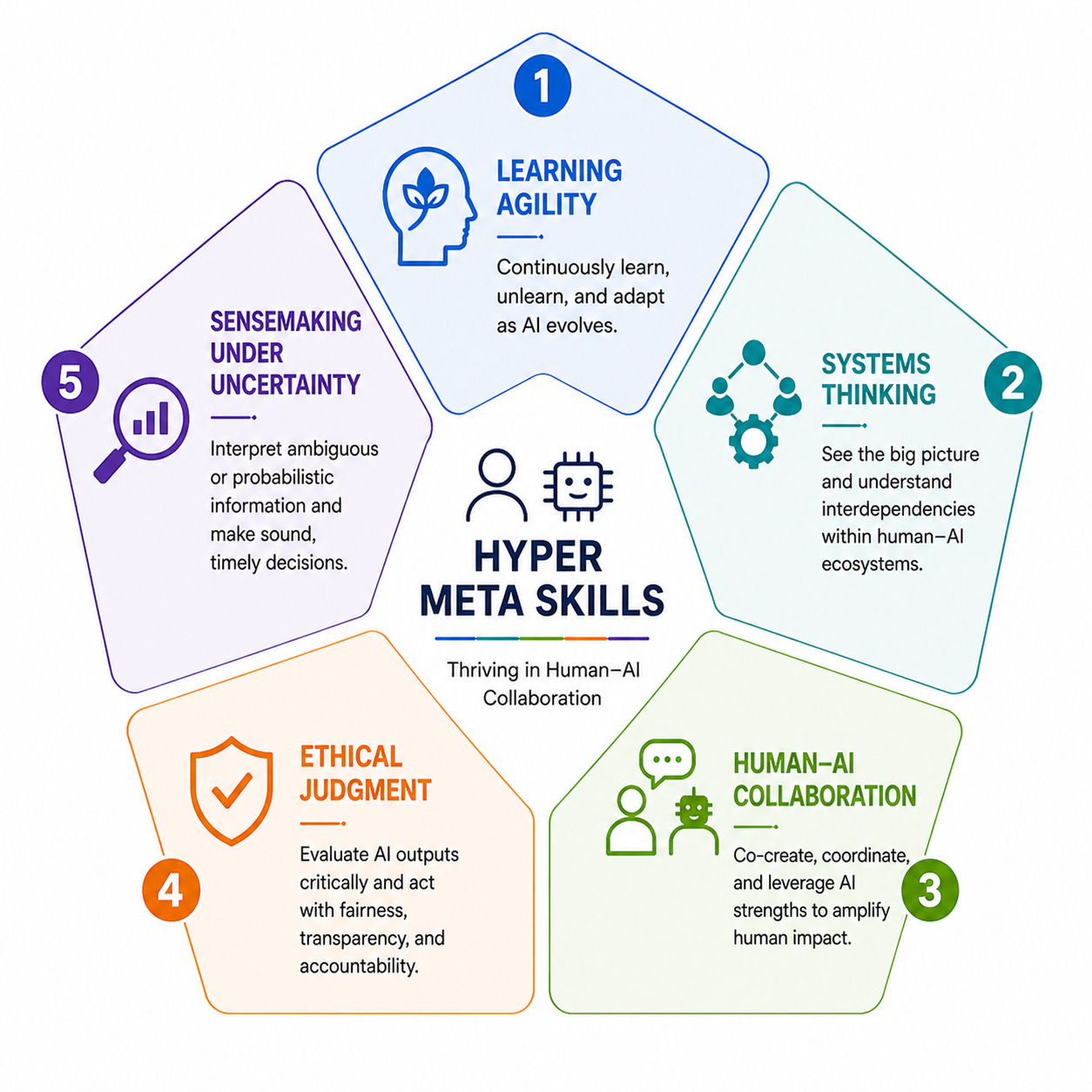
Figure 1. Five Hyper Meta Skills for Human-AI Augmented Workplace
Learning Agility
Learning agility is the capacity to continuously learn, unlearn, and adapt as AI technologies evolve. Rooted in metacognitive theory (Flavell, 1979) and HRD perspectives on adaptive learning (Canning & Callan, 2010), this capability becomes increasingly critical as individuals must recalibrate their working knowledge through ongoing interaction with AI. Empirical work indicates that AI-supported environments require iterative learning cycles and continuous human refinement of system outputs (Ardichvili et al., 2024).
Systems Thinking
Systems thinking involves recognizing the interdependencies that run through human–AI configurations. The capability aligns with socio-technical perspectives in organizational theory and reflects the need to interpret complex interactions between human judgment and algorithmic processes (Jarrahi, 2018). It also resonates with integrative management thinking long emphasized in foundational business scholarship (Brynjolfsson & McAfee, 2014).
Human–AI Collaboration
Human–AI collaboration is the ability to design, coordinate, and refine work by combining human judgment with AI capabilities. HRD research shows that individuals often treat AI as a collaborative partner, but they must actively structure roles and refine outputs to achieve meaningful results (Ardichvili et al., 2024). The capability is consistent with the human–AI complementarity perspective developed by Jarrahi (2018), which holds that humans and AI systems each bring distinct strengths to organizational decision-making.
Ethical Judgment
Ethical judgment is the capacity to evaluate AI outputs critically with respect to fairness, transparency, and accountability. As AI becomes embedded in consequential decisions, the moral stakes rise. Interdisciplinary scholarship has emphasized the importance of evaluating AI through human-centered ethical frameworks, recognizing that algorithmic recommendations are neither neutral nor self-justifying (Gaudet et al., 2024).
Sensemaking Under Uncertainty
Sensemaking under uncertainty is the ability to interpret ambiguous or probabilistic AI outputs and translate them into action. The capability draws on long-standing organizational behavior research on decision-making under conditions of incomplete information (Weick, 1995) and aligns with the broader recognition that AI outputs frequently lack the contextual grounding required for sound judgment.
Developing Hyper Meta Skills in the Workplace
A central contribution of this paper is to explicate how hyper meta skills are developed in human–AI augmented workplaces. These capabilities are best understood as dynamic, higher-order outcomes that emerge through sustained interaction with socio-technical systems rather than as static competencies acquired once and held thereafter. Drawing on HRD, organizational learning, and human–AI interaction research, I argue that hyper meta skills develop through three interrelated mechanisms: experiential learning, guided developmental interventions, and ethical-critical engagement.
Experiential Learning in Human–AI Contexts
Experiential learning is a primary pathway for developing hyper meta skills (Kolb, 1984). In AI-augmented environments, individuals interact directly with intelligent systems and move through iterative cycles of action, feedback, and adjustment. Such environments are characterized by uncertainty, probabilistic outputs, and rapid feedback loops, all of which generate discrepancies between expectations and outcomes. These discrepancies, in turn, prompt the kind of reflection and reframing associated with double-loop learning (Argyris & Schön, 1978).
Learning Through Iteration
Repeated interaction with AI allows individuals to refine both their input strategies — the prompts and instructions they provide — and their interpretation of system outputs. Over time, they develop more accurate mental models of AI behavior, sharpening judgment and decision quality. HRD research indicates that users often approach AI as a collaborative partner and improve performance through iterative experimentation (Ardichvili et al., 2024). This process strengthens algorithmic understanding and supports the development of sensemaking in complex environments.
Reflective Practice
Reflective practice consolidates experiential learning (Schön, 1983). Through structured reflection, individuals examine their reliance on AI, identify biases that may have entered the workflow through either human cognition or system design, and recalibrate their decision-making. In AI contexts, metacognition expands beyond self-regulation to encompass the regulation of interactions with intelligent systems (Flavell, 1979). This expanded metacognition deepens cognitive processing and supports higher-order evaluative capability.
Guided Development and HRD Interventions
Experiential learning offers a natural developmental pathway, but HRD interventions are essential for structuring and accelerating the process. Guided development aligns with social learning theory (Bandura, 1977), which emphasizes the role of structured support, feedback, and modeling in shaping learning outcomes.
Training for Human–AI Collaboration
Training programs for human–AI collaboration concentrate on competencies such as prompt design, output evaluation, and workflow integration. These programs address both technical and cognitive dimensions of AI interaction. Effective AI use depends on active human oversight and contextual refinement, which reinforces the value of structured training rather than informal learning alone (Ardichvili et al., 2024; Jarrahi, 2018).
Developmental Feedback Systems
Feedback systems that integrate both human and AI performance data enrich learning by offering multidimensional insight. Drawing on feedback intervention theory (Kluger & DeNisi, 1996), such systems improve performance by directing attention to task processes and outcomes. In AI-augmented contexts, real-time feedback compresses learning cycles and supports continuous adjustment, contributing to adaptive capability development.
Mentorship and Social Learning
Social learning processes also play a critical role in developing hyper meta skills (Bandura, 1977). Mentorship and peer learning give individuals access to interpretive frameworks that help them navigate complexity and uncertainty in AI-augmented work. Experienced practitioners model effective interaction patterns with AI, while peer dialogue surfaces tacit lessons that rarely appear in formal training. HRD research consistently underscores the importance of guided practice and peer support in capability development (Clarke et al., 2018).
Ethical and Critical Development
The integration of AI into organizational processes introduces ethical complexity that HRD cannot afford to treat as peripheral. AI-augmented decision-making asks individuals to balance performance objectives with moral and societal considerations — an integration that does not happen by default.
Ethical Reflection
Ethical reflection involves structured evaluation of AI-related decisions, including questions of fairness, transparency, and accountability. HRD interventions can cultivate this capability through scenario-based learning, ethical case analysis, and deliberative dialogue. Interdisciplinary scholarship makes clear that AI systems raise foundational questions about human agency and responsibility, which require deliberate ethical engagement rather than ad hoc reaction (Gaudet et al., 2024).
Critical Engagement With AI
Critical engagement is the capacity to question AI outputs, recognize the limits of the system, and resist over-reliance. The capability matters especially because users tend to anthropomorphize AI and assume accuracy where none has been earned. Cultivating critical distance protects decision quality and supports the responsible use of AI, reinforcing the need for evaluative capability alongside operational fluency.
A Developmental Model of Hyper Meta Skills
Hyper meta skills develop through the interaction of three core processes: cognitive regulation, socio-technical orchestration, and ethical governance.
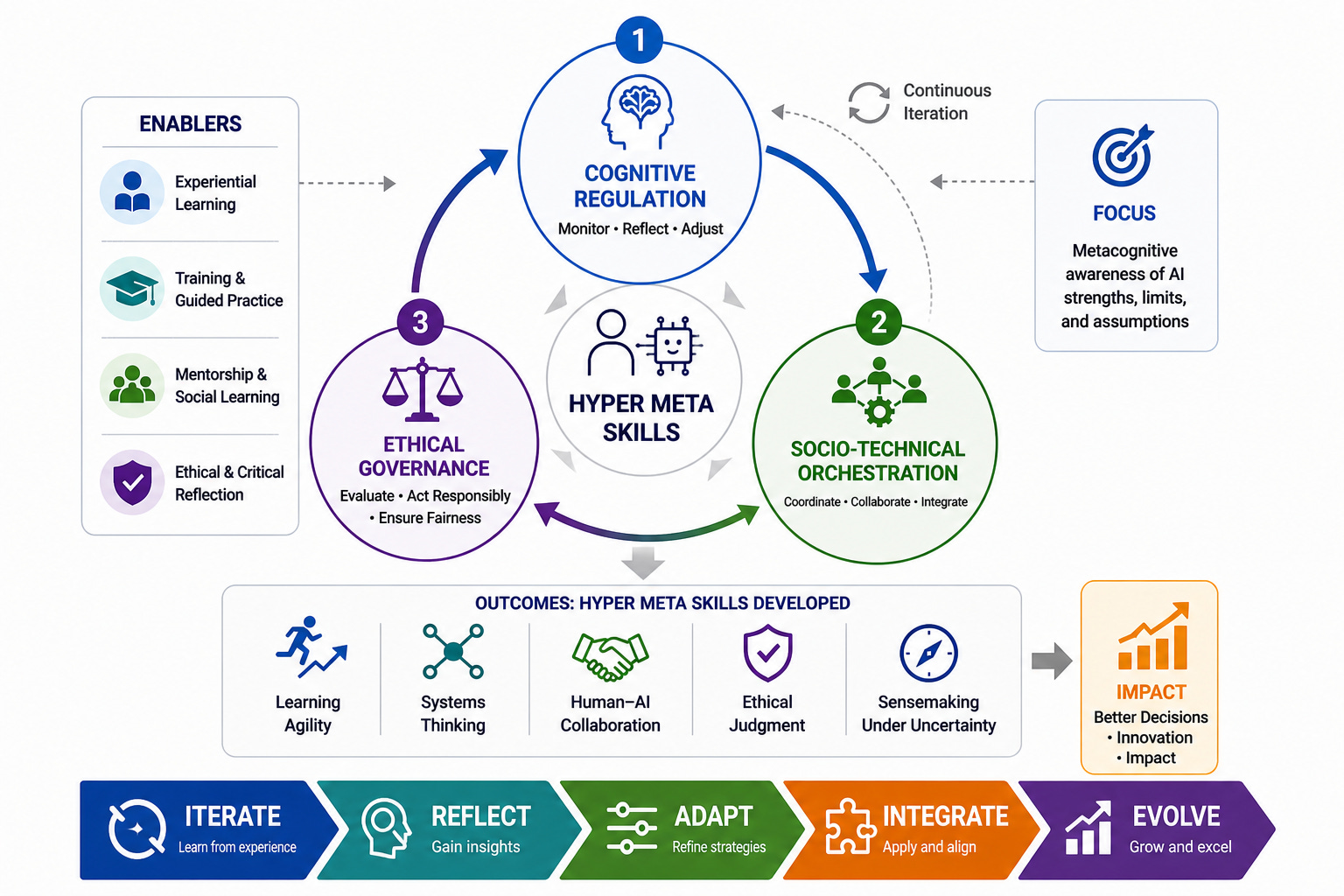
Figure 2. Developmental Model of Hyper Meta Skills
Cognitive regulation extends metacognitive processes to include the monitoring and management of interactions with AI systems (Flavell, 1979). It is the inward-facing dimension of the model, concerned with how individuals manage their own thinking in dialogue with intelligent tools.
Socio-technical orchestration involves coordinating tasks and decisions across human and AI agents. It marks a shift from individual competence to system-level capability, recognizing that performance in AI-augmented work is rarely the product of one mind acting alone (Jarrahi, 2018).
Ethical governance encompasses the responsible use of AI, including the active maintenance of fairness, transparency, and accountability across decision-making processes (Gaudet et al., 2024). It is the moral architecture within which the other two processes operate.
These processes are iterative and mutually reinforcing. They evolve over time through experiential learning, structured intervention, and reflective practice, and they should be cultivated together rather than sequentially.
Conclusion
The rise of the human–AI workforce, as McKinsey & Company (2026) makes clear, signals a fundamental shift in how work is performed and how capabilities must be developed. Practitioner accounts emphasize the importance of human–AI collaboration but offer limited guidance on how the underlying capabilities actually emerge. That gap is where HRD must do its most consequential work.
This paper advances HRD scholarship by foregrounding the development of hyper meta skills as essential for navigating AI-augmented environments. By integrating metacognitive, socio-technical, and ethical dimensions into a single developmental framework, the analysis offers a foundation for understanding how individuals can learn to engage with AI systems thoughtfully and responsibly.
Future research can examine the precise processes through which hyper meta skills develop, identify HRD interventions that prove most effective, and assess their impact at both individual and organizational levels. Such work matters beyond the academy. If the human–AI workforce is to be not merely efficient but also adaptive, ethical, and sustainable, the human in human-in-the-loop must be developed with the same seriousness we bring to the systems themselves. The technology will keep advancing. Whether it advances with us — rather than past us — depends on the depth of capability we choose to build.
References
Ardichvili, A., Dirani, K., Jabarkhail, S., El Mansour, W., & Aboulhosn, S. (2024). Using generative AI in human resource development: An applied research study. Human Resource Development International, 27(3), 388–409. https://doi.org/10.1080/13678868.2024.2337964
Argyris, C., & Schön, D. A. (1978). Organizational learning: A theory of action perspective. Addison-Wesley.
Bandura, A. (1977). Social learning theory. Prentice Hall.
Brynjolfsson, E., & McAfee, A. (2014). The second machine age: Work, progress, and prosperity in a time of brilliant technologies. W. W. Norton.
Canning, R., & Callan, S. (2010). The role of metacognition in learning and achievement. Routledge.
Clarke, A., Amundson, N., Niles, S., & Yoon, H. J. (2018). Action-oriented hope: An agent of change for internationally educated professionals. Journal of Employment Counseling, 55(4), 155–168. https://doi.org/10.1002/joec.12091
Flavell, J. H. (1979). Metacognition and cognitive monitoring: A new area of cognitive–developmental inquiry. American Psychologist, 34(10), 906–911. https://doi.org/10.1037/0003-066X.34.10.906
Gaudet, M. J., Herzfeld, N., Scherz, P., & Wales, J. J. (Eds.). (2024). Encountering artificial intelligence: Ethical and anthropological investigations. Wipf and Stock.
Jarrahi, M. H. (2018). Artificial intelligence and the future of work: Human–AI symbiosis in organizational decision making. Business Horizons, 61(4), 577–586. https://doi.org/10.1016/j.bushor.2018.03.007
Kluger, A. N., & DeNisi, A. (1996). The effects of feedback interventions on performance: A historical review, a meta-analysis, and a preliminary feedback intervention theory. Psychological Bulletin, 119(2), 254–284. https://doi.org/10.1037/0033-2909.119.2.254
Kolb, D. A. (1984). Experiential learning: Experience as the source of learning and development. Prentice Hall.
McKinsey & Company. (2026, April 30). The rise of the human–AI workforce [Podcast]. https://www.mckinsey.com/capabilities/people-and-organizational-performance/our-insights/the-rise-of-the-human-ai-workforce
Schön, D. A. (1983). The reflective practitioner: How professionals think in action. Basic Books.
Weick, K. E. (1995). Sensemaking in organizations. Sage.
About the Author:

Prof. Dr. Jeonghwan (Jerry) Choi — Editor-in-Coordination of K-Global Scholars and Professional Forum & Associate Professor, University of Maine at Presque Isle
Jeonghwan (Jerry) Choi, PhD is an Associate Professor of Business at the University of Maine at Presque Isle and Editor-in-Coordination of K-GSP Forum. With over 25 years of industry and consulting experience, he specializes in leadership development, human resource management, organizational behavior, and social entrepreneurship. His research focuses on workforce resilience, organizational health, and self-directed leadership — bridging rigorous scholarship with practical insight to cultivate leaders who create meaningful, sustainable, and humane organizations .
© K-Global Scholars and Professionals Forum. All rights reserved. Content published in the K-GSP Forum may not be reproduced, distributed, or transmitted in any form without prior written permission from the K-GSP Forum, except for brief quotations with full attribution.