

A Chaotic World
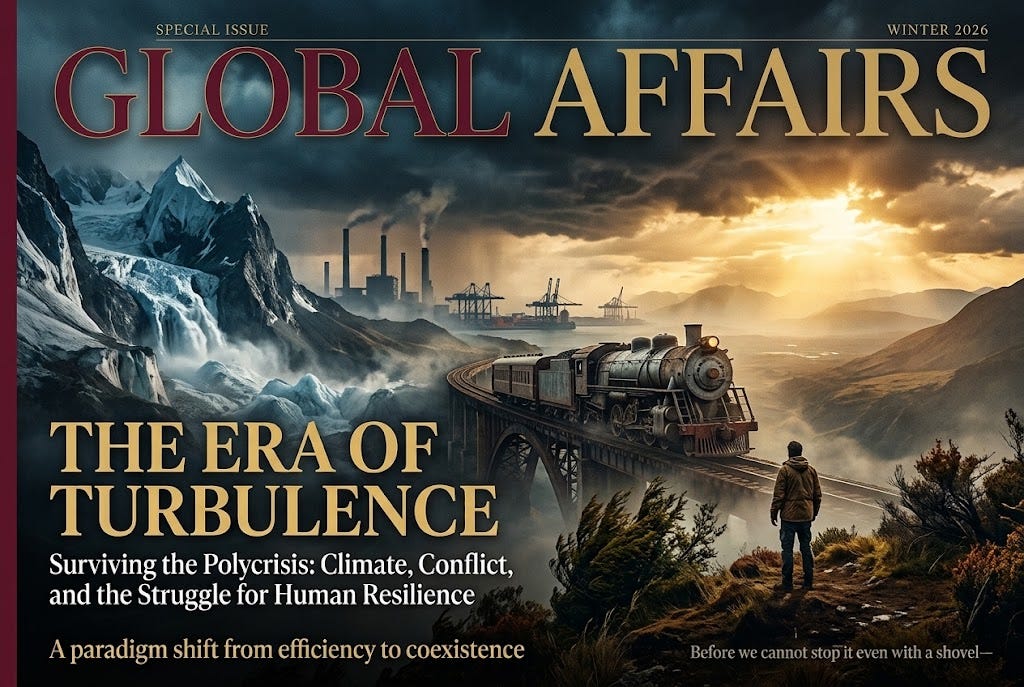
Humanity is now undoubtedly undergoing upheaval. Not only experts but also the public regard the present era as a time of turmoil or polycrisis. Extreme weather anomalies caused by global warming have become commonplace across the world, directly threatening food security and the survival of humanity. We are facing the most perilous geopolitical crisis since the Cold War due to the prolonged war between Russia and Ukraine, the intensification of conflict in the Middle East, U.S.-China competition for hegemony, and other factors. The suffering of the people is intensifying due to global inflation, the restructuring of supply chains, and severe disparities between the rich and the poor. Advanced AI technology presents opportunities, but it causes new social disruptions such as job losses and the spread of fake news.
History clearly shows that humanity has passed through times of turmoil in every era. The Black Death of the 14th century, World Wars I and II, and the Great Depression in the first half of the 20th century were absolute times of chaos, with much more severe human casualties and material destruction relative to the population, but they were limited to specific regions or were restored relatively easily.
The current turbulent times, intertwined with global supply chains and the climate system, affect the entire globe simultaneously, making it much more difficult to find solutions. One crisis triggers another, causing a chain reaction of shocks. It is difficult to gauge the scale and direction of the crisis using existing experiences or methods, and the past systems centered on abundance and efficiency have reached their limits.
There is a need to shift the paradigm and respond sector by sector. In the food system, a transition is required from an efficiency-centered approach focused solely on increasing production to one that emphasizes resilience, the ability to withstand shocks and recover rapidly. We must break away from existing methods that pursued only infinite competition and profit and move to a future strategy that considers life and coexistence. It is time to seek a common solution for humanity through solidarity that transcends boundaries and a shift in consciousness.
◇
Since suffering is inevitable in life, everyone feels that the world they live in is complex, dispiriting, and sometimes disheartening. Many people imagine a golden age of the past, a time when there was no sign of unrest, problems were easily resolved, and each day began brightly. This is a fleeting hope. People in some eras have suffered more from turmoil due to greater challenges and rapid changes compared to others.
I live accepting everything that happens to us as belonging to the providence of nature, striving not to view anything as unrelated to me. I endeavor to accept what is given to me with a grateful heart, no matter how inconvenient it may be. Instead of approaching difficulties with a sharp edge, I try to cope with them without losing myself, and without taking them lightly. Life is about struggling between the path one chose and the path already given to oneself.
However, these days I sometimes feel that I am living in a chaotic and messy era, which makes it difficult to live optimistically. The Earth is facing tremendous danger, and even our basic moral principles seem to be under threat at times. I surely am not the only one who feels this way…. I often feel as though we are rushing into a pit of destruction aboard a special express train without a conductor.
In Nepal, glaciers collapsed in the summer of 2026, triggering landslides and floods that claimed the lives of countless people or left them missing. This disaster was not an accident but a phenomenon caused by climate change, which has been appearing since the year before last and is becoming more frequent and severe. Atmospheric carbon dioxide levels are at their highest since the emergence of modern humans. Facing a series of climate disasters, many people are worried that humanity might face extinction.
◇
Looking back at history, the climate has constantly changed, and the Earth has shown remarkable resilience. Humanity has overcome crises through new institutions, technologies, and international cooperation while going through turbulent times and periods of great transition. The current turmoil is also interpreted as growing pains for advancing into a new era.
That the climate has constantly changed or that the Earth has a remarkable ability to recover does not imply that climate change can be taken lightly. While it is true that the Earth possesses resilience, the time to test that resilience is not infinite. The current situation clearly indicates that there is little time left to cope with climate upheaval.
The catastrophes caused by climate change are primarily occurring in countries where greenhouse gas emissions are virtually negligible. Which country should bear the responsibility for the climate crisis? A movement began in 2019 demanding that major emitters such as China, the United States, and India pay compensation. After two years of deliberation, the International Court of Justice announced in July 2025 that, since a country’s failure to take appropriate measures to prevent climate damage constitutes a violation of international law, compensation can be demanded by holding each country accountable based on cumulative and current emissions.
We have advanced technology to respond to climate change and have developed new ways to transition away from fossil fuels and switch to clean energy. We also know how to change agricultural techniques and the way land is utilized. We must never miss this opportunity to protect the Earth’s ecosystem and the survival of humanity. We must act now. There is a Korean proverb that says we end up using a shovel to stop what could have been stopped with a hoe, but if things continue like this, I think we will end up in a situation where even a shovel won’t be able to stop it.

Dr. Chung Gil Lee is Professor Emeritus of Veterinary Medicine at Chonnam National University, where he served on the faculty until 2007. He holds an M.Sc. and Ph.D. from James Cook University, Australia, and began his career as an Interpreter Officer in the Korean Army. A graduate of Chonnam National University (1963), he is currently a member of the Korean Literature Society of America.
어지러운 세상
분명코 인류는 지금 격변을 겪고 있다. 전문가들은 물론이거니와 일반 대중도 현세를 난세 또는 다중 위기(多重危機)로 여긴다. 지구 온난화로 인한 폭염, 홍수, 가뭄 등 극단적인 기상 이변이 온 세상에서 일상화되어 식량의 안보와 인류의 생존을 직접적으로 위협하기 때문이다. 러시아 · 우크라이나 전쟁의 장기화, 중동 지역의 분쟁 격화, 미 · 중 패권 경쟁 등으로 인해 냉전 이후 가장 위태로운 지정학적 위기에 직면해 있다. 세계적인 인플레이션, 공급망 재편, 빈부의 심한 격차 등으로 인해 민생의 고통이 커진다. 고도화된 AI 기술은 기회인 동시에 일자리 감소와 가짜 뉴스의 확산이라는 새로운 사회적 혼란을 야기한다.
시대마다 인류가 다소간의 난세를 거쳤음을 역사가 낱낱이 보여준다. 14세기의 흑사병이나 20세기 전반기의 1,2차 세계 대전과 대공황 등은 인구 대비 인명 피해와 물질적 파괴가 훨씬 극심하여 절대적인 난세였지만 특정 지역에 국한되었거나 비교적으로 쉽게 복구되었다.
글로벌 공급망과 기후 시스템으로 얽혀 있는 지금의 난세는 지구촌 전체가 동시에 영향을 받으며, 해결책을 찾기가 훨씬 더 어렵다. 한 가지의 위기가 다른 위기를 불러 연쇄적으로 충격을 주고, 기존의 경험이나 방식으로는 위기의 규모와 방향을 가늠하기 어려우며, 과거의 풍요와 효율 중심 시스템이 한계에 부딪힌 것이 특징적이다.
패러다임을 전환하여 분야별로 대응해야 할 필요성이 대두된다. 생산량만을 늘리는 효율성 중심에서 충격에 버티고 빠르게 일어나는 탄력성 회복에 역점을 두는 식품 체계로의 전환이 요구된다. 무한 경쟁과 이윤만을 좇던 기존 방식에서 벗어나 생명과 공존을 살피는 미래의 전략을 세워야 한다. 경계를 넘어서는 연대와 의식의 전환을 통해 인류 공통의 해법을 모색해야 할 때다.
◇
삶에는 고통이 따르게 마련이라 자신이 사는 세계가 복잡하고, 맥을 못 추게 하며, 때로 의기소침하게 만드는 것을 누구나 느낀다. 그래서 많은 사람들이 그저 소란스럽지 않고, 여러 가지 문제가 쉽게 풀리며, 하루하루가 밝게 시작되던 과거의 황금 시대를 상상한다. 그것은 덧없는 희망이다. 어떤 시대에는 다른 시대에 비하여 더 큰 도전과 급속한 변화로 소란을 겪고는 했다.
나는 우리에게 일어나는 모든 일을 자연의 섭리에 속하는 것으로 받아들이고, 그 어떤 것도 나와는 무관한 것으로 보지 않으려고 애쓰면서 살고 있다. 주어진 것들이 아무리 불편하더라도 감사하는 마음으로 받아들이려고 힘쓴다. 어려움을 가볍게 여기거나, 어려움에 날이 선 자세로 대하는 대신 나 자신을 잃지 않고 대처하려고 한다. 자신이 선택한 길과 이미 자신에게 주어진 길 사이에서 부대끼면서 사는 것이 삶 아니던가.
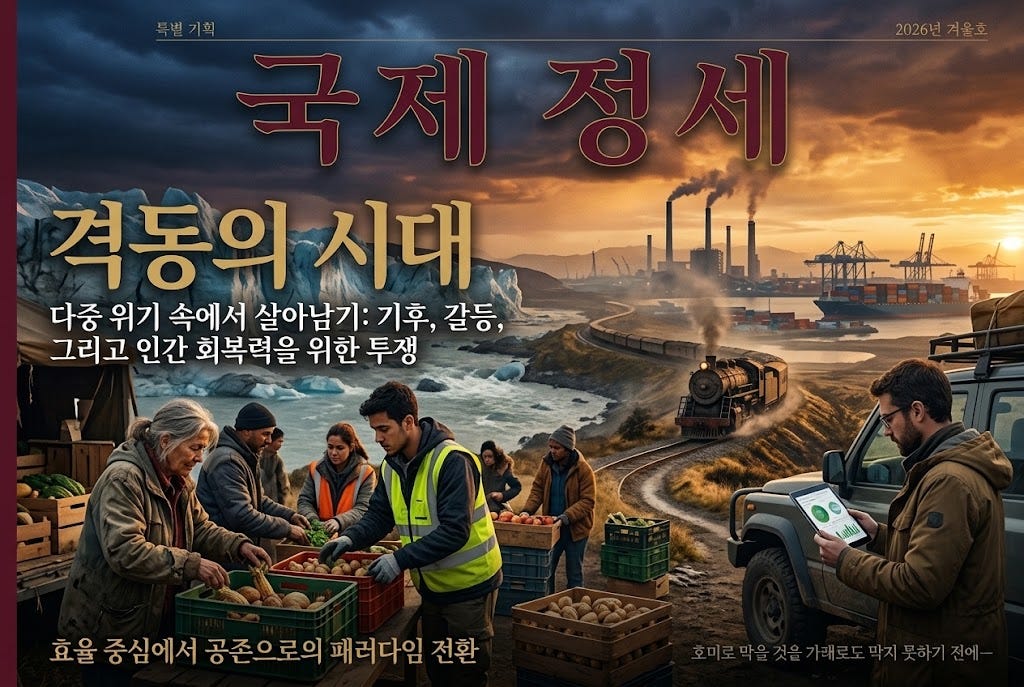
그런 내가 요즈음 뒤죽박죽으로 엉망인 시대에 살고 있음을 가끔 느끼면서, 낙관적으로 살기가 어렵다. 지구는 엄청난 위험에 당면해 있으며, 때로는 우리의 기본적인 도덕률조차 위협받는 것처럼 보인다. 나만 느끼는 것은 아닐 터…. 우리가 지금 기관사도 없는 특별 급행 열차를 타고 파멸의 구렁텅이로 돌진하고 있지 않나 하는 생각이 들 때가 많다.
네팔에서는 2026년 여름에 빙하가 무너져 내리면서 산사태와 홍수가 발생하여 수많은 사람이 목숨을 잃거나 실종되었다. 그 재해는 우발적인 사고가 아니라 지지난해부터 나타나면서 갈수록 잦아지고 심해지는 기후의 변화가 초래하는 현상이다. 대기 중의 이산화탄소 농도는 현생 인류가 등장한 이후 가장 높은 수준이다. 잇따르는 기후 재난을 마주하다 보니 ‘이러다 인류가 멸망하는 게 아닐까’ 걱정하는 사람도 많다.
역사를 돌아보면 기후는 끊임없이 변해 왔고, 지구는 놀라운 회복력을 보여주었다. 인류는 난세와 거대한 전환기를 거치면서 새로운 제도와 기술, 그리고 국제적 협력을 통해 위기를 극복해 왔다. 현재의 혼란 역시 새로운 시대로 나아가기 위한 진통으로 해석되기도 한다.
기후가 끊임없이 변해 왔다는 사실이나 지구가 가진 놀라운 회복력이 기후 변화를 대수롭지 않게 여겨도 된다는 것을 가리키지는 않는다. 지구가 회복력을 지닌 건 사실이지만, 그 회복력을 시험할 수 있는 시간은 무한하지 않다. 작금의 사태는 기후의 격변에 대처해야 할 시간이 얼마 남지 않았음을 뚜렷이 나타낸다.
기후의 변화가 초래하는 재앙은 온실 가스의 배출이 사실상 무시할 만한 수준인 나라에서 주로 일어나고 있다. 어떤 나라가 기후 위기의 책임을 가장 무겁게 짊어져야 하는가? 가스의 최대 배출국인 중국, 미국, 인도 등이 배상해야 한다는 운동이 2019년에 시작되었다. 국제 사법재판소는 2년간의 심리 끝에 2025년 7월 국가가 기후 피해를 막을 적절한 조치를 취하지 않으면 국제법 위반이기 때문에 누적 배출량과 현재 배출량을 근거로 국가별 책임을 물어 배상을 요구할 수 있다고 발표했다.
우리에게는 기후의 변화에 대응할 수 있는 고도의 기술이 있고, 화석 연료에서 벗어나 청정 에너지로 전환하는 첨단 기술도 개발했다. 농업 기술과 토지를 이용하는 방식을 바꾸는 방법도 알고 있다. 지구의 생태계와 인류의 생존을 지키기 위한 기회를 결코 놓쳐서는 안 된다. 모두가 나서서 지금 행동해야 한다. 우리 속담에 호미로 막을 것을 가래로 막는다고 했는데, 이렇게 가다가는 가래로도 막을 수 없게 되어 버리지 싶다.
© K-Global Scholars and Professionals Forum. All rights reserved. Content published in the K-GSP Forum may not be reproduced, distributed, or transmitted in any form without prior written permission from the K-GSP Forum, except for brief quotations with full attribution.