

EXECUTIVE SUMMARY
The Korean expression Albuja (알부자), commonly associated with genuine wealth that need not be displayed, offers a starting point for reflecting on financial contentment, responsibility, and purposeful living. Interpreting this expression through the three Hs—Honesty (진실), Honor (성실), and Humility (겸손)—the article proposes that financial peace requires truthful judgment, faithful stewardship, and modest expectations alongside adequate material resources. Drawing on a friendship spanning more than three decades, it examines how people can live with dignity during scarcity, practice simplicity during prosperity, prepare for uncertainty, and pass practical wisdom to younger generations.
Keywords: Albuja (알부자); Financial Peace; Honesty; Honor; Humility
1. Introduction
The central paradox of Albuja is both simple and profound: when money is scarce, live with dignity as though you have enough; when money is plentiful, live with simplicity as though you need little. Living with dignity during financial hardship does not mean denying material difficulties or pretending to be wealthy; rather, it means preserving self-respect, gratitude, and resourcefulness despite economic limitations. Likewise, practicing simplicity during prosperity does not require rejecting comfort or enjoyment, but encourages thoughtful spending, disciplined stewardship, and freedom from unnecessary social comparison. In this sense, Thanksgiving is not merely an annual celebration of abundance but an invitation to cultivate gratitude and contentment throughout the year, regardless of changing financial circumstances.
For both authors, their shared Christian faith provides an additional and deeper dimension to this understanding of wealth and thanksgiving. Good health, loving relationships, financial security, and meaningful accomplishments are blessings worthy of gratitude, yet all remain vulnerable to illness, aging, unexpected loss, and the limitations of earthly life. From their Christian perspective, Jesus Christ offers the source of comfort, spiritual riches, and enduring hope, extending beyond material circumstances and even beyond death (John 14:6; Philippians 3:8). Thanksgiving therefore becomes more than gratitude for what we temporarily enjoy; it is also an occasion to recognize the enduring spiritual blessings that sustain faith, hope, and peace through both prosperity and adversity.
While recognizing that readers may understand life’s meaning through different religious and philosophical traditions, this article presents the authors’ shared convictions alongside practical principles that can benefit a broader audience. Specifically, it develops the three Hs—Honesty (진실), Honor (성실), and Humility (겸손)—as an ethical interpretation of Albuja, examines three practical habits for achieving greater financial peace, and considers the contemporary challenges of consumerism, increasing longevity, and intergenerational responsibilities. Its central message is especially fitting for Thanksgiving: true wealth is not measured merely by how much we accumulate, but by how gratefully we receive, how wisely we manage, how generously we share, and how meaningfully we live.
2. The Korean Wisdom of Albuja: Substance Over Display
In Korean usage, Albuja generally evokes someone who is genuinely well-off, sometimes without visible luxury. The broader principles developed in this article are the authors’ ethical interpretation of the expression rather than a claim that Albuja constitutes a validated financial theory.
2.1. When Money Is Scarce: Dignity, Gratitude, and Resourcefulness
Financial hardship may generate anxiety, comparison, and a sense of inadequacy, but limited resources need not determine personal worth. The Albuja-inspired response is to acknowledge real constraints honestly while preserving dignity through gratitude, resourcefulness, and meaningful relationships rather than debt-financed appearances. Shared meals, thoughtful conversations, mutual encouragement, and the development of practical skills demonstrate that living richly need not mean spending lavishly. Where basic needs are unmet, however, individual virtues are not substitutes for income, affordable care, or an adequate social safety net.
2.2. When Money Is Plentiful: Simplicity, Humility, and Discipline
Prosperity brings opportunities but may also encourage lifestyle inflation, status purchases, and financial obligations that constrain future choice. Albuja-inspired simplicity favors deliberate spending, prudent saving, and generosity over conspicuous display; materialistic priorities can be associated with lower well-being (Kasser, 2002). Reasonable comfort is compatible with this approach when it reflects genuine needs and values rather than pressure to impress. The truly wealthy person is not necessarily the one who can afford everything, but the one who no longer needs everything.
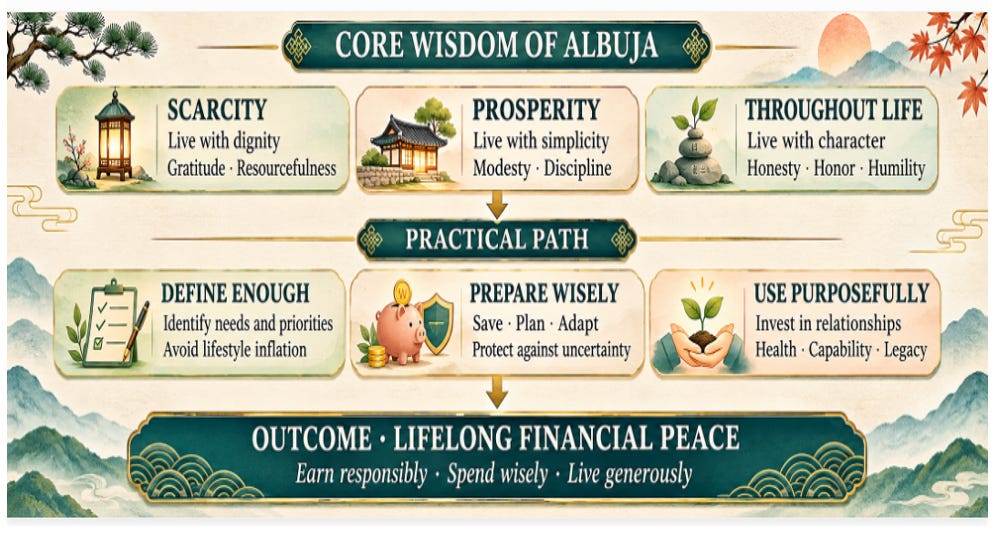
Figure 1. The Albuja Framework: From Korean Wisdom to Lifelong Financial Peace
Source: Authors’ conceptualization; AI-assisted visualization, reviewed and approved by the authors.
Figure 1 connects the central Albuja principles to three practical habits: defining enough, preparing for uncertainty, and using resources purposefully. The framework distinguishes ethical principles from financial instruments and does not imply that good character eliminates material constraints. Its intended outcome is greater financial resilience and peace of mind, supported by sustainable resources and meaningful contributions.
2.3. Honesty, Honor, and Humility: Three Foundations of Financial Peace
The three Hs—Honesty (진실), Honor (성실), and Humility (겸손)—are proposed here as an ethical framework for lifelong financial peace. Honesty means acknowledging financial realities and dealing truthfully with others; Honor means fulfilling responsibilities faithfully, honoring commitments, and practicing reliable stewardship; Humility means resisting unnecessary display and recognizing worth beyond wealth. “Honor” is not a literal translation of 성실: the pairing expresses the authors’ interpretation of honorable conduct through diligence, sincerity, and faithfulness.
Paul Tournier, in The Seasons of Life (1963), emphasizes that successive stages of life present opportunities for personal growth, spiritual maturity, and deeper reflection on purpose. His life-stage perspective complements Albuja by locating genuine wealth in responsible choices, meaningful relationships, and a sense of purpose that endures beyond material accumulation. Together, these perspectives suggest that ethical stewardship can evolve with changing responsibilities from youth through old age.
3. The Practical Path to Albuja: Three Habits for Financial Peace
Financial security refers to having sufficient resources and resilience for present and foreseeable needs; financial independence is the capacity to sustain a chosen lifestyle without continual reliance on paid employment; financial peace denotes reduced excessive anxiety about money. These states overlap but are not identical, and Albuja offers ethical habits rather than a guarantee of any one of them. Adequate income, healthcare access, and sensible protection against financial shocks remain essential, as financial well-being research also emphasizes (Consumer Financial Protection Bureau, 2015).
3.1. Define What Is Enough: Live Below Your Means Without Losing Dignity
Lifestyle inflation arises when spending commitments expand alongside income, reducing flexibility without necessarily improving contentment. An Albuja approach begins by distinguishing essential needs, reasonable comforts, and meaningful aspirations from expenditures motivated by comparison. Living below one’s means is not extreme deprivation: it is the disciplined allocation of resources toward health, housing, family responsibilities, savings, and selected pleasures, consistent with the reflective spending approach of Robin and Dominguez (2018). The first secret of financial peace is not being able to buy everything, but knowing when enough is enough.
3.2. Prepare for Uncertainty: Resilience Across Life Stages
Uncertainty about illness, employment, family obligations, and retirement can provoke worry even among households with substantial incomes. Early adulthood calls for employable skills, careful debt management, and emergency reserves; midlife requires protection, diversified saving, and balance across dependents; and later life emphasizes sustainable withdrawals, healthcare preparedness, and thoughtful enjoyment of resources. Financial literacy strengthens the capacity to plan for such decisions (Lusardi & Mitchell, 2014), while pension systems and longevity risks vary by context (Organisation for Economic Co-operation and Development [OECD], 2025). Financial security is built not by predicting every storm, but by preparing to navigate foreseeable risks.
3.3. Use Money Purposefully: Relationships, Health, and Generational Well-Being
Money can enable security and choice, but its broader value depends on the purposes it serves. Applying the three Hs means resisting misleading displays of prosperity, meeting financial and family commitments, and prioritizing shared time, learning, preventive healthcare, mentoring, and service over status purchases. Research on prosocial spending suggests that spending on others can be associated with greater happiness, while evidence varies by context and design (Dunn et al., 2008; Aknin et al., 2020). The friendship of Paul C. Hong and Richard Choi offers a personal illustration of sustained mutual regard; the richest legacy combines resources with practical wisdom and relationships that others can carry forward.

4. Korean Literary Illustrations of Albuja: Wealth, Character, and Human Dignity
Korean literature offers enduring illustrations of how poverty, prosperity, and personal character shape human lives, revealing that genuine wealth involves not only material resources but also integrity and responsibility, and providing three complementary perspectives on the contemporary wisdom of Albuja.
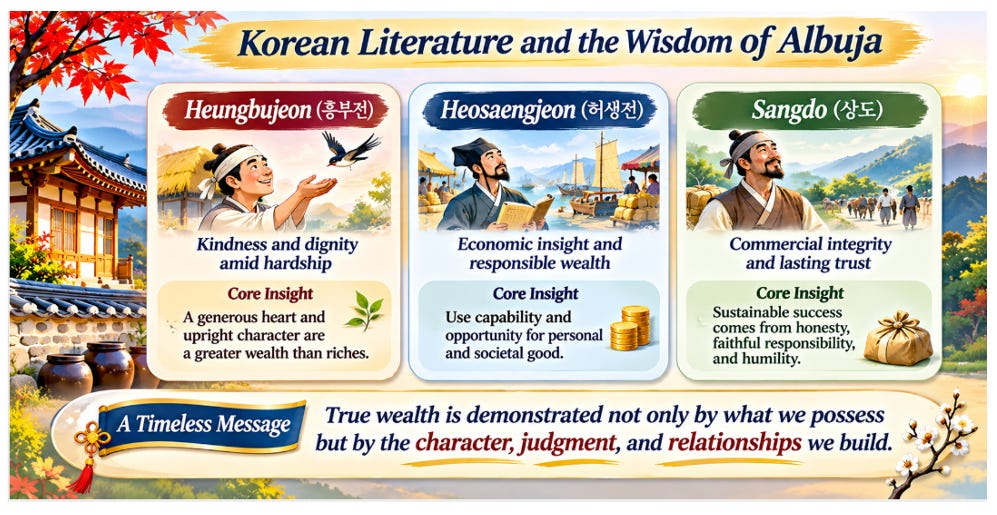
Figure 2 illustrates how three representative Korean literary works convey complementary dimensions of Albuja wisdom: Heungbujeon (흥부전) emphasizes kindness and dignity amid hardship, Heosaengjeon (허생전) explores economic capability and social responsibility, and Sangdo (상도) highlights commercial integrity and lasting trust. Together, these narratives reveal the importance of moral character, responsible judgment, and meaningful relationships in determining the value of wealth. Their enduring message is that true prosperity is measured not merely by what people possess, but by how they live, contribute, and treat others.
Figure 2. Korean Literature and the Wisdom of Albuja: Wealth, Character, and Human Dignity
Source: Authors’ conceptualization; AI-assisted visualization, reviewed and approved by the authors.
4.1. Heungbujeon (흥부전): Generosity and Dignity Amid Poverty
The Korean classical narrative Heungbujeon contrasts the impoverished but compassionate Heungbu with his wealthy yet selfish brother Nolbu, illustrating how material circumstances and moral character do not necessarily coincide. Despite experiencing severe hardship, Heungbu demonstrates kindness by caring for an injured swallow, while Nolbu’s greed and mistreatment of others expose the limitations of wealth without compassion. Although the story rewards Heungbu with prosperity, it also reflects the structural hardships of poverty and should not be interpreted as suggesting that kindness alone guarantees financial success. Its relevance to Albuja lies in the recognition that dignity during scarcity, generosity toward others, and humility during prosperity are more enduring measures of human worth than material possessions.
4.2. Heosaengjeon (허생전): Economic Capability and Responsible Wealth
Park Ji-won’s classical satire Heosaengjeon portrays an impoverished scholar who demonstrates extraordinary commercial insight by borrowing capital, exploiting market opportunities, and accumulating substantial wealth. Yet his journey extends beyond personal enrichment, as he uses resources to assist disadvantaged people and exposes the economic inefficiencies and political complacency of late Joseon society. The narrative also reveals the ethical tensions of commerce, since Heosaeng’s market speculation demonstrates how concentrated economic power can generate profits while disrupting ordinary people’s access to essential goods. Viewed through the philosophy of Albuja, the story suggests that economic capability should be accompanied by social responsibility, practical judgment, and freedom from excessive attachment to wealth, rather than treating financial accumulation as an end in itself.
4.3. Sangdo (상도): Commercial Integrity, Humility, and Lasting Trust
Choi In-ho’s historical novel Sangdo reconstructs the life of Joseon merchant Im Sang-ok, portraying commercial achievement as inseparable from moral judgment, personal discipline, and social responsibility. Through business negotiations, financial opportunities, and ethical dilemmas, the novel demonstrates how credibility, fairness, and restraint can guide sustainable commercial success while resisting excessive accumulation and uncontrolled greed. These principles illustrate the practical relevance of the three-H framework—Honesty, Honor, and Humility—to ethical decision-making, responsible commerce, and the cultivation of lasting trust. As a literary portrayal rather than independent historical evidence, Sangdo suggests that the highest achievement of wealth lies not merely in financial accumulation but in preserving human dignity, strengthening relationships, and leaving a meaningful legacy.
5. Albuja (알부자) in Modern Society: Three Challenges to Lifelong Financial Peace
Consumer culture, increased longevity, and changing family expectations create three domains in which financial habits and ethical commitments intersect. These applications illustrate the framework; they are not presented as tested causal relationships.
5.1. Consumerism: Being Rich Without Looking Rich
Visible luxury can be mistaken for financial health even when it depends on debt or costly ongoing commitments. Research distinguishes the role of income in subjective well-being from the pressures of materialistic priorities (Diener & Biswas-Diener, 2002; Kasser, 2002). The Albuja perspective values quiet substance: purchasing decisions should support security, well-being, and meaningful relationships rather than public display. As a conceptual analogy only, Hong and Wittmer’s (2026) discussion of progressive disclosure in corporate communication illustrates that possessing resources or information need not require indiscriminate visibility; the study itself is not evidence about personal wealth.
5.2. Longevity: Enjoying Life Without Outliving Resources
Longer lives create opportunities for relationships, travel, service, and learning while magnifying concerns about inflation, healthcare, and dependable retirement income (OECD, 2025). Applied to later life, Albuja favors prudent reserves, sustainable spending, and the freedom to enjoy meaningful experiences without neglecting future needs. Ethical stewardship can guide retirement decisions, although it cannot eliminate longevity risk. The purpose of retirement savings is not simply to protect money until the end of life, but to help sustain a meaningful life until the end.
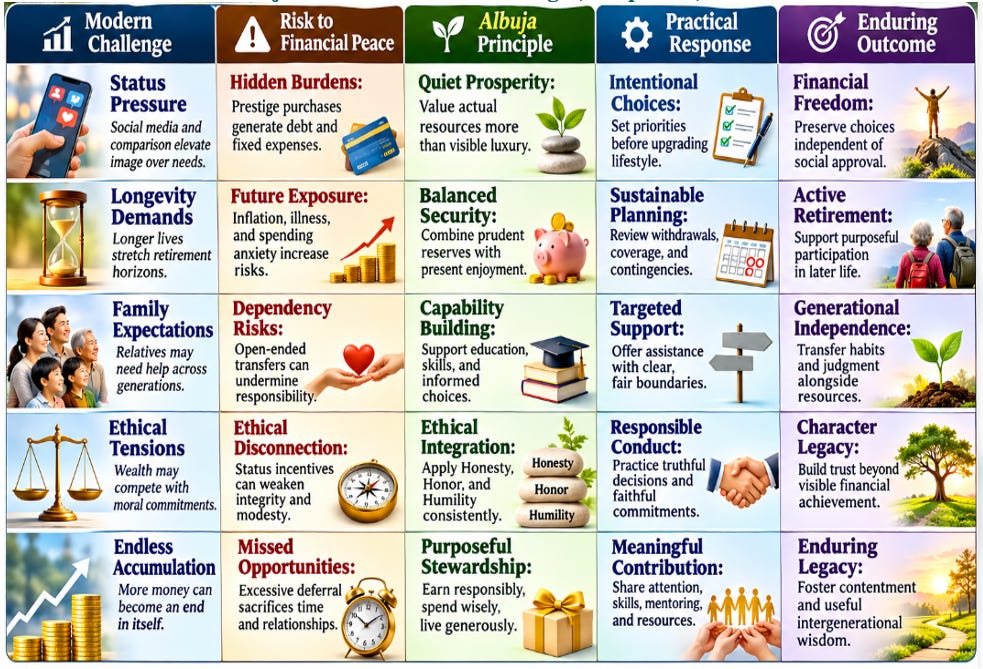
Table 1. Albuja in Modern Life: Challenges, Responses, and Outcomes
Source: Authors’ original conceptual synthesis informed by Consumer Financial Protection Bureau (2015), Diener and Biswas-Diener (2002), Kasser (2002), Lusardi and Mitchell (2014), OECD (2025), Robin and Dominguez (2018), and Seligman (2011).
Table 1 relates five contemporary challenges—status pressure, longevity, family expectations, ethical tensions, and endless accumulation—to the risks they introduce and practical Albuja responses. Each row links an ethical principle to a behavioral choice and an intended long-term outcome without asserting causal proof. The synthesis underscores financial autonomy, responsible stewardship, and intergenerational learning as dimensions of genuine wealth.

5.3. Generational Transmission: Support Without Dependence
Passing on wisdom can be as important as transferring assets. Help with education, capabilities, and temporary difficulty may foster independence, whereas unlimited transfers without clear expectations may strengthen dependence. Families can put the three Hs into practice through open conversations about money, reliable commitments, disciplined consumption, and generosity. The greatest financial inheritance is not money that eliminates the need to work, but wisdom that eliminates the need to impress.
6. Conclusion
The Korean wisdom of Albuja (알부자) suggests that lifelong financial peace is achieved not merely through wealth accumulation but through dignity during scarcity, simplicity during prosperity, and prudent stewardship throughout life. The friendship of Paul C. Hong and Richard Choi, sustained for more than three decades, provides a personal illustration of how the three Hs can guide decisions through changing circumstances. In a world of visible consumption, increasing longevity, and intergenerational responsibilities, these values complement practical financial preparation by encouraging responsible earning, thoughtful spending, meaningful generosity, and lasting relationships. The enduring wisdom of Albuja is simple: live richly when you have little, live simply when you have much, and live meaningfully regardless of how much you possess. May this Thanksgiving remind us that life’s greatest riches are found not in material possessions alone, but in grateful hearts, faithful stewardship, loving relationships, and the lasting comfort and hope offered through Jesus Christ.
References
Aknin, L. B., Dunn, E. W., Proulx, J., Lok, I., & Norton, M. I. (2020). Does spending money on others promote happiness? A registered replication report. Journal of Personality and Social Psychology, 119(2), e15–e26. https://doi.org/10.1037/pspa0000191
Consumer Financial Protection Bureau. (2015). Financial well-being: The goal of financial education. https://files.consumerfinance.gov/f/201501_cfpb_report_financial-well-being.pdf
Diener, E., & Biswas-Diener, R. (2002). Will money increase subjective well-being? Social Indicators Research, 57, 119–169. https://doi.org/10.1023/A:1014411319119
Dunn, E. W., Aknin, L. B., & Norton, M. I. (2008). Spending money on others promotes happiness. Science, 319(5870), 1687–1688. https://doi.org/10.1126/science.1150952
Dunn, E. W., & Norton, M. I. (2013). Happy money: The science of smarter spending. Simon & Schuster.
Hong, P., & Wittmer, J. (2026). Progressive disclosure: A strategic corporate communication framework for managing transparency in digital environments. Corporate Communications: An International Journal. Advance online publication. https://doi.org/10.1108/CCIJ-02-2026-0048
Kasser, T. (2002). The high price of materialism. MIT Press. https://doi.org/10.7551/mitpress/3501.001.0001
Lusardi, A., & Mitchell, O. S. (2014). The economic importance of financial literacy: Theory and evidence. Journal of Economic Literature, 52(1), 5–44. https://doi.org/10.1257/jel.52.1.5
Organisation for Economic Co-operation and Development. (2025). Pensions at a glance 2025: OECD and G20 indicators. https://doi.org/10.1787/e40274c1-en
Robin, V., & Dominguez, J. (2018). Your money or your life: 9 steps to transforming your relationship with money and achieving financial independence (2nd rev. ed.). Penguin Books.
Seligman, M. E. P. (2011). Flourish: A visionary new understanding of happiness and well-being. Free Press.
Tournier, P. (1963). The seasons of life. John Knox Press.
Whillans, A. V., Dunn, E. W., Smeets, P., Bekkers, R., & Norton, M. I. (2017). Buying time promotes happiness. Proceedings of the National Academy of Sciences, 114(32), 8523–8527. https://doi.org/10.1073/pnas.1706541114
About the Authors

Paul C. Hong (Editor-in-Chief) - Distinguished University Professor, University of Toledo
Full list of his K-GSP columns:
Paul C. Hong is a Distinguished University Professor at the University of Toledo whose academic background integrates economics, manufacturing management, engineering, and global supply chain strategy. He earned a B.A. in Economics from Yonsei University, an M.A. in Economics from Bowling Green State University, and a Ph.D. in Manufacturing Management and Engineering from the University of Toledo. His research focuses on global supply chain management, strategic benchmarking, manufacturing competitiveness, resilience, industrial policy, and geo-economics, with particular interest in how trade policy, technological change, economic security, and geopolitical competition reshape international production networks and national competitiveness. His current work increasingly examines the intersection of global supply chains, strategic industries, AI-enabled transformation, and geo-economic relations among major economies, emphasizing how firms and nations can balance efficiency, resilience, strategic autonomy, and international cooperation in an increasingly complex global environment.

Richard S. Choi
RETIRED EDUCATOR AND MISSIONAL LEADER · VISION ACADEMY
Richard S. Choi is an educator who has devoted many years to teaching in Chicago public schools. He holds a Doctor of Missiology, combining academic learning with practical experience in education and Christian missions. Through more than three decades in the educational field and missionary work, he has reflected on what constitutes a truly meaningful life beyond material wealth. In this article, his enduring life principles illustrate how three virtues—Honesty, Honor, and Humility—contribute to financial peace, personal fulfillment, and a life of lasting significance.
Suggested Citation
Hong, P. C., & Choi, R. S. (2026, November 24). The art of being truly rich: Korean wisdom for financial peace. K-Global Scholars and Professionals Forum, 1–11.
Original Article

한글 요약
알차고 부유하게 사는 비결 (알부자): 돈 걱정을 줄이고 삶의 평안을 누리는 한국적 지혜:
이 글은 한국어 표현인 알부자 (알짜 부자, 진정한 부자) 의 지혜를 바탕으로, 돈을 많이 소유하는 것과 돈 걱정을 줄이고 평안을 누리는 삶이 반드시 같은 것은 아니라는 점을 설명한다. 알부자의 핵심은 돈이 부족할 때에도 품위를 잃지 않고, 돈이 많을 때에도 검소함과 절제를 잃지 않는 삶에 있다. 다시 말해, 진정한 부는 단순한 자산 규모가 아니라 돈을 대하는 태도, 소비를 절제하는 지혜, 그리고 삶의 우선순위를 바르게 세우는 데서 비롯된다. 이 글은 그러한 한국적 생활철학을 오늘의 개인 재정, 은퇴 준비, 세대 간 책임, 그리고 삶의 의미와 연결하여 해석한다.
둘째, 이 글은 알부자의 지혜를 세 가지 기본 원리로 정리한다. 첫째, 궁핍의 시기에는 존엄, 감사, 그리고 자원 활용의 지혜 가 필요하다. 둘째, 풍요의 시기에는 단순함, 겸손, 그리고 재정적 절제가 필요하다. 셋째, 이러한 삶의 태도는 전 생애에 걸쳐 정직(Honesty, 진실), 책임과 성실(Honor, 성실), 겸손(Humility, 겸손) 으로 구현될 수 있다. 여기서 Honor는 성실의 직역이 아니라 성실함, 책임감, 약속을 지키는 태도를 아우르는 저자들의 해석적 표현이다. 이 세 가지 원칙은 돈을 단순히 소비와 축적의 수단으로 보는 것이 아니라, 삶의 목적과 인격, 그리고 타인과의 관계를 드러내는 도구로 보게 만든다.
셋째, 이 글은 알부자의 지혜가 오늘날 더욱 중요해졌다고 주장한다. 소비주의와 사회적 비교, 장수 시대의 은퇴 불안, 그리고 자녀·손자녀 세대에 대한 경제적 책임은 현대인들의 돈 걱정을 더욱 복잡하게 만든다. 그러나 알부자 철학은 보여주기식 소비보다 실질적 자유를, 끝없는 축적보다 목적 있는 사용을, 일시적 풍요보다 지속 가능한 평안을 더 중요하게 여긴다. 따라서 필요한 것을 분별하고, 불확실성에 대비하며, 돈을 관계·건강·다음 세대의 역량 강화에 사용하려는 태도는 단순한 절약 습관을 넘어 평생의 재정적 평화 를 가능하게 하는 실천 원리가 된다.
넷째, 이 글은 진정한 부유함의 비결이 ‘얼마나 많이 가졌는가’보다 ‘어떻게 사는가’에 달려 있음을 강조한다. 오랜 우정을 이어 온 두 저자는 서로 다른 직업적 길을 걸어왔지만, 공통적으로 진실하게 살고, 책임을 성실하게 감당하며, 많이 가져도 겸손하게 사는 삶 의 가치를 나누어 왔다. 이 글의 결론은 분명하다. 적게 가졌을 때는 넉넉한 마음으로 살고, 많이 가졌을 때는 소박하게 살며, 어떤 형편에서도 의미 있게 사는 것 — 이것이야말로 돈 걱정 없는 삶을 위한 가장 오래 지속되는 지혜이며, 알부자가 가르쳐 주는 진정한 부의 예술이다.
Paul C. Hong은 미국 University of Toledo의 Distinguished University Professor로서, 정보시스템·공급망관리·글로벌 경쟁력 분야에서 오랫동안 연구와 교육에 헌신해 온 학자이다. 그는 공급망, 국가경쟁력, 인간 중심 가치, 그리고 동서양의 지혜를 연결하는 학제적 관점으로 잘 알려져 있으며, 본 글에서는 한국적 생활철학인 알부자를 현대의 재정적 평화와 윤리적 삶의 문제와 연결하여 해석하였다.
Richard Choi는 시카고 공립학교에서 오랫동안 교육에 헌신해 온 교육자이며, 선교학박사학위를 지닌 실천적 지식인이다. 그는 오랫동안 교육현장과 선교사역에 참여하며 돈의 많고 적음을 넘어 진정으로 가치 있는 삶이 무엇인가를 함께 성찰해왔다. 본 글에서 그의 삶은 정직, 성실, 겸손 이라는 세 가지 덕목이 재정적 평안과 인간적 풍요를 어떻게 뒷받침하는지를 보여 주는 중요한 사례로 제시된다.
© K-Global Scholars and Professionals Forum. All rights reserved. Content published in the K-GSP Forum may not be reproduced, distributed, or transmitted in any form without prior written permission from the K-GSP Forum, except for brief quotations with full attribution.