

EXECUTIVE SUMMARY
This article examines the global vitamin supply chain ecosystem, highlighting structural concentration in upstream production while showing that competitiveness increasingly depends on formulation, quality assurance, technological capability, logistics, market access, and healthcare innovation. Particular attention is given to South Korea and Canada as strategic healthcare growth cases: South Korea brings strengths in biotechnology, fermentation, pharmaceutical-quality manufacturing, health-functional foods, OEM–ODM production, and digital capabilities, while Canada contributes strengths in life sciences, healthcare quality, functional nutrition, research, diversified sourcing, and trusted consumer-health markets. The article argues that both countries can strengthen their global positions not by competing primarily in bulk vitamin production, but by integrating reliable sourcing, scientific formulation, advanced manufacturing, personalized nutrition, digital health, and trusted brands to create higher-value preventive-health solutions.
Keywords: Vitamin supply chain; Export nations; South Korea; Canada; Health-functional foods; Ecosystem orchestration
1. Introduction
A shared interest in health, nutrition, and healthy aging brought Paul C. Hong and Isaac G. Lee to the topic of vitamins and the global systems behind them. From academic supply-chain and healthcare-industry perspectives, they became interested in where vitamins and supplements come from, how reliably they are supplied, and how these products support the needs of younger adults, older adults, and families across different life stages. These shared personal and professional concerns provide the starting point for examining vitamins not simply as consumer products, but as part of a broader global healthcare and supply-chain ecosystem.
Vitamins are essential micronutrients that support metabolism, immunity, neurological function, bone health, blood formation, tissue maintenance, and overall well-being, although balanced diets remain the primary source and supplementation should be appropriate to individual needs. Behind a tablet, capsule, powder, liquid, or gummy is a geographically dispersed system involving agricultural, biological, mineral, and chemical inputs; synthesis or fermentation; purification; formulation; quality testing; manufacturing; packaging; regulatory approval; logistics; branding; and distribution. Because this system spans many firms and countries, disruptions in production, transportation, energy supply, trade, or international sourcing can affect vitamin availability, quality, and prices across national markets.
Against this background, this article examines how producing, exporting, importing, and coordinating nations create value across the global vitamin supply chain through ingredient production, technological specialization, formulation, manufacturing, logistics, regulation, and market development. Particular attention is given to South Korea and Canada as strategic healthcare growth cases, with Korea contributing strengths in biotechnology, fermentation, pharmaceutical-quality manufacturing, health-functional foods, OEM–ODM production, and digital capabilities, and Canada contributing strengths in life sciences, healthcare quality, functional nutrition, research, diversified sourcing, and trusted consumer-health markets. The central argument is that future competitiveness depends not simply on production or export volume, but on how effectively countries integrate reliable sourcing, scientific capability, quality assurance, advanced manufacturing, personalized nutrition, digital health, and trusted market relationships.
A supply-chain perspective is especially useful because the health value experienced by consumers depends on more than the presence of a vitamin on a product label. Reliability is created through linked decisions involving sourcing, process control, formulation, testing, documentation, packaging, storage, transportation, market access, and consumer trust, while weakness at any stage can reduce value across the chain. The vitamin industry therefore illustrates a broader transition from commodity competition toward ecosystem competition, in which countries that coordinate science, regulation, manufacturing, logistics, resilience, and trusted relationships can capture substantial value even when they import much of their upstream material.
2. The Vitamin Supply Chain as a Global Healthcare Ecosystem
The global vitamin industry can be understood as an interconnected ecosystem in which nutritional demand, ingredient technologies, manufacturing capabilities, regulatory requirements, and market access combine to shape how value is created and distributed across countries, while increasing supply concentration makes resilience, quality, and coordination progressively more important.
2.1. From Essential Micronutrients to a Global Consumer Industry
Vitamins are needed in small amounts but play essential roles in metabolism, immunity, neurological function, tissue development, bone health, blood formation, and other normal physiological processes. Because the human body cannot produce most vitamins in sufficient amounts, people generally obtain them through a balanced diet, while fortified foods or supplements may be appropriate for particular age groups, nutritional deficiencies, pregnancy, medical conditions, or other life-stage needs. Both deficiency and unnecessary excess can create risks, making appropriate diet, dosage, labeling, safety, medical guidance, ingredient purity, traceability, consumer education, and trustworthy health claims important for individual and public health (World Health Organization, 2025; National Institutes of Health, Office of Dietary Supplements, 2025a, 2025b; U.S. Preventive Services Task Force, 2022).
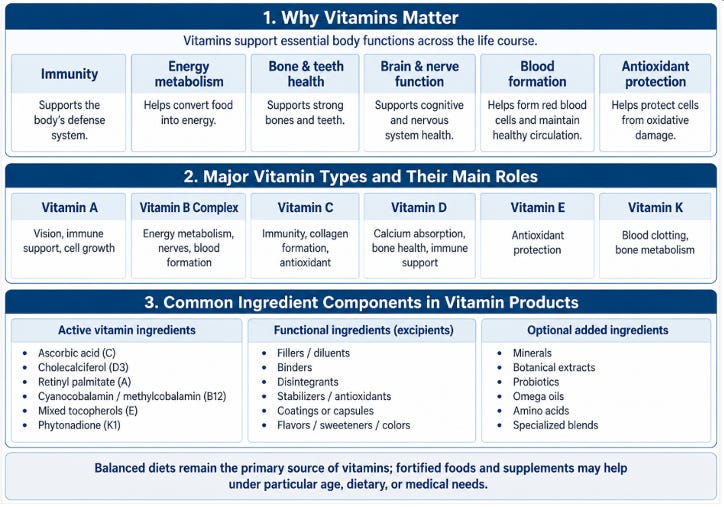
Figure 1. Health Benefits and Major Vitamin Types, and Components of Vitamin Products
Source: Authors’ conceptualization.
Figure 1 summarizes why vitamins matter, what the major vitamin groups do, and what ingredients commonly appear in vitamin products. It highlights key health functions across the life course and introduces vitamins A, B complex, C, D, E, and K, including their roles in vision, immunity, collagen formation, calcium absorption, antioxidant protection, and blood clotting. The figure also shows that vitamin products combine active nutrients with supporting ingredients such as fillers, binders, stabilizers, coatings, minerals, botanical extracts, probiotics, omega oils, and amino acids, underscoring the importance of formulation as well as nutrient content.
2.2. Global Vitamin Supply Chain Structure and Flow
The global vitamin supply chain connects raw materials, ingredient production, formulation, manufacturing, distribution, and final consumer markets across many countries, producing tablets, capsules, powders, gummies, liquids, and fortified foods. OEM firms manufacture products for other brands, while ODM firms help design or formulate products and then manufacture them, creating a global ecosystem in which products, scientific knowledge, quality information, consumer data, and brand trust move across firms and countries (European Commission, n.d.; Ministry of Food and Drug Safety, 2025). Because ingredients often cross multiple organizational and national boundaries, resilient supply chains require strong supplier qualification, accurate documentation, quality testing, traceability, regulatory compliance, and digital systems that connect sourcing, manufacturing, inventory, and market information across the ecosystem.
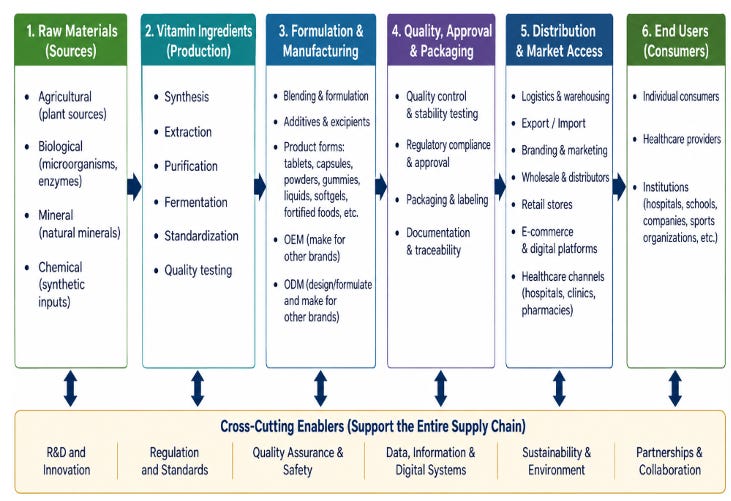
Figure 2. Global Vitamin Supply Chain: Structure and Flow
Source: Authors’ conceptualization.
Figure 2 presents the global vitamin supply chain as a simple flow from raw materials to vitamin ingredients, manufacturing, distribution, and final consumers. Agricultural, biological, mineral, and chemical inputs are first converted into vitamin ingredients through processes such as synthesis, extraction, purification, or fermentation; these ingredients are then formulated and manufactured into tablets, capsules, powders, gummies, liquids, fortified foods, and other products. Finished products move through quality control, regulatory approval, packaging, logistics, branding, wholesale, retail, and digital channels before reaching consumers, healthcare providers, and other end users. The figure emphasizes that the vitamin supply chain is not a single-country process but a connected global system in which ingredients, products, information, quality standards, and trust move across firms and national borders.
3. Benchmarking Global Vitamin Supply Chain Patterns
Country positions in the global vitamin ecosystem are compared here through national economic scale, predominant supply-chain orientation, specialized capabilities, and ecosystem roles. The comparisons are illustrative rather than measured vitamin-industry rankings: economic scale is based on 2024 nominal GDP, while orientation and industry roles are qualitative interpretations informed by product-level trade data and the evidence discussed below. Competitiveness extends beyond trade volume to include production strength, market access, coordination capability, and healthcare innovation.
3.1. Global Vitamin Supply Chain Orientation: Export and Import
Countries can build strong positions in the global vitamin ecosystem through export-linked production, import-linked value creation, or combinations of both. China is a substantial supplier of several major vitamin ingredients, while the United States, Germany, France, and India participate in ingredient production and higher-value pharmaceutical, technological, and market activities. Japan, Brazil, Spain, Canada, and South Korea illustrate different opportunities to create value through sourced ingredients, quality assurance, advanced manufacturing, formulation, branding, and market development. These descriptions are qualitative ecosystem profiles, not independently computed rankings of national vitamin exports or imports (United Nations Statistics Division, 2025; World Bank, 2026b).
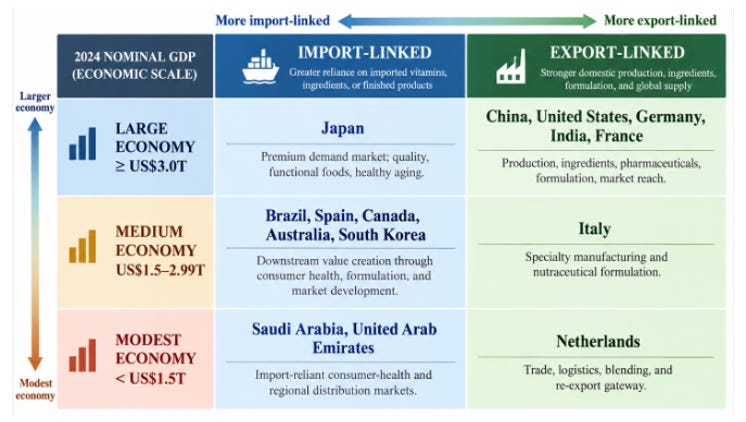
Figure 3. Patterns in Global Vitamin Supply Chain Ecosystem
Source: Authors’ conceptualization.
Note. National economic scale is classified using 2024 nominal GDP (current US$) as Large (≥US$3.0 trillion), Medium (US$1.5–2.99 trillion), or Modest (below US$1.5 trillion), while country roles represent qualitative assessments rather than measured vitamin-industry rankings.
Figure 3 presents six illustrative country groupings combining three nominal-GDP categories with two qualitative supply-chain orientations. Large economies (at least US$3 trillion) include China, the United States, Germany, India, and France on the export-linked side and Japan on the import-linked side. Medium economies (US$1.5–2.99 trillion) include Italy on the export-linked side and Brazil, Spain, Canada, Australia, and South Korea on the import-linked side. Among modest economies (below US$1.5 trillion), the Netherlands is export-linked through logistics and re-export, while Saudi Arabia and the United Arab Emirates are import-linked. These groupings represent authors’ qualitative ecosystem assessments, not verified net-export classifications or vitamin-market rankings (United Nations Statistics Division, 2025; World Bank, 2026a, 2026b).

3.2. Big Players in the Global Vitamin Ecosystem
The global vitamin ecosystem is led by several major countries that create value in different ways rather than through production volume alone. China stands out for large-scale synthesis, fermentation, and bulk ingredient production, while the United States, Germany, and France combine ingredient production with pharmaceuticals, specialty products, formulation, quality systems, branding, and large consumer markets. India is emerging as an increasingly important cost-competitive producer with strengths in pharmaceuticals and fermentation, while the Netherlands, Switzerland, Belgium, and Singapore exercise influence through specialized ingredients, logistics, intellectual property, processing, regional distribution, and re-export activities. Together, these countries show that global vitamin leadership can come from production scale, technological specialization, pharmaceutical quality, logistics and coordination, or market access, creating multiple pathways to influence the global vitamin supply chain.
3.3. Potential Leaders: Canada and South Korea
Canada and South Korea merit consideration as strategic healthcare growth cases rather than as proven leaders in aggregate vitamin trade. Canada has established life-science research and consumer-health infrastructure, while South Korea has fermentation, manufacturing, health-functional-food, OEM–ODM, and digital capabilities that may support higher-value activity. WITS reports Korea, Rep. 2024 gross exports to the world of US$50,031.36 thousand (approximately US$50.03 million) under HS 293623, vitamin B2 and its derivatives, unmixed; this provides a product-specific indicator of upstream participation, not proof of leadership across all vitamin ingredients (World Bank, 2026b). Research concerning dietary supplementation and vitamin D status documents health and nutrition concerns in Korea and Canada, but does not itself measure industrial competitiveness (Kim & Park, 2023; Lee & Kim, 2024; You et al., 2022; Weiler et al., 2023; Statistics Canada, 2023). The countries’ complementary capabilities suggest possible collaboration in formulation, quality validation, contract manufacturing, healthy aging, and personalized nutrition; these opportunities remain prospective rather than demonstrated outcomes.
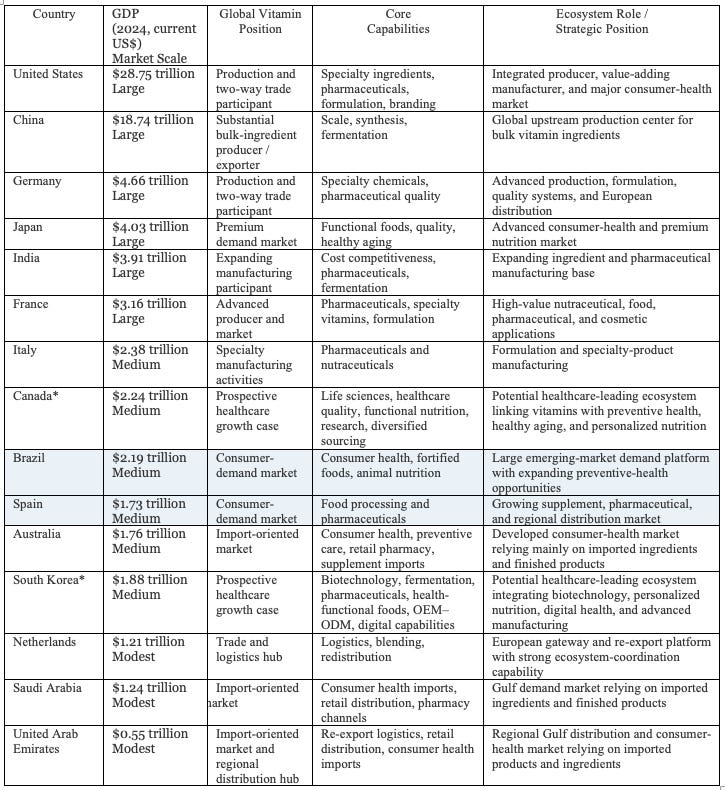
Table 1. Illustrative Vitamin Supply Chain Roles of 15 Selected Countries
Sources: GDP figures are drawn from the World Bank’s World Development Indicators (World Bank, 2026a), while ecosystem classifications are informed by UN Comtrade and World Integrated Trade Solution (WITS) HS 2936 trade data (United Nations Statistics Division, 2025; World Bank, 2026b), with national capabilities interpreted by the authors.
Table 1 compares the global vitamin supply chain roles of 15 selected countries in terms of national economic scale, industry position, core capabilities, and strategic ecosystem contributions. China demonstrates substantial strengths in bulk vitamin ingredient production, while the United States, Germany, France, and India combine manufacturing capabilities with pharmaceutical technologies, formulation, and market development; other countries create value through specialized manufacturing, consumer markets, logistics, and distribution. South Korea and Canada are highlighted as prospective healthcare growth cases, with complementary strengths in biotechnology, fermentation, OEM–ODM manufacturing, life sciences, functional nutrition, and preventive healthcare rather than established leadership in aggregate vitamin trade.
4. Key Issues Emerging from the Country Comparison
The country comparison highlights three strategic issues that shape future competitiveness: geographic concentration and supply dependency, the distinction between production leadership and ecosystem coordination, and Korea’s opportunity to build on selective upstream strengths while moving toward higher-value formulation, manufacturing, and market capabilities, providing the basis for the following strategic assessment.
4.1. Geographic Concentration and Supply Dependency
The first major issue is the geographic concentration of upstream vitamin production, particularly China’s substantial role in the global supply of several major vitamin ingredients. This concentration creates production efficiencies while exposing downstream manufacturers and importing countries to potential disruptions in supply, logistics, trade policy, and pricing (United Nations Statistics Division, 2025; World Bank, 2026b). Aggregate HS 2936 export values should not be treated as identical to production capacity, because trade data include different products and may incorporate re-exports. Resilience therefore depends on prequalified alternative suppliers, regulatory and quality readiness, selective inventories, and durable sourcing relationships rather than emergency substitution alone. For Korea, a practical strategy is to retain competitive international sourcing while gradually diversifying qualified suppliers and strengthening selected domestic capabilities for strategically important applications.
4.2. Production Leadership versus Ecosystem Coordination
The second major issue is the distinction between production capability and ecosystem coordination. China participates strongly in large-scale ingredient manufacturing, while economies such as the Netherlands, Belgium, Switzerland, and Singapore may create value through logistics, processing, intellectual property, or re-export. Such descriptions are strategic profiles, not verified country rankings or a claim that all listed economies have equal roles in every vitamin category (United Nations Statistics Division, 2025; World Bank, 2026b). Export values alone do not establish where inputs originate or who controls formulation, quality standards, scientific knowledge, branding, and distribution. A complete benchmark would separately measure ingredient production, product-level imports and exports, manufacturing quality, regulatory capacity, logistics, intellectual property, and market access. Korea may strengthen its role in biotechnology-based ingredients, premium formulation, testing, OEM–ODM manufacturing, regulatory assurance, personalized nutrition, and digitally supported consumer health.
4.3. Canada and Korea: From Niche Strengths to Higher-Value Healthcare Leadership
Canada and South Korea have distinct capabilities that could support higher-value positions in the vitamin ecosystem, although the scope and competitiveness of these activities require product-specific evidence. Canada offers life-science research and consumer-health capabilities; South Korea offers manufacturing, fermentation, health-functional-food and OEM–ODM experience, supported by a documented vitamin B2 export niche (Ministry of Food and Drug Safety, 2025; World Bank, 2026b). Rather than seek to duplicate China’s commodity production scale, the two countries could combine scientific formulation, trustworthy quality assurance, qualified international sourcing, personalized nutrition, digital health, and branding. These are strategic opportunities rather than verified forecasts. Their realization would require measurable investment in supplier diversification, manufacturing flexibility, traceability, regulatory readiness, and collaboration with healthcare and research institutions.

5. Conclusion
Vitamins are essential to human health, but responsible use begins with balanced diets and supplementation appropriate to nutritional, medical, or life-stage needs (National Academies of Sciences, Engineering, and Medicine, 2011; U.S. Preventive Services Task Force, 2022; World Health Organization, 2025). The global vitamin supply chain is interconnected and faces concentration risks in several upstream ingredient categories, with China playing a substantial role and other economies contributing manufacturing, formulation, logistics, regulation, and market access. South Korea’s approximately US$50.03 million in 2024 gross exports to the world under HS 293623 (vitamin B2 and its derivatives, unmixed; reporter: Korea, Rep.; trade flow: exports; partner: World) demonstrates a specific market presence, not a general ranking across the entire vitamin sector (World Bank, 2026b). Its most promising strategic direction is to combine biotechnology, diversified sourcing, advanced manufacturing, OEM–ODM capability, regulatory credibility, scientific formulation, and digital consumer-health applications. Canada can contribute complementary research and consumer-health capabilities. Future competitive advantage will depend on building trusted, evidence-based ecosystem partnerships rather than relying on production or trade volume alone.
References
European Commission. (n.d.). Food supplements. European Commission. https://food.ec.europa.eu/food-safety/labelling-and-nutrition/food-supplements_en
Kim, H., & Park, S. G. (2023). Effect of a single multi-vitamin and mineral supplement on nutritional intake in Korean elderly: Korean National Health and Nutrition Examination Survey 2018–2020. Nutrients, 15(7), 1561. https://doi.org/10.3390/nu15071561
Lee, S. Y., & Kim, K. N. (2024). Evaluation of the nutritional status according to household type and dietary supplements consumption in Korean elderly: Using the 7th (2016–2018) KNHANES data. Journal of the Korean Dietetic Association, 30(4), 213–226.
Ministry of Food and Drug Safety. (2025). 2024 production performance statistics for foods, processed livestock products, and health functional foods. Republic of Korea. https://www.mfds.go.kr/brd/m_374/view.do?seq=30210
National Academies of Sciences, Engineering, and Medicine. (2011). Dietary reference intakes for calcium and vitamin D. The National Academies Press. https://doi.org/10.17226/13050
National Institutes of Health, Office of Dietary Supplements. (2025a). Multivitamin/mineral supplements: Fact sheet for health professionals. https://ods.od.nih.gov/factsheets/MVMS-HealthProfessional/
National Institutes of Health, Office of Dietary Supplements. (2025b). Vitamin D: Fact sheet for health professionals. https://ods.od.nih.gov/factsheets/VitaminD-HealthProfessional/
Statistics Canada. (2023). Canadian Health Measures Survey: Vitamin D status of Canadians, 2007 to 2019. Government of Canada.
U.S. Preventive Services Task Force. (2022). Vitamin, mineral, and multivitamin supplementation to prevent cardiovascular disease and cancer: Preventive medication. JAMA, 327(23), 2326–2333. https://doi.org/10.1001/jama.2022.8970
United Nations Statistics Division. (2025). UN Comtrade database: Provitamins and vitamins, natural or reproduced by synthesis, derivatives thereof, and mixtures—HS 2936. United Nations.
Weiler, H. A., Sarafin, K., Martineau, C., Daoust, J. L., Esslinger, K., Greene-Finestone, L. S., Loukine, L., & Dorais, V. (2023). Vitamin D status of people 3 to 79 years of age from the Canadian Health Measures Survey 2012–2019. The Journal of Nutrition, 153(4), 1150–1161. https://doi.org/10.1016/j.tjnut.2023.02.026
World Bank. (2026a). GDP (current US$) [Data set]. World Development Indicators. https://data.worldbank.org/indicator/NY.GDP.MKTP.CD
World Bank. (2026b). World Integrated Trade Solution (WITS): Korea, Rep. exports of vitamin B2 and its derivatives, unmixed (HS 293623), 2024, partner World [Data set; UN Comtrade, HS 1988/92 (H0)]. https://wits.worldbank.org/trade/comtrade/en/country/KOR/year/2024/tradeflow/Exports/partner/ALL/product/293623
World Health Organization. (2025). Healthy diet. World Health Organization.
You, H., Shin, H. R., Song, S., & Ly, S. Y. (2022). Vitamin D intake and bone mineral density in Korean adults: Analysis of the 2009–2011 Korea National Health and Nutrition Examination Survey. Nutrition Research and Practice, 16(6), 775–788. https://doi.org/10.4162/nrp.2022.16.6.775
ABOUT THE AUTHORS

Paul C. Hong (Editor-in-Chief) - Distinguished University Professor, University of Toledo
Full list of his K-GSP columns:
Paul C. Hong is a Distinguished University Professor at the University of Toledo whose academic background integrates economics, manufacturing management, engineering, and global supply chain strategy. He earned a B.A. in Economics from Yonsei University, an M.A. in Economics from Bowling Green State University, and a Ph.D. in Manufacturing Management and Engineering from the University of Toledo. His research focuses on global supply chain management, strategic benchmarking, manufacturing competitiveness, resilience, industrial policy, and geo-economics, with particular interest in how trade policy, technological change, economic security, and geopolitical competition reshape international production networks and national competitiveness. His current work increasingly examines the intersection of global supply chains, strategic industries, AI-enabled transformation, and geo-economic relations among major economies, emphasizing how firms and nations can balance efficiency, resilience, strategic autonomy, and international cooperation in an increasingly complex global environment.

Isaac G. Lee
CEO AND PRESIDENT, DAVID HEALTH INTERNATIONAL, CANADA
Isaac G. Lee is the CEO and President of David Health International, a Canadian health and wellness organization headquartered in the Greater Toronto Area, where he has led corporate strategy and healthcare operations for more than two decades. A graduate of the Korea Military Academy, he combines military leadership with international business expertise to advance innovative healthcare products, preventive wellness, and sustainable health solutions across Canada and global markets.
Suggested Citation:
Hong, P. C., & Lee, I. G. (2026, October 15). The global vitamin supply chain ecosystem: Structural concentration, national capabilities, and strategic opportunities for South Korea and Canada. K-GSP Forum. pp. 1-12.
Original Article:

한글요약
글로벌 비타민 공급망 생태계: 구조적 집중, 국가별 역량, 그리고 한국과 캐나다의 전략적 기회
Paul C. Hong: 미국 톨레도대학교 석좌교수로 글로벌 공급망, 전략, 기술, 거버넌스 및 AI 시대의 조직 변화에 관한 연구를 수행하고 있다. Isaac G. Lee: 캐나다 David Health International의 CEO 겸 사장으로, 20년 이상 헬스케어 경영과 예방적 웰니스 및 글로벌 건강제품 사업을 이끌어 왔다.
건강과 영양, 그리고 건강한 노화에 대한 공통 관심은 두 저자가 비타민과 그 이면의 글로벌 공급망을 함께 살펴보게 된 출발점이었다. 젊은 세대는 에너지, 운동능력, 면역력, 집중력과 장기적 건강을 위해 비타민에 관심을 갖고, 중·장년층은 뼈 건강, 기억력, 면역력과 건강한 노화에 더욱 관심을 기울인다. 부모들 역시 자녀의 성장과 발달에 필요한 영양소를 세심하게 살피고 있다. 이러한 개인적·사회적 관심은 비타민을 단순한 건강보조제품이 아니라 예방적 건강관리와 삶의 질을 뒷받침하는 중요한 요소로 보게 한다. 그러나 소비자가 비타민 C, 비타민 D, 종합비타민 한 병을 구입할 때 그 원료가 어디에서 생산되었고, 얼마나 많은 기업과 국가가 최종 제품 생산에 참여했는지를 생각하는 경우는 많지 않다. 실제로 하나의 정제나 캡슐 뒤에는 농업·생물·광물·화학 원료, 합성 또는 발효, 정제, 배합, 품질검사, 제조, 포장, 규제 승인, 물류, 브랜드 및 유통에 이르는 복잡한 글로벌 공급망이 존재한다. 따라서 공장 가동 중단, 물류 차질, 에너지 문제, 무역규제나 국제조달의 변화는 비타민의 공급, 품질 및 가격에 직접 영향을 줄 수 있다.
세계 비타민 산업은 국가별로 서로 다른 경쟁우위를 보여준다. 중국은 대규모 합성, 발효 및 원료 생산에서 강점을 보이고, 미국·독일·프랑스는 의약품, 특수 원료, 배합, 품질관리와 대규모 소비시장을 결합한다. 인도는 비용경쟁력과 제약·발효 역량을 확대하고 있으며, 네덜란드·스위스·벨기에·싱가포르는 물류, 지식재산, 가공, 지역 유통 및 재수출을 통해 중요한 역할을 수행한다. 따라서 글로벌 비타민 경쟁력은 단순히 “얼마나 많이 생산하는가”보다 기술, 품질, 제조, 시장 접근, 물류와 생태계 조정 능력을 어떻게 결합하는가에 달려 있다. 이러한 글로벌 구조 속에서 한국과 캐나다는 현재의 수출 규모 이상으로 성장 가능성이 큰 전략적 헬스케어 국가로 평가할 수 있다. 한국은 바이오기술, 발효, 제약 수준의 제조, 건강기능식품, OEM–ODM, 정밀생산 및 디지털 역량을 갖추고 있으며, 특히 비타민 B2 및 발효 분야에서 의미 있는 기반을 보유하고 있다. 캐나다는 생명과학 연구, 높은 헬스케어 신뢰도, 기능성 영양, 다변화된 조달과 선진 소비자 건강시장이 강점이다. 두 국가는 중국과 같은 대량생산 경쟁을 추구하기보다 글로벌 원료조달을 과학적 배합, 품질보증, 개인맞춤 영양, 디지털 헬스, 신뢰받는 제조 및 글로벌 브랜드와 연결함으로써 고부가가치 헬스케어 생태계로 발전할 수 있다.
이 글의 핵심 메시지는 “글로벌 비타민 리더십은 누가 가장 많이 생산하느냐보다 누가 가장 신뢰받는 가치를 창출하느냐에 달려 있다”는 것이다. 세계 비타민 공급망은 상류 생산의 지역적 집중 때문에 효율성과 동시에 취약성을 안고 있으며, 미래 경쟁력은 안정적 조달, 공급망 회복탄력성, 과학적 신뢰성, 제조품질, 디지털 기술과 시장 신뢰를 통합하는 능력에서 결정될 것이다. 한국은 바이오·발효·OEM–ODM·디지털 역량을, 캐나다는 생명과학·헬스케어 신뢰·기능성 영양 역량을 활용하여 서로 다른 경로로 세계 시장에서 전략적 위치를 강화할 수 있다. 궁극적으로 두 나라의 기회는 저가 대량생산을 모방하는 데 있지 않고, 과학·기술·제조·건강관리·브랜드를 연결하여 신뢰받는 글로벌 예방건강 솔루션을 창출하는 데 있다.
© K-Global Scholars and Professionals Forum. All rights reserved. Content published in the K-GSP Forum may not be reproduced, distributed, or transmitted in any form without prior written permission from the K-GSP Forum, except for brief quotations with full attribution.