

EXECUTIVE SUMMARY
Historically, the U.S. president’s party has often lost House seats during midterm elections under both Democratic and Republican administrations, illustrating that early political success does not guarantee enduring public support; these electoral outcomes, however, reflect many economic, institutional, and political influences rather than any single leader’s behavior. Using this bipartisan historical pattern alongside classical literature and organizational experience as illustrative contexts, this article proposes Relational Capital Fatigue (RCF), a five-factor framework in which repetitive overexposure, excessive self-promotion, disrespectful communication, neglect of loyal supporters, and strategic inconsistency may gradually weaken stakeholder attention, credibility, respect, loyalty, and confidence. Five principles of statistical thinking—diminishing returns, mean versus variation, correlation versus causation, trend analysis, and multivariate reasoning—help distinguish observable shifts in public attitudes from untested causal explanations, yielding general lessons about humility, reciprocal relationships, strategic discipline, and timely course correction across political, organizational, and community leadership.
Keywords: Relational Capital Fatigue; Leadership Behavior; Public Attitudes; Relational Trust; Statistical Thinking.
1. Introduction
Why do successful leaders sometimes lose the confidence of people who once supported them? A leader may initially build recognition, legitimacy, and goodwill through achievement, frequent communication, and decisive action, yet the same practices may become counterproductive when audiences perceive repetition, self-importance, or disregard for others. The resulting tension is not limited to elections: executives, university leaders, nonprofit directors, and community figures all depend on relationships that require continued attention and reciprocity. This article examines when accumulated visibility and authority may cease to build confidence and instead contribute to leadership vulnerability.
Historical and literary accounts offer suggestive illustrations, not controlled evidence of a common causal mechanism. Julius Caesar’s political conflicts, Napoleon’s strategic overextension, and Richard Nixon’s Watergate-related loss of institutional support differ markedly in circumstances, but each invites reflection on the limits of authority and the importance of trusted relationships. Shakespeare’s King Lear, Macbeth, and Coriolanus likewise dramatize the costs of flattery, unchecked ambition, and contempt for stakeholders. The article treats these as interpretive examples that help generate hypotheses about leadership behavior rather than proof that identical processes determine every downfall.
The article’s conceptual contribution is Relational Capital Fatigue (RCF): a proposed erosion of accumulated goodwill, attention, credibility, respect, loyalty, and strategic confidence as stakeholders repeatedly encounter behaviors perceived as excessive, dismissive, or inconsistent. Five potentially interacting factors are examined: visibility saturation, excessive self-promotion, disrespectful communication, neglect of loyal supporters, and loss of strategic focus. The argument is conditional rather than deterministic: leaders’ conduct may shape stakeholder responses, while external pressures, performance, institutions, and group differences also matter. The aim is to distinguish observable changes in attitudes from causal assumptions and identify opportunities for thoughtful corrective action (Barber, 1992; Pfeffer, 2010; Putnam, 2000).
2. Contextual Overview
Three perspectives frame the analysis: recurring shifts in public support, historical and literary examples of relational strain, and the practical challenge of interpreting changes in stakeholder attitudes. The U.S. midterm record provides a familiar, nonpartisan illustration of changing electoral support, while the article’s principal concern is the broader relationship between leadership behavior and relational capital across institutional settings.
2.1. Midterm Elections as an Illustration of Changing Public Support
Historical U.S. House elections illustrate that the party of a sitting president frequently loses seats in midterm contests under administrations of both parties (Figure 1). The selected examples span 1930–2022 and also include three important counterexamples—1934, 1998, and 2002—when the president’s party gained House seats. Such election results are aggregate political outcomes, not direct measures of public trust or tests of any leader’s communication behavior; economic conditions, public policy, turnout, candidate quality, and electoral institutions all help explain their variation. Accordingly, the historical pattern serves as a reminder that past victories do not ensure continuing support, not as an explanation of the 2026 election or as evidence that overexposure causes electoral defeat (American Presidency Project, n.d.; Brookings Institution, n.d.).
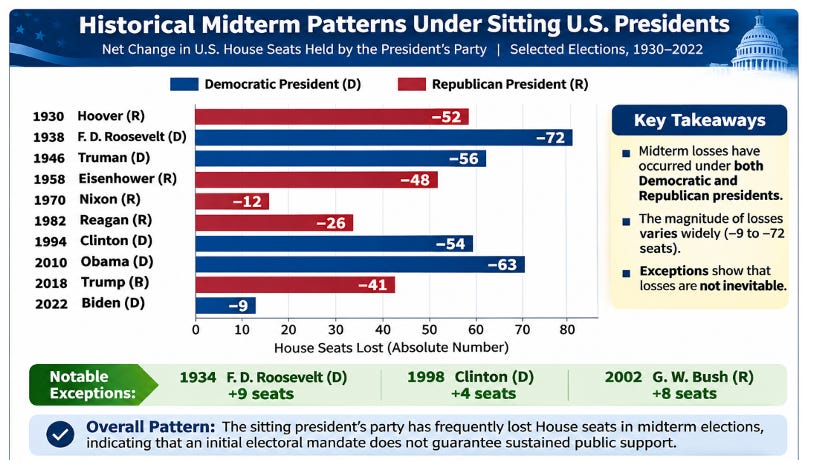
Figure 1. Historical Midterm Patterns Under Sitting U.S. Presidents (1930–2022)
Sources: American Presidency Project, midterm congressional seat-change series; Brookings Institution, Vital Statistics on Congress. Selected elections; seats gained or lost by the president’s party.
Figure 1 depicts selected historical midterm elections in which the sitting president’s party lost U.S. House seats under Democratic and Republican administrations, with widely varying losses across years. The gains recorded in 1934, 1998, and 2002 are essential counterexamples and show that midterm losses are common rather than inevitable. The figure illustrates the changing nature of political support but cannot determine whether particular leadership behaviors, economic developments, or other conditions produced those outcomes.
2.2. Historical and Literary Illustrations of Leadership Vulnerability
Historical and literary cases highlight possible pathways through which leaders strain the relationships supporting their authority. Caesar’s conflicts with republican institutions, Napoleon’s costly strategic overreach, and Nixon’s institutional crisis are different episodes involving different combinations of individual decisions and structural constraints; they should not be treated as interchangeable causes of leadership failure. In King Lear, sincerity is sacrificed to flattery; in Macbeth, ambition compounds mistrust; and in Oedipus Rex, limited knowledge and judgment shape tragic choices. These examples sharpen questions about humility, restraint, dissent, and accountability, but their interpretive value is distinct from empirical validation of RCF. Sophocles’s Oedipus the King is referenced through Fagles’s translation (Sophocles, 1984).
2.3. Reading Stakeholder Attitudes: From Recognition to Relational Fatigue
Public visibility, enthusiasm, approval, and enduring trust are related but distinguishable concepts. Audiences may recognize a leader while disagreeing with that leader, and favorable averages may conceal declining engagement among particular groups. RCF proposes that overexposure, self-promotion, disrespectful communication, neglected relationships, and inconsistent priorities may heighten attention fatigue or weaken confidence in some circumstances; their effects should be assessed against performance, organizational conditions, and competing explanations. Sustainable leadership therefore requires attentive listening, reliable feedback, and periodic adjustment rather than assuming that high visibility alone indicates healthy relationships (Hibbing & Theiss-Morse, 2002; Putnam, 2000).
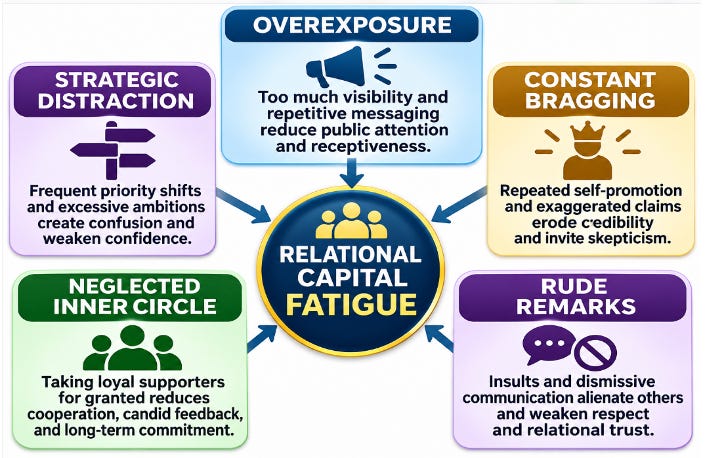
Figure 2. Five Behavioral Factors Proposed to Contribute to Relational Capital Fatigue
Source: Author’s Own Synthesis
Figure 2 organizes five proposed behavioral antecedents of RCF and their associated stakeholder responses: exposure and attention fatigue, self-promotion and credibility doubts, disrespect and reduced mutual regard, neglect and diminished loyalty, and inconsistent priorities and uncertainty. These relationships are conceptual propositions whose direction, strength, and boundaries remain questions for future empirical study.
3. Five Behavioral Sources of Relational Capital Fatigue
3.1. Overexposure: Visibility Saturation and Attention Fatigue
Visibility helps stakeholders identify a leader, understand priorities, and assess results; however, repeated exposure may yield diminishing value when messages provide little new information or meaningful engagement. Such saturation could reduce attention among some audiences even as visibility strengthens support among others. The key empirical question is whether communication frequency, content quality, and stakeholder expectations jointly predict subsequent engagement, not whether any single publicized election proves that visibility caused rejection. Historical accounts of concentrated personal authority illustrate the dilemma without establishing its causal effect.
Proposition 1 (P1): Visibility Saturation. Excessive and repetitive leadership exposure is positively associated with stakeholder attention fatigue and negatively associated with relational engagement, particularly when communication provides limited substantive value.
3.2. Constant Self-Promotion: Credibility Erosion
Achievement can legitimately strengthen a leader’s standing, but repeated personal credit-taking, exaggerated claims, or dismissal of others’ contributions may undermine perceived authenticity. King Lear offers a literary warning about reliance on flattery rather than honest relationships; the broader leadership question is whether stakeholders view communication as proportionate, verifiable, and collectively minded. The proposed effect is likely to depend on evidence of actual performance and cultural expectations about public recognition (Cialdini, 2009; Fukuyama, 1995).
Proposition 2 (P2): Credibility Erosion. Persistent self-promotion and exaggerated claims of personal achievement are negatively associated with perceived leadership authenticity and credibility, particularly when leaders fail to acknowledge collective contributions and verifiable performance limitations.
3.3. Disrespectful Communication: Respect Deterioration
Disagreement need not weaken leadership, and vigorous debate may be valuable; repeated ridicule, contempt, or personal humiliation, however, may inhibit candid feedback and diminish perceived respect. Shakespeare’s Coriolanus provides an illustrative portrayal of the political costs of contempt for constituents, not an empirical test of modern communication effects. For contemporary institutions, the relevant indicators include whether employees, citizens, or collaborators feel able to question decisions without retaliation and whether communication practices sustain mutual dignity (Hibbing & Theiss-Morse, 2002).
Proposition 3 (P3): Respect Deterioration. Repeated disrespectful remarks and dismissive interpersonal behavior are negatively associated with stakeholder respect, psychological safety, and relational trust, particularly among groups that perceive such communication as threatening or institutionally inappropriate.
3.4. Neglect of Loyal Supporters: Loyalty Withdrawal
Long-standing colleagues, advisers, and supporters contribute experience, cooperation, continuity, and corrective feedback. Leaders who overlook their contributions or restrict access to honest disagreement may weaken the relationships that once sustained their work. King Lear’s rejection of Cordelia and Kent dramatizes this danger, while network research underscores the value of maintaining reciprocal ties and diverse sources of information. The proposed RCF mechanism concerns perceived neglect and declining willingness to help, not merely changes in personal loyalty (Burt, 1992; Putnam, 2000).
Proposition 4 (P4): Loyalty Withdrawal. Perceived neglect of loyal inner-circle stakeholders is negatively associated with relational commitment, willingness to provide discretionary support, and access to constructive feedback, particularly when earlier contributions receive insufficient recognition.
3.5. Lack of Strategic Focus: Strategic Disorientation
Consistent priorities allow stakeholders to understand the relationship between announced goals, actual decisions, and resource commitments. Frequent reversals, competing initiatives, or strategic overextension may create uncertainty, especially when explanations and trade-offs are not communicated clearly. Napoleon’s 1812 campaign serves as a historical illustration of overextension amid substantial logistical and geopolitical constraints; it is not evidence that modern strategic distraction always produces failure. A more defensible test would relate measurable priority changes and decision consistency to stakeholder confidence over time (Barber, 1992; Pfeffer, 2010).
Proposition 5 (P5): Strategic Disorientation. Inconsistency between leaders’ stated priorities, actual decisions, and resource commitments is negatively associated with stakeholder confidence and sustained relational support, particularly when combined with accumulated attention fatigue, credibility erosion, respect deterioration, and declining inner-circle loyalty.
3.6. The Cumulative Fatigue Trap: From Early Warning Signs to Leadership Vulnerability
The five proposed factors may accumulate or reinforce one another, but they need not appear in a fixed order. Repetitive communication could intensify perceived self-promotion; dismissive exchanges could discourage constructive criticism; weakened feedback and neglected relationships could then make priorities harder to coordinate. Conversely, substantive communication, respectful disagreement, acknowledgement of collaborators, and clear strategic choices may interrupt a negative cycle. Figure 3 therefore depicts a provisional framework for research and reflection—not an established five-stage law—and allows for external influences such as performance, organizational culture, economic shocks, and institutional design. The arrows in Figure 3 represent illustrative relationships only, not a fixed temporal or causal sequence.
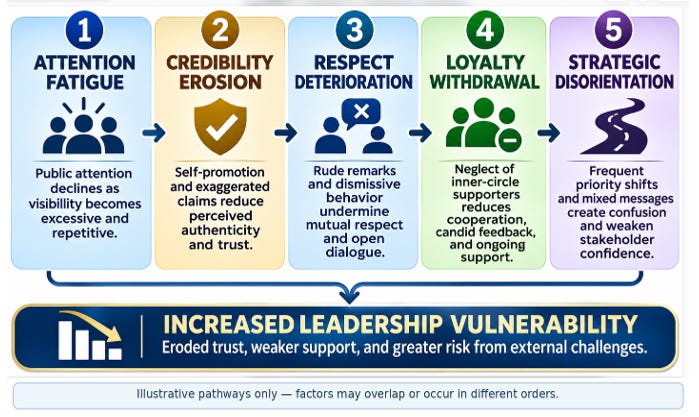
Figure 3. Proposed Pathways from Relational Capital Fatigue to Leadership Vulnerability
Source: Author’s Own Synthesis
Note. Illustrative pathways; stages may overlap or occur in different orders.
Figure 3 illustrates five potentially interacting relational consequences—attention fatigue, credibility erosion, respect deterioration, loyalty withdrawal, and strategic disorientation—that may jointly increase leadership vulnerability. The arrows represent illustrative pathways rather than a required order: the mechanisms can overlap, arise in different sequences, or be interrupted through corrective action. Longitudinal and comparative research would be needed to test the timing, interaction, and strength of these proposed relationships.
The propositions turn a broad leadership concern into five questions suitable for empirical study: when does visibility become saturation, when does self-promotion impair credibility, when does discourtesy reduce trust, when does neglect weaken loyalty, and when does strategic inconsistency undermine confidence? Researchers should measure stakeholder attitudes directly and repeatedly, rather than treating election results, publicity, or organizational outcomes as interchangeable proxies for relational capital. The value of the framework is to encourage early recognition and proportionate behavioral correction without assuming that every unfavorable outcome signals a leadership failure.
Table 1 synthesizes the proposed Relational Capital Fatigue framework by presenting five recurring leadership behaviors—overexposure, excessive self-promotion, disrespectful remarks, neglect of loyal supporters, and lack of strategic focus—alongside observable behavioral patterns, potential relational consequences, and historical or literary illustrations. These dimensions suggest how stakeholder attention, credibility, respect, loyalty, and confidence may weaken under particular conditions, potentially increasing leadership vulnerability. The historical and literary examples—including Louis XIV (Burke, 1992), Alexander the Great (Lane Fox, 1973), and Shakespearean characters—are interpretive illustrations, not empirical tests of the framework. The corresponding research propositions are developed separately in Sections 3.1–3.5.
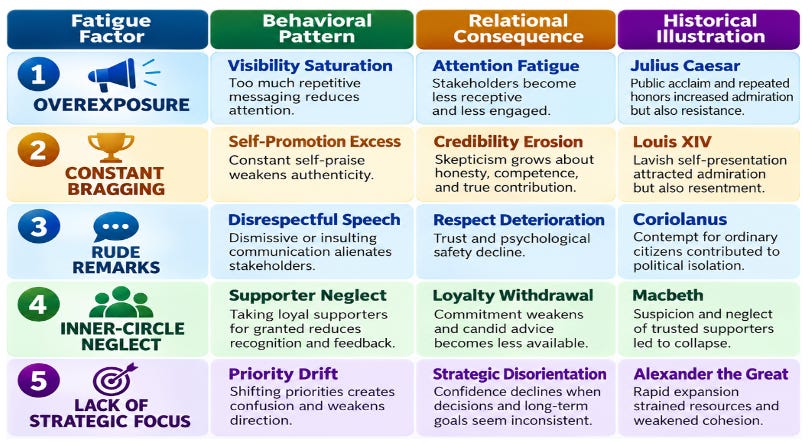
Table 1. Five Behavioral Factors, Potential Relational Consequences, and Illustrations
Source: Author’s Own Synthesis

4. Statistical Thinking for Interpreting Leadership and Public Attitudes
Statistical thinking helps separate meaningful shifts in public or stakeholder attitudes from isolated reactions and misleading comparisons. Five complementary principles—diminishing returns, mean versus variation, correlation versus causation, trend analysis, and multivariate reasoning—offer tools for evaluating the proposed RCF relationships without implying that they have already been demonstrated. Their application requires explicit definitions, suitable measures, repeated observations where possible, and attention to sampling and contextual differences (Wild & Pfannkuch, 1999; Gelman & Hill, 2007).
4.1. Diminishing Returns and Stakeholder Variation
The first principle, diminishing returns, asks whether additional messages continue to improve stakeholder understanding or begin to generate fatigue. The second, mean versus variation, asks whose attitudes are represented by an overall approval or satisfaction score and whether important subgroups are moving in different directions. A high average can coexist with rising dissatisfaction among previously supportive audiences, but such changes require reliable subgroup data and comparable survey measures rather than inference from isolated anecdotes (Wild & Pfannkuch, 1999).
4.2. Correlation, Causation, and Multivariate Reasoning
Correlation does not establish causation: declining trust may coincide with prominent messaging or contentious decisions without being caused by either one. Reverse causality is also plausible, since leaders sometimes communicate more often in response to waning support; external conditions such as economic performance, organizational restructuring, and institutional constraints may influence both communication and stakeholder attitudes. The third principle therefore concerns causal inference, while the fifth—multivariate thinking—asks researchers to consider several interacting explanations and test whether the proposed five factors add explanatory value beyond contextual variables (Gelman & Hill, 2007; Wasserstein & Lazar, 2016).
Figure 4 presents five statistical thinking principles—diminishing returns, mean versus variation, correlation versus causation, trend analysis, and multivariate thinking—for evaluating leadership behavior and stakeholder attitudes. Repetitive exposure may reduce engagement, averages may hide stakeholder differences, and declining confidence may coincide with relational fatigue without establishing causation. Taken together, the principles encourage leaders to monitor changing trends, consider competing explanations, and respond through evidence-based adjustment rather than relying on visibility or past achievements alone.
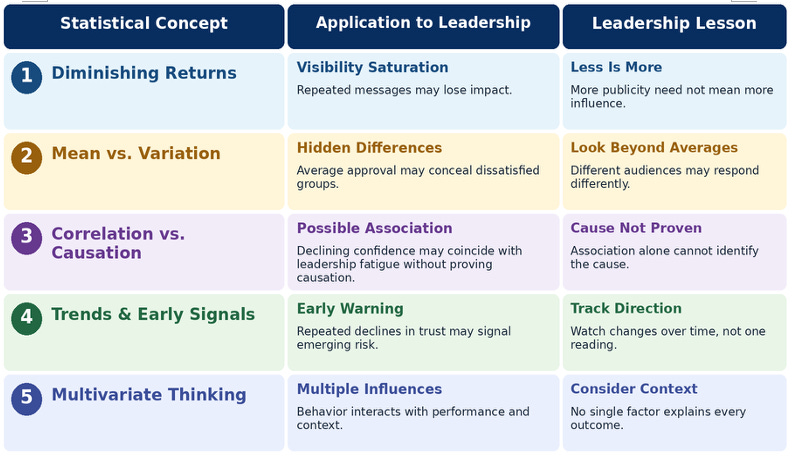
Figure 4. Five Statistical Thinking Principles for Leadership Analysis
Source: Author’s Own Synthesis
4.3. Trend Analysis and Early Warning Signals of Leadership Vulnerability
The fourth principle, trend analysis, distinguishes transient fluctuations from sustained change by comparing repeated observations of credibility, respect, engagement, loyalty, and confidence using consistent instruments. Means and dispersion measures can reveal both overall movement and growing disagreement across groups, but interpretation requires appropriate samples and attention to measurement uncertainty. Together, the five statistical principles provide a disciplined means of detecting potential early warning signals and evaluating corrective action; they do not establish that relational decline always precedes public defeat (Wild & Pfannkuch, 1999; Gelman & Hill, 2007). For example, a university leader experiencing declining faculty confidence could compare repeated survey responses across departments, examine changes in overall satisfaction alongside variation among groups, and consider whether communication practices, resource constraints, or institutional decisions better explain the observed trends. Comparable indicators over time, together with transparent attention to uncertainty and alternative explanations, could help distinguish temporary dissatisfaction from persistent relational fatigue without prematurely assigning causation. The same approach can inform leadership assessment in business and nonprofit organizations.

5. Conclusion
Familiarity can create recognition and trust, yet persistent exposure and other counterproductive leadership practices may under some conditions reduce the relational capital on which sustainable influence depends. Drawing on selected historical elections, political and literary cases, and organizational examples, this article proposes five behavioral contributors to Relational Capital Fatigue: visibility saturation, excessive self-promotion, disrespectful communication, neglect of loyal supporters, and strategic inconsistency. The historical midterm pattern shows that public support can shift under leaders of either party, but aggregate election outcomes cannot identify the behavioral causes of that shift. Statistical thinking offers a necessary safeguard by distinguishing averages from variation, association from causation, and temporary reactions from enduring trends. The practical implication extends to political, business, educational, nonprofit, and community settings: leaders should communicate with substance, recognize others, welcome candid feedback, maintain reciprocal relationships, and align action with stated priorities. RCF remains a conceptual framework to be tested through direct measures of stakeholder attitudes, comparisons across institutional contexts, and longitudinal studies rather than a confirmed explanation for any particular setback.
References
American Presidency Project. (n.d.). Seats in Congress gained/lost by the president’s party in mid-term elections. University of California, Santa Barbara. https://www.presidency.ucsb.edu/statistics/data/seats-congress-gainedlost-the-presidents-party-mid-term-elections
Brookings Institution. (n.d.). Vital statistics on Congress: Table 2-4, losses by the president’s party in midterm elections, 1862–2018. https://www.brookings.edu/wp-content/uploads/2022/09/2-4-Full.pdf
Barber, J. D. (1992). The presidential character: Predicting performance in the White House (4th ed.). Prentice Hall.
Burke, P. (1992). The fabrication of Louis XIV. Yale University Press.
Burt, R. S. (1992). Structural holes: The social structure of competition. Harvard University Press.
Cialdini, R. B. (2009). Influence: Science and practice (5th ed.). Pearson.
Fukuyama, F. (1995). Trust: The social virtues and the creation of prosperity. Free Press.
Gelman, A., & Hill, J. (2007). Data analysis using regression and multilevel/hierarchical models. Cambridge University Press.
Hibbing, J. R., & Theiss-Morse, E. (2002). Stealth democracy: Americans’ beliefs about how government should work. Cambridge University Press.
Jacobson, G. C. (2019). Extreme referendum: Donald Trump and the 2018 midterm elections. Political Science Quarterly, 134(1), 9–38. https://doi.org/10.1002/polq.12866
Lane Fox, R. (1973). Alexander the Great. Penguin Books.
Pfeffer, J. (2010). Power: Why some people have it—and others don’t. HarperBusiness.
Putnam, R. D. (2000). Bowling alone: The collapse and revival of American community. Simon & Schuster.
Shakespeare, W. (n.d.). Coriolanus (B. Mowat & P. Werstine, Eds.). Folger Shakespeare Library. https://www.folger.edu/explore/shakespeares-works/coriolanus/
Shakespeare, W. (n.d.). Julius Caesar (B. Mowat & P. Werstine, Eds.). Folger Shakespeare Library. https://www.folger.edu/explore/shakespeares-works/julius-caesar/
Shakespeare, W. (n.d.). King Lear (B. Mowat & P. Werstine, Eds.). Folger Shakespeare Library. https://www.folger.edu/explore/shakespeares-works/king-lear/
Shakespeare, W. (n.d.). Macbeth (B. Mowat & P. Werstine, Eds.). Folger Shakespeare Library. https://www.folger.edu/explore/shakespeares-works/macbeth/
Pew Research Center. (2018, November 15). Trump, the 2018 election and beyond. https://www.pewresearch.org/politics/2018/11/15/4-trump-the-2018-election-and-beyond/
Sophocles. (1984). Oedipus the King (R. Fagles, Trans.). In The three Theban plays. Penguin Books. (Original work performed c. 429 BCE)
U.S. House of Representatives, History, Art & Archives. (n.d.). Majority changes in the House of Representatives, 1856 to present. https://history.house.gov/Institution/Majority-Changes/Majority-Changes/
Wasserstein, R. L., & Lazar, N. A. (2016). The ASA statement on p-values: Context, process, and purpose. The American Statistician, 70(2), 129–133. https://doi.org/10.1080/00031305.2016.1154108
Wild, C. J., & Pfannkuch, M. (1999). Statistical thinking in empirical enquiry. International Statistical Review, 67(3), 223–248. https://doi.org/10.1111/j.1751-5823.1999.tb00442.x
About the Authors

Paul C. Hong (Editor-in-Chief) - Distinguished University Professor, University of Toledo
Full list of his K-GSP columns:
Paul C. Hong is a Distinguished University Professor at the University of Toledo whose research spans global supply chain management, international competitiveness, geopolitical strategy, and institutional governance. He is co-author of Rising Asia and American Hegemony: Case of Competitive Firms from Japan, Korea, China and India (Springer, 2020), which examines the changing dynamics of Asian economic development and global competition. His scholarship examines how political dynamics, geopolitical tensions, economic interdependence, technological transformation, and strategic networks influence national competitiveness and organizational responses to uncertainty.

Joe Wert
PROFESSOR OF POLITICAL SCIENCE · INDIANA UNIVERSITY SOUTHEAST, USA
Joe Wert is a Professor of Political Science at Indiana University Southeast whose research focuses on American politics, public administration, presidential leadership, and political institutions. He earned his Ph.D. in Political Science from the University of Cincinnati and holds advanced degrees in economics, political science, and business administration. He is the author of A Study of Bill Clinton’s Presidential Approval Ratings (Edwin Mellen Press, 2003) and has published extensively on presidential leadership styles and American presidential elections, particularly those of 2016 and 2020. His current research examines how politically weak presidents secure U.S. Senate ratification of international treaties, highlighting the interaction of executive leadership, legislative institutions, and political negotiation in American governance.
Suggested Citation
Hong, P. C., & Wert, J. L. (2026, November 10). Familiarity may generate trust, but overexposure breeds fatigue: Statistical thinking, relational capital fatigue, and enduring lessons for leadership. K-Global Scholars and Professionals Forum, 1-15
Original Article

한글 요약
친숙함은 신뢰를 만들 수 있지만, 과도한 노출은 피로를 낳는다
통계적 사고, 관계 자본 피로, 그리고 지속가능한 리더십의 교훈
성공적인 지도자도 시간이 지나면서 지지와 신뢰를 잃을 수 있지만, 이러한 변화가 반드시 한 가지 행동이나 성격에서 비롯되는 것은 아니다. 본 글은 역사와 고전문학의 사례를 해석적 자료로 활용하면서, 정치·기업·교육·비영리기관·지역사회에 공통으로 적용할 수 있는 관계 자본 피로(Relational Capital Fatigue, RCF)라는 개념적 틀을 제안한다.
관계 자본 피로란 지도자가 축적한 관심, 신뢰성, 존중, 충성, 전략적 신뢰가 반복적인 행동과 이해관계자의 반응 속에서 약화될 가능성을 의미한다. 핵심적인 다섯 요인은 ① 과도한 노출과 반복적인 메시지, ② 지나친 자기 과시, ③ 무례하거나 경멸적인 의사소통, ④ 오랜 지지자와 협력자에 대한 소홀함, ⑤ 목표와 실행의 일관성 부족이다. 이 요인들은 서로 영향을 줄 수 있으나 모든 지도자에게 동일한 순서나 강도로 작용한다고 단정할 수 없으며, 제시된 관계는 향후 실증적으로 검증해야 할 가설이다.
미국 중간선거의 장기적 기록은 민주당과 공화당 어느 쪽이 집권하든 대통령 소속 정당이 하원 의석을 잃는 일이 흔하지만 불가피하지는 않다는 점을 보여준다. 1934년, 1998년, 2002년에는 오히려 의석을 늘린 예외도 있었으며, 선거 결과는 경제 상황, 정책 평가, 투표 참여, 후보의 특성, 정치제도 등 복합적인 요인의 영향을 받는다. 따라서 본 글은 2026년 중간선거나 특정 대통령의 성과를 평가하지 않고, 이러한 역사적 현상을 대중의 태도가 변할 수 있음을 보여주는 보조적 사례로 사용한다.
분석의 중심에는 한계효용 체감, 평균과 변동성, 상관관계와 인과관계의 구별, 추세 분석, 다변량 사고라는 다섯 가지 통계적 원칙이 있다. 이 원칙들은 지도자의 노출 빈도나 일시적인 지지율만으로 인과관계를 추정하지 않고 집단 간 차이, 시간에 따른 변화, 다른 설명 요인을 함께 검토하도록 돕는다.
궁극적으로 지속가능한 리더십은 과도한 자기 홍보보다 실질적 소통, 겸손, 상호 존중, 공로 인정, 솔직한 피드백, 전략적 일관성을 통해 관계 자본을 지속적으로 관리하는 데 달려 있다는 실천적 통찰을 제시한다.
폴 홍(Paul C. Hong)은 미국 톨레도대학교(University of Toledo)의 석좌교수(Distinguished University Professor)로, 글로벌 공급망 관리, 국제경쟁력, 조직 혁신 및 제도적 거버넌스를 연구하고 있다. 그의 연구는 역사적 사례와 조직·경영의 문제를 연결하여 지속가능한 리더십과 협력의 조건을 탐구한다.
공동저자 조셉 워트(Joseph L. Wert)는 인디애나대학교 사우스이스트(Indiana University Southeast)의 정치학 교수로, 미국 정치, 대통령 리더십 및 공공행정을 연구하고 있다.
© K-Global Scholars and Professionals Forum. All rights reserved. Content published in the K-GSP Forum may not be reproduced, distributed, or transmitted in any form without prior written permission from the K-GSP Forum, except for brief quotations with full attribution.
Dr. Paul Hong, thank you for this insightful and thought-provoking article.
Your concept of Relational Capital Fatigue offers a valuable lens for understanding how leaders can gradually lose the trust they once earned.
I especially appreciate your reminder that past success does not guarantee lasting support.
Your emphasis on humility, reciprocity, and strategic consistency speaks directly to leadership in business, politics, and community life.
It encourages all of us to reflect on how carefully we nurture the relationships entrusted to us.