

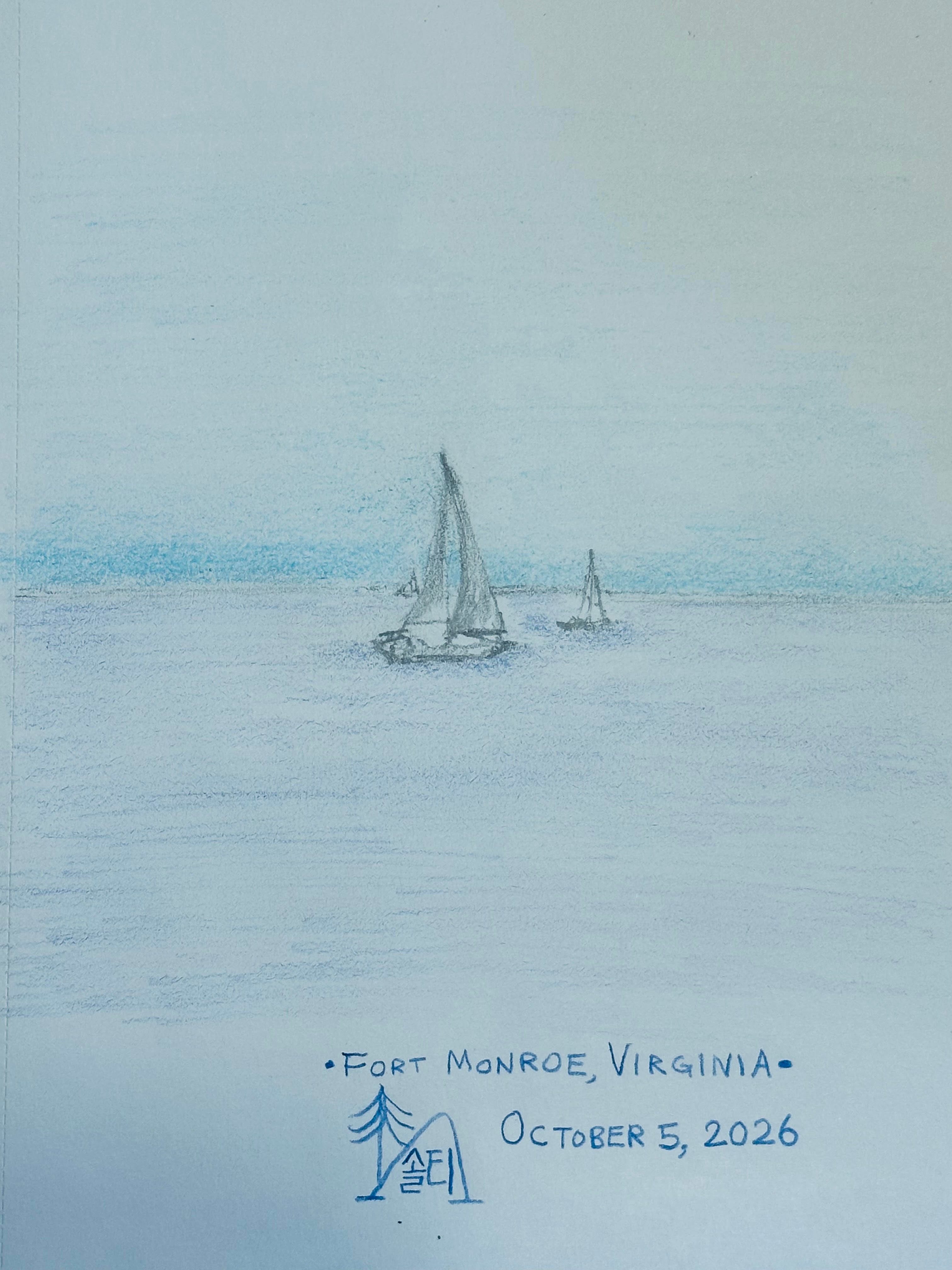
Author’s Sketch of Far View of Fort Monroe
Fort Monroe: Where American History Arrives by Sea
A Journey Through Exploration, Slavery, War, and Freedom
Abstract
Fort Monroe, located at Old Point Comfort on the Chesapeake Bay in Virginia, is far more than a military fortress. It is a remarkable historical landscape in which Indigenous history, European exploration, colonial settlement, the arrival of Africans, slavery, American military development, the Civil War, emancipation, and African American history intersect. The story of Fort Monroe begins before the construction of the present stone fortress in the nineteenth century. In the early seventeenth century, the area became connected to English exploration and the establishment of Jamestown, while Old Point Comfort later became associated with the arrival of the first recorded Africans in English Virginia in 1619. Two centuries later, the United States constructed the present Fort Monroe as one of the most important coastal fortifications of the Third System. During the Civil War, the fort acquired another extraordinary meaning when Major General Benjamin Butler refused to return three enslaved men who had escaped to Union lines and instead classified them as “contraband of war.” This decision helped establish Fort Monroe as a place associated with self-emancipation and freedom. Today, Fort Monroe invites visitors to understand American history not as a sequence of isolated events but as a continuing dialogue among exploration, power, human suffering, resistance, freedom, and memory.
Keywords: Fort Monroe, Old Point Comfort, John Smith, African American history, slavery, emancipation, Civil War, Virginia
A Place Where History Begins at the Water
There are historical places that we visit to see old buildings, and there are places where the landscape itself seems to tell a story. Fort Monroe is one of the latter. Standing at the entrance to Hampton Roads, where the Chesapeake Bay meets the Atlantic Ocean, the fort occupies a strategic location that has connected people, ships, commerce, war, migration, and ideas for centuries. The water surrounding Old Point Comfort was not simply a geographic feature; it was a major pathway through which different worlds encountered one another. Indigenous peoples lived in the region long before Europeans arrived, and the arrival of English explorers transformed the landscape into part of a rapidly expanding colonial world (National Park Service [NPS], n.d.-a). To walk around Fort Monroe today is therefore to walk through several layers of American history at once.
The physical appearance of Fort Monroe can initially make it seem like a conventional military installation. Its massive stone walls, broad moat, gates, bastions, and geometric design communicate strength and defense. Yet the history contained within those walls is much larger than military architecture. The site connects the age of European exploration with the founding of Jamestown, the development of colonial Virginia, the forced migration of Africans, the institution of slavery, the Civil War, and the struggle for freedom. The present fortress itself did not exist when many of these early events occurred; the current Fort Monroe began construction in the early nineteenth century. The historical continuity comes from the land—Old Point Comfort—which remained strategically important across changing periods of American history (NPS, n.d.-b).
John Smith and the Age of English Exploration
To understand Fort Monroe, it is useful to begin with the maritime world of the early seventeenth century. Captain John Smith was one of the most recognizable figures in the English colonization of Virginia. A soldier, explorer, cartographer, and writer, Smith participated in the Jamestown settlement and explored the Chesapeake Bay, producing maps and descriptions that became important to English knowledge of the region (NPS, n.d.-c). His voyages were part of a larger European age of exploration in which geography was closely connected to economic opportunity, political power, trade, and imperial ambition.
Smith’s story is particularly important because exploration was never simply an innocent act of discovery. European explorers entered landscapes that were already inhabited, governed, and culturally meaningful to Indigenous peoples. The Chesapeake region had its own societies, political relationships, economies, and traditions long before English settlers arrived. Consequently, the history of Fort Monroe cannot be understood only from the perspective of European exploration. It must also be viewed as part of a much older Indigenous history and as an encounter among peoples with very different understandings of land, sovereignty, and community.
The Chesapeake waterways also explain why Old Point Comfort became so important. Ships traveling into the bay could use the location as a strategic point for navigation and defense. Early English settlements established forts in the region, including Fort Algernourne at Old Point Comfort in the early colonial period. These early fortifications were very different from the massive masonry structure that would eventually become Fort Monroe, but they reveal the enduring strategic value of the site (NPS, n.d.-d). The history of the place, therefore, begins not with one fortress but with a geographical position that repeatedly attracted human attention.
1619: Africans Arrive at Old Point Comfort
Perhaps the most historically significant connection between Old Point Comfort and American history occurred in 1619. That year, Africans arrived at Point Comfort aboard the English privateer White Lion. Their arrival is commonly recognized as the first recorded arrival of Africans in English Virginia and became an important event in the development of African American history (NPS, 2024).
The historical meaning of 1619 requires careful interpretation. The Africans who arrived at Virginia were not transported into an already fully developed system of hereditary racial slavery identical to the institution that emerged later in colonial America. During the seventeenth century, Virginia’s labor system was still developing, and the legal and social boundaries between different forms of servitude were not yet fully established. Over subsequent decades, however, colonial Virginia increasingly created laws that racialized and institutionalized slavery, eventually producing a hereditary system in which African descent became closely associated with permanent enslavement (Morgan, 1975; NPS, 2024).
This distinction is important because history is often simplified into a single dramatic moment. The arrival of Africans in 1619 was not itself the completed creation of American slavery. Rather, it was one important event in a much longer historical process. The significance of Old Point Comfort lies precisely in this complexity: the same landscape became associated with both the arrival of Africans and, centuries later, a major episode in the struggle to end slavery.
From Colonial Labor to American Slavery
The transformation of slavery in colonial Virginia occurred gradually. As tobacco cultivation expanded, plantation agriculture created an increasing demand for labor. Colonial authorities gradually established legal distinctions that separated enslaved Africans and their descendants from European indentured servants and other laborers. By the late seventeenth and eighteenth centuries, Virginia had developed a deeply entrenched system of racialized hereditary slavery (Morgan, 1975).
The consequences extended far beyond the plantation economy. Slavery influenced law, politics, family structures, wealth, education, religion, and ideas about race. Enslaved people were treated as property under law, yet they continued to exercise agency through family formation, religious life, cultural traditions, resistance, escape, and negotiation. African American history therefore cannot be reduced to a history of victimization. It is also a history of endurance, creativity, resistance, and the persistent pursuit of freedom.
Old Point Comfort became part of this complicated history because of its location along the Chesapeake. Ships, soldiers, merchants, enslaved people, free people, and fugitives all moved through the region. The water that had carried explorers into Virginia also carried people whose lives were shaped by the Atlantic slave trade. The Chesapeake thus became one of the geographical spaces in which American freedom and American slavery developed side by side.
The Birth of the Present Fort Monroe
The Fort Monroe that visitors see today belongs primarily to the nineteenth-century history of the United States. Following the War of 1812, the young nation undertook a major program to strengthen coastal defenses. This effort became known as the Third System of American fortifications. Fort Monroe was one of its most important projects because its position at the entrance to Hampton Roads offered strategic control over access to the Chesapeake Bay (NPS, n.d.-e).
Construction of the present fort began in 1819. Designed according to advanced military engineering principles of the period, Fort Monroe became one of the largest masonry fortifications in the United States. Its massive walls and surrounding moat were intended to protect the harbor and defend the approaches to important American ports and naval facilities (NPS, n.d.-f).
Yet even the construction of this symbol of American national defense contains another layer of history. Enslaved labor was used in the construction of Fort Monroe, demonstrating the contradiction at the heart of nineteenth-century America. The United States was developing institutions dedicated to national security and republican government while slavery remained deeply embedded in the economy and society. Fort Monroe, therefore, represents not only the physical strength of the young nation but also the unresolved moral and political contradictions that eventually contributed to the Civil War.
Fort Monroe and the Civil War
The most dramatic transformation in the meaning of Fort Monroe occurred during the Civil War. When Virginia seceded from the Union in 1861, Fort Monroe remained under Union control. Its strategic position made it an important Union military base in the Chesapeake region. But the fort’s historical significance soon became much greater than its military role.
In May 1861, three enslaved men—Frank Baker, Shepard Mallory, and James Townsend—escaped from their enslaver and reached Fort Monroe seeking protection. Their arrival presented the Union Major General Benjamin F. Butler a legal and political problem. Under the Fugitive Slave Act, enslaved people who escaped to Union-controlled territory could be claimed by enslavers. Butler, however, argued that because enslaved people were being used to support the Confederate war effort, they could be treated as “contraband of war” rather than returned (NPS, n.d.-g; NPS, n.d.-h).
Butler’s decision was not the same as a general legal abolition of slavery. Nevertheless, it created a significant opening for enslaved people seeking freedom. News of the decision spread, and increasing numbers of enslaved people made their way toward Union-held Fort Monroe. The people who came to the fort were not passive recipients of freedom; many actively chose to leave slavery and take the dangerous journey toward Union protection. Their actions became part of a broader process of self-emancipation during the Civil War.
The Contraband Community
The people who escaped to Fort Monroe created a community that became known as the Contraband Camp. Its population grew substantially during the war, and the community developed schools, churches, homes, and other institutions. The camp became an important example of African Americans building community under extraordinary circumstances while the nation was still fighting over the future of slavery (NPS, n.d.-i).
This part of Fort Monroe’s history changes the way we understand the word “freedom.” Freedom did not simply arrive from Washington in the form of a presidential document. Long before emancipation became national policy, enslaved people themselves were crossing lines, leaving plantations, entering Union territory, and demanding protection. Their movement forced the federal government to confront the practical meaning of freedom in the middle of a war.
The story also demonstrates the importance of ordinary people in historical change. Textbooks often emphasize presidents, generals, battles, and laws, but the history of Fort Monroe reveals another dimension of the Civil War: the decisions made by individuals whose names were rarely recorded in major political histories. Frank Baker, Shepard Mallory, James Townsend, and thousands of others helped transform the meaning of Union military occupation by turning it into a pathway toward freedom.
From Military Fortress to “Freedom’s Fortress”
Because of these events, Fort Monroe has sometimes been described as “Freedom’s Fortress.” The phrase captures an important transformation in the site’s historical meaning. The fort was originally constructed to defend the United States against military threats, but during the Civil War, it also became a place where enslaved people sought protection from bondage.
The transformation is historically significant because it was not planned when the fortress was built. The engineers who designed its walls in the nineteenth century could not have known that those walls would later become associated with emancipation. Historical places often acquire meanings that their original builders never imagined. A building may begin as a military structure and later become a symbol of human freedom because people make new uses of it in response to changing circumstances.
Therefore, Fort Monroe illustrates an important principle of history: places do not have only one meaning. Their meanings evolve as different generations experience them. A fortress can be a weapon of national defense, a prison-like reminder of military power, a refuge for freedom seekers, a site of the African American community, and eventually a national monument dedicated to preserving memory.
Walking Through History Today
A visit to Fort Monroe is consequently different from visiting an ordinary tourist attraction. The massive walls invite attention to military architecture, while the surrounding landscape encourages visitors to think about the people who passed through it. The Chesapeake Bay evokes exploration and trade, while the Contraband Camp reminds visitors of people who crossed the same landscape in search of freedom. The fort’s military structures tell a story of national power, while the history of slavery reminds us that American power developed within profound contradictions.
The Fort Monroe National Monument designation in 2011 created a new opportunity to preserve and interpret these overlapping histories. The National Park Service now presents Fort Monroe as a place where military, African American, Indigenous, colonial, and national histories intersect (NPS, n.d.-a). This approach is important because preserving history does not mean preserving only buildings. It also means preserving the questions, experiences, conflicts, and human stories connected to those buildings.
Therefore, a visitor becomes more than a tourist. Walking through the gates becomes an exercise in historical interpretation. Who built these walls? Who was protected by them? Who was excluded? Who sought refuge there? What did freedom mean to the people who arrived at the fort? And how should later generations remember a place connected simultaneously to national defense, slavery, war, and emancipation?
History as Memory and Responsibility
Fort Monroe offers a particularly powerful lesson for the twenty-first century because it demonstrates that American history cannot be understood through a single narrative. Exploration and colonization existed together with Indigenous displacement. National independence and republican ideals developed alongside slavery. Military power could protect a nation while also becoming an instrument through which enslaved people found a path toward freedom.
The importance of Fort Monroe is therefore not limited to the events that happened there. Its deeper significance lies in the way it connects different chapters of American history. John Smith’s voyages represent an age of exploration and empire. The arrival of Africans in 1619 connects the site to the long history of the African diaspora and slavery. The construction of the nineteenth-century fortress represents the rise of American military power. The Contraband decision connects the same landscape to self-emancipation and the transformation of slavery during the Civil War.
For modern visitors, the greatest lesson may be that freedom is not merely an abstract political principle. It is experienced through physical movement, personal decisions, community formation, law, institutions, and historical memory. The men who reached Fort Monroe in 1861 did not know how the Civil War would end. They knew only that remaining where they were meant remaining enslaved, while reaching Union lines offered another possibility. Their decision became part of a much larger transformation in American history.
Conclusion: A Fortress That Became a Question
Fort Monroe stands today as a remarkable place where the history of America can be encountered through geography, architecture, and human experience. Its story begins with the Indigenous history of the Chesapeake and the maritime exploration of John Smith, continues through the colonial development of Virginia and the arrival of Africans in 1619, and extends into the construction of the great nineteenth-century fortress. During the Civil War, the fort became a place where enslaved people sought protection and where the meaning of freedom began to change through individual acts of self-emancipation.
The significance of Fort Monroe ultimately lies in this extraordinary historical layering. It was a strategic military site, but it was also a crossroads of people and ideas. It was connected to slavery, yet it became associated with freedom. It was built to defend a nation, yet its most enduring legacy may be the people who came to its walls seeking a new life.
To visit Fort Monroe is therefore to do more than look at an old fortress. It is to encounter a question that remains relevant across generations: What does freedom mean when it must be claimed, protected, remembered, and passed to others? The stones of Fort Monroe cannot answer that question by themselves. They can, however, remind us that American history was made not only by presidents and generals, but also by explorers, laborers, enslaved people, freedom seekers, families, soldiers, and communities whose choices changed the meaning of the places they inhabited.
Fort Monroe’s greatest historical lesson may therefore be found not in its walls but in the human stories that passed through them. The fortress remains, but its meaning has changed. What was once built primarily for defense has become a place of historical reflection—a landscape where exploration, slavery, war, emancipation, and memory meet. In that sense, Fort Monroe is not simply a monument to the past. It is a living reminder that the meaning of America has always been shaped by the continuing human search for freedom.
References
National Park Service. (2024). Arrival of the first Africans in 1619. U.S. Department of the Interior. National Park Service — Arrival of the First Africans in 1619
National Park Service. (n.d.-a). Fort Monroe National Monument. U.S. Department of the Interior. National Park Service — Fort Monroe National Monument
National Park Service. (n.d.-b). History & culture. Fort Monroe National Monument, U.S. Department of the Interior. National Park Service — Fort Monroe History & Culture
National Park Service. (n.d.-c). John Smith. Historic Jamestowne, U.S. Department of the Interior. National Park Service — John Smith
National Park Service. (n.d.-d). Growth and settlement beyond Jamestown. Historic Jamestowne, U.S. Department of the Interior. National Park Service — Growth and Settlement Beyond Jamestown
National Park Service. (n.d.-e). Foundation document: Fort Monroe National Monument. U.S. Department of the Interior.
National Park Service. (n.d.-f). Third system of fortification. U.S. Department of the Interior.
National Park Service. (n.d.-g). Fort Monroe and the contrabands of war. Fort Monroe National Monument, U.S. Department of the Interior.
National Park Service. (n.d.-h). Major General Benjamin F. Butler. Fort Monroe National Monument, U.S. Department of the Interior.
National Park Service. (n.d.-i). Discover Fort Monroe’s African American heritage. Fort Monroe National Monument, U.S. Department of the Interior.
Morgan, E. S. (1975). American slavery, American freedom: The ordeal of colonial Virginia. W. W. Norton.
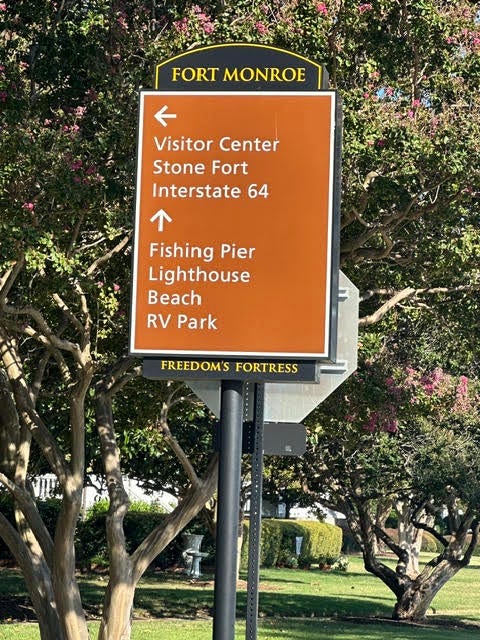
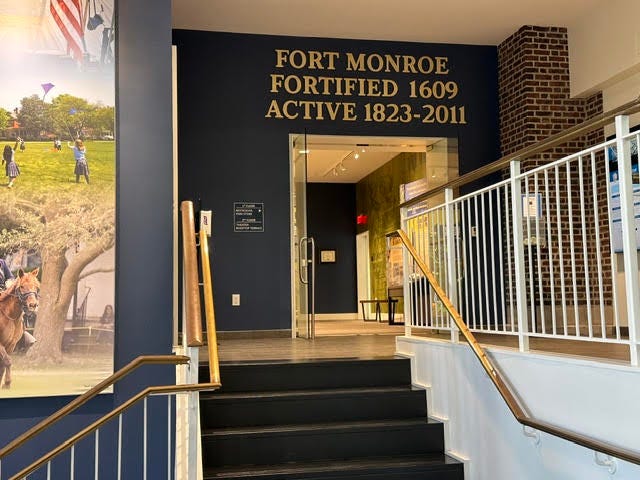
Fort Moroe Entrance Sign - Freedom’s Fortress
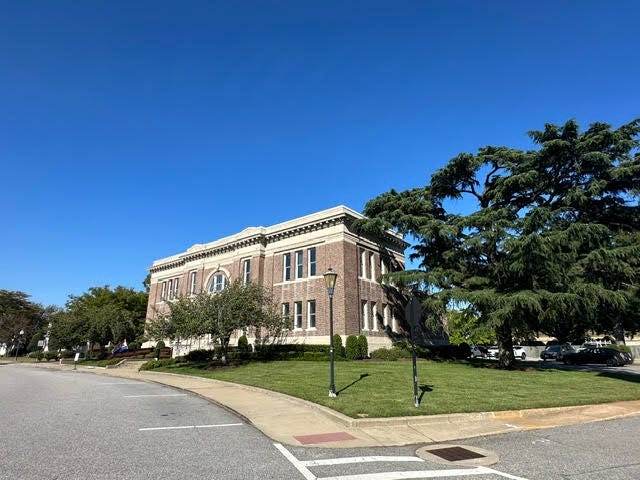
The Front View of The Fort Monroe Visitor & Education Center
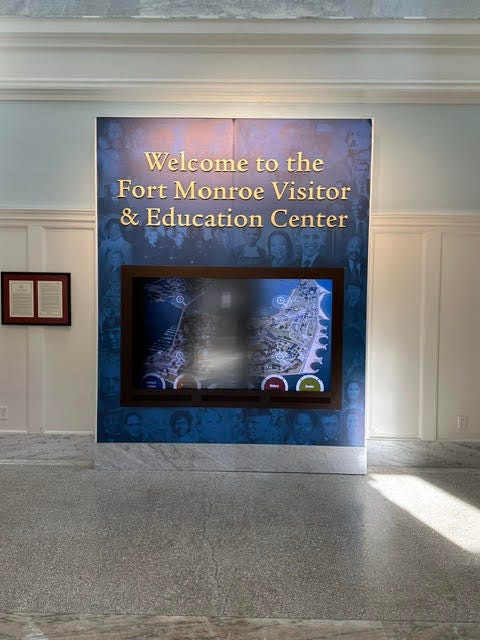
Entrance to The Fort Monroe Visitor & Education Center
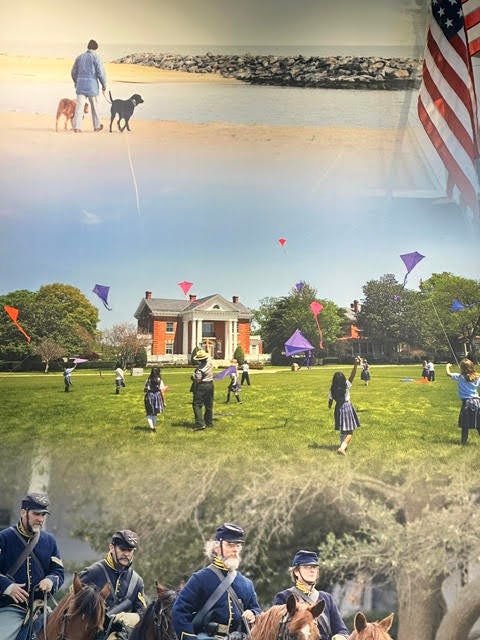
Various Activities Hosted by The Fort Monroe Visitor & Education Center
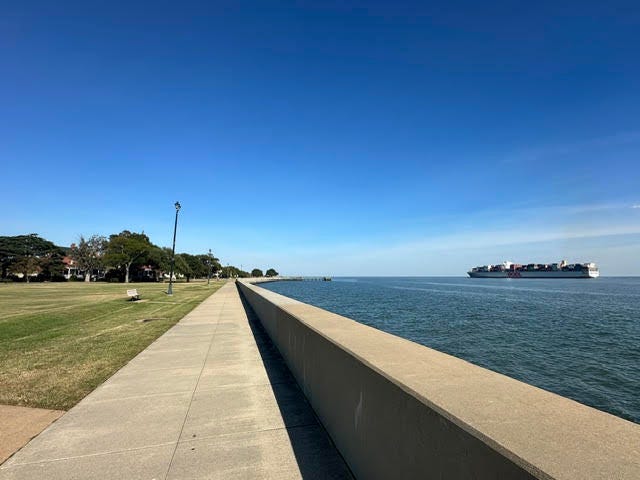
Chesapeake Bay close to Fort Monroe
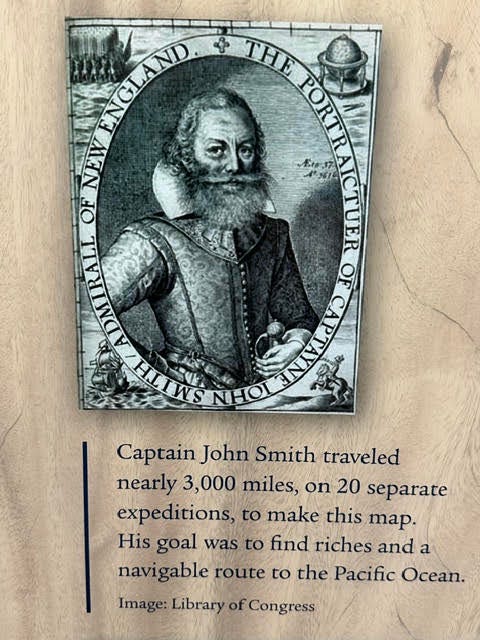
Captain John Smith of England
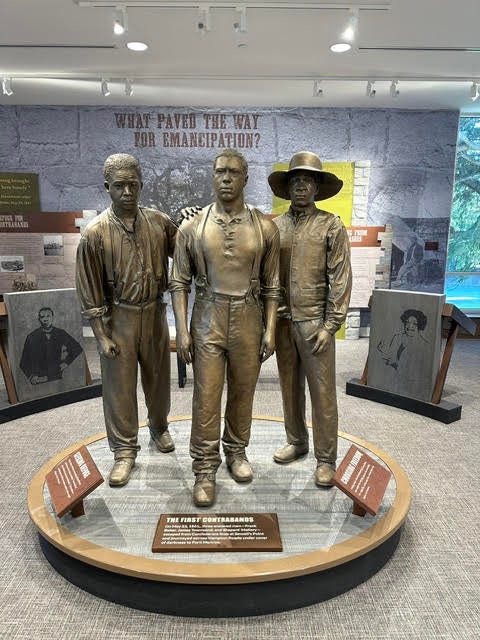
The First Three Contrabands
A Very Brief History of Fort Monroe
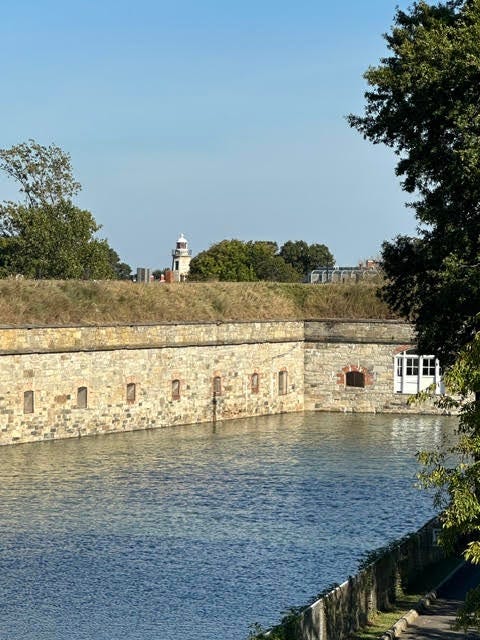
Fort Monroe I
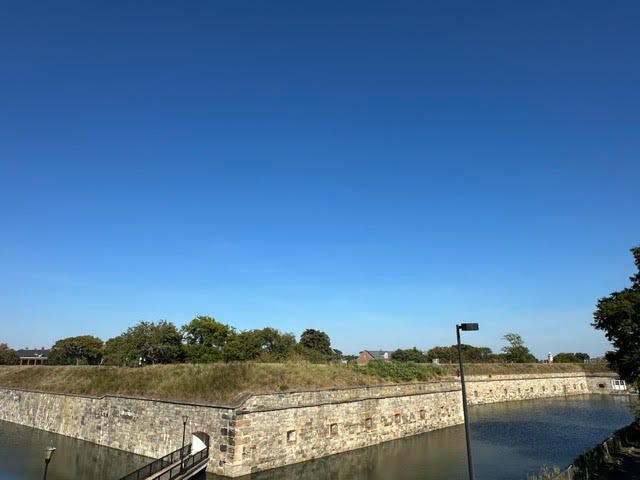
Fort Monroe II
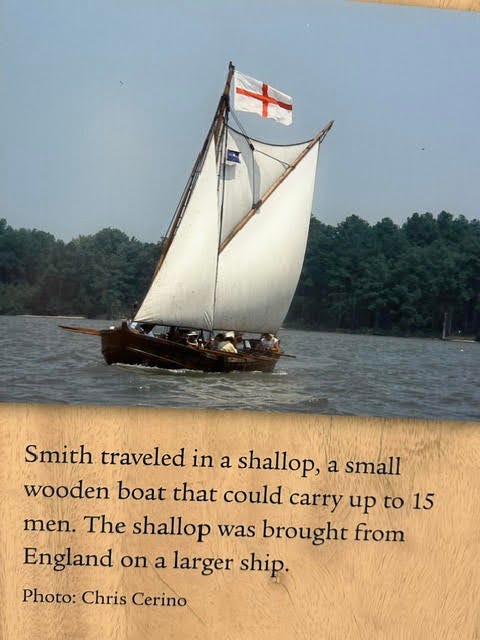
Captain John Smith’s Shallop Brought from England
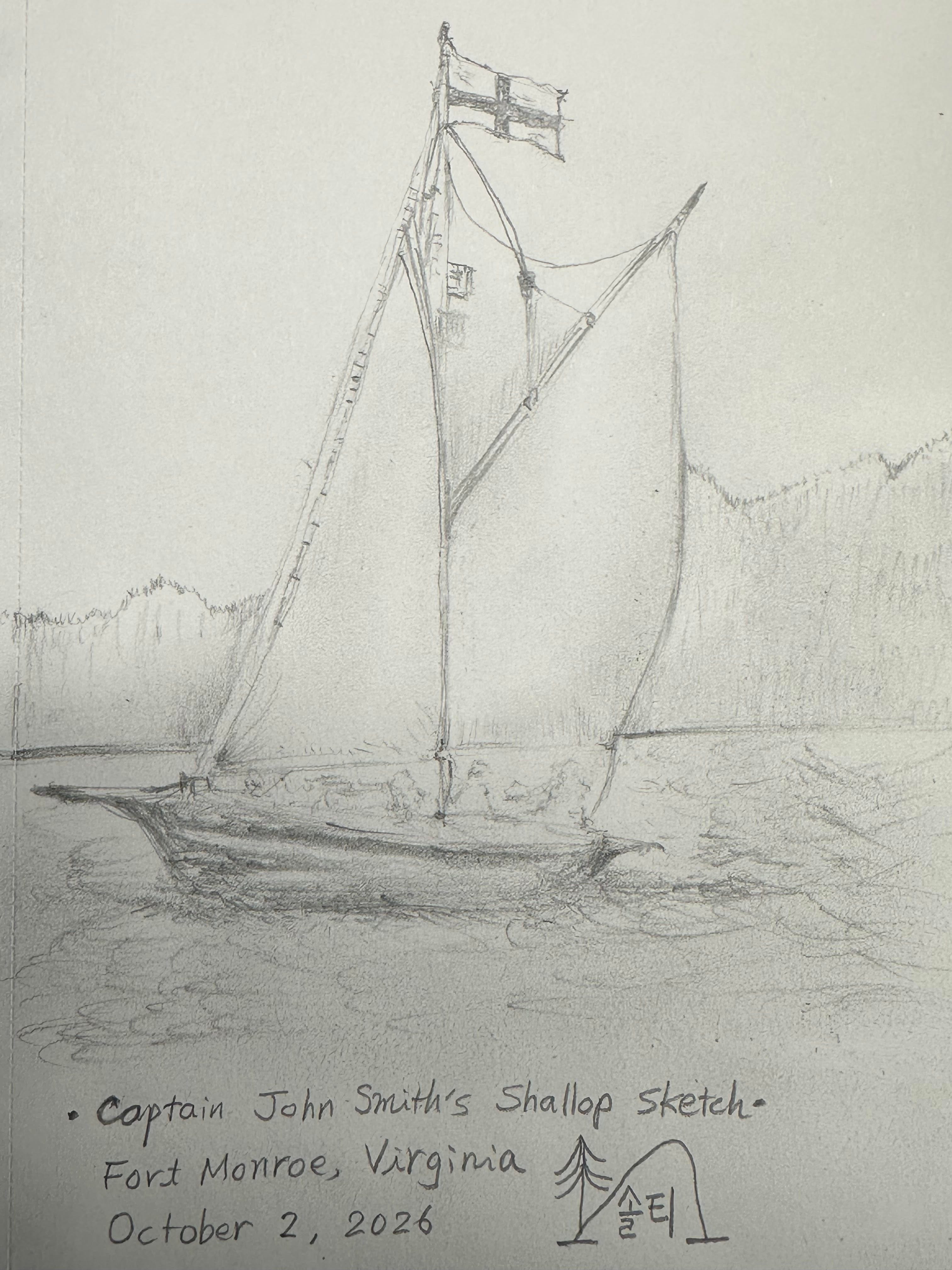
Author’s Sketch of Captain John Smith’s Shallop
포트 먼로: 바다 끝에서 만나는 미국의 역사
탐험에서 자유까지 — 노예제와 전쟁을 지나온 역사적 여정
Abstract
Fort Monroe National Monument는 버지니아의 Chesapeake Bay 입구에 자리한 거대한 요새이지만, 그 의미는 군사 건축을 훨씬 넘어선다. 이곳의 역사는 미국 원주민 사회, 영국의 Chesapeake 탐험, Jamestown 식민지, 1619년 아프리카인의 강제 이주, 미국 노예제도의 발전, 남북전쟁, 그리고 자유를 찾아 요새로 들어온 사람들의 이야기와 연결되어 있다. 특히 Old Point Comfort는 1619년 영국령 북미에 최초로 기록된 아프리카인들이 도착한 장소이며, 1861년에는 노예제에서 탈출한 세 사람이 Union군에게 보호를 요청한 장소이기도 했다(National Park Service [NPS], 2024a, n.d.-a). 이처럼 같은 해안이 한때 강제 이주의 입구였다가 242년 뒤에는 자유를 찾아가는 피난처가 되었다는 사실은 Fort Monroe를 미국 역사의 중요한 상징적 공간으로 만든다.
Keywords: Fort Monroe, Old Point Comfort, John Smith, 1619 Africans, American Slavery, Civil War, Freedom
바다를 따라 역사 속으로 들어가다
여행에는 두 종류가 있다. 하나는 새로운 장소를 보는 여행이고, 다른 하나는 익숙했던 역사를 새로운 눈으로 보는 여행이다. Fort Monroe를 방문하는 여행은 후자에 가깝다. Chesapeake Bay를 바라보며 거대한 석벽과 해자를 따라 걷다 보면 처음에는 미국의 오래된 군사 요새를 보고 있다고 생각하게 된다. 그러나 조금 더 오래 머물면 이곳이 단순한 요새가 아니라 미국이라는 국가가 형성되는 과정에서 서로 다른 시대와 사람들이 교차했던 장소였음을 알게 된다.
오늘날 Fort Monroe National Monument가 자리한 반도는 역사적으로 Old Point Comfort라고 불렸다. 이곳은 Chesapeake Bay와 주요 강들의 입구에 가까운 전략적 위치에 있어 초기 Virginia 식민지 시대부터 중요한 장소였다. National Park Service는 이 지역의 역사를 American Indians, Captain John Smith, 초기 영국 식민지 개척자들, 아프리카인, 남북전쟁의 freedom seekers, 그리고 현대 미국의 군사 역사까지 연결되는 장기적인 역사로 설명한다 (NPS, n.d.-a).
따라서 Fort Monroe를 이해하는 가장 좋은 방법은 요새의 벽에서 시작하지 않는 것이다. 바다에서 시작해야 한다. 바다는 이곳의 역사를 움직인 가장 오래된 길이기 때문이다.
John Smith와 Chesapeake의 항해
17세기 초 유럽의 세계는 바다를 중심으로 빠르게 변하고 있었다. 영국, 스페인, 프랑스, 네덜란드 등은 새로운 항로와 무역 기회를 찾으며 북아메리카로 진출했다. 영국의 Virginia Company of London 역시 Chesapeake 지역에 식민지를 건설하기 위해 원정대를 조직했고, 그 원정대에 포함된 사람이 Captain John Smith였다.
National Park Service에 따르면 Smith는 Virginia Company의 원정에 참여하여 1607년 Jamestown 건설에 중요한 역할을 했으며, 이후 Chesapeake 지역을 광범위하게 탐험하고 지리 정보를 기록했다(NPS, n.d.-b). 그의 탐험과 지도 제작은 초기 Virginia 식민지의 지리적·경제적·군사적 환경을 이해하는 데 중요한 자료가 되었다.
John Smith의 이야기는 모험소설처럼 읽을 수도 있다. 그러나 오늘날 우리는 그의 이야기를 단순한 영웅담으로만 읽을 필요는 없다. 그의 항해와 지도 제작은 ‘유럽의 탐험이 어떻게 식민지 건설과 영토에 대한 새로운 인식을 만들어냈는가?’를 보여 주기 때문이다(NPS, n.d.-b). 지도는 단순한 지리 정보가 아니었다. 어디에 정착할 수 있는가, 어떤 강을 이용할 수 있는가, 어느 곳이 방어에 유리한가, 어디에서 배가 안전하게 정박할 수 있는가를 알려주는 중요한 도구였다. 그리고 Old Point Comfort는 바로 그런 장소였다.
1607년에서 1609년으로 — 요새가 생겨나다
Jamestown이 1607년 건설된 뒤 Virginia 식민지는 생존을 위해 여러 방향으로 확장되었다. 1609년 Captain John Smith는 Jamestown에 집중되어 있던 정착민들을 여러 지역으로 분산시키는 정책을 추진했고, Chesapeake 입구에 가까운 지역에도 여러 방어시설이 건설되었다. National Park Service는 이 과정에서 Forts Henry, Charles, Algernon 등이 오늘날 Fort Monroe 주변에 세워졌으며, 이 시설들이 식민지 방어와 해상 접근로 감시에서 중요한 역할을 했다고 설명한다 (NPS, n.d.-c).
특히 Fort Algernourne은 Old Point Comfort의 초기 군사 역사를 상징한다. 오늘날 Fort Monroe 안에 있는 Algernourne Oak이라는 거대한 참나무는 이 지역의 초기 역사를 기억하게 하는 자연유산이다. NPS는 이 나무가 수백 년 된 것으로 추정되며 그 이름이 1609년경 이곳에 세워졌던 Fort Algernourne과 연결되어 있다고 설명한다 (NPS, n.d.-d).
이렇게 생각하면 Fort Monroe의 풍경은 달라진다. 성벽은 19세기의 것이지만, 그 땅의 군사적 역사는 17세기 초까지 거슬러 올라간다. 즉, Fort Monroe는 ‘하나의 요새라기보다 같은 장소에 여러 시대의 역사적 지층이 겹쳐 있는 공간’이라고 볼 수 있다.
1619년 — 바다가 가져온 또 다른 역사
그러나 Fort Monroe의 역사에서 가장 중요한 장면 가운데 하나는 군사적 사건이 아니다. 1619년 8월, 아프리카인들이 탄 배가 Old Point Comfort에 도착했다. National Park Service에 따르면 이들은 현재의 Angola 지역에 존재했던 Ndongo 왕국 출신으로, 포르투갈 노예선 São João Bautista에 실려 강제로 이동하던 사람들이었다. 영국계 사략선 White Lion이 이 배를 공격한 뒤 일부 아프리카인들이 Virginia로 끌려왔으며, 1619년 8월 25일경 Old Point Comfort에 도착했다(NPS, 2024a).
John Rolfe의 기록에는 “20 and odd Negroes”라는 표현이 남아 있으며, NPS는 이를 Virginia에 기록된 최초의 아프리카인 도착 사건으로 설명한다(NPS, 2024a). 여기서 역사적으로 중요한 주의점이 하나 있다. 1619년에 도착한 사람들의 당시 법적 지위가 후대에 제도화된 미국식 인종·세습 노예제와 처음부터 동일했다고 단순화해서는 안 된다. NPS의 설명에 따르면 Virginia 식민지의 당시 법률은 후대의 노예제도와 같은 형태로 완전히 정착되어 있지 않았다(NPS, 2024a).
그러나 그들이 강제로 이송된 사람들이었다는 사실은 분명하다. 이후 17세기 동안 Virginia의 법률과 사회제도는 아프리카인과 그 후손을 대상으로 한 인종화되고 세습적인 종신 노예제도를 점차 제도화했다 (NPS, 2024a). 따라서 1619년은 완성된 미국 노예제도의 한 순간이라기보다, 이후 수세기 동안 발전하게 될 미국의 인종·노동·법률 체계와 연결되는 중요한 역사적 출발점으로 이해하는 것이 더 정확하다.
숫자 뒤에 있는 사람들
1619년의 이야기를 “20여 명의 아프리카인”이라는 숫자로만 기억하면 중요한 것을 놓치게 된다. 그들은 숫자가 아니었다. 그들에게는 고향이 있었고 가족이 있었으며 언어와 문화가 있었다. NPS는 당시 Virginia에 도착한 아프리카인들이 농업, 목축, 대장 기술 등 다양한 기술을 가지고 있었으며 자신들의 문화적 전통도 가지고 왔다고 설명한다(NPS, 2024a).
그 가운데 알려진 인물이 Isabella와 Antoney이다. Virginia의 기록에는 그들과 아들 William에 관한 내용이 남아 있으며, 이들의 이야기는 초기 아프리카계 Virginia 주민들의 삶을 이해하는 데 중요한 자료가 된다(NPS, 2024a). 이 사실은 중요한 역사적 관점을 제공한다. 아프리카계 미국인은 미국 역사의 나중에 추가된 사람들이 아니다. 미국 역사의 초기 단계부터 미국의 형성 과정에 존재했던 사람들이다. 그들의 노동과 기술은 Virginia 식민지의 생존과 경제 발전에 기여했으며, 이후 아프리카계 미국인의 문화는 미국 사회의 형성 과정에 깊이 자리 잡았다(NPS, 2024a).
왜 Fort Monroe를 건설했을까?
현재의 Fort Monroe는 1619년의 요새가 아니다. 오늘날 우리가 보는 거대한 석조 성채는 19세기의 대규모 해안 방어 시설이다. 건설은 1819년 시작되었으며 10년 이상 지속되었다 (NPS, n.d.-e). Fort Monroe의 건설은 미국의 해안 방어 전략과 직접적으로 연결되어 있다. 1812년 전쟁 이후 미국 정부는 주요 항구와 해안 지역을 방어하기 위해 이른바 Third System of Coastal Fortifications를 구축했다. 이 체계는 미국의 주요 항구와 해상 접근로를 보호하기 위한 대규모 요새 네트워크였다 (NPS, n.d.-f).
Fort Monroe는 그 가운데 중요한 시설이었다. Chesapeake Bay와 Hampton Roads에 접근하는 해상로를 감시하고 방어하기에 매우 유리한 위치에 있었기 때문이다 (NPS, n.d.-e). 따라서 Fort Monroe가 만들어진 가장 직접적인 이유는 국가 방어와 해상 교통로 보호였다. 그러나 그 건설 과정은 당시 미국 사회의 노예제 현실과 분리되어 있지 않았다. NPS의 Foundation Document는 요새 건설 과정에서 노예 노동이 사용되었다는 사실도 기록하고 있다(NPS, n.d.-e). 이러한 사실은 Fort Monroe를 이해하는 데 중요한 역사적 역설을 보여준다. 자유의 역사를 기억하는 요새가 노예제 사회에서 건설되었다.
돌로 만들어진 국가의 방어선
Fort Monroe의 규모는 압도적이다. 해자와 두꺼운 성벽, 포대와 casemate를 갖춘 이 요새는 19세기 미국의 군사공학을 보여주는 대표적인 사례다. Third System 요새들은 이전보다 강력한 방어력을 갖도록 설계되었으며, 두꺼운 벽과 포탄 공격에 견딜 수 있는 구조를 사용했다 (NPS, n.d.-f).
Fort Monroe는 따라서 단순한 건축물이 아니다. 그것은 미국이 독립국가로서 자신의 영토와 항구, 무역로를 보호하기 위해 얼마나 많은 자원을 투입했는지를 보여주는 물리적 기록이다. 그러나 이 거대한 방어시설의 역사를 바라볼 때 우리는 동시에 한 가지 질문을 던지게 된다. 누구의 노동으로 국가의 방어선이 만들어졌는가? 바로 이 질문 때문에 Fort Monroe는 군사건축을 넘어선 역사교육의 공간이 된다.
1861년 — 같은 장소에서 역사가 뒤집히다
그리고 1861년, Fort Monroe의 역사는 극적으로 방향을 바꾼다. 남북전쟁이 시작되었을 때 Virginia는 Confederacy에 합류했지만 Fort Monroe는 Union군의 통제 아래 남았다. 그해 5월, 세 명의 노예였던 Frank Baker, James Townsend, Shepard Mallory가 Fort Monroe에 찾아와 보호를 요청했다(NPS, n.d.-g).
Union군 지휘관 Benjamin Butler는 이들을 노예주에게 돌려보내지 않았다. 그는 이들을 Confederate군의 전쟁 수행에 사용될 수 있는 재산으로 간주하여 “contraband of war”라는 논리를 적용했다 (NPS, n.d.-h). 이 결정은 이후 다른 노예들이 Union군 진영으로 탈출하는 데 중요한 선례가 되었다(NPS, n.d.-h).
그러나 Butler의 결정을 당시의 노예제 폐지 선언과 동일시해서는 안 된다. NPS가 설명하듯 Butler는 abolitionist가 아니었으며, 그의 결정은 전쟁과 군사적 필요에 대한 법적 해석에서 출발했다 (NPS, n.d.-h). 그럼에도 그 결과는 중요했다. 한 개인의 법적 판단이 수많은 사람들이 자유를 찾아 이동하는 새로운 현실을 만들어냈기 때문이다.
자유를 찾아 Fort Monroe로
Butler의 결정 이후 Fort Monroe에는 점점 더 많은 freedom seekers가 몰려들었다. NPS는 이곳에 형성된 Contraband Camp가 수천 명 규모로 성장했으며, 이 공동체가 교육과 종교, 노동과 자립을 위한 새로운 삶의 공간으로 발전했다고 설명한다(NPS, n.d.-i) 이 장면을 1619년과 나란히 놓으면 Fort Monroe의 역사는 매우 인상적인 대칭 구조를 갖게 된다.
1619년에는 아프리카인들이 강제로 Virginia로 끌려왔다. 1861년에는 노예들이 자유를 찾아 Fort Monroe로 탈출해 왔다. 같은 장소, 같은 해안, 그러나 전혀 다른 역사적 방향이다. 1619년에는 사람들이 자신의 의사와 관계없이 이동했다. 1861년에는 사람들이 자신의 의지로 자유를 향해 이동했다.이 변화는 Fort Monroe가 미국 역사에서 갖는 가장 중요한 상징 가운데 하나다.
“Contraband”에서 Emancipation으로
Fort Monroe에서 시작된 사건은 군사적 결정 하나로 끝나지 않았다. NPS는 Butler의 결정과 이후의 사건들이 First Confiscation Act, Second Confiscation Act, Emancipation Proclamation, 그리고 궁극적으로 Thirteenth Amendment와 연결되는 광범위한 역사적 변화의 일부였다고 설명한다 (NPS, n.d.-h).
물론 Fort Monroe 하나가 노예제 폐지를 만들어낸 것은 아니다. 미국의 노예제 폐지는 남북전쟁, 의회 입법, 대통령 정책, 노예들의 자기해방, abolitionist 운동, 군사적 변화, 그리고 헌법 개정 등이 복합적으로 작용한 결과였다.
그러나 Fort Monroe는 그 거대한 변화 속에서 중요한 장면을 보여준다. 사람들이 먼저 움직였다. 그들이 요새의 문을 두드렸다. 그리고 정부는 그 새로운 현실에 대응해야 했다. 이것은 역사에서 중요한 교훈을 제공한다. 사회의 변화는 법률이나 제도에서만 시작되는 것이 아니라, 사람들이 기존 제도의 경계를 넘어설 때 시작되기도 한다.
미국 역사에서 Fort Monroe의 위치
Fort Monroe의 미국 역사에서의 위치는 하나의 사건으로 설명할 수 없다. 그것은 최소한 다음과 같은 네 개의 역사적 흐름이 교차하는 장소다.
탐험과 식민지의 역사 - John Smith와 초기 영국 식민지 개척자들이 Chesapeake 지역을 탐험하고 Jamestown를 중심으로 정착지를 확대하던 시대와 연결된다 (NPS, n.d.-b, n.d.-c).
아프리카계 미국인의 역사 - 1619년 Old Point Comfort는 Virginia에 기록된 최초의 아프리카인 도착과 연결되며, 이후 미국 노예제도의 발전이라는 장기적 역사와 이어진다(NPS, 2024a).
미국 군사사의 역사 - 1819년부터 건설된 Fort Monroe는 Third System of Coastal Fortifications의 중요한 요새로 Chesapeake Bay와 Hampton Roads를 방어하는 역할을 했다 (NPS, n.d.-e, n.d.-f).
자유와 해방의 역사 - 1861년 Frank Baker, James Townsend, Shepard Mallory가 이곳으로 피신한 사건과 Butler의 Contraband Decision 이후 수많은 freedom seekers가 Fort Monroe로 모여든 역사는 미국의 해방 역사와 연결된다(NPS, n.d.-g, n.d.-h).
따라서 Fort Monroe를 한 문장으로 설명한다면 이렇게 말할 수 있다.
Fort Monroe is a place where exploration, colonization, slavery, military power, self-emancipation, and freedom intersect. (포트 먼로는 탐험과 식민지 개척, 노예제와 군사력, 그리고 자기해방과 자유가 한곳에서 만나는 살아 있는 역사의 공간이다.)
역사를 기억한다는 것
오늘날 Fort Monroe를 방문하는 사람은 단순히 오래된 성벽을 구경하는 관광객이 아니다. 그 사람은 다음과 같은 미국 역사의 여러 질문 앞에 서게 된다.
누가 이 땅에 먼저 살았는가?
왜 유럽인들은 이곳으로 왔는가?
왜 식민지를 건설했는가?
왜 아프리카인들이 강제로 이곳에 끌려왔는가?
왜 노예제는 그렇게 오랫동안 유지되었는가?
왜 어떤 사람들은 1861년에 자유를 찾아 Fort Monroe로 도망쳐 왔는가?
그리고 미국은 어떻게 노예제를 폐지하게 되었는가?
Fort Monroe가 중요한 이유는 이러한 질문에 하나의 단순한 답을 제공하지 않기 때문이다. 오히려 서로 모순되는 역사적 사실들을 한 장소에서 만나게 한다. 미국은 자유를 선언하면서 노예제를 유지했다. 국가를 방어하기 위해 세운 요새가 노예제 사회의 노동을 이용해 건설되었다. 1619년 강제로 끌려온 사람들이 들어온 바로 그 지역이 1861년에는 자유를 찾아온 사람들을 받아들였다. 이러한 모순을 제거하는 것이 역사교육은 아니다. 오히려 그 모순을 정확하게 이해하는 것이 역사교육의 출발점이다.
여행자가 발견하는 미국
Fort Monroe를 떠날 때는 다시 한번 Chesapeake Bay를 바라보게 된다. 바다는 처음 방문했을 때와 똑같다. 그러나 보는 사람의 눈은 달라졌다. 처음에는 아름다운 해안이었다.그다음에는 John Smith의 항해가 떠올랐다. 그리고 Jamestown와 초기 식민지가 보였다. 1619년의 White Lion이 떠올랐다. 아프리카에서 강제로 끌려온 사람들의 모습이 떠올랐다. 그 뒤에는 노예 노동을 포함한 당시의 노동체계 속에서 건설된 거대한 요새가 보였다. 그리고 1861년 Main Gate를 향해 걸어온 Frank Baker, James Townsend, Shepard Mallory가 떠오른다(NPS, n.d.-g).
마침내 이 모든 장면이 하나의 역사적 문장으로 연결된다. ‘같은 장소가 다른 시대의 사람들에게 전혀 다른 의미가 될 수 있다.’ Old Point Comfort는 한때 식민지의 전초기지였다. 그곳은 노예제의 역사적 기억을 가진 장소가 되었다. 그리고 남북전쟁 때는 자유를 찾아온 사람들의 피난처가 되었다. 오늘날에는 그 모든 이야기를 기억하는 National Monument가 되었다. Fort Monroe는 2011년 National Monument로 지정되었으며 현재 National Park Service와 Fort Monroe Authority가 역사 보존과 교육을 이어가고 있다(NPS, n.d.-a).
성벽보다 오래 남는 것
Fort Monroe 여행의 마지막 장면은 성벽이 아니라 바다였으면 한다. 성벽은 인간이 만들었다. 등대도 인간이 만들었다. 요새도 인간이 만들었다. 그러나 바다는 인간보다 오래 존재했다.
1607년에도 이 바다는 그 자리에 있었다.
1619년에도 그랬다.
1819년에도 그랬고,
1861년에도 그랬다.
2026년에도 그렇다.
오늘도 여전히 Chesapeake Bay는 조용히 물결친다. 하지만 그 물결을 바라보는 우리는 이제 그 바다를 단순한 아름다운 하나의 자연경관으로만 볼 수 없다. 그 바다는 탐험의 길이었다. 식민지의 길이었다. 노예선의 길이었다. 군함의 길이었다. 그리고 자유를 찾아 떠난 사람들의 길이었다. 그래서 Fort Monroe의 진정한 의미는 거대한 성벽의 크기에 있지 않다.
그 의미는 ‘미국이라는 나라가 어떤 과정을 통해 오늘에 이르렀는지를 한 장소에서 생각하게 한다는 데 있다.’ 미국의 역사는 하나의 단순한 성공담도, 하나의 단순한 실패담도 아니다. 그것은 탐험과 식민주의, 자유와 노예제, 국가 건설과 인간의 권리, 전쟁과 해방이 서로 충돌하고 변화해 온 복합적인 역사다.
Fort Monroe는 그 역사를 숨기지 않는다. 오히려 성벽과 등대, 바다와 나무, 군사시설과 역사적 표지를 통해 우리에게 말한다. ‘역사를 기억한다는 것은 과거를 그대로 되풀이하는 것이 아니라, 과거의 복잡성을 이해하고 현재를 더 정확하게 바라보는 일이다.’ 그리고 아마 이것이 Fort Monroe를 방문한 여행자가 집으로 가져갈 수 있는 가장 중요한 기념품일 것이다. 돌이나 사진이 아니다.
‘역사를 바라보는 새로운 시선’이다.
References
National Park Service. (2024, August 2). Arrival of the first Africans in 1619. U.S. Department of the Interior. https://www.nps.gov/articles/000/arrival-of-the-first-africans-in-1619.htm
National Park Service. (n.d.-a). Fort Monroe National Monument. U.S. Department of the Interior. https://www.nps.gov/fomr/
National Park Service. (n.d.-b). John Smith. U.S. Department of the Interior. https://home.nps.gov/people/john-smith.htm
National Park Service. (n.d.-c). Growth and settlement beyond Jamestown. U.S. Department of the Interior. https://www.nps.gov/jame/learn/historyculture/growth-and-settlement-beyond-jamestown.htm
National Park Service. (n.d.-d). Featured stories: Fort Monroe National Monument. U.S. Department of the Interior. https://www.nps.gov/articles/featured_stories_fomr.htm
National Park Service. (n.d.-e). Fort Monroe National Monument Foundation Document. U.S. Department of the Interior. Foundation Document
National Park Service. (n.d.-f). Third System of fortification. U.S. Department of the Interior. Third System of Fortification
National Park Service. (n.d.-g). Fort Monroe Main Gate. U.S. Department of the Interior. Fort Monroe Main Gate
National Park Service. (n.d.-h). Major General Benjamin F. Butler. U.S. Department of the Interior. Benjamin F. Butler
National Park Service. (n.d.-i). Discover Fort Monroe’s African American heritage. U.S. Department of the Interior. African American Heritage at Fort Monroe
2026년 10월 7일
{솔티}

Prof. Dr. Young Choi (Editor-in-Chief) — Regent University
Young B. Choi is a Professor in the Department of Engineering & Computer Science at Regent University. He published 38 books with ‘Selected Readings in Cybersecurity’ (2018) (over 800 copies archived globally at university/college libraries around the world) and ‘Cybersecurity Applications and Artificial Intelligence’ (2023) available in seven major world languages. He proposed the world’s first global and universal telecommunications “Service Order Handling (SOH)” Model (T-SOH Model) (1995) with Dr. Adrian Tang. With this innovative research work, he received the IEEE NOMS ’96 Best Paper Award and became the first recipient of the Outstanding Contribution Award of the TeleManagement Forum in 1998. His research areas include Natural Language Processing-focused AI, AI-applied cybersecurity, network and telecom service management, and Korean studies on Gani Choi Rip’s Jeonggwan (靜觀: Quiet Contemplation) philosophy and Shilhak ( 實學: Practical Learning).
© K-GSP (K-Global Scholars and Professionals) Forum. All rights reserved. 2026.
Suggested Citation:
Choi, Y. B. (2026, October 7). Fort Monroe: Where American History Arrives by Sea: A Journey Through Exploration, Slavery, War, and Freedom. K-GSP.