

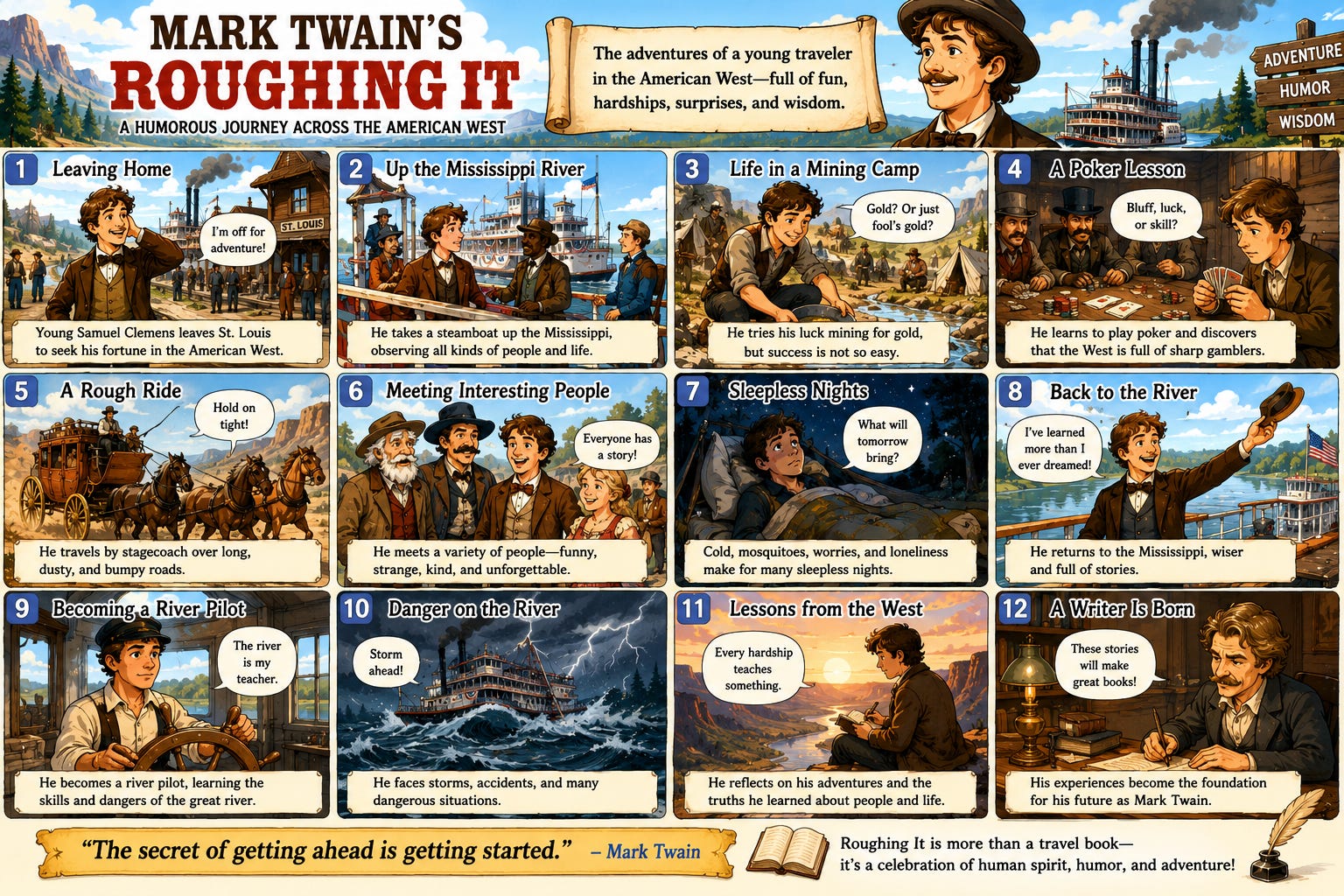
From a Rough Road to the Birth of a Great Writer
An Engaging Overview of Mark Twain’s Roughing It
As an autobiographical work by Mark Twain, Roughing It is composed of two volumes, whose major plots can be summarized as follows.
Volume I
Roughing It, Volume I, begins when the young Samuel Clemens leaves the American East with his brother Orion and heads toward the unknown West. The two men travel by stagecoach across vast plains and deserts, experiencing the harsh and unfamiliar world of the American frontier. After arriving in Nevada, Samuel encounters a rapidly changing society and a wide variety of people as he gradually adapts to life in the West. The gold and silver mining fever that swept through the region inspired many people with dreams of becoming rich overnight. Samuel, too, becomes interested in the world of mining and speculation and hopes to find success, but reality proves far more difficult than he expected. He experiences failures, disappointments, dangers, and a series of strange and unexpected adventures that teach him about the harsh realities of life. Yet he views even his failures with his distinctive sense of humor and gradually develops the ability to transform them into entertaining stories. He observes miners, politicians, gamblers, adventurers, and boastful characters, discovering human greed and courage, foolishness and wisdom. Although he initially travels west in search of money and success, he gradually becomes a keen observer of the world and an increasingly gifted storyteller. Ultimately, Volume I tells the story of a young man who sets out in search of gold but discovers something more valuable: experience, powers of observation, and a treasury of stories that will help shape the future writer.
Volume II
In Volume II of Roughing It, Samuel Clemens’s life and adventures in the West develop into a broader and more varied journey. Drawing upon the experiences and failures of his mining life, he gradually begins to discover what he can truly do best. In particular, his work as a newspaper journalist helps him develop his ability to transform what he sees, hears, and experiences into lively and engaging writing. The unusual people and rapidly changing societies of Nevada and California provide him with an endless supply of material for his stories. He observes human boasting and greed, social contradictions, and human foolishness with a sharp eye, yet expresses them through humor and satire rather than bitterness. His adventures eventually extend beyond the American West into new places and cultures, broadening his understanding of the world. His journey to Hawaii, in particular, gives him an opportunity to observe landscapes, cultures, and human communities beyond the American mainland. Although he continues to encounter unexpected dangers and failures, he increasingly learns to transform them from mere misfortunes into valuable material for storytelling. Through this process, Samuel Clemens gradually develops from a simple adventurer into Mark Twain, a writer with his own distinctive voice. Ultimately, Volume II portrays how a young man transforms the countless experiences of a rough and unpredictable world into humor and literature, moving steadily toward his emergence as one of America’s great writers.
Mark Twain’s Roughing It is an adventurous tale of a young man leaving the familiar world behind and entering the vast, unknown world of the American West. Samuel Clemens, who would later become the world-famous writer known as Mark Twain, was neither a great author nor a successful businessman when he began this journey. He was, instead, a curious and inexperienced young man who left the familiar life of the East and headed west in search of new opportunities. The road he chose was far from comfortable. Dusty trails, rattling stagecoaches, rugged mountains and deserts, unfamiliar people, and a world of uncertainty—where no one knew what might happen next—stretched out before him.
His journey was like entering a giant school. There were no classrooms and no teachers, yet every person he met and every event he experienced along the way became a teacher. As he traveled, he encountered eccentric characters and observed the free-spirited culture and remarkable variety of people in the American West. Some dreamed of becoming enormously wealthy. Others wandered through deserts and mountains searching for gold mines. Still others risked everything on cards and gambling. Everyone carried a dream of his own, but the reality of the West did not grant success as easily as their dreams promised.
Life in the mining communities, in particular, became an intense experience for the young Twain. At that time, rumors filled the American West that anyone who discovered gold or silver could become rich overnight. People became excited whenever they heard that a new mine had been discovered, and some were willing to risk everything in the hope of finding enormous wealth. Twain himself was caught up in this atmosphere and became interested in mining. But reality was not as easy as he had imagined. Searching for gold was difficult and promises of success often turned into disappointment. Yet, when he looked back years later, the greatest treasure he had gained was neither gold nor silver. It was the people he had met, the events he had experienced, and the stories he had collected.
Life in the West was not always exciting and romantic. Traveling long distances by stagecoach was uncomfortable and dangerous, while cold and loneliness often arrived with the night. Unexpected dangers and hardships appeared from time to time, and the young traveler sometimes realized just how small and vulnerable he was in such a vast and unfamiliar world. Yet it was precisely through these difficulties that he gradually grew. Human qualities that could not easily be seen in comfortable surroundings revealed themselves in times of hardship. Twain began to observe people’s greed and courage, their boasting and honesty, their foolishness and wisdom.
One of Twain’s greatest talents was his ability to turn even failure into laughter. Mistakes that others might have been too embarrassed to mention became entertaining stories in his hands. Unsuccessful experiences in mining, clumsy adventures, and unexpected dangers were transformed into stories that made readers laugh. Twain did not simply say, “I failed.” Instead, he seemed to say, “You will never believe what happened!” Through humor, he looked at the foolishness and absurdity of human beings—and sometimes at his own foolishness as well.
During this process, the young adventurer gradually became an observer. At first, he had gone West hoping to find success in a new world. But as time passed, he began to record the world itself. The way people spoke, the way they behaved, their boasting, dreams, failures, and unpredictable adventures gradually accumulated in his memory. The American West became more than a place he had visited. It became a vast storehouse of stories.
In the end, the most fascinating thing about Roughing It is that it is not the story of a young man discovering an enormous gold mine in the American West. Twain may not have become rich in the way he had originally hoped. But he discovered something far more valuable: the ability to transform experience into stories.
The young man who had set out on a difficult road met countless people, experienced failure, laughed at life’s absurdities, faced danger, and carefully observed the world around him. Through these experiences, he gradually became a different person. The treasure he failed to find in the mines was eventually discovered in his own memory and imagination. That treasure consisted of the experiences, powers of observation, sense of humor, and deep understanding of human nature that would eventually help create the world-famous writer known as Mark Twain.
For this reason, Roughing It is much more than a travel narrative about the American West. It is the story of a person entering an unknown world and transforming failure into experience, experience into wisdom, and wisdom into stories.
Mark Twain traveled a rough road. But that rough road did not destroy him. Instead, it gave him a new way of seeing the world. And eventually, those eyes became the eyes of a great writer—eyes that would make countless readers laugh, think, and see human life in a new way.
Perhaps this is the most important lesson that Roughing It offers us:
The most valuable treasures in life are not always found where we first expect to find them.
Sometimes the experiences gained through failure and hardship, adventure and accident, become our greatest treasures.
The young man who set out in search of a gold mine eventually discovered something that would last far longer than gold.
He discovered the ability to turn his own life into a story.
거친 길에서 위대한 작가가 태어나다
마크 트웨인의 『Roughing It』 흥미로운 줄거리
마크 트웨인의 『Roughing It』의 자서적인 소설로서 2권으로 구성되어 있는데 그 주요한 줄거리는 각각 다음과 같다.
Volume I
『Roughing It』 Volume I은 젊은 새뮤얼 클레멘스가 형 오리온과 함께 미국 동부를 떠나 미지의 서부로 향하면서 시작된다. 두 사람은 역마차를 타고 광활한 평원과 사막을 지나며 거칠고 낯선 서부 세계를 경험한다. 네바다에 도착한 새뮤얼은 빠르게 변화하는 새로운 사회와 다양한 사람들을 만나며 서부 생활에 적응해 간다. 당시 서부를 휩쓴 금과 은광 열풍은 많은 사람들에게 하루아침에 부자가 될 수 있다는 꿈을 심어 주었다. 새뮤얼 역시 광산과 투기의 세계에 관심을 가지며 성공을 기대하지만 현실은 그의 기대만큼 쉽지 않았다. 그는 여러 실패와 실망, 위험하고 황당한 사건들을 겪으면서 세상의 냉혹함을 배운다. 그러나 그는 자신의 실패조차 특유의 유머로 바라보며 훗날 재미있는 이야기로 바꾸는 능력을 보여 준다. 그는 광부, 정치인, 도박꾼, 모험가, 허풍쟁이 등 다양한 인간 군상을 관찰하며 인간의 욕심과 용기, 어리석음과 지혜를 발견한다. 처음에는 돈과 성공을 찾아 서부로 떠난 젊은이였지만, 그는 점차 세상을 깊이 관찰하는 뛰어난 이야기꾼으로 성장한다. 결국 Volume I은 금을 찾아 떠난 한 청년이 금보다 더 값진 경험과 관찰력, 그리고 미래의 작가를 만들어 줄 이야기의 보물을 발견하는 과정이다.
Volume II
『Roughing It』 Volume II에서는 새뮤얼 클레멘스의 서부 생활과 모험이 더욱 다양하고 폭넓은 세계로 발전한다. 그는 광산 생활에서 얻은 경험과 실패를 바탕으로 자신이 진정으로 잘할 수 있는 일이 무엇인지 점차 발견하기 시작한다. 특히 신문 기자로 활동하면서 그는 자신이 보고 듣고 경험한 사건들을 흥미로운 글로 기록하는 능력을 발전시킨다. 네바다와 캘리포니아의 독특한 사람들과 빠르게 변화하는 사회는 그에게 끝없는 글쓰기의 소재를 제공한다. 그는 사람들의 허풍과 욕심, 사회의 모순과 인간의 어리석음을 날카롭게 관찰하면서도 유머와 풍자로 표현한다. 그의 모험은 미국 서부에만 머물지 않고 새로운 지역과 문화로 확대되면서 더욱 넓은 세계를 경험하게 한다. 특히 하와이 여행은 그에게 미국 본토 밖의 자연과 문화, 그리고 새로운 인간 사회를 관찰할 기회를 제공한다. 그는 계속해서 예상하지 못한 위험과 실패를 경험하지만 이제는 그것들을 단순한 불운이 아니라 훌륭한 이야기의 재료로 바꾼다. 이 과정에서 새뮤얼 클레멘스는 단순한 모험가에서 자신만의 독특한 목소리를 가진 작가 마크 트웨인으로 점차 성장한다. 결국 Volume II는 거친 세계에서 얻은 수많은 경험을 유머와 문학으로 변화시키며 한 젊은이가 위대한 미국 작가로 탄생해 가는 과정을 보여 준다.
마크 트웨인의 『Roughing It』은 한 젊은이가 익숙한 세계를 떠나 미국 서부라는 거대한 미지의 세계로 들어가면서 겪는 좌충우돌의 모험담이다. 훗날 세계적인 작가가 되는 새뮤얼 클레멘스, 즉 마크 트웨인은 처음부터 위대한 작가도, 성공한 사업가도 아니었다. 그는 오히려 호기심 많고 경험이 부족한 젊은이였으며, 새로운 기회를 찾아 동부의 익숙한 생활을 떠나 서부로 향했다. 그가 선택한 길은 편안한 길이 아니었다. 먼지 날리는 길, 흔들리는 역마차, 험준한 산과 사막, 낯선 사람들, 그리고 언제 어떤 일이 일어날지 알 수 없는 불확실한 세계가 그의 앞에 펼쳐졌다.
그의 여행은 마치 거대한 학교에 들어가는 것과 같았다. 교실도 없고 선생님도 없었지만, 길 위에서 만나는 모든 사람과 사건이 그의 스승이었다. 그는 여행하면서 별난 사람들을 만나고, 서부 특유의 자유분방한 문화와 인간 군상을 관찰했다. 어떤 사람은 엄청난 부자가 되겠다는 꿈을 꾸었고, 어떤 사람은 금광을 찾아 사막과 산을 헤맸으며, 또 어떤 사람은 카드와 도박에서 인생을 걸었다. 누구나 자신만의 꿈을 가지고 있었지만, 서부의 현실은 꿈만큼 쉽게 성공을 허락하지 않았다.
특히 광산촌의 생활은 젊은 트웨인에게 강렬한 경험이었다. 당시 미국 서부에는 금과 은을 발견하면 하루아침에 부자가 될 수 있다는 소문이 넘쳐났다. 사람들은 새로운 광산을 발견했다는 이야기에 열광했고, 엄청난 재산을 얻을 수 있다는 기대에 모든 것을 걸기도 했다. 트웨인 역시 이러한 분위기에 휩쓸려 광산 사업에 관심을 가졌지만, 현실은 그가 상상했던 것처럼 쉽지 않았다. 금을 찾는 일은 힘들었고, 성공의 약속은 종종 실망으로 바뀌었다. 그러나 훗날 돌아보면, 그가 얻은 가장 큰 보물은 금이나 은이 아니었다. 바로 그곳에서 경험한 사람들과 사건들 그리고 이야기였다.
서부 생활은 언제나 재미있고 낭만적인 것만은 아니었다. 먼 길을 달리는 역마차 여행은 불편하고 위험했으며, 밤에는 추위와 외로움이 찾아왔다. 때로는 예상하지 못한 위험과 어려움이 나타났고, 젊은 여행자는 자신이 얼마나 작은 존재인지를 깨닫기도 했다. 그러나 바로 그러한 어려움 속에서 그는 조금씩 성장했다. 편안한 환경에서는 보이지 않던 인간의 모습이 고난 속에서 드러났고, 그는 사람들의 욕심과 용기, 허풍과 정직함, 어리석음과 지혜를 유심히 관찰하기 시작했다.
트웨인의 가장 큰 재능 가운데 하나는 바로 실패마저 웃음으로 바꾸는 능력이었다. 다른 사람이라면 부끄러워 감추고 싶을 실수도 그는 재미있는 이야기로 만들었다. 성공하지 못한 광산 생활도, 어설픈 모험도, 예상 밖의 위험도 그의 손을 거치면 독자를 웃게 만드는 이야기로 변했다. 그는 서부에서 “나는 실패했다”고만 말하지 않았다. 대신 “이렇게 어처구니없는 일이 일어났다!”라고 이야기하며 인간의 어리석음을 유머로 바라보았다.
이 과정에서 젊은 모험가는 점차 관찰자로 변해 갔다. 처음에는 자신이 새로운 세계에서 성공하기 위해 서부로 왔지만, 시간이 흐르면서 그는 자신이 만나는 세상 자체를 기록하기 시작했다. 사람들의 말투, 행동, 허풍, 꿈, 실패, 그리고 예측할 수 없는 사건들이 그의 머릿속에 차곡차곡 쌓였다. 서부는 그에게 단순한 여행지가 아니라 거대한 이야기의 창고가 되었다.
결국 『Roughing It』의 가장 흥미로운 점은 한 젊은이가 서부에서 엄청난 금광을 발견하는 이야기가 아니라는 데 있다. 그는 원하는 방식으로 큰 부자가 되지 못했을 수도 있다. 그러나 그는 훨씬 더 값진 것을 발견했다. 바로 경험을 이야기로 바꾸는 능력이었다.
험한 길을 떠났던 젊은이는 수많은 사람을 만나고, 실패하고, 웃고, 위험을 경험하고, 세상을 관찰하면서 점차 새로운 사람으로 성장했다. 광산에서 찾지 못했던 보물은 결국 그의 마음과 기억 속에 있었다. 그 보물은 바로 훗날 세계적인 작가 마크 트웨인을 만들어 준 경험, 관찰, 유머, 그리고 인간에 대한 깊은 이해였다.
그래서 『Roughing It』은 단순한 미국 서부 여행기가 아니다. 그것은 한 사람이 미지의 세계로 들어가 실패를 경험으로 바꾸고, 경험을 지혜로 바꾸며, 지혜를 이야기로 바꾸는 과정을 보여주는 작품이다.
마크 트웨인은 거친 길을 걸었다. 그러나 그 거친 길은 그를 무너뜨리지 않았다. 오히려 그 길은 그에게 세상을 보는 눈을 주었다. 그리고 결국 그 눈은 수많은 독자를 웃게 하고 생각하게 만든 위대한 작가의 눈이 되었다.
『Roughing It』이 우리에게 주는 가장 중요한 교훈은 어쩌면 이것일 것이다.
인생에서 가장 값진 보물은 언제나 우리가 처음부터 찾으려고 했던 곳에 있는 것은 아니다.
때로는 실패와 고난, 모험과 우연 속에서 얻은 경험이 우리의 진정한 보물이 된다.
금광을 찾아 떠난 젊은이는 결국 금보다 더 오래 남는 것을 발견했다.
그것은 바로 자신의 삶을 이야기로 만드는 능력이었다.
2026년 9월 4일
{솔티}

Prof. Dr. Young Choi (Editor in Chief) — Regent University
Young B. Choi is a Professor in the Department of Engineering & Computer Science at Regent University. He published 38 books with ‘Selected Readings in Cybersecurity’ (2018) (over 800 copies archived globally at university/college libraries around the world) and ‘Cybersecurity Applications and Artificial Intelligence’ (2023) available in seven major world languages. He proposed the world’s first global and universal telecommunications “Service Order Handling (SOH)” Model (T-SOH Model) (1995) with Dr. Adrian Tang. With this innovative research work, he received the IEEE NOMS ’96 Best Paper Award and became the first recipient of the Outstanding Contribution Award of the TeleManagement Forum in 1998. His research areas include Natural Language Processing-focused AI, AI-applied cybersecurity, network and telecom service management, and Korean studies on Gani Choi Rip’s Jeonggwan (靜觀: Quiet Contemplation) philosophy and Shilhak ( 實學: Practical Learning).
© K-GSP (K-Global Scholars and Professionals) Forum. All rights reserved. 2026.
Suggested Citation:
Choi, Y. B. (2026, September 4). From a Rough Road to the Birth of a Great Writer: An Engaging Overview of Mark Twain’s Roughing It. K-GSP.