

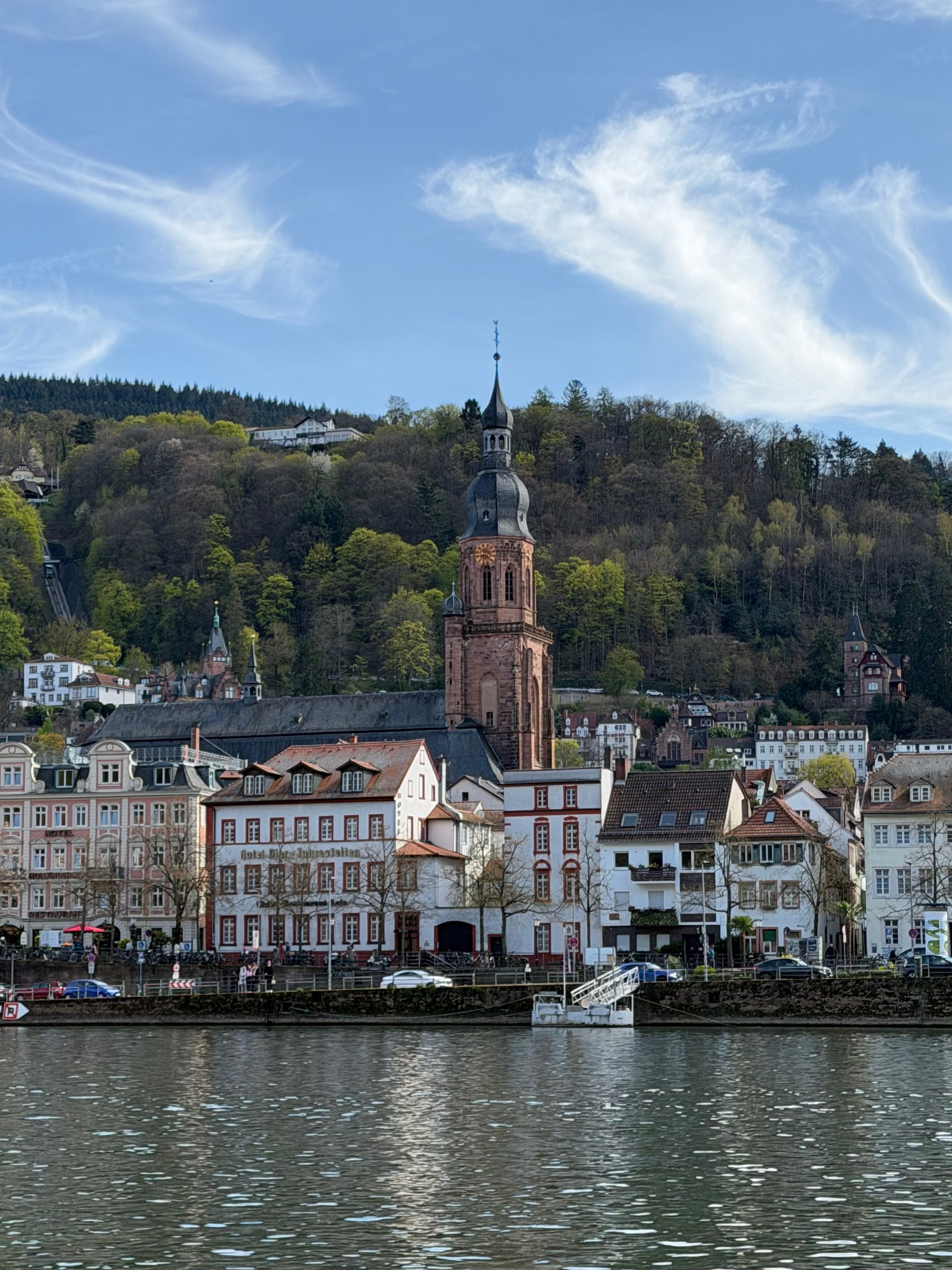
Image Credit: Iryna Shapoval
Germany: A Nation of Precision, Memory, and Reinvention
Frankfurt am Main, Heidelberg, and the Character of a Nation
I have visited Germany twice. The first time, I traveled there by train from Paris to Frankfurt am Main while touring Europe. The second time, I visited Heidelberg to attend an international academic gathering. The two journeys were quite different, yet together they left me with a lasting impression of Germany—not simply as a country of automobiles, engineering, soccer, castles, and universities, but as a civilization shaped by three remarkable qualities: precision, memory, and reinvention.
My relationship with Germany actually began long before I ever set foot there. It began in Korea in the early 1970s, when I was still an elementary school student watching Bundesliga football on television. Korean broadcaster Lee Cheol-hwan and commentator Joo Young-kwang provided lively explanations of the matches, and to a young football enthusiast, the Bundesliga seemed to represent a distant and fascinating world. I watched German players running across the screen and dreamed that someday I would visit Germany and watch a Bundesliga match in person.
At the time, I could hardly have imagined that decades later I would actually travel through Germany. Nor could I have imagined that Germany would become more than a destination on a map. It would become, in my memory, a country through which I could think about history, culture, technology, discipline, and the character of modern civilization.
A Country That Runs by the Clock
My first impression of Germany came through its railway system. I arrived from France by train, and the contrast was almost comical. The French railway experience seemed relatively relaxed and improvisational, while the German system appeared more structured, disciplined, and precise. The timetable announced when the train would leave; the announcement confirmed the schedule; and the train itself seemed determined to prove that the timetable was not merely a suggestion. This may sound like a small matter, but civilization is often revealed through small matters.
A railway system is not simply a collection of trains and tracks. It is a social agreement about time. Millions of people must trust that a departure at one time will actually occur at that time, that a connection will be possible, and that a complicated network can function because countless individuals and institutions perform their roles correctly. Precision, therefore, becomes more than an engineering quality. It becomes a form of social trust.
Germany seemed to understand this principle particularly well. There is a famous story about Johann Wolfgang von Goethe and his daily walks. According to the anecdote, his routine was so regular that people could supposedly tell the time by seeing him pass. Whether every detail of the story is historically accurate is less important than what the story has come to symbolize. Goethe’s walk has become an almost perfect cultural metaphor for the German association with order, routine, and punctuality.
Of course, no nation is composed entirely of stereotypes. Germans can be spontaneous, humorous, artistic, rebellious, and wonderfully unconventional. Yet the cultural value placed on precision is unmistakable. From engineering and manufacturing to transportation and administration, Germany has repeatedly demonstrated that civilization depends not only on imagination but also on the ability to turn imagination into reliable systems. Perhaps this is one reason German engineering became so respected around the world.
Precision as a Form of Civilization
Germany’s reputation for precision extends far beyond trains. Its automobile industry, machinery, optical instruments, chemicals, tools, and countless specialized products have become symbols of technical excellence.
The famous German automobile is not simply a vehicle. It represents a philosophy of manufacturing: design carefully, engineer precisely, test repeatedly, and build something that can be trusted.
The same philosophy can be found in the traditions of Solingen, the famous German center of blade and cutlery production. For generations, Solingen has been associated with knives, scissors, razors, and other precision products. The history of J. A. Henckels, whose origins go back to 1731, illustrates how craftsmanship can survive across centuries by combining tradition with technological development.
The familiar Zwilling knives found in many Korean kitchens have an interesting cultural story behind them. A kitchen knife may appear to be an ordinary household object, but it can also represent centuries of accumulated craftsmanship. This is one of the great secrets of civilization: extraordinary civilizations are often preserved in ordinary objects.
A knife, a watch, a railway timetable, an automobile engine, or a university library may contain generations of accumulated knowledge. The object is small; the civilization behind it is enormous.
Germany and the Burden of Memory
Yet Germany cannot be understood through precision alone. To understand modern Germany, one must also understand memory.
Germany’s twentieth-century history contains some of the darkest chapters in modern human history. The experience of Nazism, the Holocaust, the Second World War, the division of Germany, and the subsequent reunification left profound marks on German society and European civilization.
During my train journey across the border, I remember seeing customs officials inspecting luggage very carefully. The procedure itself was ordinary, but something about the atmosphere reminded me of historical images from wartime Europe—the tense railway stations, border crossings, inspections, and anxious travelers so often portrayed in war films. For a moment, travel became history.
That experience reminded me that European landscapes are not merely beautiful scenery. Behind the railway stations, castles, rivers, and city streets lie layers of memory. A traveler may cross a border in a matter of minutes, but history does not cross borders so easily.
Germany’s response to its difficult past is one of the most important aspects of its modern identity. It has had to confront a question that every civilization eventually faces: What should a nation do with a terrible past? One answer is to forget. Another is to deny. A more difficult answer is to remember.
Modern Germany has invested heavily in remembrance, historical education, memorials, museums, archives, and public discussion. The purpose is not simply to make Germans feel guilty forever. Rather, remembrance becomes a warning about what can happen when political power, ideology, technology, and human obedience become disconnected from moral responsibility.
In this sense, memory becomes a form of civic technology. Technology can organize information. Memory can organize moral consciousness.
From Destruction to Reinvention
This leads to the third characteristic of Germany: reinvention.
Few countries experienced such devastation in the first half of the twentieth century and then rebuilt themselves so successfully in the second half. After the Second World War, Germany was physically devastated and politically divided. Yet West Germany gradually rebuilt its industrial base and democratic institutions, while East and West Germany eventually confronted the extraordinary challenge of reunification.
The story of German reconstruction is therefore not simply an economic success story. It is a story about institutional reinvention.
Germany demonstrated that a nation can lose much of its physical infrastructure and still rebuild because knowledge, institutions, skills, culture, and human capital survive. This is particularly important in the age of artificial intelligence.
Today, many societies are once again facing disruption on a scale that resembles an industrial revolution. Artificial intelligence is changing how people work, how companies operate, how universities teach, and how governments make decisions. Nations are competing to build semiconductors, data centers, AI models, robotics, and advanced manufacturing systems.
In such an environment, Germany’s historical experience offers an important lesson. A civilization should not define itself solely by what it possesses today. It should also ask whether it has the capacity to reinvent itself tomorrow.
Frankfurt: The City of Economic Power
Frankfurt am Main offered me one expression of this modern Germany.
The city felt like a commercial and financial center of continental Europe. Modern buildings stood beside historic churches and traditional European architecture. The contrast was striking: medieval Europe had not disappeared; it had simply learned to live alongside modern finance, transportation, technology, and global commerce.
Frankfurt seemed to embody another characteristic of Germany—the ability to combine historical continuity with modern functionality.
For a Korean traveler, Frankfurt also carried another layer of meaning. Direct air connections made the city relatively accessible, but Germany itself was already familiar to Koreans for another reason: the history of Korean miners and nurses who came to West Germany in the 1960s and 1970s. Their story is deeply moving.
Young Koreans traveled thousands of miles from home to work in unfamiliar surroundings. They endured difficult conditions and separation from their families, contributing through their labor to both their own families and the economic development of a rapidly changing Korea.
The Germany they encountered was not necessarily the Germany of castles and tourism brochures. It was a Germany of factories, hospitals, mines, wages, discipline, and hard work.
In that sense, the relationship between Korea and Germany was built not only through diplomacy but through labor. Sweat became a bridge between two nations.
A Korean Football Memory in Frankfurt
Frankfurt also gave me a personal connection to Korean history through football. The legendary Korean footballer Cha Bum-kun played for Eintracht Frankfurt and became one of the most celebrated Asian players in European football. During my visit, I encountered an older German football fan who still remembered him as “Cha Boom.” That moment was unexpectedly touching. History is sometimes preserved not in textbooks but in people’s memories.
A German fan remembering a Korean footballer decades after his playing days illustrated something larger than sports. Football had created a cultural bridge between two societies that were geographically distant but increasingly connected.
As a young boy in Korea, I had watched Bundesliga matches on television. Years later, I stood in Germany and spoke with someone who remembered one of the Korean players I had watched as a child. The television screen had become a bridge across time and geography.
Heidelberg: The Germany of Memory and Imagination
If Frankfurt represented Germany’s economic power, Heidelberg represented another Germany—the Germany of literature, universities, romantic landscapes, and intellectual tradition.
Located along the Neckar River, Heidelberg is one of Europe’s most beautiful university cities. Its old buildings, hills, castle ruins, and river scenery create an atmosphere almost too picturesque to be entirely real.
The Neckar River moved quietly through the city while sightseeing boats passed slowly along the water. The surrounding hills seemed to encourage visitors to slow down and contemplate rather than simply move from one tourist attraction to another.
During my stay, I borrowed a bicycle from the hotel and explored Heidelberg on my own. That bicycle ride produced one of my most memorable German experiences. The city has many hills, and riding downhill was exhilarating. The scenery was beautiful, the air was refreshing, and I became increasingly confident—perhaps excessively confident. At one point, my enthusiasm exceeded my bicycle-handling skills, and I went over in what might generously be described as an unscheduled acrobatic performance. Fortunately, I was not injured.
Looking back, I find the episode rather amusing. Germany had taught me about precision, but my bicycle ride in Heidelberg reminded me that human beings do not always operate according to carefully calculated systems.
Perhaps that is also part of civilization. We need precision, but we also need freedom. We need systems, but we also need imagination.
The Frankfurter
Then there was the food.
My hotel meals were not exactly what I would call a culinary adventure. There were Frankfurters, small smoked fish, cheese, juice, fruit, and other simple foods. As a self-declared gourmet—or perhaps simply a person who enjoys eating—I found the menu somewhat modest. Still, eating a Frankfurter in Germany had a certain charm.
Food, like language, is part of cultural identity. A sausage eaten in its country of origin somehow feels different from the same word printed on a menu thousands of miles away. Perhaps I was not discovering German haute cuisine, but I was discovering something more basic: everyday culture.
Civilization is not found only in museums and cathedrals. It is also found at the breakfast table.
Korea and Germany: Two Nations of Reinvention
The more I think about Germany, the more interesting the comparison with Korea becomes. The two countries are obviously different in geography, history, culture, and political experience. Yet they share some striking characteristics.
Both experienced devastating wars in the twentieth century. Both experienced periods of division. Both rebuilt rapidly from difficult circumstances. Both developed powerful manufacturing sectors. Both placed great importance on education. Both transformed themselves within a remarkably short historical period. And both understand, perhaps better than many older industrial societies, what it means to rebuild.
The Korean and German experiences are not identical, and historical comparisons must always be made carefully. Yet there is something intellectually productive about placing the two stories beside each other. Germany rebuilt through engineering, industry, institutions, and European integration. Korea rebuilt through education, manufacturing, export industries, technology, and an extraordinary national drive for development.
Germany’s miners and Korean workers sometimes met in the same historical landscape. German technology entered Korean homes. Korean labor entered German mines and hospitals. German football entered Korean television. Korean football eventually entered German stadiums.
History often connects nations in ways that governments alone cannot design.
Precision, Memory, and the Age of AI
Germany’s three qualities—precision, memory, and reinvention—may have special significance in the age of artificial intelligence.
AI demands precision because complex systems cannot function reliably without accurate data, well-designed architectures, rigorous testing, and responsible engineering. AI demands memory because technological progress without historical awareness can become dangerous. The more powerful technology becomes, the more important it is to understand the consequences of its misuse. And AI demands reinvention because no society can remain competitive by simply protecting yesterday’s institutions.
The challenge is therefore not to choose between tradition and innovation. The challenge is to transform tradition into a foundation for innovation. This is perhaps one of the most important lessons that Germany can offer the twenty-first century.
A nation does not become modern by abandoning its history. Nor does it remain strong merely by preserving its past. It becomes resilient when it can remember honestly, build carefully, and reinvent courageously.
The Germany I Remember
My memories of Germany are therefore scattered among seemingly unrelated images: a train leaving precisely on schedule; a customs officer inspecting luggage; the skyline of Frankfurt; an elderly football fan saying “Cha Boom”; the quiet Neckar River; Heidelberg Castle; a bicycle racing downhill; a Frankfurter on a hotel plate; a German knife in a kitchen; and the distant memory of Korean miners and nurses working in West Germany.
Taken separately, these are simply travel memories. Taken together, they form a portrait of a civilization.
Germany is a country that has known extraordinary achievement and extraordinary tragedy. It has built some of the world’s finest technologies while confronting some of the darkest consequences of modern technology and political power. It has experienced destruction, division, reconstruction, reunification, and reinvention. Perhaps that is why Germany’s greatest lesson is not simply “Be precise.”
It is something deeper: Be precise in what you build. Be honest about what you remember. And be courageous enough to reinvent what must change.
For Korea, too, these lessons remain relevant. We have our own painful history, our own rapid transformation, and our own responsibility to build the future. As artificial intelligence reshapes civilization, nations will need more than economic power and technological capability. They will need memory, judgment, ethics, creativity, and the ability to reinvent institutions without losing their humanity.
And so, if I return to Germany someday, I hope to do three things. I would like to walk again through Heidelberg, perhaps a little more carefully this time. I would like to take a German train and appreciate its remarkable relationship with time. And above all, I would like to sit with my family in a German football stadium and finally watch a Bundesliga match—not through the small television screen of my childhood, but in the middle of a living crowd. The boy who once watched German football from Korea would finally arrive where his imagination had taken him more than half a century earlier. Perhaps that is what travel ultimately means.
We leave home to see another country, only to discover something about ourselves. And sometimes, after crossing thousands of miles and many decades, we discover that the journey began long before we ever bought the ticket. +++
References
Germany
http://en.wikipedia.org/wiki/Germany
Frankfurt
http://en.wikipedia.org/wiki/Frankfurt
Heidelberg
http://en.wikipedia.org/wiki/Heidelberg
Bundesliga
Deutsche Bahn
http://en.wikipedia.org/wiki/Deutsche_Bahn
River Neckar
http://en.wikipedia.org/wiki/Neckar_River
River Rhine
http://en.wikipedia.org/wiki/Rhine
Hot dog
http://en.wikipedia.org/wiki/Hot_dog
Solingen
http://en.wikipedia.org/wiki/Solingen
J. A. Henckels
http://en.wikipedia.org/wiki/J._A._Henckels
North Rhine-Westphalia
http://en.wikipedia.org/wiki/North_Rhine-Westphalia
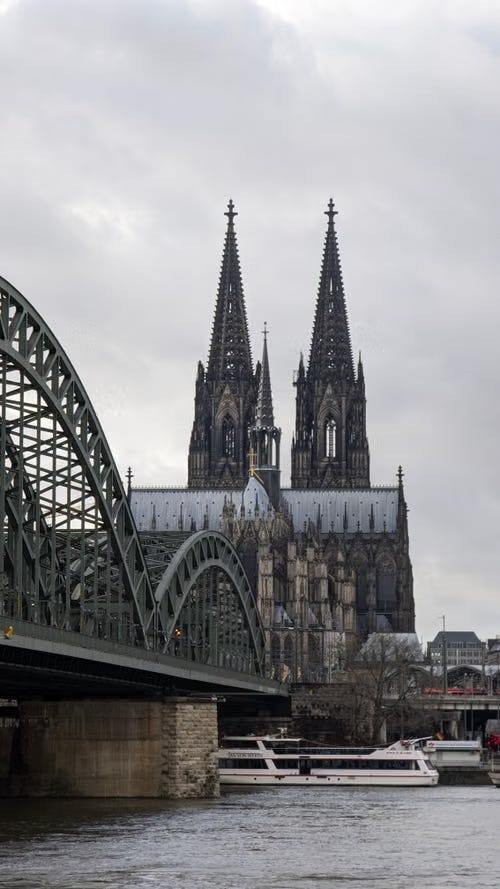
Image Credit: Ardlt Mbratl
독일: 정확성, 기억, 그리고 재창조의 나라
프랑크푸르트 암 마인과 하이델베르크, 그리고 한 나라의 성격
나는 독일을 두번 방문하였다. 한 번은 프랑스 여행시에 빠리에서 기차로 Frankfrut am Main 을 갔었고, 다른 한 번은 국제학술모임 참석 차 독일의 대표적 대학도시인 Heidelberg를 방문하였다.
독일과의 인연은 아마 초등학교 때 한국의 문화방송 이철환 아나운서와 주영광 선생님의 재미있는 해설로 진행된 독일의 프로축구리그인 Bundesliga경기들을 시청한 1970년대 초부터 시작한다. 축구를 아주 좋아하는 나는 언젠가 독일을 방문하여 꼭 독일의 분데스리가 경기를 보고 싶었다. 고등학교 때에는 내가 재학하였던 학교가 독일어를 제2외국어로 선택하여 배우게 되었다. 중간에 입시제도가 바뀌어 영어의 중요성에 밀려 독일어를 고등학교 2학년 때까지만 배우고 그만두게 된 것이 지금 생각해 보면 매우 아쉽다. 공부하기가 쉽지는 않았지만 독일을 두 번 방문하게 되니 그때 잘 배워두었을 걸 하고 후회하게 되었다.
독일은 모든 면에서 특히 과학과 공업은 물론 거의 모든 분야가 세계적으로 아주 잘 발달되어 있고 정돈된 나라이다. 사회 체계가 완벽하리만치 조직된 모든 면에서 정확한 나라임에는 틀림이 없다. 심지어는 잘 기억이 나진 않지만, 아마 괴테인가 싶다. 그는 산책을 매우 좋아했는데, 그가 어떤 지점을 지나는 시간이 거의 날마다 똑같았다고 한다. 하나의 예로 독일의 철도체계인 DB(Deutsche Bahn)을 한 번 타 봤는데, 열차운행표에 나온 발차시간과 도착시간, 안내방송의 내용, 실제의 열차 운행시간이 모두 딱딱한 독일어만큼이나 모두 일치하면서 기차가 정확하게 운행되었다. 나는 프랑스 빠리에서 기차를 타고 독일로 입국하였는데, 너무 자유스러운 프랑스 기차의 운행과 딱딱하지만 정확한 독일 기차의 운행은 아주 대조적이었다. 목적지까지 간다고 하는 결과는 같지만 어떤 일을 하는 데서의 중간 과정은 두 나라 사람들의 기질만큼이나 너무 다르다고 느꼈다. 중간중간 정차하는 독일 역사(驛舍)들의 모습도 한결같이 너무나 깔끔하였다. 또, 국경을 넘자마자 실시되는 세관원들의 검사도 느슨한 프랑스와는 달리 아주 철저하여 모든 가방에 대해 하나하나 조사하였다. 그 모습은 나로 하여금 제2차세계대전 시의 유럽의 혼란한 사회 상황을 연상시켰으며, 이러한 상황들을 배경으로 제작된 전쟁영화의 긴장된 승객검문 장면들을 떠올리게하였다.
1960년대 후반과 1970년대 초반 구 서독에 파견된 우리나라의 광부들과 간호원들의 땀과 눈물, 그리고 한이 서린 독일은 여러모로 우리나라와 인연이 깊은 나라이다. 프랑크푸르트는 독일의 중심도시로 한국에서는 직항로가 개설되어 있어서 여행하기는 매우 편리하였다. 독일의 프랑크푸르트는 유럽 대륙의 비즈니스 중심이라는 생각이 들었다. 시내의 중심가에 있는 성당들을 비롯한 건물들은 규모도 크고 건축 양식도 아름다웠다. 한국의 전설적인 축구선수인 차범근 선수가 프랑크푸르트에서 활약했다고 하는데, 거기서 만난 나이가 지긋한 독일의 한 열성 축구 팬은 그의 이름을 아직도 “차붐”으로 기억하며 잘 알고 있었다.
하이델베르크는 라인 강(Rhine River)과 합류하는 넥카강 (Neckar River)가에 위치한 아주 오래된 고풍스런 대학 도시로서 주변의 오래된 성들과 어울려 시내가 너무 아름다웠다. 여름에는 특히 관광객이 끊이지 않고 몰려든다고 하는데, 넥카 강을 따라 운항하는 유람선의 모습은 아주 평화롭게 보였다. 내가 머문 Holiday Inn은 투숙객들에게 자전거를 무료로 대여해 주고 있어서 나는 자전거를 빌려 타고 하이델베르크 시내를 혼자 질주하였다. 하이델베르크는 주택가에 언덕길이 많아 내리막길에서 아름다운 경치를 즐기며 내려가는 재미가 꽤 쏠쏠했는데, 한 번은 너무 재미있었던 나머지 앞으로 한바탕 묘기를 부리며 곤두박질을 쳤으나 다행히 아무곳도 다치지는 않았다.
독일에 머무는 동안 인상적인 (?) 것 중의 하나는 음식이었다. 호텔에서 제공하는 주된 음식은 hot dog인 Frankfruter와 우리 나리의 멸치와 같은 조그만 물고기를 훈제한 것과 치즈, 쥬스, 과일 등이 주류였다. 미식가 (?)인 나로서는 그리 즐겁지 않은 식단이었으나 본 고장에서 먹어 보는 Frankfruter는 가끔 먹을만 하였다.
독일은 정밀기계공업이 잘 발달되어있다고 하는데, 벤츠 같은 독일산 자동차의 품질은 세계적이라는 데는 의심의 여지가 없다. 관광객들이 독일을 방문하면 여러 가지 기념품을 사 가는데, 한국인들에게는 ‘졸링겐의 칼 (Knife of Solingen)’이 널리 알려진 것 같다. Solingen은 독일의 North Rhine-Westphalia에 위치한 도시로서 품질 좋은 칼을 비롯한 주방기기, 가위, 면도기 등 각종 가정용 기기들의 생산지로 “칼의 도시”로서 널리 알려져 있다. 특히, J. A. Henckels라는 회사는1731년으로 그 창립 역사가 거슬러 올라가는 가장 오래되고 규모가 큰 주방기기 전문제작업체로서 품질이 아주 뛰어난 주방용 칼, 가위, 조리기구, 수저와 포크 등을 비롯한 가정용 부엌 제품들을 생산하기로 매우 유명하다. 흔히 우리나라 아주머니들에게 잘 알려져 있는 “쌍둥이 (독일어로 “Zwilling”은 “twin (쌍둥이)”를 의미한다) 칼”도 이 회사가 제작하여 생산하고 있다.
독일의 경제력은 실로 막강하다고 한다. 사실 미국과 일본, 최근 부상하는 중국과 비교할 때도 독일의 국력은 결코 과소평가할 수가 없다. 유럽연합에서도 독일의 영향력은 막강하여 독일에 대해 과거의 아픈 역사적 기억을 갖고 있는 주변의 유럽 여러 나라들로서는 통일의 후유증에서 벗어나 점차적으로 강해지는 독일의 힘에 대해 모두들 내심 경계의 눈초리를 보내고 있다고 한다.
어두운 역사적 과거 때문에 죄의식을 느끼는 독일. 그러나 독일은 여러 면에서 배울 점이 많은 나라이고 특히, 독일인들의 근면성과 정확성은 우리 모두가 잘 배우고 본받아야 할 덕목 (德目)들이 아닌가 생각한다. 언젠가 독일을 나중에 방문하게 되면 꼭 Bundesliga의 축구경기를 가족들과 한 번 느긋하게 봐야 겠다. +++
참고자료
Germany
http://en.wikipedia.org/wiki/Germany
Frankfurt
http://en.wikipedia.org/wiki/Frankfurt
Heidelberg
http://en.wikipedia.org/wiki/Heidelberg
Bundesliga
Deutsche Bahn
http://en.wikipedia.org/wiki/Deutsche_Bahn
River Neckar
http://en.wikipedia.org/wiki/Neckar_River
River Rhine
http://en.wikipedia.org/wiki/Rhine
Hot dog
http://en.wikipedia.org/wiki/Hot_dog
Solingen
http://en.wikipedia.org/wiki/Solingen
J. A. Henckels
http://en.wikipedia.org/wiki/J._A._Henckels
North Rhine-Westphalia
http://en.wikipedia.org/wiki/North_Rhine-Westphalia
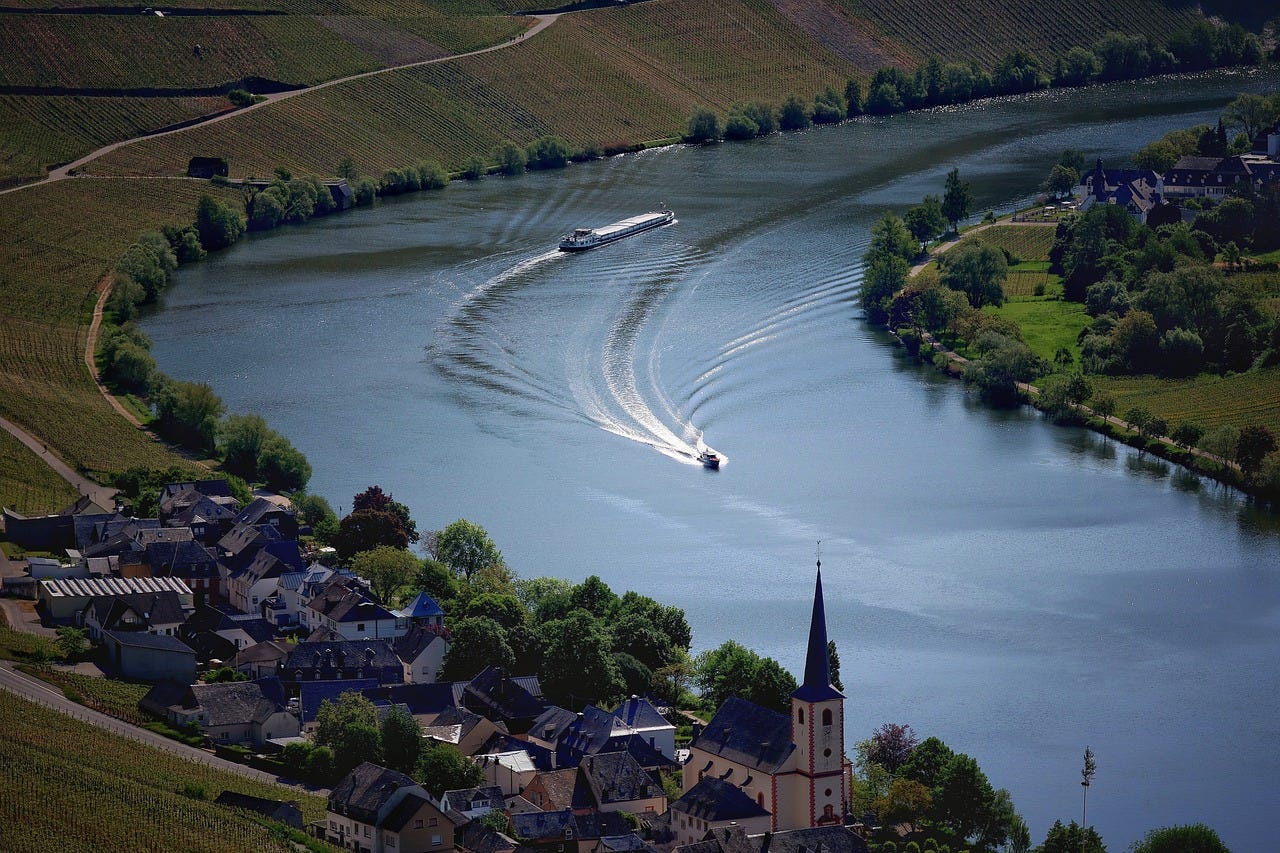
Image Credit: Tho-Ge
2026년 9월 15일
{솔티}
Prof. Dr. Young Choi (Editor in Chief) — Regent University
Young B. Choi is a Professor in the Department of Engineering & Computer Science at Regent University. He published 38 books with ‘Selected Readings in Cybersecurity’ (2018) (over 800 copies archived globally at university/college libraries around the world) and ‘Cybersecurity Applications and Artificial Intelligence’ (2023) available in seven major world languages. He proposed the world’s first global and universal telecommunications “Service Order Handling (SOH)” Model (T-SOH Model) (1995) with Dr. Adrian Tang. With this innovative research work, he received the IEEE NOMS ’96 Best Paper Award and became the first recipient of the Outstanding Contribution Award of the TeleManagement Forum in 1998. His research areas include Natural Language Processing-focused AI, AI-applied cybersecurity, network and telecom service management, and Korean studies on Gani Choi Rip’s Jeonggwan (靜觀: Quiet Contemplation) philosophy and Shilhak ( 實學: Practical Learning).
© K-GSP (K-Global Scholars and Professionals) Forum. All rights reserved. 2026.
Suggested Citation:
Choi, Y. B. (2026, September 15). Germany: A Nation of Precision, Memory, and Reinvention: Frankfurt am Main, Heidelberg, and the Character of a Nation. K-GSP.