

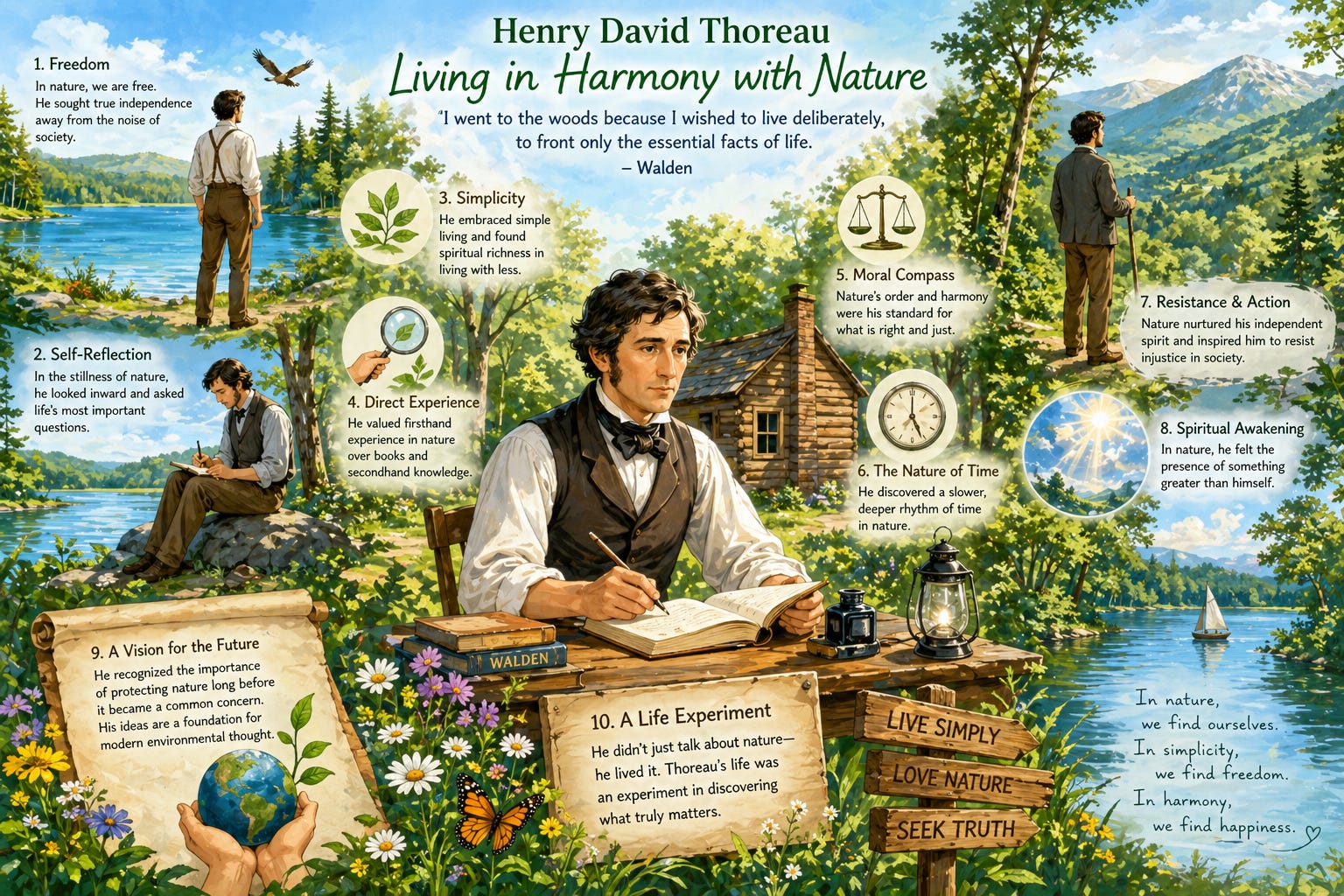
Henry David Thoreau’s view of nature extends beyond simple admiration of the natural world into a profound philosophical inquiry into the essence of human existence. He regarded nature not as something separate from humanity, but as a living whole deeply connected to the human inner self. This perspective is most clearly expressed in his seminal work, Walden.
First, for Thoreau, nature was a space of freedom. He believed that industrialization and urban civilization constrained human beings, and that true autonomy and independence could only be restored in nature. His life by Walden Pond was a practical experiment in realizing this belief.
Second, nature served as a place of self-reflection. In the quiet of the woods, he examined himself and continually asked fundamental questions about life—how should one live? Nature became a silent teacher guiding his introspection.
Third, Thoreau saw nature as a textbook of simplicity. By leaving behind the complexities of modern life and embracing minimal living, he demonstrated that a rich spiritual life could emerge from simplicity. This idea resonates strongly with modern minimalism.
Fourth, he emphasized the importance of direct experience. Rather than relying on books or secondhand knowledge, he valued firsthand engagement with nature. For Thoreau, nature was not something to be merely studied, but to be lived and experienced.
Fifth, nature functioned as a moral standard. He looked to the order and harmony of nature as a guide for human society. When humans violate natural laws, he believed, social imbalance and moral decay follow.
Sixth, Thoreau discovered the essence of time in nature. Unlike the mechanical time created by humans, nature operates on a slower, deeper rhythm. Within this natural rhythm, he sought the true meaning of life.
Seventh, his view of nature led to resistance and action. By cultivating an independent spirit in nature, he developed the moral courage to resist social injustice. His ideas later influenced the philosophy of civil disobedience.
Eighth, nature was a pathway to spiritual awakening. In nature, he experienced a sense of the sacred, a perspective deeply connected to the transcendentalist philosophy of Ralph Waldo Emerson. Nature was not merely material, but a place where the soul encounters the divine.
Ninth, Thoreau’s view of nature laid an early foundation for modern environmental thought. Even in the 19th century, he recognized the dangers of environmental destruction and emphasized a harmonious relationship between humans and nature, a concern that strongly resonates with contemporary sustainability discourse.
Finally, his view of nature can be summarized as a “life experiment.” He did not merely theorize about nature but lived within it to test and validate his philosophy. This practical approach continues to offer a powerful and enduring inspiration today. +++
{Solti}
April 30, 2026
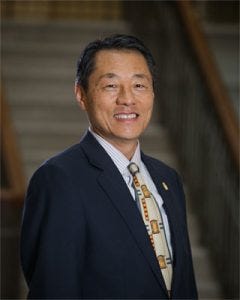
Young Choi, PhD is a Professor at Regent University bringing a rare combination of technical expertise and creative spirit to everything he does. A scholar in AI, cybersecurity, and network & telecommunications service management, he has published 38 books including AI and cybersecurity area books, over 200 refereed articles, and over 20 book chapters. Beyond the academy, Dr. Choi is a passionate poet, essayist, and wooden block engraving artist whose reflective writing invites readers to rediscover life’s beauty in quiet contemplation. He lives under the motto: “Study hard and give generously without holding back! (열심히 공부해서 아낌없이 남주자 !)”
Published books: https://www.amazon.com/stores/Young-Choi/author/B0DMZ5S6R7?ref=ap_rdr&shoppingPortalEnabled=true