

Just a few years ago, artificial intelligence (AI) seemed like a topic confined to research laboratories and technology conferences. Today, however, AI has become deeply integrated into our daily lives. Smartphones answer our questions, vehicles can drive themselves, and hospitals increasingly rely on AI-assisted diagnoses. The world is changing rapidly. Amid this transformation, what is the most important factor? Many people might point to supercomputers or massive data centers, but the true source of competitiveness in the AI era is people.
Although AI appears to evolve on its own, it is ultimately created, improved, and governed by human beings. No matter how advanced AI technology becomes, a nation cannot maintain its competitive edge without talented individuals who understand, develop, and responsibly manage it. It is much like agriculture: even the finest seeds cannot produce a harvest without skilled farmers.
Today, countries around the world are engaged in an intense competition to attract and develop AI talent. Silicon Valley in the United States continues to draw some of the brightest minds by offering abundant research funding and an environment that encourages innovation. European nations are also strengthening their AI research infrastructure and educational initiatives to prepare for the future.
South Korea possesses many advantages in this race. It is globally recognized for its strengths in semiconductors, telecommunications, and manufacturing. The country also has a strong educational tradition and a highly motivated workforce. Yet challenges remain. The supply of advanced AI professionals is not keeping pace with demand. Many talented researchers and engineers seek better opportunities abroad, while gaps persist between the skills universities teach and the expertise industries require.
These realities remind us that competition in the AI era is fundamentally a competition for talent. Before a nation can lead in technology, it must invest in developing people. This is why educational policy is so important. From elementary schools to graduate programs, students should be given opportunities to acquire AI literacy, data analysis skills, and computational thinking. More importantly, education must go beyond teaching coding. It should cultivate creativity, critical thinking, and the ability to identify and solve complex problems.
The AI age also demands a new kind of professional. Future innovators will not be defined solely by technical expertise. They will be individuals who can bridge disciplines—combining AI with medicine, law, education, business, art, and the humanities. Innovation often emerges at the intersection of different fields, and those who can connect diverse domains will shape the future.
Equally important is establishing sound workforce planning and talent-supply policies. Producing large numbers of graduates is not enough if their skills do not align with industry needs. Conversely, a shortage of qualified professionals can slow economic growth and technological advancement. Governments, universities, and businesses must therefore work together to anticipate future workforce demands and design educational programs that prepare students for emerging opportunities.
Another important lesson is that talent cannot be developed through education alone. Researchers need environments that allow them to pursue ambitious ideas. Entrepreneurs need ecosystems encouraging innovation and risk-taking. Societies need cultures that tolerate failure and reward perseverance. Without these conditions, even the most talented individuals may seek opportunities elsewhere.
History repeatedly demonstrates that the rise and fall of nations depend on people. During the Industrial Revolution, countries with skilled engineers and technicians gained tremendous advantages. In the Information Age, nations that nurtured IT professionals became global leaders. The same principle applies in the AI era. Machines may be powerful, but it is human talent that ultimately determines success.
AI was not created to replace humanity. Rather, it is a tool that expands human capabilities and opens new possibilities. Instead of fearing AI, we should focus on empowering people to use it wisely, creatively, and ethically. Investing in human capital remains the most valuable investment a society can make.
One day, historians may look back on the mid-21st century as the era of the great AI transformation. When they examine which nations prospered, they may find that success did not belong to those with the largest data centers or the fastest computers. Instead, it belonged to those who cultivated, empowered, and respected their people. In the end, the winners of the AI age will not simply be the nations with the best technology—they will be the nations that invested most effectively in human talent. +++
{Solti}
June 19, 2026
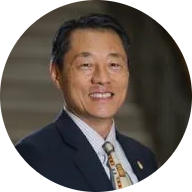
Prof. Dr. Young Choi (Editor in Chief) — Regent University
Young B. Choi is a Professor in the Department of Engineering & Computer Science at Regent University. He published 38 books with ‘Selected Readings in Cybersecurity’ (2018) (over 800 copies archived globally at university/college libraries around the world) and ‘Cybersecurity Applications and Artificial Intelligence’ (2023) available in seven major world languages. He proposed the world’s first global and universal telecommunications “Service Order Handling (SOH)” Model (1995) with Dr. Adrian Tang. With this innovative research work, he received the IEEE NOMS ’96 Best Paper Award and became the first recipient of the Outstanding Contribution Award of the TeleManagement Forum in 1998. His research areas include Natural Language Processing-focused AI, AI-applied cybersecurity, network and telecom service management, and Korean studies on Gani Choi Rip’s Jeonggwan (靜觀: Quiet Contemplation) philosophy and Shilhak ( 實學: Practical Learning).