

Interval Walking Technique
Walking is the most natural thing to do. It is a basic ability humans are born with and learn naturally as they grow up. It is the basic mode of human locomotion, moving forward by alternately stepping on the ground. Since everyone does it in daily life, it serves as the foundation for life.
The closest thing to doing nothing is walking. There is no need to go to great lengths to learn how to walk. It is an excellent aerobic exercise that anyone can do without special equipment, requiring only that one foot remain in contact with the ground. The benefits of walking for a healthy mind and body are immeasurable.
Walking is the foundation of all human activity. Brisk walking at a pace that makes one slightly out of breath and causes sweating is recommended for good health. Walking about 8,000 to 10,000 steps, or 30 minutes to an hour a day, is said to be good for the body. The U.S. Army uses walking backward, a method physical therapists and healthcare professionals have long recognized and recommended, to prevent blisters on the big toe.
Walking meditation, which many people are interested in and practice, is a type of mindfulness meditation involving awareness of physical sensations such as the soles of the feet, body movements, and breathing, as well as the surrounding environment. Walking more slowly than usual while focusing mainly on breathing relieves stress and has a good effect on calming anger, improving concentration, and reducing anxiety.
A new type of walking has recently become a trend. It is very simple, and its effectiveness has been scientifically recognized. This walking style is popular, especially among the elderly. It originated in Japan and is called Japanese-style walking, but on social media it is called Interval Walking Technique (IWT). It first appeared about 20 years ago and is widely known to help people regain their health in a short period of time.
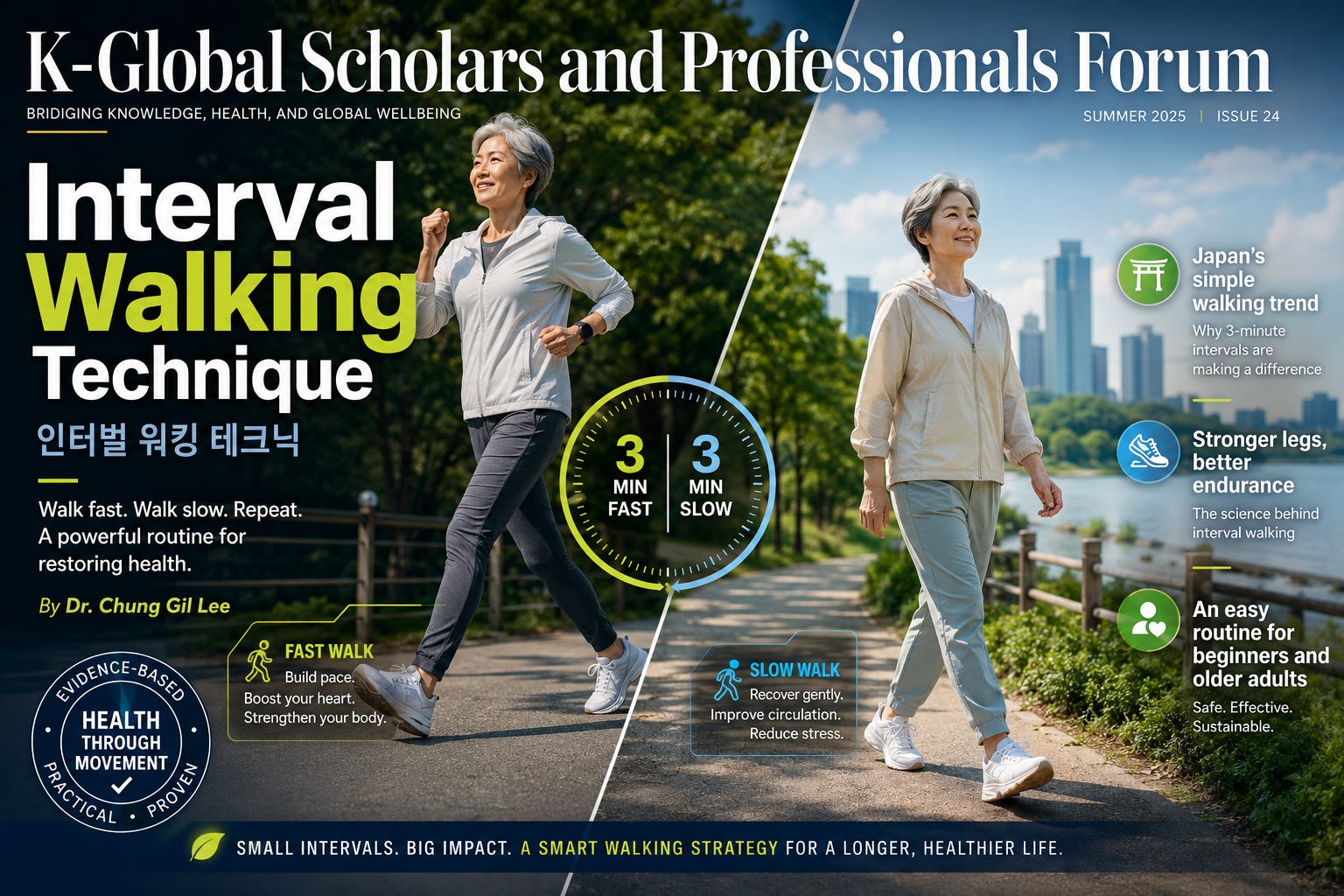
It differs so much from ordinary walking that people find it strange. It consists of high-intensity and low-intensity exercises, similar to high-intensity interval training, which is used to strengthen vascular function. It is exceptionally good for the elderly, and its effect has been confirmed to be much better than walking continuously at a normal pace.
Walk quickly and slowly at intervals. First, walk slowly for 10 minutes to relax the muscles and joints. Then walk vigorously for 3 minutes until slightly out of breath, and walk slowly for the next 3 minutes. Repeat the brisk and slow walks at least 5 times for 30 minutes total. During the fast walking, do not try too hard. If joint pain occurs, stop and rest.
Studies conducted by a research institute have been made known to the world (Ohio State Health & Discovery, Mayo Clinic Health System). Oxygen intake increased by 9%, and thigh muscle strength increased by 13%. Intermittent speed adjustments have been proven effective for cardiovascular health and calorie burning. It is very good for bone health because it is weight-bearing.
Compared to hiking, it restores health without the risk of injury. It is an exercise anyone can do, regardless of age or health level. Even heavy beginners or the elderly can do it, and it requires no tools or equipment. A pair of comfortable, sturdy shoes is all that is needed.
It is advisable to get a doctor’s diagnosis before starting this exercise. After finishing the 30-minute workout, walk slowly for 5 minutes and perform flexion and extension exercises for the body and limbs. Three or four practice sessions a week are enough for beginners. As health recovers, one can gradually increase the frequency or intensity.
In 2025, a real-life example of someone whose health was recovered through this exercise was published by the American Association of Retired Persons. It was the memoir of a mother who started running fast at age 50 to help her daughter, who had signed up for a New York City marathon. But she ended up with a stress fracture and arthritis. She would run a few miles a day, but eventually fell into a state where she could do nothing. She lost muscle and stamina, and her desire to try new things vanished. Just as she was thinking she needed to change her daily health management routine, she discovered and implemented IWT. As a result, she regained her stamina, lost weight, and her knees improved significantly. She used IWT to finish the Brooklyn Half Marathon at a brisk pace.
Original Article:

About the Author

Dr. Chung Gil Lee is Professor Emeritus of Veterinary Medicine at Chonnam National University, where he served on the faculty until 2007. He holds an M.Sc. and Ph.D. from James Cook University, Australia, and began his career as an Interpreter Officer in the Korean Army. A graduate of Chonnam National University (1963), he is currently a member of the Korean Literature Society of America.
인터벌 워킹 테크닉
더할 나위없이 자연스러운 일이 걷기다. 사람이 본디 가지고 태어나는 기본적인 능력이며, 태어나 자라면서 저절로 익힌다. 양 발을 번갈아 가며 바닥을 딛고 앞으로 나아가는 인간의 가장 기초적인 이동 방식이자 신체 활동이다. 사람이면 누구나 일상 생활에서 하는 일이어서 삶의 밑천이 된다.
걷기는 아무 일도 하지 않는 것에 가까운 일이기도 하다. 걷는 방법은 애써 배울 필요도 없다. 한쪽 발이 항상 땅에 닿아 있어야 하며, 별도의 장비 없이 누구나 쉽게 할 수 있는 유산소 운동이다. 모든 활동의 기본이 걷기다. 건강을 위해서는 약간 숨이 차고 땀이 나는 정도의 힘찬 걷기가 좋다. 하루 30분에서 1시간 동안 약 8,000~10,000보 정도 걸으면 몸에 좋다고 알려졌다.
심신을 건강하게 해주는 걷기의 이로움은 이루 다 헤아릴 수 없이 많다. 오래 전부터 물리 치료사들이나 건강 관리사들이 그 이점을 알아 권유해온 뒷걸음질을 미국 육군에서는 엄지발가락에 물집이 생기는 것을 방지하는 방법으로 쓴다. 많은 사람들이 관심을 두고 실행하는 보행 명상은 발바닥의 감각, 몸의 움직임, 호흡 등의 신체 감각과 주변 환경을 알아차리는 마음 챙김 명상법의 하나다. 평소에 걷는 것보다 천천히 걸으면서 주로 호흡에 정신을 집중하면 스트레스 해소, 집중력 향상, 불안 감소, 화를 삭이는 데에 좋은 효과를 나타낸다.
새로 나온 한 가지 걷기가 근자에 유행하는 추세에 있다. 아주 간단하면서 효능이 과학적으로 인정되었다. 노인들에게 알맞아 인기를 끄는 그 간격 걷기가 처음 일본에서 시작되어 ‘일본식 걷기’라고도 하지만, 소셜 미디어에서는 Interval Walking Technique (IWT)라고 한다. 20여 년 전에 세상에 알려져, 사람들이 단기간에 건강을 되찾게 해준다.
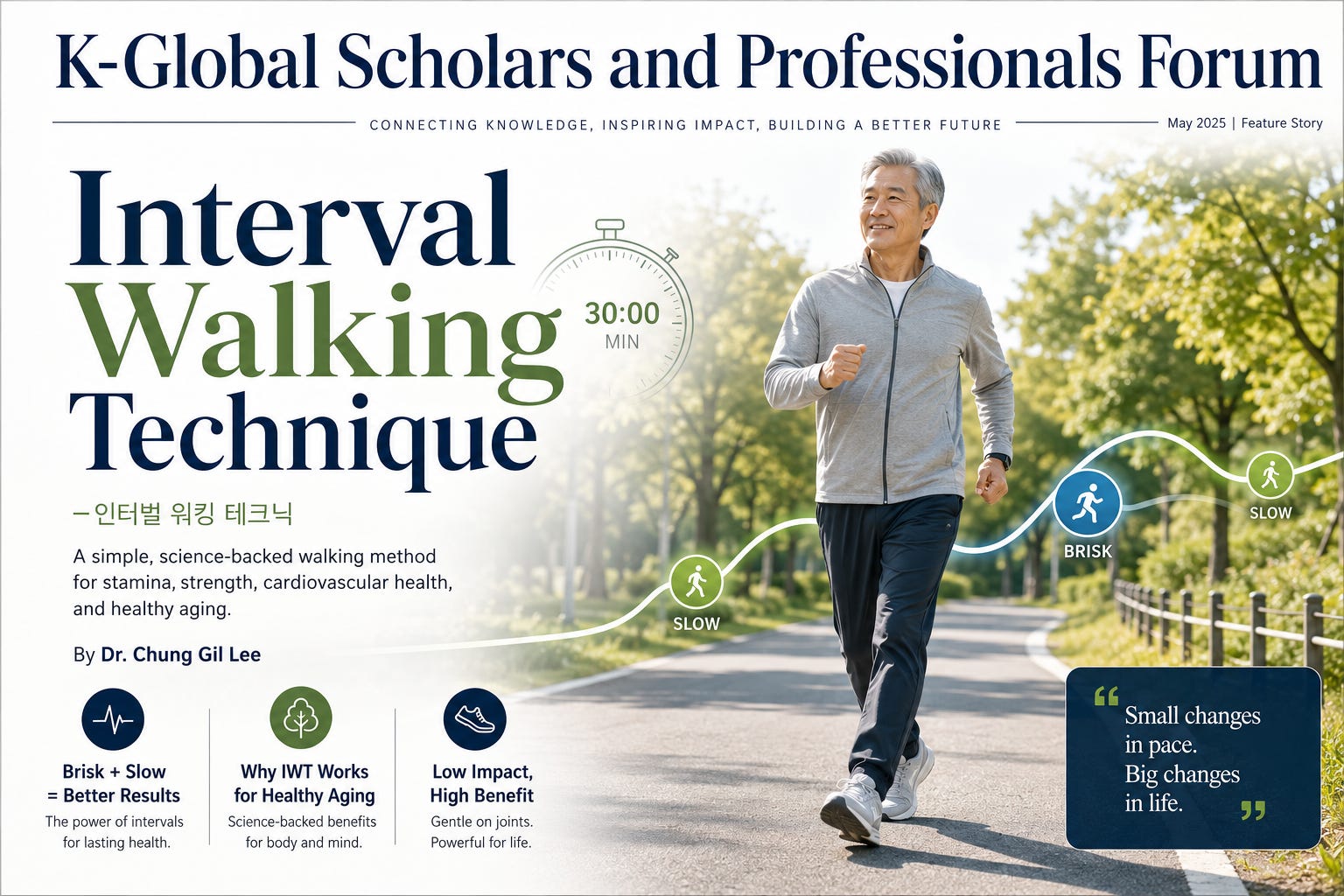
간격을 두고 빠르게 걷기와 천천히 걷기를 교대로 반복한다. 보통의 걷기와 너무 달라 이상하다 싶을 만큼 간단한 걷기이다. 심장·혈관계 기능을 강화하는 데에 사용되고 있는 고강도 인터벌 트레이닝(HIIT)처럼 강도가 높은 운동과 낮은 운동으로 구성된다. 특히 나이가 많은 노인들에게 좋으며, 일반적인 보통 걸음으로 계속해서 걷는 것보다 운동 효과가 훨씬 뛰어나다는 사실이 확인되었다.
먼저 천천히 10분 동안 걸어서 근육과 관절을 느슨하게 해준다. 이어서 3분을 숨이 약간 찰 정도로 빠르게 걷는다. 그런 다음의 3분은 천천히 걷는다. 그 속보와 완보를 5회 반복하여 30분 동안 계속한다. 빨리 걸으려고 하지 말고 자신의 체력에 맞춰 속도를 조절하는 것이 중요하며, 관절에 통증이 오면 멈추고 휴식을 취한다.
이 운동은 하기 쉬우면서 짧은 시간 안에 건강을 되찾게 만든다. 하루에 8,000보를 몸에 알맞은 속도로 걷는 보통의 걷기가 나타내는 것보다 훨씬 더 좋은 효과를 보인다. 체력을 향상하고 근력을 강화하는 데에 크게 도움이 된다. 영양, 운동, 수면, 정신 건강 등 다양한 주제의 최신 의학 정보와 전문가 칼럼을 제공하는 연구소에서 실제로 실시한 연구의 결과가 세상에 알려졌다. 산소의 섭취가 9% 증가하고, 넓적다리의 근력이 13% 증가한다. 중간중간의 속도 조절이 심혈관의 건강과 칼로리 소모에 효과적인 것으로 판명되었다. 심폐기능을 강화하는 데다가 체중을 지탱해주기 때문에 뼈의 건강에도 아주 좋다. 혈액순환을 개선하여 심혈관 질환 및 당뇨 등의 관리에도 탁월한 효과를 보인다 (Ohio State Health & Discovery, Mayo Clinic Health System).
등산에 비하여 10배 이상 안전하며, 부상 없이 건강을 되돌려주는 운동이다. 칼로리 소모를 돕고 기초 대사량을 높여 다이어트에 효과적이며, 엔도르핀 분비를 촉진해 스트레스 해소 및 우울증 완화에 도움을 준다. 연령이나 건강 수준에 상관없이 누구나 할 수 있는 운동이다. 체중이 많은 초심자나 노인도 할 수 있으며, 도구나 장비가 필요한 것도 아니다. 편안하고 튼튼한 신발 한 켤레면 된다.
새로운 운동을 시작할 때면 하듯이 이 운동을 시작할 때도 의사의 진단을 받는 것이 좋다. 30분 동안의 운동을 끝낸 다음 5분 동안 천천히 걸으면서 몸과 팔다리의 굴신 운동으로 마무리한다. 건강이 회복됨에 따라 횟수나 강도를 늘려가는데, 처음 시작할 때는 한 주에 서너 번을 목표로 하는 것이 바람직하다.
지난 2025년에는 이 운동으로 건강을 회복한 실례가 미국 은퇴자협회지에 실리기도 했다. 뉴욕시가 주관하는 마라톤에 참가를 신청한 딸을 도우려는 생각에서 50세에 빨리 달리기를 시작했다가 스트레스 골절과 관절염을 겪은 엄마의 수기였다. 하루면 몇 마일을 달리다가 아무 것도 할 수 없는 상태에 빠졌으며, 그 바람에 근육을 잃고 정력이 떨어지면서 무엇인가를 해보려는 마음도 사라지고 말았다. 일상으로 하던 건강 관리법을 바꿔야 한다고 생각하던 차에 건강 관리사가 IWT를 추천해주어 실행하였더니 정력을 되찾고 불었던 체중이 감소하였으며 무릎도 한결 좋아졌다는 것이었다. 그래서 브루클린 하프 마라톤을 속보로 완주하는 데에 그 테크닉을 사용했다.
© K-Global Scholars and Professionals Forum. All rights reserved. Content published in the K-GSP Forum may not be reproduced, distributed, or transmitted in any form without prior written permission from the K-GSP Forum, except for brief quotations with full attribution.