

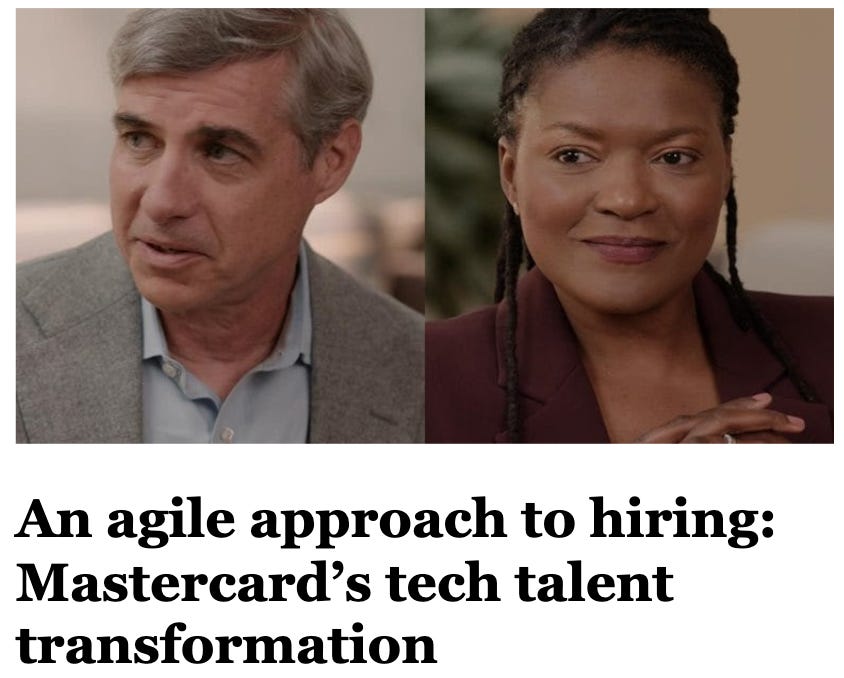
In an April 2026 McKinsey interview, Mastercard President and CTO Ed McLaughlin and EVP of People and Capability for Technology Charman Hayes describe how the company applied agile product development methods to its tech hiring process, creating what they call the TEAM (Talent Excellence Always-on Model) approach.
The story is instructive on its own. It becomes urgent when read alongside the September 2025 ICE raid at the Hyundai-LG battery plant in Ellabell, Georgia, where over 300 Korean workers were detained — an episode that exposed how Korean HR assumptions and practices translate into American operations.
The Problem
Mastercard’s previous hiring system required individual approval for each role, sometimes taking months. Candidates and managers had inconsistent experiences depending on geography and function. To stay competitive in a tightening tech talent market, the company needed greater consistency, pace, and scale.
The Agile Shift
Rather than commissioning a multi-year overhaul, Mastercard’s leaders treated hiring as a product. They convened a cross-functional team of recruiters, hiring managers, HR leaders, and engineers, and began working in two-week sprints with a backlog, sprint demos, and shared accountability. The first version launched as a minimum viable product (MVP) in the St. Louis Tech Hub before scaling globally.
Core Mechanics
Four design choices anchored the model. First, Mastercard reframed its employer narrative, sharpening how it described the work and the people it wanted to attract; applicant response rates rose by roughly 400 percent. Second, the company adopted a design-thinking, candidate-centric view of the entire hiring journey across geographies. Third, it built guilds — cross-company communities of practitioners — to raise the hiring bar through shared standards, interviews, and onboarding. Fourth, it shifted to pooled hiring, posting general roles to fill clusters of similar positions and giving hiring managers final say on team fit at the end of the process.
Results
TEAM hiring now accounts for about 35 percent of all hiring at Mastercard, with a target of 50 percent. Candidate satisfaction sits at 92 percent and hiring manager satisfaction at 98 percent. Over 1,200 interviewers have been trained, and more than 3,800 technical screening interviews were conducted in the past year. Real-time dashboards now inform hiring decisions, and the model has expanded beyond technology into consulting services.
Lessons for Agile HR
Three principles stand out. Start small and iterate rather than designing the perfect system upfront. Treat HR as product development, with sprints, MVPs, and continuous user feedback. And build co-ownership between HR and the business so transformation is shared, not imposed. As McLaughlin frames it, any technology strategy is, in the end, a people strategy — and people strategy deserves the same agile discipline as any other product.
Two Insights for Korean-American Companies After Georgia
The September 2025 ICE raid at the Hyundai-LG battery plant in Ellabell, Georgia, where over 300 Korean workers were detained, was a structural signal — not a freak event. Korean firms expanding under IRA and CHIPS Act incentives are building American footprints with Korean HR muscle memory.
First, treat U.S. workforce strategy as a product, not a transplant. Like Mastercard’s St. Louis MVP, build locally rooted hiring pipelines — community colleges, technical schools, candidate-centric journeys designed for American workers and regulators. Test in one plant, then scale.
Second, build co-ownership between Seoul and U.S. operations. Korean HQ-led, subsidiary-execute models leave local HR, legal, and compliance leaders without the authority to intervene early. Guild-style communities of practice across U.S. plants would distribute ownership, standardize compliance, and surface risks before they become crises like Georgia.
The Deeper Point
Mastercard reframed talent from a cost center to an asset. Korean-American companies face the same choice on a much larger stage. Treating U.S. workers as a logistical input — to be dispatched, rotated, or worked around — invites repeats of Georgia. Treating them as a long-term asset, governed by agile and locally-rooted HR systems, is what turns a manufacturing footprint into a sustainable American business.
About the Author
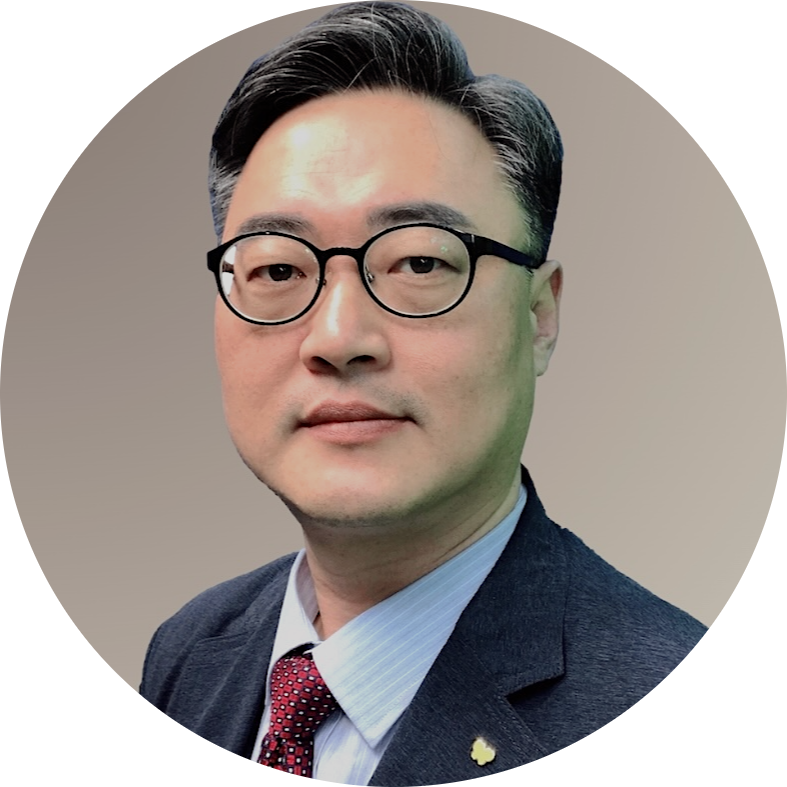
Prof. Dr. Jeonghwan (Jerry) Choi — Editor-in-Coordination, University of Maine at Presque Isle
Jeonghwan (Jerry) Choi, PhD is an Associate Professor of Business at the University of Maine at Presque Isle and Editor-in-Coordination of K-GSP Forum. With over 25 years of industry and consulting experience, he specializes in leadership development, human resource management, organizational behavior, and social entrepreneurship. His research focuses on workforce resilience, organizational health, and self-directed leadership — bridging rigorous scholarship with practical insight to cultivate leaders who create meaningful, sustainable, and humane organizations.
© K-Global Scholars and Professionals Forum. All rights reserved. Content published in the K-GSP Forum may not be reproduced, distributed, or transmitted in any form without prior written permission from the K-GSP Forum, except for brief quotations with full attribution.