

From the Page to the Place: Mark Twain’s Missouri, Part I—Hannibal
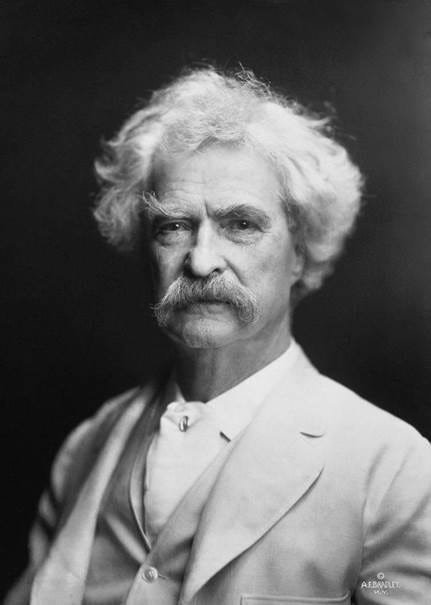
A. F. Bradley. Portrait of Mark Twain. 1907. Wikimedia Commons.
Mark Twain (1835-1910) was born in Florida, Missouri, and grew up in Hannibal, Missouri, a port town on the Mississippi River approximately forty miles to the east. Widely regarded as one of America’s greatest novelists, Twain possessed a distinctive sense of humor that has long been regarded as among the finest in American literature, and his novels set along the Mississippi River have earned enduring acclaim from both critics and readers. His most celebrated works, The Adventures of Tom Sawyer (1876) and Adventures of Huckleberry Finn (1884), made Hannibal a famous literary destination, drawing Twain enthusiasts from around the world each year. In these two novels, Hannibal appears as St. Petersburg, which serves as the primary setting of Tom Sawyer and the starting point for Huck and Jim’s journey down the Mississippi River in Huckleberry Finn. Recognizing Twain’s literary genius, Ernest Hemingway—himself one of the most influential American novelists—famously declared, “All modern American literature comes from one book by Mark Twain called Huckleberry Finn....” Indeed, alongside T. S. Eliot, a native of St. Louis, Twain remains one of the most prominent authors Missouri has produced.
Twain’s fiction has been studied worldwide, including in Japan, South Korea, China, and Europe. This global reception extends even to readers encountering his works through translation. Growing up in Korea, I read The Adventures of Tom Sawyer and Adventures of Huckleberry Finn in Korean translations, and these two novels were frequently taught in university-level literature courses. Yet one of the greatest challenges in translating Twain’s fiction lies in his extensive use of dialect, which can be difficult to understand even for native English speakers. The following excerpt from Chapter 8 of Adventures of Huckleberry Finn illustrates Twain’s distinctive representation of vernacular speech:
“Strawberries and such truck,” I [Huck] says. “Is that what you live on?”
“I couldn’ git nuffn else,” he [Jim] says.
“Why, how long you been on the island, Jim?”
“I come heah de night arter you’s killed.”
“What, all that time?”
“Yes—indeedy.”
“And ain’t you had nothing but that kind of rubbage to eat?”
“No, sah—nuffn else.”
“Well, you must be most starved, ain’t you?”
“I reck’n I could eat a hoss. I think I could. How long you ben on de islan’?”
“Since the night I got killed.”
“No! W’y, what has you lived on? But you got a gun. Oh, yes, you got a gun. Dat’s good. Now you kill sumfn en I’ll make up de fire.”
Because dialects are deeply rooted in specific cultural and regional contexts, they are especially difficult to translate into another language. In translating Twain’s novels, Korean translators have generally chosen standard Korean rather than attempting to reproduce the nonstandard speech patterns of the original. Although it would have been possible to substitute a Korean regional dialect for Twain’s vernacular expressions, such a strategy would have made the Missouri characters sound like Korean peasants rather than inhabitants of the American Midwest.
In the summer of 1988, while preparing for my graduate studies in the United States, I gave tutorials on Huck Finn to more than fifty students at Korea National Open University in Seoul. Meeting in a university classroom, I lectured on the novel with a sense of embarrassment: with my first master’s degree in hand, I was teaching a work whose setting I had never visited. Nevertheless, I was able to interpret and explain the novel for my students even without firsthand experience of the American landscape.
In 1993, as a doctoral student at Nebraska, I made my first visit to Hannibal and Florida, Missouri. Hannibal, a small riverfront city, appeared beautiful and leisurely. I had imagined a large, clean river flowing between Missouri and Illinois, but although the Mississippi was indeed vast, I was surprised by its muddy appearance. Reading about a place and experiencing it firsthand are two very different things. Florida, a tranquil village near Mark Twain Lake, preserves the author’s birthplace through the Mark Twain Memorial Shrine, which houses his cabin and other artifacts. To date, I have visited Hannibal five times and Florida four times. Each journey to these literary sites fills me with excitement, and I return with new insights into Twain and his world. It is a privilege to live within driving distance of Hannibal and Florida and to visit the places that have made Missouri famous in literary history.
Unlike the Ozarks of southern Missouri and northern Arkansas, known for their low mountains and wooded landscapes, Hannibal and Florida lie in northeastern Missouri’s prairie region. Having grown up surrounded by rice fields, I feel at home in this agricultural landscape while driving along highways bordered by endless cornfields. In Hannibal, ample free parking along the river and the relative absence of crowds create an atmosphere of quiet reflection, while the village of Florida remains an especially peaceful literary landscape.
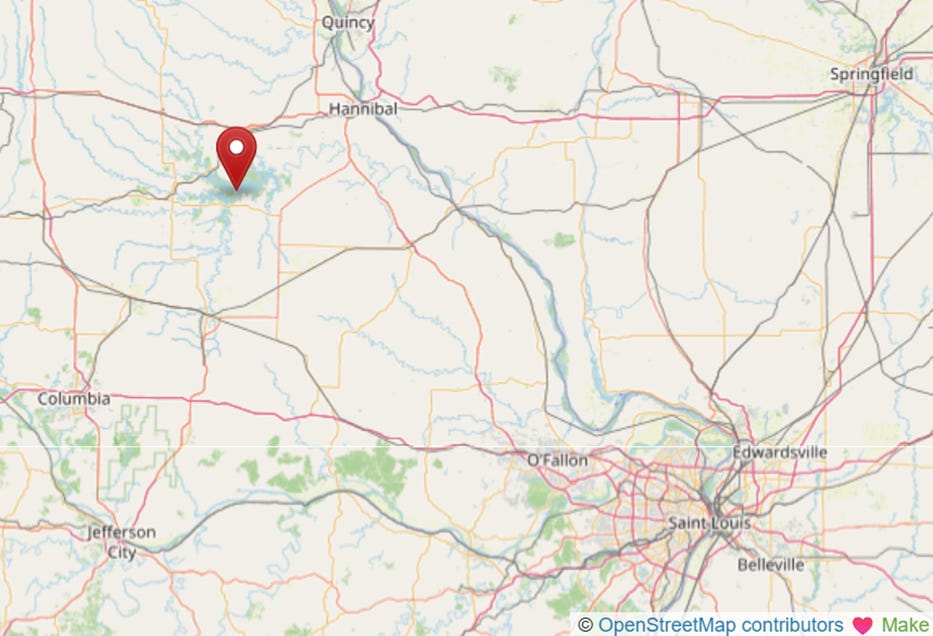
Hannibal, Missouri, is located along the Mississippi River, approximately 100 miles northwest of St. Louis. Florida, Missouri, marked on the map, lies about forty miles southwest of Hannibal. Composite image based on map data © OpenStreetMap contributors.
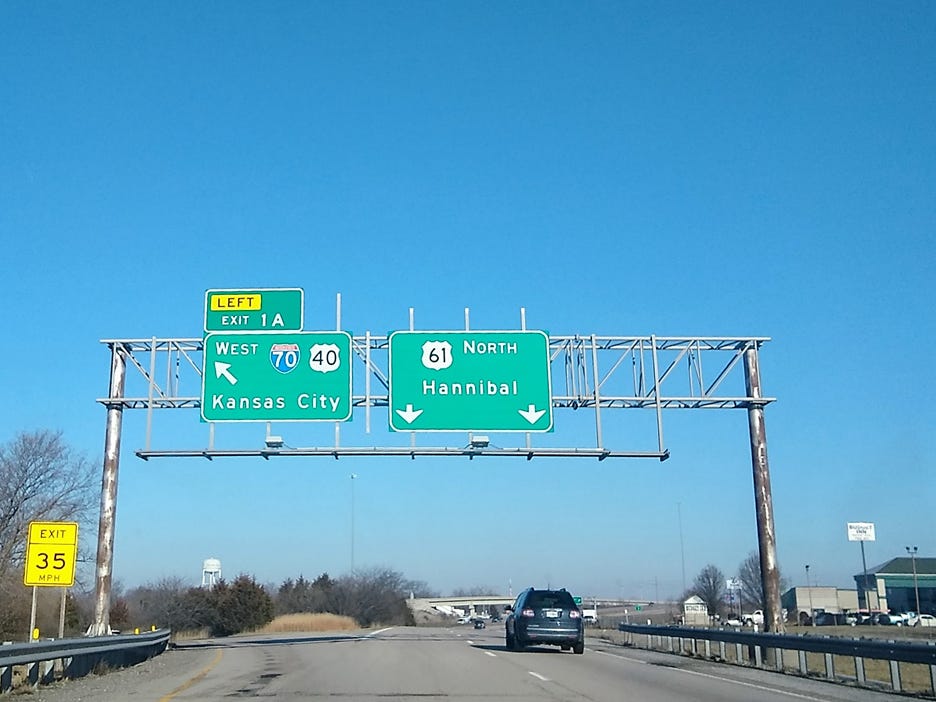
The route from St. Louis to Hannibal via Interstate 64 and U.S. Highway 61. Highway 61 begins after I-64 crosses Interstate 70 in Wentzville, Missouri.
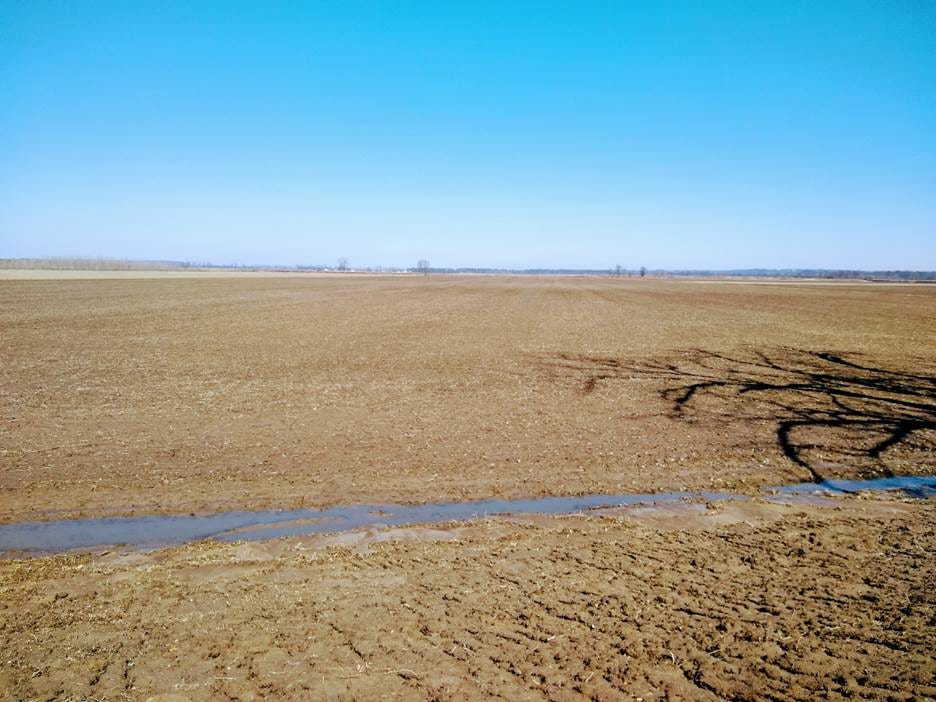
A floodplain on the way to Hannibal. This photograph was taken midway between Old Monroe, Missouri, and the Mississippi River, a landscape characteristic of the river valley leading north toward Twain’s hometown.
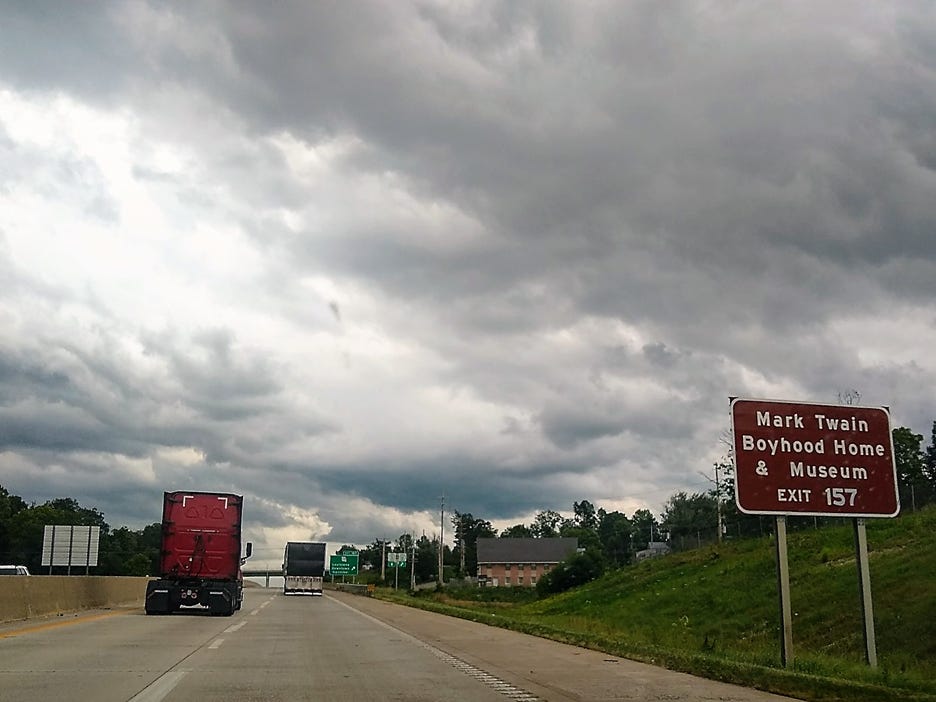
A road sign on U.S. Highway 61 directs visitors to the Mark Twain Boyhood Home & Museum in downtown Hannibal, Marion County, Missouri.
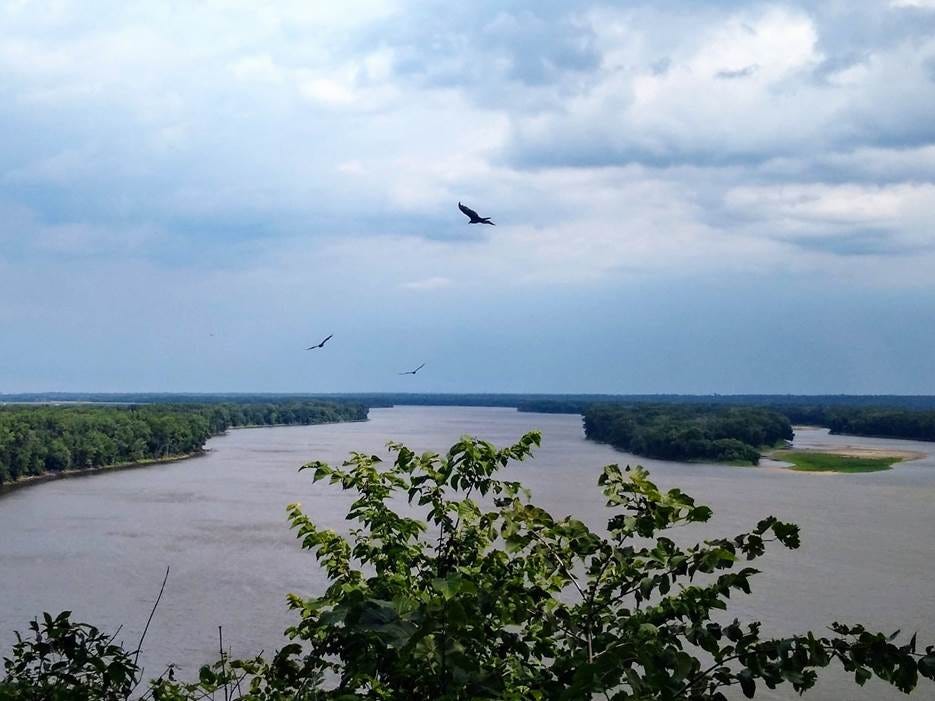
Vultures hover over the Mississippi River in Hannibal. The river separates Missouri from Illinois, with Missouri on the left side of the image. The northern half of Missouri and much of Illinois lie within the Interior Plains, creating the region’s characteristic flat landscape. Hannibal appears as St. Petersburg in The Adventures of Tom Sawyer and serves as the fictional starting point for Huck and Jim’s journey in Adventures of Huckleberry Finn.
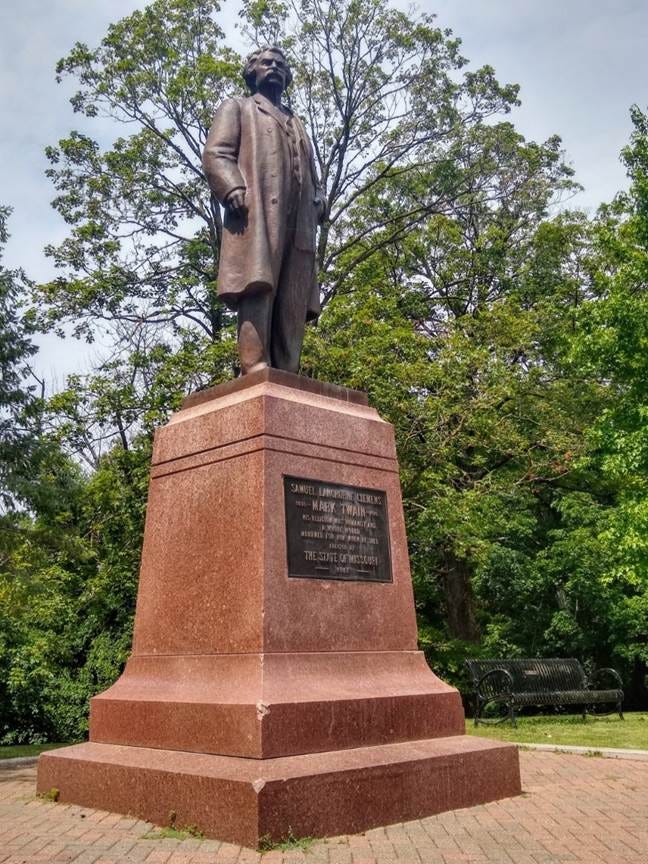
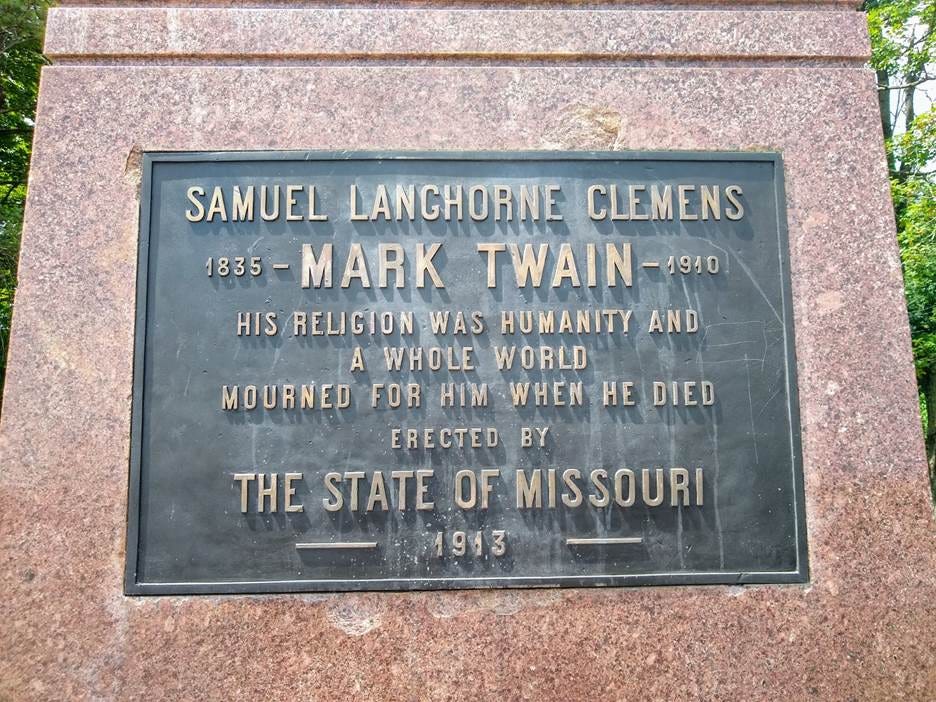
A statue of Mark Twain overlooks the Mississippi River from the hilltop of Riverview Park. Erected by the State of Missouri in 1913, the statue bears a plaque that reads, “His religion was humanity and a whole world mourned for him when he died.”
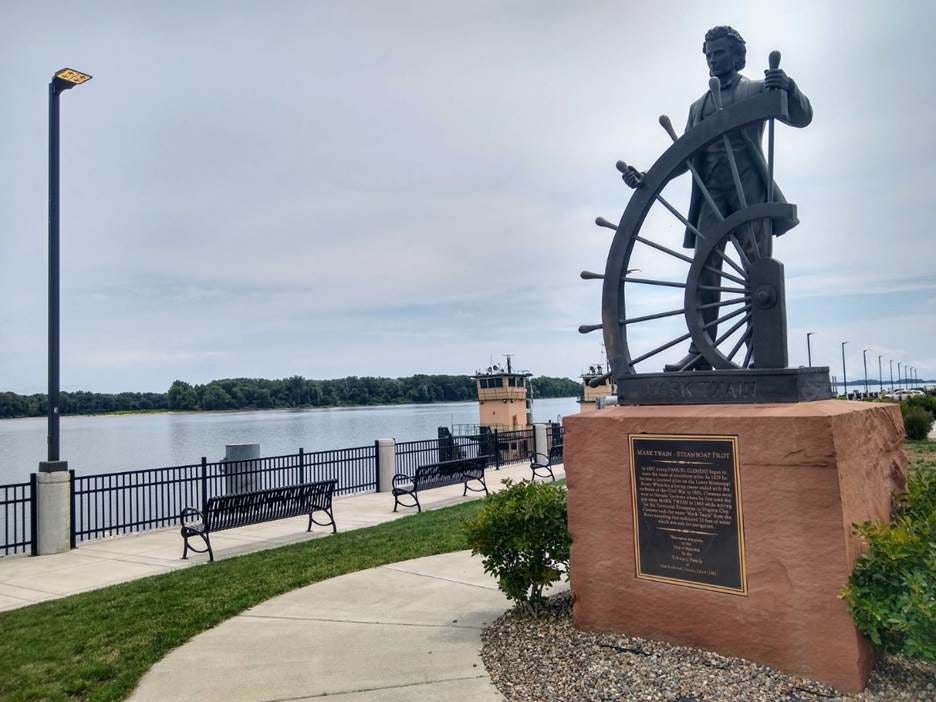
A statue depicting Mark Twain as a young steamboat pilot was erected in Hannibal in 2003. Twain began learning to pilot steamboats on the Mississippi River in 1858 and became a licensed pilot two years later. His career as a steamboat pilot ended in 1861 with the outbreak of the Civil War. Chapter 1 of Life on the Mississippi (1883), Twain’s memoir of his experiences on the river, begins with this majestic description of the Mississippi:
The Mississippi is well worth reading about. It is not a commonplace river, but on the contrary is in all ways remarkable. Considering the Missouri its main branch, it is the longest river in the world—four thousand three hundred miles. It seems safe to say that it is also the crookedest river in the world, since in one part of its journey it uses up one thousand three hundred miles to cover the same ground that the crow would fly over in six hundred and seventy-five.
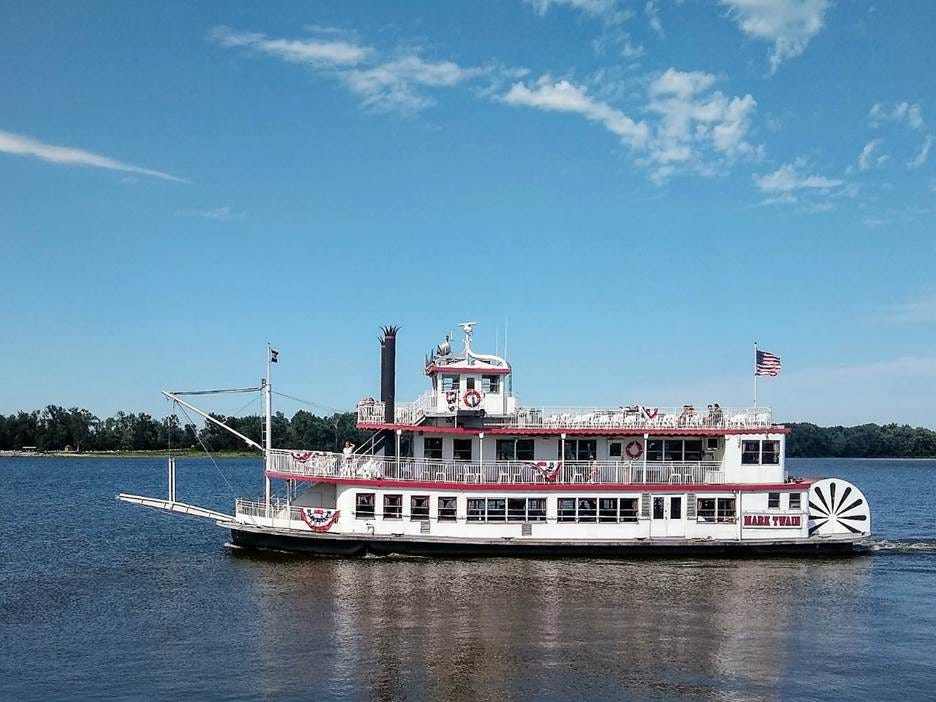
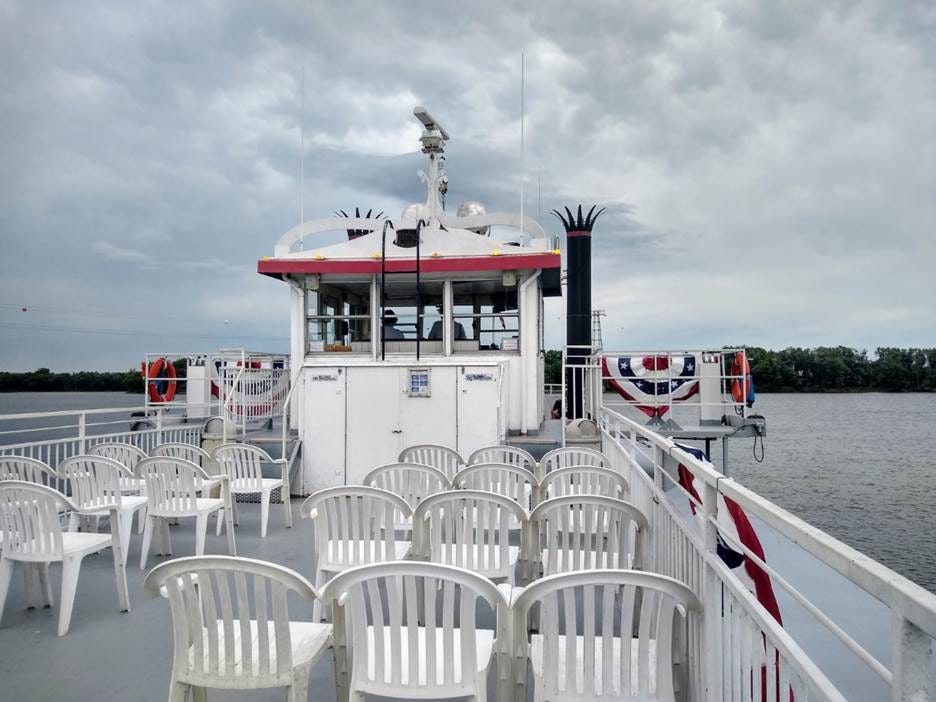
The Mark Twain Steamboat on the Mississippi River in Hannibal. This replica paddle-wheel steamboat recalls the vessels that traveled the Mississippi River during Twain’s lifetime and influenced his literary imagination.
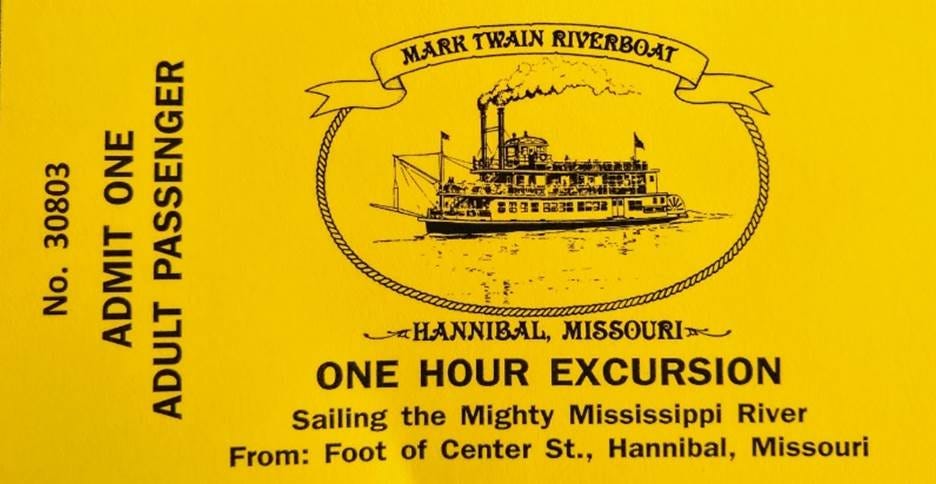
Onboard the Mark Twain Steamboat on the Mississippi River in Hannibal.
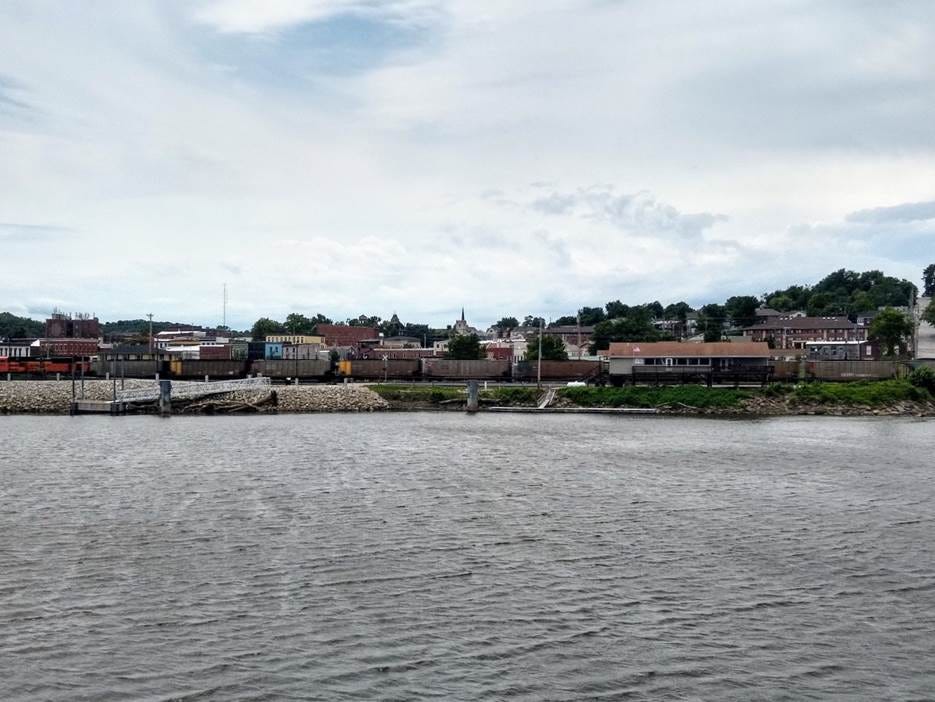
A view of Hannibal from the Mark Twain Steamboat on the Mississippi River.
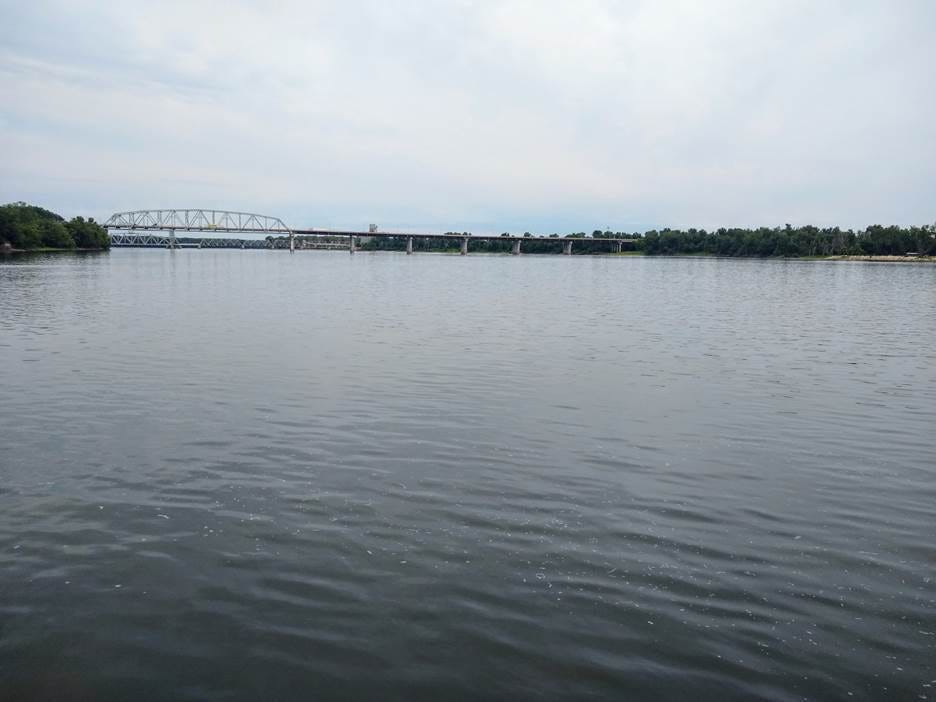
The Mark Twain Memorial Bridge on U.S. Route 36 and Interstate 72 connects Missouri (left) to Illinois. The steel truss bridge opened in 2000.
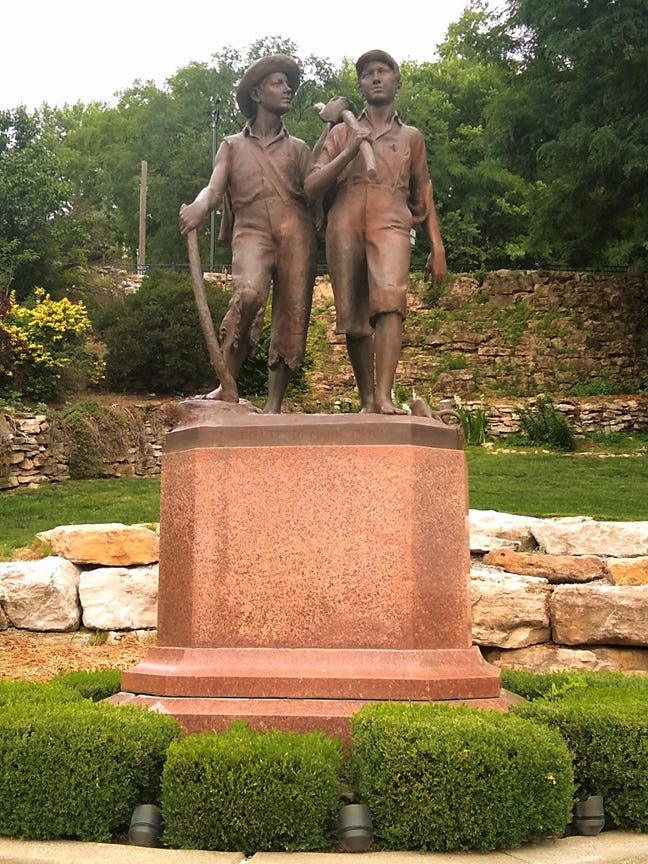
The Tom and Huck Statue at the foot of Cardiff Hill in Hannibal. The bronze statue, erected in 1926, honors the beloved characters from Mark Twain’s The Adventures of Tom Sawyer and Adventures of Huckleberry Finn.
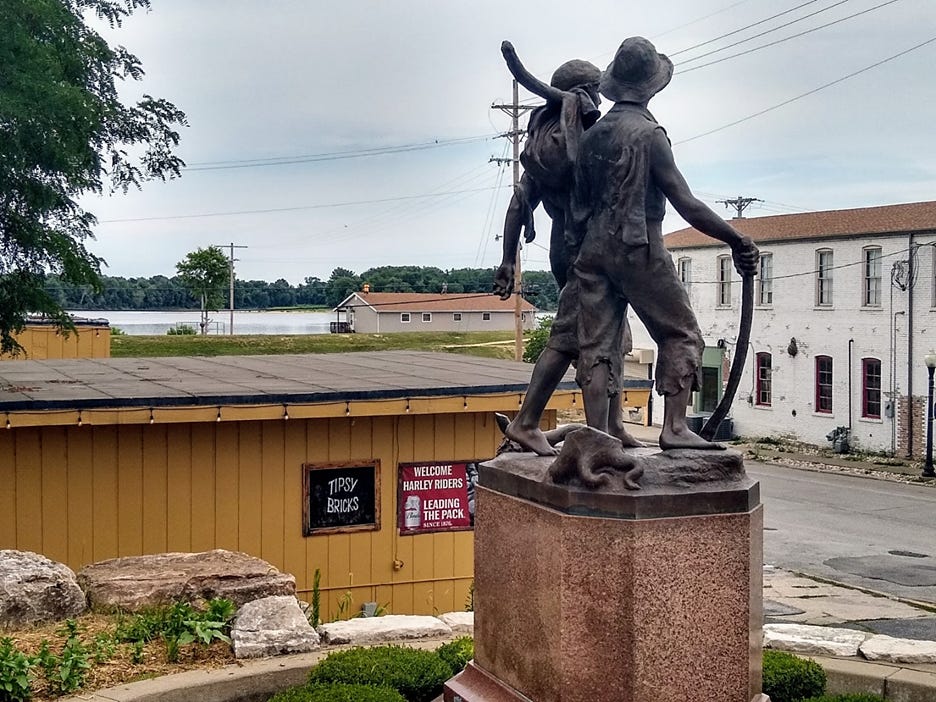
The Tom and Huck Statue stands near the Mississippi River and Mark Twain’s boyhood home.
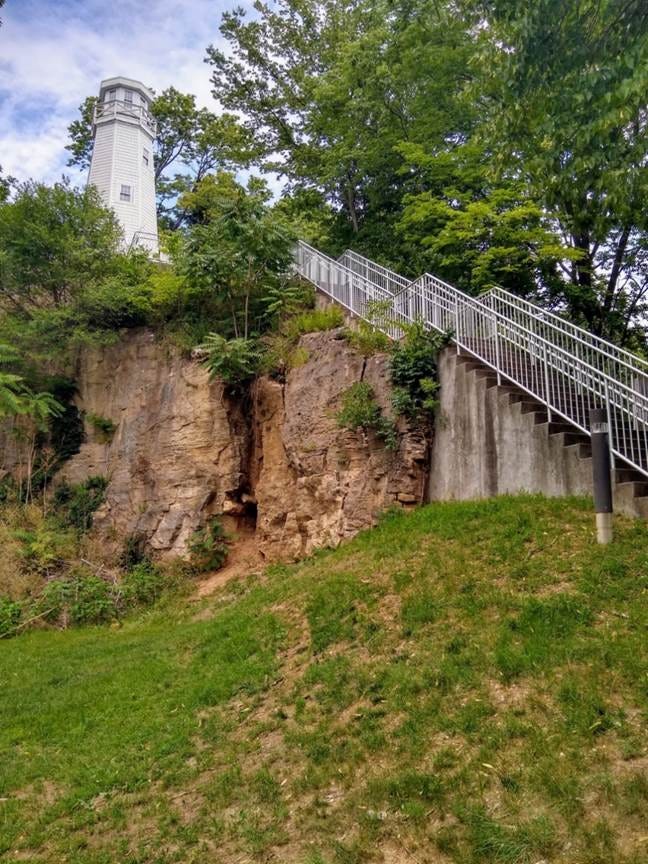
The Mark Twain Memorial Lighthouse overlooks the Mississippi River to the east and downtown Hannibal to the south. Located atop Cardiff Hill, it takes 244 steps to reach the lighthouse.
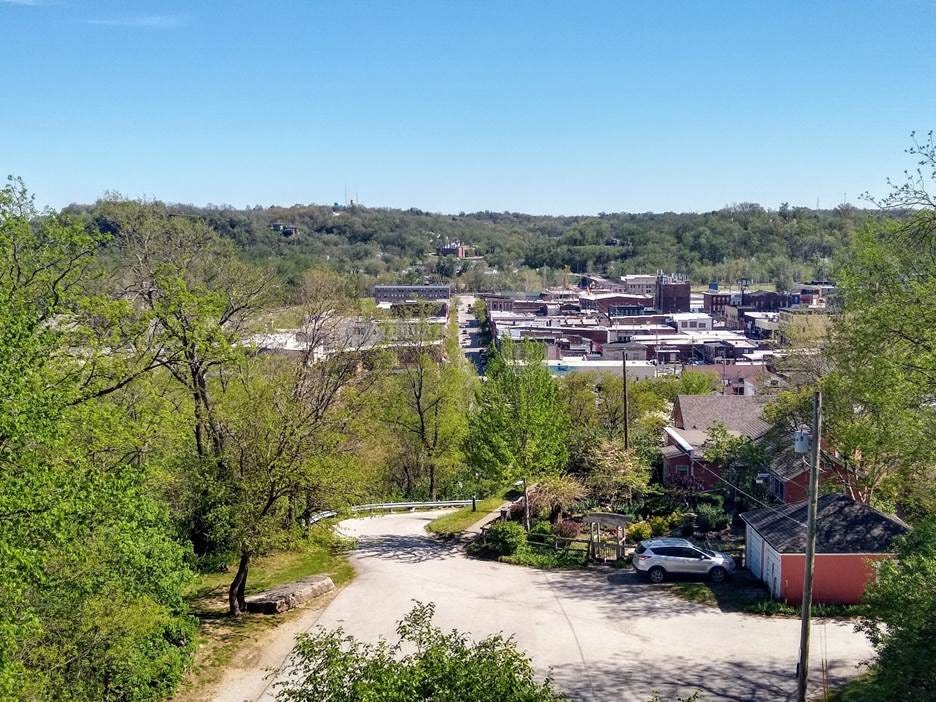
A view of Hannibal, Missouri, from midway up the hill to the Mark Twain Memorial Lighthouse.
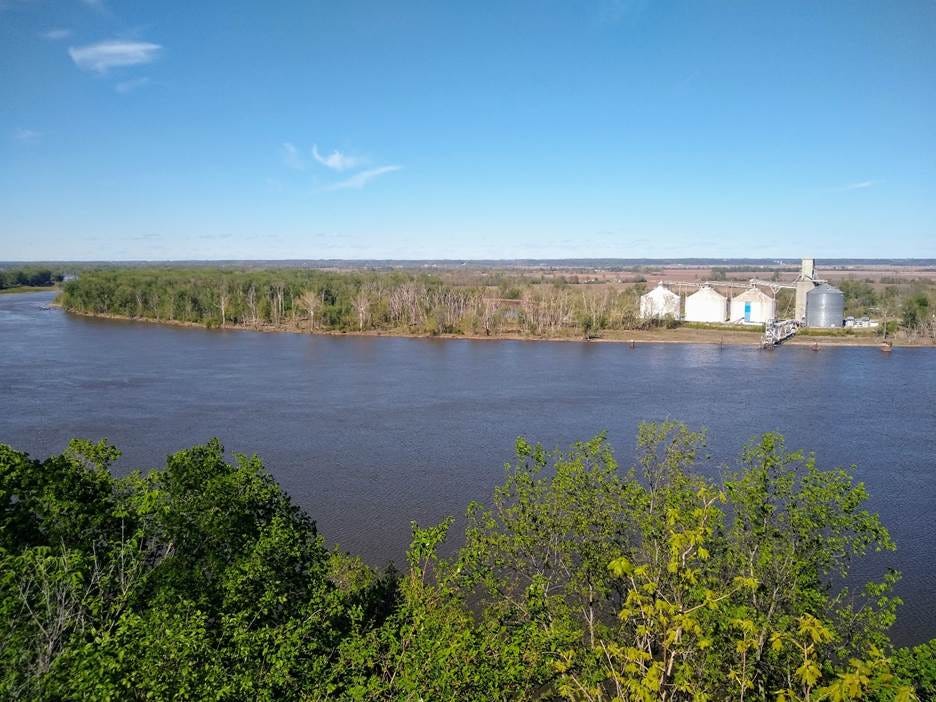
A view of Illinois across the Mississippi River from Hannibal, Missouri.
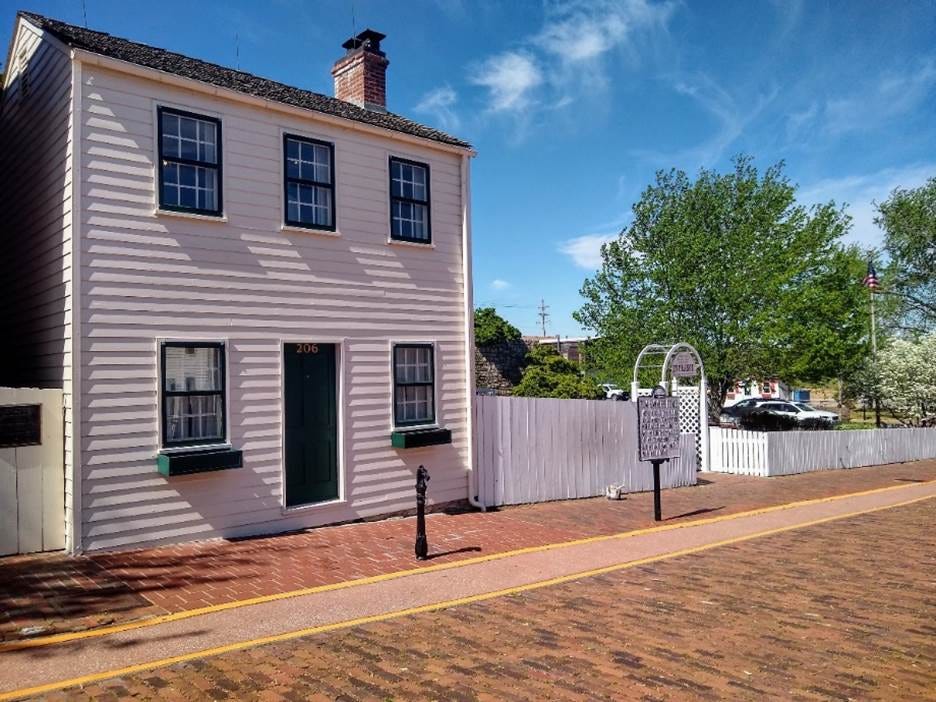
The Mark Twain Boyhood Home & Museum in Hannibal preserves the home where Samuel L. Clemens spent much of his boyhood. Designated a National Historic Landmark, the site commemorates the life and literary legacy of the author better known as Mark Twain.
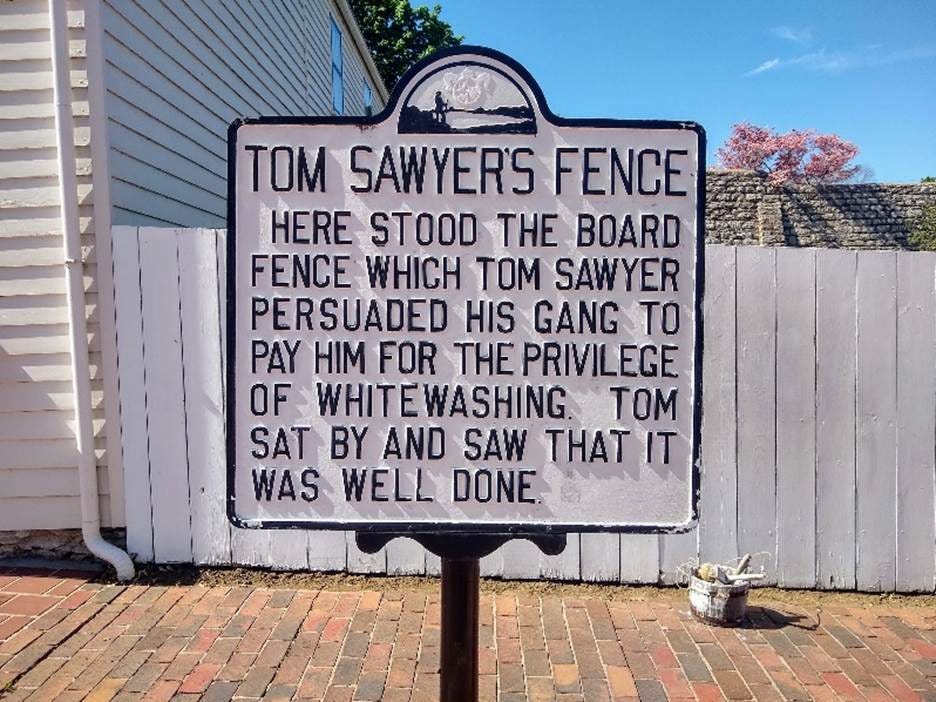
Tom Sawyer’s fence in Hannibal. The following passage from Chapter 2 of The Adventures of Tom Sawyer describes the famous whitewashing scene:
He [Tom] had had a nice, good, idle time all the while—plenty of company—and the fence had three coats of whitewash on it! If he hadn’t run out of whitewash he would have bankrupted every boy in the village.
Tom said to himself that it was not such a hollow world, after all. He had discovered a great law of human action, without knowing it—namely, that in order to make a man or a boy covet a thing, it is only necessary to make the thing difficult to attain.

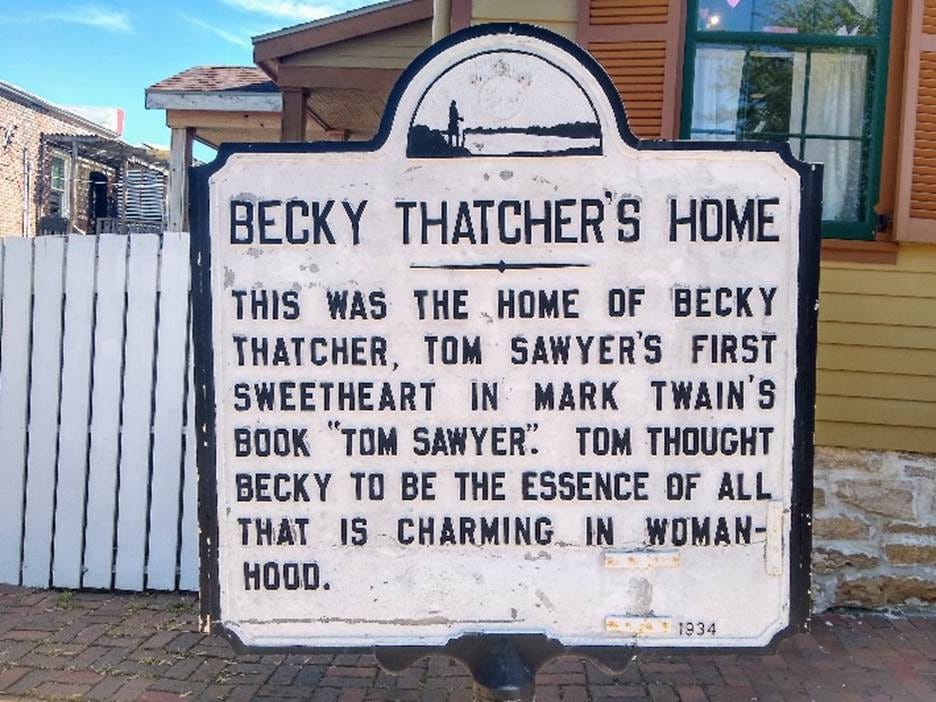

Becky Thatcher’s home in Hannibal. The following excerpt from Chapter 7 of The Adventures of Tom Sawyer captures a conversation between Tom and Becky:
“[…] Say, Becky, was you ever engaged?”
“What’s that?”
“Why, engaged to be married.”
“No.”
“Would you like to?”
“I reckon so. I don’t know. What is it like?”
“Like? Why it ain’t like anything. You only just tell a boy you won’t ever have anybody but him, ever ever ever, and then you kiss and that’s all. Anybody can do it.”
“Kiss? What do you kiss for?”
“Why, that, you know, is to—well, they always do that.”
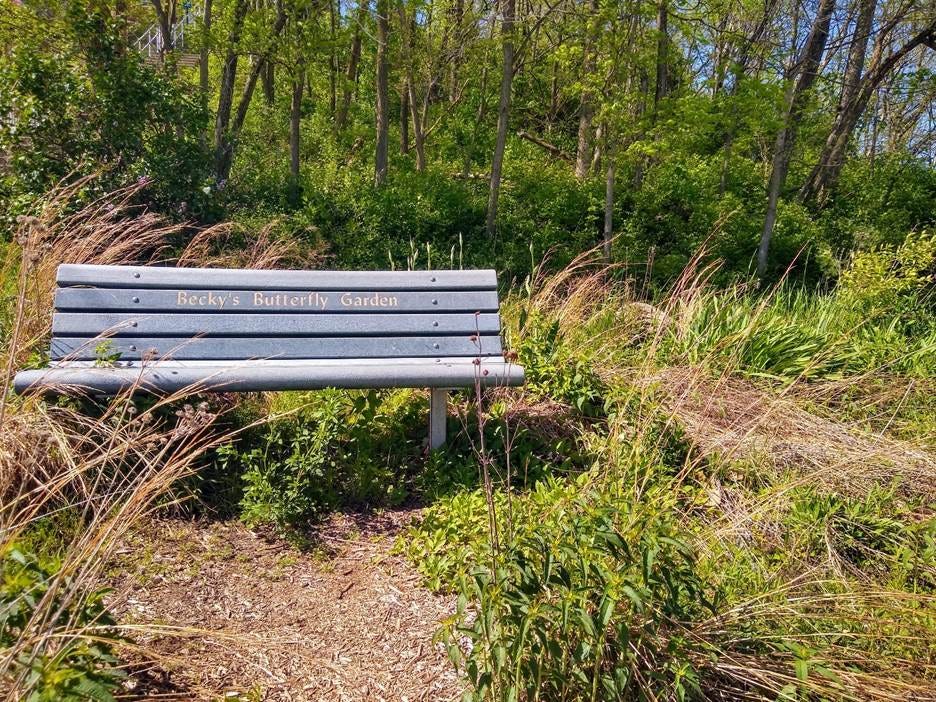
Becky’s Butterfly Garden on a hill near the Mark Twain Memorial Lighthouse in Hannibal, named after Becky Thatcher, Tom Sawyer’s beloved companion in The Adventures of Tom Sawyer.
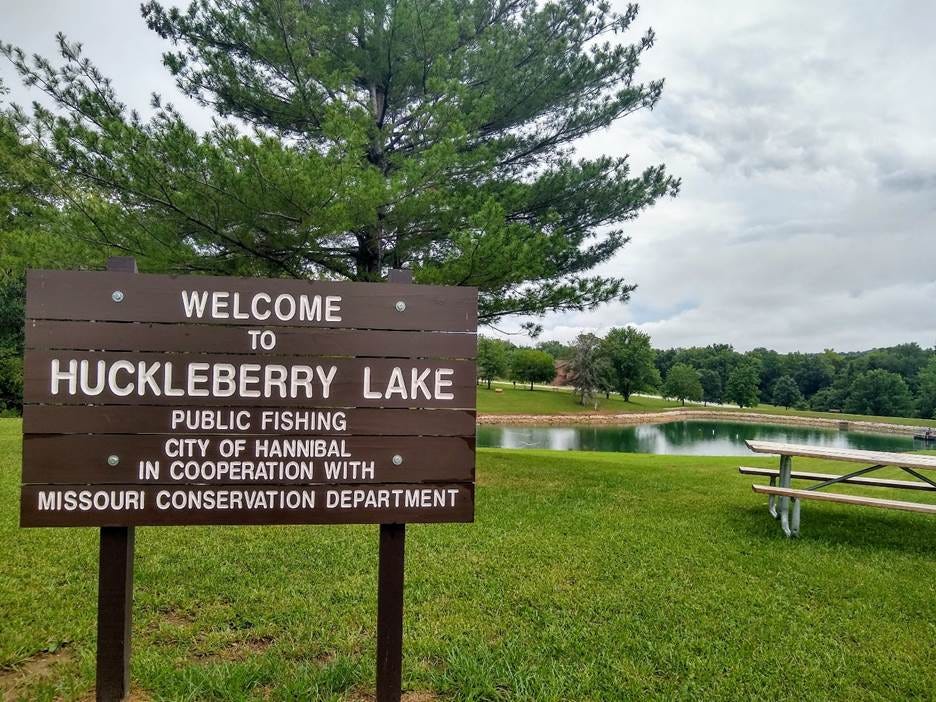
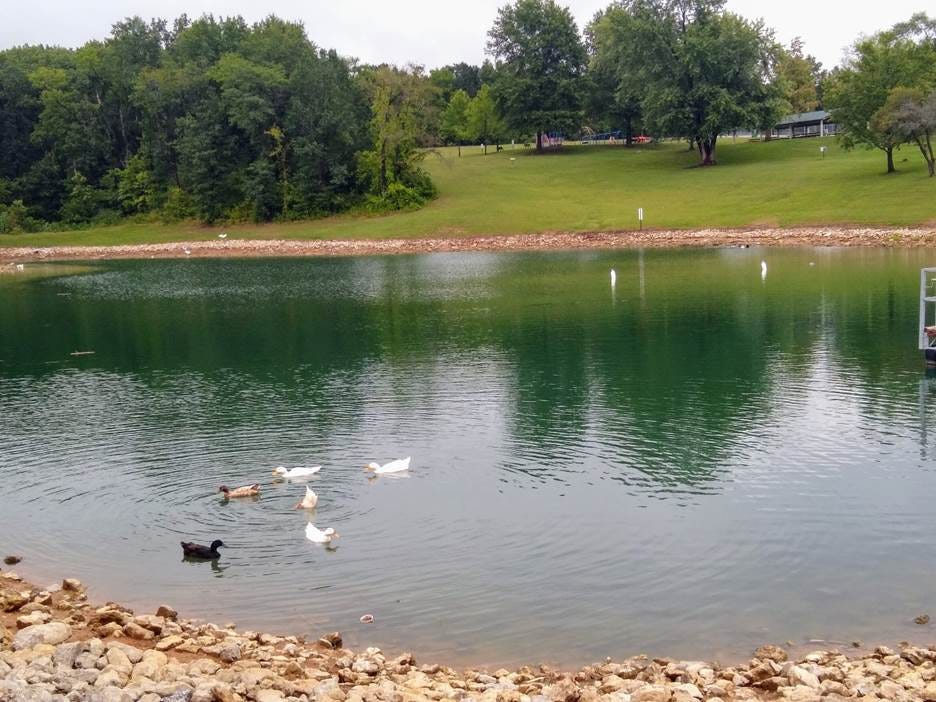
Huckleberry Lake (also known as Huckleberry Park Pond) in Huckleberry Park, Hannibal, takes its name from Mark Twain’s Adventures of Huckleberry Finn and serves as a 1.8-acre recreational lake for urban fishing and family activities.
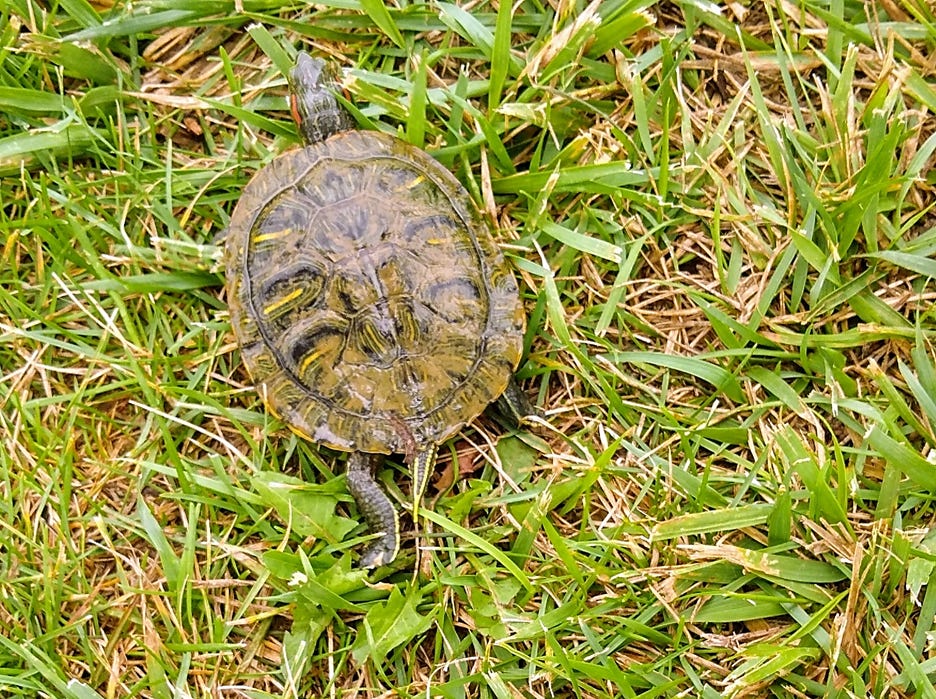
A turtle resting on the grass near Huckleberry Lake in Hannibal. The quiet scene adds a touch of natural beauty to a place named in honor of Mark Twain’s Adventures of Huckleberry Finn.
[To be continued]
About the Author

Professor of English and Creative Writing and Associate Dean of the School of Humanities and Theology, Missouri Baptist University
John J. Han, PhD, is the author, editor, co-editor, or translator of 35 books. His forthcoming book, Echoes from the Hills: Critical Essays on Ozarks Literature (co-edited with C. Clark Triplett), will be published by the University of Arkansas Press. He has also published more than 3,000 poems in a wide range of journals and anthologies. In addition to his long tenure at Missouri Baptist University, he has taught at Kansas State University, the University of Nebraska–Lincoln, Nebraska Wesleyan University, and Washington University in St. Louis. He has also served as a visiting scholar at Georgia College & State University and the University of Ljubljana in Slovenia.
© K-Global Scholars and Professionals Forum. All rights reserved. Content published in the K-GSP Forum may not be reproduced, distributed, or transmitted in any form without prior written permission from the K-GSP Forum, except for brief quotations with full attribution.