

From the Page to the Place: Mark Twain’s Missouri, Part III—St. Louis and Beyond
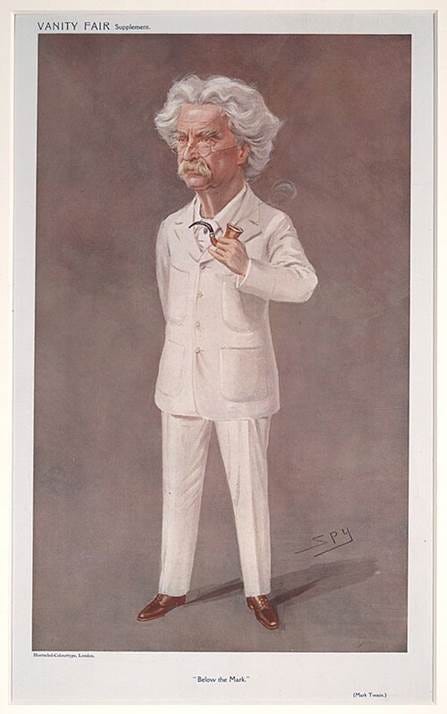
“Below the Mark.” Caricature of Mark Twain by Leslie Ward (“Spy”), Vanity Fair, 13 May 1908. Digital image courtesy of University of Virginia Fine Arts Library. Public domain.
Note: Part III of Mark Twain’s Missouri continues the exploration of places connected to Twain’s life, writings, and enduring legacy. Moving beyond Hannibal and Florida, this final installment examines how Twain is remembered in Greater St. Louis, a region that played an important role in the cultural and economic life of Missouri during his time. It also visits sites beyond the urban landscape, including Mark Twain National Forest and Arrow Rock, places that reveal the broader historical and literary landscapes associated with the state. Together, these locations demonstrate the lasting presence of Twain’s name and influence throughout Missouri.
The St. Louis Metropolitan Area
Although St. Louis never serves as the primary setting of any of Mark Twain’s novels, the city occupies an important place in his imagination and writing. Located about 100 miles south of Hannibal, St. Louis represented the larger world beyond the small Mississippi River towns that shaped Twain’s childhood. In Life on the Mississippi (1883), his memoir of the river and his years as a steamboat pilot, Twain presents St. Louis as a magnificent and rapidly growing metropolis. The city also appears in several of his fictional works, including The Adventures of Tom Sawyer (1876), Adventures of Huckleberry Finn (1884), and Pudd’nhead Wilson (1894). Together, these works reveal St. Louis as a place of economic opportunity, cultural sophistication, and urban excitement during Twain’s lifetime.
By the middle and late nineteenth century, St. Louis had become one of the most important cities in the American Midwest. Founded in 1764 by Pierre Laclède as a fur-trading settlement at the confluence of the Mississippi and Missouri Rivers, the city grew rapidly because of its strategic location. By the 1840s, St. Louis had become a major destination for immigrants from Germany, Ireland, Italy, Greece, and other parts of Europe. Its location on the Mississippi River made it a center of commerce and transportation, and it developed the nation’s second-largest river port after New York. The construction of the first railroad west of the Mississippi further strengthened its role as a gateway to the expanding American West.
Twain’s fictional references to St. Louis reflect its reputation as a major urban center. In The Adventures of Tom Sawyer, St. Louis appears briefly when a detective travels from the city to investigate the disappearance of Injun Joe. Although the reference is brief, it presents St. Louis as a place associated with professional expertise and modern institutions beyond the limits of a small Mississippi River town. The contrast between St. Petersburg, Twain’s fictionalized version of Hannibal, and St. Louis reflects the difference between rural river communities and expanding urban centers.
St. Louis plays a more visible role in Adventures of Huckleberry Finn. As Huck and Jim travel down the Mississippi River on their raft, Huck encounters St. Louis as a dazzling city of lights. From the darkness of the river, the young narrator is amazed by the sight of the city shining at night, realizing for the first time the immense scale of the world beyond his hometown. Yet St. Louis also represents danger and injustice. Later in the novel, when Jim’s escape becomes threatened by advertisements placed in St. Louis newspapers, the city becomes associated with the oppressive system of slavery that Huck and Jim are attempting to escape.
In Pudd’nhead Wilson, St. Louis represents opportunity, temptation, and modern urban life. The fictional town of Dawson’s Landing, located along the Mississippi River south of St. Louis, looks to the larger city as a place of excitement and possibility. Tom Driscoll, dissatisfied with small-town life, repeatedly travels to St. Louis seeking entertainment and pleasure. Through Tom’s experiences, Twain portrays the city as a place where individuals can find freedom and excitement but also encounter moral dangers such as gambling and irresponsible behavior.
Among Twain’s writings, Life on the Mississippi provides the richest portrait of St. Louis. As a young man growing up in Hannibal, Twain viewed the city with fascination. In his childhood memories, the arrival of steamboats from St. Louis was a major event that brought excitement and a sense of connection with the wider world. For boys in small river towns, St. Louis represented modernity, wealth, and possibility. The city was not merely a geographic location; it was a symbol of ambition and adventure.
When Twain returned to St. Louis after many years away, he found a city transformed by growth and modernization. In Life on the Mississippi, he describes its expanding population, impressive architecture, beautiful parks, and elegant neighborhoods. Although he noticed some signs of decline along the riverfront, his overall impression remained positive. He admired St. Louis as a prosperous and advancing city whose growth reflected the energy of the American Midwest during the late nineteenth century.
Today, photographs of St. Louis connected with Twain’s life and writings offer a way to revisit the city that fascinated him. The Gateway Arch, the Mississippi River, historic neighborhoods, and surviving nineteenth-century buildings preserve connections to the era when Twain knew the city. Although St. Louis no longer occupies the same economic position it held in the nineteenth century, its historical significance remains visible. For Twain, the city represented the possibilities of a changing America—a place where commerce, culture, and human stories converged along the Mississippi River.
Following Twain’s footsteps from Hannibal and Florida to St. Louis reveals the geographical range of Missouri’s influence on his life and imagination. The small river towns of northeastern Missouri shaped his childhood memories, while St. Louis represented the larger world that surrounded and transformed those experiences. Together, these places form a literary landscape in which geography and imagination are inseparable. To visit Twain’s Missouri is therefore to move not only through physical locations but also through the pages of his enduring works.
Beyond St. Louis: Mark Twain’s Legacy Across Missouri’s Landscapes
Mark Twain’s influence extends far beyond the cities and towns most closely associated with his life. Throughout Missouri, his name appears in places that reflect both the natural beauty of the state and the continuing cultural memory of its most celebrated writer. One of the most prominent examples is the Mark Twain National Forest, a vast public landscape in southern and southeastern Missouri named in honor of the author. Although Twain’s own life was closely connected with the Mississippi River and northeastern Missouri, the forest preserves another aspect of the state’s identity—the wooded hills, springs, rivers, and lakes that have long shaped Missouri’s natural heritage. Among the sites within or near this region are Lake Wappapello in southeastern Missouri and the Lane Spring Recreation Area, where visitors encounter landscapes that, while not directly connected to Twain’s biography, carry the spirit of exploration and appreciation for the natural world often associated with his writings.
Twain’s literary legacy also reaches smaller historic communities such as Arrow Rock, Missouri, a preserved nineteenth-century village along the Missouri River. The town’s historic appearance has made it an attractive location for film and television productions, including a movie adaptation of Tom Sawyer. Walking through Arrow Rock, visitors can imagine the nineteenth-century Missouri landscape that inspired Twain’s fictional river towns and rural communities.
Even modern cultural institutions continue to honor Twain’s worldwide influence. At the Springfield-Greene County Library, Twain is recognized on the library floor among dozens of other great authors, a tribute that places him within a global literary tradition. These sites, from forests and historic villages to public libraries, demonstrate that Twain’s presence in Missouri is not limited to places where he lived but extends throughout the state’s landscapes of memory, imagination, and storytelling.
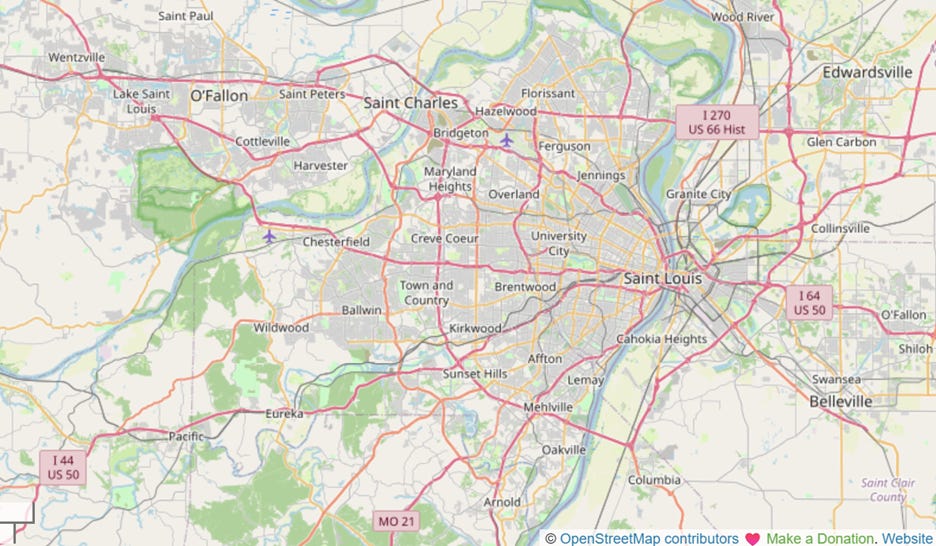
The St. Louis metropolitan area extends across the Mississippi River, encompassing communities in both Missouri and Illinois, including St. Charles County and the Metro East counties of Illinois. Composite image based on map data © OpenStreetMap contributors.
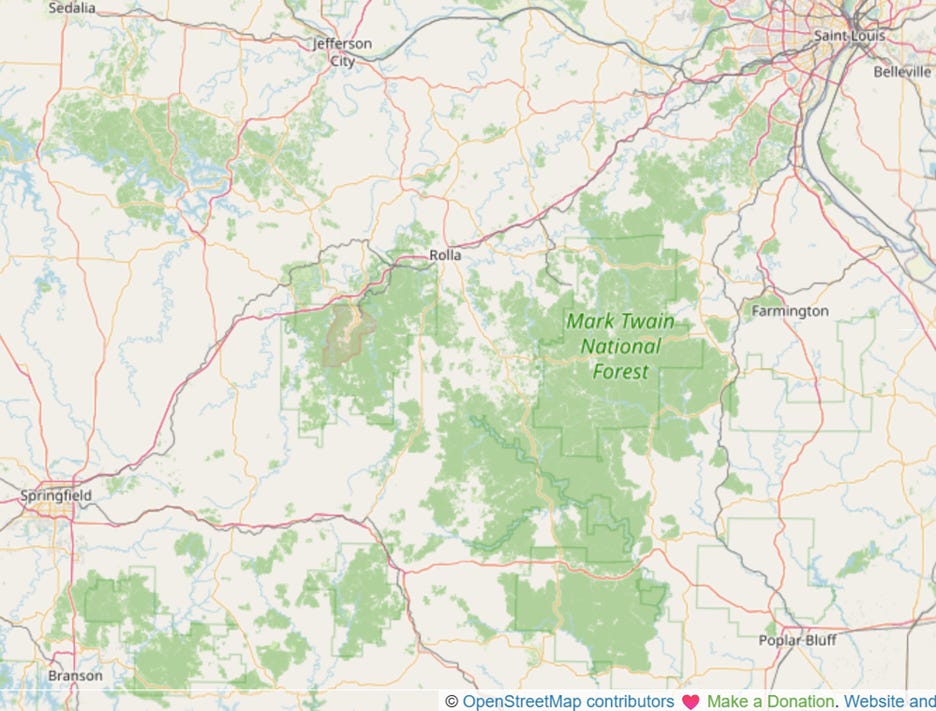
The Mark Twain National Forest stretches across a vast expanse of southern and southeastern Missouri. Composite image based on map data © OpenStreetMap contributors.
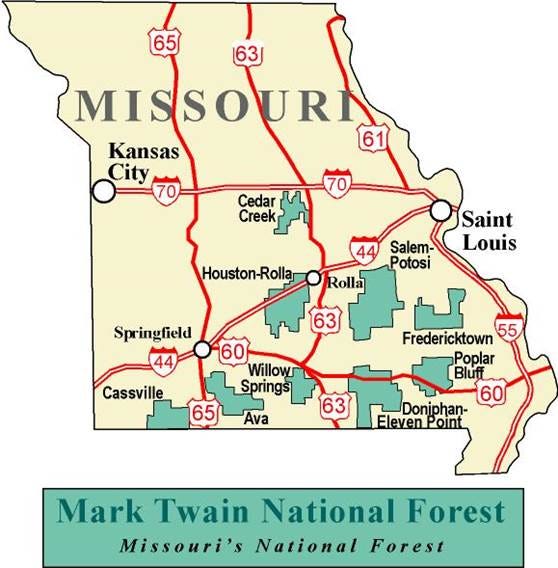
United States Forest Service. Map of Mark Twain National Forest. U.S. Department of Agriculture Forest Service, n.d. Wikimedia Commons. Public domain.
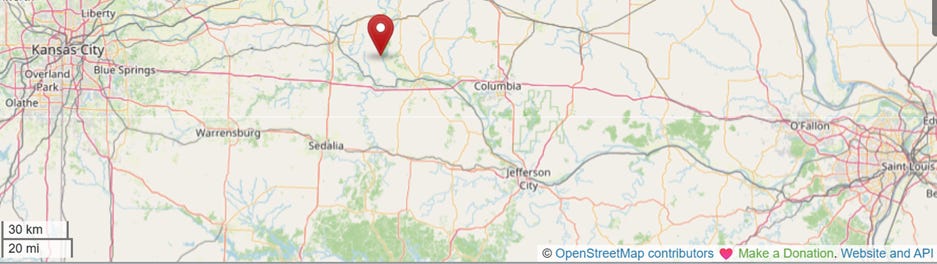
Arrow Rock, Missouri, a historic village along the Missouri River northwest of Boonville, served as one of the filming locations for the classic 1973 musical film adaptation of Mark Twain’s The Adventures of Tom Sawyer. With its preserved nineteenth-century buildings and river-town atmosphere, Arrow Rock provided an ideal setting for recreating the world of Twain’s fictional St. Petersburg. Composite image based on map data © OpenStreetMap contributors.
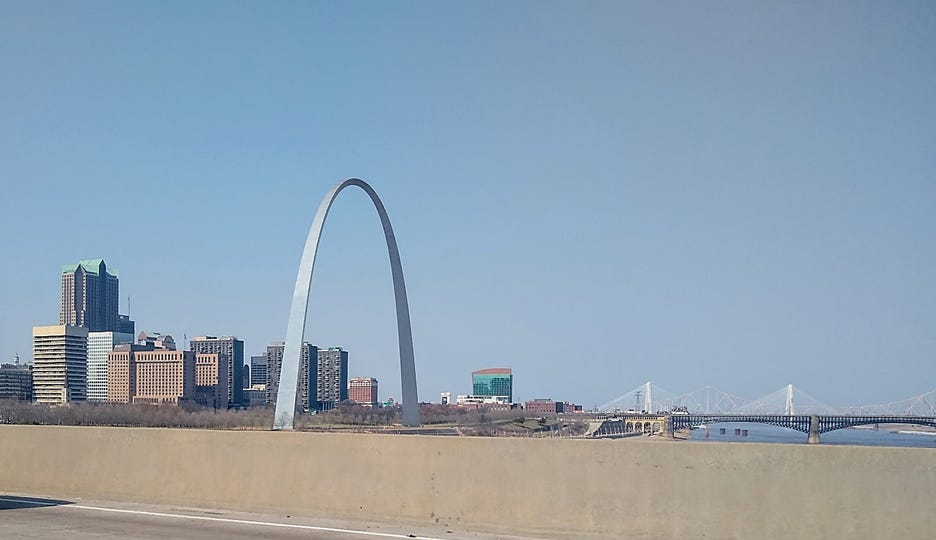
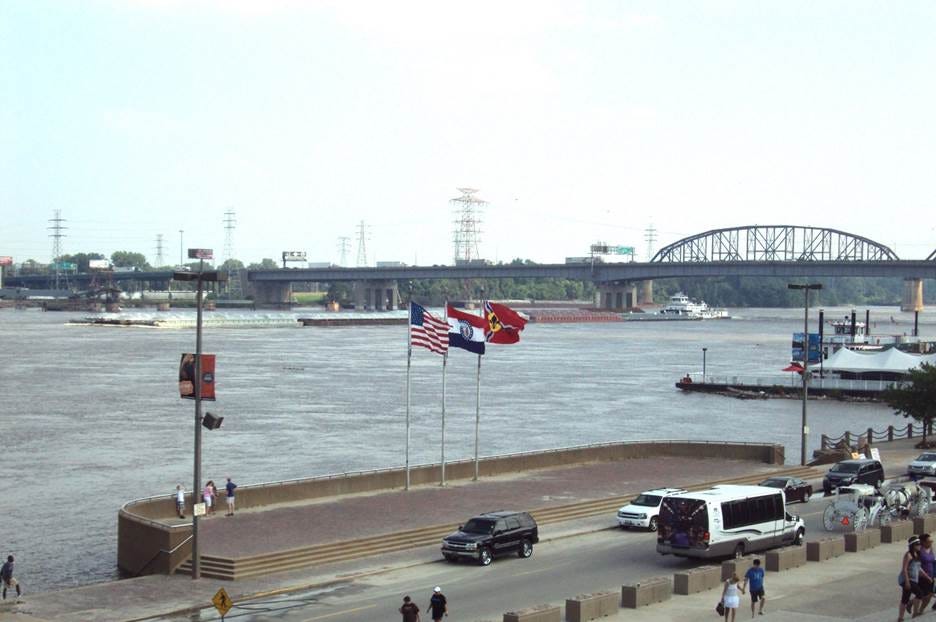
The Gateway Arch, Mississippi River bridges, and riverfront, St. Louis, Missouri
Completed in 1965, fifty-five years after Mark Twain’s death, the Gateway Arch stands as a modern symbol of St. Louis’s historic role as the “Gateway to the West.” Along the same Mississippi River that shaped Twain’s imagination and writings, the city remains a landscape of movement, commerce, and human stories. As Huck Finn observed while passing the city at night, “The fifth night we passed St. Louis, and it was like the whole world lit up” (Adventures of Huckleberry Finn). Years later, Twain recalled St. Louis as “this domed and steepled metropolis, this solid expanse of bricks and mortar stretching away on every hand into dim, measure-defying distances” (Life on the Mississippi).
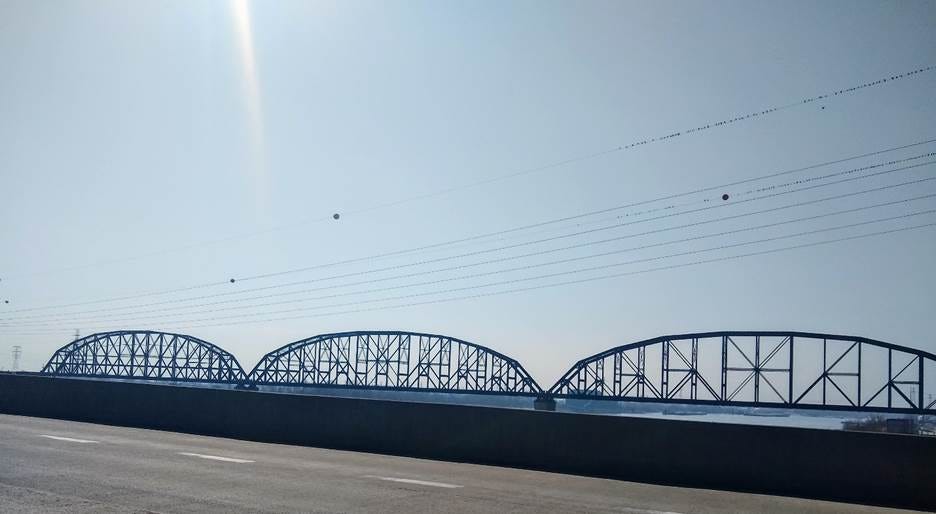



The Jefferson Barracks Bridge at sunset spans the Mississippi River south of St. Louis, linking Missouri and Illinois across the river that shaped Mark Twain’s life and writings.
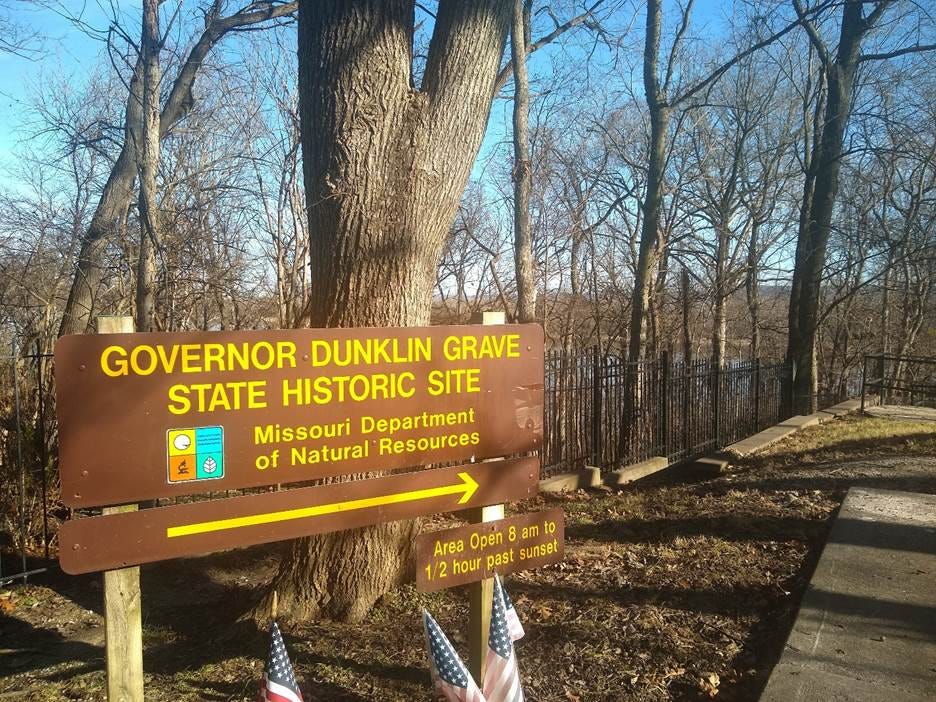
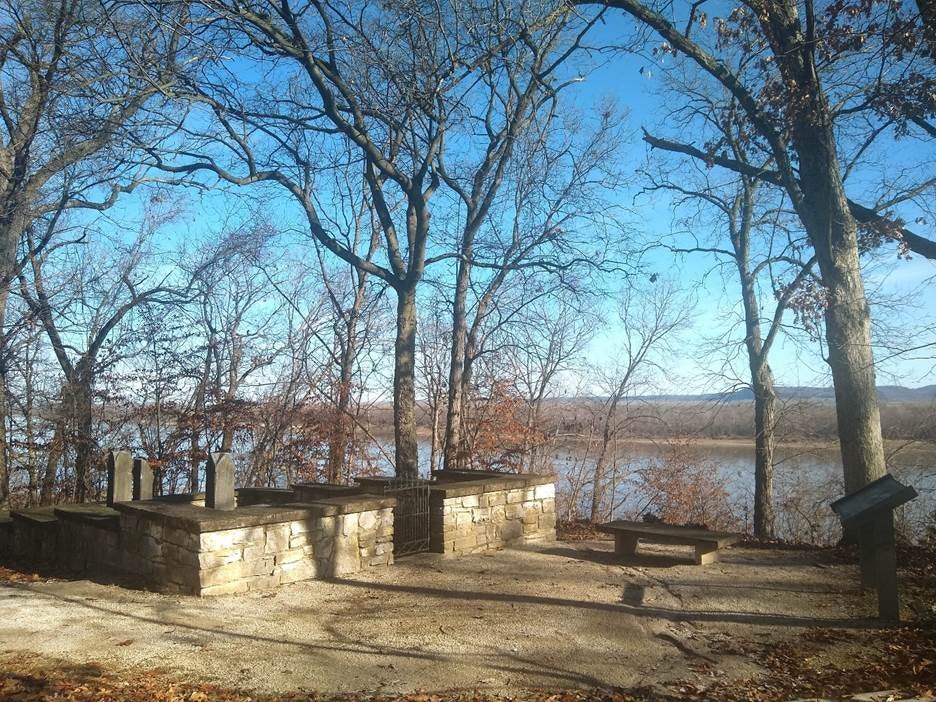
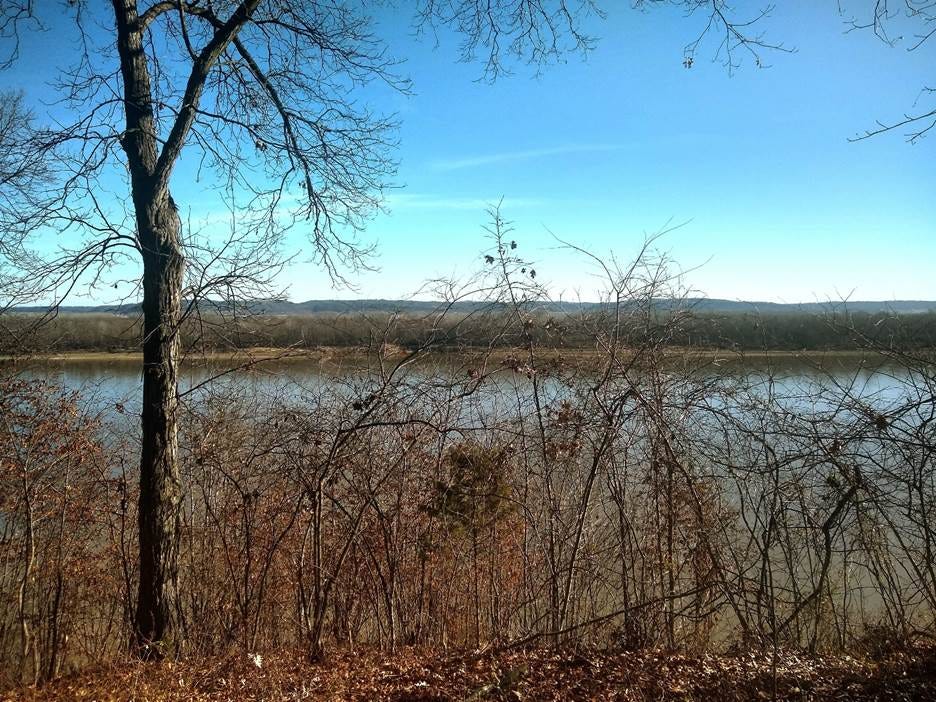
A view of the Mississippi River from Herculaneum, Jefferson County, Missouri
A view of the Mississippi River from Gov. Daniel Dunklin’s Grave State Historic Site in Herculaneum, Missouri, located about thirty miles south of St. Louis. From this quiet hillside above the river, one can see the same powerful waterway that inspired generations of Missouri writers, including Mark Twain. In Adventures of Huckleberry Finn, Huck and Jim travel past this region during their journey down the Mississippi River, making this landscape part of the literary geography of Twain’s celebrated novel.
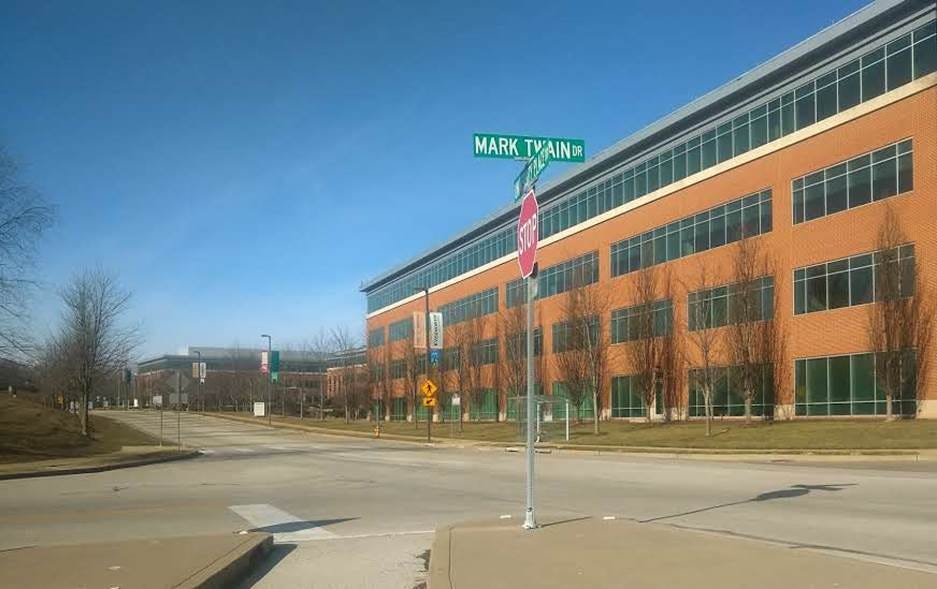
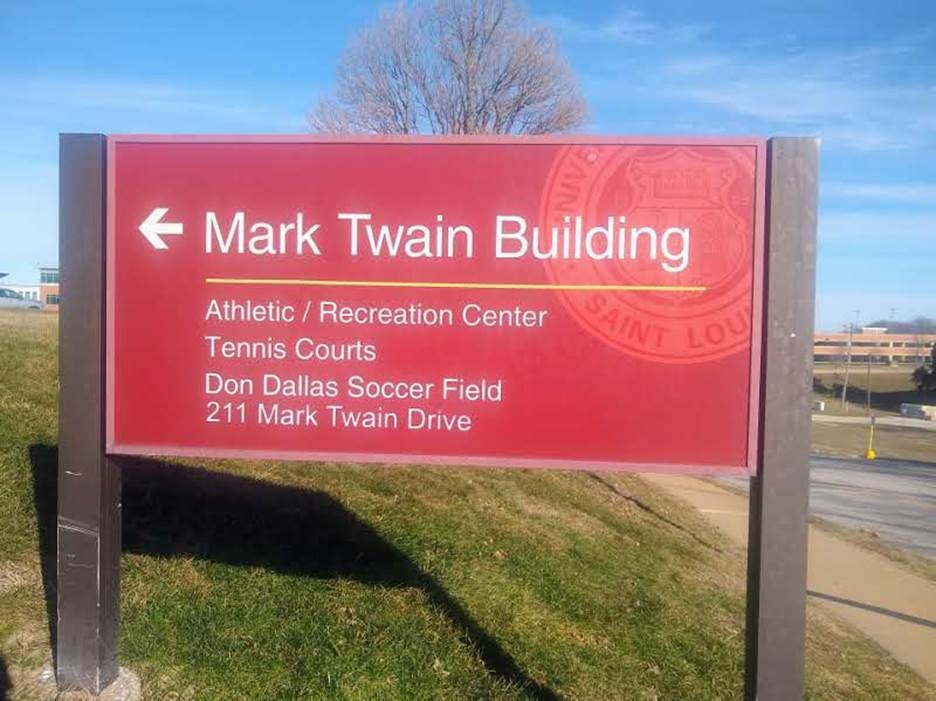
Mark Twain Drive and the Mark Twain Building at the University of Missouri-St. Louis
In a state shaped by the Mississippi River and its stories, these names preserve the legacy of Samuel Clemens—better known as Mark Twain—whose writings captured the humor, humanity, and contradictions of American life.


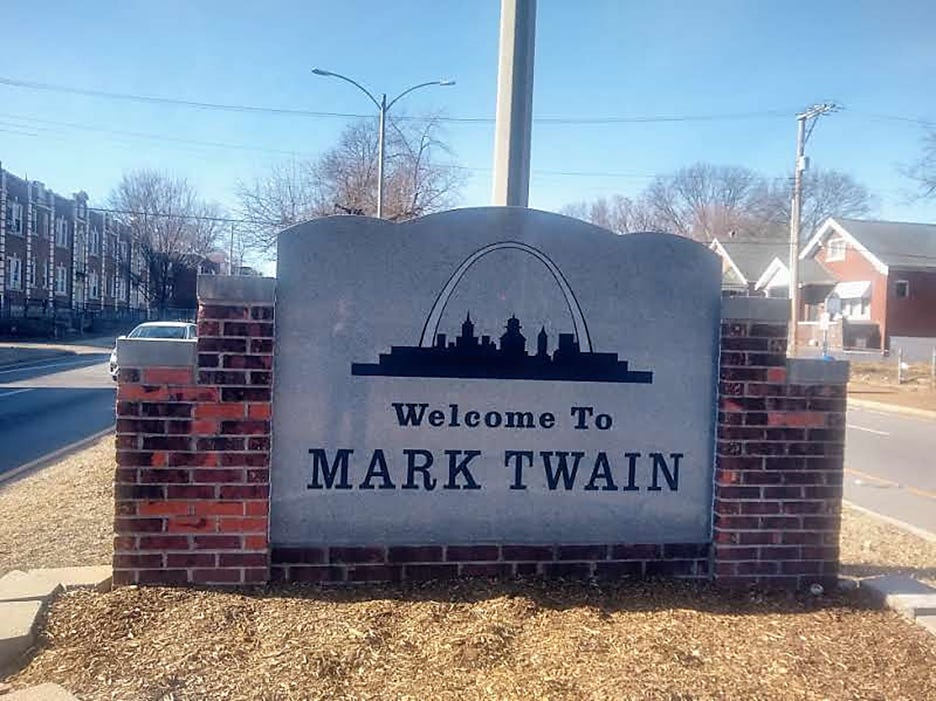
Mark Twain Neighborhood, St. Louis, Missouri
Located in northwest St. Louis, this historic neighborhood was developed in the late nineteenth and early twentieth centuries as streetcar expansion, railroad growth, and residential construction transformed former farmland into an urban community. Named after Missouri’s most famous author, the neighborhood grew around schools, churches, homes, and commercial corridors such as Union Boulevard and Kingshighway. Over time, it experienced significant demographic and economic changes, reflecting the broader history of urban transformation in St. Louis.

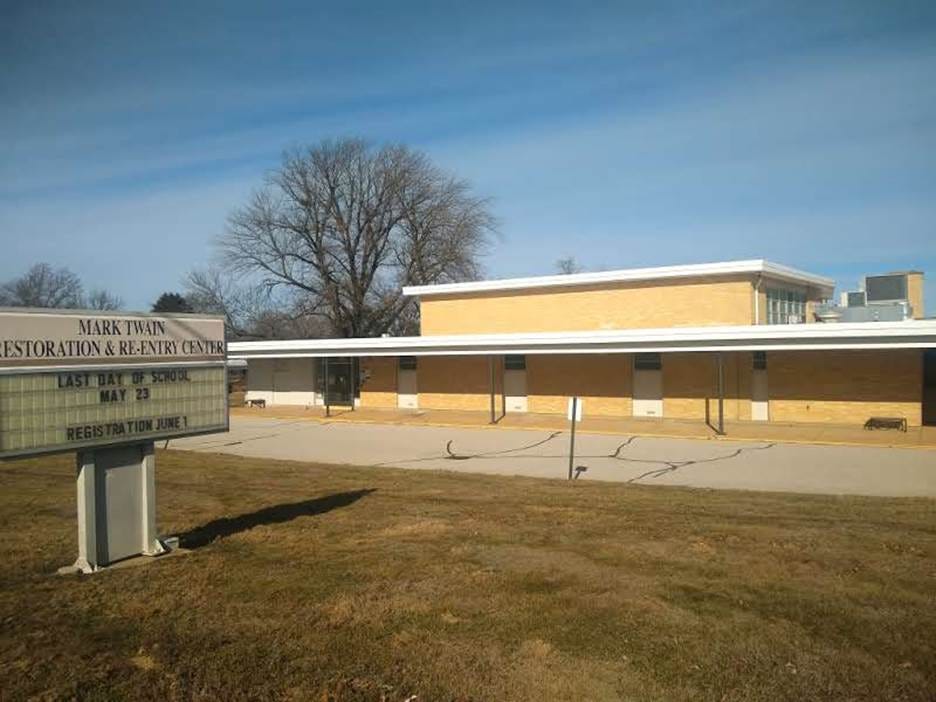
Mark Twain Restoration & Re-Entry Center, St. Louis, Missouri
One of many Missouri landmarks bearing the name of Samuel Clemens, this institution extends Mark Twain’s legacy into the modern world by emphasizing education, rehabilitation, and the possibility of personal transformation.

Mark Twain Elementary School, Brentwood, Missouri
Across Missouri, schools and public spaces preserve the memory of Mark Twain, whose writings celebrated curiosity, imagination, and the experiences of ordinary people. Located in central St. Louis County, this elementary school carries his name into a new generation, linking education with the enduring legacy of one of America’s greatest storytellers.



Mark Twain Village Shopping Center, St. Charles County, Missouri
Although a modern commercial space, its name connects everyday community life with the literary heritage of Mark Twain, whose childhood along the Mississippi River inspired some of America’s most enduring stories.



Mark Twain Hobby Center, St. Charles, Missouri
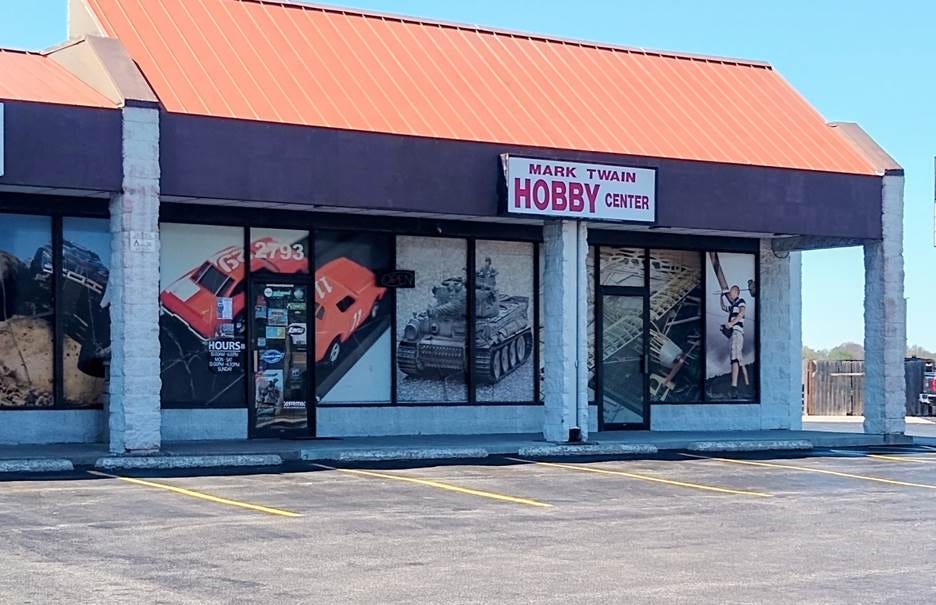
This RC enthusiast’s destination—featuring cars, trucks, aircraft, boats, drones, and accessories—extends the legacy of Mark Twain’s name into a world of imagination, exploration, and adventure. Located near the Mark Twain Village Shopping Center, it is another example of how Missouri communities continue to preserve the memory of their most famous literary figure.
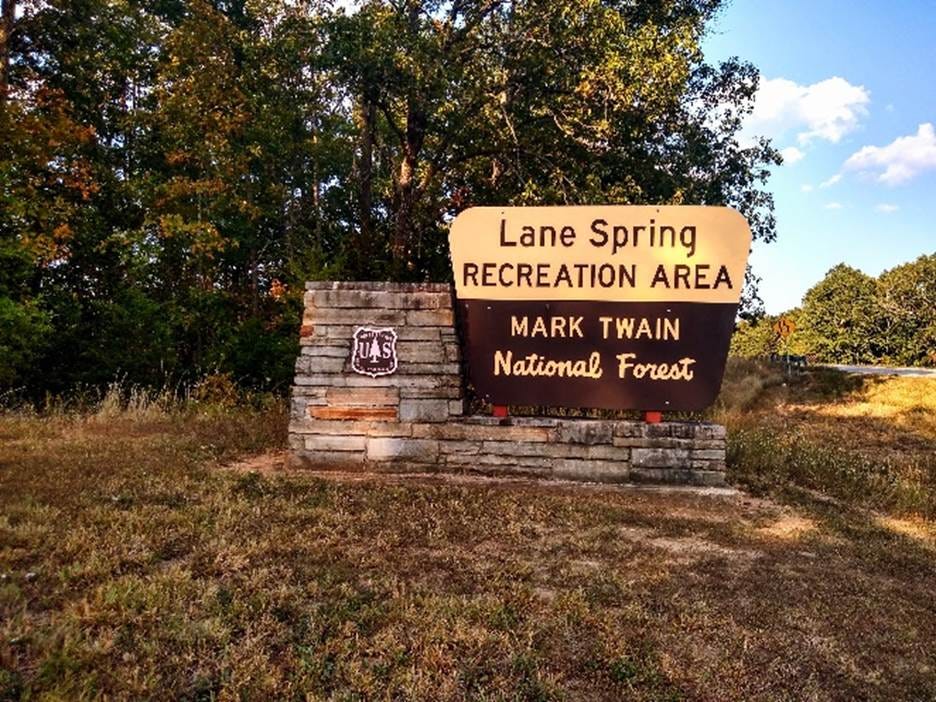
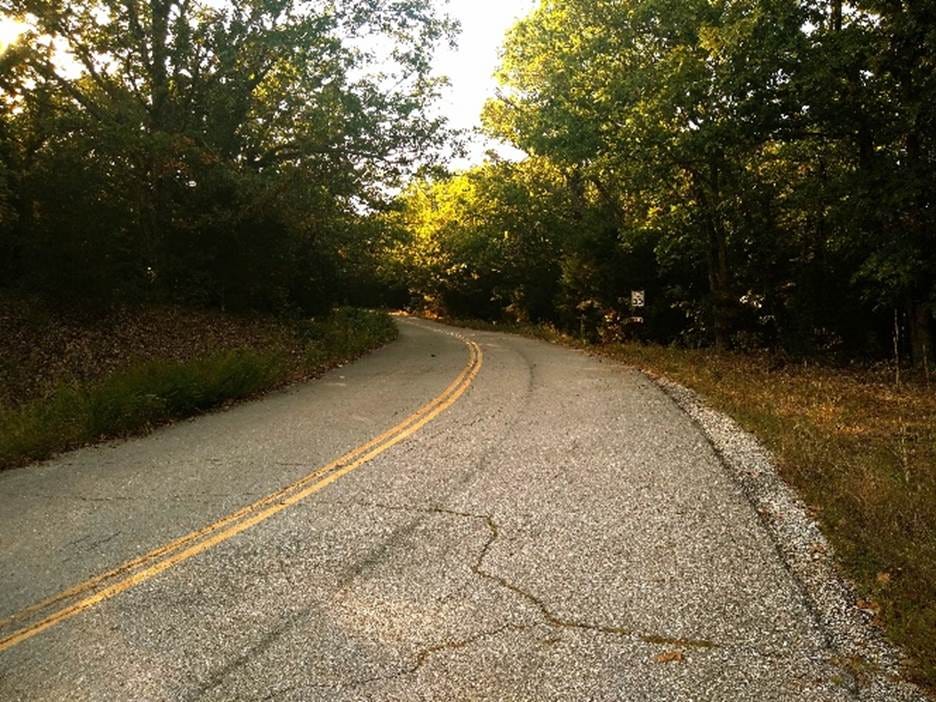
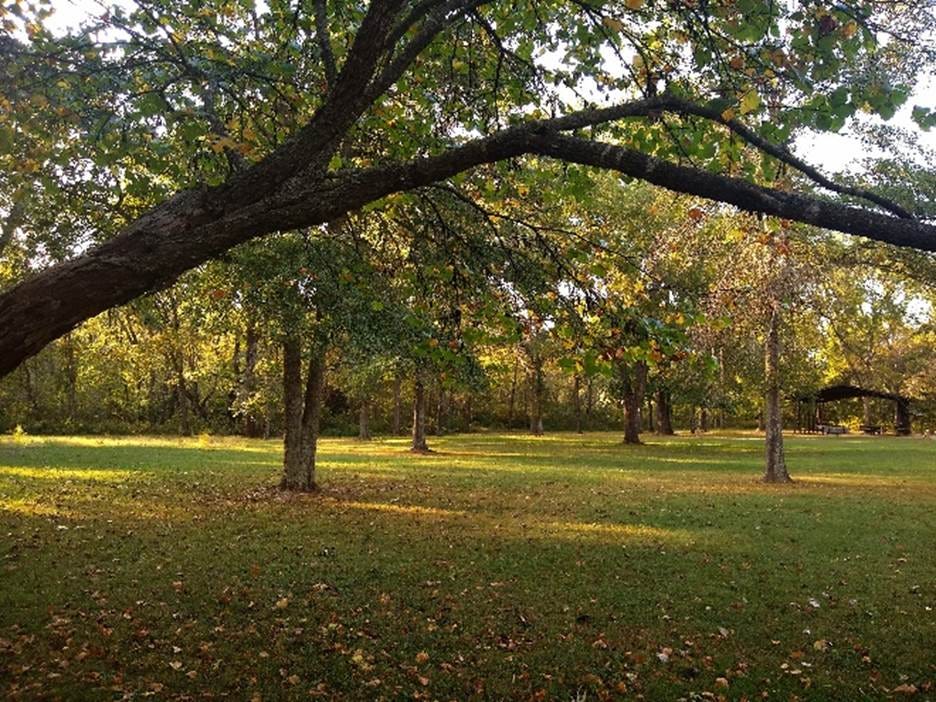
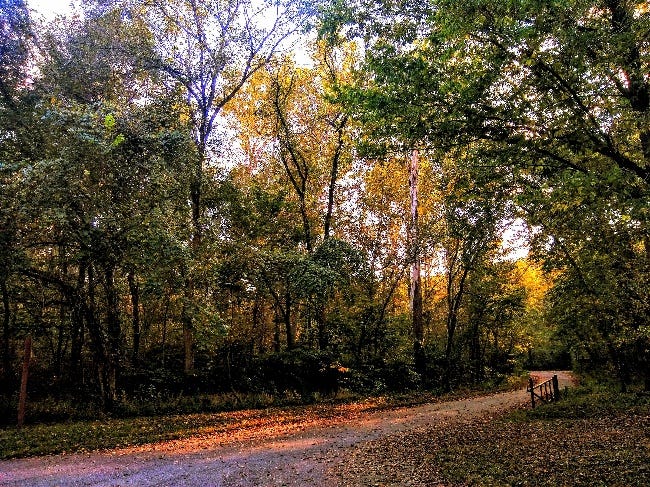
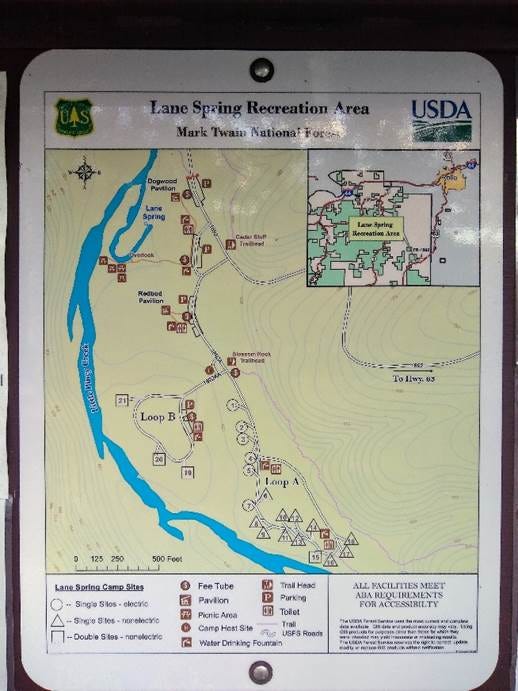
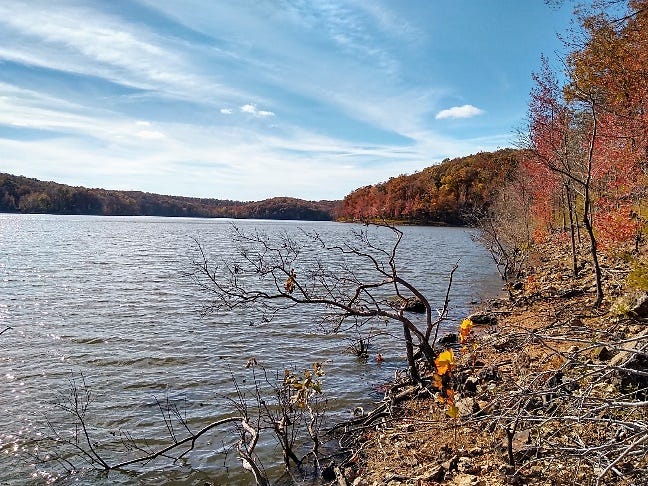
Lane Spring Recreation Area, Lecoma, Missouri
Located in the scenic Ozark Highlands, this peaceful recreation area features a historic spring, forested hills, and opportunities for camping, hiking, and enjoying the natural beauty of the Missouri wilderness. Surrounded by the rugged landscape of the Ozarks, the site reflects the kind of natural environment that inspired the naming of the Mark Twain National Forest, honoring Missouri’s most celebrated author.
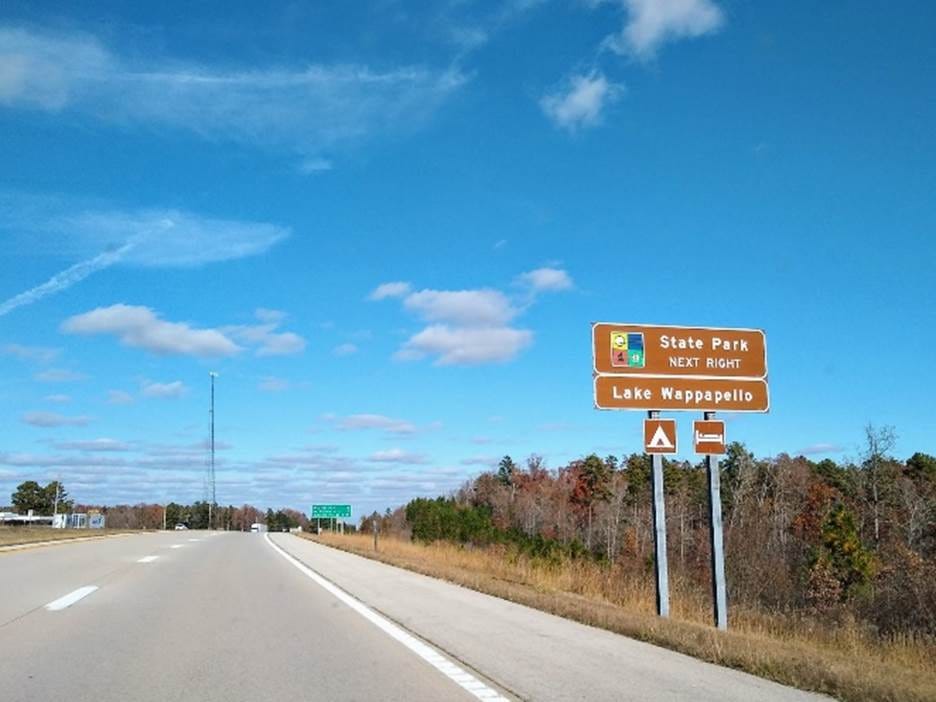
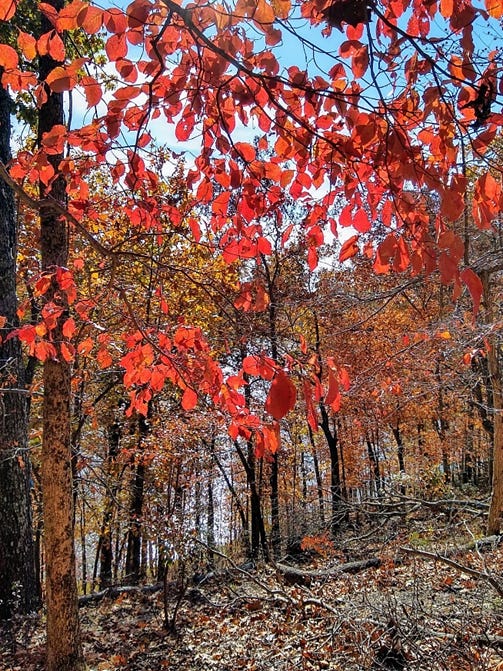
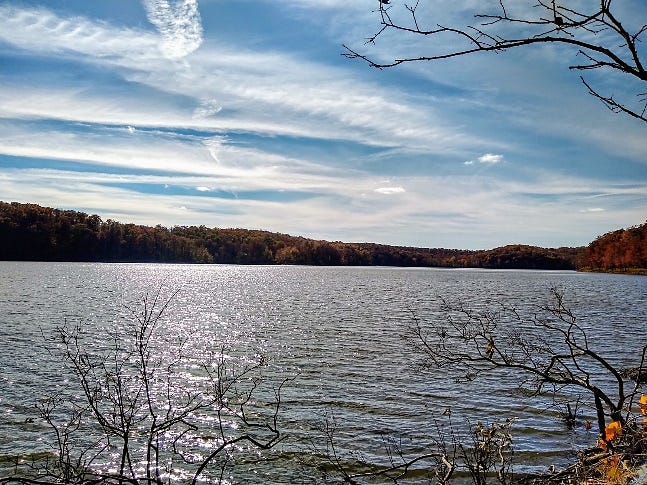
Lake Wappapello, Wayne and Butler Counties, Missouri
Surrounded by portions of the Mark Twain National Forest, this scenic reservoir offers opportunities for camping, hiking, boating, and enjoying the natural beauty of the Ozark landscape. Managed by the U.S. Army Corps of Engineers, the lake and its forested surroundings reflect the outdoor heritage of southeastern Missouri.
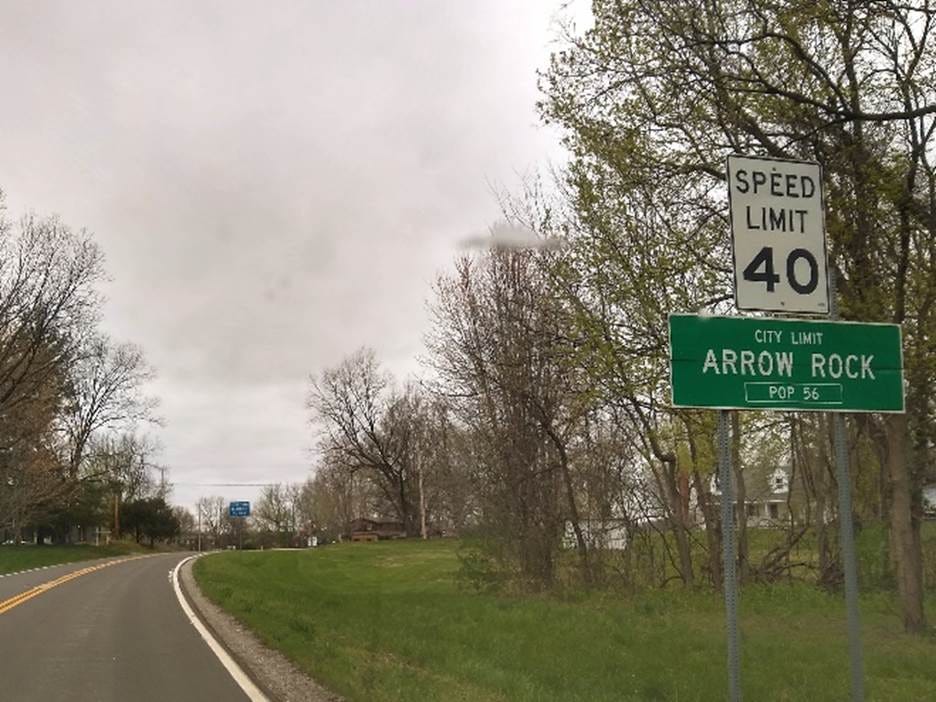
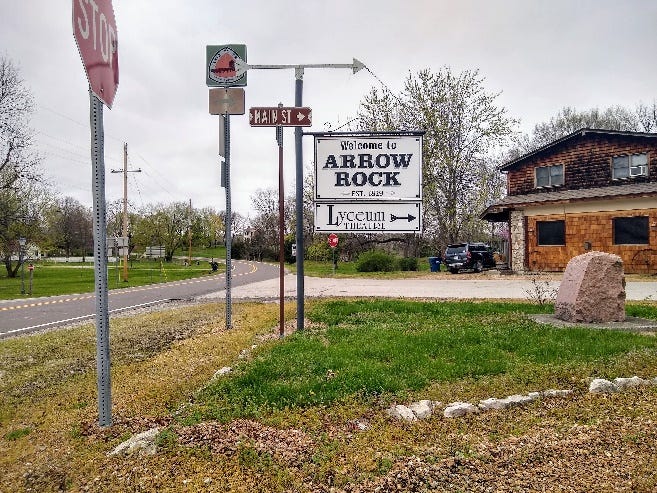
The Village of Arrow Rock, Saline County, Missouri
A National Historic Landmark village along the Missouri River, Arrow Rock provided the authentic nineteenth-century setting for the 1973 film Tom Sawyer. Filmmakers transformed the preserved community into the world of Mark Twain’s boyhood imagination, recognizing that its historic streets, buildings, and atmosphere required little set construction.
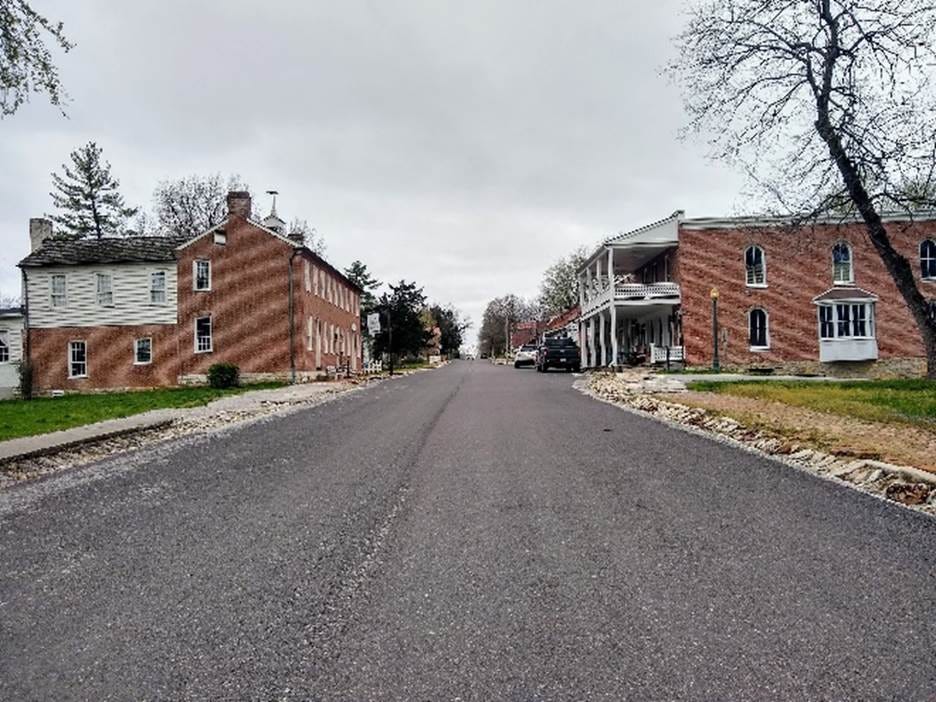
The building on the left side of Main Street in this photograph is the J. Huston Tavern, built in 1834 and recognized as the oldest continuously operating restaurant west of the Mississippi River. A centerpiece of Arrow Rock State Historic Site, the tavern preserves the architectural character and hospitality of Missouri’s historic Boone’s Lick Country, offering visitors a glimpse into nineteenth-century frontier life.
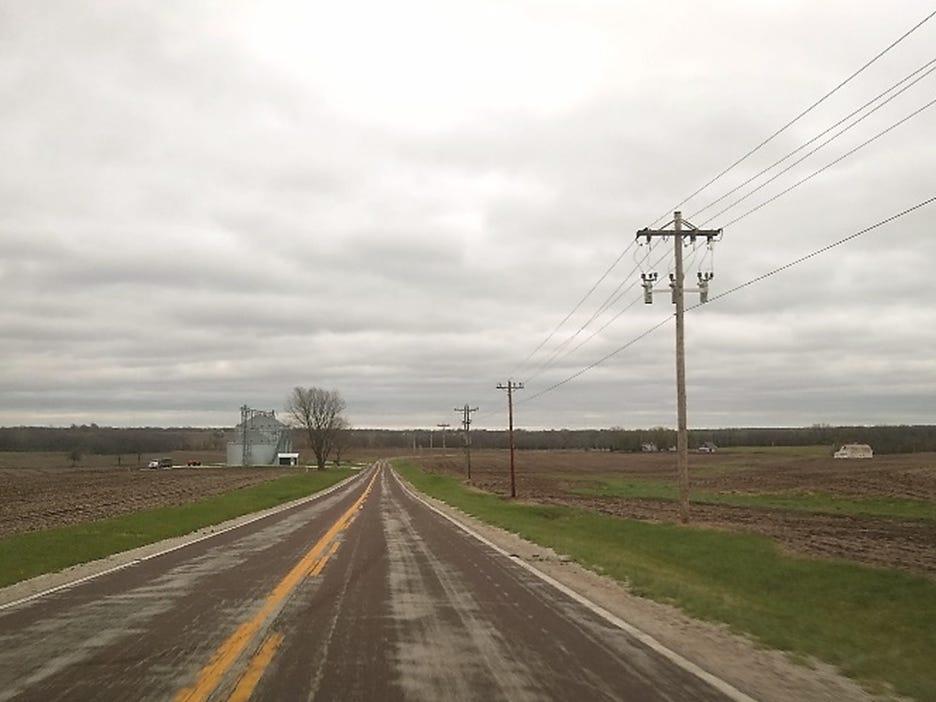
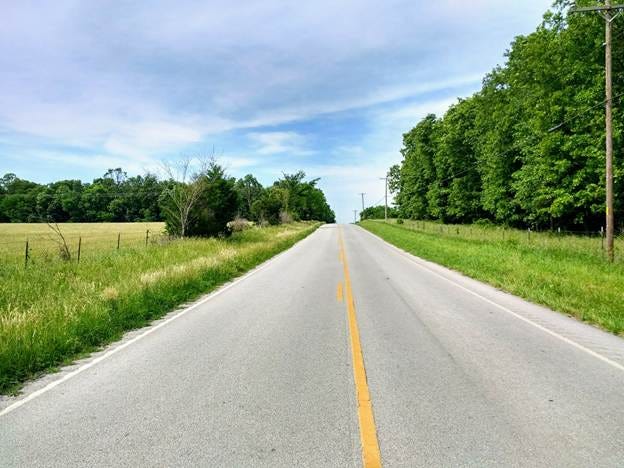
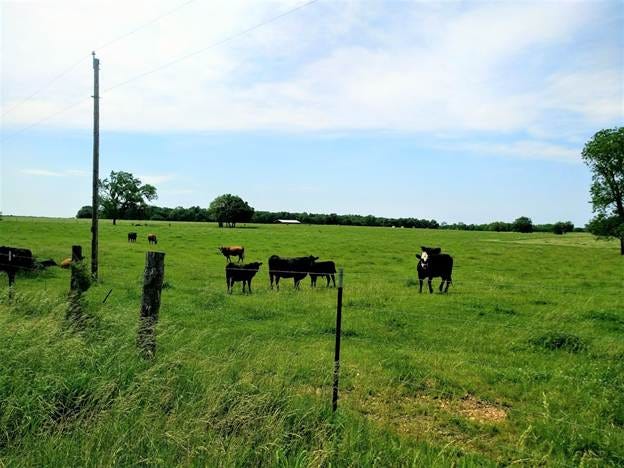
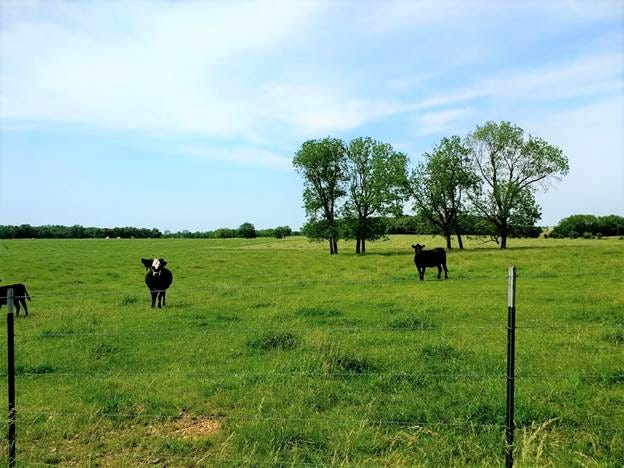
This photo was taken on the way from Arrow Rock to Interstate Highway 70. Having grown up in the countryside, I find something deeply refreshing and comforting about driving through this kind of agricultural landscape—with little to no traffic, open fields, and wide horizons stretching endlessly across the Missouri countryside.
Springfield-Greene County, Missouri, Library
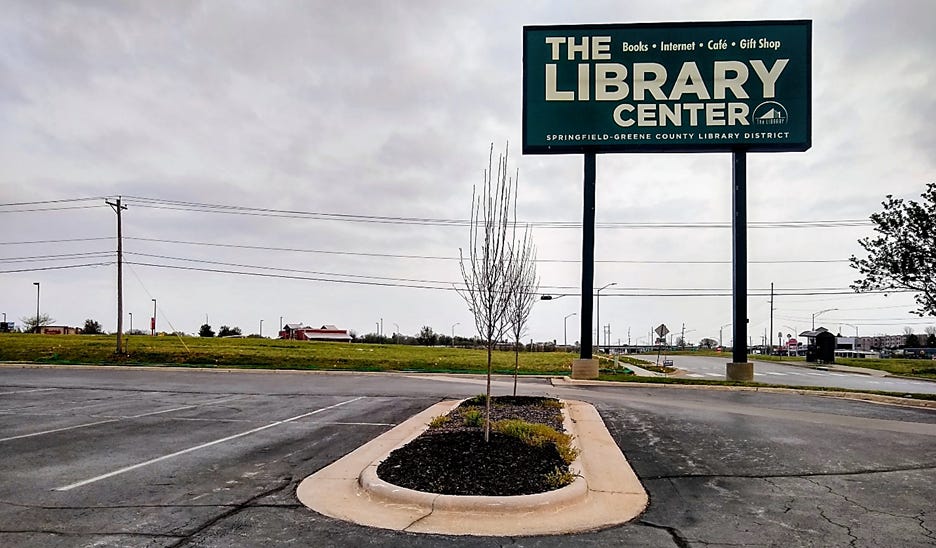

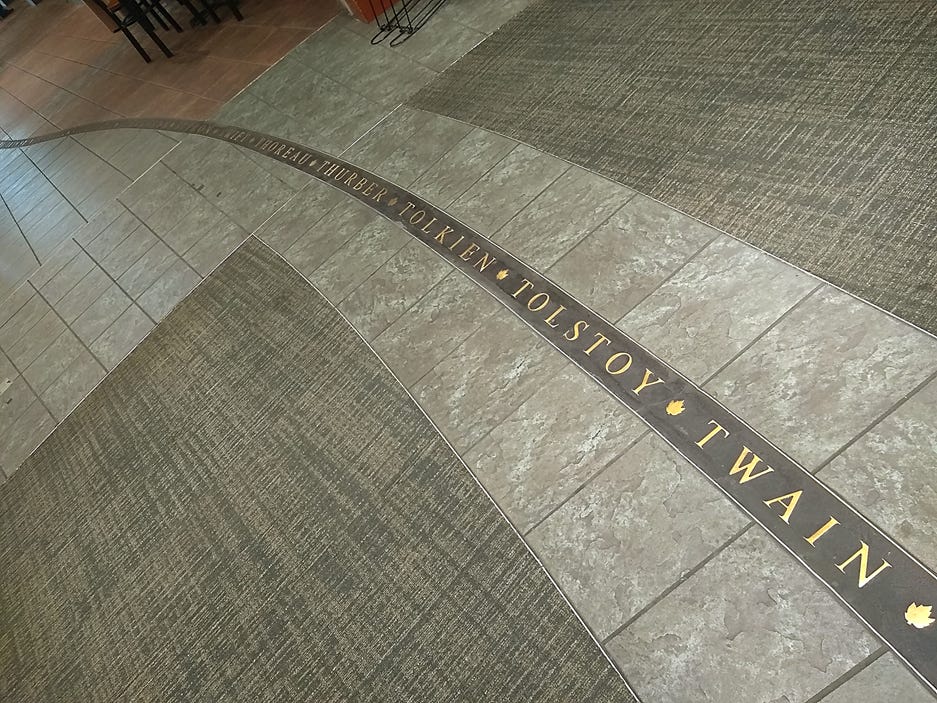
Mark Twain’s name is inscribed on the floor of the Springfield-Greene County Library Center in Springfield, Missouri, among a select group of celebrated authors, including Thoreau, Thurber, Tolkien, and Tolstoy.
Pierce City, Lawrence County, Missouri
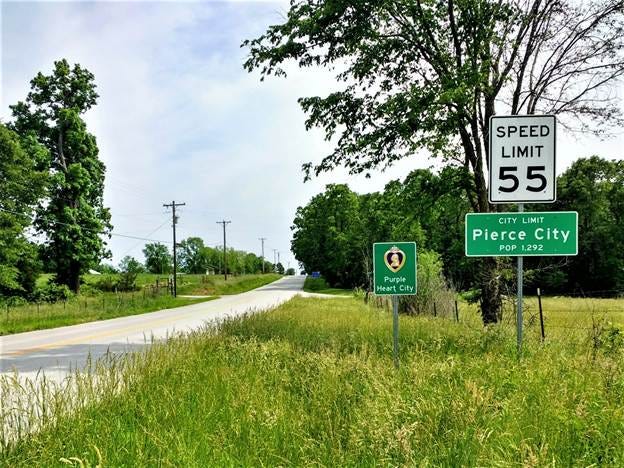
Pierce City became national news in 1901 due to the August 19, 1901, lynchings of three Black residents near the city. The incident inspired Mark Twain to write the powerful essay “The United States of Lyncherdom,” a condemnation of racial violence and injustice. Due to censorship, the essay was published posthumously in Europe and Elsewhere (1923), a collection of Twain’s nonfiction works edited by Albert Bigelow Paine. The essay opens with these words:
And so Missouri has fallen, that great state! Certain of her children have joined the lynchers, and the smirch is upon the rest of us. That handful of her children have given us a character and labeled us with a name, and to the dwellers in the four quarters of the earth we are “lynchers,” now, and ever shall be.
The city’s website does not mention the lynchings, instead stating, “After the black population left in 1901 and the land rush moved west with the railroads, Pierce City’s business focus turned more local. […] Pierce City […] looks forward to an active and progressive future” (https://piercecitymo.com/).
When I visited the Harold Bell Wright Museum in Pierce City in May 2022, one of the docents told me that this pastoral city in the southwestern corner of Missouri had made the front page of The New York Times twice in its history: the 1901 Black lynchings and the May 2003 tornado that swept through the city. He added that a small group of city residents gathers annually to honor the three Black victims of the lynching.
About the Author

Professor of English and Creative Writing and Associate Dean of the School of Humanities and Theology, Missouri Baptist University
John J. Han, PhD, is the author, editor, co-editor, or translator of 35 books. His forthcoming book, Echoes from the Hills: Critical Essays on Ozarks Literature (co-edited with C. Clark Triplett), will be published by the University of Arkansas Press. He has also published more than 3,000 poems in a wide range of journals and anthologies. In addition to his long tenure at Missouri Baptist University, he has taught at Kansas State University, the University of Nebraska–Lincoln, Nebraska Wesleyan University, and Washington University in St. Louis. He has also served as a visiting scholar at Georgia College & State University and the University of Ljubljana in Slovenia.
© K-Global Scholars and Professionals Forum. All rights reserved. Content published in the K-GSP Forum may not be reproduced, distributed, or transmitted in any form without prior written permission from the K-GSP Forum, except for brief quotations with full attribution.