

Gwangyang and Hadong: The Seomjin River Nourishes Literary Imagination
From mid- to late June 2006, I stayed in South Korea on my way to a conference at Qingdao University in China. My schedule was packed. I first visited Handong Global University in Pohang as a guest lecturer and toured Gyeongju, a historic city in southeastern Korea. I then presented a paper at an international conference at Chungbuk National University. A few days later, I traveled to Gwangyang, South Jeolla Province, to visit poet Song Su-kwon (1940-2016), then a professor of poetry writing at Suncheon National University. I first visited his writing shack along the Seomjin River, and then he and I crossed the river to tour sites associated with Park Kyoung-ni’s celebrated novel The Land. Our day together ended at Ssanggye Temple, a place mentioned in Kim Dong-ri’s short story “The Post Horse” (1947). It was a pleasure to spend the entire day with him, sharing lunch and dinner and talking about poetry and regional culture. Because I felt a personal connection with him as a budding poet from the same province, I promised to translate some of his poems for publication in a book. The project took longer than I had anticipated, but I eventually published the collection a year before his death.
Although I have read and studied Korean poetry since childhood, no other poet has influenced me as directly as Song. Perhaps our shared roots—growing up in rural areas of the same province, speaking the same dialect, and viewing life as a sea of suffering without surrendering to despair—explain my deep attraction to his work. Through his poetry, I rediscovered my native culture and learned to draw poetic ideas and images from my own life and remain true to my feelings. His sensory imagery, East Asian sensibility, empathy with nature, and celebration of rural life taught me how poetry can resonate with readers. Although I write mostly haiku and other Japanese-style poetry, Song has influenced me more than even the four Japanese haiku masters I greatly admire: Basho, Buson, Issa, and Shiki. Translating his poetry has been one of the most gratifying experiences of my professional life.
It was equally meaningful to explore with Song the settings of Park Kyoung-ni’s The Land, only about thirty minutes from his writing shack across the Seomjin River. This was my first visit to South Gyeongsang Province, and I was delighted to see the bridge connecting the two provinces as a symbol of harmony and shared prosperity. Hwagae Market in Hadong likewise celebrates the cultural kinship between the people of the two provinces, despite their distinctive regional dialects. Park Kyoung-ni spent a quarter century completing her epic novel, making it especially meaningful for me to visit the landscape where its opening section unfolds. The journey brought together three things that have shaped my literary life: my native region, Korean literature, and my own development as a poet.
This photo essay presents photographs from Gwangyang, Hadong, and Ssanggye Temple, three places closely connected to modern Korean literature. Together, they reveal how the landscape along the Seomjin River has nurtured literary imagination and brought writers, readers, and neighboring communities together.
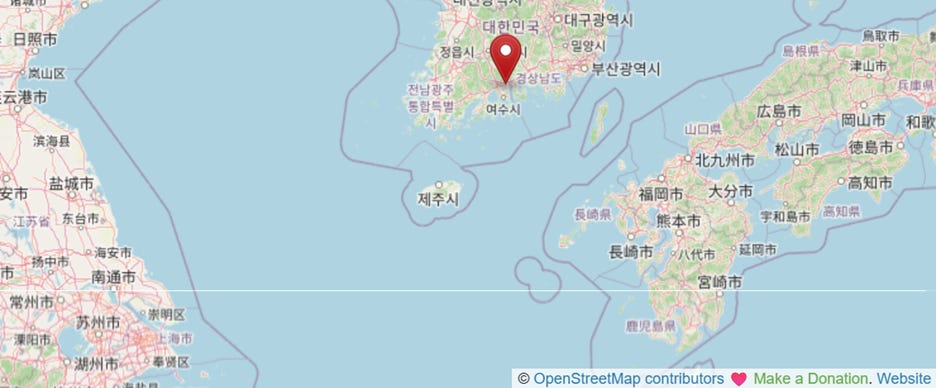
Map of Gwangyang and Hadong: Gwangyang in South Jeolla Province and Hadong in South Gyeongsang Province are separated by the Seomjin River, which flows southward into the South Sea. Composite image based on map data © OpenStreetMap contributors.
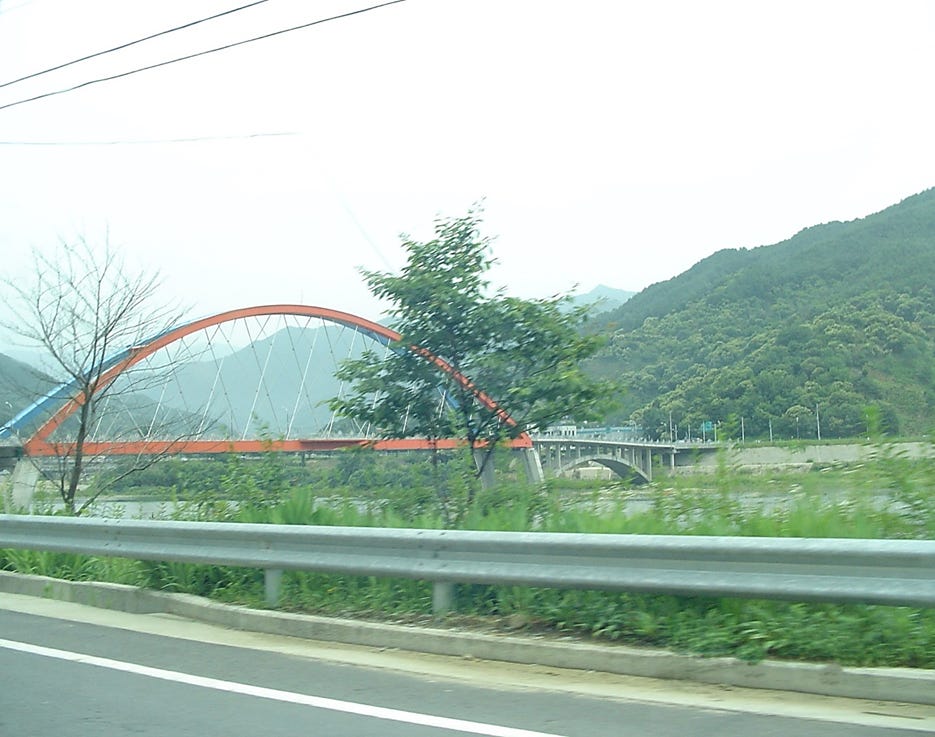
Namdo 2 Bridge: Completed across the Seomjin River, Namdo 2 Bridge connects Akyang-myeon in Hadong County, South Gyeongsang Province, with Dap-myeon in Gwangyang, South Jeolla Province. The bridge provides a new link between the two municipalities and facilitates travel between the communities on opposite sides of the river. It also serves as a symbol of harmony and friendship between the Jeolla and Gyeongsang regions, which have often been divided by political rivalries and animosities fueled by self-serving politicians. All the photos in this essay were taken on June 15, 2006.
Poet Song Soo-kwon’s Writing Shack in Gwangyang, South Jeolla Province
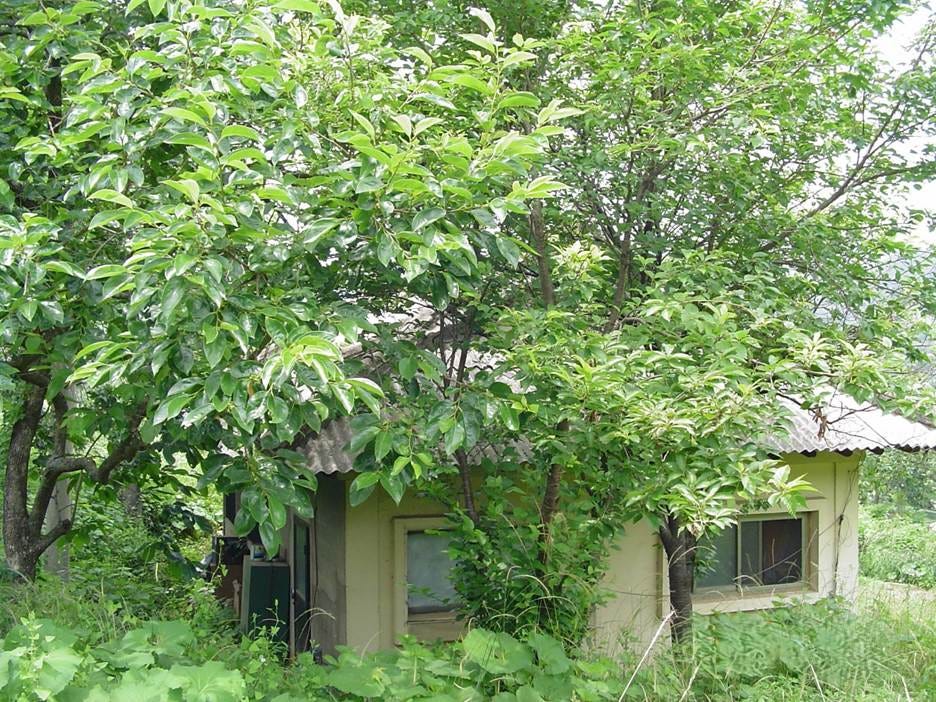
Poet Song Soo-kwon’s writing shack in Gwangyang along the Seomjin River. Its serene, lush surroundings provide an ideal setting for poetic imagination.
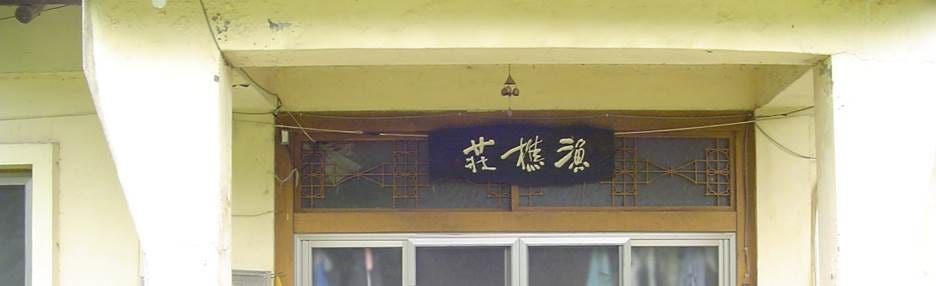
Above the entrance to the writing shack hangs a wooden plaque inscribed 漁樵莊 (Korean: 어초장), meaning “Fisherman and Woodcutter’s Retreat.”
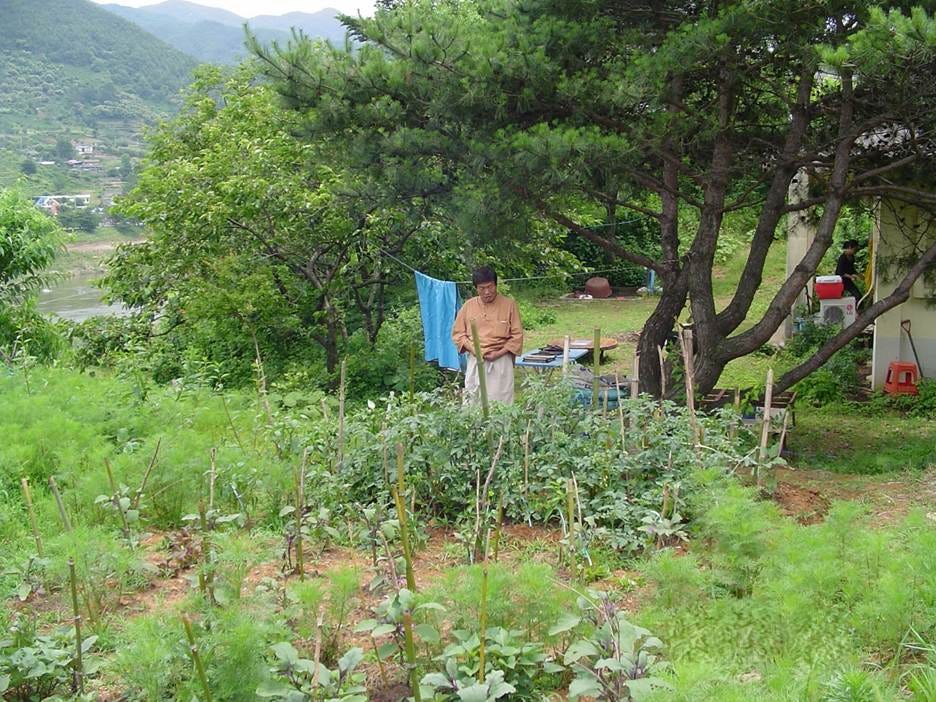
Poet Song Soo-kwon checks on his vegetable garden. To the left, the Seomjin River flows southward; across the river lies South Gyeongsang Province.
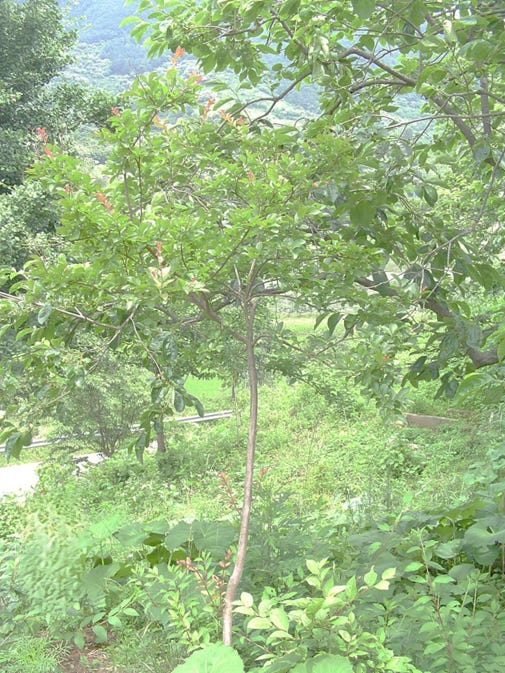
Greenery surrounds poet Song Soo-kwon’s writing shack.
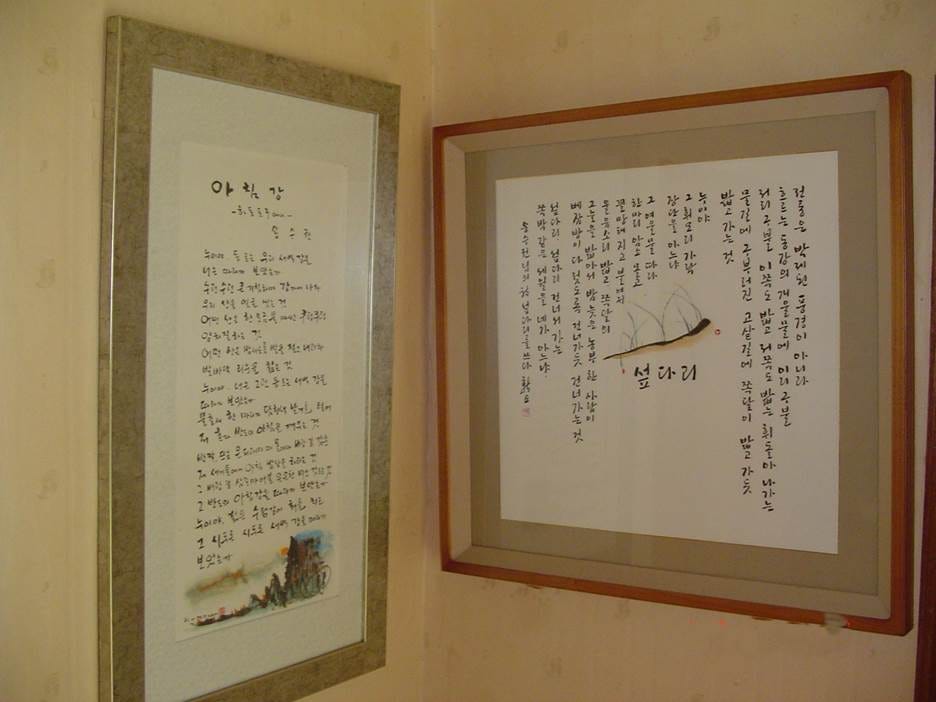
Two of Song’s poems, accompanied by illustrations, adorn the walls of his otherwise modest and functional living room. They are titled “아침강” (“Morning River”) and “섶다리” (“Brushwood Bridge”), a temporary bridge made of pine branches and earth.
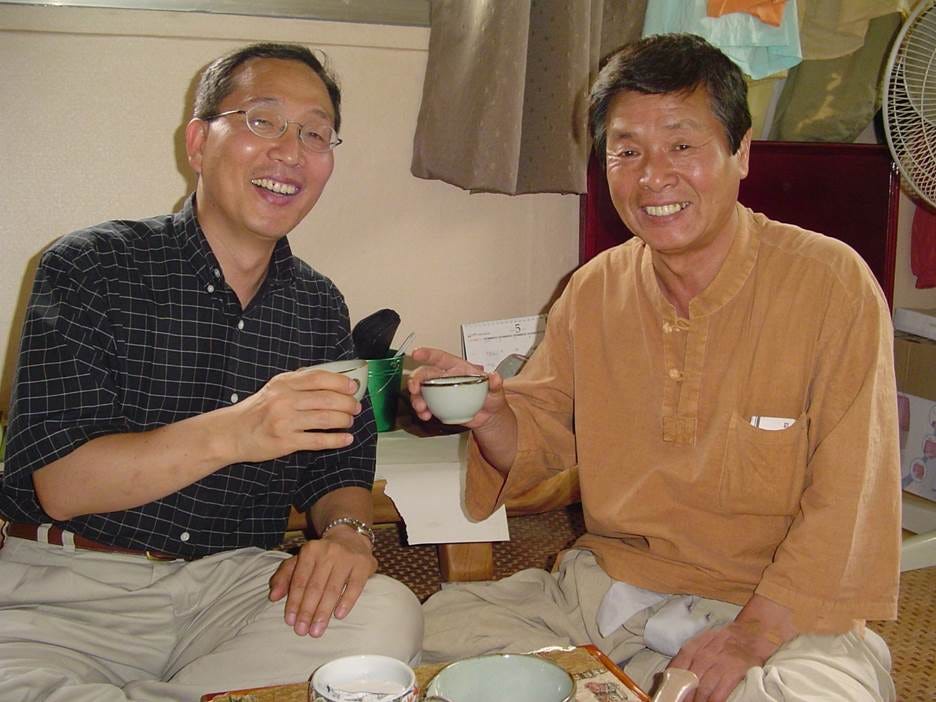
Drinking tea with poet Song Soo-kwon (right) in his living room.
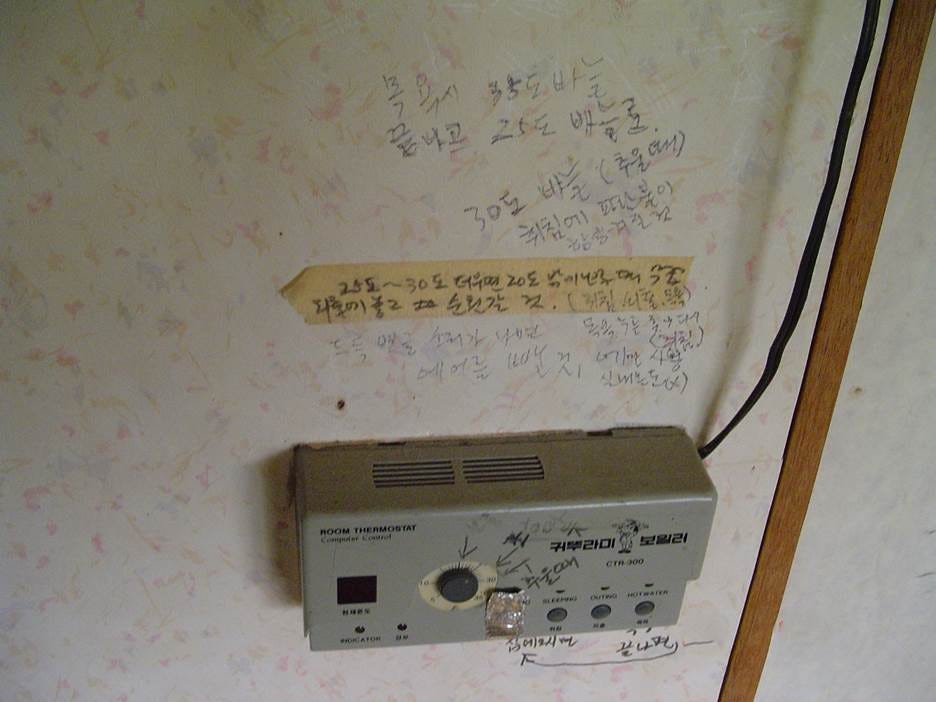
Poet Song Soo-kwon’s wife left written instructions on the wall explaining how to set the electric switches to the proper temperatures, what to do when leaving the house, and what to do upon returning. Poetry was his entire world, so he often needed reminders about some of life’s practical details. Fortunately, his wife was a loyal, proud, and supportive companion throughout his life.
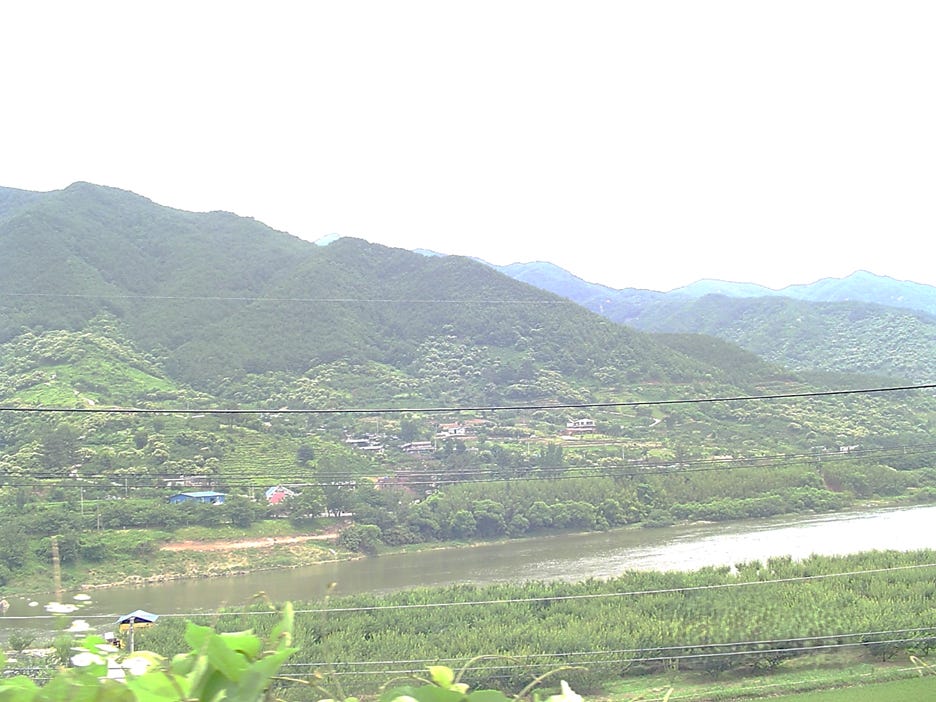
After leaving the writing shack, poet Song Soo-kwon and I headed toward Hadong County, across the Seomjin River. We were still in Gwangyang at this point.
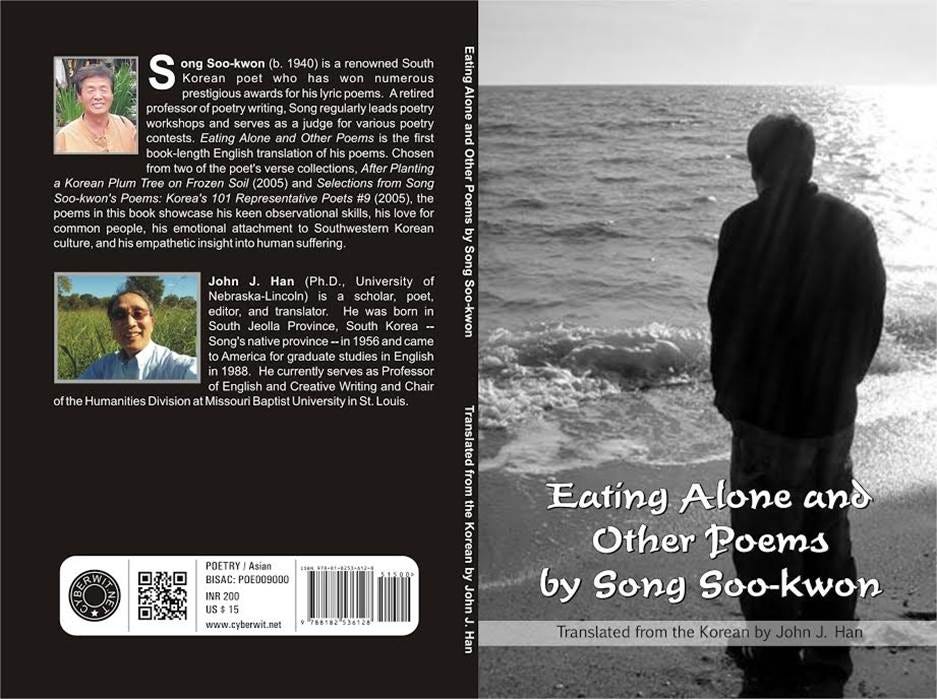
One year before his death in 2016, I translated forty-two of Song Su-kwon’s poems, with an introduction and notes, and published the collection under the title Eating Alone and Other Poems by Song Soo-kwon (Cyberwit). He was delighted to receive copies of the book. Below are three poems from the collection, each of which is set in his writing shack (Eochojang) or its surrounding landscape.
Yi Cheong-jun’s Hat: A Reply to Yi Cheong-jun’s “Song for Eochojang’s Old Man”
Anyone who has seen the river wind
blow away a hat knows this.
Tangled in the wind, his silver hair looks desolate
as he watches helplessly as his hat floats down the river.
With no chance of retrieving it from the water,
he realizes that his life, too, is waning like the disappearing hat.
Startled, the old man stops casting his line into the river.
He watches the hat drift farther away
until it vanishes without a trace.
The lone sandbank on the other side of the river
is ablaze in the setting sun.
*
Causality
My beloved Zhong [Song’s pet] died.
I buried him under the persimmon tree on the hill of Eochojang.
The following spring, verdant persimmon leaves barked,
“Bow-wow!”
*
My Love
Dogwood blossoms in the mountain village yonder—
let them fall.
Plum blossoms in the river village down yonder—
let them fall.
Apricot, peach, and cherry blossoms—
let them all fall.
Pear blossoms at the mouth of the river—
let them all fall.
This spring, meeting these flowers along the river does not sadden me.
This spring, I have something I really want to rub my cheeks against—
the persimmon buds in the sun-drenched orchard.
This spring, I have something I trust.
Light green buds swell, shy beneath the sunlight.
Likewise, my love swells, and my heart beats faster.
The sun shines on the persimmon buds.
I gasp, rubbing my cheeks against them and whispering to them.
My love amounts to the joy I share with those buds.
Hadong: Made Famous by Park Kyoung-ni’s Epic Novel The Land (1969-1994)
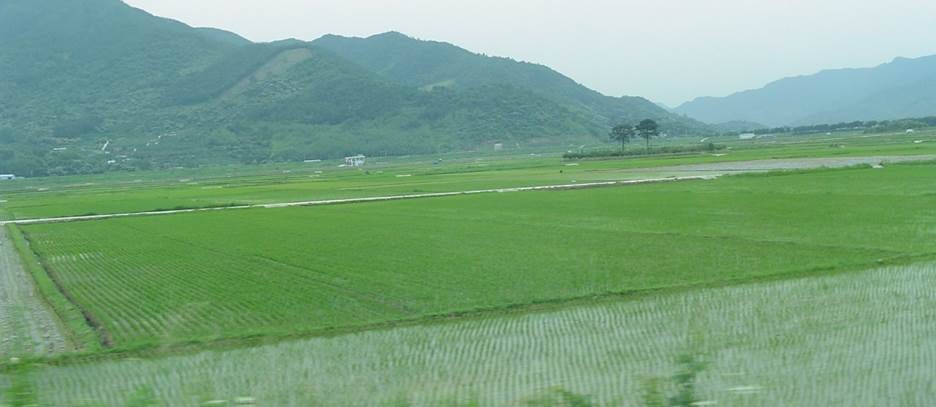
We have arrived in Hadong. Outside our car, rice fields are filled with young rice seedlings, with the harvest season about three months away.
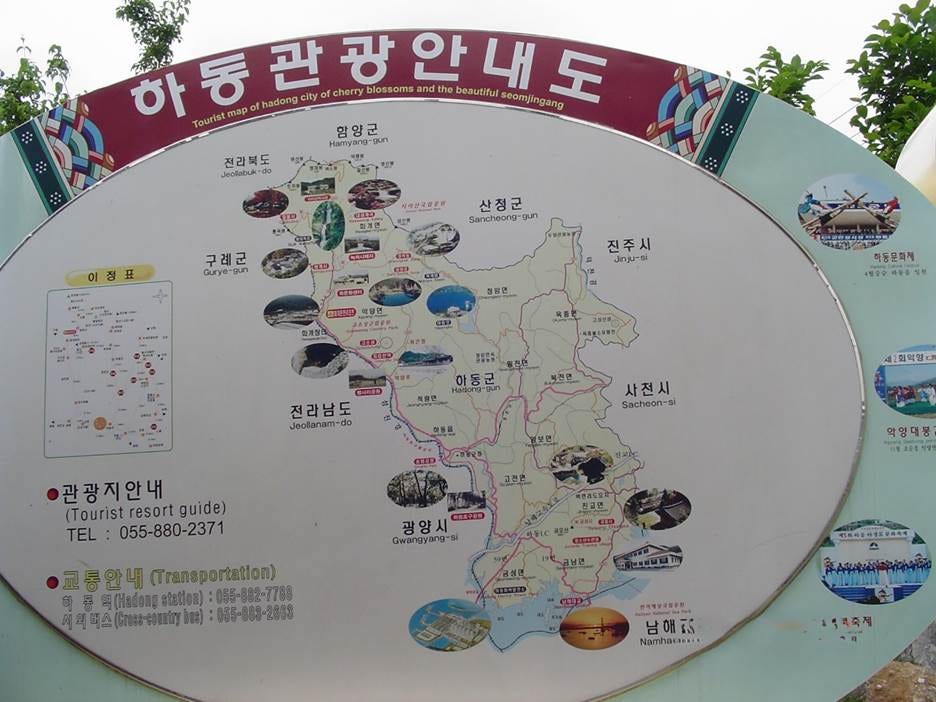
A tourist map of Hadong County, known for its cherry blossoms and the Seomjin River.
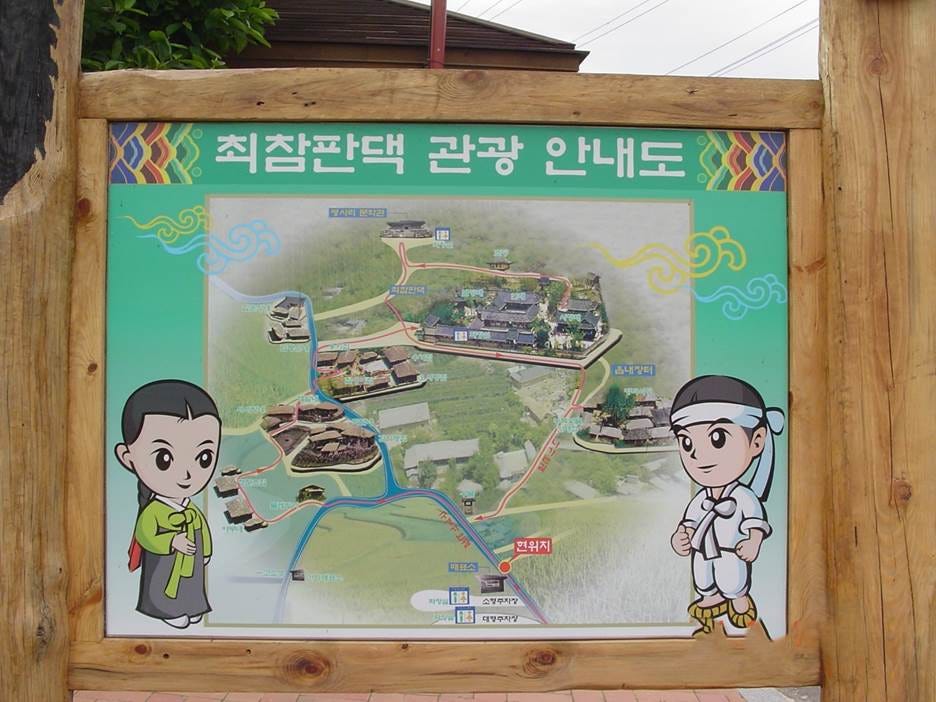
The first part of Park’s The Land is set in Korea and northeast China between 1897 and 1908. One of the novel’s main storylines traces the decline of the prominent and wealthy Choi family in Pyeongsa-ri, Hadong. The map is titled “Guide to Vice Minister Choi and His Family’s House.”
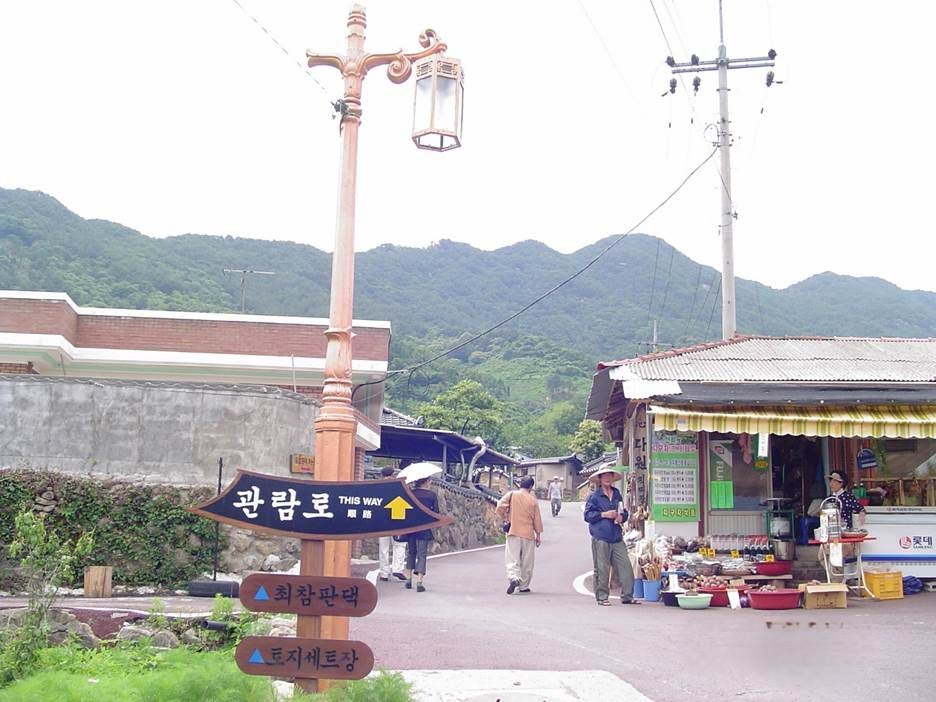
Poet Song Soo-kwon passes a mom-and-pop shop on the way to the Choi family’s house and the locations used in the film adaptation of The Land.
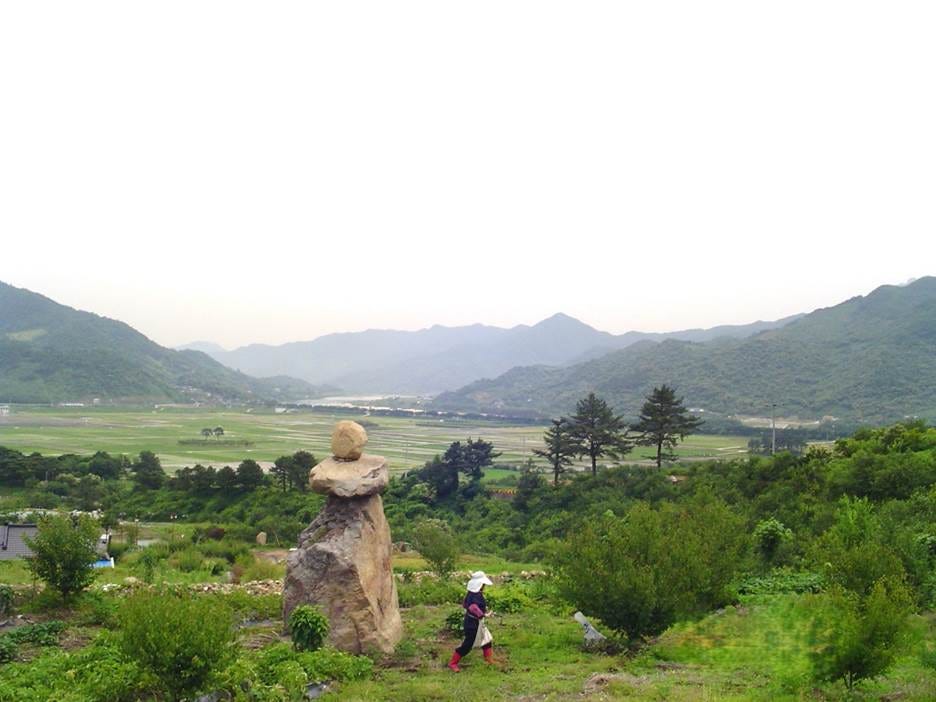
A view of the rice fields on the way to the Choi family’s house and the settings of the film adaptation of The Land. The Choi family is portrayed as a manseokji, a wealthy landowner whose fields produced 10,000 seok of rice annually. This would have amounted to roughly 1,440 metric tons of rice, requiring an enormous estate of approximately 2-4 million pyeong (about 1,650-3,300 acres).
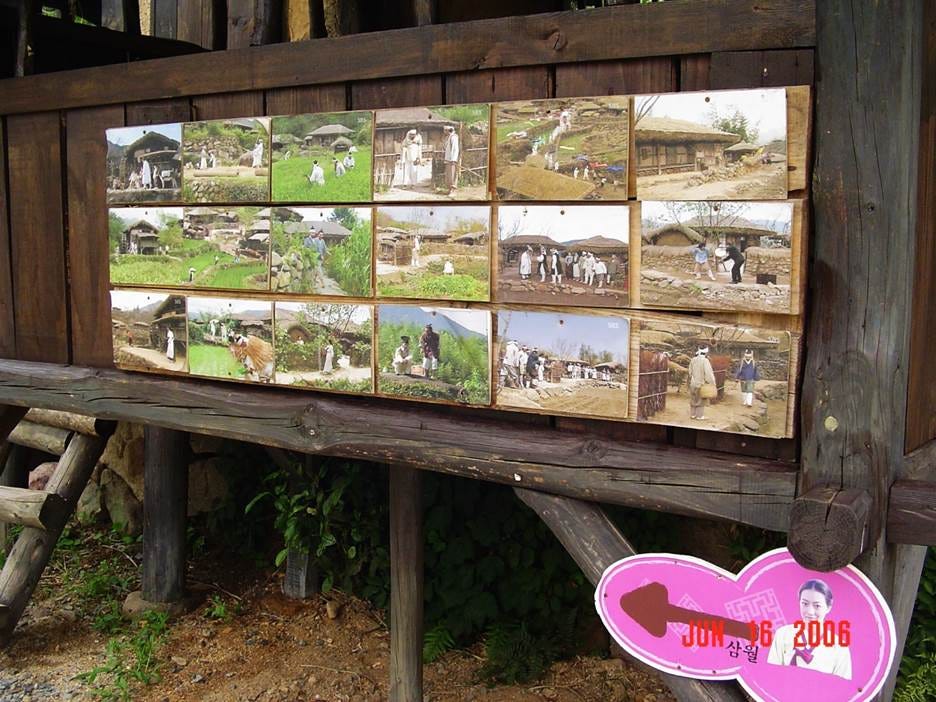
This wooden panel depicts selected scenes from the film adaptation of Park’s novel The Land.
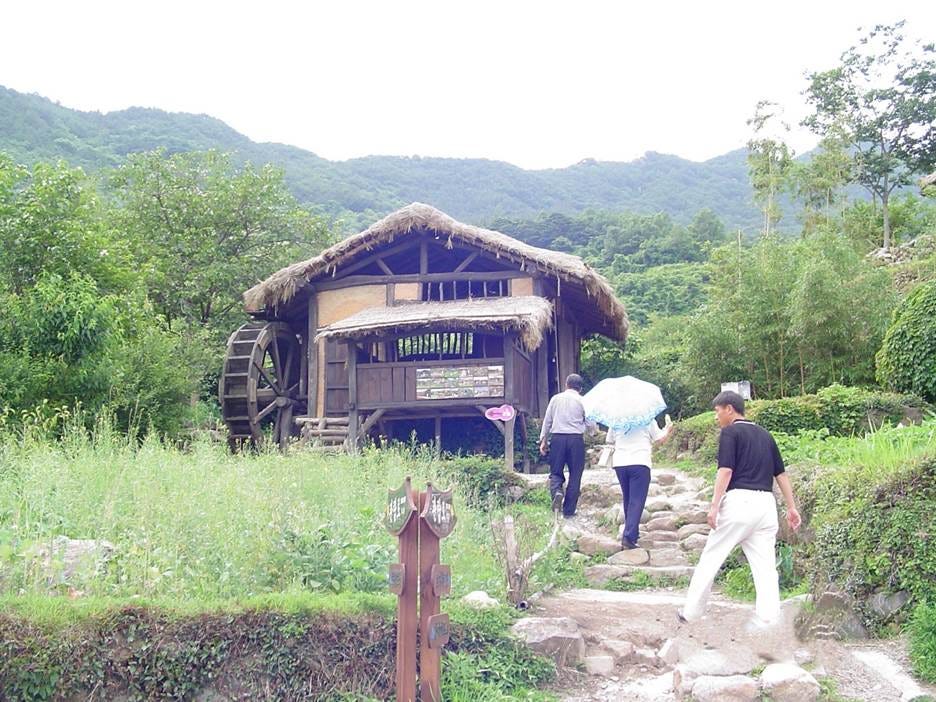
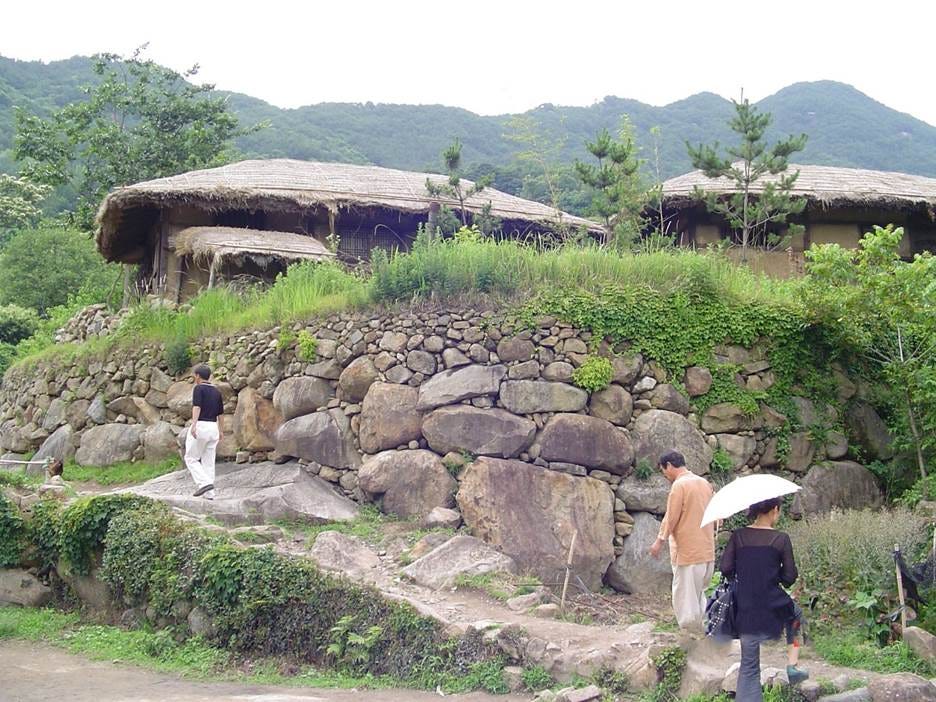
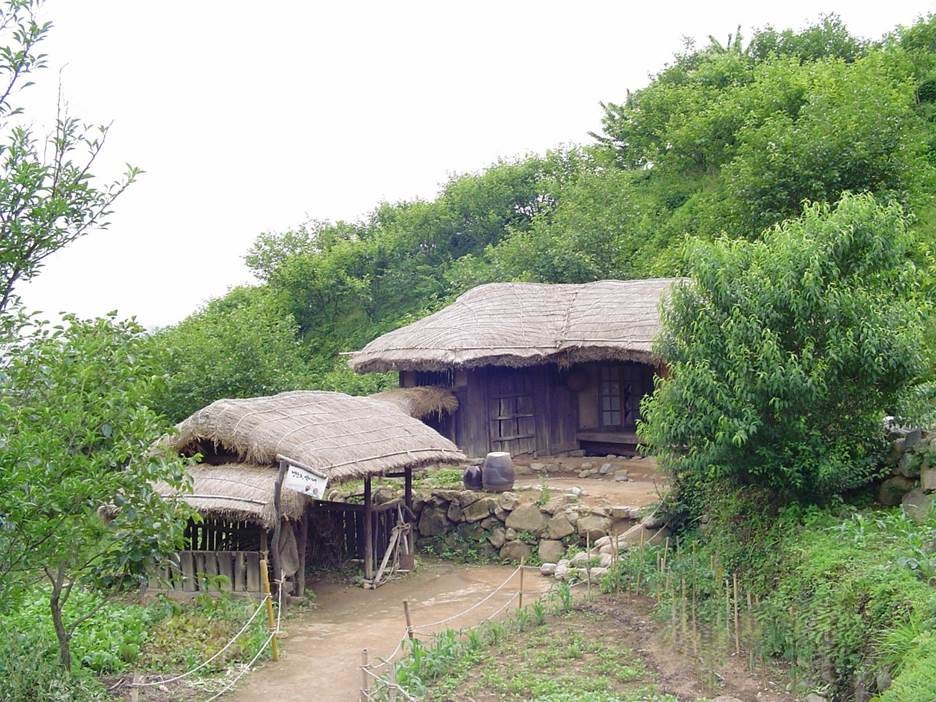
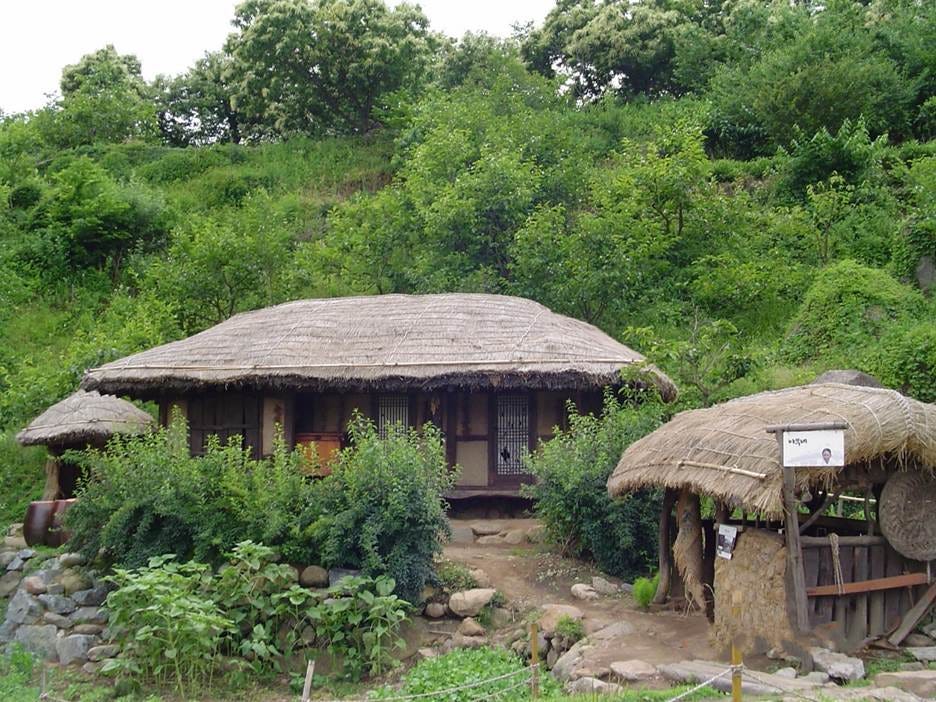
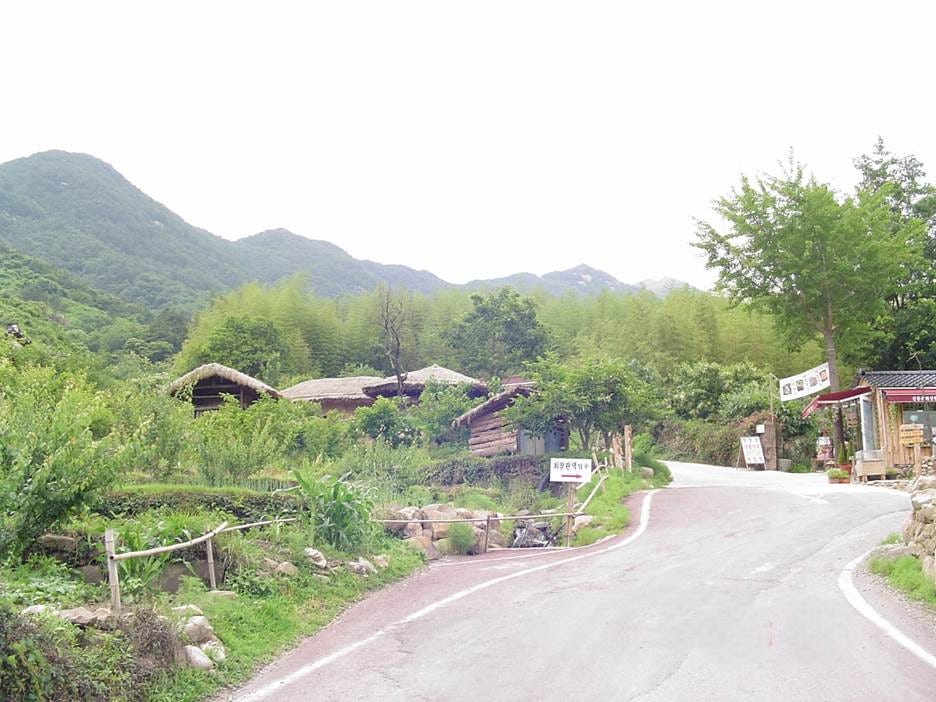
Houses used as filming locations for the screen adaptation of Park Kyoung-ni’s The Land, recreating the rural village setting of the novel.
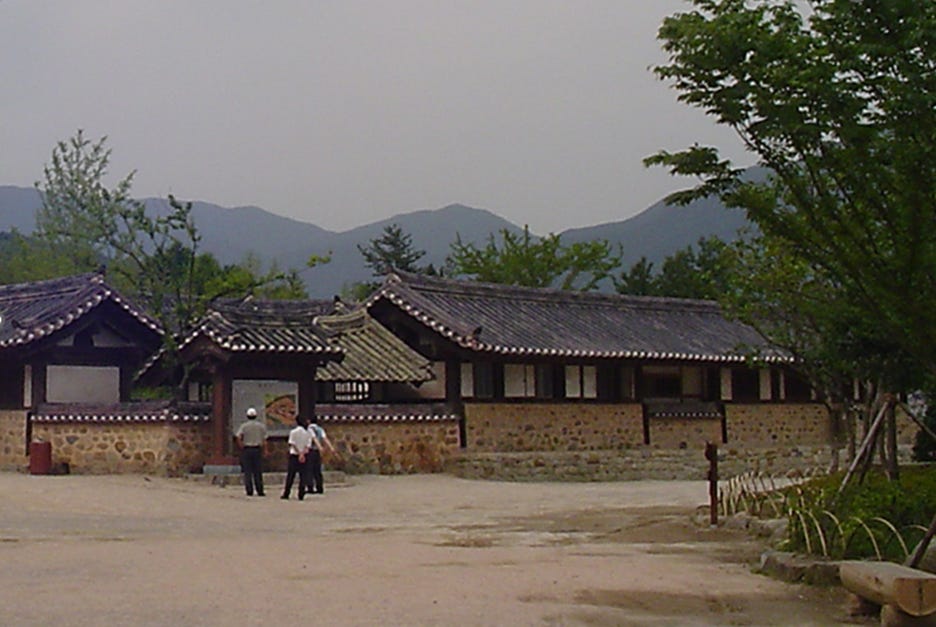
The Choi family’s house.
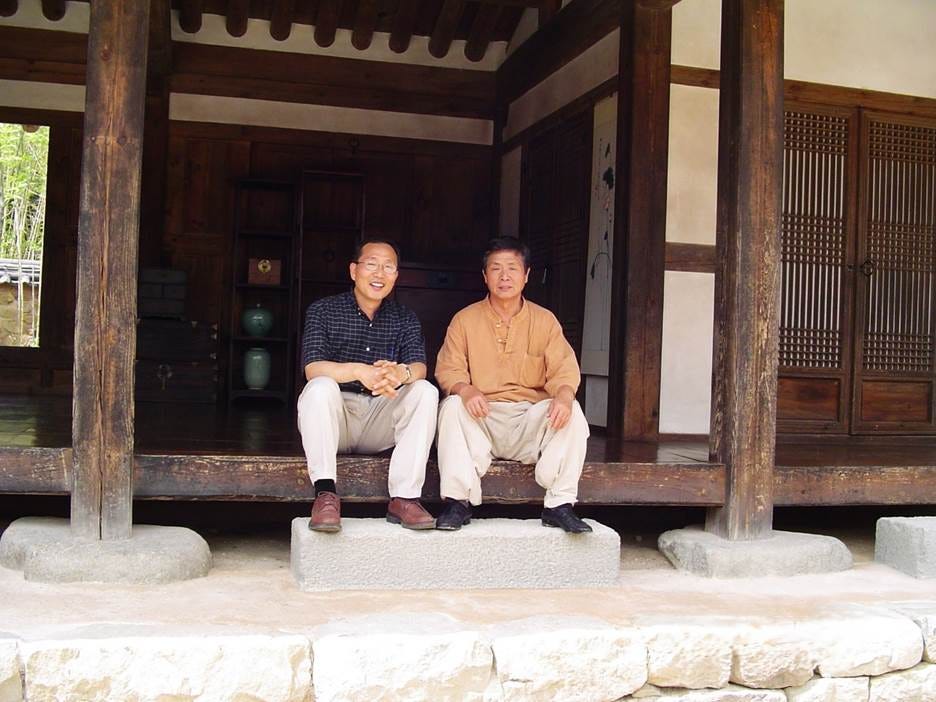
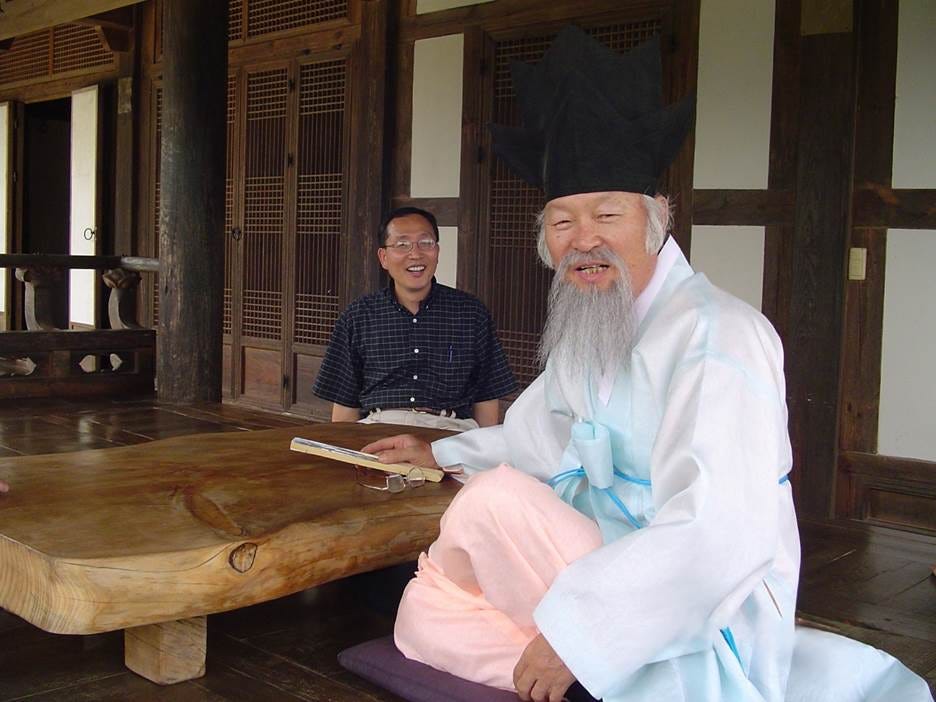
Poet Song Soo-kwon (right) and I rest in the main wooden hall of the Choi family’s house.
A local man impersonates Vice Minister Choi inside the Choi family’s house.
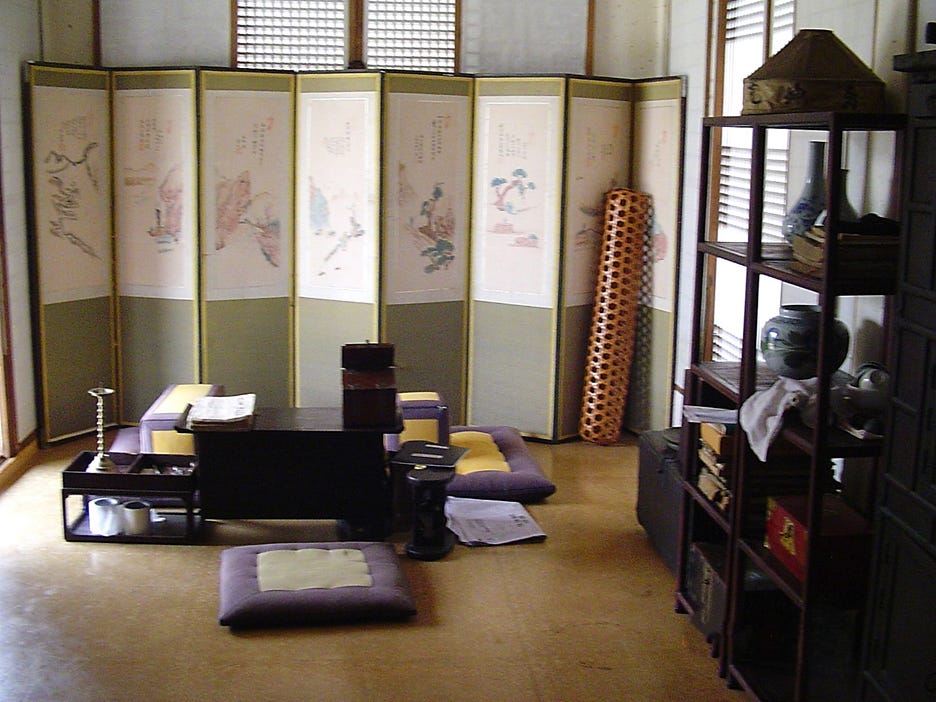
A peek into one of the rooms in the Choi family’s house.
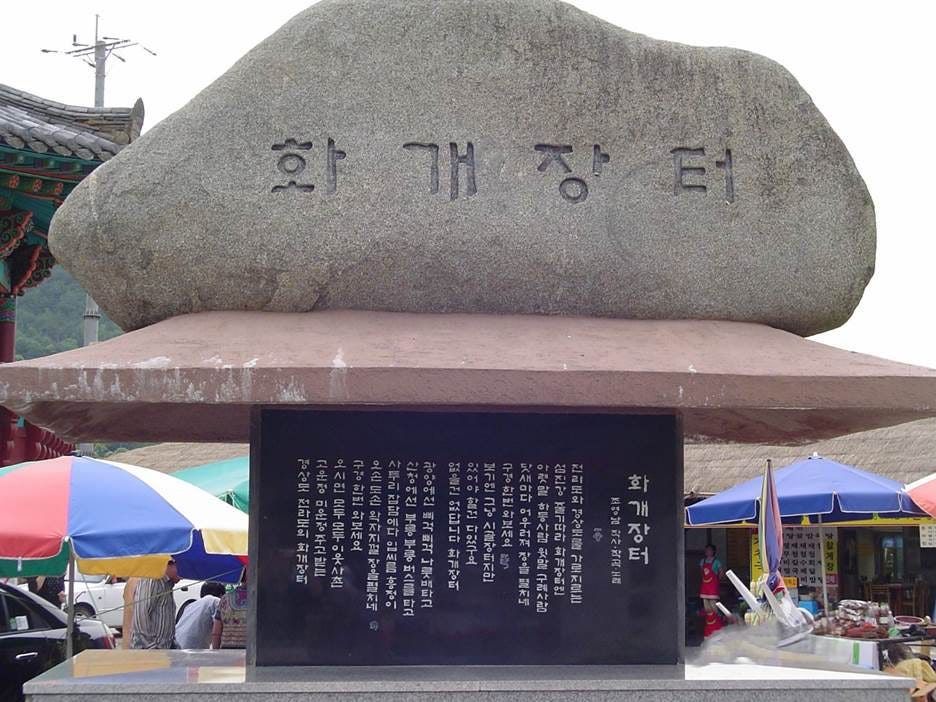
A sign in Hadong reads “Hwagae Market.” Inscribed beneath it are lyrics from a song written and sung by Jo Young-nam, portraying the market as a symbol of harmony between the people of South Jeolla and South Gyeongsang provinces.
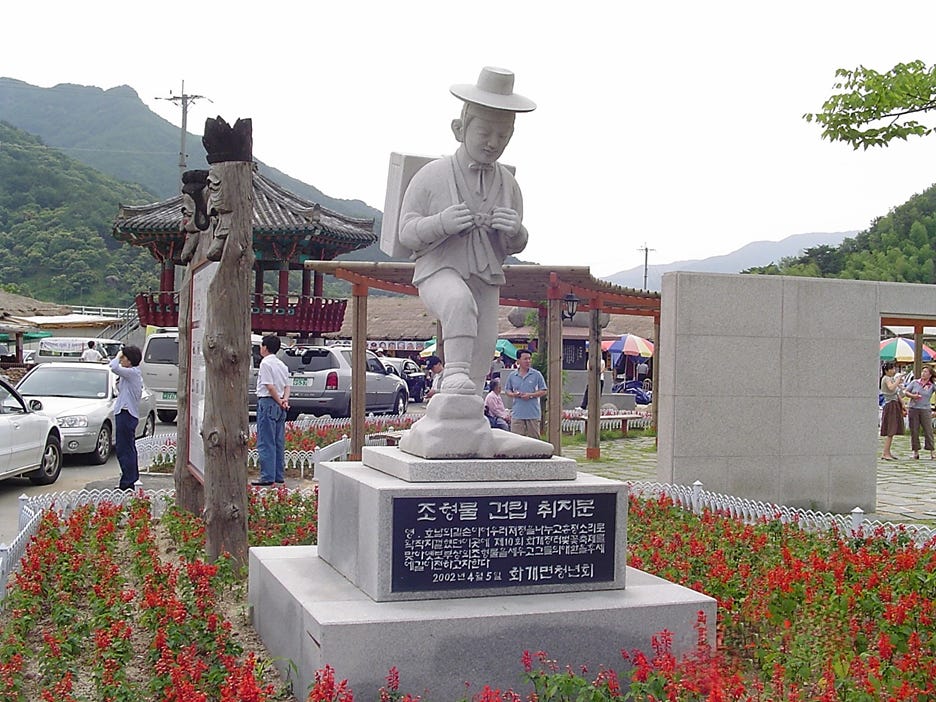
A stone monument at Hwagae Market features a traditional Korean traveling merchant.
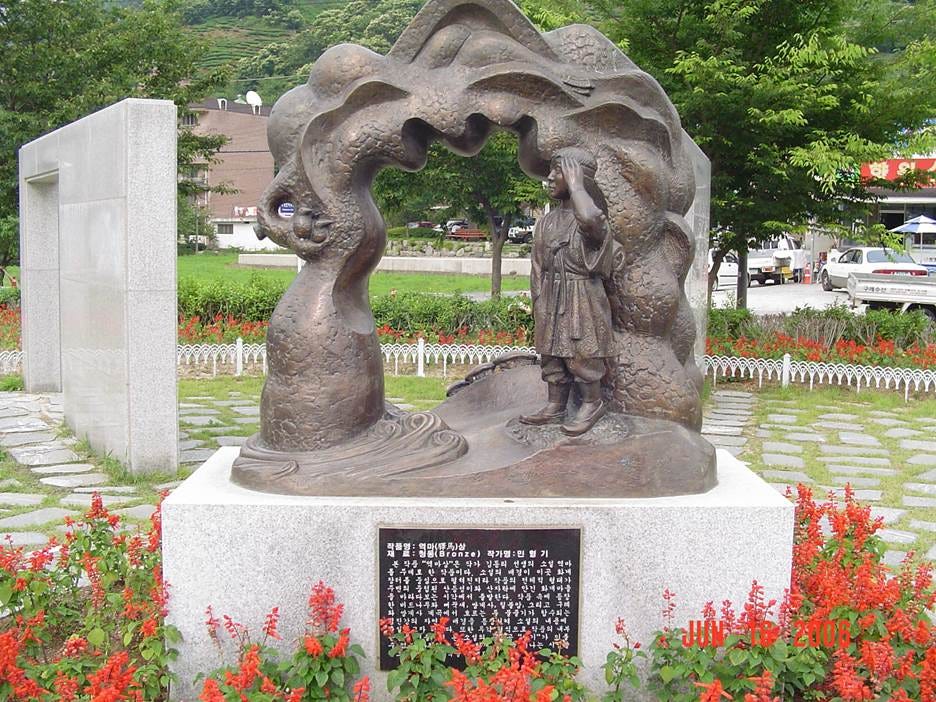
A bronze statue commemorating Kim Dong-ni’s short story “The Post Horse” (역마, 驛馬, Yeokma) stands in Hwagae, Hadong, where the story is set. Published in 1947, the story explores the Korean folk belief in yeokmasal, a fate that compels a person to wander rather than settle in one place. To rid her son Seong-gi of his wandering fate, his mother sends him to Ssanggye Temple nearby, but her efforts ultimately fail. Unable to marry the woman he loves, Gye-yeon, Seong-gi eventually accepts his destiny and leaves Hwagae Market to begin a life of wandering.
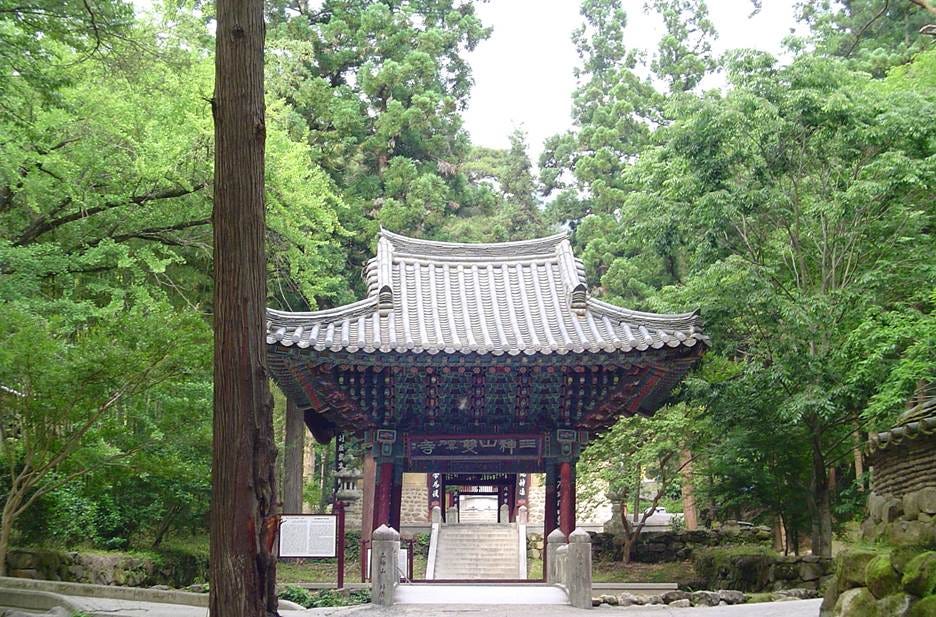
The entrance to Ssanggye Temple in Hadong, one of the settings in Kim Dong-ri’s short story “The Post Horse” (1947).
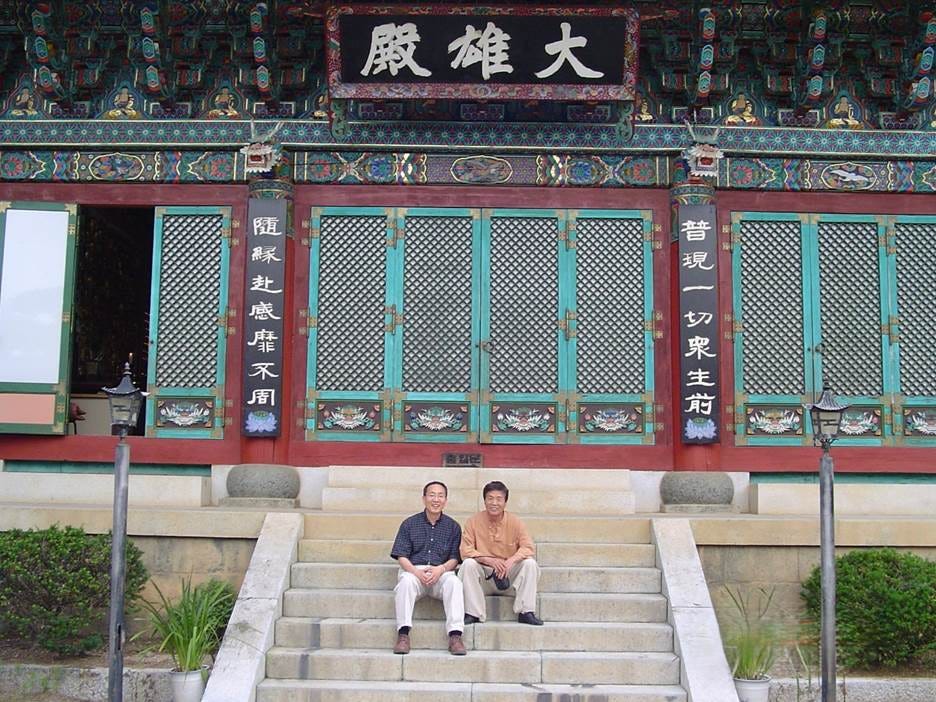
With poet Song Soo-kwon (right) in front of the Main Buddha Hall at Ssanggye Temple.
About the Author
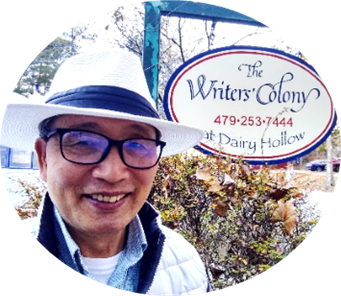
Professor of English and Creative Writing and Associate Dean of the School of Humanities and Theology, Missouri Baptist University
John J. Han, PhD, is the author, editor, co-editor, or translator of 36 books. His forthcoming book, Echoes from the Hills: Critical Essays on Ozarks Literature (co-edited with C. Clark Triplett), will be published by the University of Arkansas Press. He has also published more than 3,000 poems, primarily haiku, in a wide range of journals and anthologies. In addition to his long tenure at Missouri Baptist University, he has taught at Kansas State University, the University of Nebraska–Lincoln, Nebraska Wesleyan University, and Washington University in St. Louis. He has also served as a visiting scholar at Georgia College & State University and the University of Ljubljana in Slovenia.
© K-Global Scholars and Professionals Forum. All rights reserved. Content published in the K-GSP Forum may not be reproduced, distributed, or transmitted in any form without prior written permission from the K-GSP Forum, except for brief quotations with full attribution.