

Literary Korea: From Ancient Poets to Modern Voices
As the final installment in this series on selected literary sites in South Korea, this essay explores monuments and other literary landmarks in areas once associated with the ancient kingdoms of Baekje and Silla. The sites featured here are in Seoul, Cheongju, Jeongeup, Yeonggwang, and Gyeongju. The photographs range from June 2006 to May 2023. As usual, I took them during spare moments amid busy itineraries that included guest lectures, reunions with family and friends, and even family funerals.
Below are the sites featured in this essay:
Seoul: The home of poet Yi Tae-jun, now operated as Suyeonsanbang (수연산방)
Cheongju, North Chungcheong Province: Rocks inscribed with poems by Kim Si-seup and Yi Yuk-sa
Jeongeup, North Jeolla Province: Jeongeupsa Park
Yeonggwang, South Jeolla Province: A rock inscribed with a sijo by Jo Un
Gyeongju, North Gyeongsang Province: Bulguksa Temple, hyangga, and the literary museum dedicated to Kim Dong-ni and Park Mok-wol
The Home of Fiction Writer Yi Tae-ju, Seoul
As a member of the Wilderness literary magazine in Seoul for more than a dozen years, I often attended summer workshops and meetings held at various locations throughout the city. During my visit to Korea in June 2014, I attended a haiku meeting on the campus of Dongduk Women’s University in Seongbuk-gu, where Dr. Kim Mi-ye, an English professor and haiku poet, taught. Afterward, we headed to Suyeonsanbang, a traditional Korean teahouse also located in Seongbuk-gu, for a haiku workshop. Nestled in a quiet, wooded area on a hillside, the teahouse was once the residence of renowned novelist and short-story writer Yi Tae-jun (이태준, 李泰俊, 1904-1970?). He lived and worked there from 1933 to 1946, writing such notable works as “Moonlit Night” (달밤, 1933) and “The Stone Bridge” (돌다리, 1943). Yi’s former residence has been designated Seoul Folklore Material No. 11.
Yi Tae-jun, whose pen name was Sangheo (상허, 尙虛), is widely regarded as one of the masters of modern Korean fiction. Often called the Korean Guy de Maupassant, he was born in Cheolwon, Gangwon Province (officially, Gangwon Special Self-Governing Province). Orphaned at a young age, he endured a difficult childhood before pursuing a career in literature. He made his literary debut in 1925. During the 1930s, he became one of Korea’s leading writers, co-founding the literary group Guinhoe (구인회, 九人會) and serving as editor of the influential journal Munjang (문장, 文章, 1939-1941). He was especially admired for his refined prose style, lyrical sensibility, and skill in portraying ordinary people and the hardships of their times. After Korea’s liberation from Japan, he became involved with left-wing literary organizations and moved to North Korea in 1946. He later fell out of favor with the North Korean regime and was subjected to political persecution and forced labor. His later life and exact date of death remain uncertain.
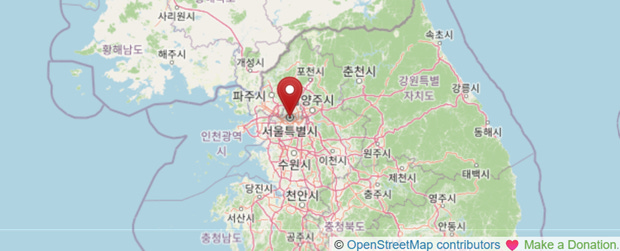
Whenever I land at Incheon International Airport in South Korea, I first take an express bus to my native South Jeolla Province and then find time to visit Seoul for a few days by train or bus. In a sense, my life in Korea and beyond seems to trace the territory of the ancient kingdom of Baekje, which once occupied much of the western half of present-day South Korea, including Seoul, as marked on the map above. Composite image based on map data © OpenStreetMap contributors.
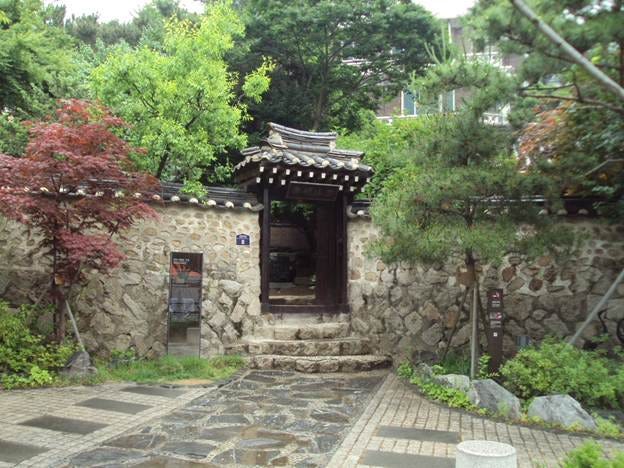
The gate of Yi Tae-jun’s former house, along with its stone wall and surrounding trees, creates a picturesque and elegant setting.
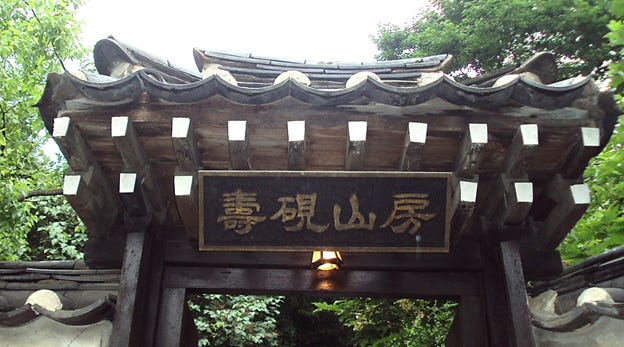
The plaque bears the name Suyeonsanbang (수연산방, 壽硯山房), meaning “The Inkstone Retreat in the Mountains.”
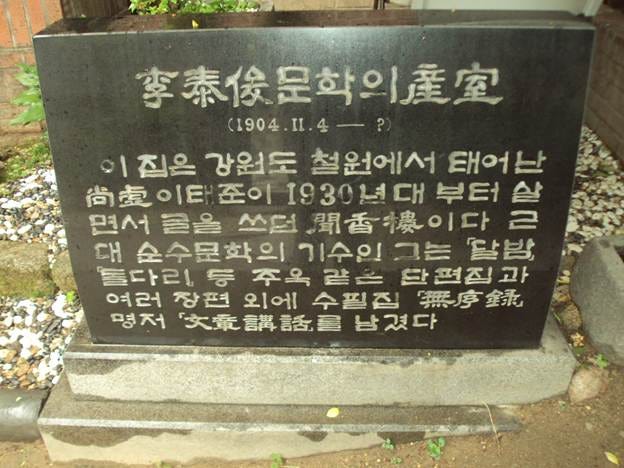
The interpretive stone bears the following information on Yi Tae-jun’s life and literary accomplishments:
The Cradle of Yi Tae-jun’s Literary Works
(November 4, 1904-?)
This house includes Munhyangru (문향루, 聞香樓), where Sangheo Yi Tae-jun lived and wrote from the 1930s onward. Born in Cheolwon, Gangwon Province, Yi Tae-jun was a leading figure in modern Korean pure literature. A leading figure in modern Korean pure literature, he left behind such gems of short fiction as “Moonlit Night” and “The Stone Bridge,” along with several novels, the essay collection Museorok (무서록, 無序錄), and the acclaimed guide to literary composition Munjang Ganghwa (문장강화, 文章講話).
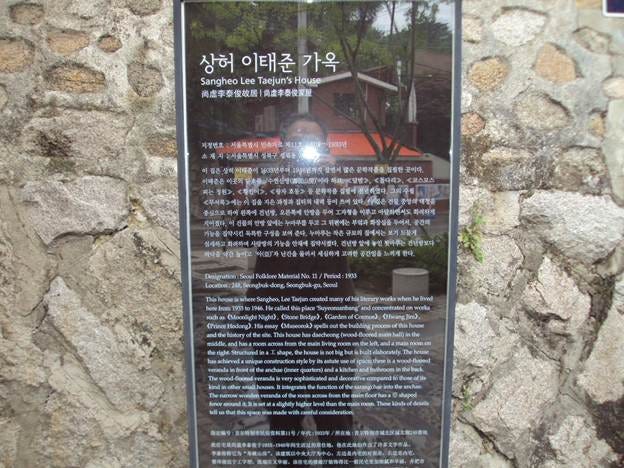
This sign provides information on Yi Tae-jun’s house in three languages: Korean, English, and Chinese.
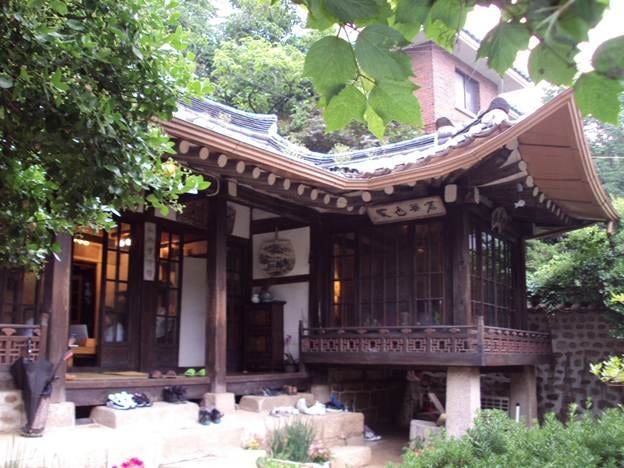
Yi Tae-jun’s house viewed from the front yard.
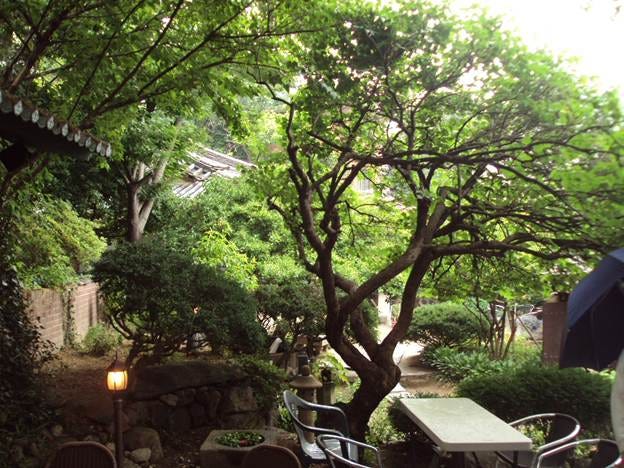
Yi Tae-jun’s house is in a hilly and wooded neighborhood.
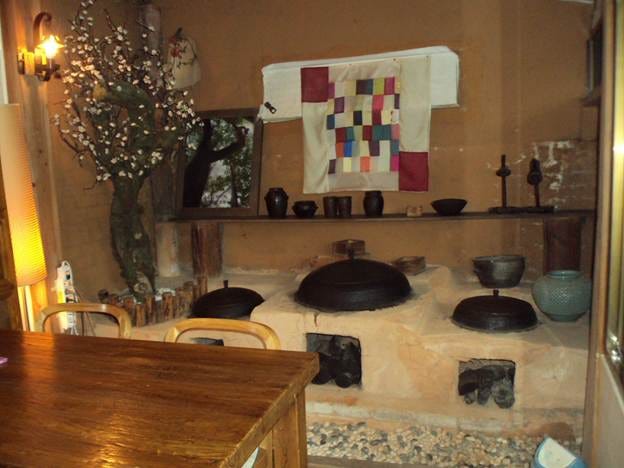
A traditional Korean-style kitchen inside Yi Tae-jun’s house.
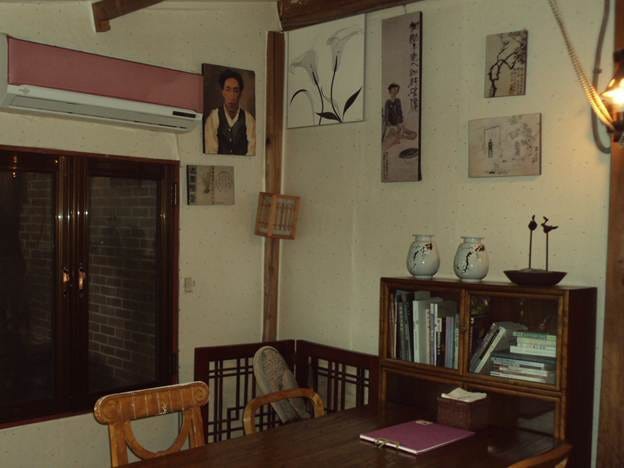
A glimpse inside a room at Yi Tae-jun’s house.
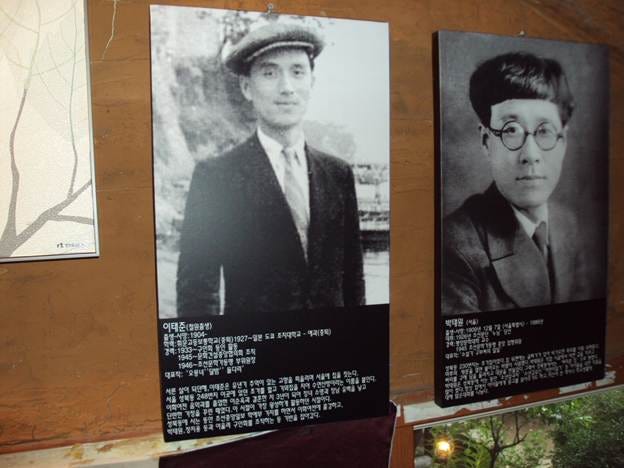
Yi Tae-jun joined forces with poets and writers such as Jeong Ji-yong, Kim Gi-rim, Yi Sang, and Yi Hyo-seok to form the Guinhoe (Nine-Member Society), through which they actively participated in literary circles. Yi’s house displays profiles of the members of the Nine-Member Society. The nine founding members included Yi (left), while several others, including Park Tae-jun (right), joined later.
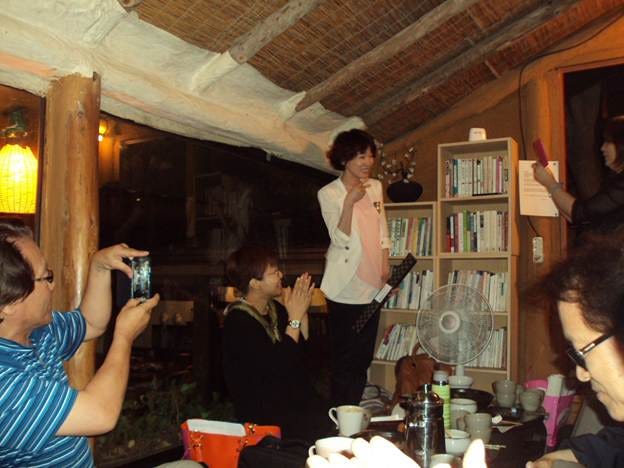
Our haiku club had a wonderful time at Yi’s house, reading poems we had brought and discussing the art of haiku composition. Sitting on the far left is Dr. Park Jeong-geun, then a professor of English at Daejin University, as well as a poet, novelist, and publisher of Wilderness magazine. I consider him one of South Korea’s finest contemporary poets.
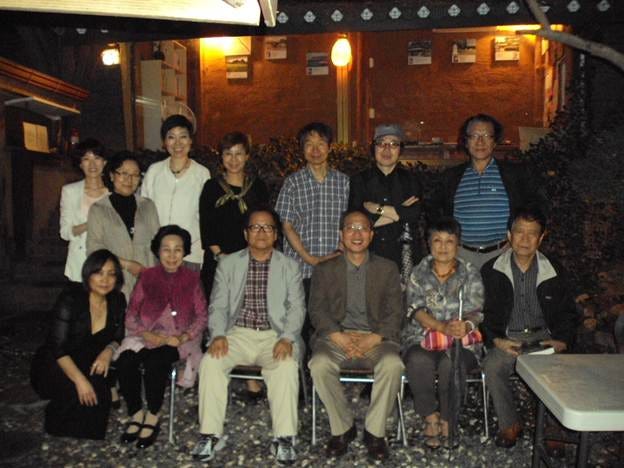
A Korean gathering cannot end without a group photo. After our meeting at Yi’s house, we took a group picture to commemorate the occasion. Sitting to my left is Dr. Kim Mi-ye, a Shakespeare scholar and theater director. She and I served as co-directors of the haiku group within Wilderness magazine for many years. We now co-edit the semiannual digital haiku magazine 덧없는 촛불 / Brief Candle, which we founded in spring 2026. The magazine publishes mostly Korean-language haiku but also features English-language poems from outside Korea by invitation. Most of the poets in this photo contribute to 덧없는 촛불. The title of the magazine comes from Shakespeare’s Macbeth:
Tomorrow, and tomorrow, and tomorrow,
Creeps in this petty pace from day to day,
To the last syllable of recorded time;
And all our yesterdays have lighted fools
The way to dusty death. Out, out, brief candle!
Life’s but a walking shadow, a poor player,
That struts and frets his hour upon the stage,
And then is heard no more. It is a tale
Told by an idiot, full of sound and fury,
Signifying nothing.
Cheongju, North Chungcheong Province
After delivering a guest lecture to the English Department at Chungbuk National University in June 2009, my host, Dr. Hyo-sik Hwang, took me to see two poetic monuments in Cheongju. The first was a large rock inscribed with “A Visit to the Mountain Fortress” (유산성, 遊山城), a Chinese poem by Maewol Kim Si-seup (1435-1493). The monument stands at the center of a lawn near the South Gate (Gongnammun, 공남문, 控南門) of Sangdangsanseong Fortress (상당산성, 上黨山城). It was erected jointly by the Cheongju branch of the Korean Writers’ Association and the city of Cheongju in July 2000.
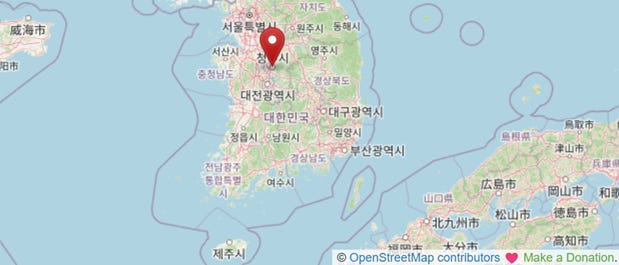
Cheongju, the capital of North Chungcheong Province, has special significance for me as the ancestral center of the Cheongju Han clan. Munongjeong Pavilion (무농정, 務農亭) was originally built in the early Goryeo period by Han Ran (韓蘭), the clan’s progenitor, to encourage agriculture. Composite image based on map data © OpenStreetMap contributors.
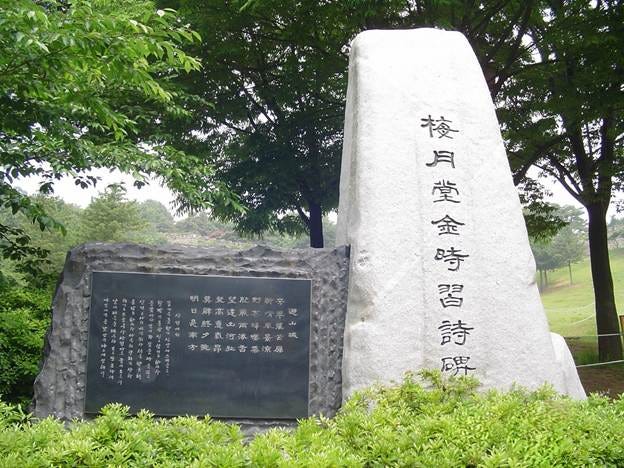
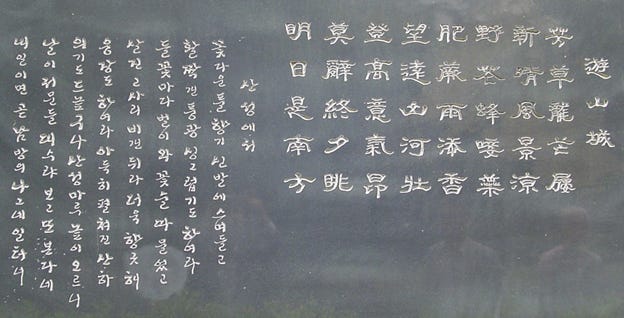
Kim’s poem may be translated as follows:
A Visit to the Mountain Fortress
Lovely grasses pierce my worn straw sandals;
With the clearing sky, the scenery feels refreshingly cool.
Bees visit the wildflowers and kiss their petals,
While rain on the lush bracken deepens the fragrance along the path.
From afar, the mountains and rivers appear magnificent;
Climbing higher, my spirits soar.
Do not hesitate to linger and enjoy the view until evening,
For tomorrow I must depart for the south.
Kim Si-seup, one of the Six Living Loyal Subjects (Saengyuksin, 生六臣), burned his books and wandered throughout the country after King Sejo deposed his young nephew, King Danjong, and usurped the throne. At times, he mocked the world and lived like a madman until the end of his life. The poem captures Kim’s delight in the natural beauty surrounding the mountain fortress, from wildflowers and buzzing bees to fragrant bracken refreshed by rain. Yet beneath its serene and exuberant tone lies a sense of transience: the speaker pauses to savor the landscape, knowing that he must leave for the south the following day.
Another poetic monument that Professor Hwang and I visited was a poetry rock honoring Yi Yuk-sa (1904-1944). An independence activist as well as a poet, Yi is a household name in Korea, best known for his poem “Green Grapes,” which can be translated as follows:
Green Grapes
Yi Yuk-sa
In my hometown, July
is the season when green grapes ripen.
The legends of this village hang in clusters,
and the distant sky comes dreaming, each grape holding a piece of it.
Beneath the sky, the blue sea opens its breast,
and when a white-sailed boat glides gracefully toward us,
the guest I await, weary from his journey,
will come dressed in a blue robe.
When I welcome him and pick these grapes for him to eat,
I would not mind if their juice soaked both my hands.
Child, set our table
with a silver tray and a white ramie cloth.
“Green Grapes” uses vivid contrasts of blue and white to create a bright and striking visual landscape. The “guest” can be read as a symbol of national liberation, while the ripening green grapes suggest a peaceful and prosperous homeland. Written during the Japanese occupation, the poem expresses Yi Yuk-sa’s longing for a free Korea and his hope for a brighter future. Its lush imagery and personification give the poem a sense of abundance and anticipation, while the simple act of preparing a table for the long-awaited guest transforms political hope into an intimate and deeply human vision of peace.
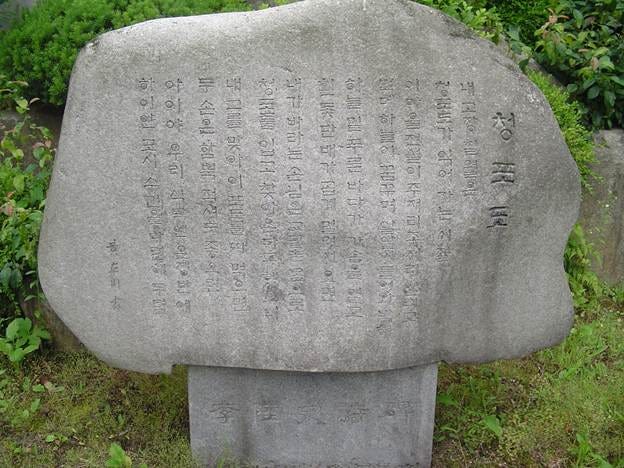
This poetry monument, inscribed with Yi Yuk-sa’s “Green Grapes,” once stood on the grounds of Myeongam Park Tourist Hotel (명암파크관광호텔), now operating as Hotel Namoo. Because of its location, a Google search may not readily identify this monument in Cheongju.
Jeongeup City, North Jeolla Province
Jeongeup City is well known for “Jeongeupsa” (“Song of Jeongeup”), a poem traditionally associated with the ancient Baekje kingdom (18 BCE-660 CE). Having learned that Jeongeupsa Park commemorates this important literary heritage, I decided to visit the site in May 2023. On my way back from Seoul, I got off the bullet train at Jeongeup Station, toured the park, stayed overnight at a nearby hotel, and left the city the following day. The park features a monument commemorating the poem, interpretive signs, and a traditional garden, offering visitors a quiet setting for reflection as well as an opportunity to learn about Jeongeup’s literary and cultural history.
In addition to its cultural heritage, Jeongeup has a personal connection for me. Growing up in Yeonggwang, about 38 miles southwest of Jeongeup, I often heard my paternal grandmother say that we had relatives living there. My memory is distant, but I may even have met some of them when they visited our home. With the passing of my grandparents and parents, those family connections have faded away, but the memory of relatives in Jeongeup made my visit nostalgic. As most of the older generations in my extended family have passed away, and as I grow older myself, I have tried to visit places that are dear to me whenever I return to Korea, knowing that there is no guarantee I will have another opportunity. It was raining when I visited the park alone, and as I walked through its quiet grounds, I thought about the relatives I had learned about as a child—and about their descendants who, somewhere under the same sky, may still be living.
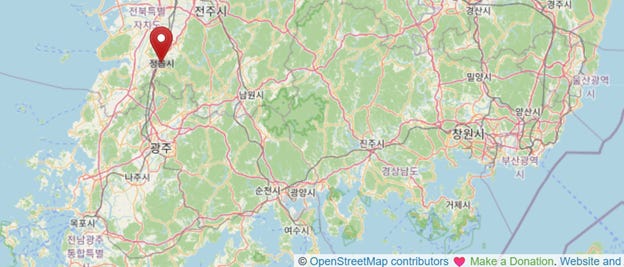
Jeongeup City (정읍시, 井邑市) is a city in the southwestern part of North Jeolla Province (officially, Jeonbuk Special Self-Governing Province), South Korea. Composite image based on map data © OpenStreetMap contributors.
Below is the poem that has made Jeongeup City famous, followed by an English translation. As an ancient Korean poem, the original text is nearly incomprehensible to modern readers.
ᄃᆞᆯ하 노피곰 도ᄃᆞ샤
어긔야 머리곰 비취오시라
어긔야 어강됴리
아으 다롱디리
져재녀러신고요.
어긔야 즌ᄃᆡᄅᆞᆯ 드ᄃᆡ욜셰라.
어긔야 어강됴리
어느이다 노코시라.
어긔야 내 가논 ᄃᆡ졈그ᄅᆞᆯ셰라.
어긔야 어강됴리
아으 다롱디리
(Source: https://namu.wiki/w/정읍사)
Translation:
Jeongeupsa (Song of Jeongeup)
O moon, rise high, high,
and shine far, far away.
Eogiya, eogangdori.
Ah, darongdiri.
Are you still away at the marketplace?
Ah, I fear you may step into a muddy, dangerous place.
Eogiya, eogangdori.
Leave whatever you are carrying wherever you are.
Ah, I fear the road you are traveling may grow dark.
Eogiya, eogangdori.
Ah, darongdiri.
“Jeongeupsa” (井邑詞), or “Song of Jeongeup,” is the only surviving song associated with the ancient Baekje kingdom and is traditionally regarded as Korea’s oldest surviving vernacular song. The poem presents a wife anxiously waiting for her husband, a traveling merchant, to return home safely, addressing the moon as a protective presence: “O moon, rise high, high, / and shine far, far away.” She worries that he may step into a “muddy place,” a phrase that can suggest not only a literal dark or dangerous road but also the temptations and dangers he might encounter away from home. In the final stanza, she prays that nothing will delay or endanger his journey home, while the repeated refrains—“Eogiya, eogangdori” and “Ah, darongdiri”—serve as musical interludes rather than carrying a specific meaning. The poem’s movement from prayer to anxiety to renewed supplication captures the intimate concerns of an ordinary woman waiting for her loved one, while the moon and the dark, muddy road create a striking contrast between protection and danger.
Although the poem is traditionally associated with Baekje, its earliest surviving written record appears in the Goryeosa (History of Goryeo), compiled by officials of the Joseon dynasty in 1451. In its section on music, the Goryeosa records that when a man from Jeongeup left home as a traveling merchant and did not return for a long time, his wife climbed a rock on a nearby mountain to watch for him, fearing that he might suffer harm while traveling at night. She expressed her anxiety through the image of muddy water and thus sang the song. According to tradition, the rock from which she waited for her husband came to be known as a “stone of waiting for one’s husband” (망부석, 望夫石). The poem has often been noted for its three-stanza, six-line structure, which some scholars regard as an early precursor to the later Korean sijo form.
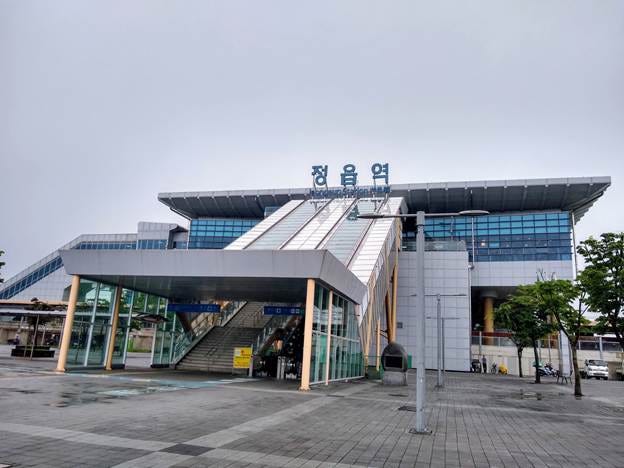
Jeongeup Station as viewed from outside. It was a cloudy day, and heavy rain soon followed.
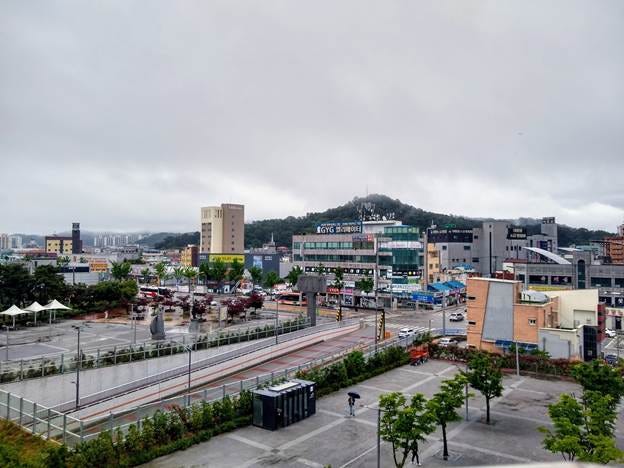
Jeongeup City viewed from Jeongeup Station. The city of approximately 100,000 people lies between Jeonju and Gwangju, with mountains in the southeast and broad plains extending across much of the region. Best known for its natural beauty, including Naejangsan, and its historical and literary heritage, Jeongeup is associated with the ancient song “Jeongeupsa” as well as “Sangchunga,” regarded as the first major work of Korean gasa poetry.
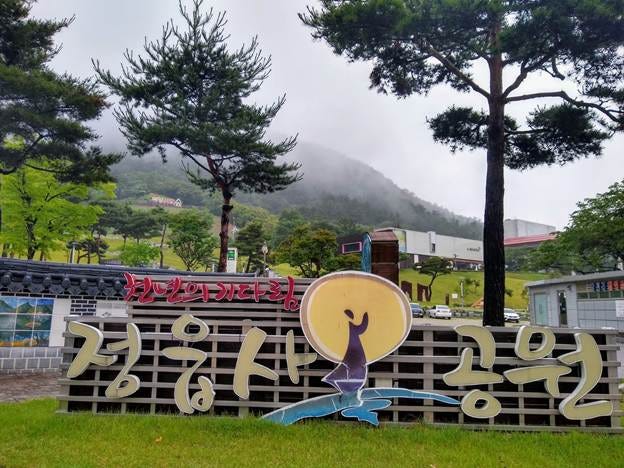
A sign greeting visitors at the entrance to Jeongeupsa Park reads, “A Thousand-Year-Long Wait: Jeongeupsa Park.”
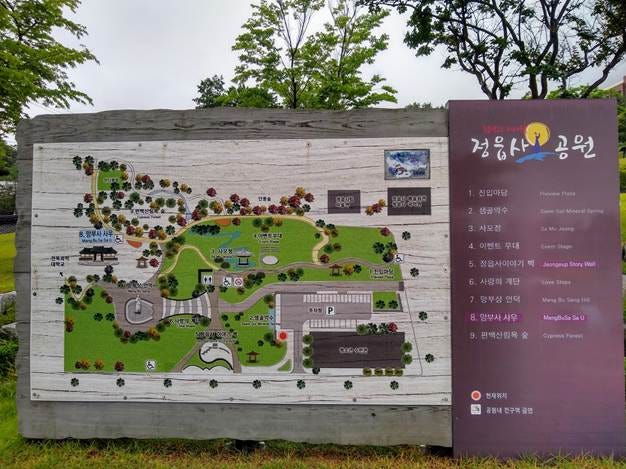
A map at the entrance to Jeongeupsa Park points visitors to the statue of a woman, a mineral spring, the Jeongeupsa Story Wall, Lovers’ Steps, a cypress forest, and other features within the park.
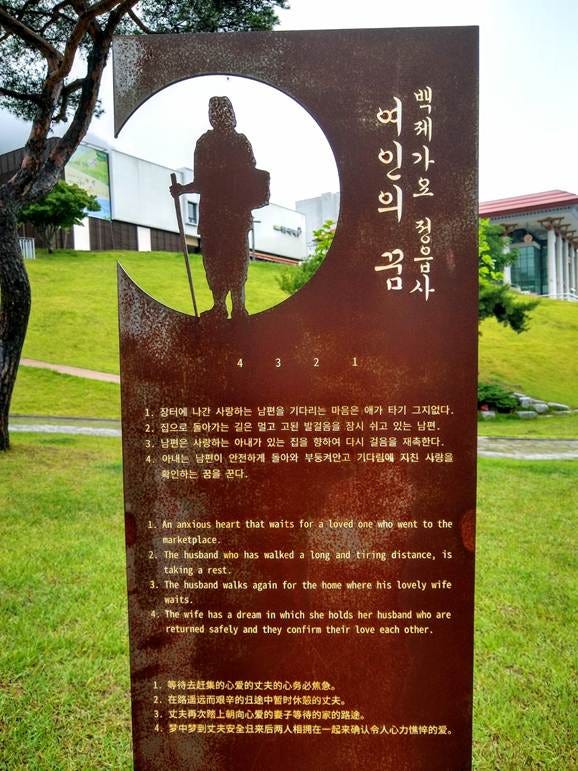
“Jeongeupsa” is very short but tells a story. Above are three summaries of the poem in Korean, English, and Chinese, respectively. Next to the husband’s figure at the top is the caption “The Woman’s Dream: “Jeongeupsa,” a Baekje Song.” In the original text, however, there is no mention of the wife dreaming of a happy reunion with her husband.
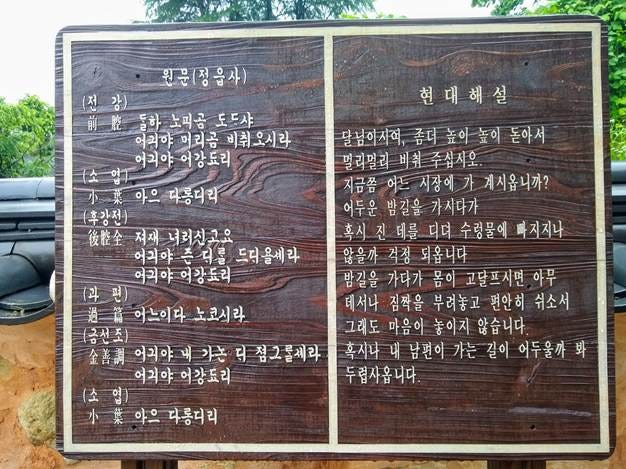
There are several modern versions of “Jeongeupsa.” Above are the original text of the ancient poem (left) and a modern Korean version (right), which can be translated as follows:
Jeongeupsa (Song of Jeongeup)
O moon, rise higher and higher,
and shine your light far, far away.
By now, what market might you be at?
As you travel along the dark road at night,
I worry that you might step in a muddy place
and fall into a bog.
If you become weary while traveling at night,
set down your load wherever you are
and rest comfortably.
Even so, my heart is not at ease.
I fear that the road
my husband is traveling
might be dark.
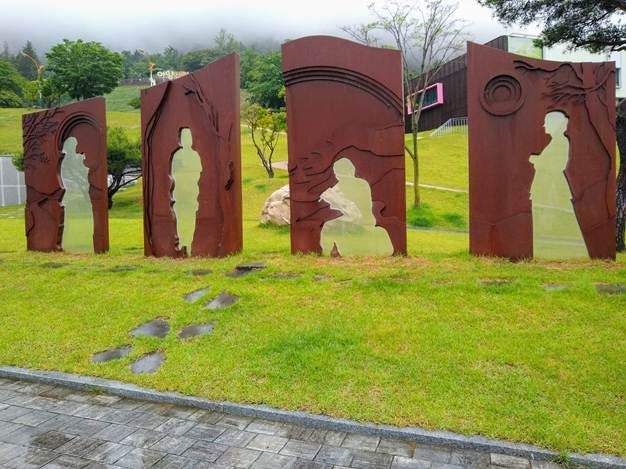
In this photo zone, steel structures tells the story of Jeongeupsa.
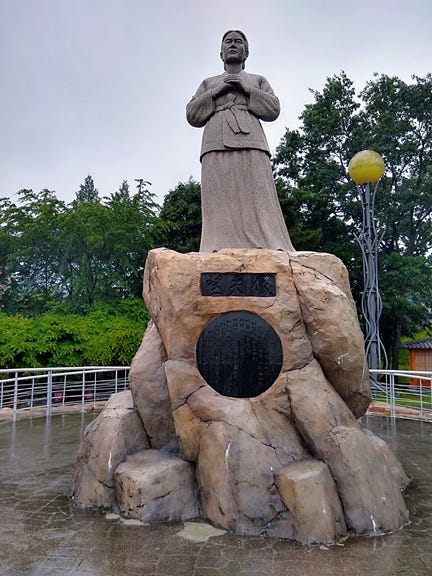
The statue of the speaker in “Jeongeupsa.” Her clasped hands express her longing to see her husband again.
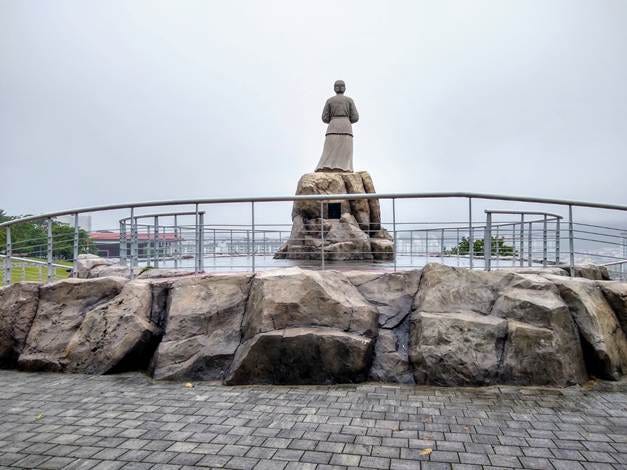
The statue overlooks Jeongeup City, a landscape where urban and rural areas meet.
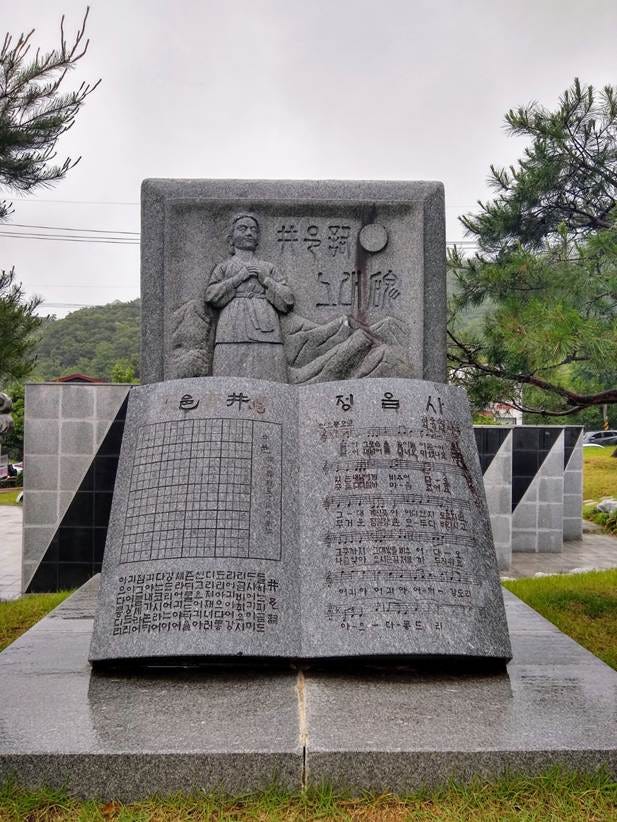
“Jeongeupsa” has also been set to music, as shown above.
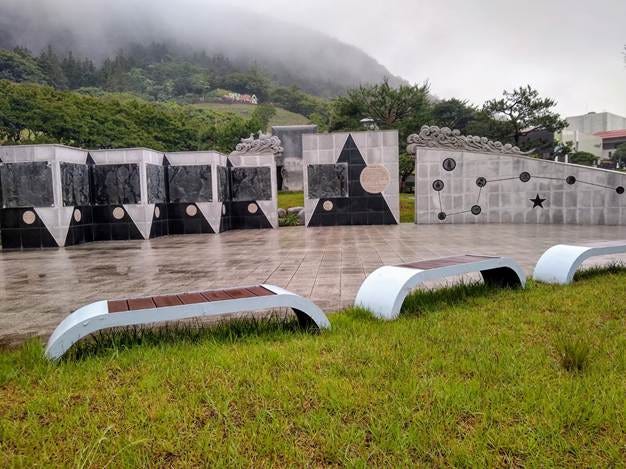
The Jeongeupsa Story Wall depicts the story of “Jeongeupsa.”
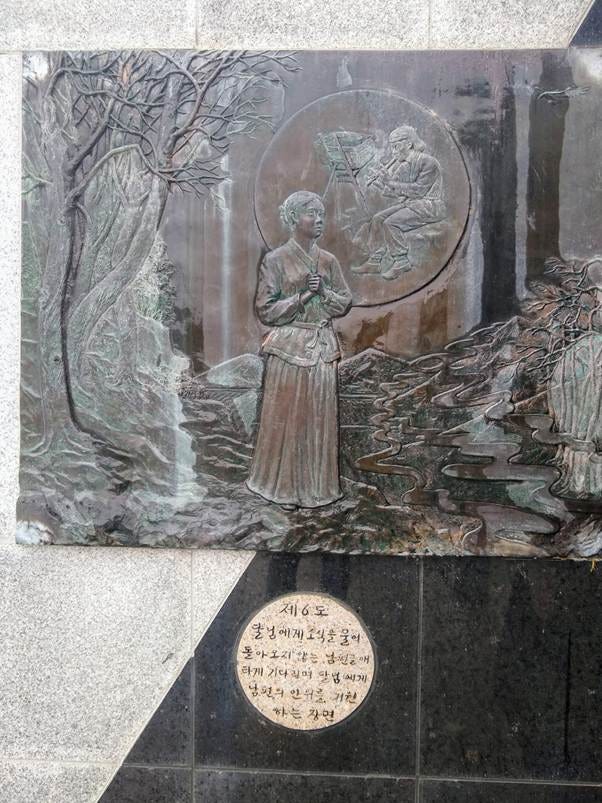
One of the scenes from the artificial wall depicts the woman longing for her husband’s return and wondering how he is faring in an unfamiliar place.
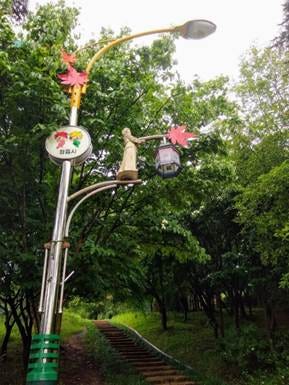
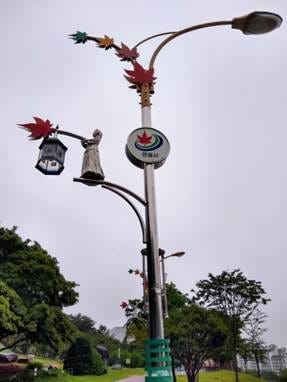
Light posts along the trail in Jeongeupsa Park feature images of the narrator of “Jeongeupsa.”
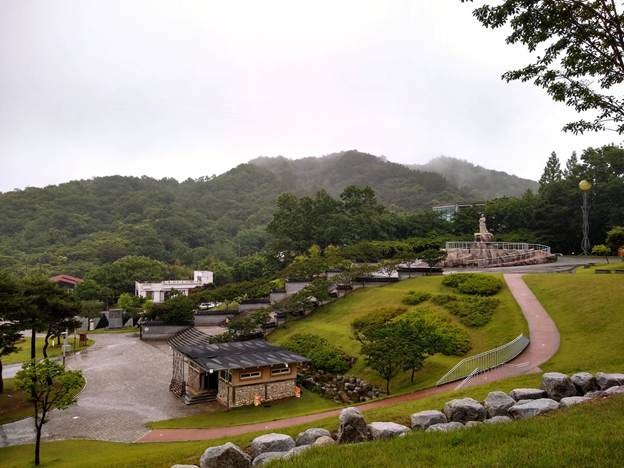
A distant view of the woman’s statue. The entire park is dedicated to this ancient poem.
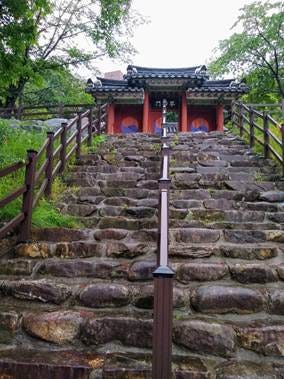
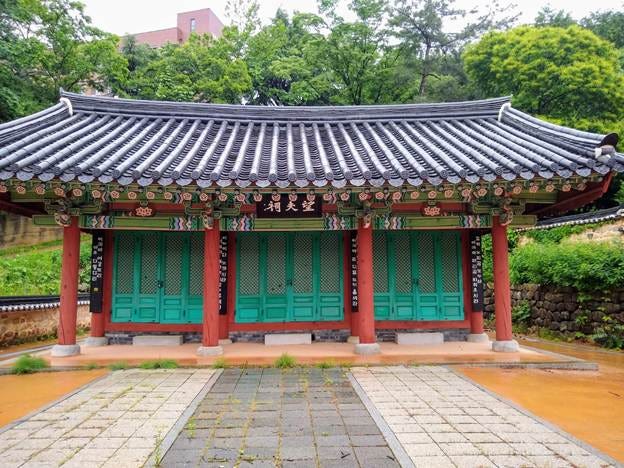
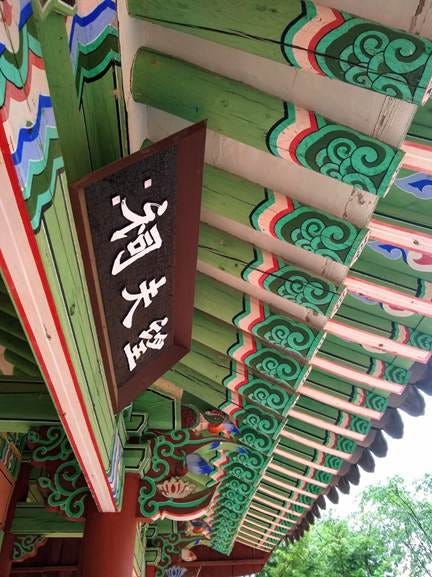
Mangbusa Shrine, built in 1994 to honor the spirit of the Baekje woman who waited faithfully for her husband’s return.
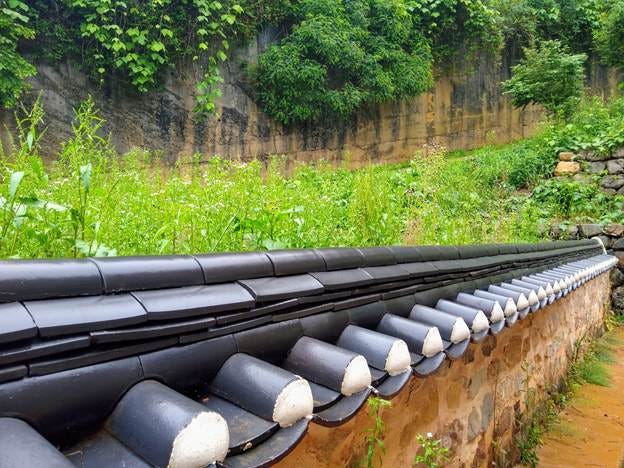
A traditional mud-and-stone fence topped with tiles graces the grounds of Mangbusa Shrine.
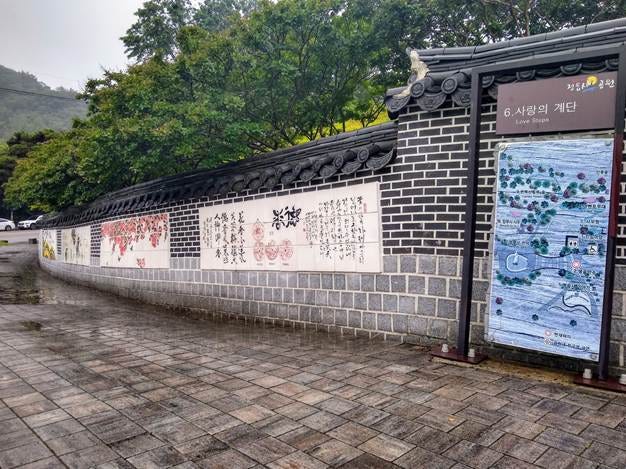
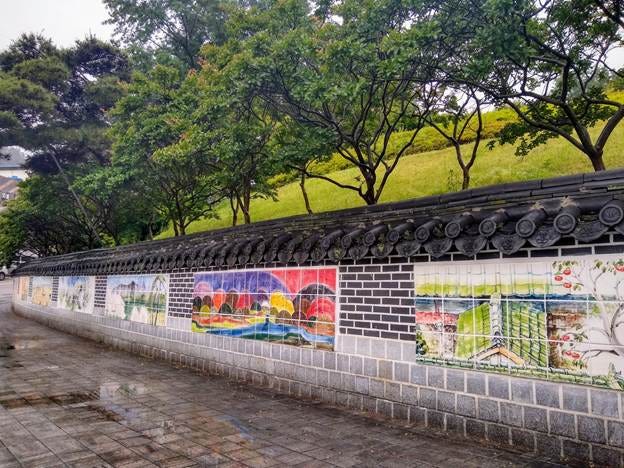
This wall is adorned with romantic poems and paintings of nature.
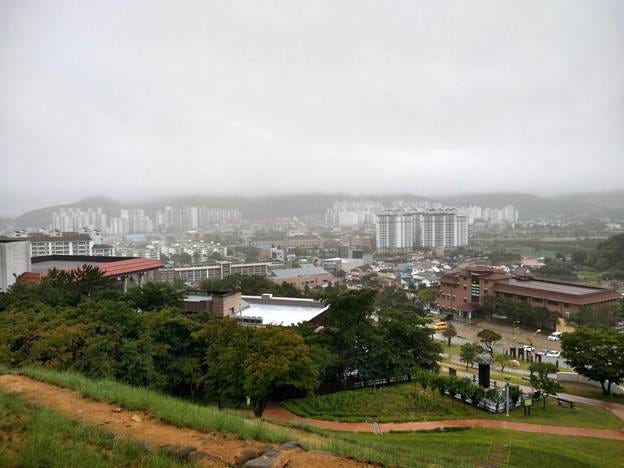
Jeungeup City, viewed from the hills of Jeongeupsa Park, is shrouded in fog.
Yeonggwang County, South Jeolla Province
Yeonggwang County has a distinctive place in modern Korean literary history and is often described as “the cradle of Namdo literature.” During the Japanese colonial period (1910-1945), the region was an active center of enlightenment, education, and resistance, fostering a strong sense of national consciousness. Students who studied in Seoul and Japan often returned home during school breaks to conduct night classes and teach literature, music, theater, and sports, while numerous local organizations promoted education, cultural activities, and nationalist causes. This vibrant intellectual and cultural environment helped make Yeonggwang an important center of literary activity in southern Korea.
The county produced a remarkable number of writers, including Jo Un (1900–?), a major modern sijo poet and a leading figure in the revival of the traditional Korean form, as well as poets Jo Nam-ryeong, Jo Ui-hyeon, Jeong Tae-yeon, and Yi Gyeong-in; essayist Jo Hui-gwan; and children’s writer Jeong Tae-byeong. Several of these writers were also involved in the region’s nationalist movement and suffered imprisonment or prosecution under Japanese rule. Particularly, Jo Un’s literary career was closely connected to Yeonggwang’s cultural and educational movements, and his sijo “Pomegranate” (Seokryu) remains one of the best-known works associated with the county. The literary tradition he and other writers established continues today through local literary associations, festivals, literary competitions, and efforts to preserve and reinterpret Yeonggwang’s literary heritage.
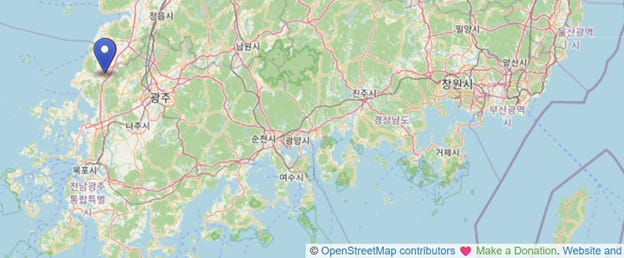
Yeonggwang County (영광군, 靈光郡) is a county in the northwestern part of South Jeolla Province (officially, Jeonnam-Gwangju Integrated Special City), South Korea. Composite image based on map data © OpenStreetMap contributors.
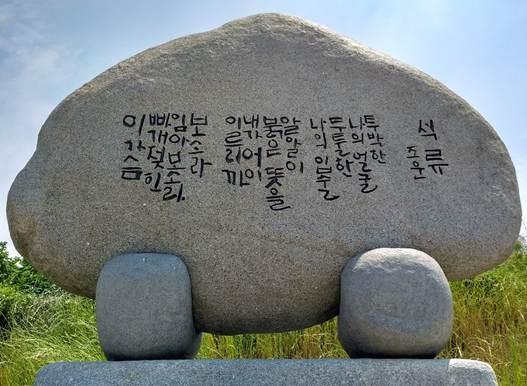
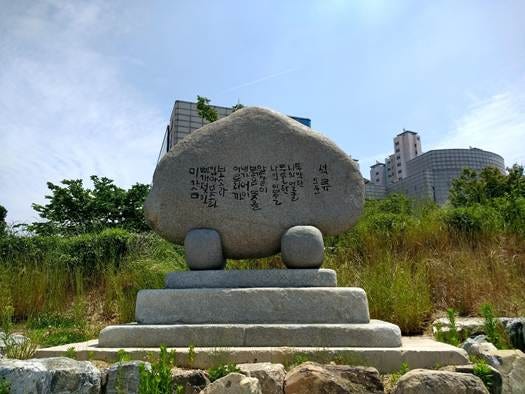
This rock bearing Jo Un’s modern sijo “Pomegranate” stands in the county seat of Yeonggwang County, the poet’s birthplace. The poem can be translated as:
Pomegranate
Jo Un
My rugged face,
my thick lips—
how could I possibly speak
of the crimson meaning
held in every seed?
Look, my beloved, look—
this heart
split wide open.
Jo Un (조운, 曺雲)—born Jo Ju-hyeon (조주현, 曺柱鉉) in Dodong-ri, Yeonggwang-eup, Yeonggwang County—was a pioneer in the revival and modernization of sijo, Korea’s traditional three-line poetic form. After beginning his literary career in the 1920s, he joined Yi Byeong-gi (이병기, 李秉岐, 1891-1968) and other poets in advocating for the vitality of sijo as a modern form capable of expressing contemporary thought and emotion. After Korea’s liberation, he was briefly involved in literary and political organizations and taught Korean language and literature at Dongguk University before leaving for North Korea with his family in 1948. Because of his departure to the North, his name was largely excluded from South Korean literary history for decades, but he was later rediscovered and reevaluated as an important figure in the development of modern Korean poetry. Photo date: May 2018.
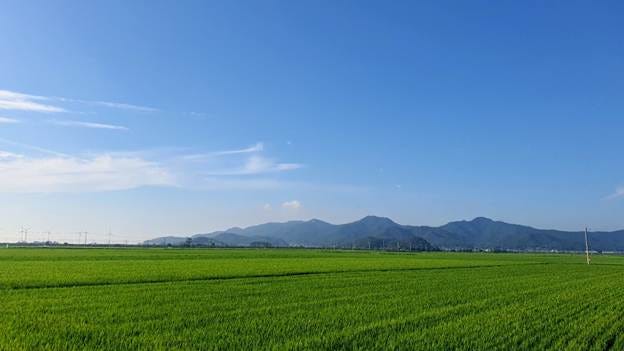
Yeonggwang, the northwestern-most county in South Jeolla Province, lies along Korea’s West Coast. It is known for its production of rice and barley, as well as its fisheries and salt. Strong coastal winds also make the area well suited for wind turbines. The photo above shows a typical agricultural landscape, with wind turbines scattered along the riverbanks. The mountain range in the background once served as a stronghold for pro-North Korean partisans during the Korean War, and fierce battles took place between them and South Korean forces advancing from the plains below.
Gyeongju, North Gyeongsang Province
There are few ancient capitals on the Korean Peninsula with a history and cultural heritage as rich as those of Gyeongju (경주시, 慶州市). As someone from southwestern South Korea, I did not have an opportunity to visit this historic city until June 2006, when I was invited to give a lecture in the English Department at Handong Global University in Pohang. Although my visit was brief, it was gratifying to see in person some of the sites I had previously encountered only in textbooks.
Gyeongju served as the capital of Silla for 992 years, from the kingdom’s founding in 57 BCE until its fall in 935 CE. The city was known by various names, including Seorabeol (서라벌, 徐羅伐) and Geumseong (금성, 金城). In 935, the eighteenth year of the reign of King Taejo of Goryeo, it was given its present name, Gyeongju. The name later changed to Donggyeong (동경, 東京) and Gyerimbu (계림부, 鷄林府), among others, before reverting to Gyeongju during the Joseon period.
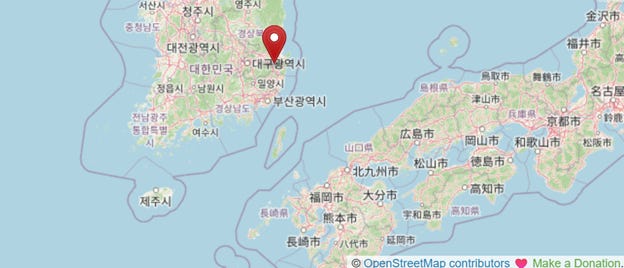
Gyeongju is home to numerous historic sites, including Bulguksa Temple and Seokguram Grotto, as well as Cheomseongdae Observatory, the Daereungwon Tomb Complex, Donggung Palace, and Wolji Pond. Composite image based on map data © OpenStreetMap contributors.
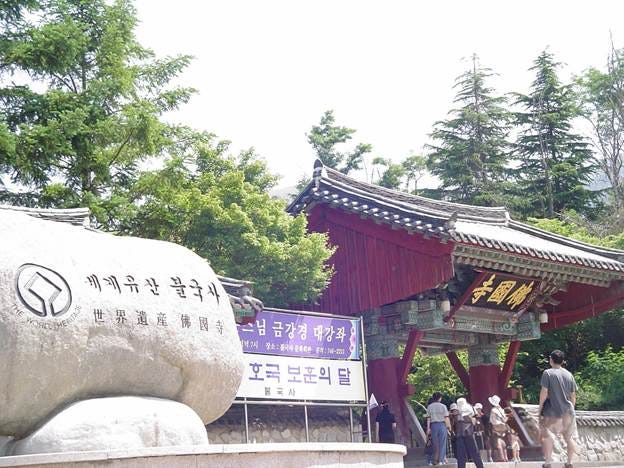
The main gate of Bulguksa Temple (불국사, 佛國寺, “Temple of the Buddha Land”), a Buddhist temple affiliated with the Jogye Order of Korean Buddhism. In 1995, Bulguksa and Seokguram Grotto were designated as a UNESCO World Heritage Site. The temple is one of Korea’s most important cultural and spiritual landmarks. Built during the Silla period, Bulguksa represents the ideal of a Buddhist realm on earth and is renowned for its elegant stone architecture, including Seokgatap and Dabotap. Poet Park Mok-wol captures another dimension of Bulguksa in his poem “Bulguksa,” portraying the temple on a quiet autumn night bathed in moonlight and mist. Below is the original poem from his collection Mountain Peach Blossoms (산도화, 1955), followed by a translation.
불국사(佛國寺)
박목월
흰 달빛
자하문(紫霞門)
달 안개
물 소리
대웅전(大雄殿)
큰 보살
바람 소리
솔 소리
범영루(泛影樓)
뜬 그림자
흐는히
젖는데
흰 달빛
자하문
바람 소리
물 소리
Bulguksa
Park Mok-wol
White moonlight
Jahamun Gate
Moon mist
the sound of water
Daeungjeon Hall
the Great Bodhisattva
the sound of wind
the sound of pines
Beomyeongnu Pavilion
floating shadows
quietly
growing wet
white moonlight
Jahamun Gate
the sound of wind
the sound of water
Through spare language and a succession of visual and auditory images—white moonlight, mist, water, wind, and the sound of pine trees—the poem evokes the temple’s serene and contemplative atmosphere. Its final image of a “floating shadow” also introduces a subtle sense of impermanence, suggesting that Bulguksa is not merely a monument of architectural beauty but also a place of meditation on transience and eternity.
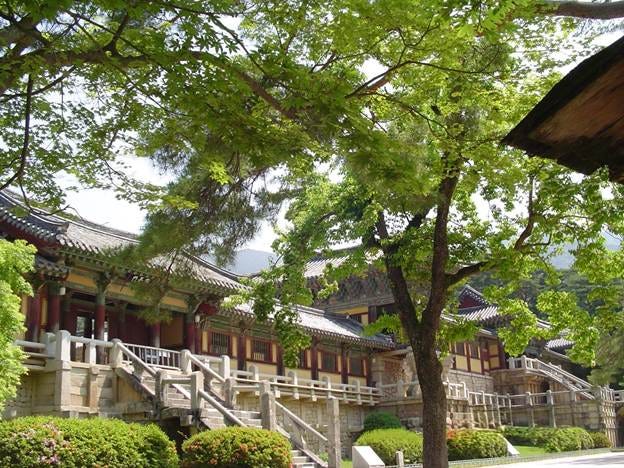
The Lotus Flower Bridge and Seven Treasure Bridge (Yeonhwagyo and Chilbogyo) at Bulguksa. These elegant Silla-period stone stairways lead to Jahamun, the temple’s main gate. Their names and design symbolize the passage from the earthly realm into the sacred world of Buddhism.
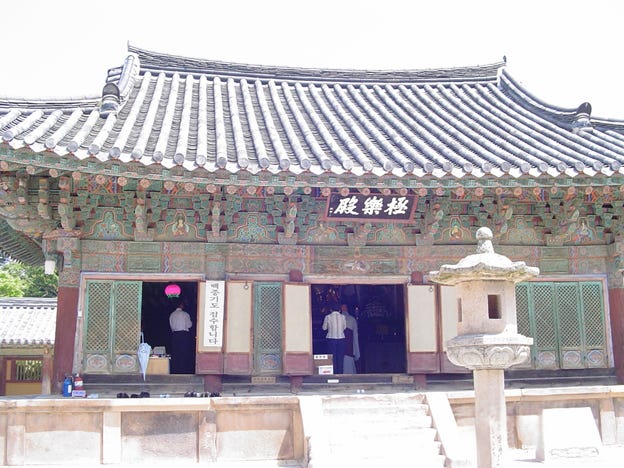
Geungju Bulguksa’s Geungnakjeon (Hall of Ultimate Bliss). Rebuilt in 1750 after its destruction during the Japanese invasions, this late-Joseon Buddhist hall incorporates foundation stones and steps believed to date to the Silla period. It houses a gilt-bronze seated Amitabha Buddha from the Unified Silla period.
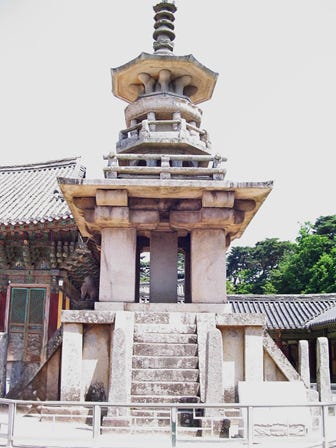
Dabotap Pagoda at Bulguksa. Built around 751 during the Unified Silla period, this National Treasure No. 20 is one of Korea’s most celebrated stone pagodas. Its distinctive design combines square, octagonal, and circular forms to create an intricate expression of Silla craftsmanship. Standing opposite Seokgatap, Dabotap represents the Buddha of the past, Dabo Buddha, who appears in the Lotus Sutra to affirm the truth of Shakyamuni Buddha’s teachings.
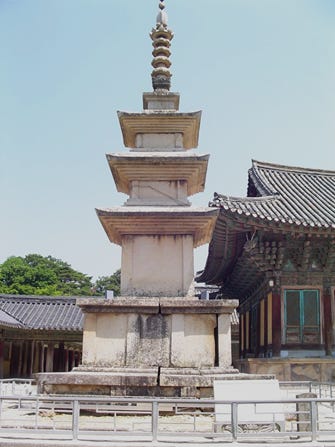
Seokgatap, or the Pagoda of Shakyamuni Buddha, at Bulguksa Temple. Built during the Unified Silla period, probably in the eighth century, this 10.75-meter pagoda is regarded as one of the finest examples of the traditional Korean stone pagoda. Also known as the “Pagoda of No Shadow” (Munyeongtap), it stands opposite Dabotap and represents Shakyamuni Buddha, the Buddha of the present, while Dabotap represents Dabo Buddha, the Buddha of the past. A famous legend connects the pagoda to the tragic love story of the stoneworker Asadal and his wife Asanyeo.
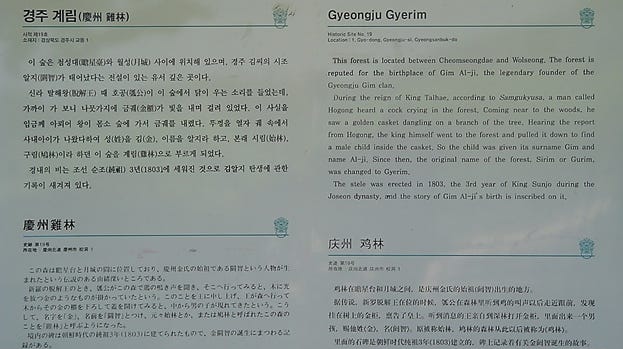
An information panel describes Gyerim Forest (계림, 鷄林) in four languages: Korean, English, Japanese, and Simplified Chinese. The ancient grove is associated with the founding legend of the Gyeongju Kim clan. According to tradition, Kim Al-ji, the clan’s progenitor, was discovered here as an infant in a golden chest beneath a tree where a white rooster was crowing. Originally called Sirim (始林, “Beginning Forest”), the grove was renamed Gyerim (“Rooster Forest”) after this event. Located between Cheomseongdae and Wolseong, it preserves many old trees and was designated a Historic Site in 1963.
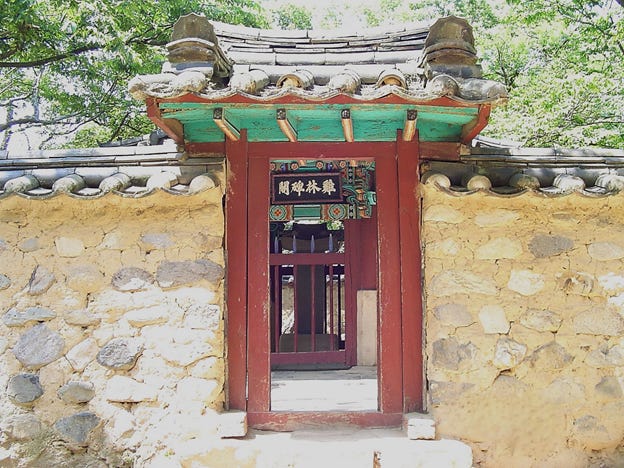
Gyerim Stele Pavilion. Located in the historic Gyerim Forest in Gyeongju, this traditional pavilion was built in 1803 to preserve the legend of the birth of Kim Al-ji, the founder of the Gyeongju Kim clan. The stele records the story of his miraculous birth and the lineage of the Kim royal family.
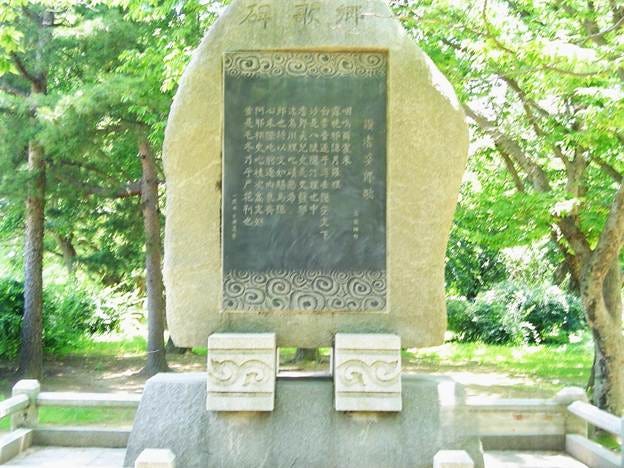
Monument to “Song of Praise for Giparang.” This poetry monument in Gyerim Forest bears the text of “Changiparangga” (찬기파랑가, 讚耆婆郞歌), a celebrated ten-line hyangga composed by the Silla monk Chungdam during the reign of King Gyeongdeok. The poem commemorates and praises Giparang, a Hwarang (“Flower Knight”) whose identity and historical status remain uncertain. Its imagery of the moon, flowing water, and a lofty pine evokes Giparang’s noble character while expressing the poet’s admiration and longing. The front of the monument bears the original hyangchal text, while the back provides a modern Korean interpretation and commentary. The original poem is written in Chinese characters used both phonetically and semantically to represent Old Korean:
咽烏爾處米 露曉邪隱月羅理
白雲音逐于浮去隱安攴下 沙是八陵隱汀理也中
耆郞矣皃史是史藪邪 逸烏川理叱磧惡希
郞也持以支如賜烏隱 心未際叱肸逐內良齊
阿耶 栢史叱枝次高攴好 雪是毛冬乃乎尸花判也
Because hyangchal is difficult to interpret precisely, translations vary. Below is an English rendering:
Song of Praise for Giparang
Monk Chungdam
As I gaze through tears,
the moon appears in the fading dawn,
beneath the white clouds
that drift away in pursuit,
there by the blue-green stream,
I see the figure of Giparang.
On the pebbled bank of the stream,
I long to follow the noble heart
that our lord once possessed.
Ah, the pine branches rise so high
that snow cannot reach them—
a crown beyond the reach of mortal eyes.
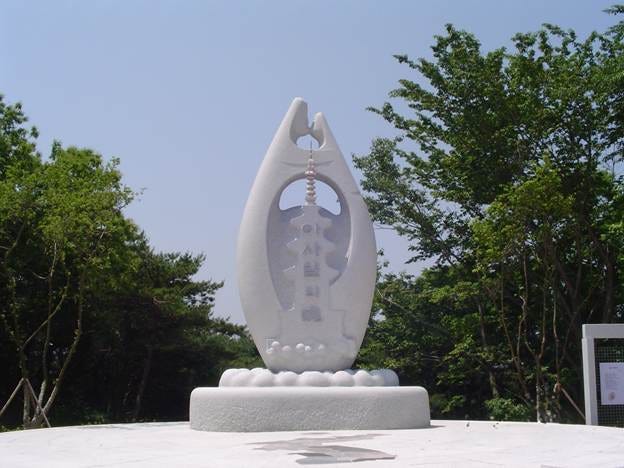
The Asadal and Asanyeo Love Tower stands in the plaza of the Dongni–Mokwol Literary Museum at the foot of Tohamsan Mountain. Erected in July 2006, the monument commemorates the artistic spirit of Asadal, a legendary master stoneworker of Silla, and the devoted love of his wife, Asanyeo. The front depicts Asadal’s craftsmanship in the form of Seokgatap, while the back features a relief portraying Asanyeo’s tragic love and longing. The monument was built through the efforts of stoneworkers from across Korea to honor Silla’s remarkable stoneworking tradition and preserve the spirit of craftsmanship.
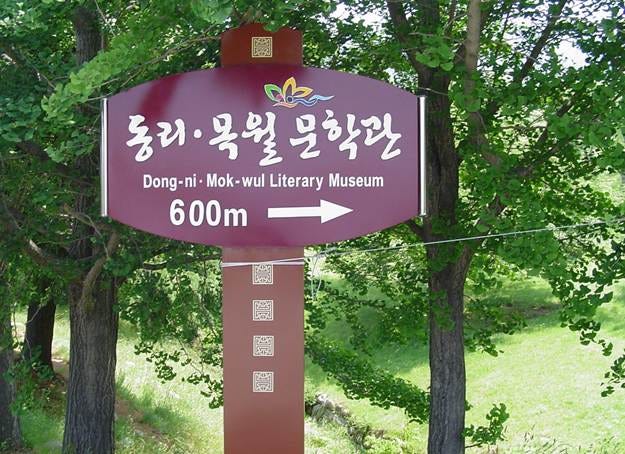
A signpost points to the Dong-ni and Mok-wol Literary Museum, dedicated to two native sons of Gyeongju who became leading figures in modern Korean literature. Fiction writer Kim Dong-ni (1913-1995) began his literary career in the 1930s and became known for exploring the ultimate meaning of human existence and the problem of fate. After Korea’s liberation, he also sought to embody a new form of humanism in his fiction. His major works include The Cross of Saban (사반의 십자가, 1955-1957) and “The Shaman Painting” (무녀도, 1936). Poet Park Mok-wol (1915-1978) was also a university professor whose poetry is known for its rich use of traditional and pastoral Korean imagery. He is especially remembered for Cheongnokjip (청록집, The Green Deer Anthology), which he coauthored with Cho Ji-hun and Park Du-jin.
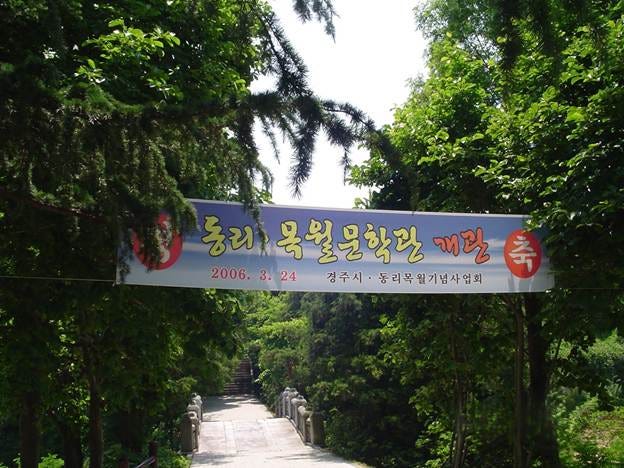
A banner commemorates the grand opening of the Dong-ni and Mok-wol Literary Museum on March 24, 2006.
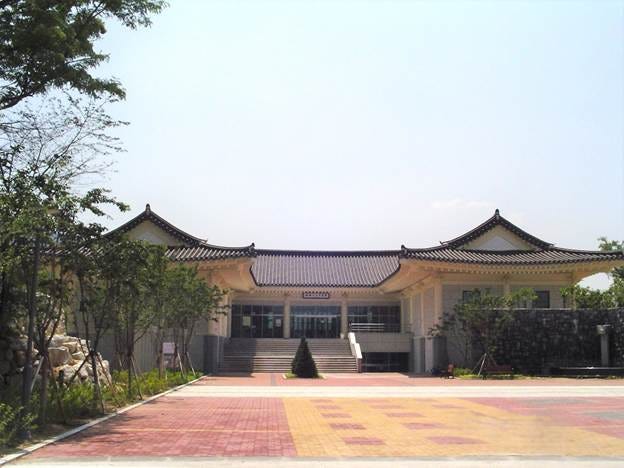
The front of the Dong-ni and Mok-wol Literary Museum.
About the Author

Professor of English and Creative Writing and Associate Dean of the School of Humanities and Theology, Missouri Baptist University
John J. Han, PhD, is the author, editor, co-editor, or translator of 36 books. His forthcoming book, Echoes from the Hills: Critical Essays on Ozarks Literature (co-edited with C. Clark Triplett), will be published by the University of Arkansas Press. He has also published more than 3,000 poems, primarily haiku, in a wide range of journals and anthologies. In addition to his long tenure at Missouri Baptist University, he has taught at Kansas State University, the University of Nebraska–Lincoln, Nebraska Wesleyan University, and Washington University in St. Louis. He has also served as a visiting scholar at Georgia College & State University and the University of Ljubljana in Slovenia.
© K-Global Scholars and Professionals Forum. All rights reserved. Content published in the K-GSP Forum may not be reproduced, distributed, or transmitted in any form without prior written permission from the K-GSP Forum, except for brief quotations with full attribution.