

Remembering Korean Poet-Alumni: Jeong Ji-yong and Yun Dong-ju at Doshisha University
In the first half of the twentieth century, Japan was the principal destination for ambitious Korean students seeking a university education, long before the United States became the preferred destination for study abroad. In search of Western knowledge, much of which had been introduced into East Asia through Japan’s rapid modernization during the Meiji era, Korean students crossed the Korea Strait by ferry to attend Japanese universities. Among them were the poets Jeong Ji-yong (정지용, 鄭芝溶, 1902-1950) and Yun Dong-ju (윤동주, 尹東柱, 1917-1945), both of whom enrolled at Doshisha University (同志社大学), a prestigious private institution in Kyoto.
On Jeong Ji-yong:
Jeong Ji-yong was born in Okcheon, North Chungcheong Province, Korea, and showed an early interest in literature during his studies at Whimoon High School, where he entered in 1918. In 1923, he entered the preparatory program of Doshisha University as a government-sponsored student from Whimoon High School, marking the beginning of his formative years in Japan, where he would later produce much of his early modernist poetry. He published works such as “Café France” in Hakjo (Academic Tide), a journal of Korean students in Kyoto, and contributed to various literary outlets in both Korean and Japanese. During this period, he also wrote one of his most famous poems, “Hyangsu” (Nostalgia), which would later become a landmark of modern Korean poetry. In 1928, he converted to Roman Catholicism, taking the baptismal name Francis, and completed an English thesis on William Blake’s poetic imagination.
After graduating from Doshisha University in 1929, Jeong returned to Korea and began teaching English at his alma mater, Whimoon High School, a position he held for sixteen years until liberation in 1945. Alongside his teaching career, he played a key role in shaping modern Korean literary culture: he helped found the journal Simunhak (Poetic Literature) in 1930, served as an editorial adviser to Catholic Youth, and introduced emerging writers such as Yi Sang to broader audiences. In 1933, he joined the modernist literary group Guinhoe (The Group of Nine), actively participating in lectures and avant-garde literary publications. After liberation, he joined Ewha Womans University as a professor but retired in 1948 to a quiet life in Seoul.
Jeong Ji-yong’s later life was marked by the uncertainty of the Korean War period, during which he disappeared and was presumed lost under unclear circumstances. In South Korea, his absence led to decades of political and cultural erasure, including the banning of his works and partial censorship of his name. This ban was finally lifted in 1988, leading to the restoration of his poetry to the Korean literary canon. Today, he is widely recognized as one of the most important pioneers of modern Korean poetry, and his legacy is commemorated through literary prizes, memorial projects, and monuments, including a memorial stone erected at Doshisha University in Kyoto in 2005.
On Yun Dong-ju:
Yun Dong-ju was born in Jiandao (Gando), Northeast China, where his Korean grandparents had settled in 1886. Raised in a devout Christian household, he participated in family worship from an early age and continued attending church and chapel services throughout his schooling. After graduating from Gwangmyeong Secondary School, he entered Yonhi College (now Yonsei University) in Seoul in 1938, where he began writing poetry and formed friendships with writers such as Jeong Ji-yong.
After graduating from Yonhi in 1941, Yun went to Japan for further study. He briefly enrolled in the English Department at Rikkyo University in Tokyo before transferring to the Faculty of Humanities at Doshisha University in Kyoto. His time at Doshisha was cut short by increasing surveillance, culminating in his arrest in 1943 on charges related to political offenses. He was later sentenced to two years in prison by a Japanese court. He died in Fukuoka prison on February 16, 1945, at the age of twenty-seven, just months before Korea’s liberation on August 15 of that year.
At the time of his arrest, Yun had already attempted to publish his poetry collection Sky, Wind, Stars, and Poetry (Haneul gwa baram gwa byeol gwa si), though it was not realized until after liberation. His writing, much of it composed during his student years in Seoul and Japan, reflects a profound sense of conscience, longing, and resistance. In recognition of his enduring literary legacy, Doshisha University posthumously awarded him an honorary doctorate in literature on February 16, 2025, marking the 80th anniversary of his death in a ceremony attended by university leaders, Korean and Japanese scholars, and members of his family.
Below is the Korean text and an English translation of Yun’s most well-known poem composed in November 1941:
서시
죽는 날까지 하늘을 우러러
한 점 부끄럼이 없기를,
잎새에 이는 바람에도
나는 괴로워했다.
별을 노래하는 마음으로
모든 죽어가는 것을 사랑해야지
그리고 나한테 주어진 길을
걸어가야겠다.
오늘 밤에도 별이 바람에 스치운다.
Prologue
Until the day I die,
may I look up to heaven
without a single speck of shame.
Even at the wind
stirring the leaves,
I felt sorrow.
With a heart that sings of the stars,
I must love all that is passing away,
and I must walk
the path given to me.
Tonight, too,
the stars are brushed by the wind.
(Originally published in Intégrité, vol. 13, no. 2, Fall 2014, p. 67)
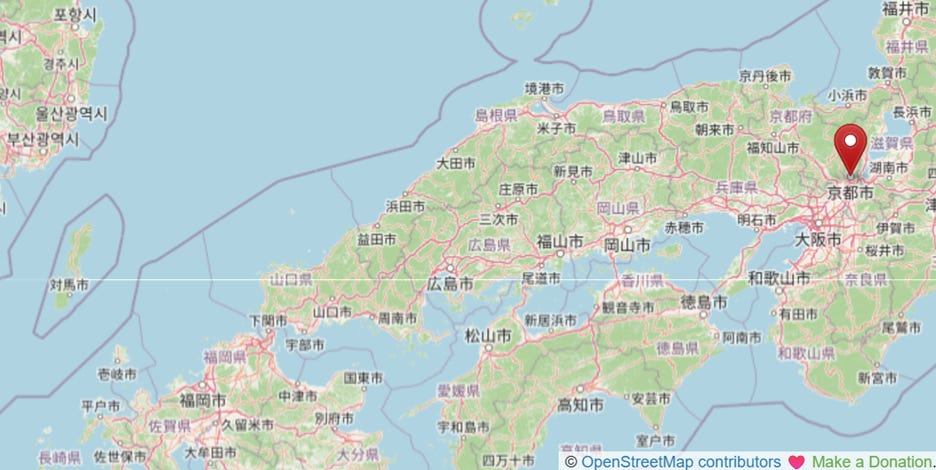
Doshisha University, a Protestant Christian institution founded in 1875, is located in Kyoto, Japan. The Imadegawa campus features memorial stones honoring two of its prominent Korean alumni, the poets Jeong Ji-yong and Yun Dong-ju. Composite image based on map data © OpenStreetMap contributors.
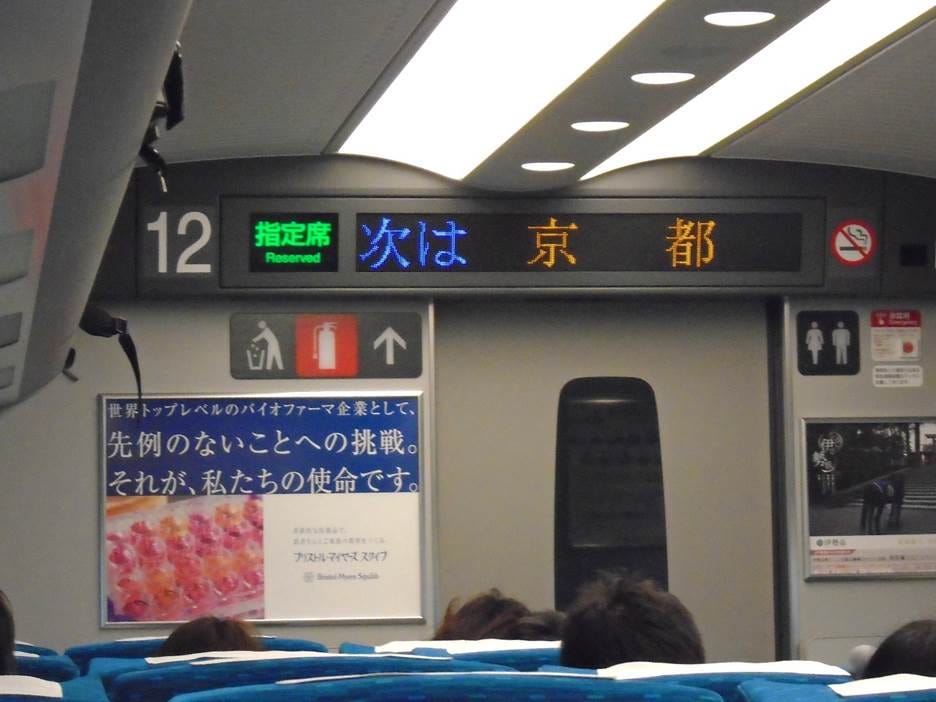
My Shinkansen train (bullet train) from Tokyo will arrive in Kyoto soon.
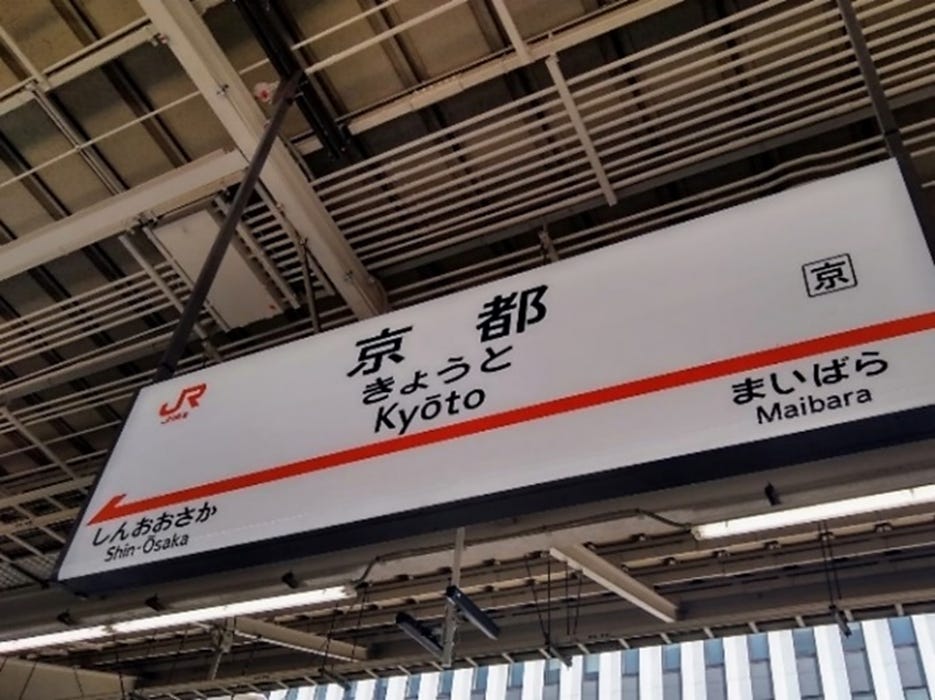
I arrived at Kyoto Station (京都駅). As a Japanese railroad station, Kyoto Station is second only to Nagoya Station in size. It serves both Shinkansen and non-Shinkansen lines. The Nara Line (奈良線), a non-Shinkansen line, leads to such historic destinations as Tofuku-ji, Inari, Uji, and Nara.
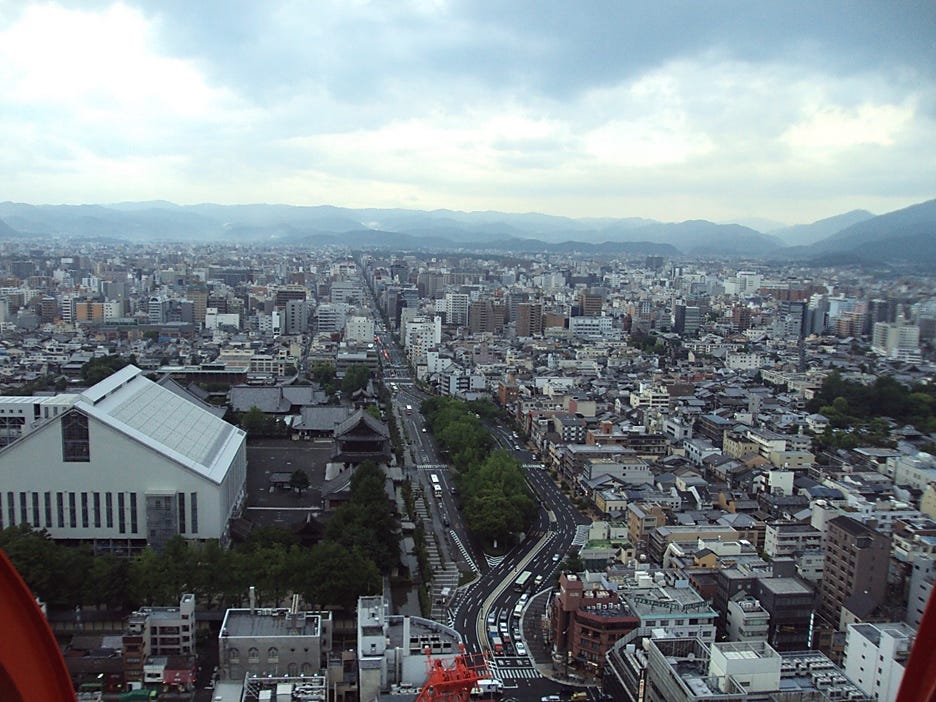
An aerial view of Kyoto looking north from the observation tower near Kyoto Station. Kyoto University is visible on the right side of the photograph, while the Doshisha University campus lies just to the right of the main road. At the foot of the northwestern mountains are several of Kyoto’s best-known cultural landmarks, including Kinkaku-ji (金閣寺, the Golden Pavilion) and Ryoan-ji (龍安寺), famous for its Zen rock garden.
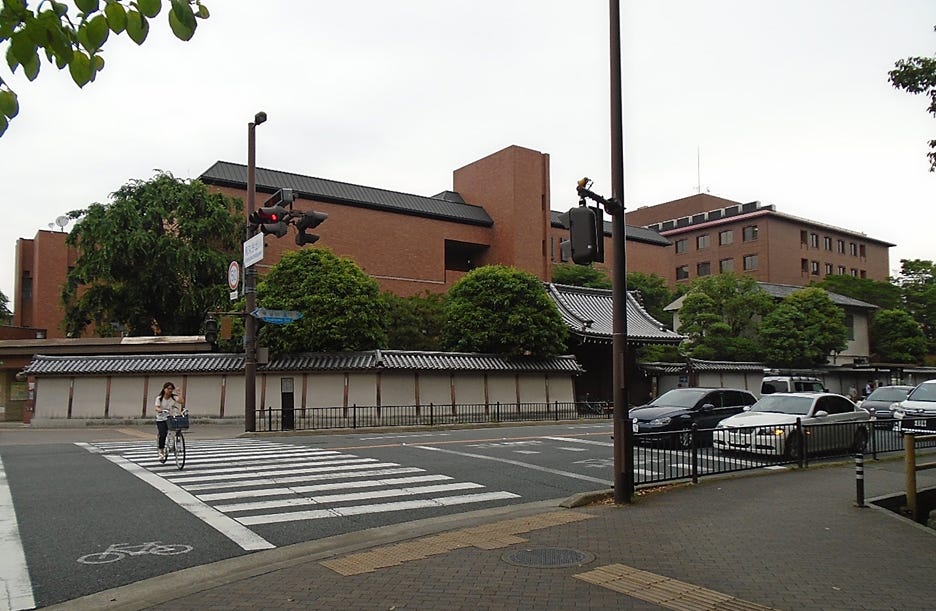
The campus of Doshisha University, which was founded by Niijima Jō (新島 襄) in 1875. Today, Doshisha is widely regarded as one of Japan’s four most prestigious Christian universities, alongside Sophia University (上智大学) in Tokyo, Kwansei Gakuin University (関西学院大学) in Nishinomiya, and International Christian University (国際基督教大学) in Mitaka. It is noteworthy that, in a country whose religious landscape has traditionally been shaped by Shinto and Buddhism, more than a dozen Christian institutions of higher learning continue to thrive.
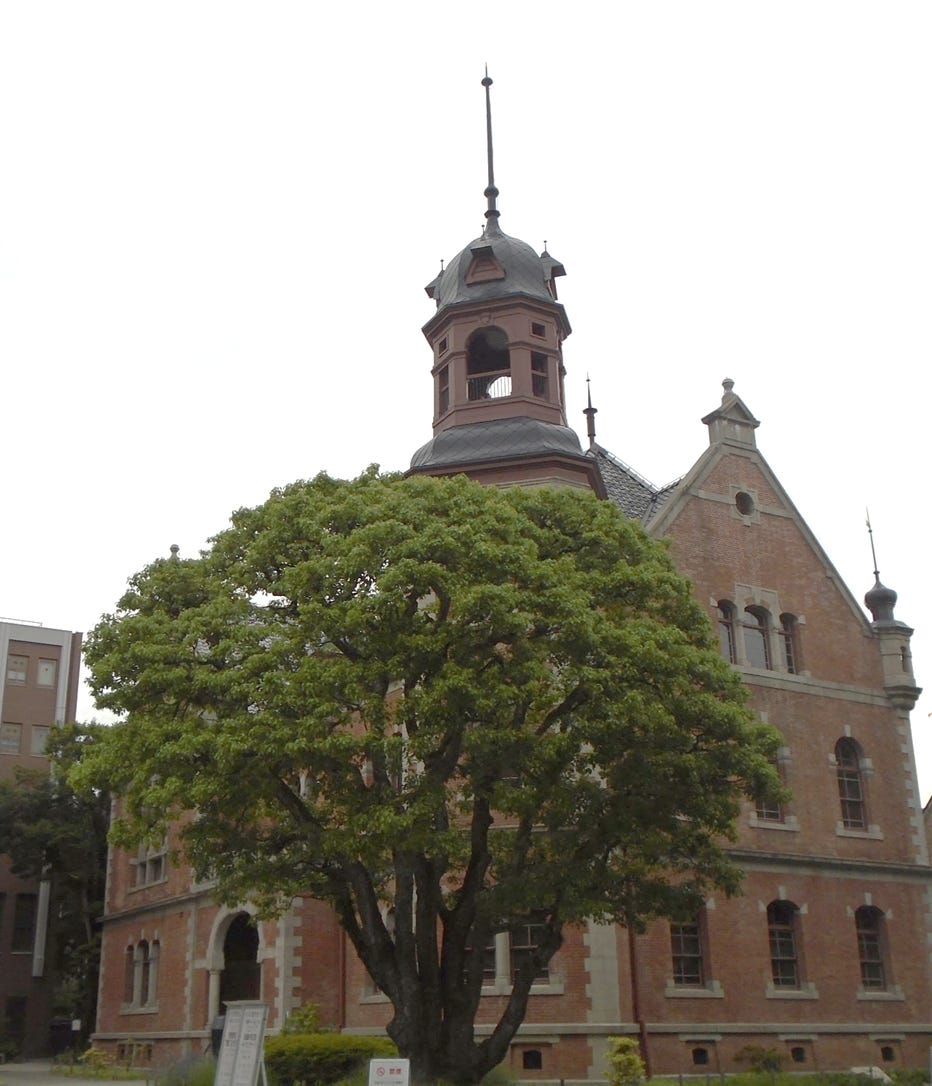
Clark Memorial Hall, a landmark building on the campus of Doshisha University, is designated a National Important Cultural Property.
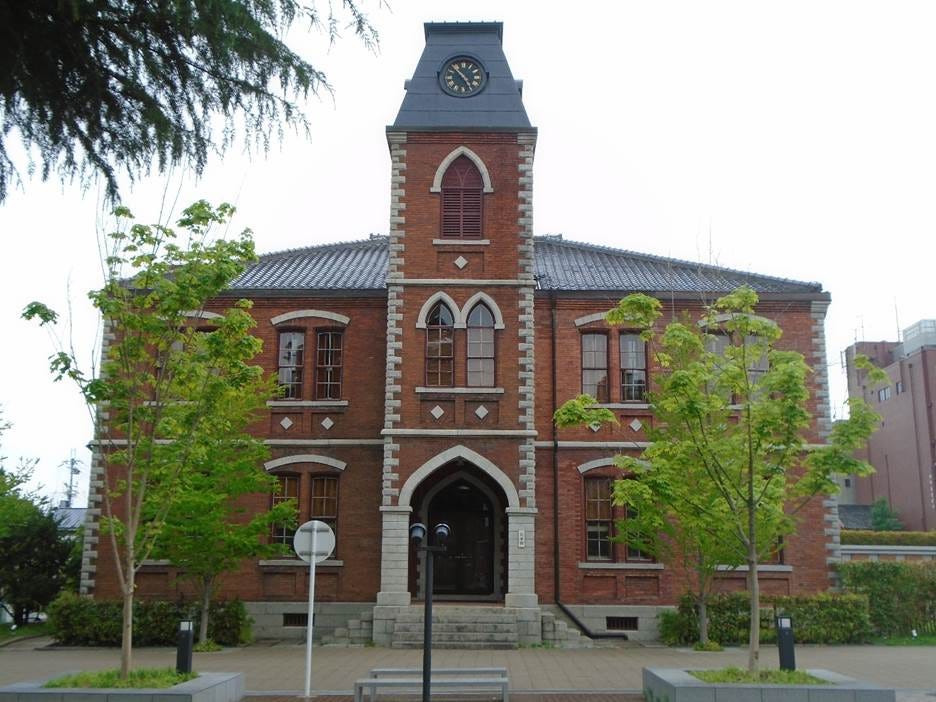
This is one of the buildings on the campus of Doshisha University. It is striking to observe the blend of a traditional tile roof with Western-style brick and stone construction.
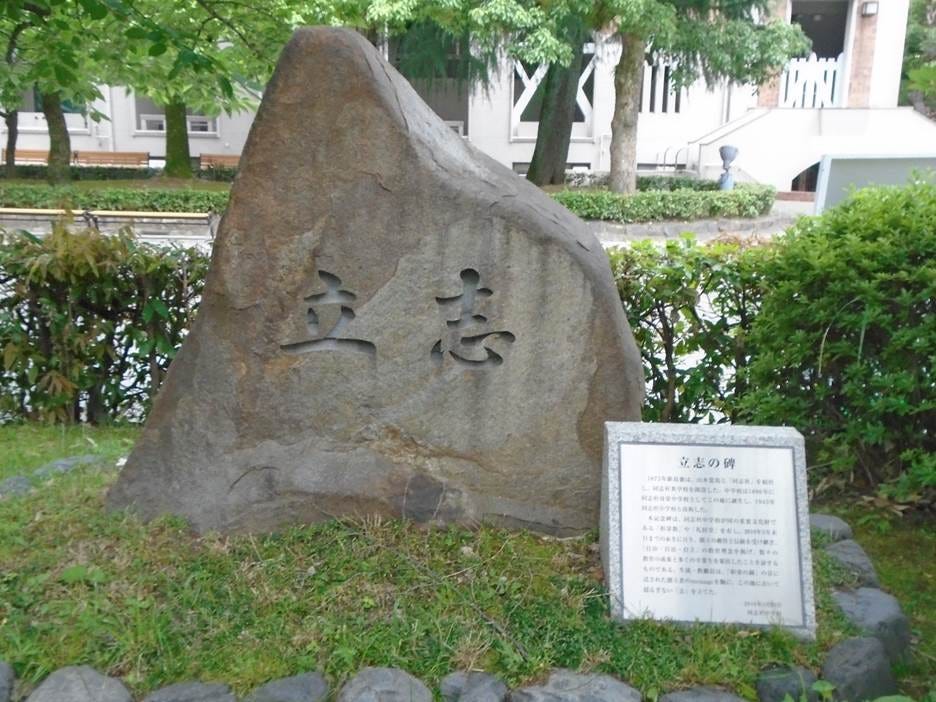
A stone monument engraved with the Chinese characters 立志 (risshi, “to form a strong resolve”) on the campus of Doshisha University reflects the university’s educational ideal of cultivating determination and purpose among its students.
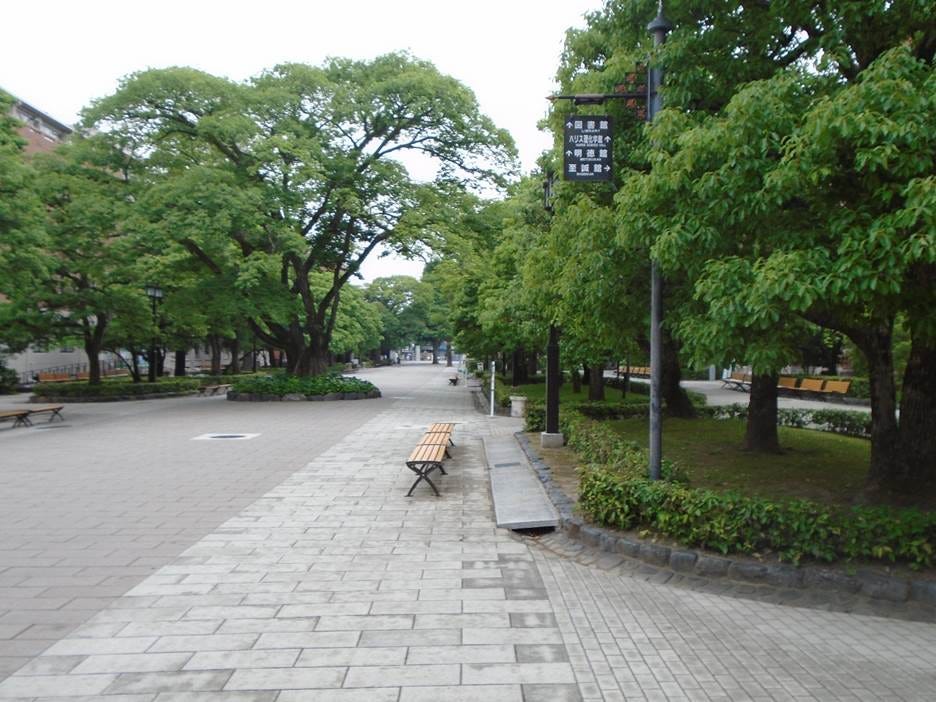
The Doshisha campus looks clean and serene. Indeed, Kyoto itself is refreshingly free from the hustle and bustle that characterize many of Japan’s other major cities.
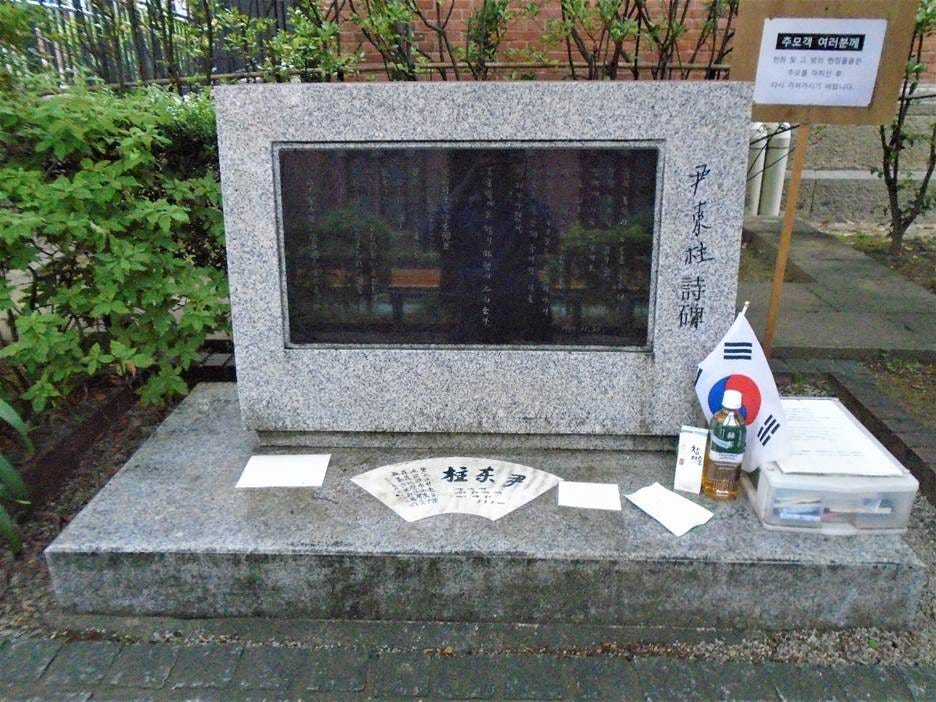
The Yun Dong-ju Poetry Monument on the campus of Doshisha University.
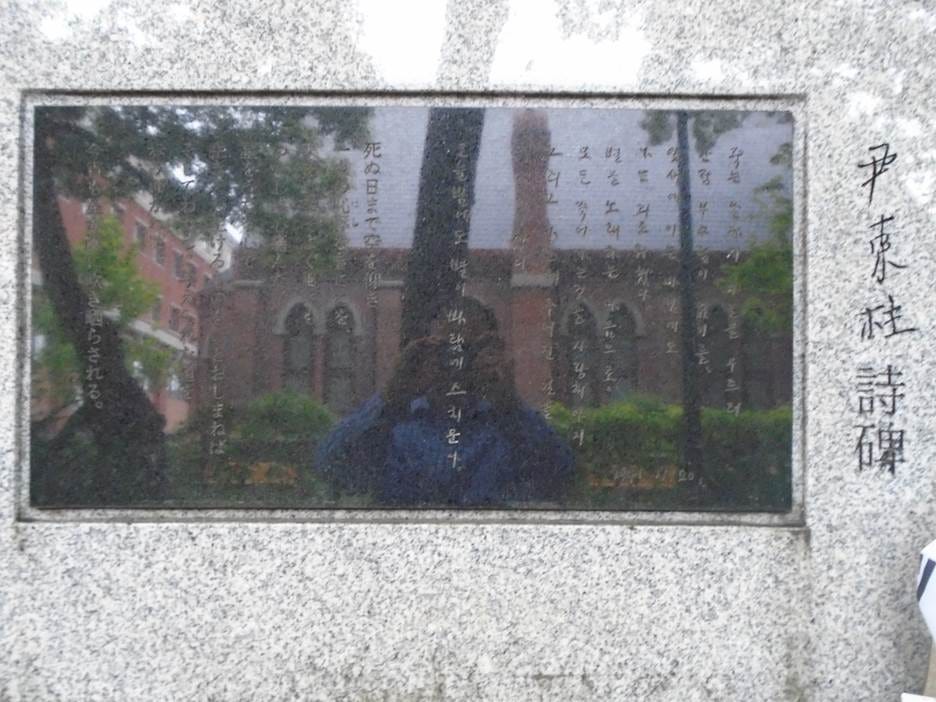
A close-up of the Yun Dong-ju Poetry Monument on the campus of Doshisha University reveals the complete text of his well-known poem, “Prologue.”
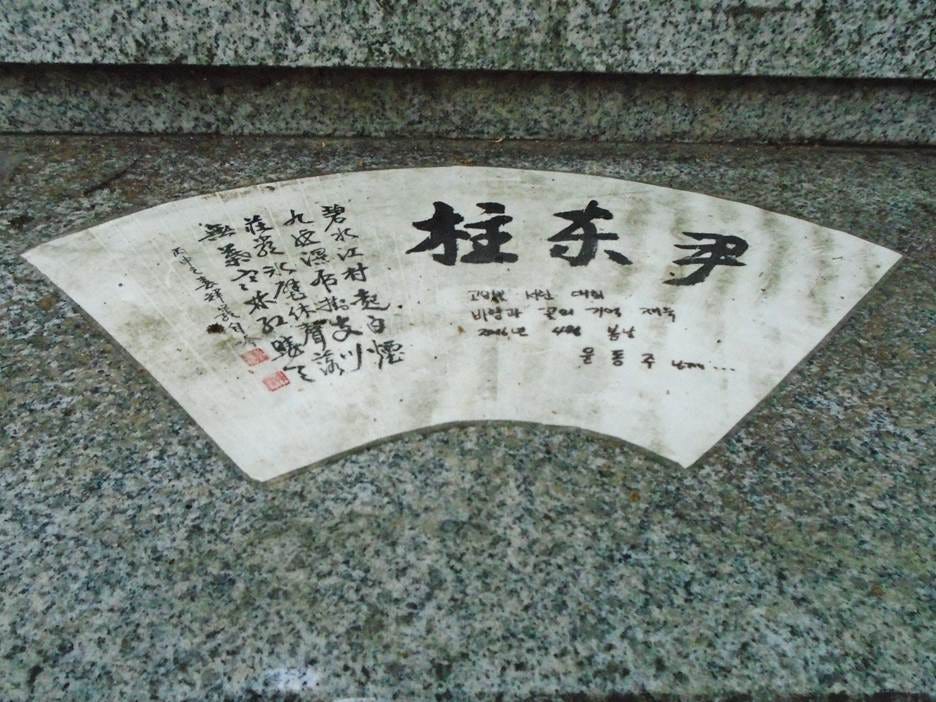
The left side of this fan-shaped stone panel features a four-line poem in classical Chinese, rendered in elegant calligraphy. Although its authorship remains uncertain, the poem appears to have been composed specifically for the monument rather than copied from a well-known classical source. Drawing on traditional imagery of rivers, moonlight, autumn dew, and distant waters, it evokes purity, solitude, and spiritual transcendence—qualities that resonate deeply with Yun Dong-ju’s poetic vision and enduring legacy. The classical verse thus links Yun’s modern Korean poetry to the broader literary tradition of East Asia.
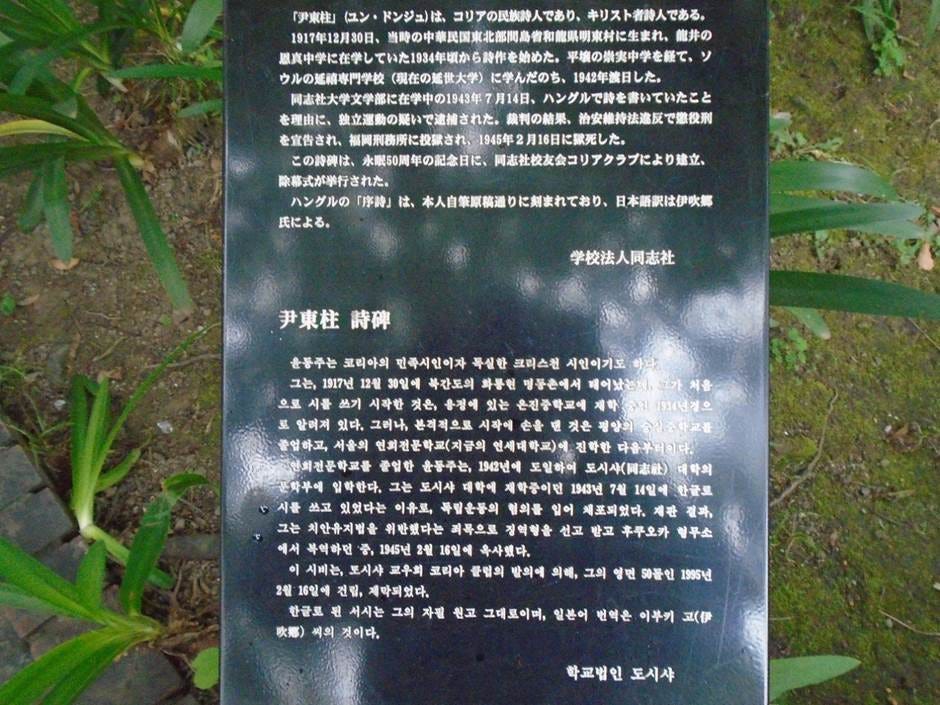
This interpretive panel beside the poetry monument of Yun Dong-ju at Doshisha University provides a brief biography of the poet. The second half of the text reads:
Yun graduated from Yonhi College and came to Japan in 1942, where he enrolled in Doshisha University’s Faculty of Letters. While studying here, he was arrested on July 14, 1943, on suspicion of independence activism after being found writing poetry in Korean. He was later convicted under the Peace Preservation Law and imprisoned in Fukuoka, where he died on February 16, 1945.
The monument was erected and unveiled on February 16, 1995, marking the 50th anniversary of his death, through the initiative of the Doshisha Alumni Korea Club.
The Korean text of “Prologue” is reproduced from Yun’s original manuscript, and the Japanese translation was prepared by Ibuki Kō.
The Doshisha University Foundation
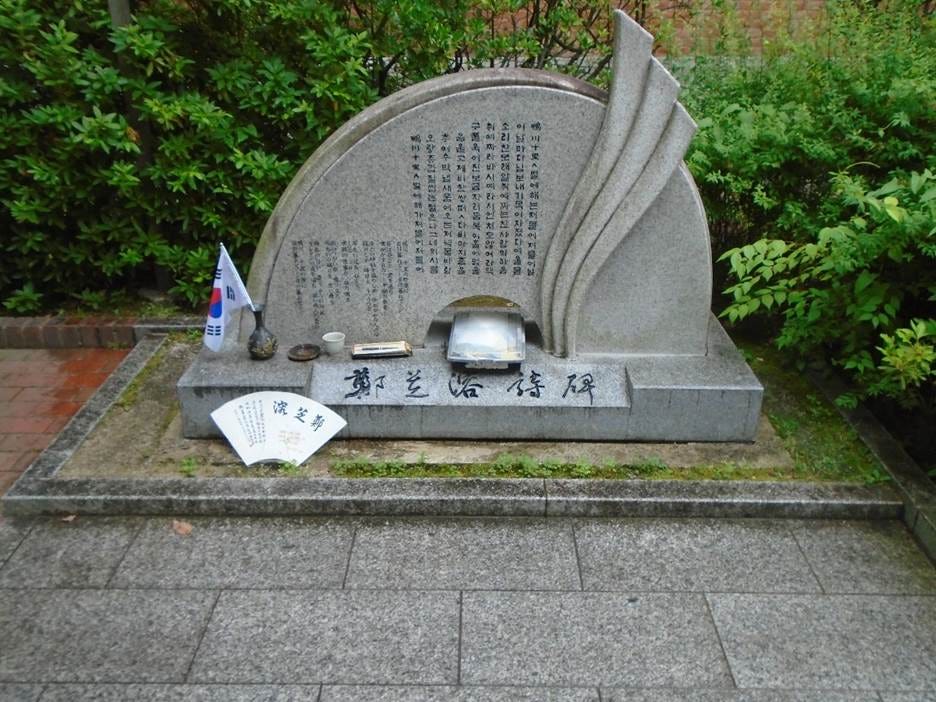
Next to the Yun Dong-ju Poetry Monument stands the Jeong Ji-yong Poetry Monument at Doshisha University.
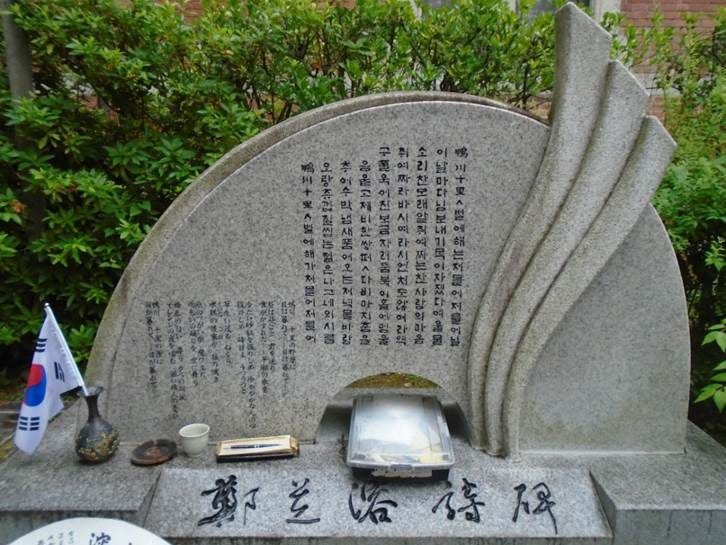
The monument commemorating Jeong Ji-yong features his poem on the Kamo River—a 19-mile stretch flowing through central Kyoto—along with a Japanese translation. An English translation is provided below.
The Kamo River
On the ten-ri fields of the Kamo River,
the sun is fading… fading…
Day after day, sending off my beloved—
my throat has gone hoarse… the sound of rapids…
A cold heart, squeezing cold grains of sand,
squeeze it harder—break it open—still no relief.
In a nest overgrown with tangled reeds,
a coot, a widow-mother, cries alone,
a pair of swallows takes flight,
dancing through wind like rain.
Evening river breeze carries the scent of watermelon.
The sorrow of a young wayfarer,
chewing orange peel.
On the ten-ri fields of the Kamo River,
the sun fades… fades…
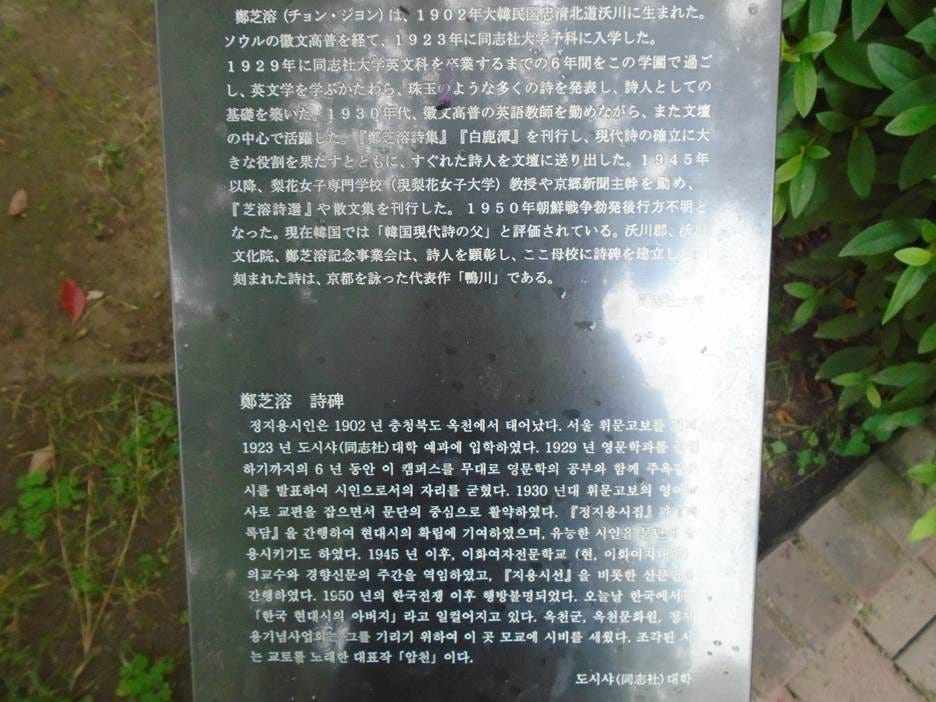
This interpretive panel beside the Jeong Ji-yong Poetry Monument at Doshisha University offers a brief biography of the poet. It describes him as “a father of modern Korean poetry” and notes that the monument was erected on his alma mater’s campus by Okcheon County, the Okcheon Cultural Center, and the Jeong Ji-yong Memorial Association in his honor. It also explains that the inscribed poem (see previous page), “The Kamo River,” is one of his most representative works on Kyoto.
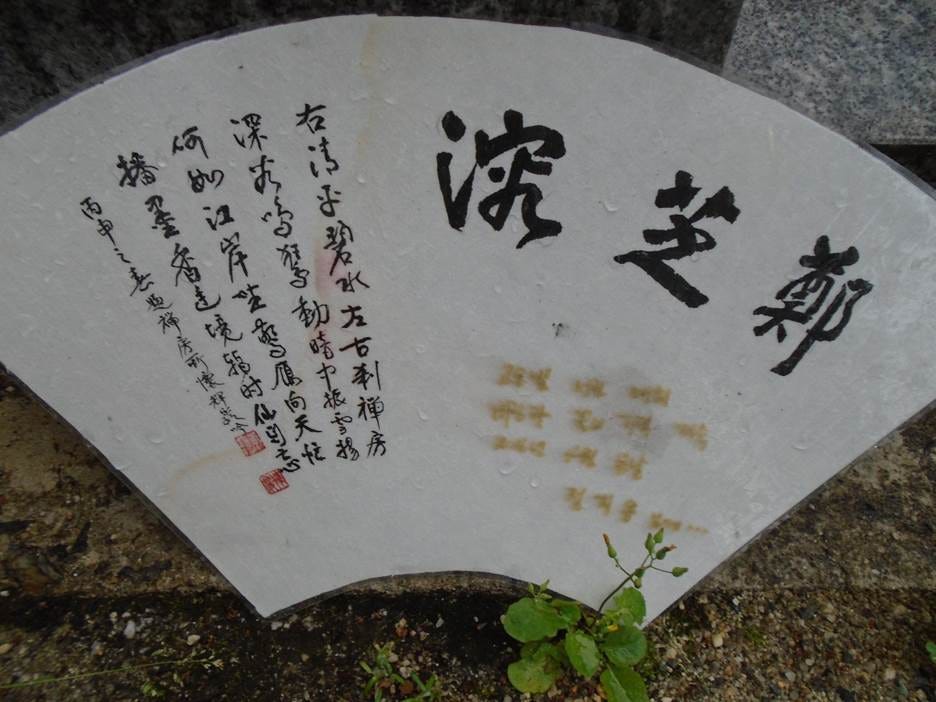
This fan-shaped stone panel commemorating Jeong Ji-yong displays a calligraphic inscription of a classical Chinese-style poem alongside the name of the Kamo River in bold characters. Portions of the poem are difficult to decipher due to dense brushwork. The inscription evokes the Kamo River in Kyoto through restrained, traditional imagery characteristic of classical Chinese poetic diction, suggesting its flowing movement and seasonal atmosphere. Rather than offering a straightforward description, the lines condense the scene into an elegant, contemplative vision in which the river becomes a symbol of passing time and quiet reflection. Because the text is rendered in stylized script and is only partially legible, its precise wording remains uncertain, but its overall tone aligns with the monument’s commemorative and lyrical intent.
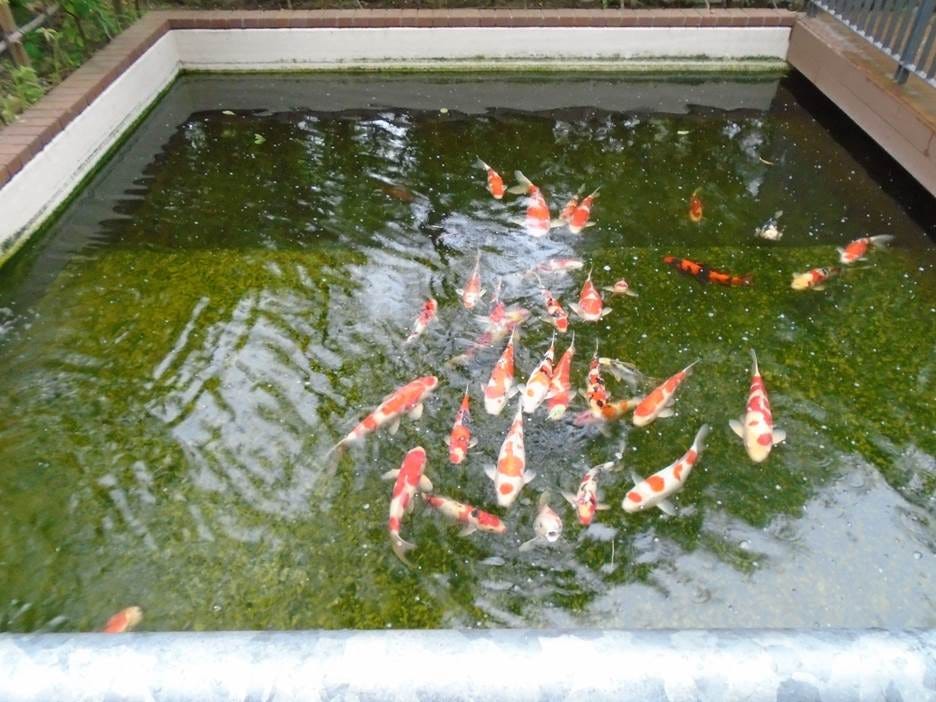
Next to the Yun and Jeong monuments, a small pond with goldfish swimming peacefully suggests a quiet hope for harmony between Korea and Japan.
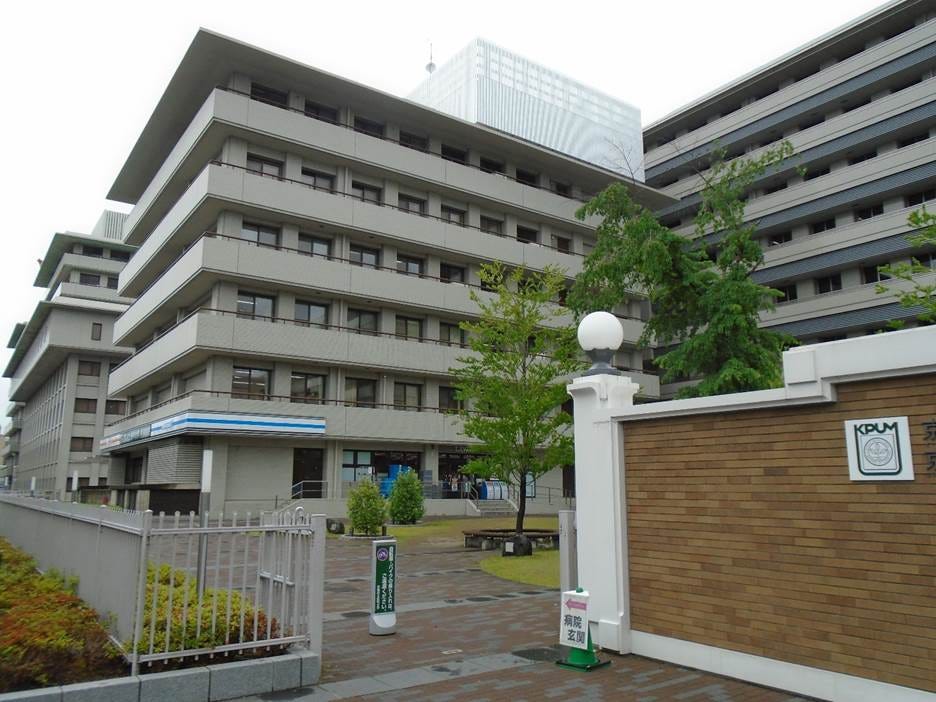
I visited Doshisha University before attending the 40th Conference of the John Steinbeck Society of Japan at Kyoto Prefectural University of Medicine (KPUM) in May 2016. The photograph shows the entrance to the campus of Kyoto Prefectural University of Medicine.
Most of my visits to literary sites in Japan were made possible through my participation in the annual conferences of the John Steinbeck Society of Japan, held each year at a different university across the country. I also served for several years as an editor of the Society’s English-language journal, Steinbeck Studies.
About the Author
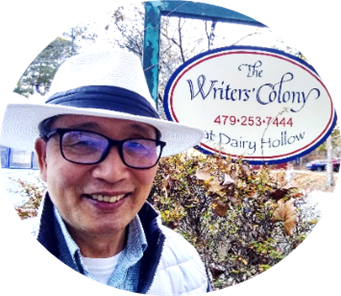
Professor of English and Creative Writing and Associate Dean of the School of Humanities and Theology, Missouri Baptist University
John J. Han, PhD, is the author, editor, co-editor, or translator of 35 books. His forthcoming book, Echoes from the Hills: Critical Essays on Ozarks Literature (co-edited with C. Clark Triplett), will be published by the University of Arkansas Press. He has also published nearly 3,000 poems in a wide range of journals and anthologies. In addition to his long tenure at Missouri Baptist University, he has taught at Kansas State University, the University of Nebraska–Lincoln, Nebraska Wesleyan University, and Washington University in St. Louis. He has also served as a visiting scholar at Georgia College & State University and the University of Ljubljana in Slovenia.
© K-Global Scholars and Professionals Forum. All rights reserved. Content published in the K-GSP Forum may not be reproduced, distributed, or transmitted in any form without prior written permission from the K-GSP Forum, except for brief quotations with full attribution.