

The Written Landscape: Discovering England Through Its Literature
As a professor of English, I had never visited England until May 2026, when I traveled with my university’s Chorale & Choral Society for a week. Although my specialty is American literature, I also took numerous British literature courses as a student and have taught many British texts, so it was only fitting to visit England at least once. Touring the country for a week was manageable—not too long, not too short—and I needed only to follow the group without planning the trip.
During our stay in England, we visited almost a dozen sites, including London, Salisbury, Stonehenge, Bath, Bristol, Wells, Coventry, Stratford, and Oxford. Although our itinerary was organized around the places where the choral group performed, I still had opportunities to soak in the sights and sounds that echo English texts. Fortunately, England is much smaller than France and Germany, which I had visited in 2025, making it convenient to move from one place to the next.
This essay presents photographs related to English literature that I took during the trip. Some readers, even those who are not English majors, will be able to recognize the significance of the places featured in this essay. Before the trip, I had researched each location on our itinerary, which proved helpful. My dream destination, Wales—the home of King Arthur and his knights—was not part of our trip. While staying in Bristol for two nights, I missed Wales, located across the Bristol Channel, but I also knew that it is impossible to visit all the places we dream about. Who knows? A dream destination may be better left as an idealized notion of a place.
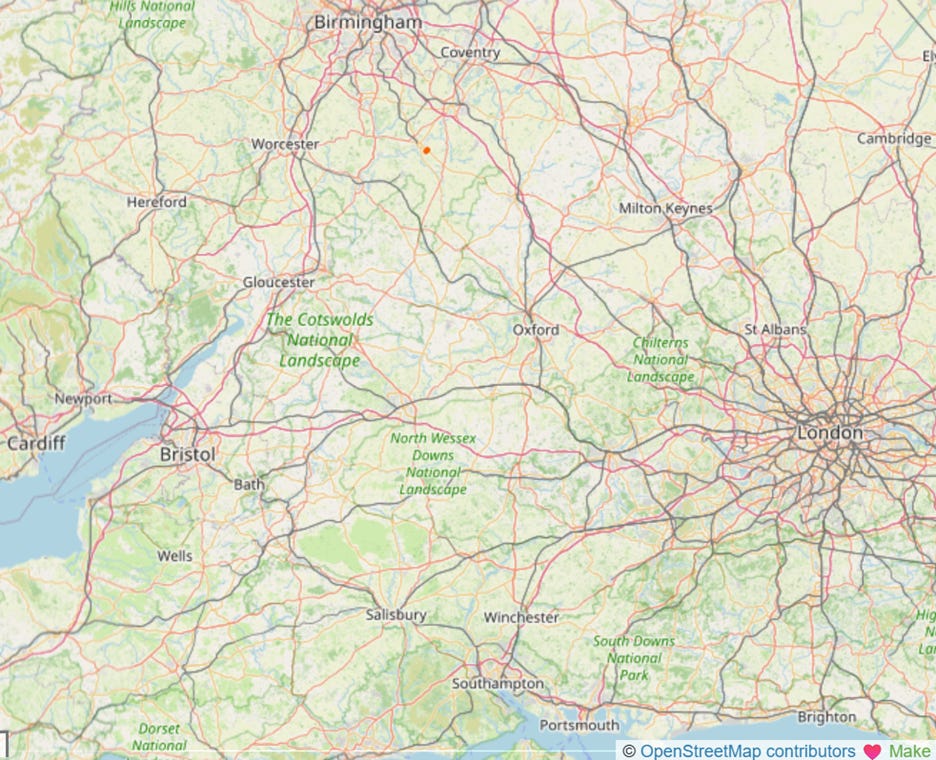
Literary Landscapes of Southern England and the Midlands. Composite image based on map data © OpenStreetMap contributors.
Our itinerary began with a two-day tour of London. We then traveled west to visit Salisbury and nearby Stonehenge, as well as Bristol, Bath, and Wells. From there, we headed northeast to Stratford-upon-Avon and Coventry in the Heart of England. Thereafter, we traveled southeast to Oxford before returning to London.


Our American Airlines flight landed in Terminal 3 of London Heathrow Airport. According to the English tour guide, arriving in Terminal 3 is less complex than at some other terminals. The airport was less crowded than I had expected, and thanks to the electronic travel visa, which I had obtained weeks before the trip, I did not need any interviews with immigration officials. Indeed, all visitors went through an unmanned checkpoint, which is a global trend these days. In travel writing, memoir, and modern fiction, Heathrow often frames moments of departure, reunion, and separation.
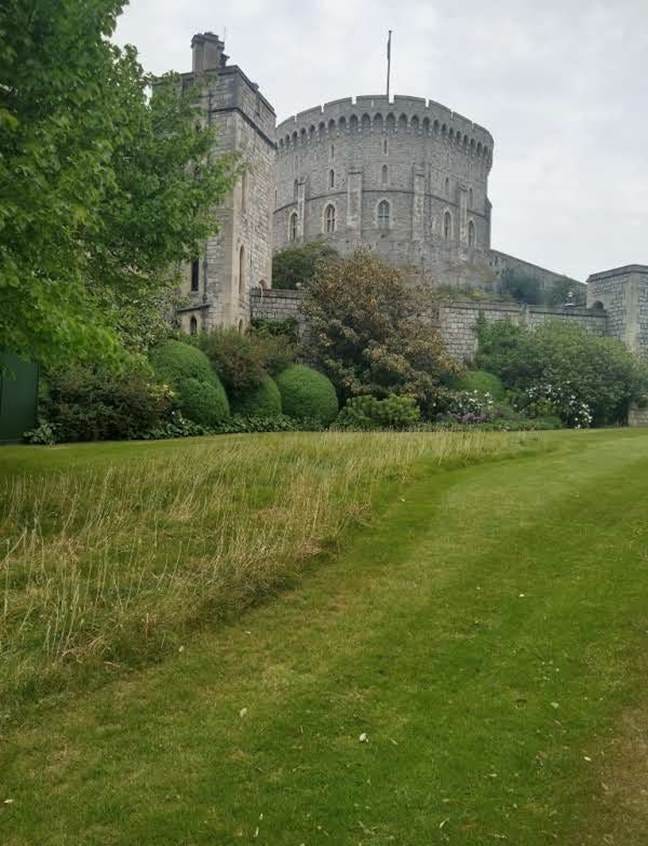
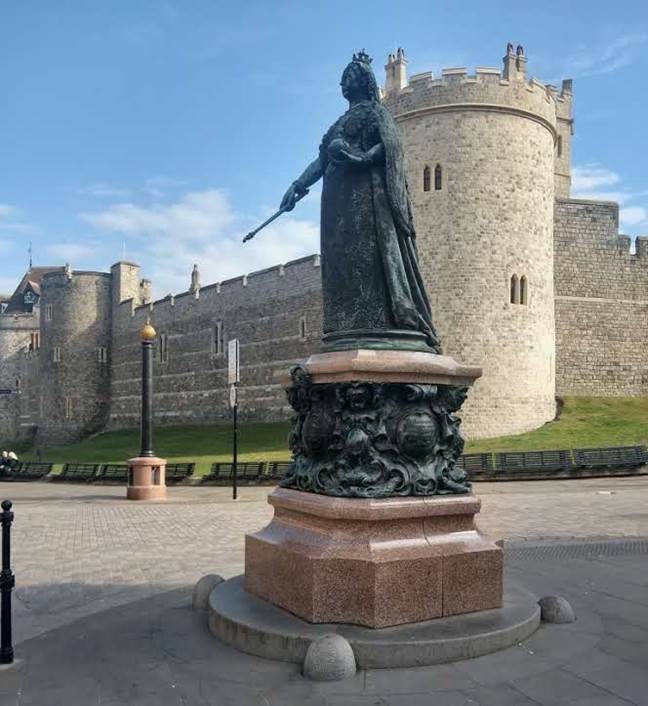
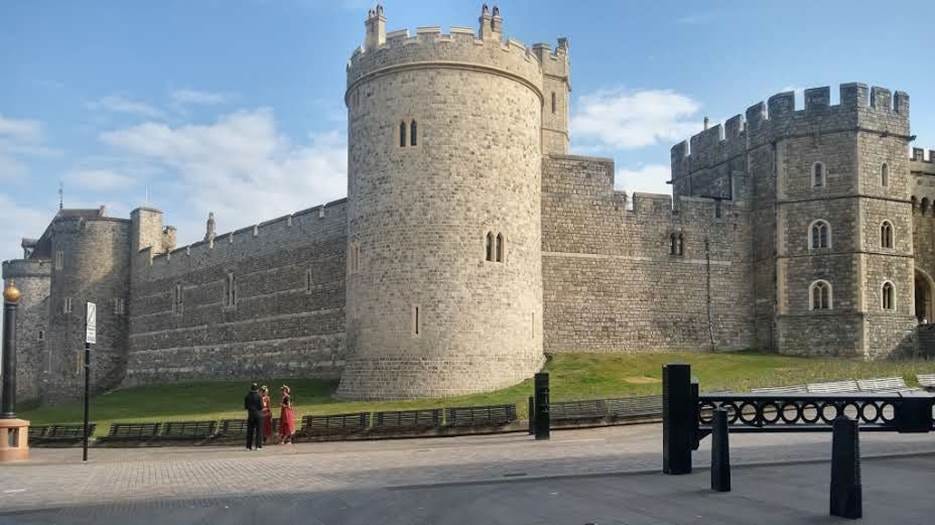
Windsor Castle, about 25 miles west of central London, is a royal residence. First built by William the Conqueror around 1070, four years after the Norman Conquest, it is home to the State Apartments and St. George’s Chapel. The photo in the middle shows a bronze statue of Queen Victoria. Several literary works are set at Windsor, including William Shakespeare’s comedy The Merry Wives of Windsor (1602) and W. H. Ainsworth’s historical romance Windsor Castle (1843).
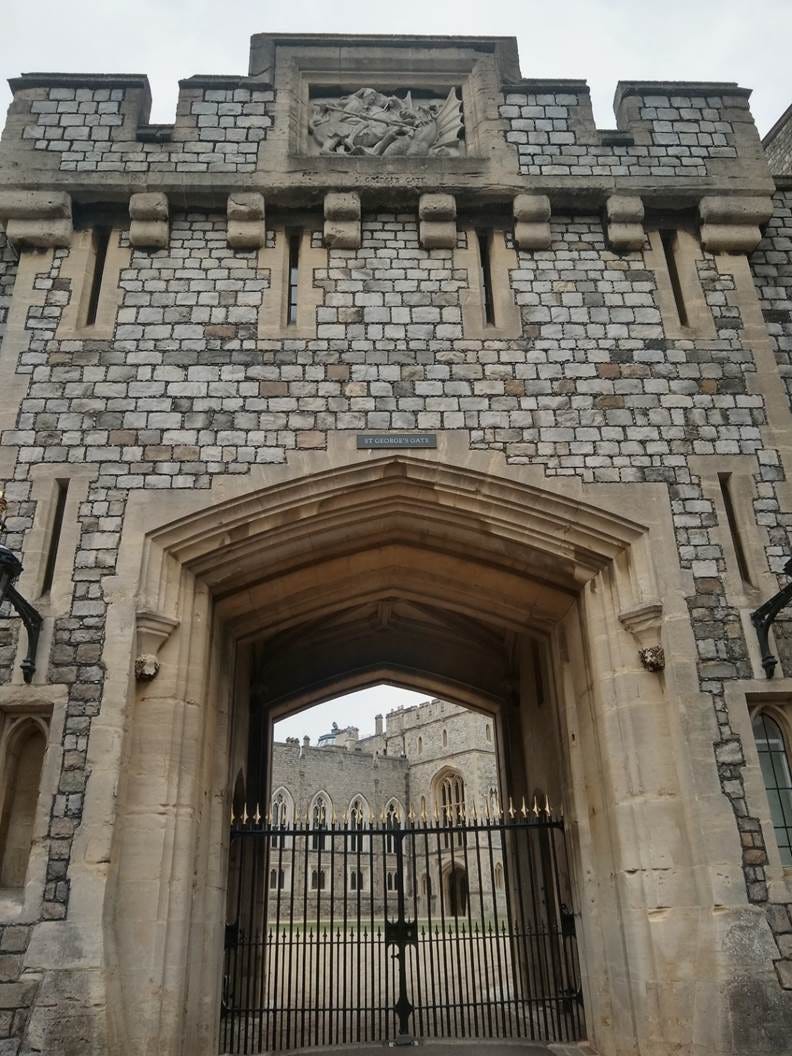
The top of St. George’s Gate features St. George—the patron saint of England—slaying a dragon, a symbol of evil. In Book I of Edmund Spenser’s epic poem The Faerie Queene (1590), St. George appears as the Redcrosse Knight, whose mission is to rescue Lady Una and restore her kingdom.
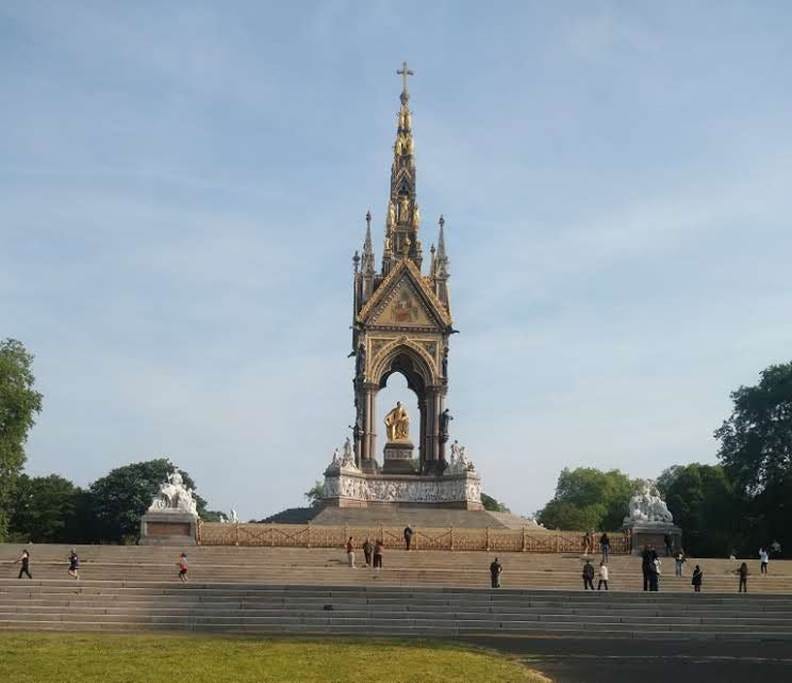
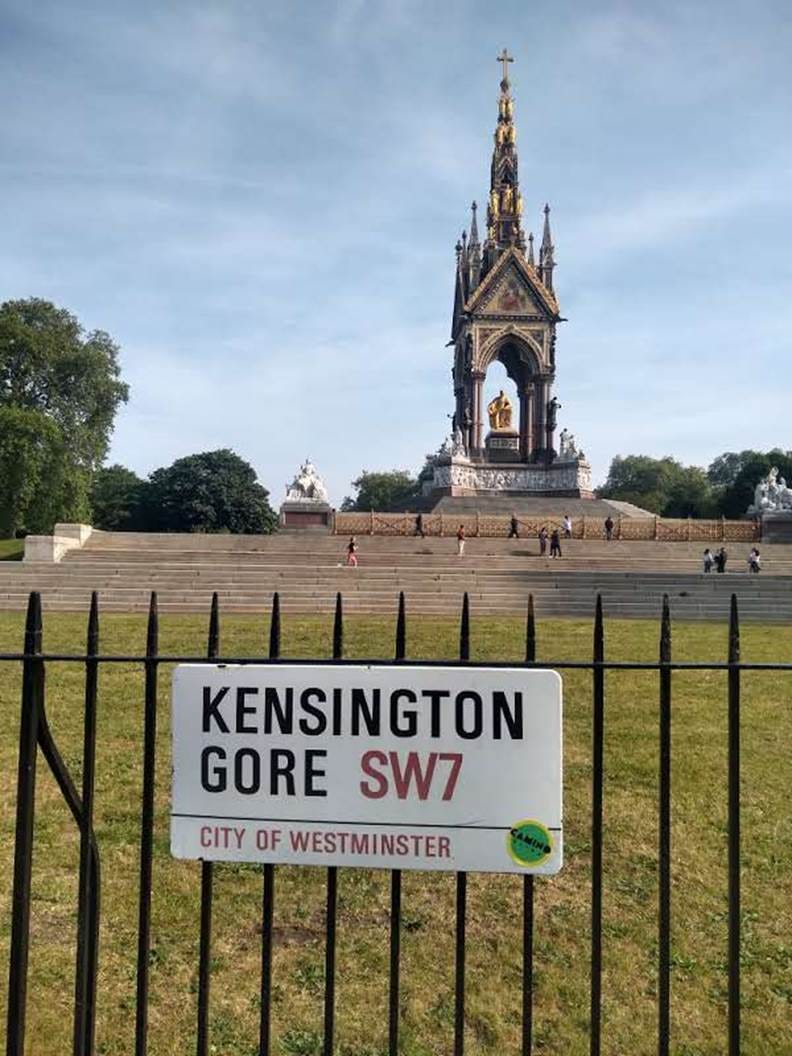
The Albert Memorial, located in the royal park of Kensington Gardens in Westminster, commemorates the husband of Queen Victoria. Completed in 1872, the gardens were later immortalized in Peter Pan in Kensington Gardens (1906), a children’s fantasy by J. M. Barrie. Kensington Gardens is one of London’s eight Royal Parks.
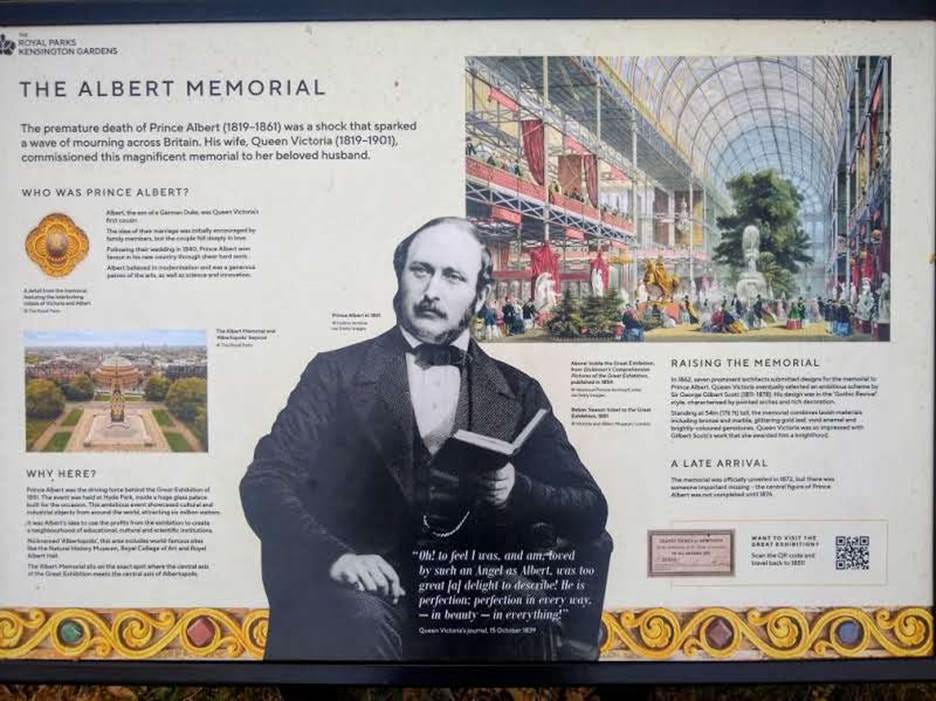
An interpretive sign at the Albert Memorial.
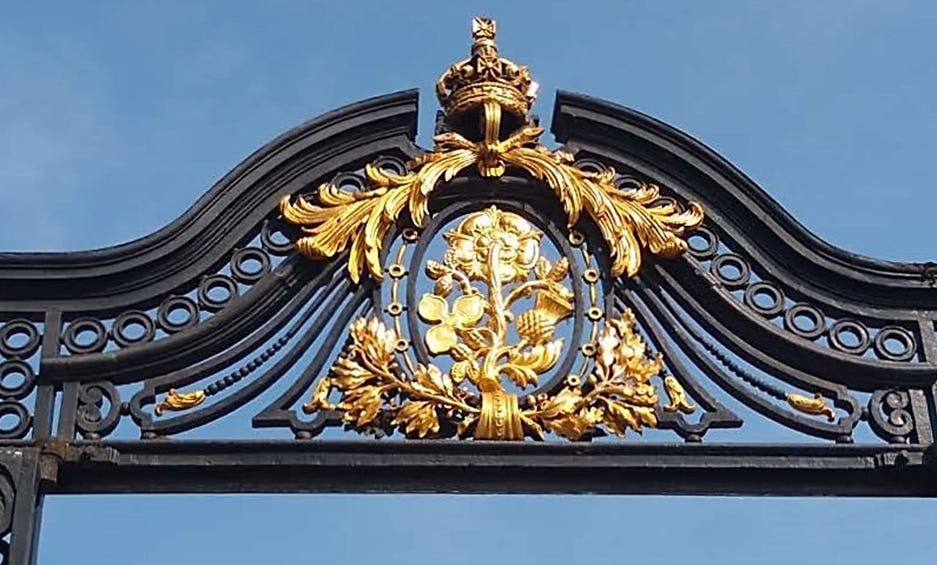
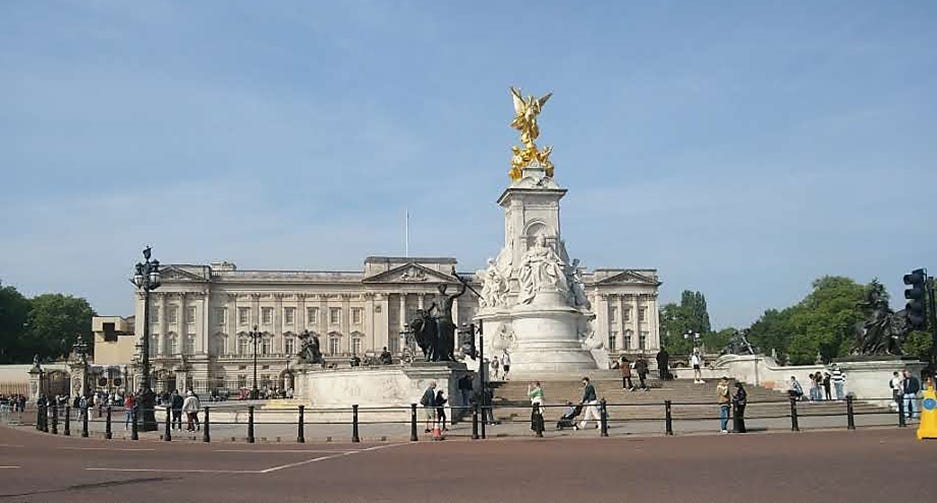
Buckingham Palace, located on the western edge of St James’s Park in London, is the official residence of the British monarch. The palace appears in a range of literary works as a symbol of monarchy and political power, including:
· A Little Princess (1905) by Frances Hodgson Burnett: “‘She’s got more airs and graces than if she come from Buckingham Palace, that young one,’ said the cook, chuckling a little sometimes.”
· Mrs Dalloway (1925) by Virginia Woolf: The palace is mentioned seven times. “A small crowd meanwhile had gathered at the gates of Buckingham Palace.”
· The Queen and I (1992), a satiric novel by Sue Townsend.
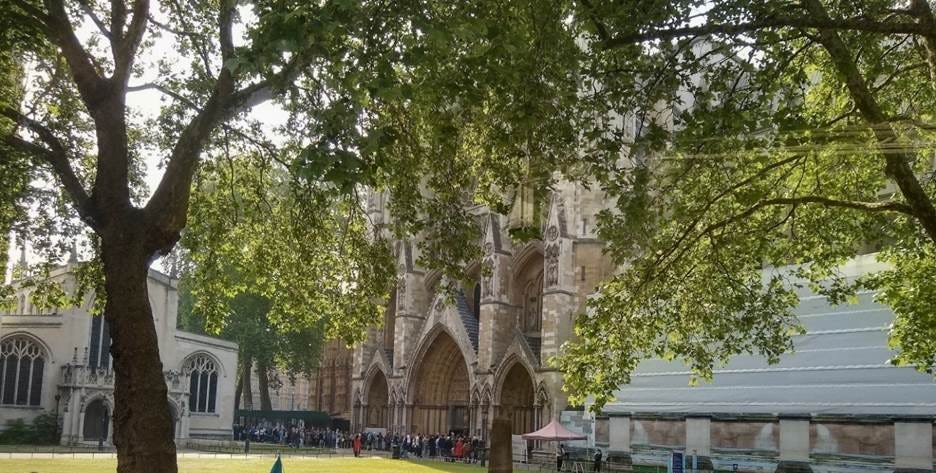
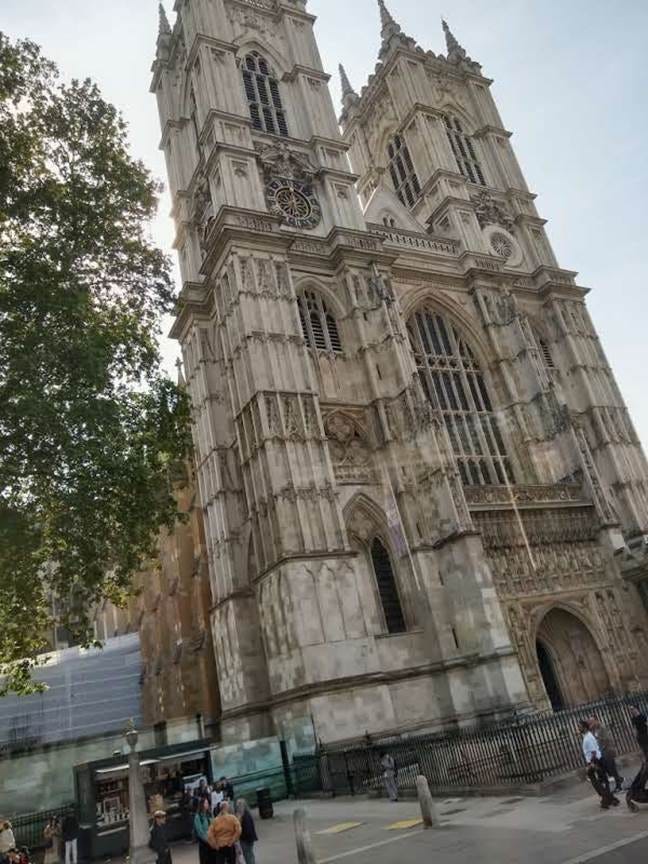
Westminster Abbey, whose official name is the Collegiate Church of Saint Peter at Westminster, is a royal Anglican church in central London. Since 1066, it has served as the coronation church for English and British monarchs and as the burial place of many monarchs. In Poets’ Corner, more than 100 writers and poets are either buried or memorialized. Those buried there include Geoffrey Chaucer, Edmund Spenser, and Charles Dickens.
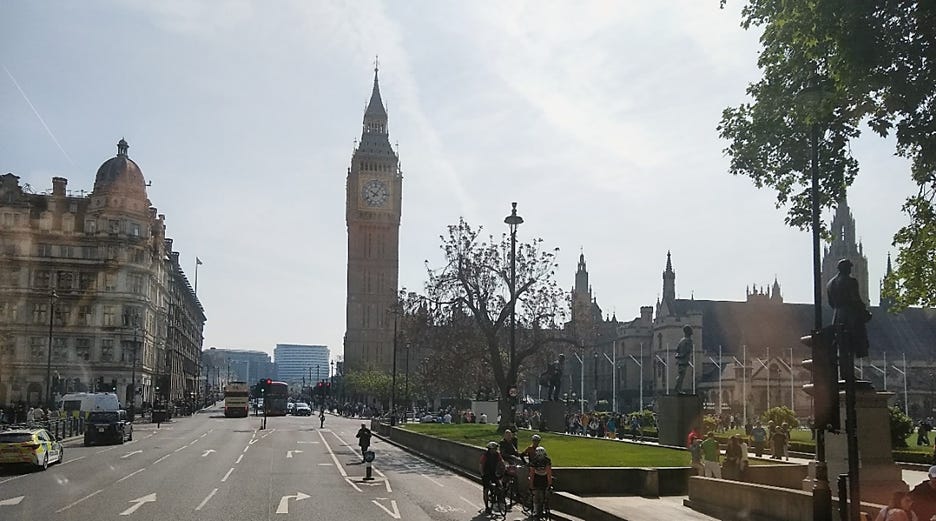
Big Ben/Elizabeth Tower along the River Thames. The building immediately to the right of Big Ben in the photo is part of the Palace of Westminster (the Houses of Parliament).
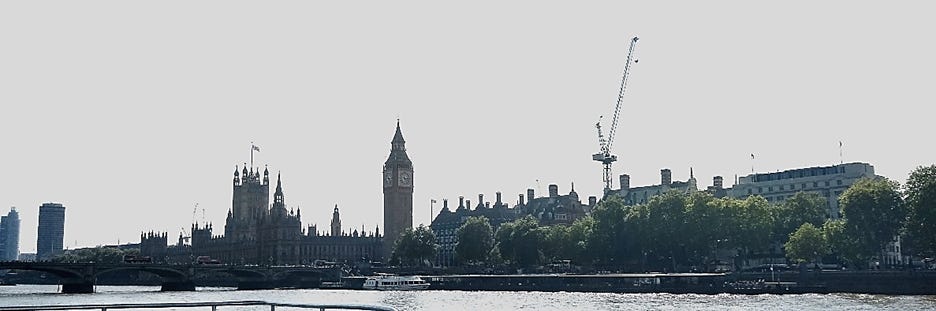
Big Ben and the Palace of Westminster viewed from the River Thames. Big Ben appears frequently in literature, where it often functions as a symbol of time, order, or modern urban life. Virginia Woolf mentions it several times in Mrs Dalloway (1925). For example:
· “The sound of Big Ben striking the half-hour struck out between them with extraordinary vigour, as if a young man, strong, indifferent, inconsiderate, were swinging dumb-bells this way and that.”
· “It is this, he said, as he entered Dean’s Yard. Big Ben was beginning to strike, first the warning, musical; then the hour, irrevocable. Lunch parties waste the entire afternoon, he thought, approaching his door.”
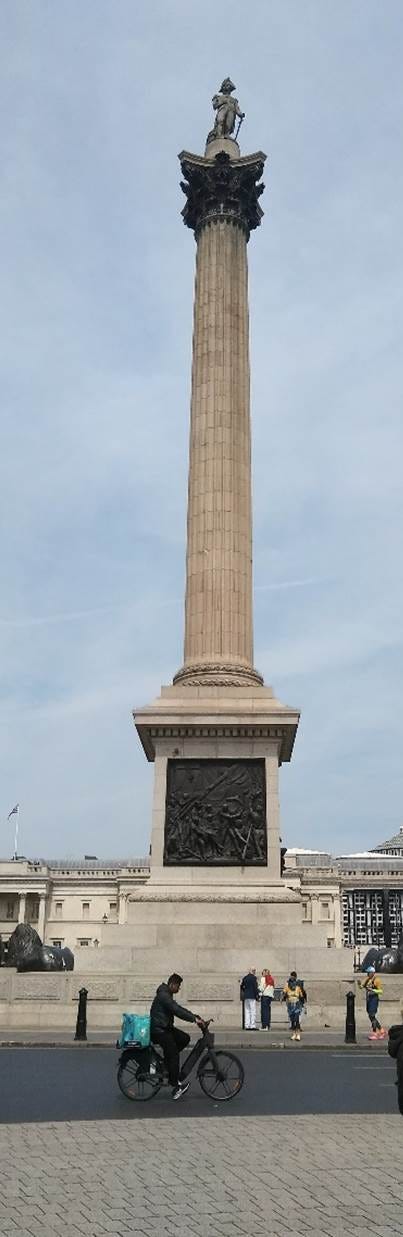
Trafalgar Square with Nelson’s Column.
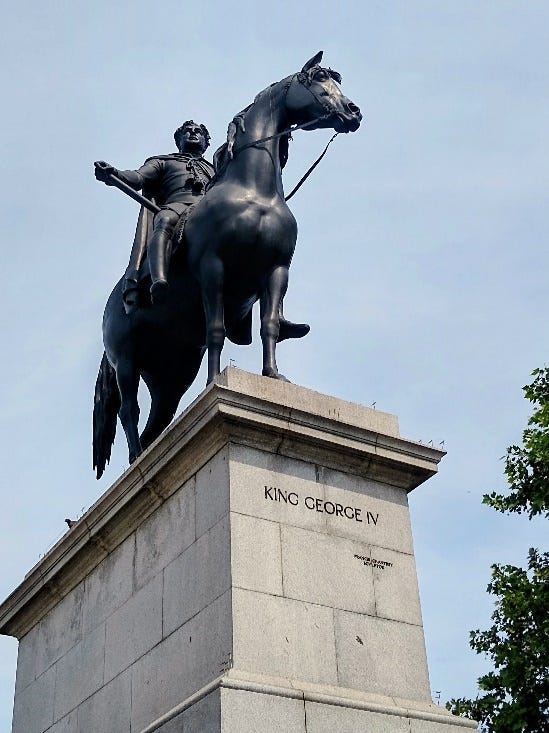
A statue of King George IV.
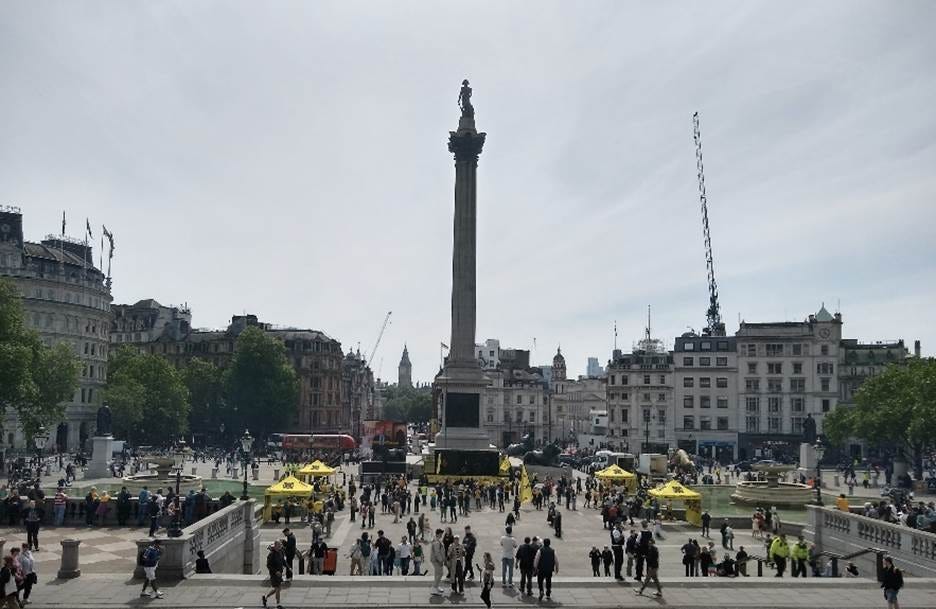
Trafalgar Square as viewed from inside the National Gallery. In Mrs Dalloway, Virginia Woolf uses Trafalgar Square as part of the flowing city consciousness: “But she’s not married; she’s young; quite young, thought Peter, the red carnation he had seen her wear as she came across Trafalgar Square burning again in his eyes and making her lips red.”
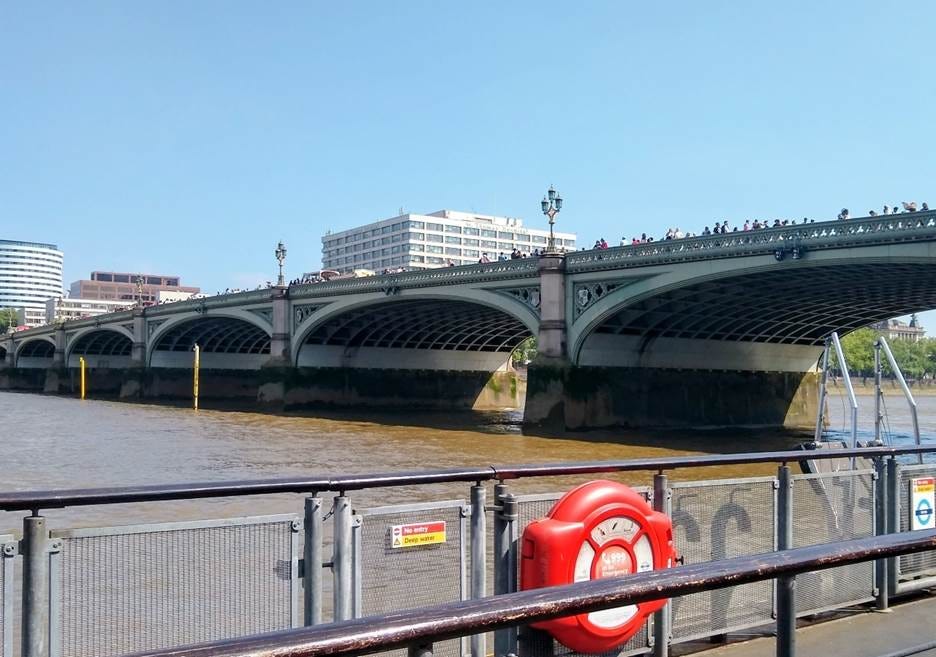
Westminster Bridge spans the Thames near the Palace of Westminster, connecting Westminster (near the Houses of Parliament) and Lambeth (near the South Bank). The bridge is most famously featured in English literature as the subject of William Wordsworth’s “Composed upon Westminster Bridge, September 3, 1802” (1802), a Romantic adaptation of the Petrarchan sonnet form. The poem reads:
Earth has not any thing to show more fair:
Dull would he be of soul who could pass by
A sight so touching in its majesty:
This City now doth, like a garment, wear
The beauty of the morning; silent, bare,
Ships, towers, domes, theatres, and temples lie
Open unto the fields, and to the sky;
All bright and glittering in the smokeless air.
Never did sun more beautifully steep
In his first splendour, valley, rock, or hill;
Ne’er saw I, never felt, a calm so deep!
The river glideth at his own sweet will:
Dear God! the very houses seem asleep;
And all that mighty heart is lying still!
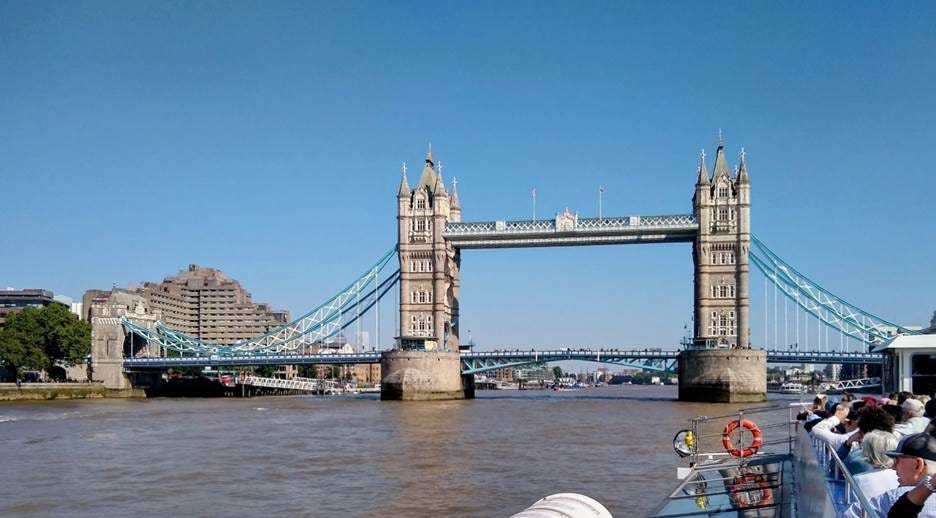
Completed in 1894, Tower Bridge is a landmark of East London. It appears frequently in modern spy and detective fiction set in London. One example is Emily Organ’s The Tower Bridge Murder: A 1920s Lady Detective Mystery (Darkfield Books, 2023).
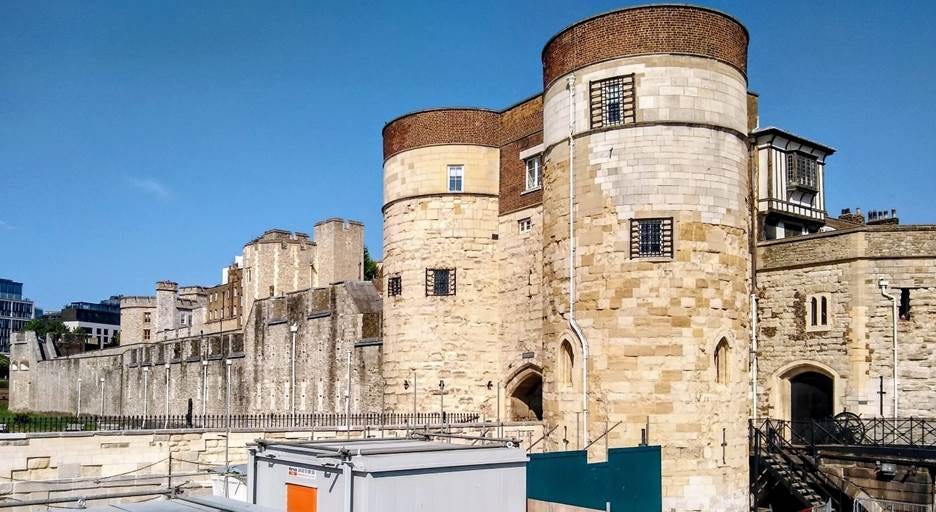
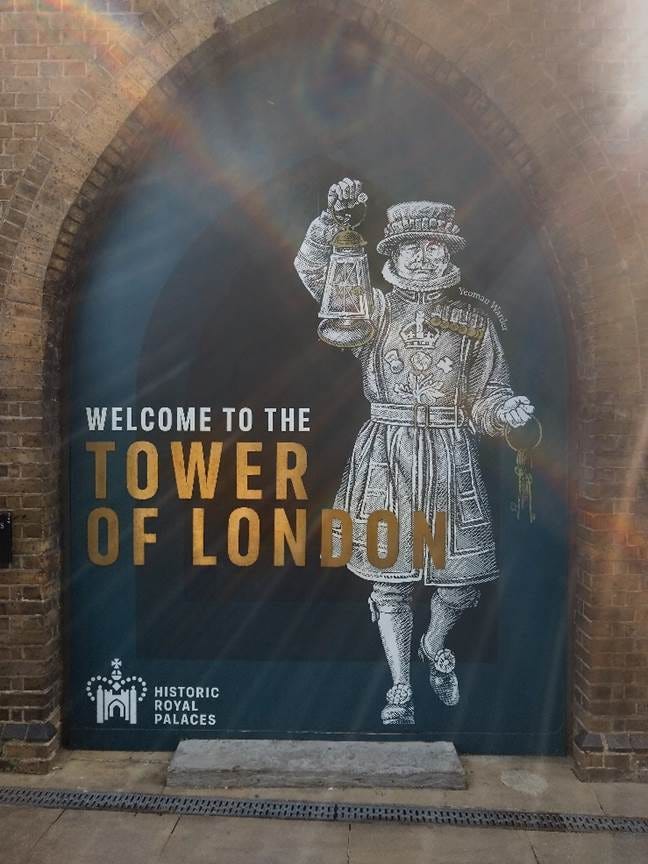
The Tower of London. The following quote is taken from Chapter 10 (“The End of the Islander”) of Arthur Conan Doyle’s detective novel The Sign of the Four (1890): “While this conversation had been proceeding, we had been shooting the long series of bridges which span the Thames. As we passed the City the last rays of the sun were gilding the cross upon the summit of St. Paul’s [Cathedral]. It was twilight before we reached the Tower.” Here, the narrator is traveling along the River Thames, passing “the long series of bridges” and continuing eastward; one would naturally arrive at the Tower of London. In nineteenth- and early twentieth-century literature, writers often referred to it simply as “the Tower” because it was such a famous landmark.
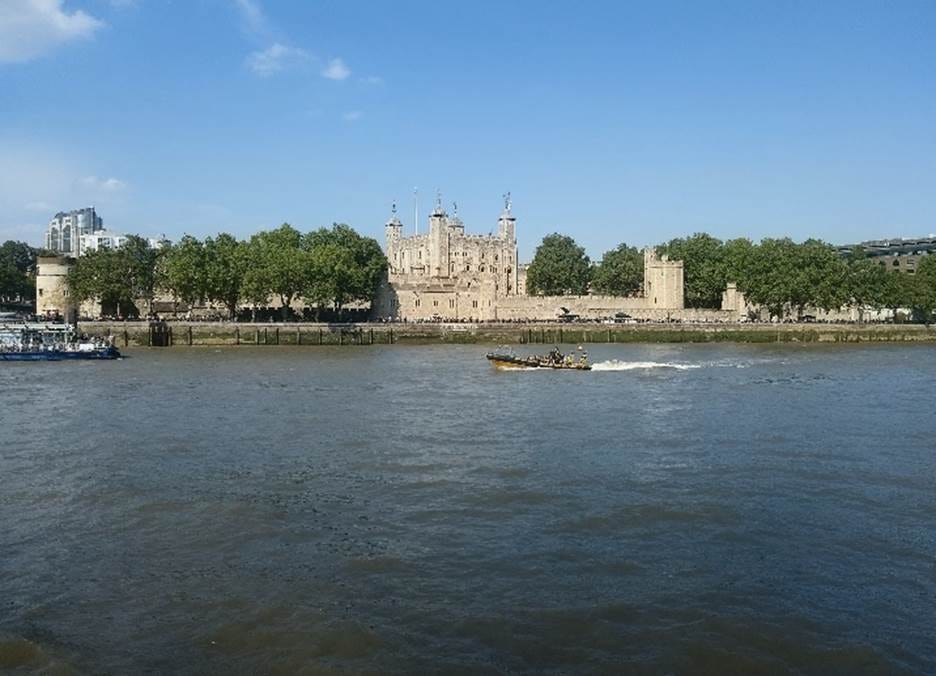
The Thames in East London is wider and more heavily influenced by tides and urban activity.
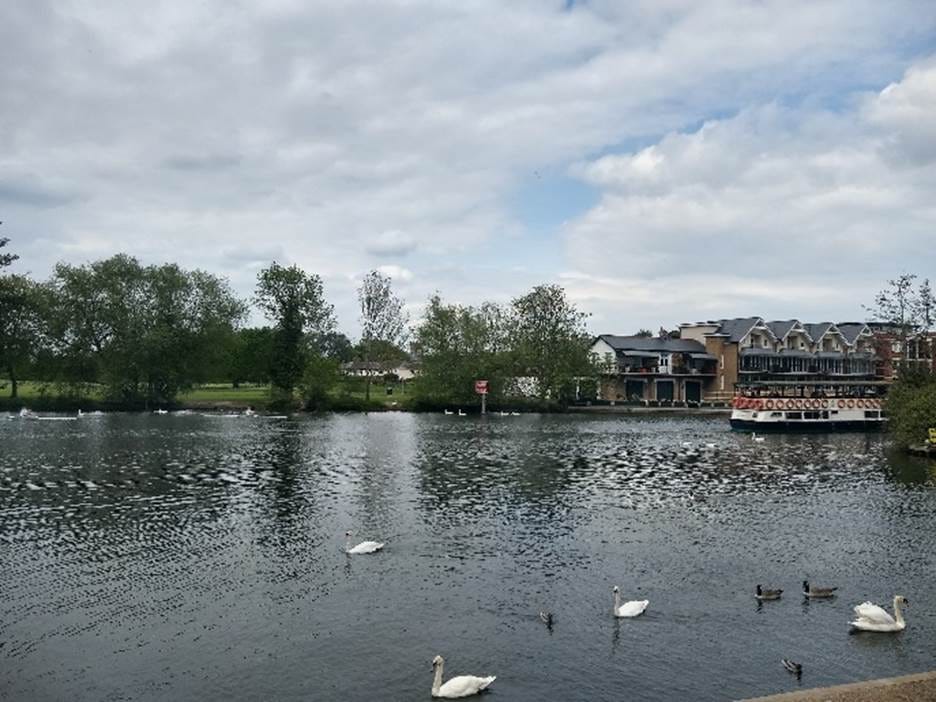
The Thames in Windsor, about 25 miles west of central London, is narrower and often appears less urban and clearer.
The River Thames appears in many well-known British texts, including Geoffrey Chaucer’s The Canterbury Tales (1387-1400), Charles Dickens’s Oliver Twist (1838), and Joseph Conrad’s Heart of Darkness (1899). In the section “The Fire Sermon” of T. S. Eliot’s modernist poem The Waste Land (1922), the Thames symbolizes decay, memory, and spiritual emptiness in modern London:
The river’s tent is broken: the last fingers of leaf
Clutch and sink into the wet bank. The wind
Crosses the brown land, unheard. The nymphs are departed.
Sweet Thames, run softly, till I end my song.
The river bears no empty bottles, sandwich papers,
Silk handkerchiefs, cardboard boxes, cigarette ends
Or other testimony of summer nights. The nymphs are departed.
And their friends, the loitering heirs of city directors;
Departed, have left no addresses.
By the waters of Leman I sat down and wept…
Sweet Thames, run softly till I end my song,
Sweet Thames, run softly, for I speak not loud or long. […]
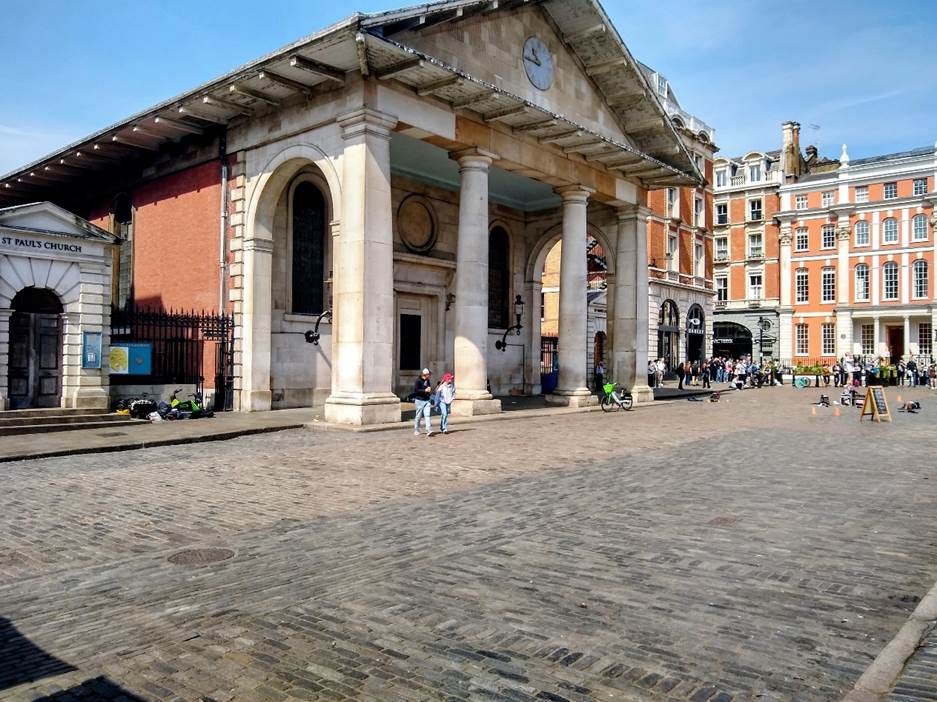
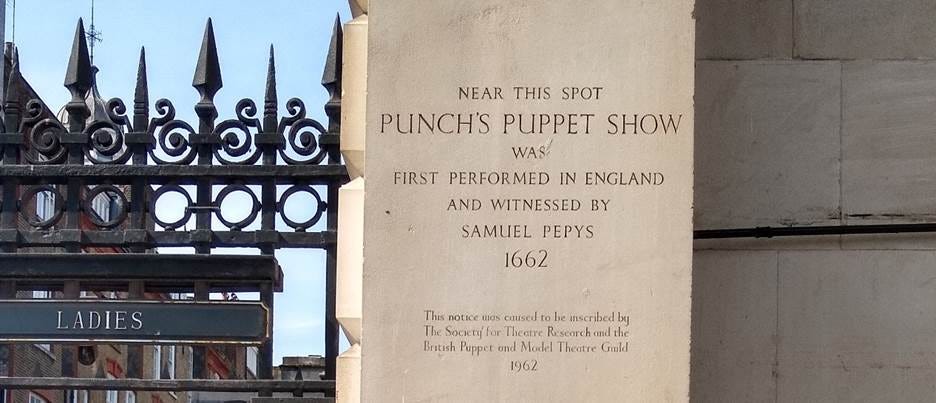
Completed in 1633, St. Paul’s Church, Covent Garden (The Actors’ Church), is an Anglican church in central London. It has maintained long ties with the theatre community. The inscription above reads, “Near this spot Punch’s Puppet Show was first performed in England and witnessed by Samuel Pepys in 1662.” Samuel Pepys (1633-1703) was a writer and politician mainly known for The Diary of Samuel Pepys (1660-69), a firsthand 17th-century account of English life as well as his personal, professional, and social experiences.
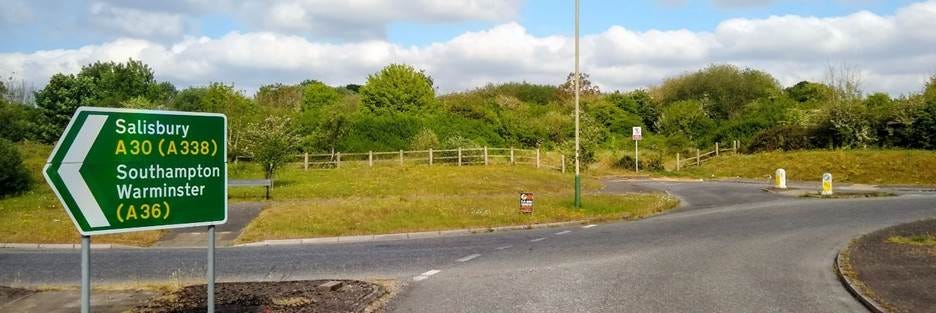
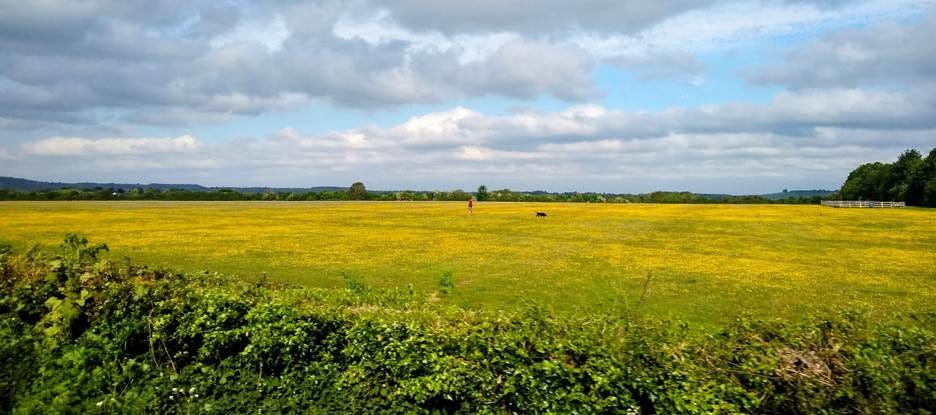
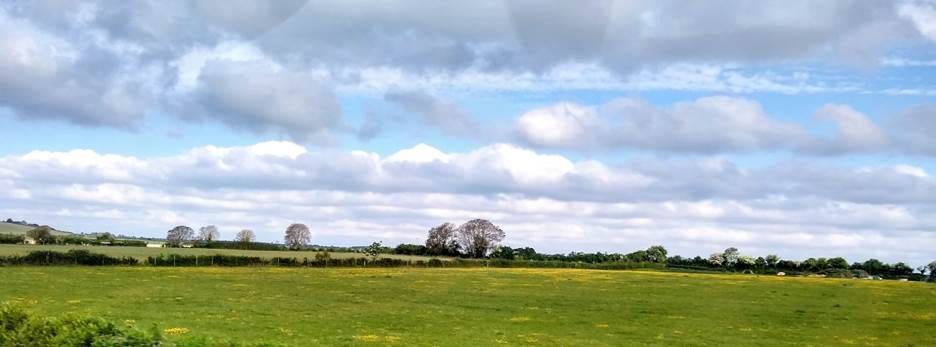
The road from London to Salisbury, England. Among the several European countries I have visited, England seemed the most peaceful, pastoral, and unhurried.
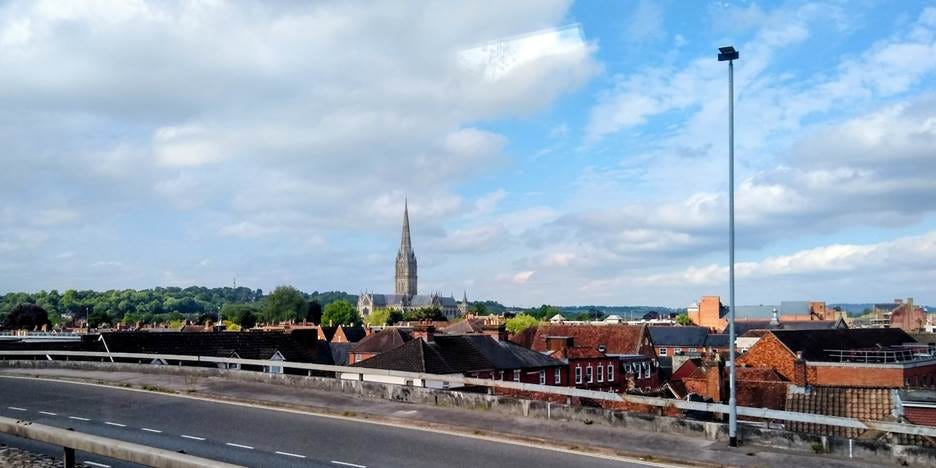
As we approach the city, the 13th-century Salisbury Cathedral comes into view. It is renamed Melchester Cathedral in Thomas Hardy’s novels set in the fictional region of “Wessex.”
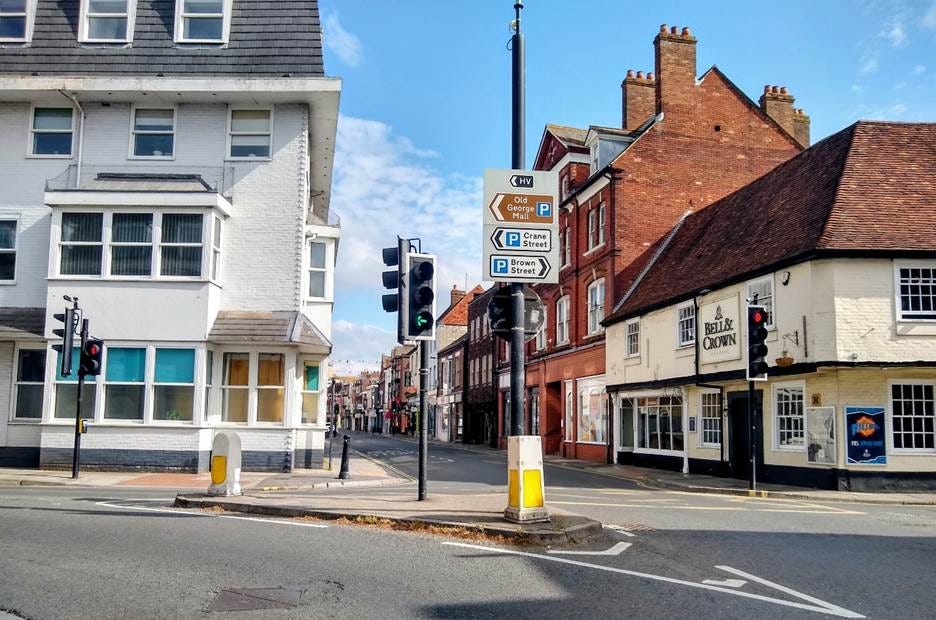
Downtown Salisbury, not far from Salisbury Cathedral.
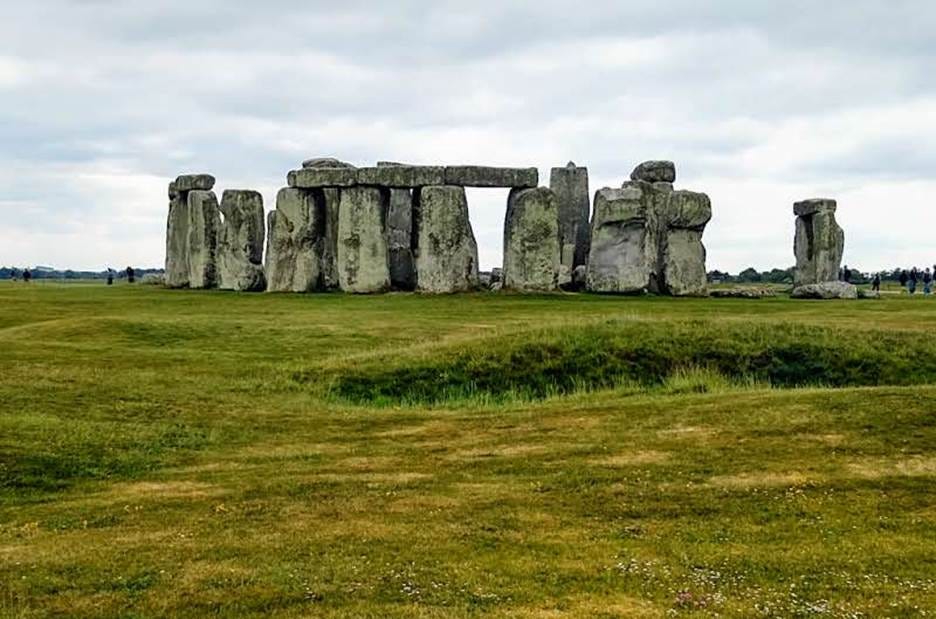
Stonehenge, less than ten miles from Salisbury, is a megalithic structure on Salisbury Plain in Wiltshire. Chapter 58 of Thomas Hardy’s novel Tess of the d’Urbervilles: A Pure Woman (1891) includes the following conversation:
“It is Stonehenge!” said Clare.
“The heathen temple, you mean?”
“Yes. Older than the centuries; older than the d’Urbervilles! Well, what shall we do, darling? We may find shelter further on.”
Stonehenge also fascinated Romantic poets William Blake and William Wordsworth. The title of Wordsworth’s long narrative poem Guilt and Sorrow, or Incidents upon Salisbury Plain (1842) makes its setting explicit. Section 14 begins with these lines:
Pile of Stone-henge! so proud to hint yet keep
Thy secrets, thou that lov’st to stand and hear
The Plain resounding to the whirlwind’s sweep,
Inmate of lonesome Nature’s endless year;
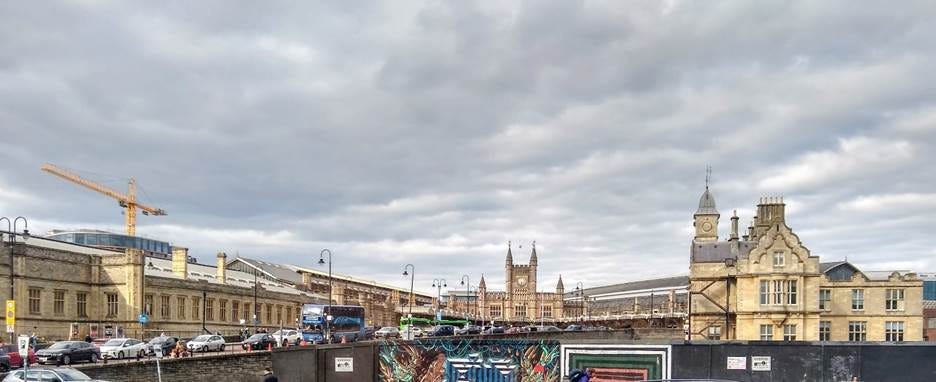
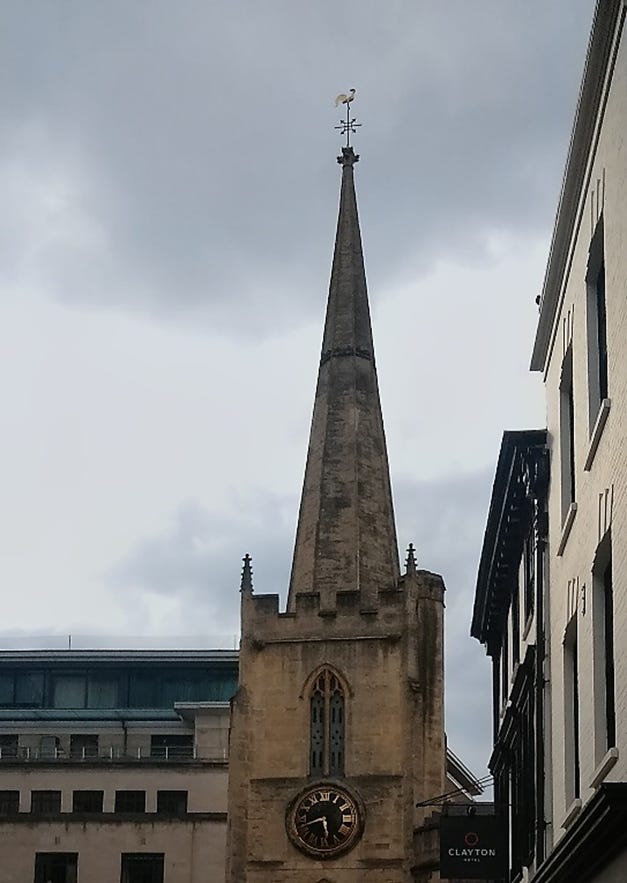
Downtown Bristol. Chapter 7 of Robert Louis Stevenson’s Treasure Island (1883) is entitled “I Go to Bristol.” The chapter begins with these lines:
It was longer than the squire imagined ere we were ready for the sea, and none of our first plans—not even Dr. Livesey’s, of keeping me beside him—could be carried out as we intended. The doctor had to go to London for a physician to take charge of his practice; the squire was hard at work at Bristol; and I lived on at the hall under the charge of old Redruth, the gamekeeper, almost a prisoner, but full of sea-dreams and the most charming anticipations of strange islands and adventures. I brooded by the hour together over the map, all the details of which I well remembered. […]
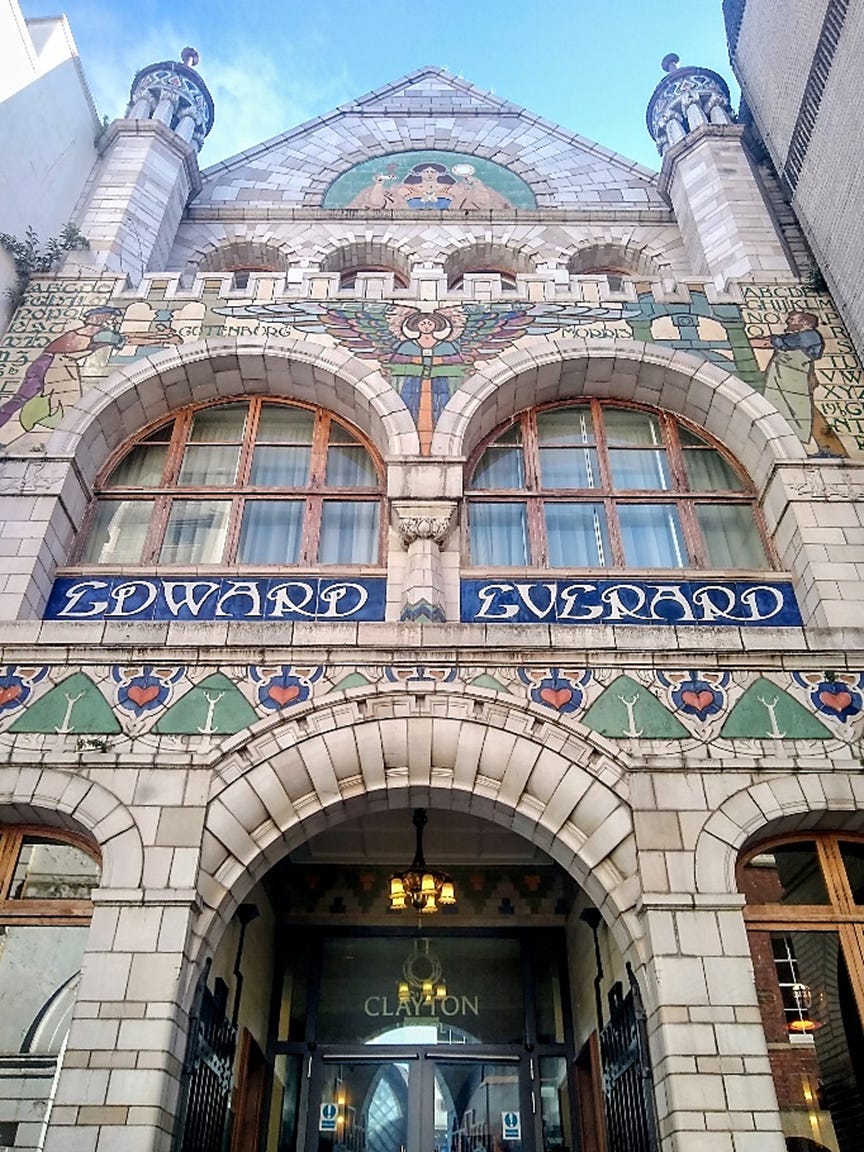
Decorative Art Nouveau imagery at a historic Bristol building now used as the Clayton Hotel.
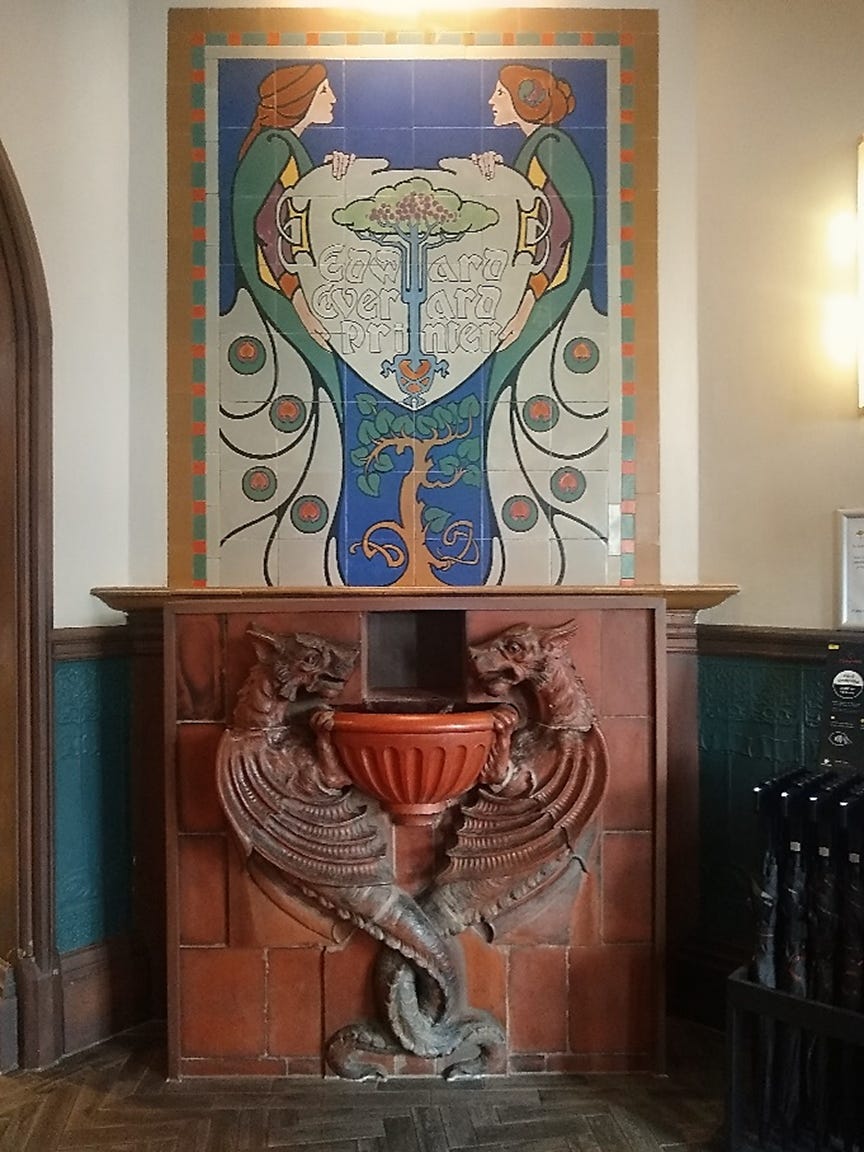
The stylized female figures, flowing lines, and dragon-like creatures reflect the late Victorian fascination with myth, fantasy, and medieval design that also influenced British literature and visual culture of the period.

The road from Bristol to Bath, made famous by “The Wife of Bath’s Tale” in Geoffrey Chaucer’s The Canterbury Tales (1387-1400). The story begins with these lines:
Experience, though none authority
Were in this world, is right enough for me
To speak of woe that is in marriage:
For, lordings, since I twelve year was of age,
(Thanked be God that is etern on live),
Husbands at the church door have I had five,
For I so often have y-wedded be,
And all were worthy men in their degree. […]
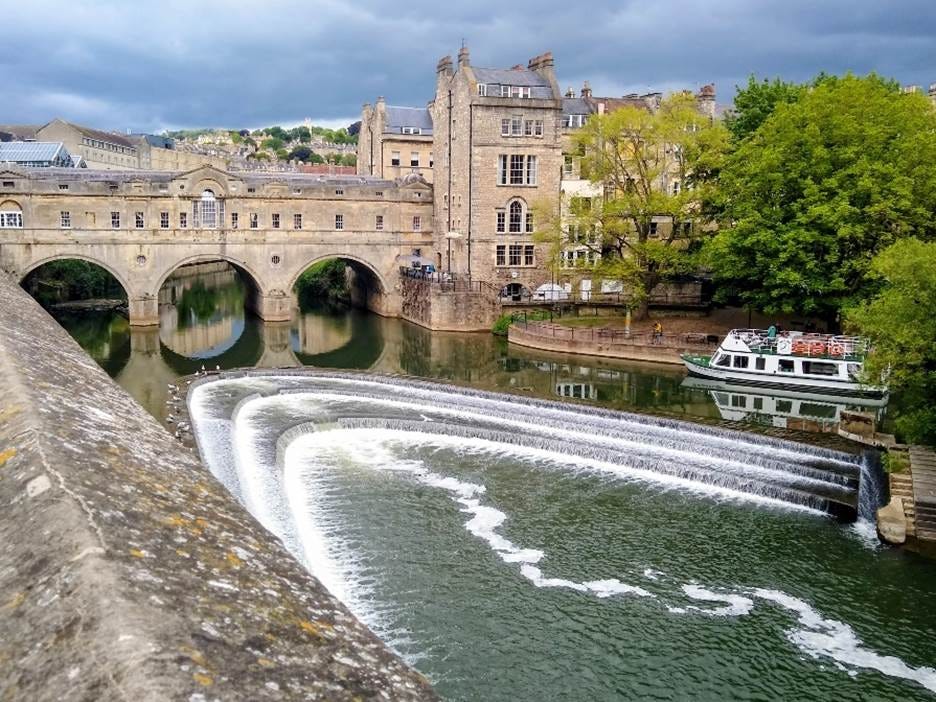
The River Avon flows through Bath, which has a population of approximately 94,000.
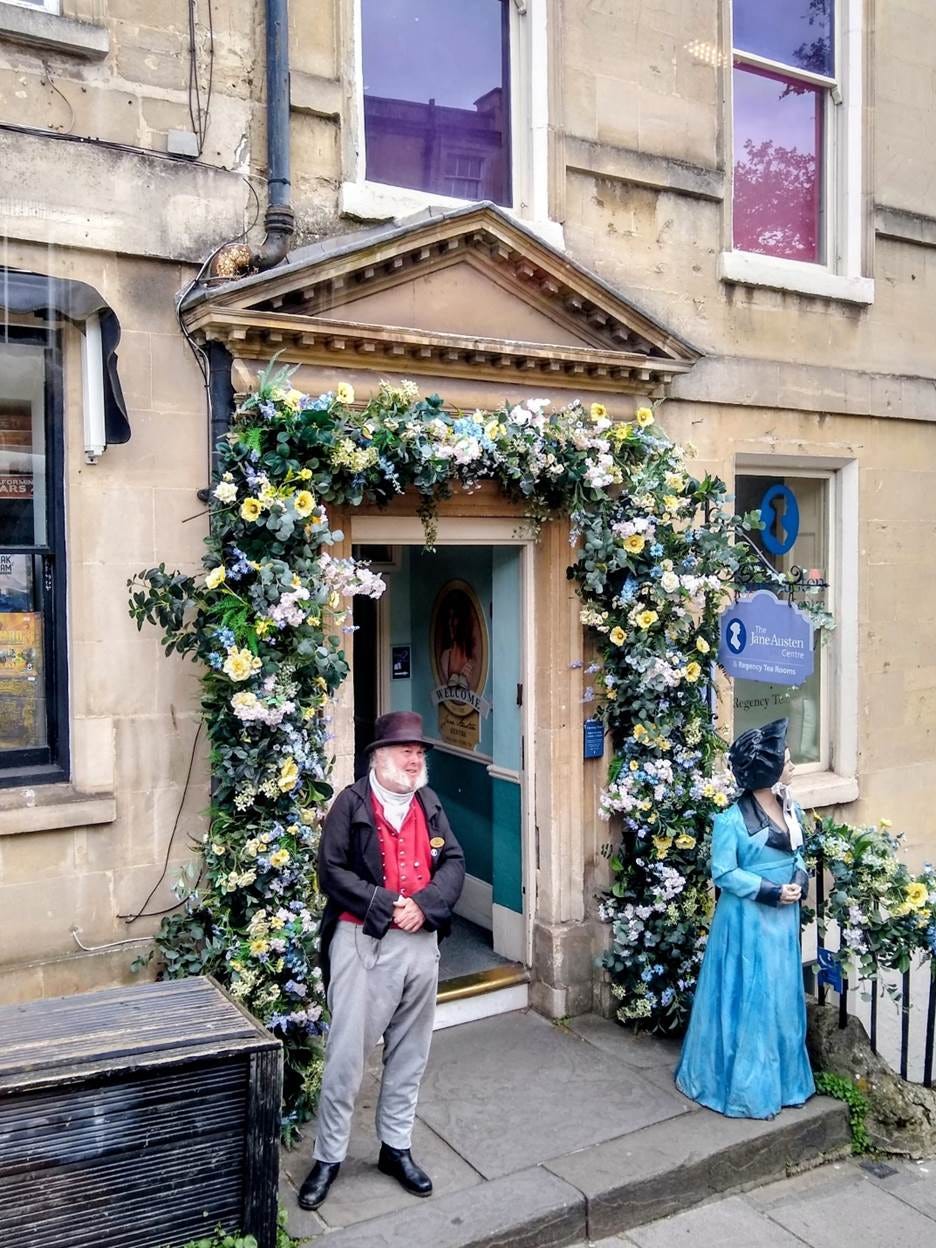
The Jane Austen Centre in Bath. Austen lived in Bath from 1801 to 1806. Chapter 3 of her satirical novel Northanger Abbey (1817) includes the following comment about the city:
“Bath is a charming place, sir; there are so many good shops here. We are sadly off in the country; not but what we have very good shops in Salisbury, but it is so far to go—eight miles is a long way; Mr. Allen says it is nine, measured nine; but I am sure it cannot be more than eight; and it is such a fag—I come back tired to death. Now, here one can step out of doors and get a thing in five minutes.”
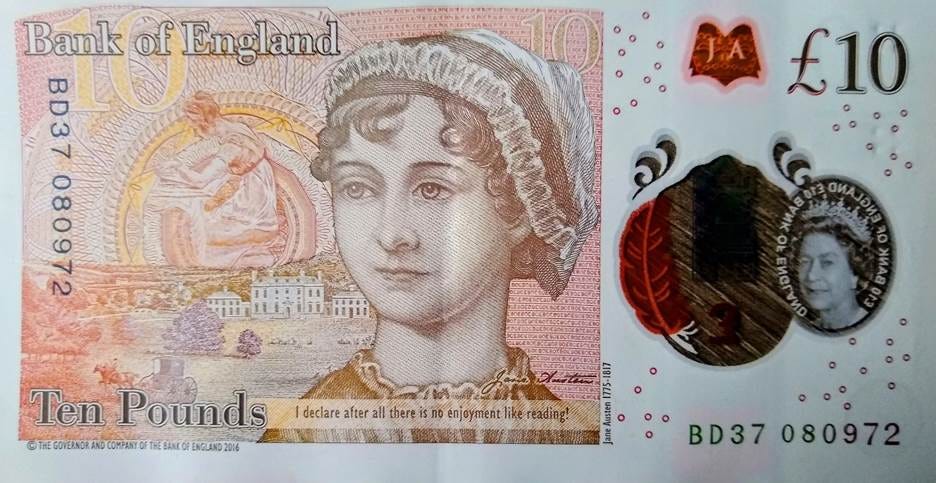
The Bank of England £10 note featuring Jane Austen highlights her enduring place in British literary and cultural heritage. The note also includes a quotation from Chapter 11 of her novel Pride and Prejudice (1813), reinforcing her lasting presence in public memory and print culture. The inscription reads: “I declare after all there is no enjoyment like reading!” During this visit, I also saw and handled British banknotes for the first time.
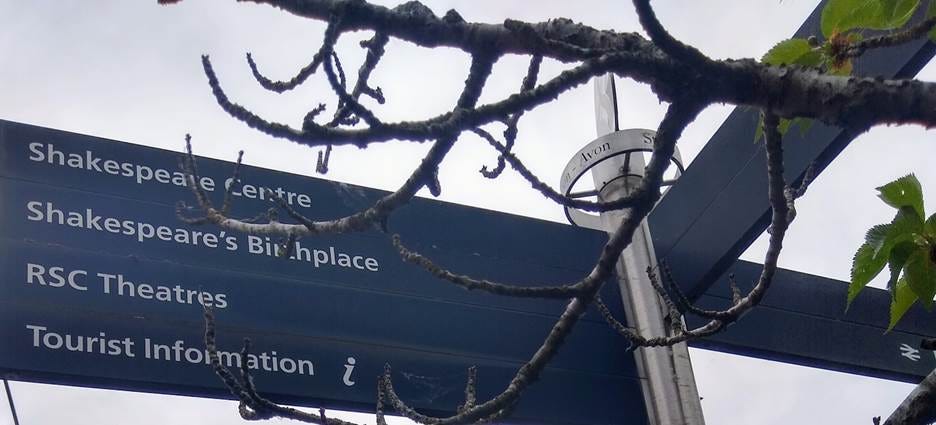
We arrived in Stratford-upon-Avon, Warwickshire, the birthplace of William Shakespeare (1564-1616). The historic market town is roughly a two-hour drive from London and about 90 minutes from Bristol, depending on traffic and route.
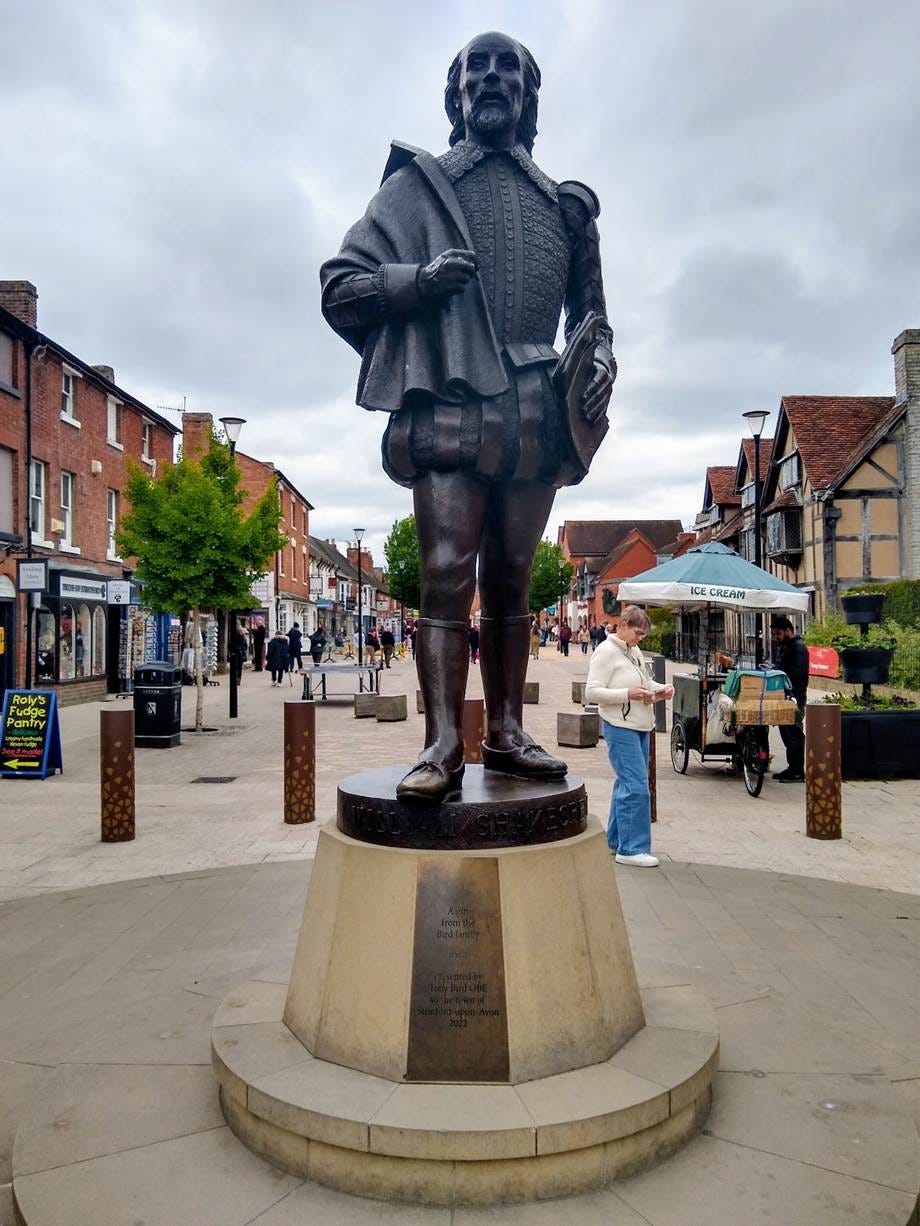
A statue of Shakespeare stands on Henley Street.
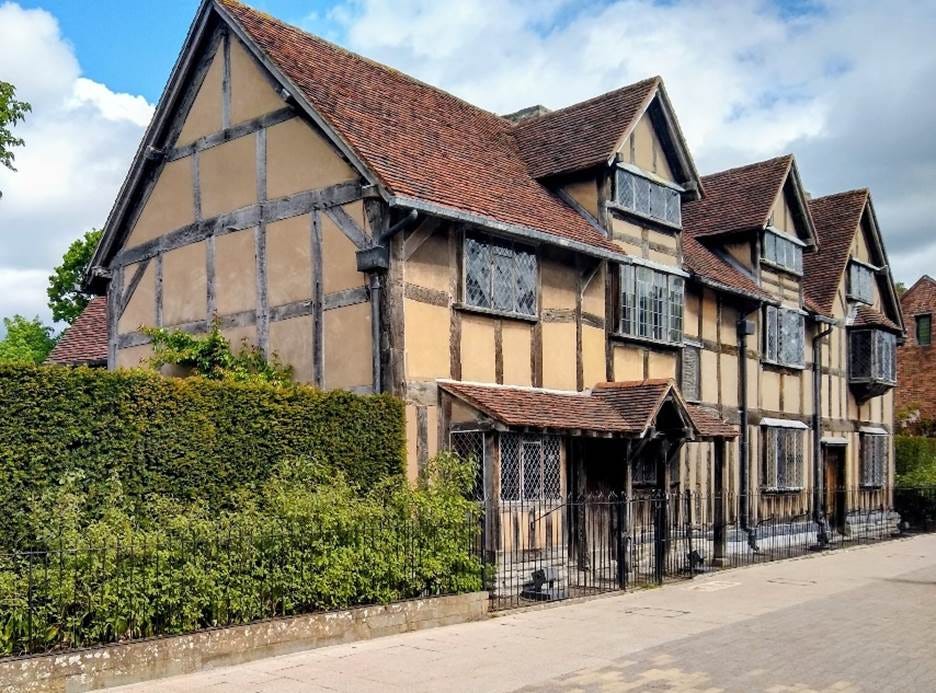
Shakespeare’s Birthplace stands next to the statue. Shakespeare was born and raised in Stratford-upon-Avon, later returned there in retirement, and is buried at Holy Trinity Church.
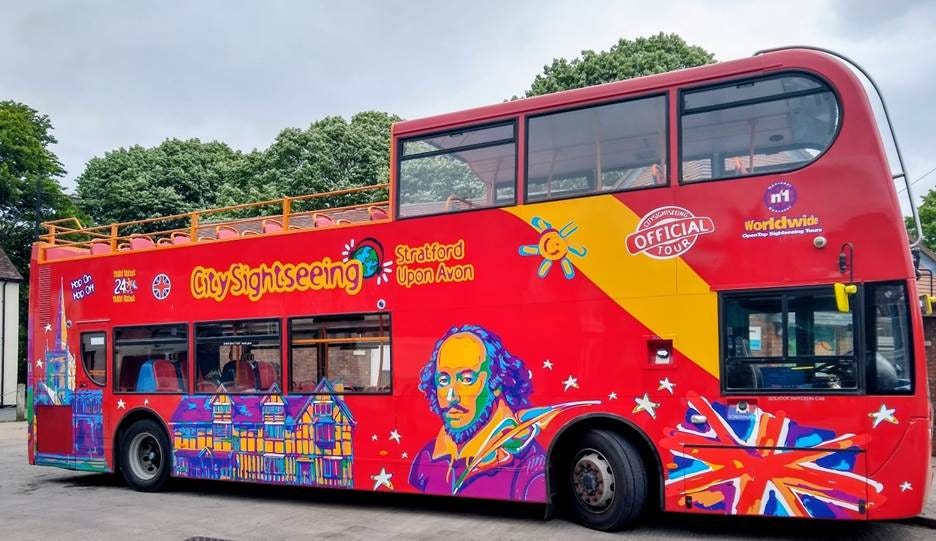


Stratford-upon-Avon has developed a thriving tourism industry centered on Shakespeare, attracting visitors from around the world, including scholars and enthusiasts.
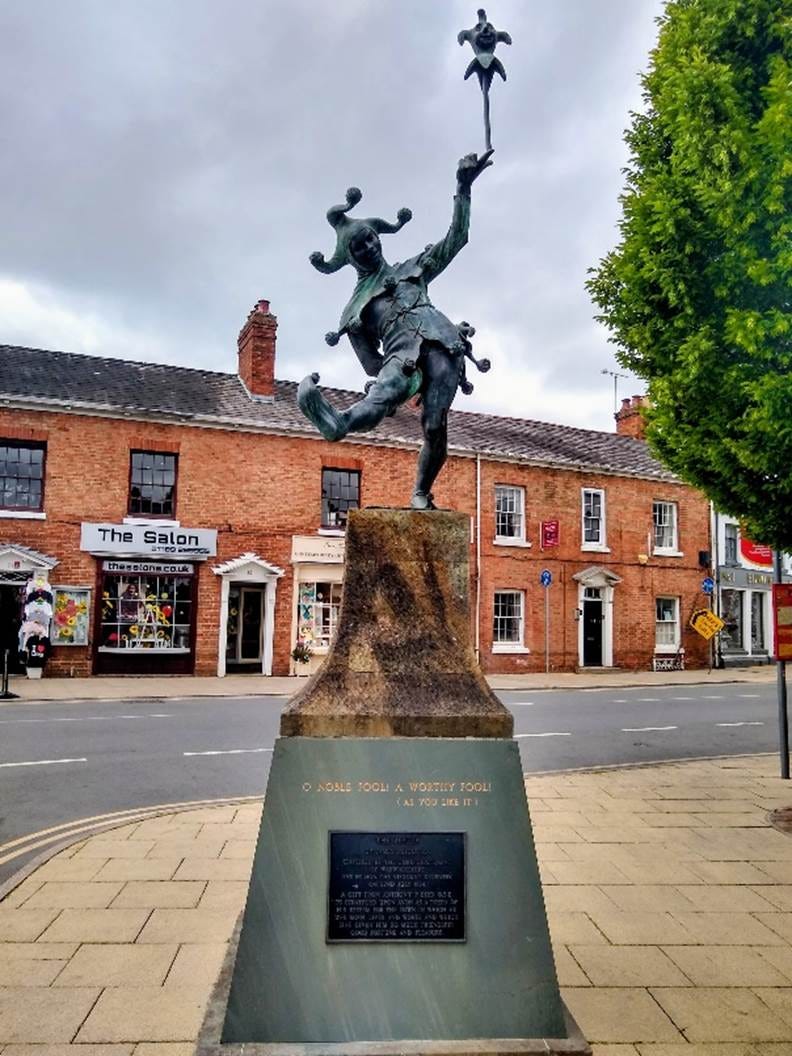
A statue of the “Fool” stands on Henley Street in Stratford-upon-Avon, a nod to the memorable court jesters who appear throughout Shakespeare’s plays, blending humor with sharp social commentary.
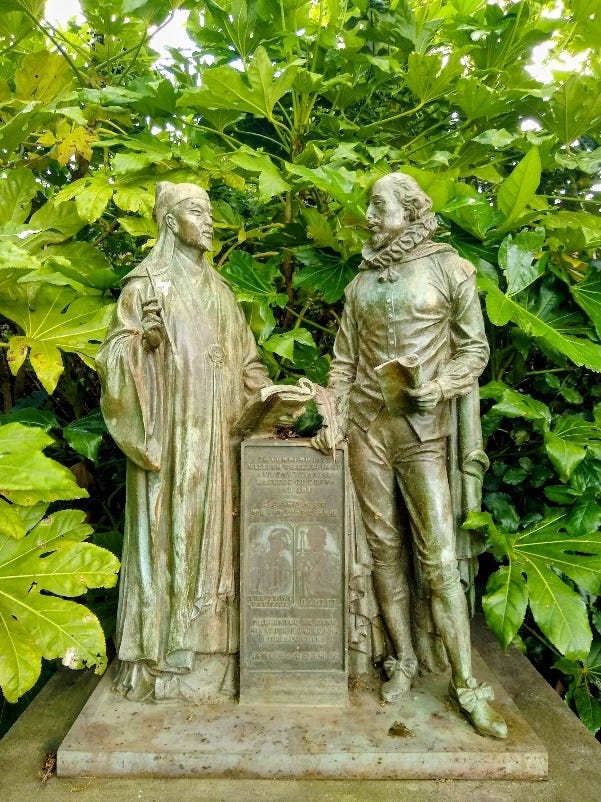
In the backyard of Shakespeare’s birthplace, a statue depicts William Shakespeare alongside Tang Xianzu (湯顯祖, 1550-1616), a contemporary Chinese playwright, symbolizing the shared reach of dramatic storytelling across cultures.
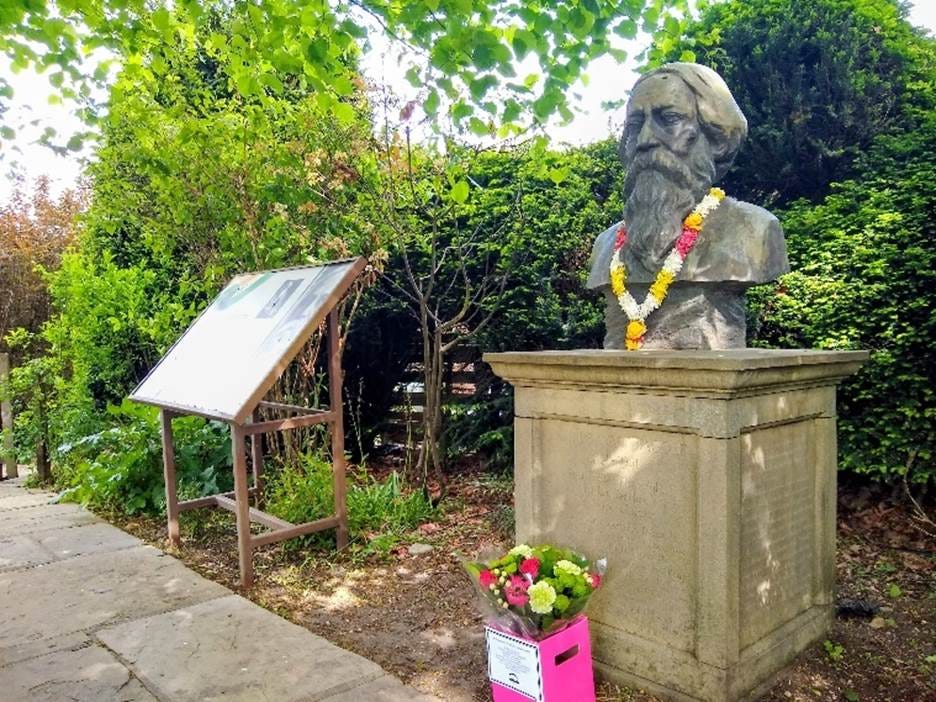
In the backyard of Shakespeare’s birthplace stands a statue of Rabindranath Tagore (1861-1941), a Bengali poet. In 1916, Tagore penned a tribute titled “In Honour of William Shakespeare” to celebrate the 300th death anniversary of the English playwright and poet.
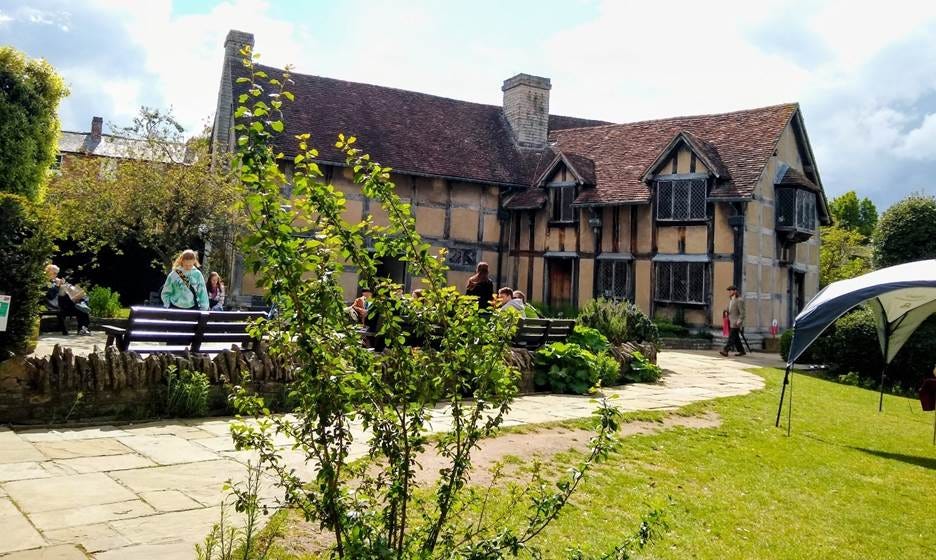
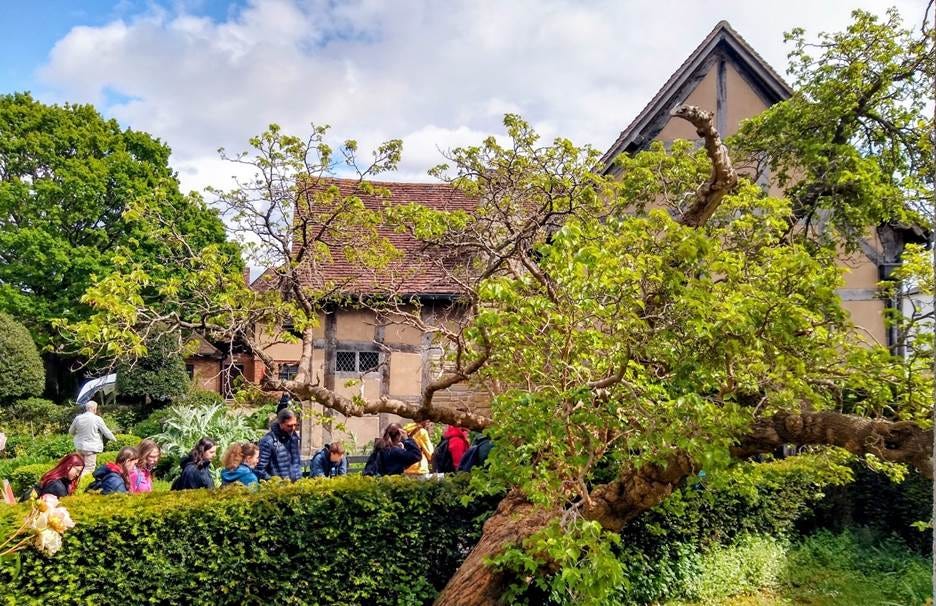
The backyard of Shakespeare’s birthplace.


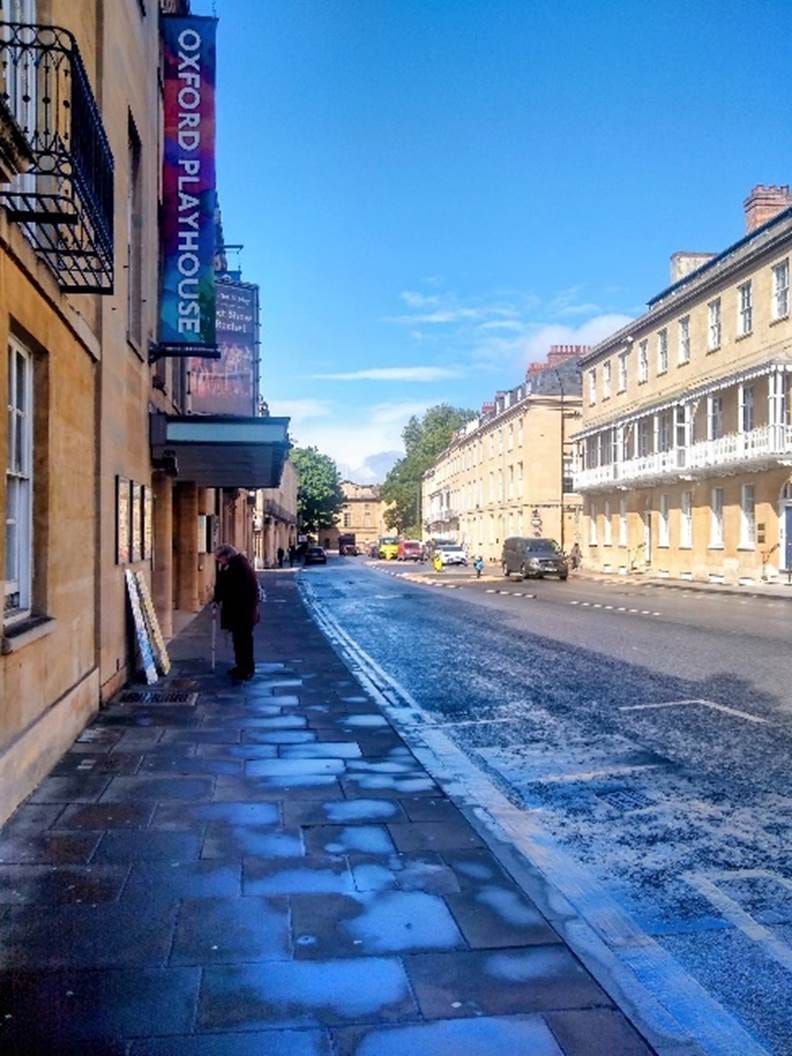
We arrived at the final stop of our tour: the historic college town of Oxford, home to the University of Oxford (established in 1096) and a magnet for talented students from across the globe. Authors closely connected with the University of Oxford include Oscar Wilde (1854-1900), J. R. R. Tolkien (1892-1973), Dorothy L. Sayers (1893-1957), C. S. Lewis (1898-1963), Evelyn Waugh (1903-66), W. H. Auden (1907-73), all of whom studied at or were closely associated with Oxford. Oxford’s rapid expansion and emergence as a major center of higher learning in 1167 were accelerated when King Henry II banned English students from studying at the University of Paris, prompting many scholars to return to England.
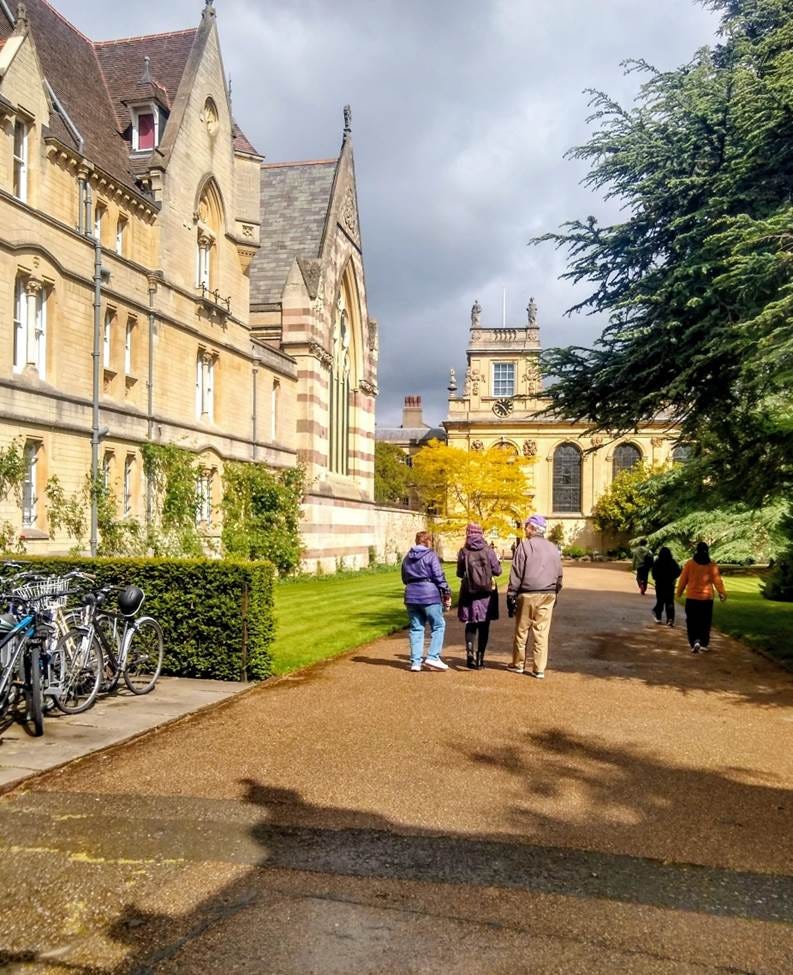
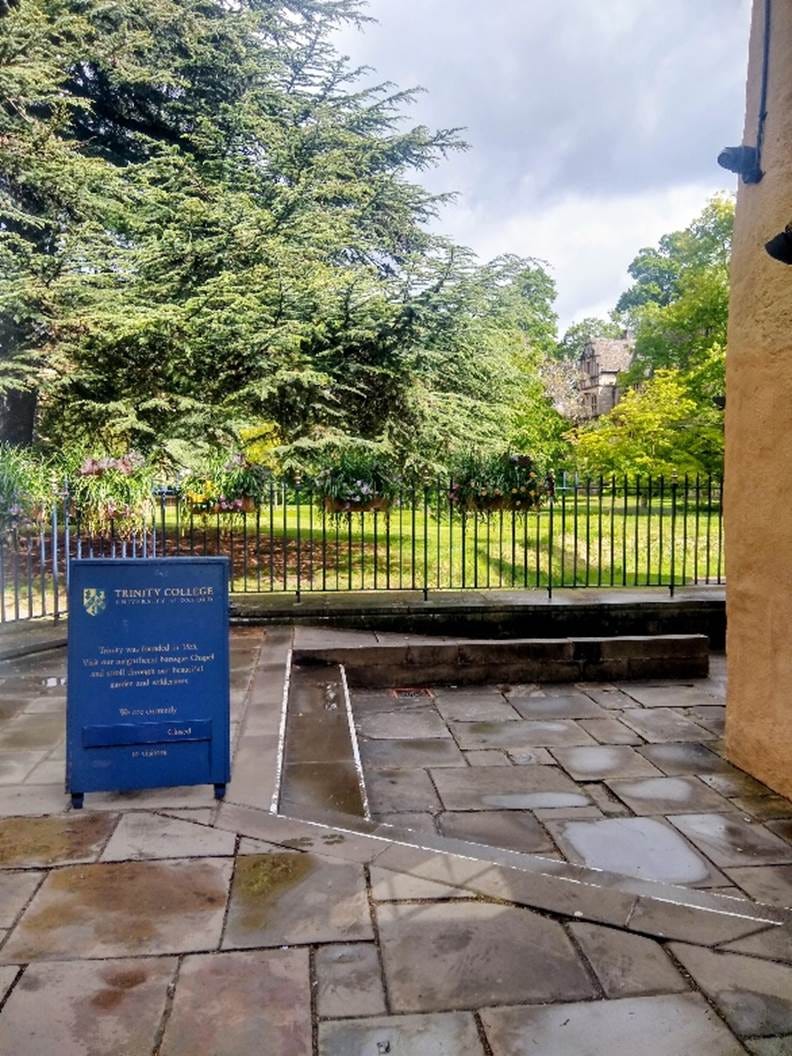
Trinity College was founded by Sir Thomas Pope in 1555. Its notable alumni include John Henry Newman (1801-90), theologian, poet, and leader of the Oxford Movement. In F. Scott Fitzgerald’s The Great Gatsby (1925), Jay Gatsby briefly attends Oxford after the war and refers to “Trinity Quad,” possibly suggesting a connection to Trinity College: “Here’s another thing I always carry. A souvenir of Oxford days. It was taken in Trinity Quad—the man on my left is now the Earl of Doncaster.”
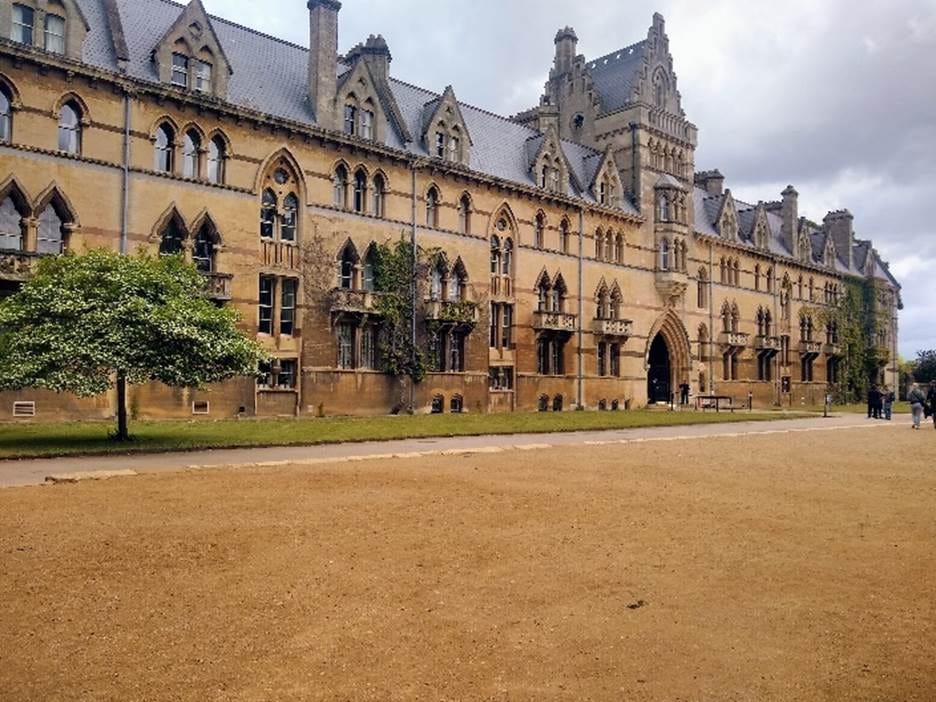
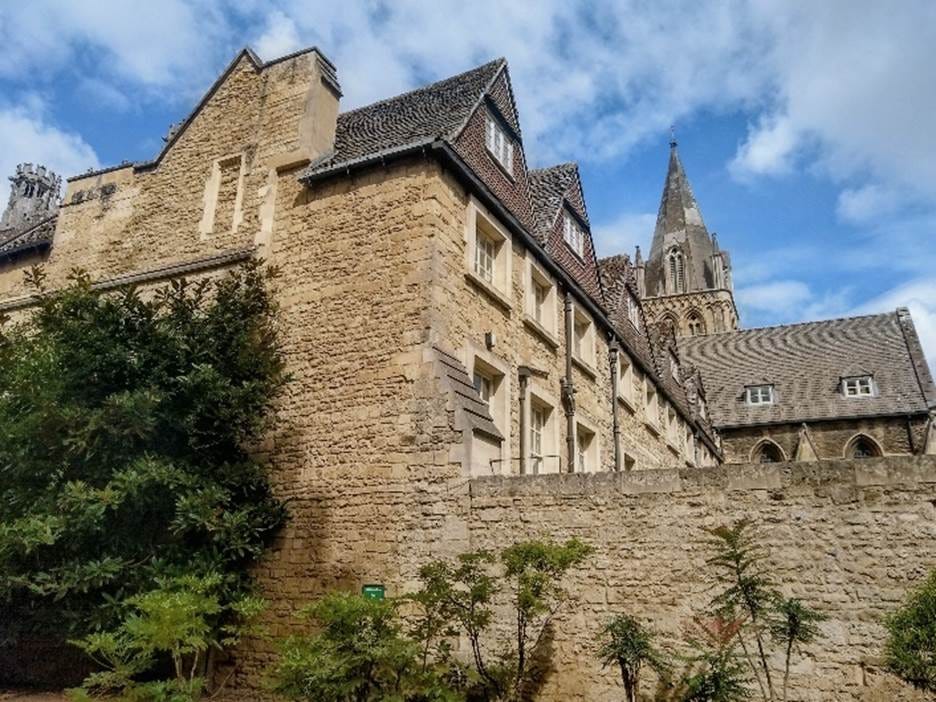
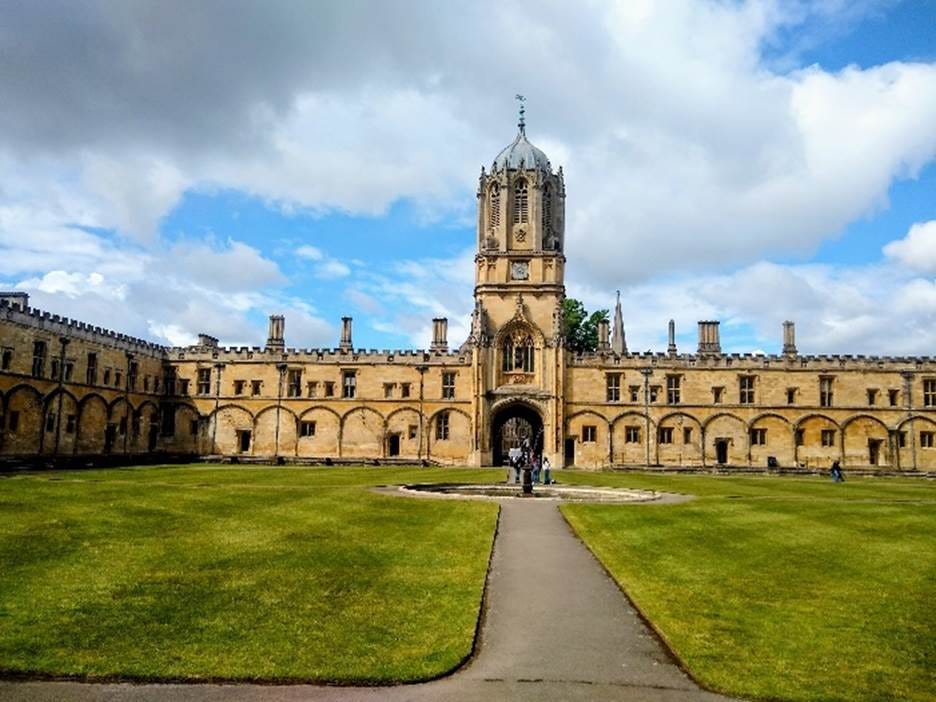
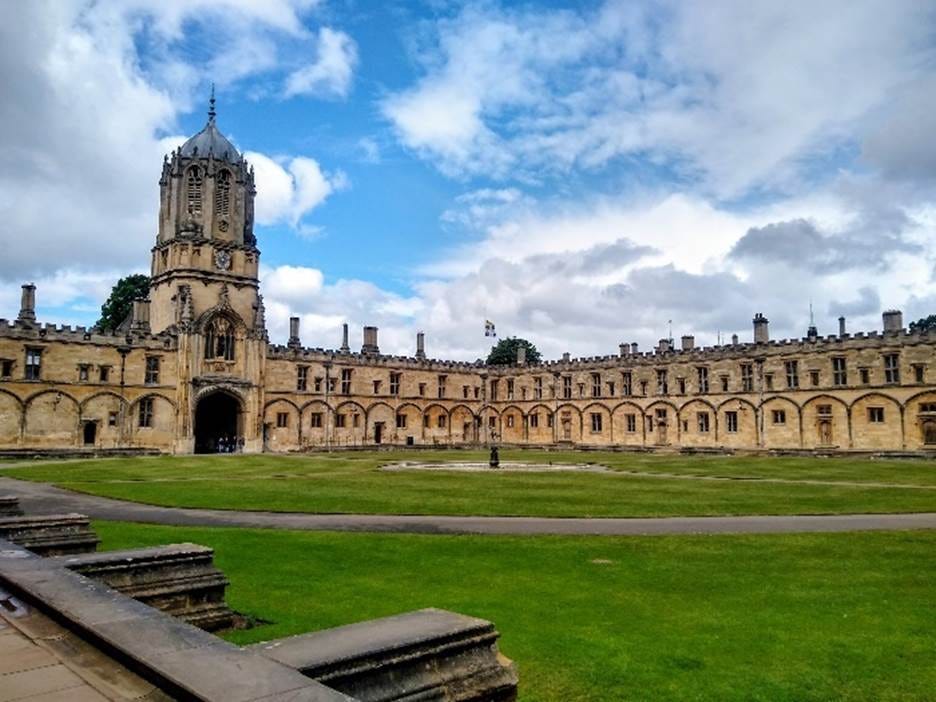
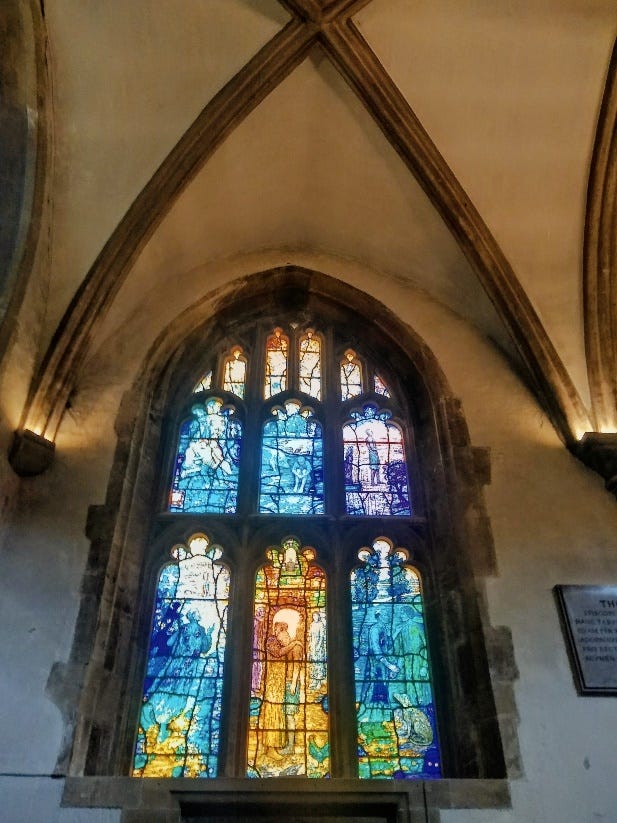
Christ Church College, Oxford, was founded in 1546 by King Henry VIII. Its alumni include Sir Philip Sidney (1554-86), poet and courtier; Lewis Carroll (1832-98), author of Alice’s Adventures in Wonderland (1865) and Through the Looking-Glass (1871); John Crowe Ransom (1888-1974), scholar and literary critic; and W. H. Auden (1907-73), poet.
The Scholar-Gipsy (1853), a pastoral poem by Matthew Arnold, includes the following lines: “The line of festal light in Christ-Church hall— / Then sought thy straw in some sequester’d grange.”
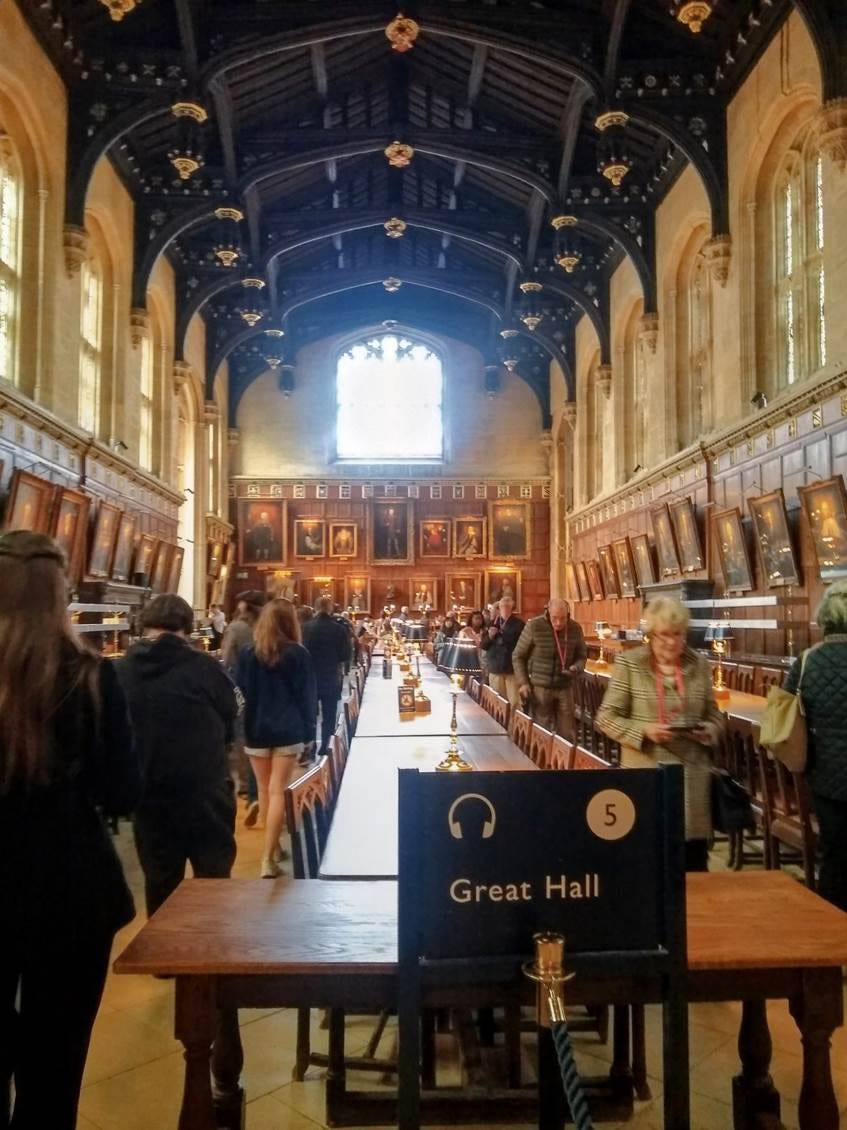
The Great Hall of Christ Church is one of the most famous dining halls in Oxford, noted for its long wooden tables, portraits, and high timber ceiling. It served as an inspiration for the Great Hall set in the Harry Potter and the Philosopher’s Stone and subsequent Harry Potter films.
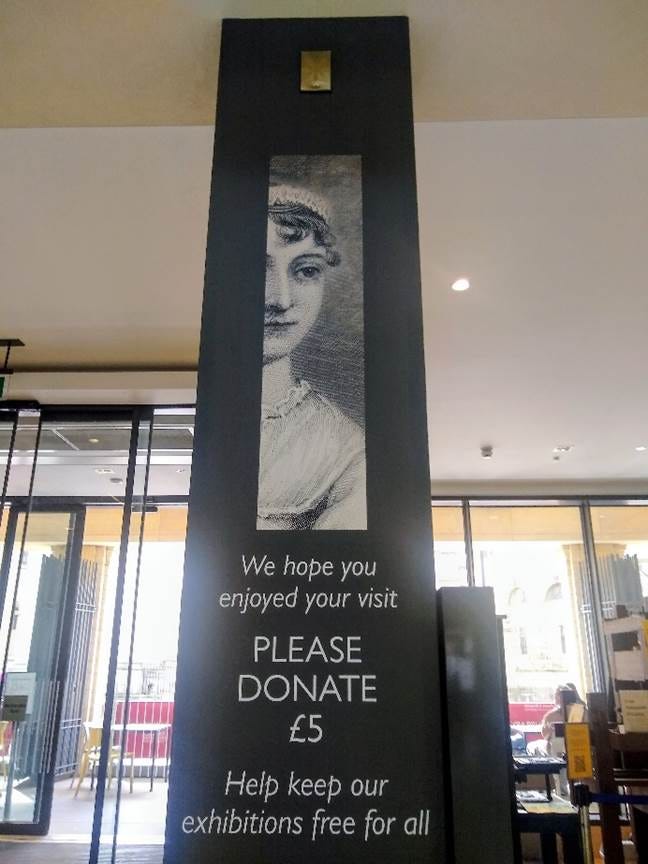
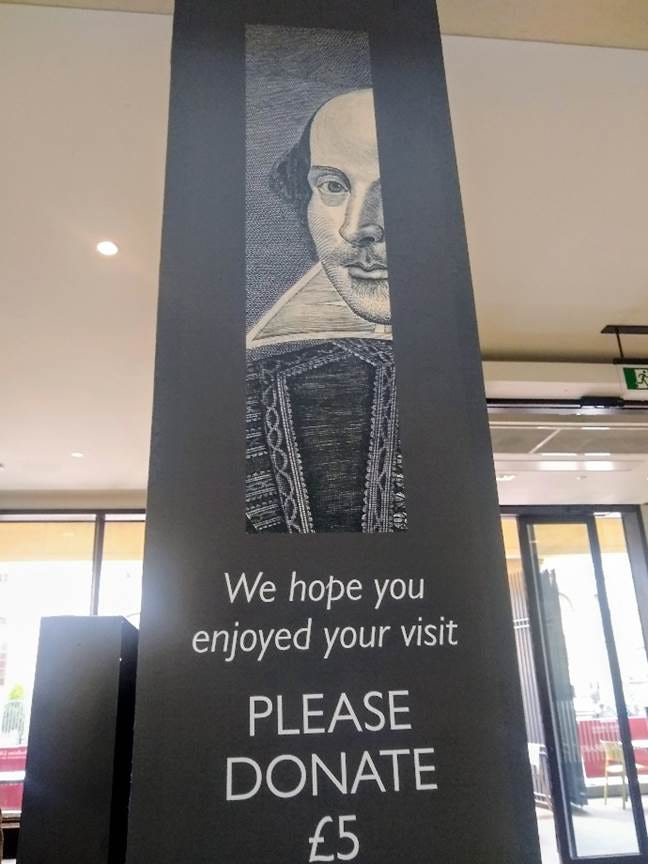
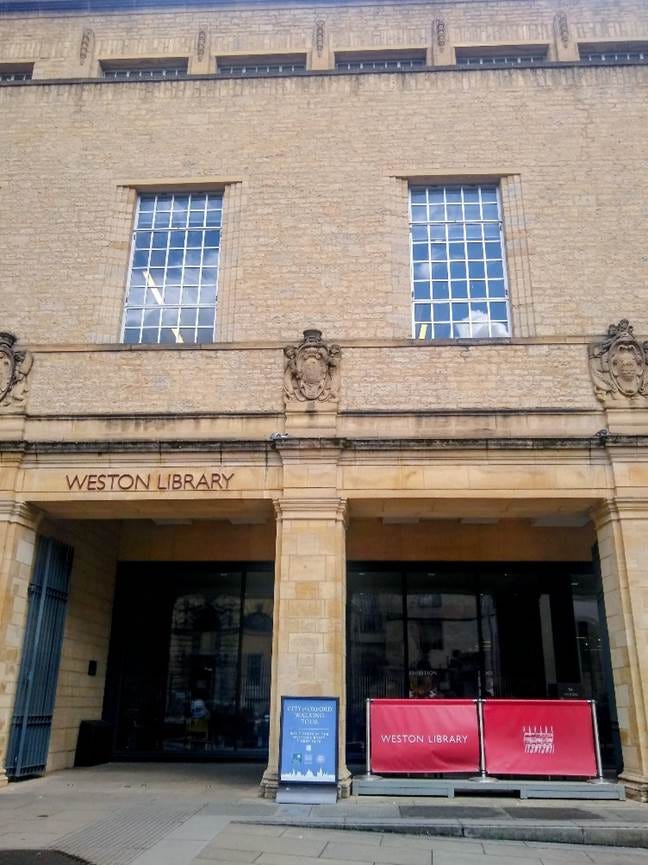
The Weston Library, the special collections library of University of Oxford, is part of the renowned Bodleian Libraries. Its collections include rare manuscripts, literary archives, and historic documents connected with major writers such as J. R. R. Tolkien, Percy Bysshe Shelley, and Mary Shelley. Two banners in the first-floor hallway feature William Shakespeare and Jane Austen, respectively, as representative male and female authors in English literature.

Among all the places we visited during our trip to England, Bath ranked near the top of my list. The city is forever associated with the memorable narrator of Geoffrey Chaucer’s “The Wife of Bath’s Tale” (Middle English: The Tale of the Wyf of Bathe) in The Canterbury Tales (ca. 1387-1400). I have taught this tale in Middle English for many years, and each time I revisit it, I find myself smiling at its wit, humor, and keen insight into human relationships.
The story centers on a young knight who commits a crime punishable by death: the rape of a young woman. Instead of ordering his execution, the queen grants him one year and one day to discover the answer to a single question: What do women desire most? He travels throughout the kingdom, asking countless women, only to receive conflicting answers. As the deadline draws near, he encounters an old, ugly woman who promises to reveal the correct answer if he agrees to grant her whatever she may later request. Desperate to save his life, he accepts the bargain.
When the knight appears before the queen, he answers that women desire sovereignty—the authority to exercise mastery over their husbands and lovers:
Middle English:
“My lige lady, generally,” quod he,
“Wommen desiren to have sovereynetee
As wel over hir housbond as hir love,
And for to been in maistrie hym above.
This is youre mooste desir, thogh ye me kille.
Dooth as yow list; I am heer at youre wille.”
In al the court ne was ther wyf, ne mayde,
Ne wydwe that contraried that he sayde,
But seyden he was worthy han his lyf.
Modern English Translation:
“My gracious lady,” he said, “without exception,
Women desire to have sovereignty
As well over their husbands and their lovers,
To rule above them and to hold command.
This is your greatest wish, I understand.
Though you should take my life for what I say,
Do as you will; I am yours this day.”
Throughout the court there was no wife or maid,
No widow who disagreed with what he said;
They said that he deserved his life anew.
His response satisfies the queen, and his life is spared. The old woman then claims the reward she was promised: she demands that the knight marry her. Though horrified by the prospect, he keeps his word and weds her.
On their wedding night, the knight remains miserable. His new wife gently challenges his attitude, asking whether he would rather have a young and beautiful wife who might be unfaithful or an old and ugly wife who would remain loyal and true. Recognizing her wisdom, he allows her to choose what she wishes to be. At that moment, she is transformed into a young, beautiful, and faithful wife. The tale concludes with the knight doubly blessed, having gained a companion who embodies both beauty and loyalty.
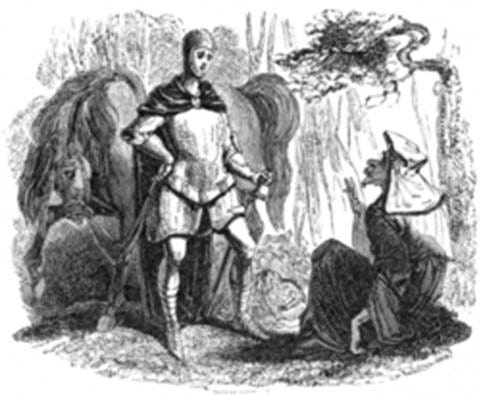
Samuel Williams, The Wife of Bath’s Tale, 1870. Illustration from Charles Cowden Clarke’s Tales from Chaucer. The illustration depicts the moment when “the whole bevy of dancers had vanished, and no living soul was left behind, except a hideous old woman, bent double, and sitting on the green.” Courtesy of Wikimedia Commons. Public domain.
About the Author

Professor of English and Creative Writing and Associate Dean of the School of Humanities and Theology, Missouri Baptist University
John J. Han, PhD, is the author, editor, co-editor, or translator of 35 books. His forthcoming book, Echoes from the Hills: Critical Essays on Ozarks Literature (co-edited with C. Clark Triplett), will be published by the University of Arkansas Press. He has also published nearly 3,000 poems in a wide range of journals and anthologies. In addition to his long tenure at Missouri Baptist University, he has taught at Kansas State University, the University of Nebraska–Lincoln, Nebraska Wesleyan University, and Washington University in St. Louis. He has also served as a visiting scholar at Georgia College & State University and the University of Ljubljana in Slovenia.
© K-Global Scholars and Professionals Forum. All rights reserved. Content published in the K-GSP Forum may not be reproduced, distributed, or transmitted in any form without prior written permission from the K-GSP Forum, except for brief quotations with full attribution.