
Unhyeongung Palace: The Setting of Kim Dong-in’s Springtime of Unhyeongung
Modern Korean literature has established a rich tradition of historical novels that revisit the nation’s past to explore questions of identity, power, social change, and collective memory. Among the earliest and most influential works in this tradition is Kim Dong-in’s (1900-1951) Springtime of Unhyeongung (Unhyeongung-ui Bom, 1933-1934), a landmark novel that dramatizes the turbulent final decades of the Joseon dynasty through the life of Heungseon Daewongun (1820-1898), the father of King Gojong (r. 1864-1907). Written during the Japanese colonial period, the novel uses historical events and figures to reflect on political leadership, national crisis, and the challenges of modernization.
Along with fellow pioneer Park Jong-hwa (1901-1981), whose sweeping historical novels popularized Korea’s dynastic past for modern readers, Kim helped establish the historical novel as a major genre in modern Korean fiction. Their achievements paved the way for later generations of writers, including Park Kyong-ni (Land, 1969-1994), Jo Jung-rae (The Taebaek Mountains, 1983-1989), and Hwang Sok-yong (The Guest, 2002), whose novels continue to examine Korea’s complex historical experiences.
Although I had known for many years that Unhyeongung served as the setting of Kim Dong-in’s Springtime of Unhyeongung, and although I had worked at a publishing house just a fifteen-minute walk from the palace early in my career in Korea, I did not visit it until May 2023. Living in the United States deepened my appreciation for my native culture, and one item on my bucket list was to explore Seoul’s historic palaces, especially the one immortalized in Kim’s celebrated novel. Ironically, Korean Americans often seem more eager to visit Korea’s cultural landmarks than many people living in Korea, who may be too occupied with everyday life or assume these places can always be visited another time because they are so close at hand.
When I visited Korea in 2023, I intentionally reserved a room at a Nagwon-dong hotel within walking distance of the palace. My goal for the day was to visit Unhyeongung first and then Changdeokgung Palace, located a few blocks away, later that day. Unhyeongung is smaller than the royal palaces, but it played an important role in nineteenth-century Korean history as the center of Daewongun’s political activities and his efforts to strengthen royal authority and reform the government. The palace witnessed major events during a period of intense internal change and growing foreign pressure on Joseon.
Serialized in The Chosun Ilbo from April 1933 to February 1934, Kim Dong-in’s Springtime of Unhyeongung portrays the life of Heungseon Daewongun and the turbulent final decades of the Joseon dynasty. Through the rise of its protagonist from a marginalized royal relative to the powerful regent who restored the authority of the royal court, Kim explores themes of ambition, political struggle, social injustice, and national crisis. The novel presents Daewongun as a complex figure—both a determined reformer who challenged the dominance of powerful clans and a tragic figure constrained by the harsh realities of his era. Written during the Japanese colonial period, Springtime of Unhyeongung reflects Kim’s historical imagination and national consciousness while helping establish the historical novel as a major genre in modern Korean fiction.
This photo essay explores the historic buildings of Unhyeongung Palace, along with artifacts associated with Heungseon Daewongun and the broader world of Joseon court culture. Through these images, the palace emerges not only as a historical site but also as a literary landscape where the memory of a vanished dynasty continues to inspire imagination and reflection.
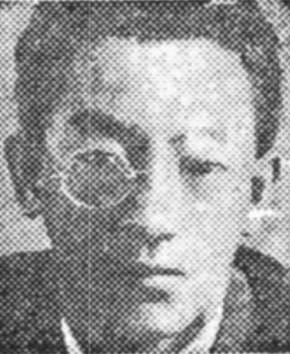
Kim Dong-in (1900-1951). Photograph published in The Chosun Ilbo, March 19, 1974. Public domain. Source: Naver News Library via Wikimedia Commons.
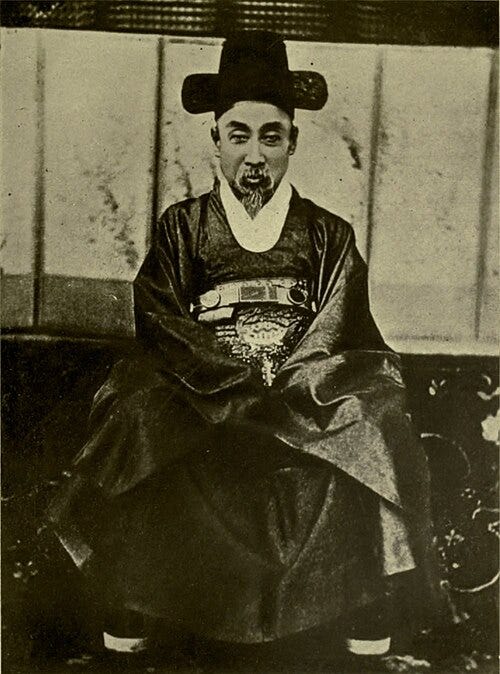
Heungseon Daewongun (1820-1898), portrait photograph by Homer B. Hulbert (1863-1949), 1898 or earlier. Published in The Passing of Korea (1906). Public domain, courtesy of Wikimedia Commons and the Internet Archive.
Kim Dong-in’s novel begins with the death of the protagonist. Below is an excerpt from the opening chapter:
(Korean)
이 날이 조선 근대의 괴걸이요, 유사 이래 어떤 제왕이든 감히 잡아 보지 못하였던 “절대”적 권리를 손에 잡고 이 팔도 삼백여 주를 호령하며, 밖으로는 불란서, 미국, 청국 들을 내려 누르고, 안으로는 자기의 백성의 복지를 위하여 그의 일생을 바친 흥선 대원군 이하응(興宣大院君 李昰應)이 별세한 날이다.
This day marked the death of Heungseon Daewongun Yi Ha-eung (興宣大院君 李昰應), one of the most extraordinary figures of modern Joseon history. He was a man who seized “absolute” authority that no ruler in Korean history had ever dared to claim, wielding power across the Eight Provinces and more than three hundred districts throughout the kingdom. He challenged foreign powers—including France, the United States, and Qing China—and devoted his life to the welfare of his people.
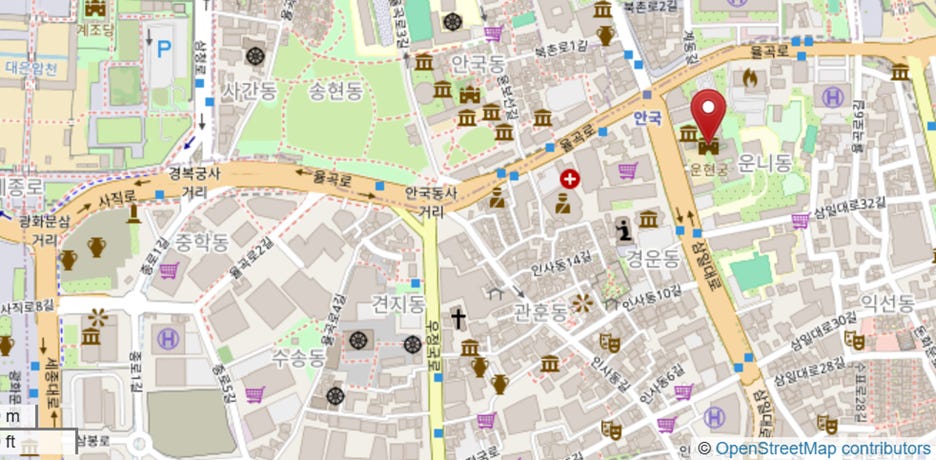
Located in Jongno-gu in central Seoul, Unhyeongung Palace stands less than a mile east of Gwanghwamun Gate, placing it within the historic heart of the former Joseon capital. Composite image based on map data © OpenStreetMap contributors.
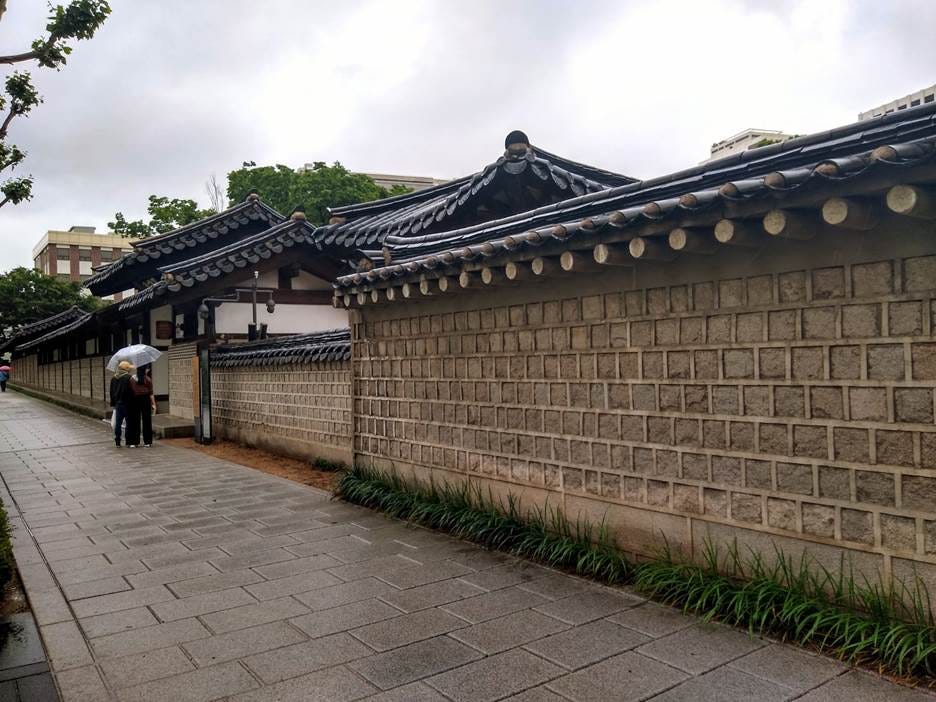
Two visitors pause to read the interpretive sign at the entrance to Unhyeongung Palace.
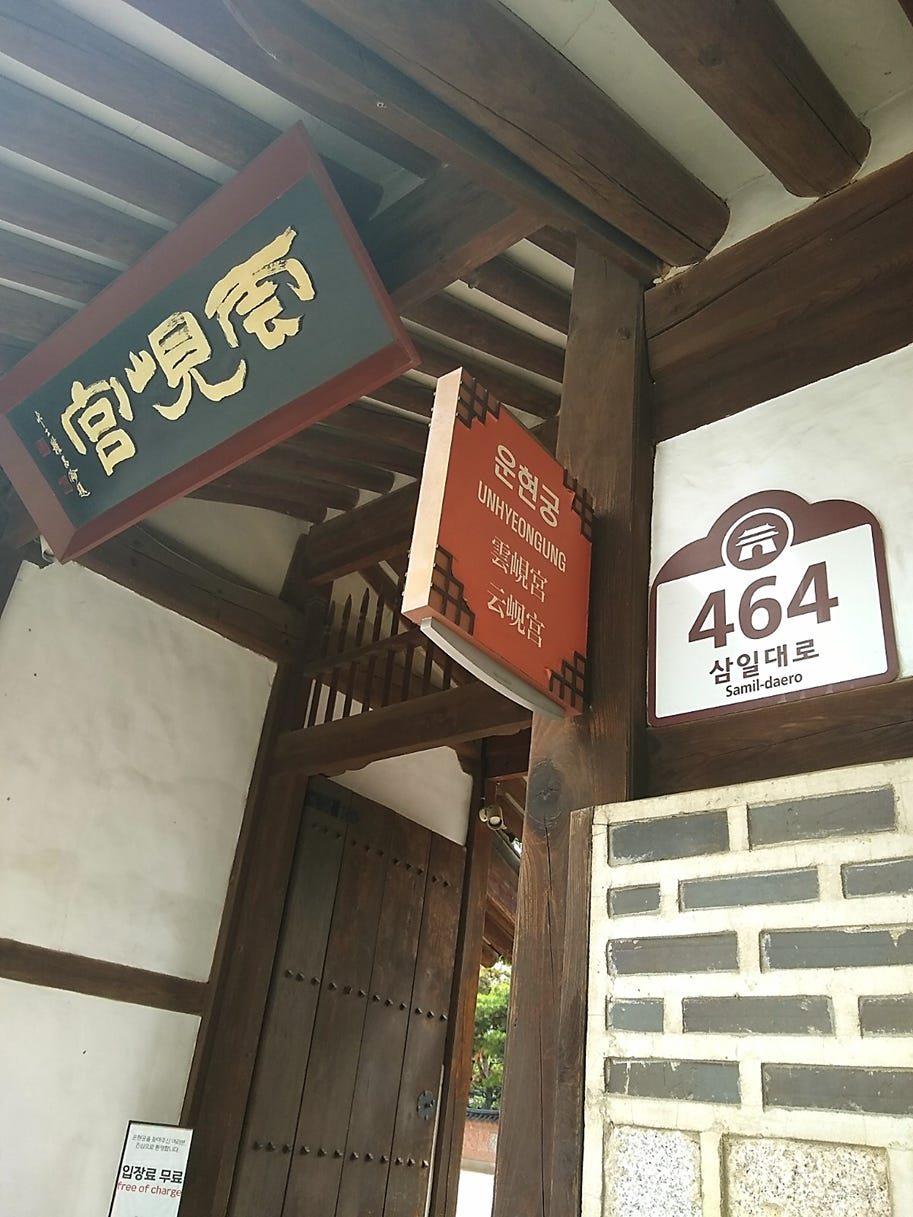
The name “Unhyeongung” (雲峴宮) is inscribed in Chinese characters on the wooden tablet beneath the eaves above the palace entrance.
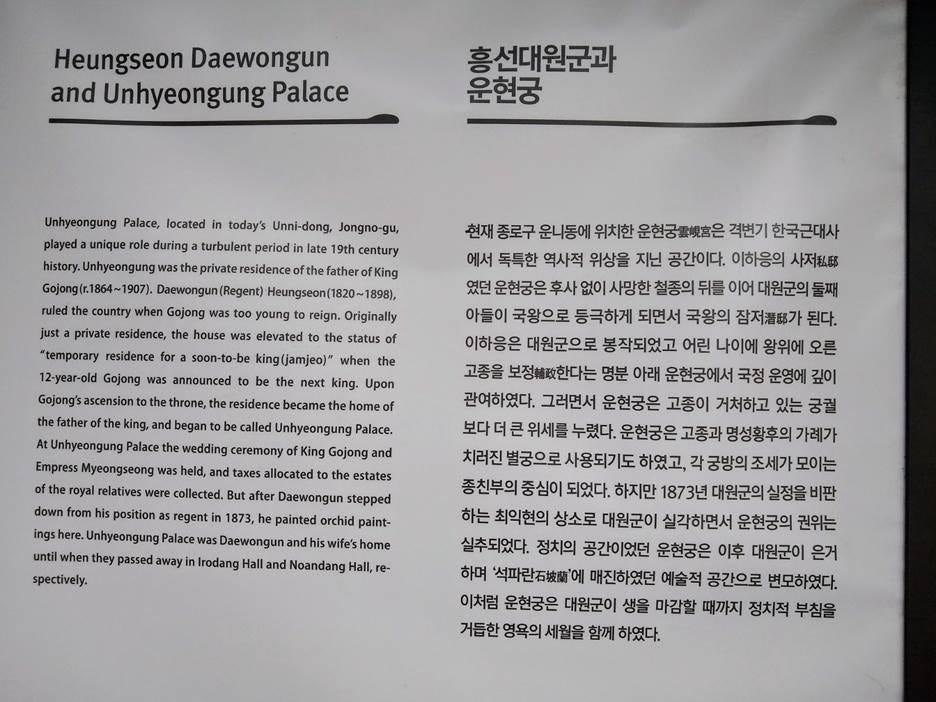
This information panel explains that Heungseon Daewongun governed the kingdom from this residence after his son, King Gojong, ascended to the throne at the age of twelve. Gojong’s wedding was held here, and after relinquishing his regency in 1873, Daewongun and his wife continued to live at Unhyeongung Palace, where he devoted himself to painting orchids.
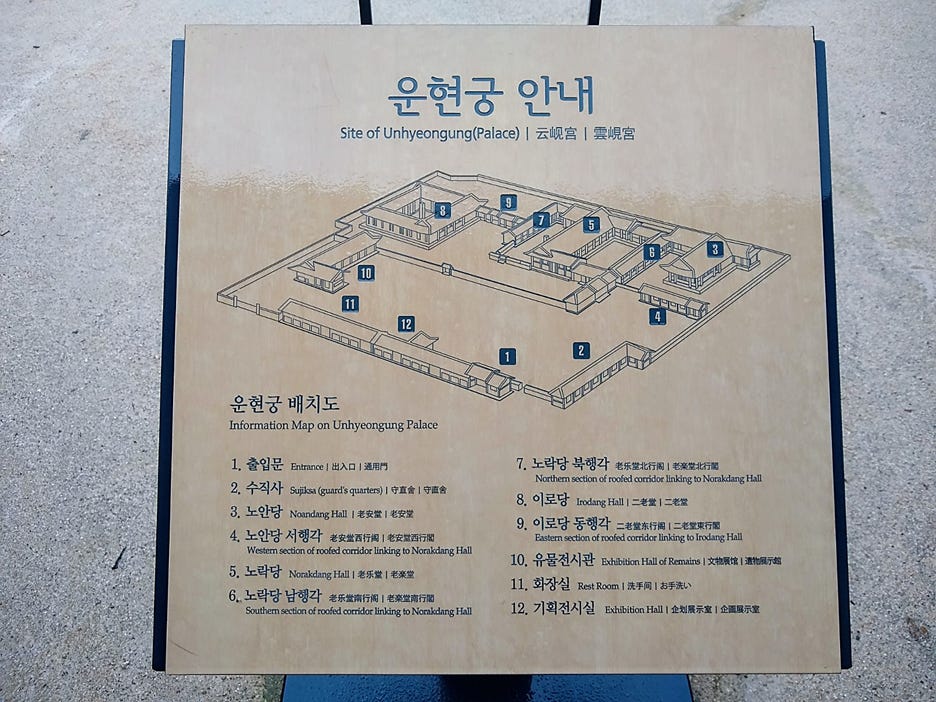
A map of Unhyeongung Palace.
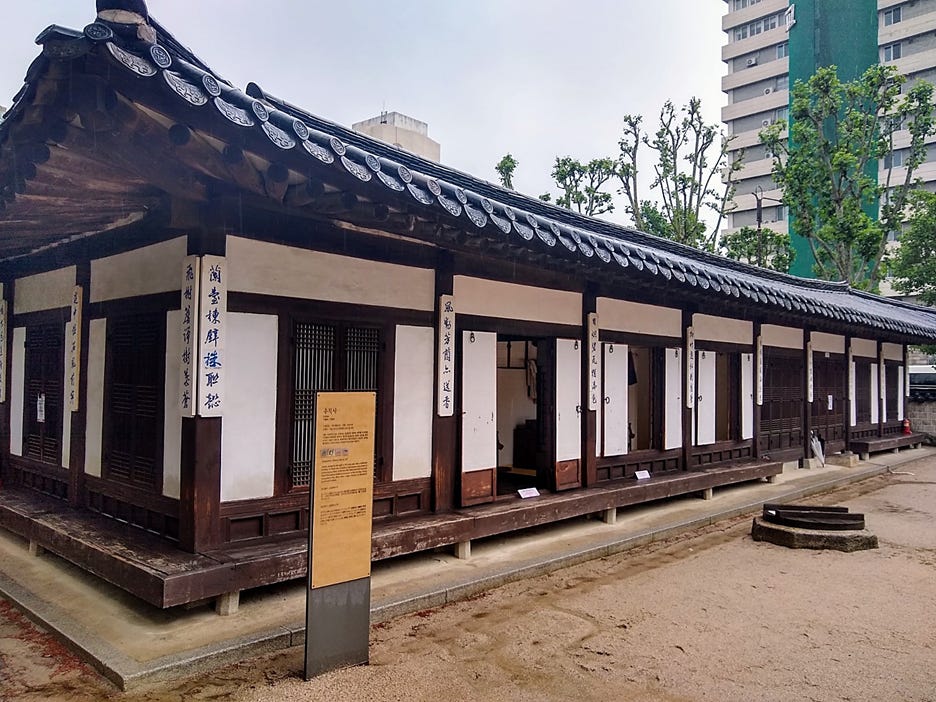
Upon entering the main gate, visitors encounter Sujiksa (守直舍), located immediately to the right. This building served as quarters for the palace guards and maintenance staff who were responsible for protecting and managing Unhyeongung.
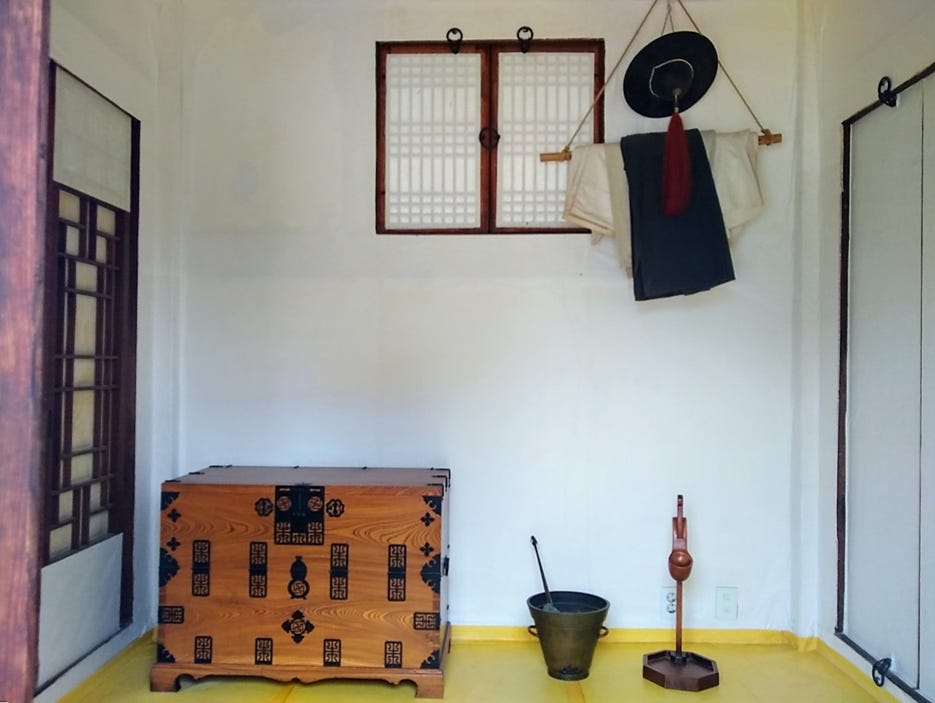
The interior of Sujiksa is modest and functional, reflecting its role as quarters for the palace guards and maintenance staff.
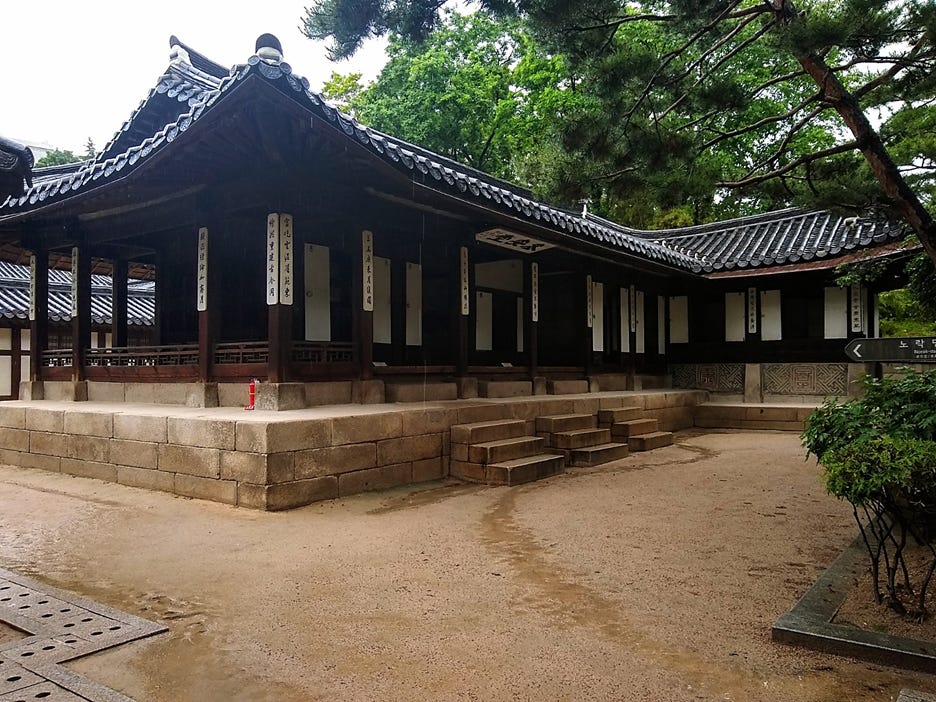
As the sarangchae (men’s quarters) of Unhyeongung Palace, Noandang Hall (老安堂) served as the principal residence of Regent Heungseon Daewongun. Its name, Noan (“honoring and comforting the elderly”), is derived from the Analects of Confucius, reflecting the Confucian ideal of respecting and caring for one’s elders. The hall was built in 1864, the first year of King Gojong’s reign.
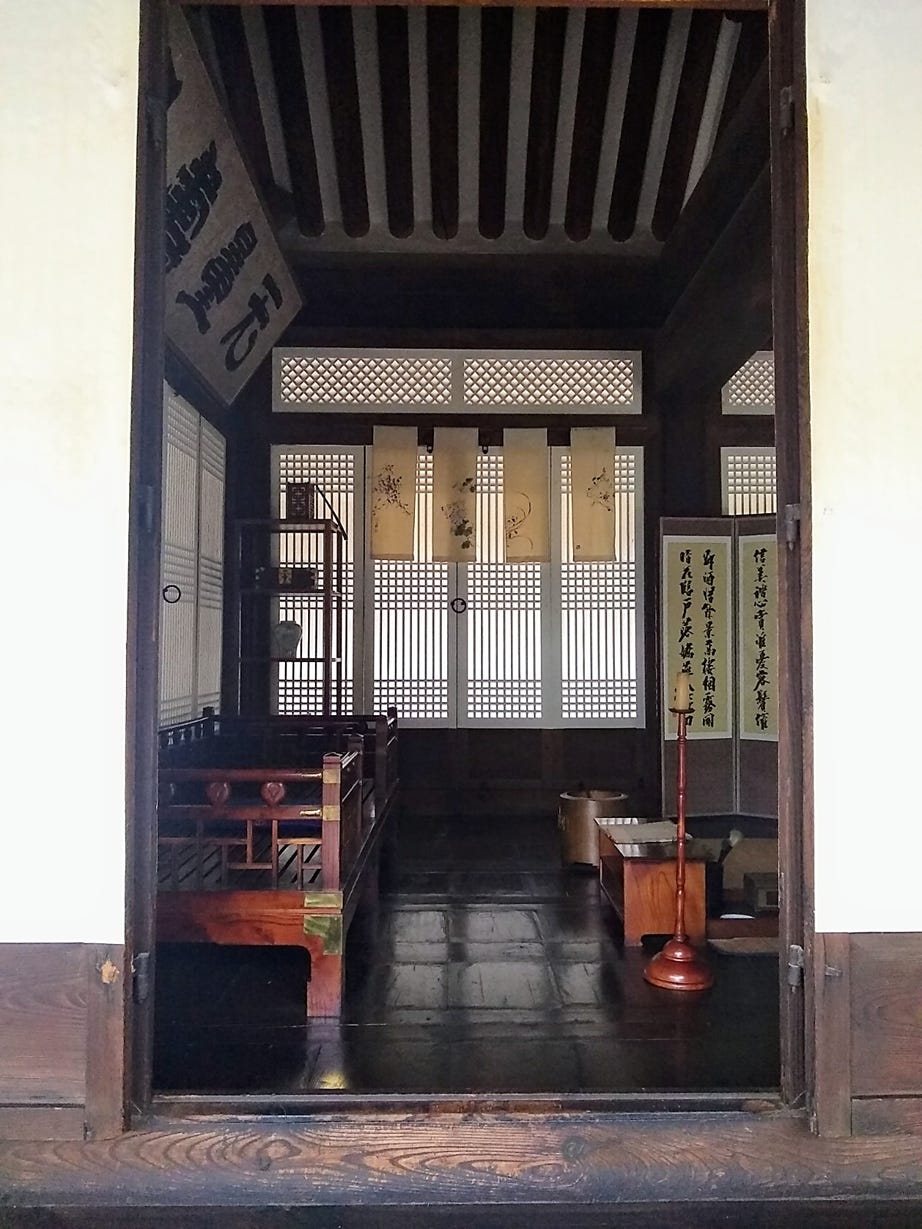
The interior of Noandang Hall is more elaborate and elegant, befitting the residence of the regent.
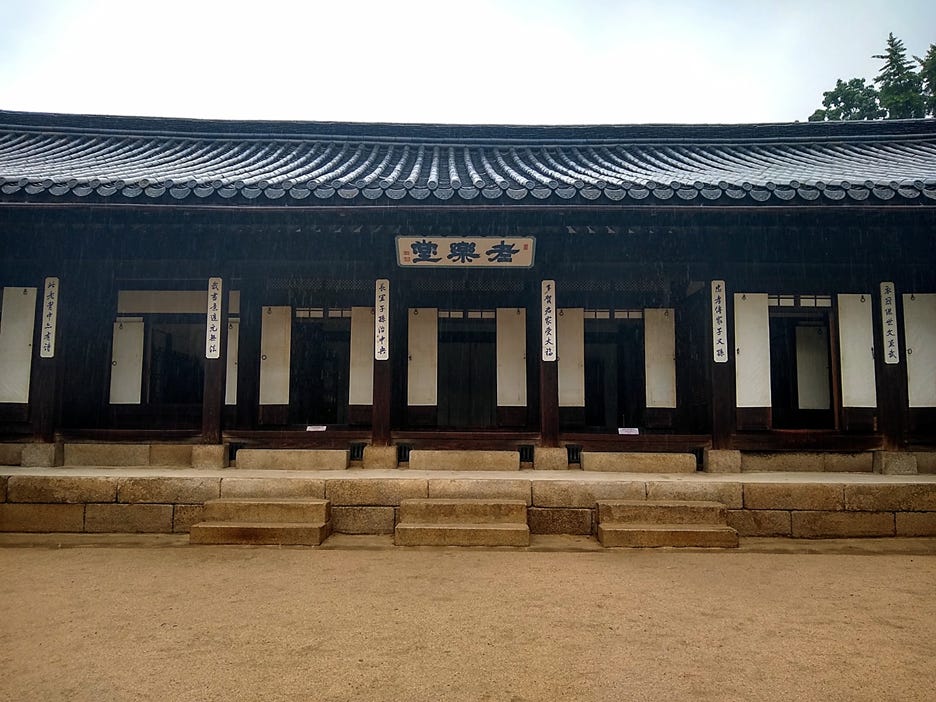
Norakdang Hall (老樂堂, “Hall of Joy in Old Age”) was the principal ceremonial hall of Unhyeongung Palace and the setting for major family occasions, including sixtieth-birthday celebrations, weddings, and other important festivities. Renowned for its grandeur and elegant architecture, the hall rivaled the reception buildings of the royal palaces in both scale and splendor, reflecting the elevated status of Heungseon Daewongun’s household.
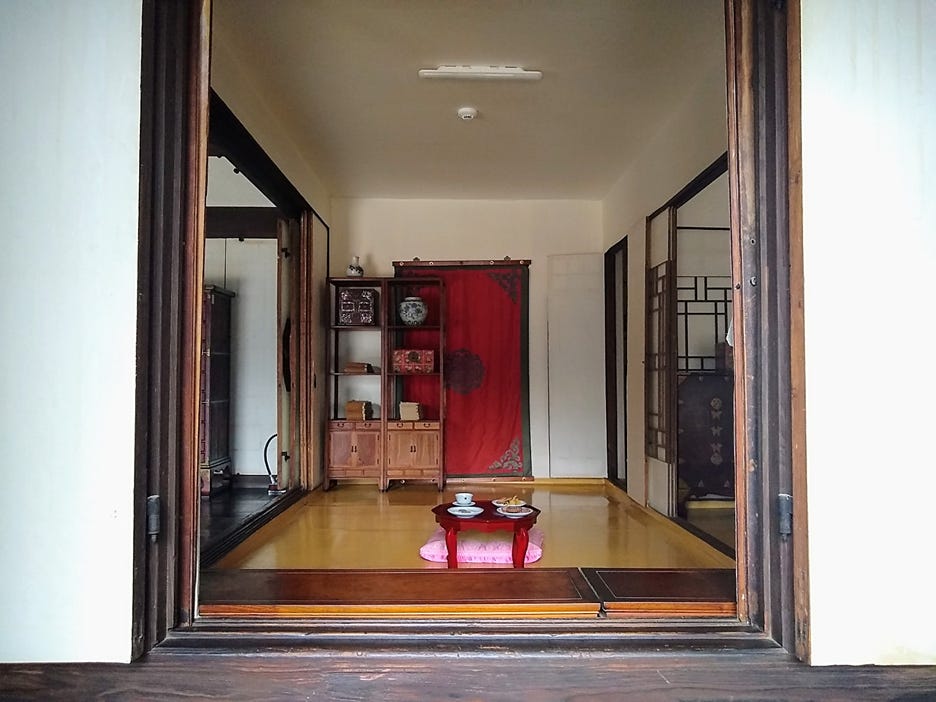
The interior of Norakdang Hall, the ceremonial heart of Unhyeongung Palace. Built in 1864, it is the only building in the palace with decorated column capitals, underscoring its status as the residence’s principal hall. In 1866, the third year of King Gojong’s reign, the hall was the site of the royal wedding of King Gojong and Queen Myeongseong.
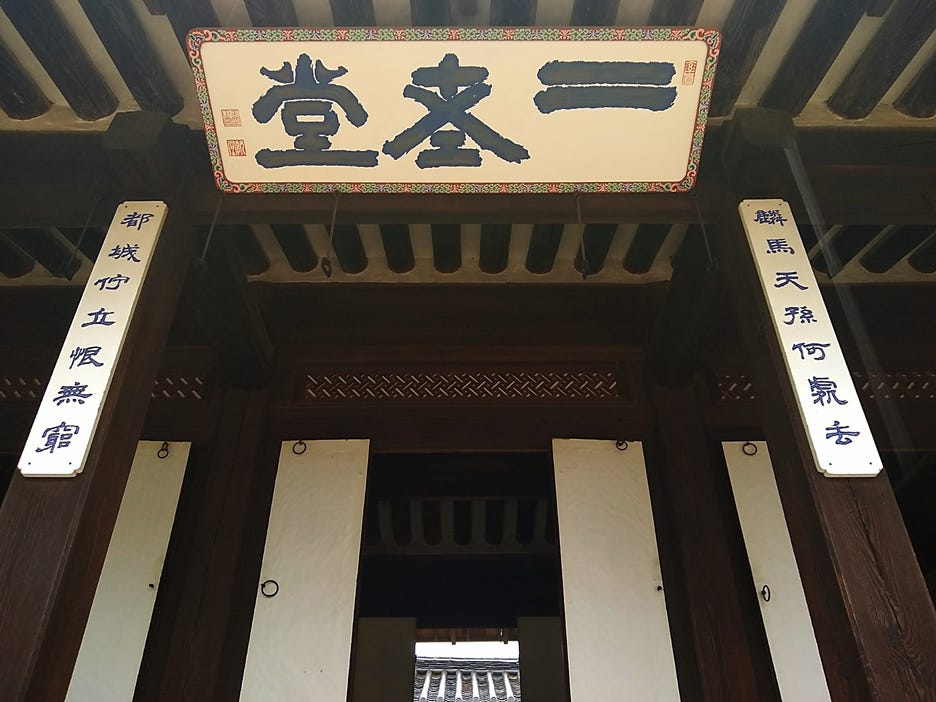
Irodang Hall (二老堂, “Hall of the Two Elders”) is one of the three principal buildings of Unhyeongung Palace, along with Noandang and Norakdang. Located in the innermost part of the palace, it was the private residence of Lady Min, the wife of Heungseon Daewongun and mother of King Gojong. Unlike Norakdang, which served as the main hall for family celebrations and major events, Irodang functioned as the women’s quarters of the household, with its enclosed “ㄷ”-shaped structure reflecting the traditional separation of spaces in a noble family residence. The hall’s name plaque was reproduced from calligraphy by the renowned scholar and artist Chusa Kim Jeong-hui (1786-1856), reflecting both Chusa’s artistry and Heungseon Daewongun’s appreciation for refined calligraphic design.
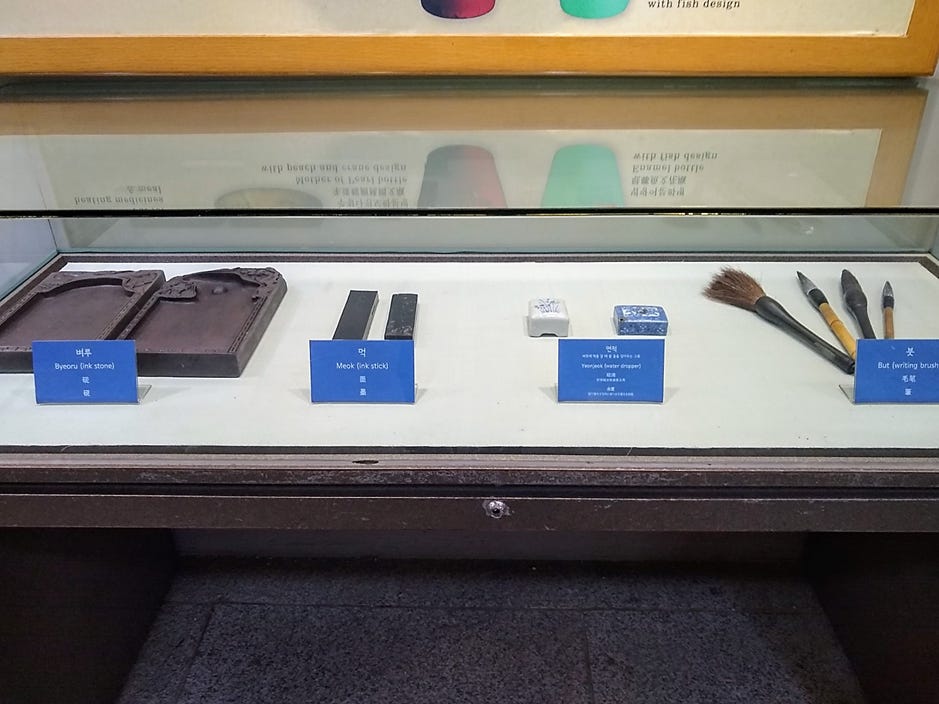
The Exhibition Hall of Unhyeongung Palace, which features 18 sections, displays household objects and artifacts associated with daily life at the palace. Shown here are traditional writing implements, including brushes, a water dropper, ink sticks, and ink stones, reflecting the importance of calligraphy and literary culture in Joseon society.
This display recalls a memorable passage from Chapter 5 of Kim Dong-in’s Springtime of Unhyeongung, in which Heungseon Daewongun paints an orchid:
(Korean)
앞에 펴 놓은 명주―
그 앞에 단정히 앉아 있는 것은 흥선이었다.
붓에 먹을 듬뿍이 묻혀 가지고 한참 명주 폭만 내려다 보고 있다가 흥선은 왼손으로 방바닥을 짚으며 오른손에 잡았던 붓을 명주폭 위에 놀렸다. 손은 뛰놀았다. 위 아래 좌우로, 혹은 천천히 혹은 급속히―흥선의 손에 잡힌 붓이 노는 동안 한 포기의 난초는 명주 위에 그려졌다.
바위, 나무등걸―그 틈으로 벋은 길고 짧은 잎이며 점점이 빛을 자랑하는 몇 송이의 꽃―흥선의 정신을 모은 한 포기의 난초는 명주 위에 나타났다. 거기 낙관을 하고 흥선은 조금 물러앉아서 자기의 휘호한 난초를 굽어보았다. 기교보다도, 화법보다도 오히려 힘으로 찬 난초였다. 알지 못함이 아니며, 자각하지 못함이 아니로되, 패기에 난 그의 손끝은 기교를 무시하고 화법을 무시하고, 때때로 힘있게 길게 벋는 것이었다.
Spread out before him lay a sheet of fine white silk.
Heungseon sat upright before it.
Loading his brush generously with ink, he gazed at the blank silk for a long while. Then, steadying himself with his left hand on the floor, he set the brush in his right hand upon the silk. His hand came alive. It moved up and down, left and right, now slowly, now swiftly. As the brush danced in his hand, a single orchid gradually emerged upon the silk.
Rocks, a weathered tree stump, long and short leaves stretching between them, and several blossoms glowing like scattered points of light—all came together as Heungseon’s concentrated spirit took shape in the orchid on the silk. After adding his seal, he leaned back slightly and looked down at his finished work. It was an orchid distinguished less by technical refinement or adherence to artistic convention than by its sheer force. Heungseon was fully aware of both technique and established methods, yet the boldness that filled his spirit led his brush to disregard them, sweeping forward at times with vigorous, unrestrained strokes.
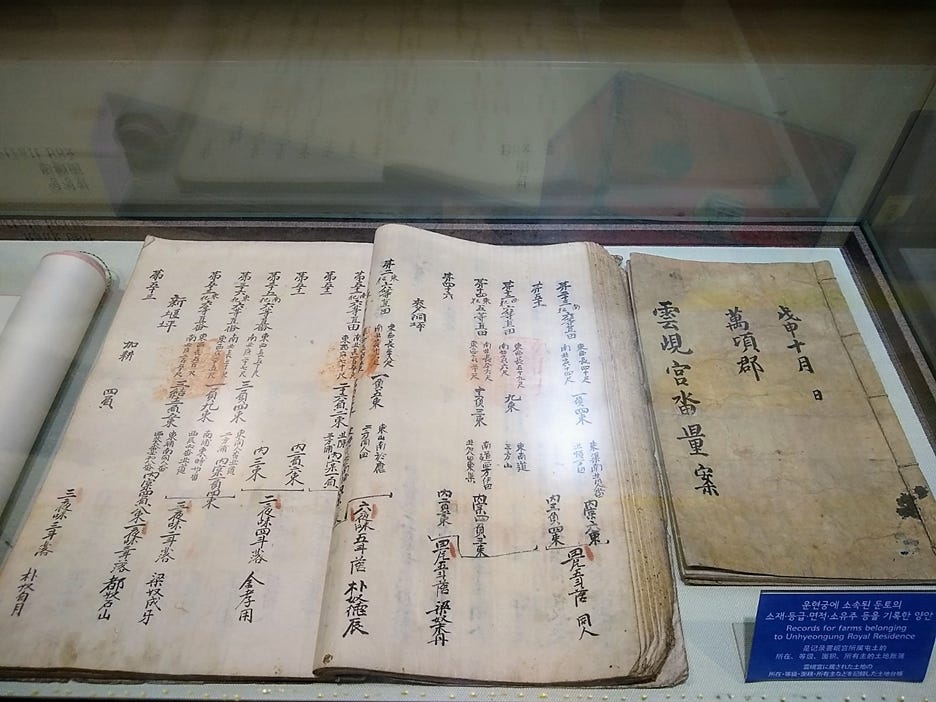
These Chinese-language records document the farms and landholdings of Unhyeongung Palace, providing evidence of the economic foundation that supported the residence and household of Heungseon Daewongun.
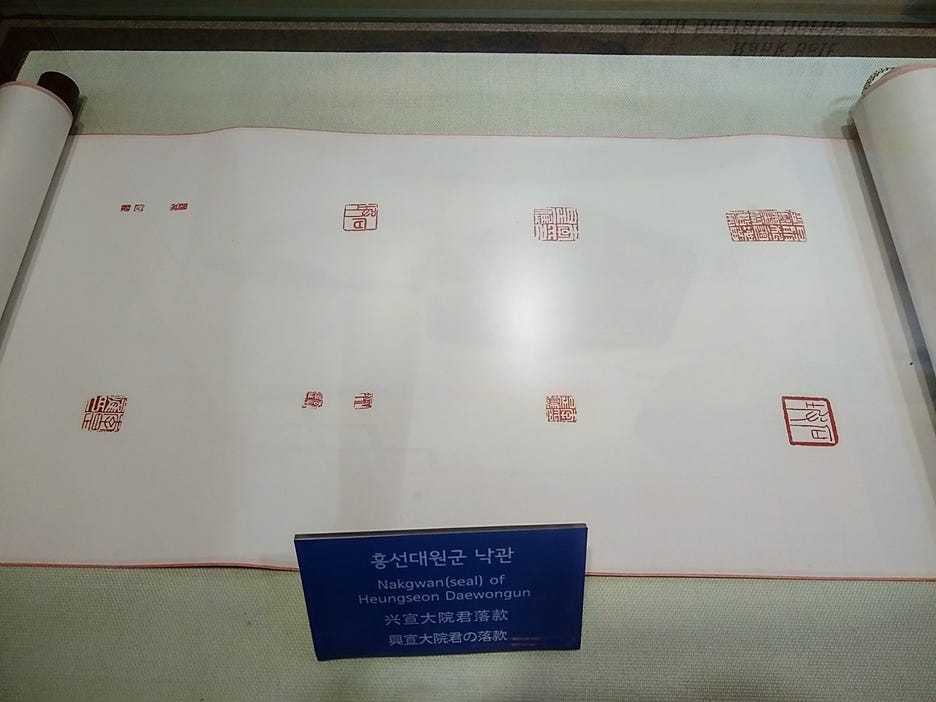
These are the personal seals of Heungseon Daewongun, used to authenticate documents and represent his authority.
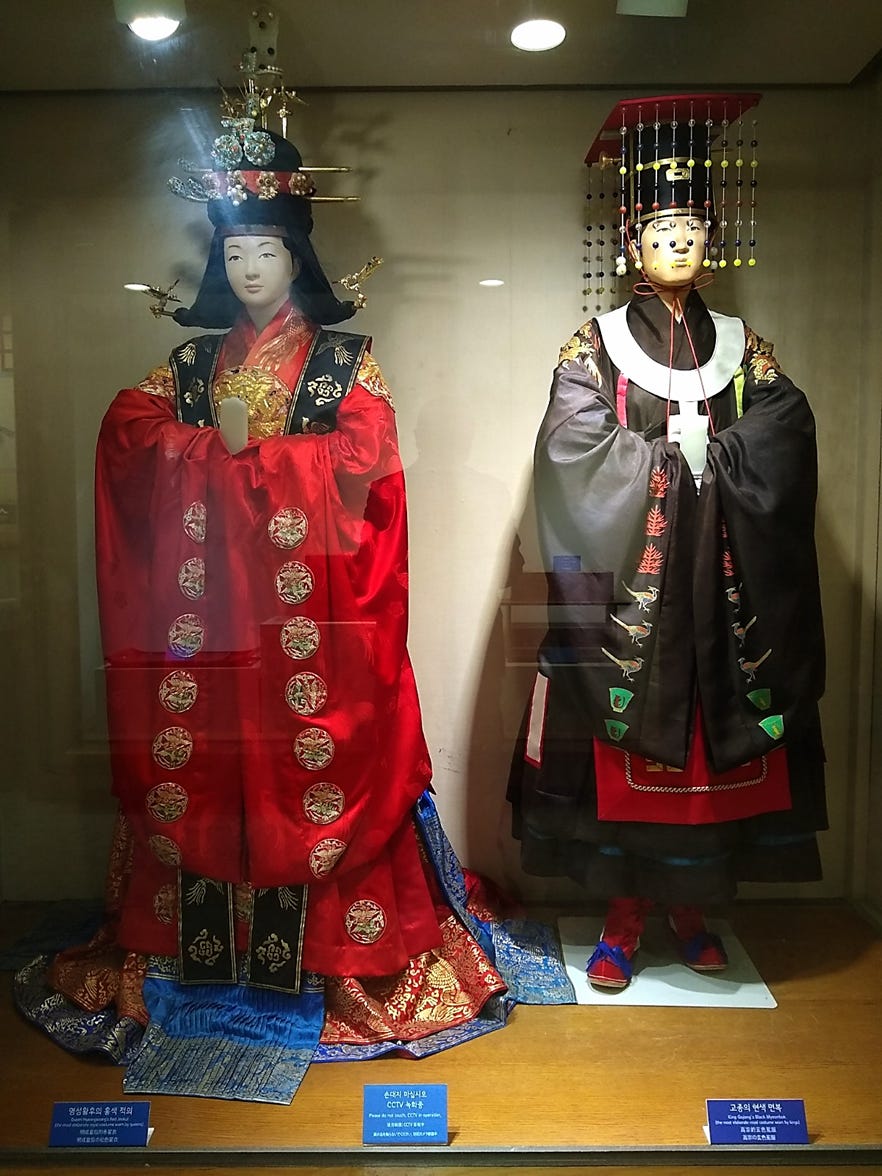
These are the ceremonial garments worn by King Gojong and Queen Myeongseong at their wedding ceremony held at Unhyeongung Palace in 1866.
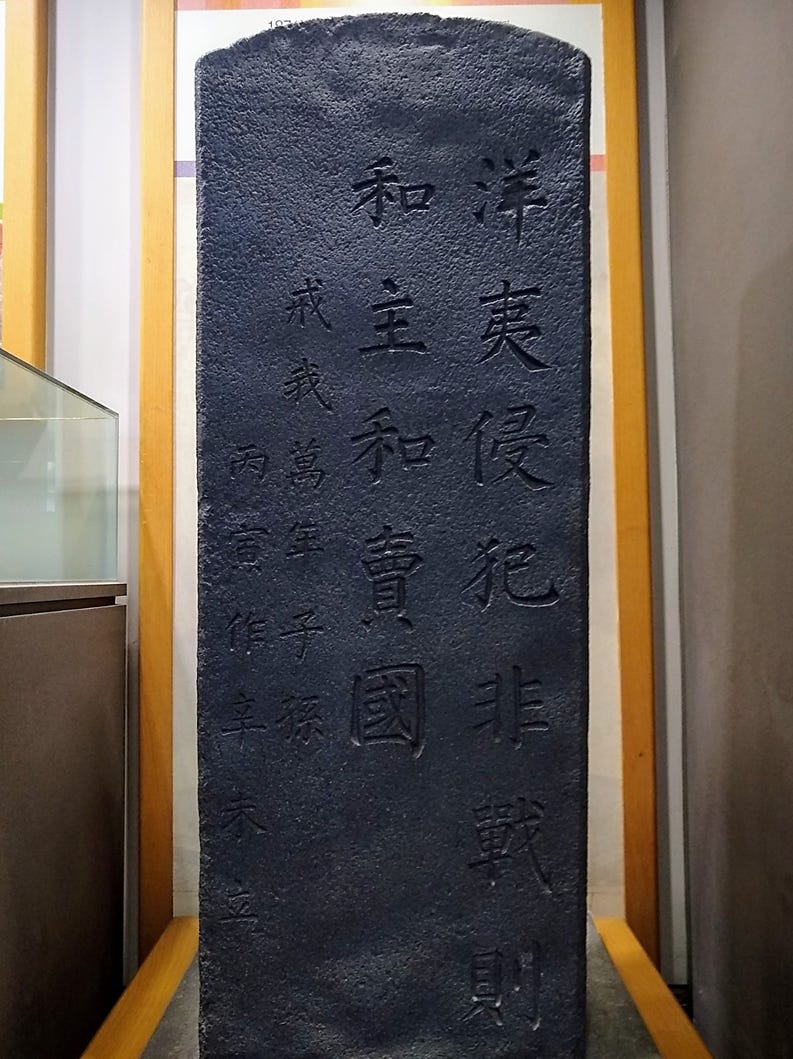
This monument is a Cheokhwabi (斥和碑), or “Anti-Western Stele,” erected in 1871 by order of Heungseon Daewongun. Following the French and American expeditions to Korea, these stone monuments were placed at strategic locations throughout the kingdom to declare the government’s determination to resist Western demands for diplomatic and commercial relations and to strengthen its isolationist policy. The inscription warns that “those who seek peace without fighting against Western barbarians are selling the nation” (洋夷侵犯非戰則和 主和賣國 戒我萬年子孫), reflecting Daewongun’s uncompromising stance toward foreign powers during a period of growing international pressure.
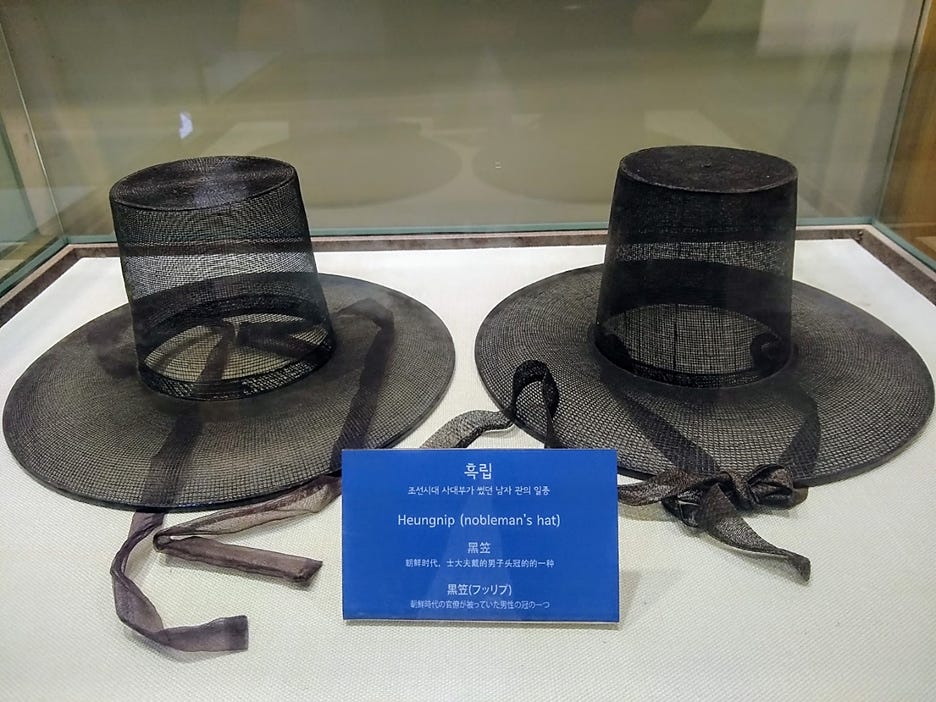
On display are two traditional hats worn by yangban (noblemen) during the Joseon period, reflecting the clothing customs and social status of the educated elite.
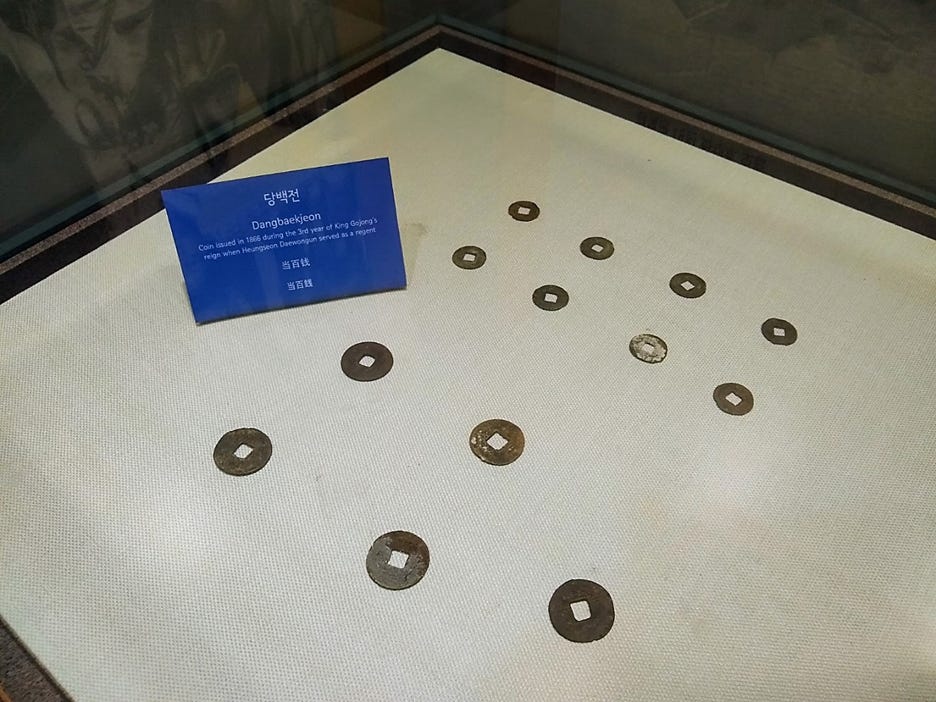
This display features the Dangbaekjeon (當百錢), high-denomination coins issued in 1866 during the reign of King Gojong by order of Heungseon Daewongun. Intended to finance the reconstruction of Gyeongbokgung Palace and strengthen the military, the coins were assigned a face value one hundred times greater than that of the existing Sangpyeongtongbo (常平通寶). However, because their actual metal value was far lower than their stated worth, the Dangbaekjeon caused severe inflation and economic disruption before being abolished only two years later in 1868.
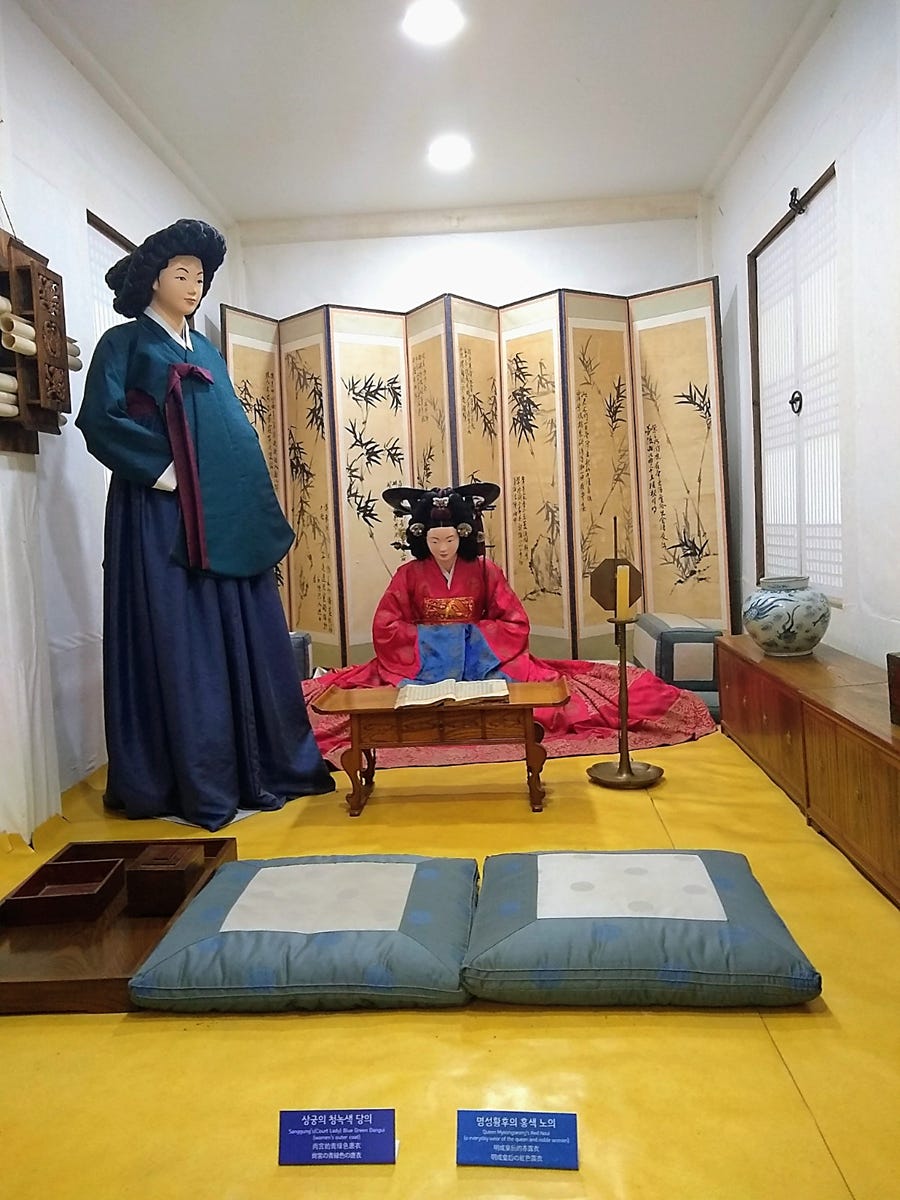
This photograph shows Queen Myeongseong seated in her royal attire, with a sanggung (尙宮), a senior court lady responsible for assisting and attending to the queen, standing beside her. The image offers a rare glimpse into the formal hierarchy and daily life of the Joseon royal court.
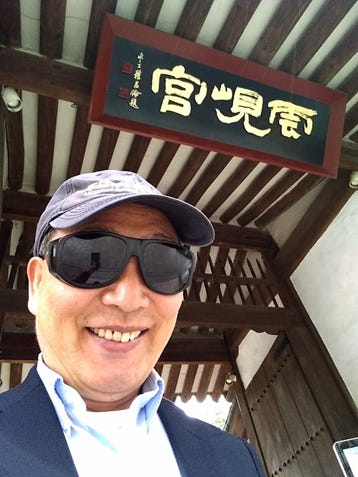
Reading a book from a bygone era offers the delightful opportunity to engage in an indirect yet meaningful conversation with its author. Likewise, visiting a historic place such as Unhyeongung Palace transports us to a world far removed from our own. Confronted by powerful external forces that threatened the very survival of the Joseon kingdom, Heungseon Daewongun could scarcely have imagined that Korea would one day emerge as a leading nation in the twenty-first century—not only in cultural influence but also in politics, economic development, and military strength.
About the Author
Professor of English and Creative Writing and Associate Dean of the School of Humanities and Theology, Missouri Baptist University
John J. Han, PhD, is the author, editor, co-editor, or translator of 35 books. His forthcoming book, Echoes from the Hills: Critical Essays on Ozarks Literature (co-edited with C. Clark Triplett), will be published by the University of Arkansas Press. He has also published nearly 3,000 poems in a wide range of journals and anthologies. In addition to his long tenure at Missouri Baptist University, he has taught at Kansas State University, the University of Nebraska–Lincoln, Nebraska Wesleyan University, and Washington University in St. Louis. He has also served as a visiting scholar at Georgia College & State University and the University of Ljubljana in Slovenia.
© K-Global Scholars and Professionals Forum. All rights reserved. Content published in the K-GSP Forum may not be reproduced, distributed, or transmitted in any form without prior written permission from the K-GSP Forum, except for brief quotations with full attribution.
서울 한복판에 있는데도, 운현궁은 못 가봤었네요... 나중에 꼭 찾아가 보겠습니다. ^^