

Where a Tyrant Poet Lies in Repose: Traces of King Yeonsan in Seoul
Korea’s Joseon Dynasty (1392-1910) had its share of cruel rulers. Yeonsan (1476-1506), the tenth king of the dynasty, remains especially notorious for his brutal reign. His atrocities included exhuming and beheading deceased courtiers he despised, banishing political opponents, and personally mutilating and killing a eunuch who protested his debauchery. He also violated his Elder Mother and several Buddhist nuns, who were former royal concubines or widows of members of the royal family; they later died by suicide. He was eventually deposed in a coup d’état and replaced by his half-brother, King Jungjong (1506-1544). After his dethronement, Yeonsan was banished to Ganghwa Island, where he died two months later at the age of thirty-one. His death was attributed to malaria and carbuncles, but some historians speculate that he may have been poisoned by his political enemies.
Yet Yeonsan was not only a brutal ruler but also a sensitive poet who composed Chinese-language poems filled with sorrow, longing, and nostalgia. Fascinated by this contradiction in his character, I began translating his poems about fifteen years ago and completed the project in early 2017. In May of that year, I had the opportunity to visit South Korea, where I traveled to two places associated with Yeonsan: Mangwon Pavilion in Mapo-gu, where the king hosted banquets for foreign emissaries, and the Yeonsan Tomb Complex in Dobong-gu. Both sites, now within the boundaries of Seoul, preserve traces of a ruler whose legacy remains deeply divided. This essay features photographs from these two locations.
Before presenting the photographs, I provide additional biographical background on Yeonsan and discuss several major themes in his poetry. The eldest son of King Seongjong (1457-1494), Yeonsan ascended the throne in 1494 and ruled for eleven years and nine months (29 December 1494-2 September 1506, according to the Chinese lunar calendar). After his deposition, his wife, Queen Shin (1472-1537), was reduced to the status of Deposed Queen Shin, although her life was spared. In addition to Queen Shin, who bore him two sons and one daughter, Yeonsan had three royal consorts, each of whom bore him a son. Following the coup, Yeonsan’s two sons by Queen Shin were exiled and later executed by poison. Queen Shin, renowned for her virtue and grace, outlived her husband by more than thirty years and was buried beside Yeonsan’s tomb.
Yeonsan’s poetry reveals a striking contrast between the brutality of his reign and the sensitivity of his artistic imagination. His poems explore several recurring themes: political ideals, the beauty of nature, love and romance, and the sorrows of loss and impermanence. Many poems reflect the Confucian ideals expected of a monarch, praising loyal officials and emphasizing the responsibilities of kingship. Others reveal his appreciation for seasonal changes, flowers, moonlight, and the fleeting beauty of the natural world. A significant number of poems also express grief, loneliness, and a profound awareness of the transitory nature of human existence.
This contrast between tenderness and cruelty is perhaps the most fascinating aspect of Yeonsan’s poetic legacy. In one poem, he portrays a woman’s sorrow as she listens to wild geese beneath the cold autumn moon; in another, he threatens those who oppose him with violent punishment. The same poetic voice that expresses compassion and melancholy also reveals suspicion, anger, and an obsession with absolute authority. His poetry, therefore, provides a rare glimpse into the complex inner world of a king remembered both as a tyrant and as a gifted literary figure.
Yeonsan’s literary education shaped his poetic style. Like other members of the Korean royal court, he studied classical Chinese texts and mastered traditional poetic forms, including regulated verse and quatrains commonly practiced by East Asian elites. His poems combine Confucian concerns about morality and governance, Daoist appreciation of nature, and traditional East Asian reflections on the impermanence of worldly life. These traditions provided him with the language through which he expressed both his aspirations as a ruler and his anxieties as a human being.
His tragic personal history helps explain some of the darker elements of his poetry. As a child, Yeonsan was separated from the truth about his mother, Queen Yun, who had been executed after a political and personal conflict within the royal court. When he later discovered the circumstances of her death, his grief and desire for revenge contributed to the violent purge of 1504, during which he punished those connected to his mother’s downfall. The fear of betrayal and rebellion that marked his later reign also appears in several of his poems.
Ultimately, Yeonsan’s poems present a paradoxical portrait of a ruler who possessed both artistic sensitivity and destructive impulses. They reveal a man capable of appreciating beauty, expressing sorrow, and reflecting on human vulnerability, yet also one consumed by suspicion and the desire for control. His poetry does not erase the cruelty of his reign, but it complicates our understanding of him by revealing the inner life of a king whose political legacy ended in disgrace while whose literary voice has survived.
Among his surviving works, Yeonsan’s final poem perhaps best captures this tragic contradiction. Composed on 23 August 1506, during the twelfth year of his reign, it is the last extant poem attributed to him. In only two lines, Yeonsan reflects on the fragility of human existence and the fleeting nature of human encounters:
人生如草露
會合不多時
Life is like dew upon the grass;
our days together are so few.
After reciting this poem, Yeonsan reportedly wept. Except for Jeon Bi and Jang Nok-su, two of his favorite consorts, the court ladies in attendance secretly laughed at the king’s display of emotion. The two women, who held considerable influence in the royal court, wept with him, unaware of the fate awaiting them. As he comforted them, Yeonsan reportedly said, “The kingdom has enjoyed peace for a long time, and I do not expect any troubles. Yet if disaster should come, the two of you will have no way to escape it.” Ten days later, Yeonsan was deposed in a coup. Jeon Bi and Jang Nok-su were captured by the rebels, beheaded, and their bodies were subjected to public humiliation as a mob stoned them in the streets.
Yeonsan’s final poem is a fitting expression of the paradox that defines his legacy. A king remembered for cruelty and excess ended his reign with a meditation on impermanence, loneliness, and the brief encounters that shape human life. His poetry preserves the voice of a man whose power disappeared almost overnight, but whose words continue to survive.
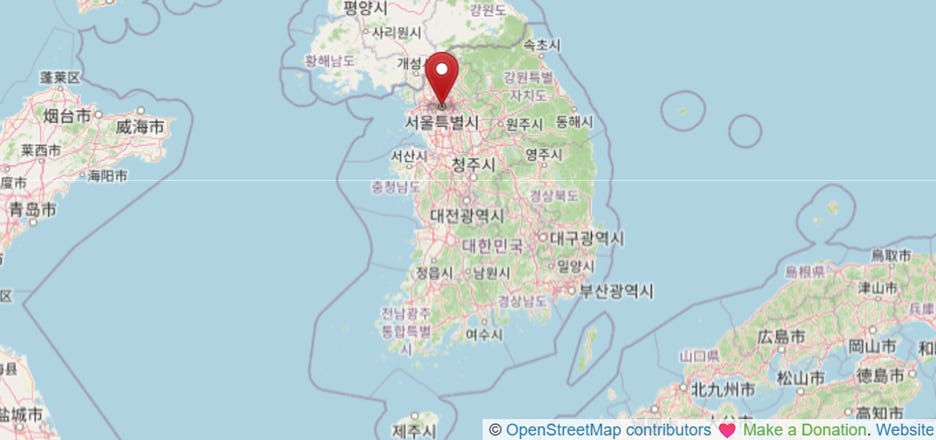
Mangwon Pavilion stands atop a hill overlooking the Han River in western Seoul, while the Yeonsan Tomb Complex lies in northern Seoul, an area that in premodern times formed part of Gyeonggi Province. Composite image based on map data © OpenStreetMap contributors.
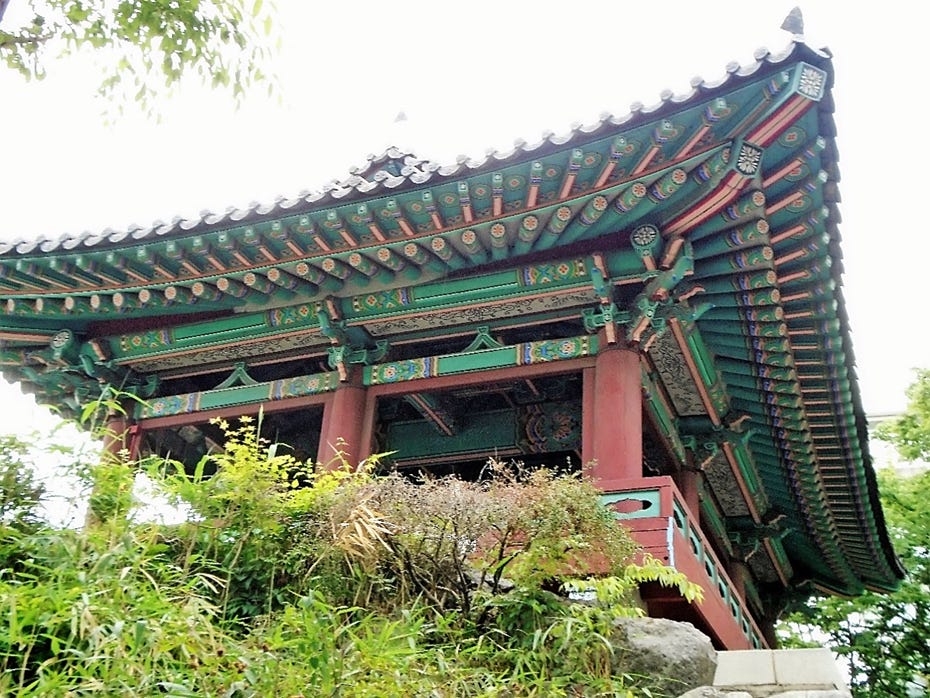
Mangwon (“Distant View”) Pavilion, located in Hapjeong-dong, Mapo-gu, Seoul, stands on a hill overlooking the Han River. During Yeonsan’s reign, it served as a popular scenic retreat for noblemen, scholars, and courtesans.
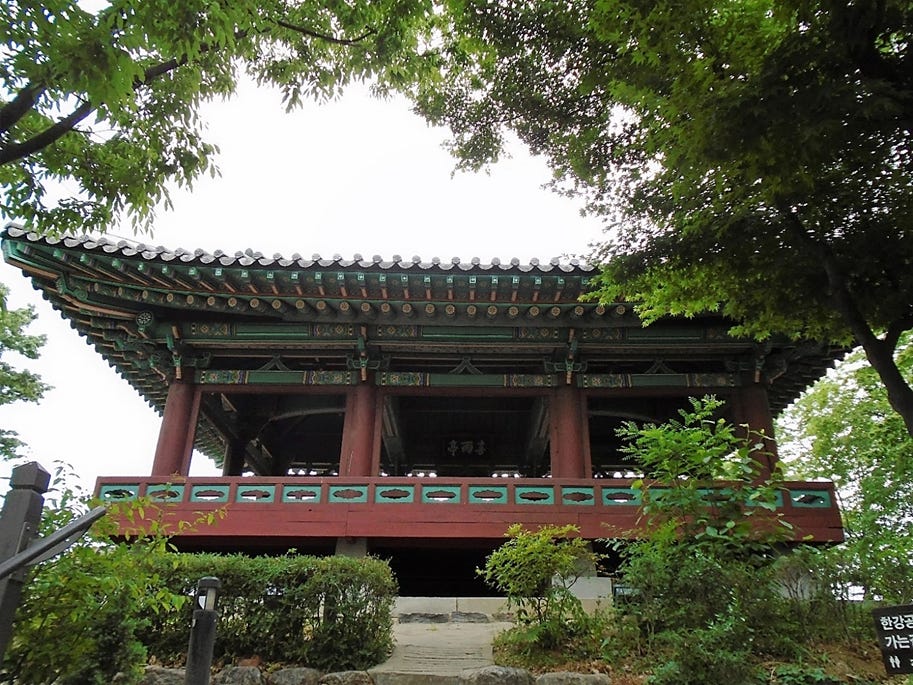
Mangwon Pavilion viewed from another angle. In his poem “Sending Courtiers for an Autumn Excursion,” King Yeonsan suggests that he dispatched a group of officials to the pavilion for leisure and directed them to compose poems inspired by their visit. The poem reads:
特許秋郊賞樂行
高亭風景政新淸
漁舟捲帆長江點
紅粉應和醉裏情
You have my special permission to go
on an autumn excursion beyond the city.
From the lofty pavilion, the scenery
will appear especially fresh and clear.
As fishing boats lower their sails
and drift along the long river,
beautiful women will surely respond
to your hearts, joyful in their intoxication.
This poem subtly reveals another side of Yeonsan, a controversial king: his association with courtly pleasure, wine, scenery, and aesthetic enjoyment. The contrast with his later violence becomes even more striking.
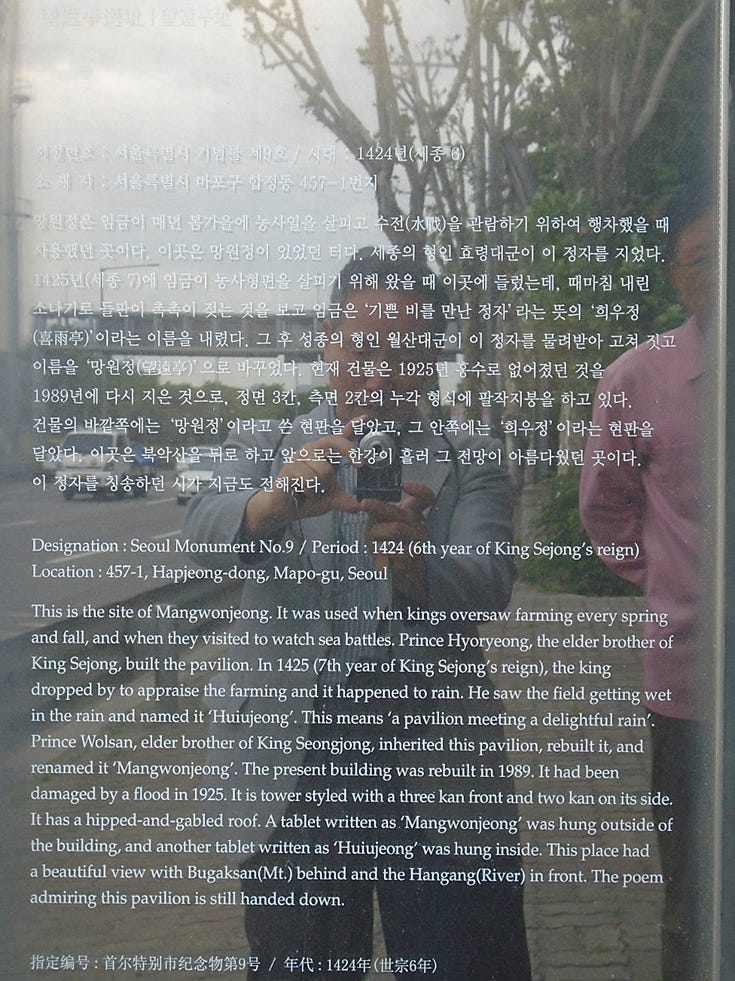
As this interpretive sign indicates, Mangwon Pavilion was originally built by Prince Hyoryeong, the elder brother of King Sejong. In 1425, the king named it Huiu Pavilion, meaning “a pavilion greeted by a welcome rain.” Grand Prince Wolsan (1455-1489) later renamed it Mangwon Pavilion. The structure was damaged by a flood in 1925, and the present building was erected in 1985. The tablet bearing the name Mangwon Pavilion hangs beneath the eaves of the front façade.
(The photo above includes my reflection as I took a picture of the sign. Standing beside me is the taxi driver who waited while I made my brief visit to the pavilion. Afterward, he drove me to the nearby campus of Hongik University, where I reunited with an old friend I had first met in the 1970s. He recently retired after a long career as a professor of physics at Hongik.)
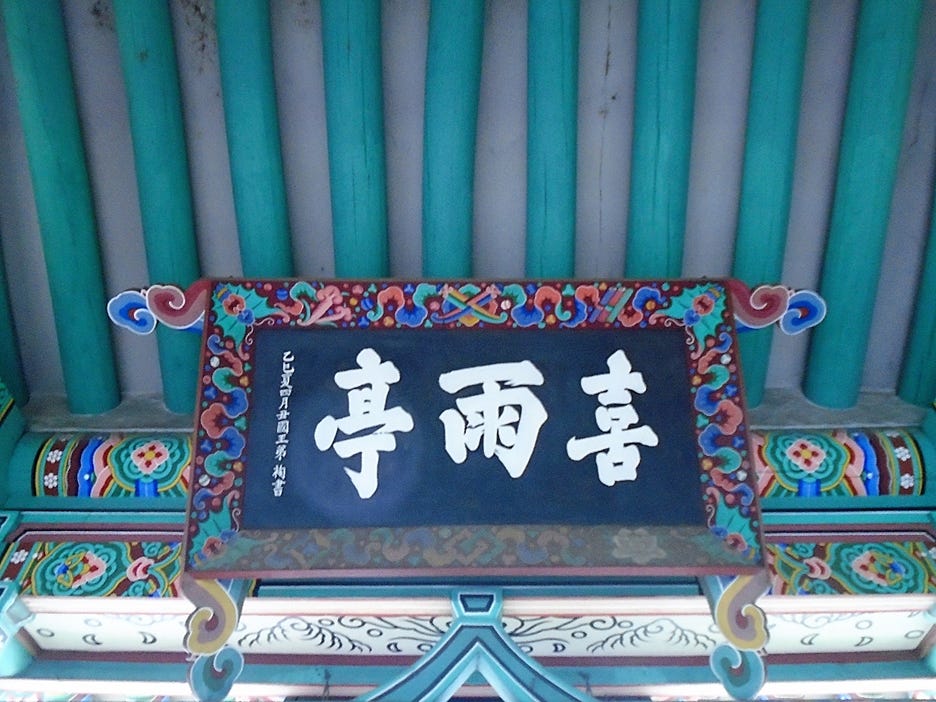
The tablet bearing the name Huiu Pavilion hangs inside the pavilion.
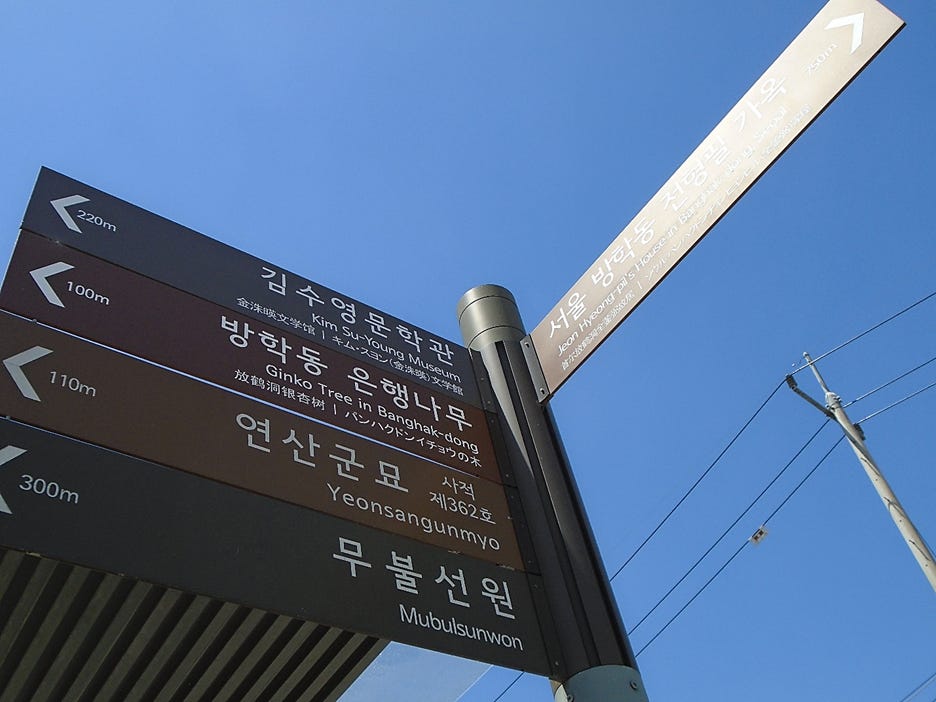
Dobong-gu, Seoul, is home to several literary and cultural sites, including the Yeonsan Tomb Complex and the Kim Su-young Literary Museum. At an intersection near the tomb complex stood a multi-directional guidepost, its panels pointing to several nearby historic landmarks.
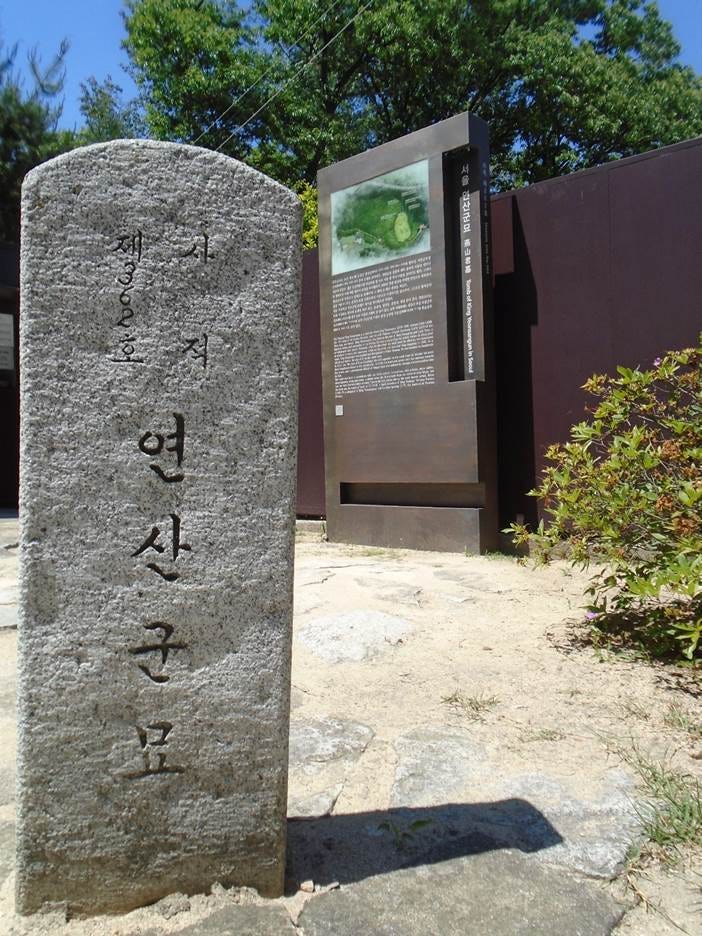
At the entrance to the Yeonsan Tomb Complex stands a stone marker inscribed “Heritage Site 362: The Prince Yeonsan Tomb.” Because of his dishonorable dethronement, King Yeonsan is officially designated as a prince rather than a king.
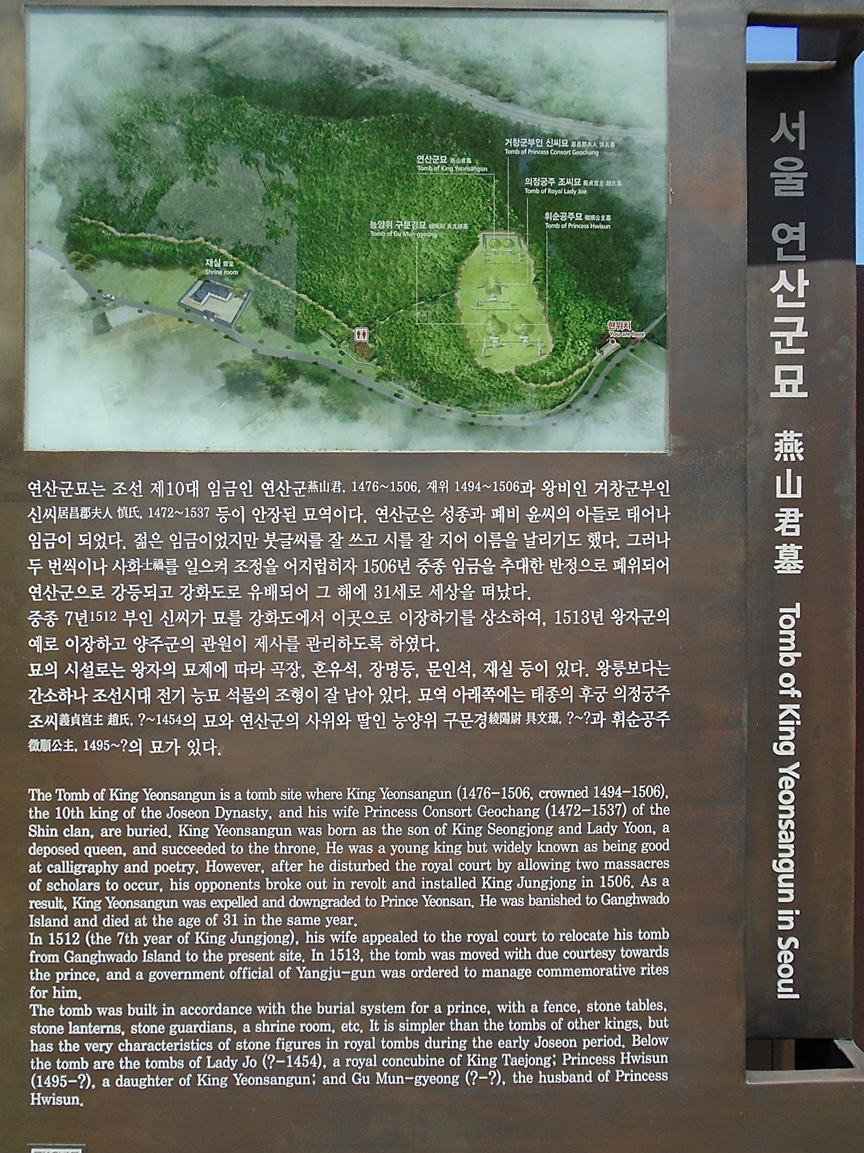
This interpretive sign outlines King Yeonsan’s life and the history of the tomb complex. Part of the final paragraph reads: “The tomb was built in accordance with the burial system for a prince, with a fence, stone tablets, stone lanterns, stone guardians, a shrine room, etc. It is simpler than the tombs of other kings, but [it retains] the very characteristics of stone figures [found] in royal tombs [from] the early Joseon period.”
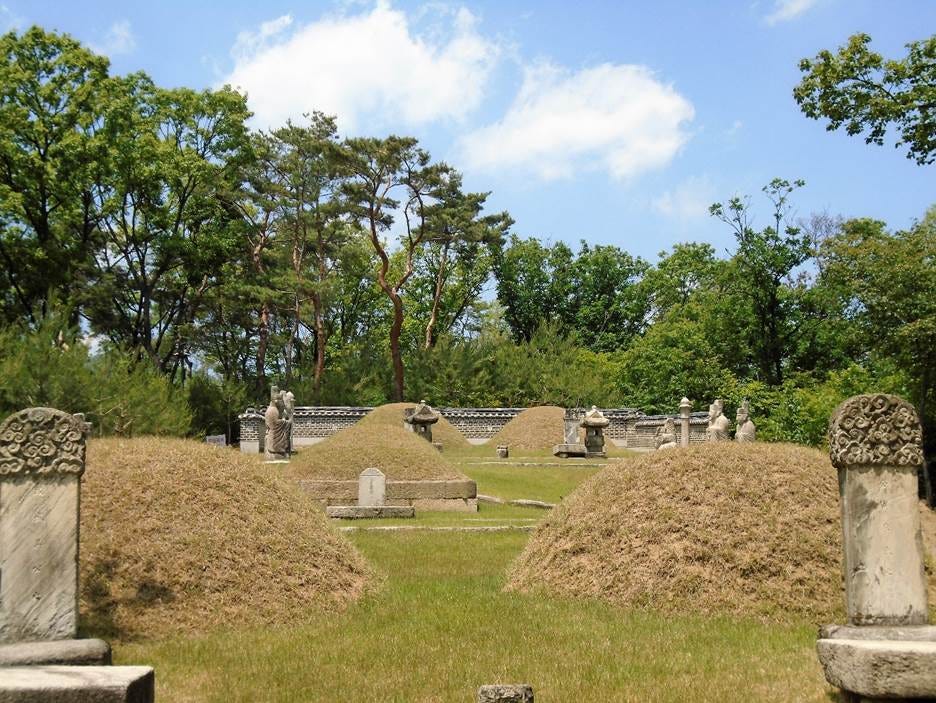
The Yeonsan Tomb Complex. Beneath the two mounds in the background lie the remains of King Yeonsan (left) and his wife, Lady Shin (right). The tomb in the middle distance belongs to Euijeonggungju Cho, one of King Taejong’s (1367-1422) concubines. In the foreground are the tombs of Yeonsan’s daughter (right) and her husband (left).
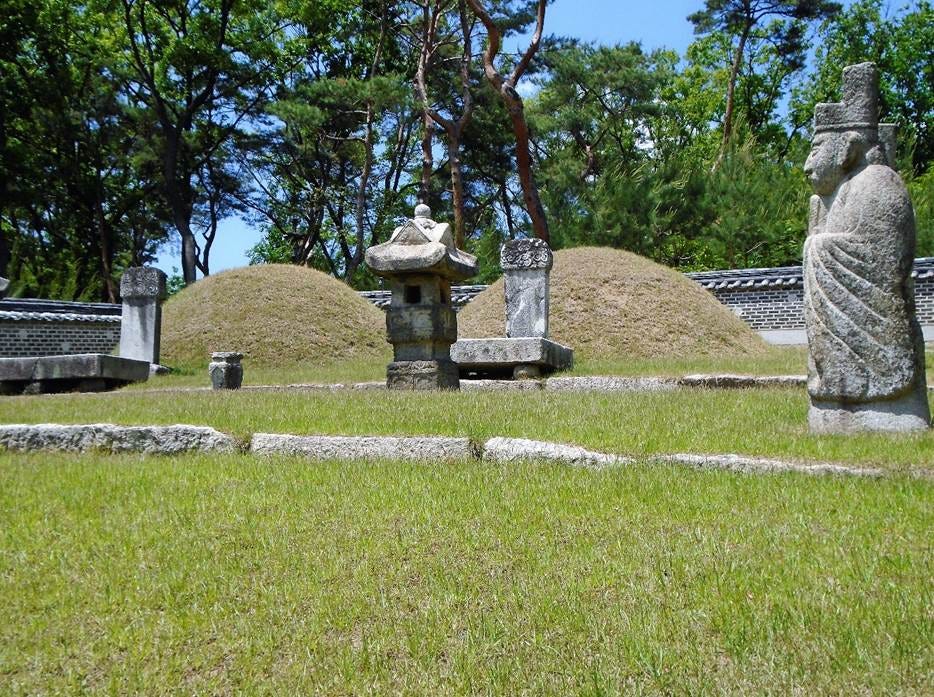
A close-up view of the tombs of Yeonsan (left) and his wife (right). The modest appearance of the graves reflects Yeonsan’s status as a deposed king. Four stone guards, including the one shown in the photo, stand watch over the tombs.
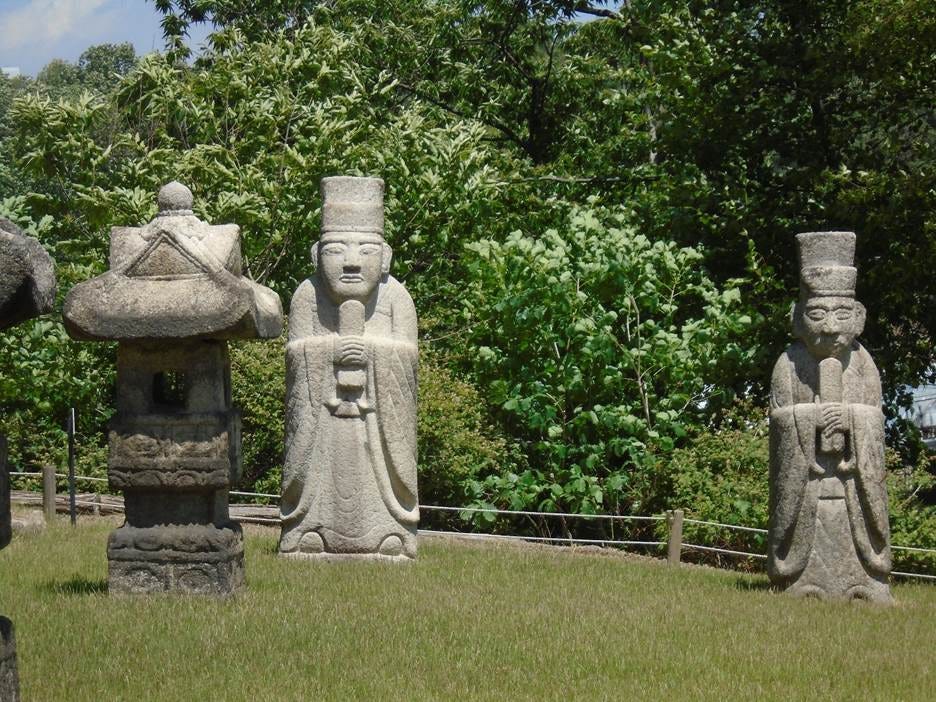
The guardians’ facial expressions seem to convey both devotion and sadness. They made me wonder whether the stonemason sought, through his work, to reflect the tragic nature of Yeonsan’s life.
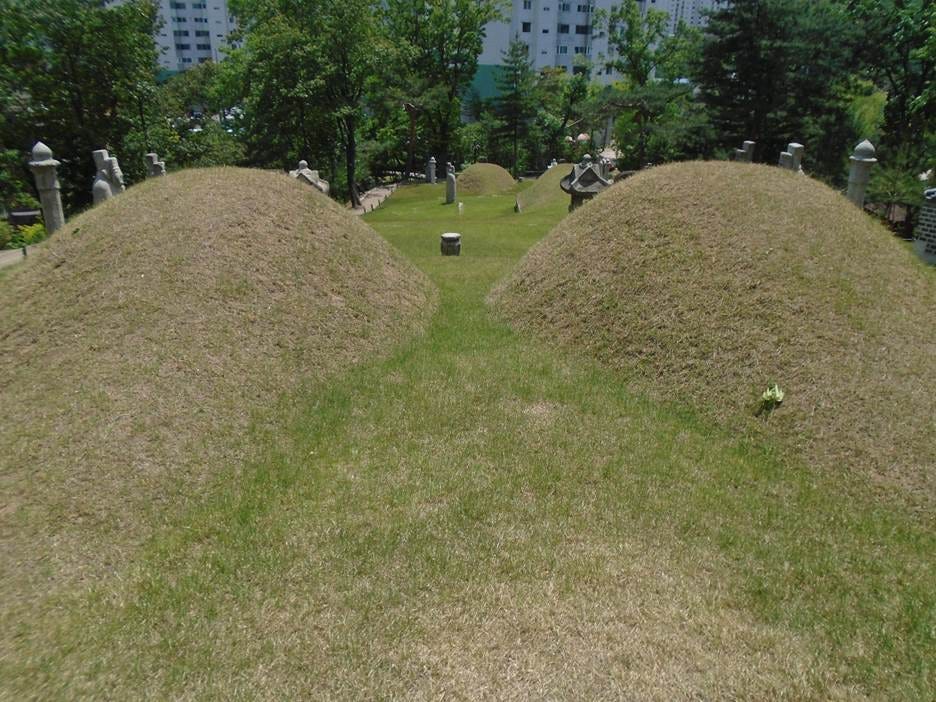
The Yeonsan Tomb Complex sits on a hill overlooking an apartment complex in northern Seoul. I visited the site on a pleasant May day, yet I encountered no other visitors. Some people in Korea may feel that they can visit such places anytime because of their proximity, while others may simply be too absorbed in their daily lives to explore historic sites.
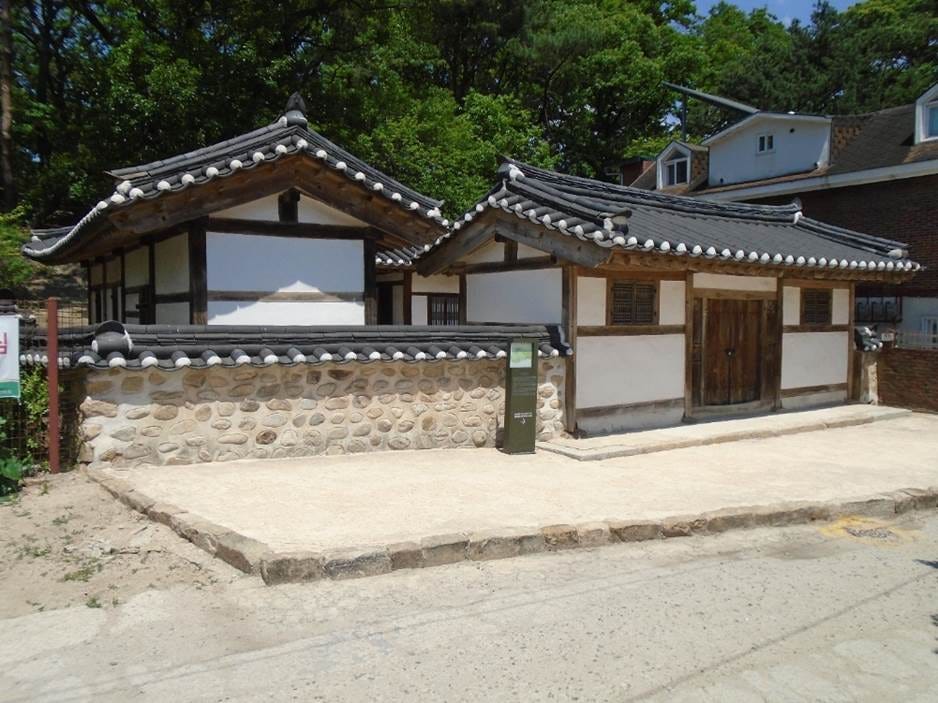
This is the house where the tomb keeper of the Yeonsan Tomb Complex lived. According to the site information board, it served both as the tomb keeper’s dwelling and as an office for the officials who conducted the seasonal memorial ceremonies held at the tomb.
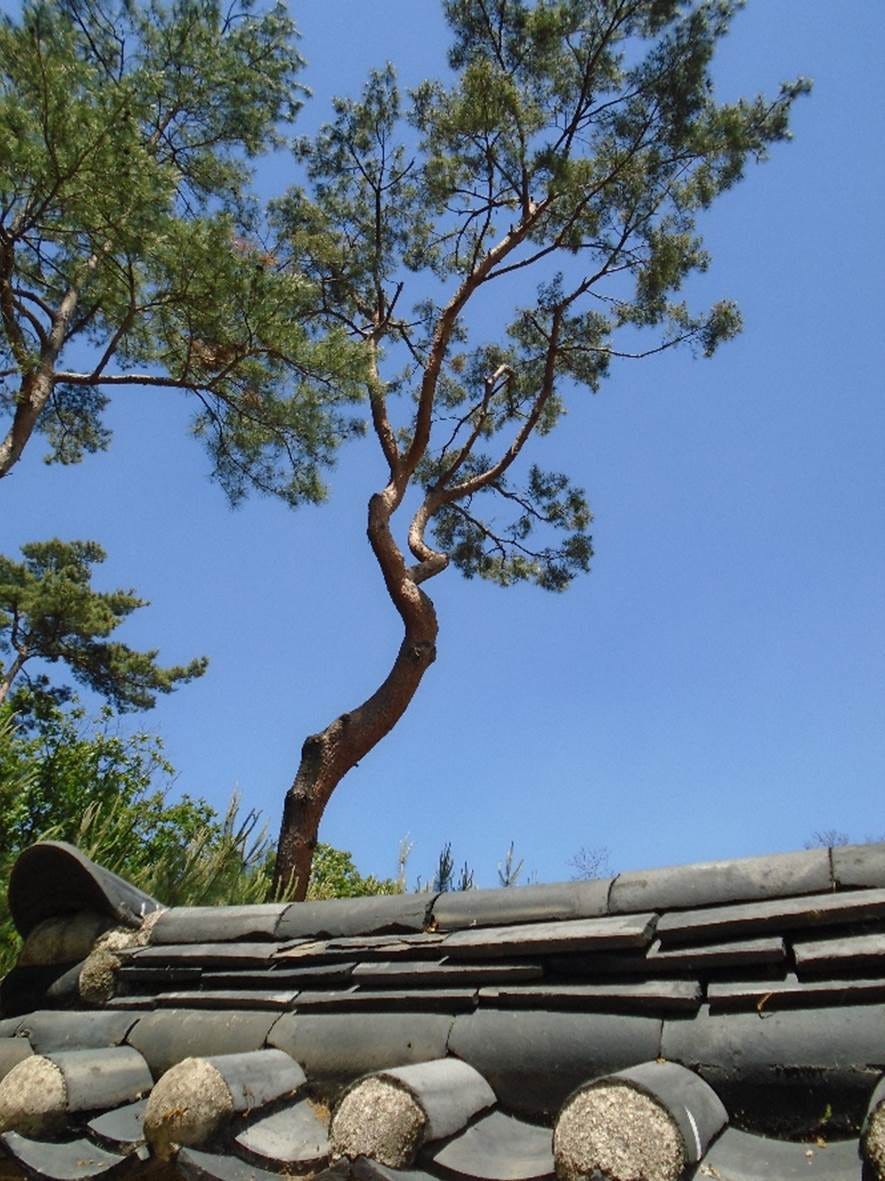
Pine trees grow on the hill beside the Yeonsan Tomb Complex. In East Asian culture, the evergreen pine tree symbolizes longevity and steadfastness.
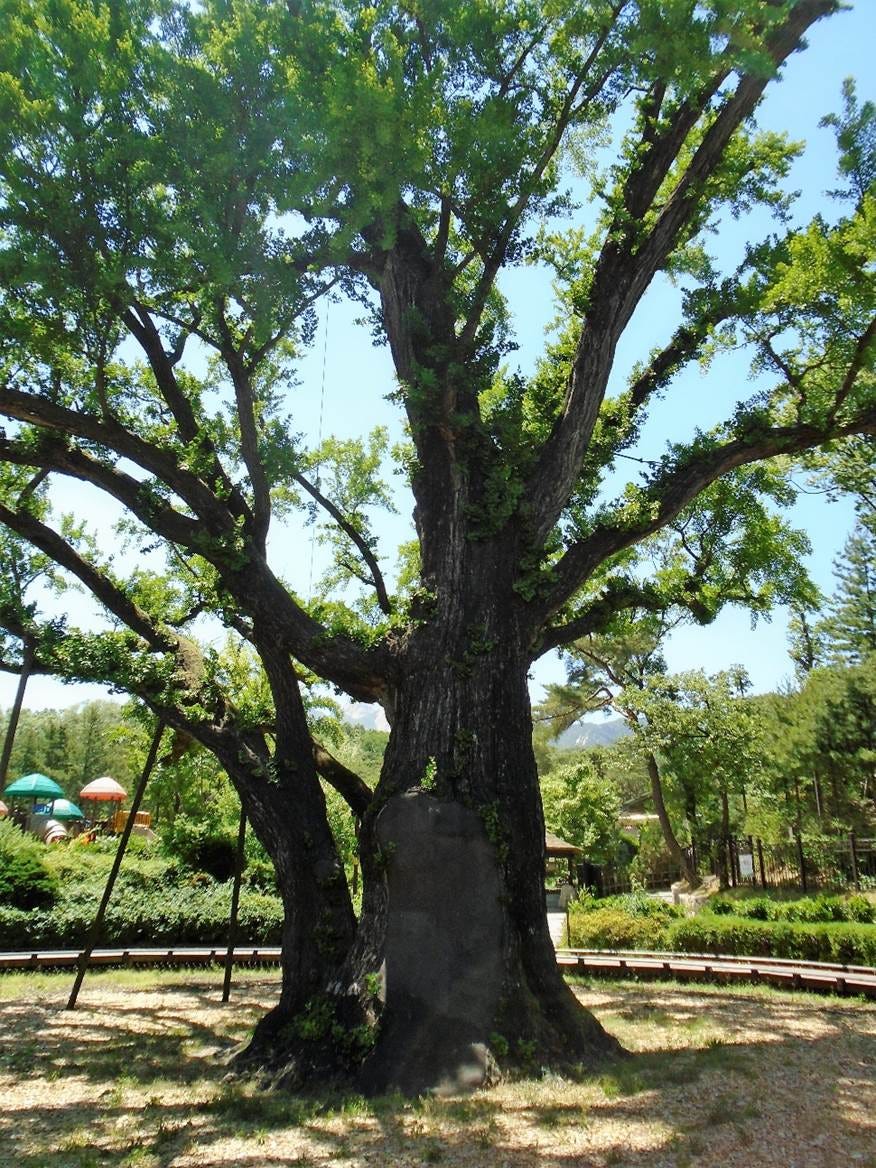
This ginkgo tree stands below the Yeonsan Tomb Complex. More than 550 years old, it must have witnessed the burial of Yeonsan on the hill above in the early sixteenth century.
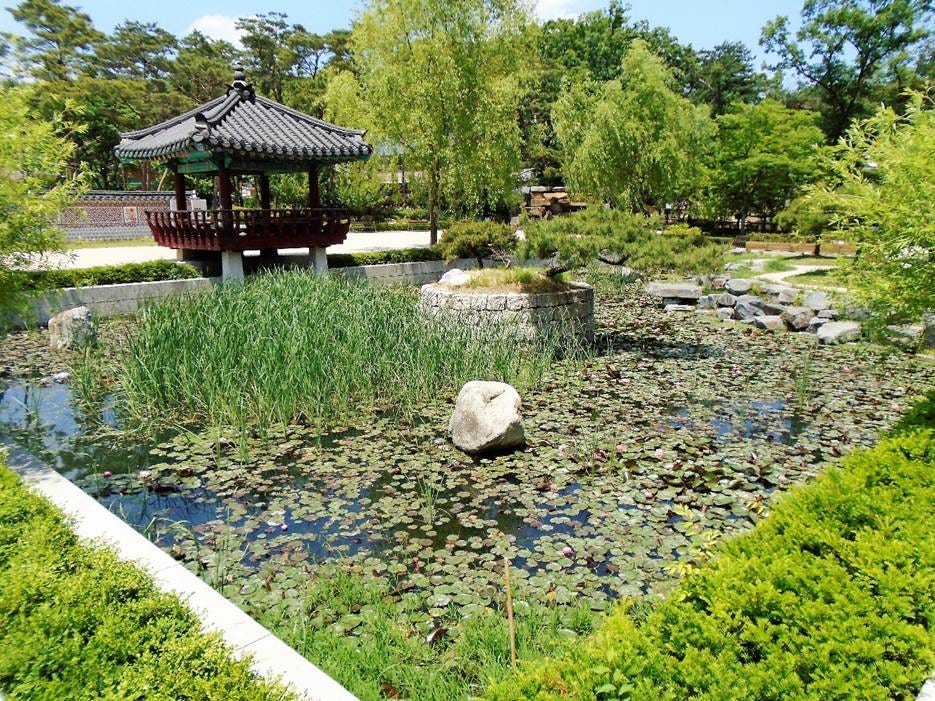
A lotus pond with a small pavilion lies down the hill from where Yeonsan is buried. Like many traditional Korean gardens, this space was designed to promote a sense of serenity and peace.
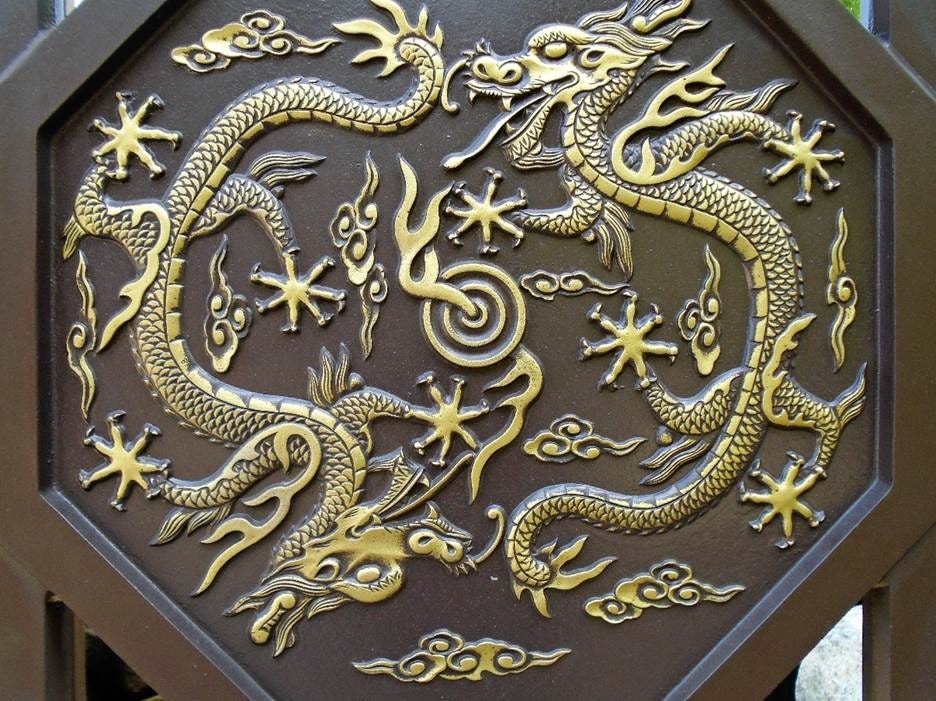
Twin dragons carved on the fence of the Yeonsan Tomb Complex symbolize the king’s authority and divine mandate.
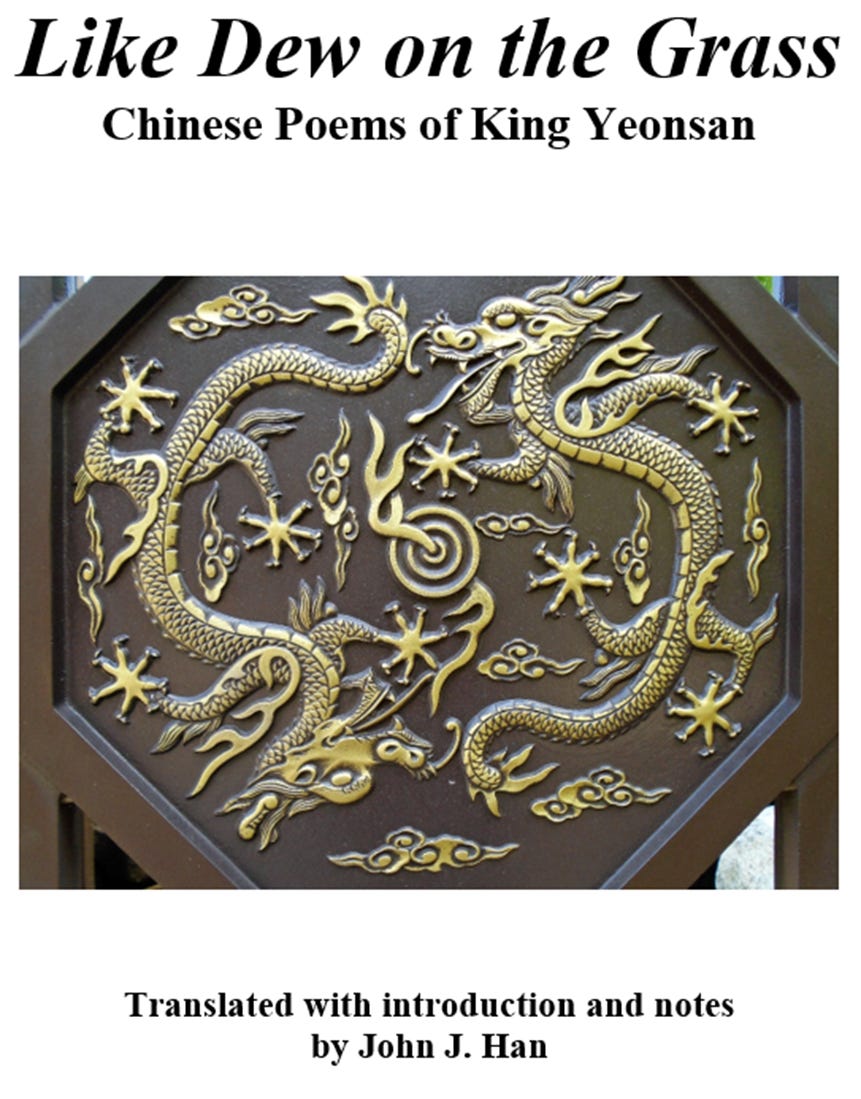
This book, published by Cyberwit in 2017, includes my translations of eighty Chinese-language poems by King Yeonsan.
About the Author
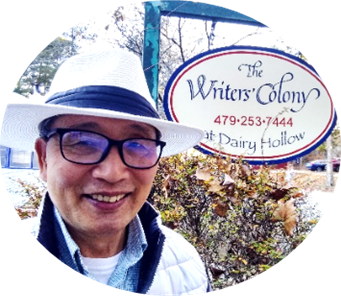
Professor of English and Creative Writing and Associate Dean of the School of Humanities and Theology, Missouri Baptist University
John J. Han, PhD, is the author, editor, co-editor, or translator of 35 books. His forthcoming book, Echoes from the Hills: Critical Essays on Ozarks Literature (co-edited with C. Clark Triplett), will be published by the University of Arkansas Press. He has also published nearly 3,000 poems in a wide range of journals and anthologies. In addition to his long tenure at Missouri Baptist University, he has taught at Kansas State University, the University of Nebraska–Lincoln, Nebraska Wesleyan University, and Washington University in St. Louis. He has also served as a visiting scholar at Georgia College & State University and the University of Ljubljana in Slovenia.
© K-Global Scholars and Professionals Forum. All rights reserved. Content published in the K-GSP Forum may not be reproduced, distributed, or transmitted in any form without prior written permission from the K-GSP Forum, except for brief quotations with full attribution.