

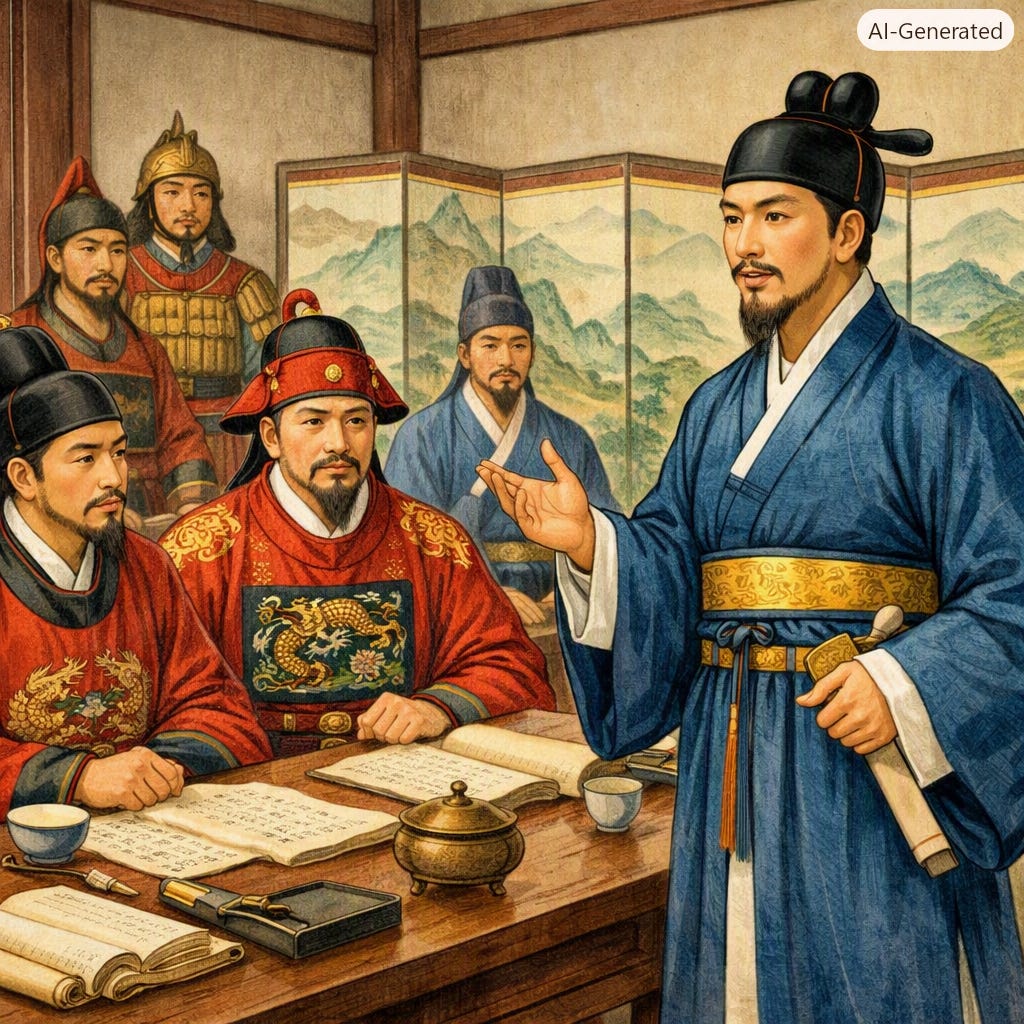
Choi Rip: Joseon’s Renaissance Man Who United Literature and Diplomacy
Reencountering a Joseon Intellectual on the Front Lines of Joseon–Ming Diplomacy
Abstract
Intellectuals in the Joseon Dynasty did not necessarily work within the clearly separated professional domains of scholars, politicians, writers, and diplomats that characterize the modern world. In an era when international relations were conducted largely through documents, language, ritual, and moral argument, exceptional literary ability itself could become an important diplomatic asset. From this perspective, Choi Rip (崔岦, 1539–1612) deserves renewed attention as one of Joseon Korea’s most remarkable ‘scholar-diplomats.’
Choi Rip was a distinguished writer and poet who participated in four missions to Ming China. His earlier missions were associated with the long-running diplomatic effort known as Jonggyebyeonmu (宗系辨誣), which sought to correct erroneous Ming records concerning the genealogy of the Joseon royal family. His later missions took place during the Imjin War, when Joseon urgently needed military and diplomatic support from Ming China (Han, 2014). His diplomatic writings contributed to the articulation of Joseon’s historical legitimacy and political morality, while his envoy poetry provides valuable evidence of how a Joseon intellectual perceived Ming China, international relations, war, and his own identity (Lee, 2017; Zhang, 2025). (KCI)
Choi Rip should therefore not be understood merely as a literary figure. He was a writer, diplomatic communicator, envoy, cultural intermediary, and historical observer whose career connected literature, diplomacy, international relations, and cultural exchange. His life also offers a striking lesson for the age of generative artificial intelligence: when machines can generate language with extraordinary speed, human beings must contribute judgment, historical context, purpose, values, and responsibility.
Keywords: Choi Rip, Gani-jip, Joseon Dynasty, Ming China, diplomacy, envoy poetry, scholar-diplomat, intellectual diplomacy, generative AI
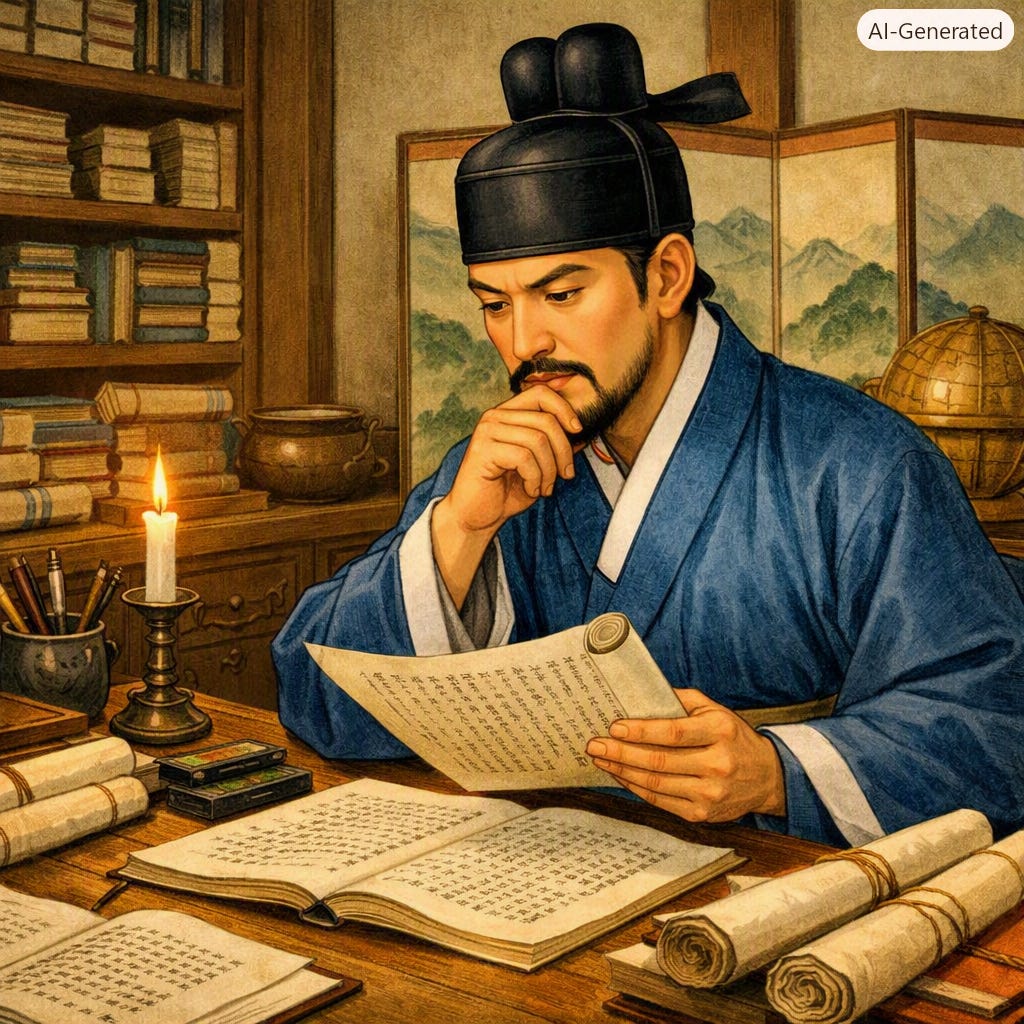
1. Why Should We Read Choi Rip Again?
When we look back at history, the most important figure of an era is not necessarily a king, general, or political leader.
Sometimes the person who matters most is ’the person who writes.’
Writing conveys ideas. Ideas shape policy. And policy can influence the destiny of a nation.
This was particularly true in the Joseon Dynasty. In a world without telephones, email, international organizations, or instantaneous news, diplomatic documents were among the most important instruments through which states communicated their interests and legitimacy. The ability to write powerful and persuasive prose was therefore more than a literary talent. It could become a national asset.
Choi Rip lived in precisely such an age.
He was a distinguished poet and prose writer of the late sixteenth and early seventeenth centuries. Modern scholarship has described him as a renowned literary figure and examined both his life and his distinctive poetic style (Hwang, 2022). He also participated in four missions to Ming China, two before the Imjin War in connection with Jonggyebyeonmu, and two during the war in connection with Joseon’s efforts to secure Ming military and diplomatic assistance (Han, 2014). (KCI)
His life therefore reveals a remarkable chain:
Literature → Diplomacy → International Relations → History → Cultural Exchange
That chain is precisely why Choi Rip deserves to be rediscovered today.
2. Four Missions to Ming China: A Literary Intellectual Enters the International Arena
One of the most important characteristics of Choi Rip’s career was his participation in four missions to Ming China.
Research on his envoy poetry identifies these missions as significant stages in his intellectual and diplomatic development. His first two missions were associated with the Joseon court’s efforts to correct erroneous historical records concerning the royal genealogy. His later missions took place during the Imjin War, when Joseon sought military assistance and diplomatic support from Ming China (Han, 2014). (KCI)
These were therefore not simply repeated diplomatic visits.
They represented two fundamentally different historical challenges.
Jonggyebyeonmu
→ securing the historical legitimacy of the Joseon royal house
The Imjin War
→ securing military and diplomatic assistance for national survival
Choi Rip experienced both.
His four missions thus intersected with important turning points in Joseon–Ming relations.
For this reason, his envoy writings should not be reduced to travel literature.
They can be read as records of knowledge produced in the field of international relations.
3. Jonggyebyeonmu: When Writing Represented a Nation
One of the strongest reasons to consider Choi Rip an important diplomatic figure is his involvement in Jonggyebyeonmu.
Jonggyebyeonmu was the Joseon court’s prolonged diplomatic effort to correct erroneous records in Ming historical texts concerning the genealogy of the Joseon royal family.
The issue was much more than a simple historical correction.
For Joseon, royal genealogy was closely connected to dynastic legitimacy and national identity. Correcting the Ming record was therefore also an effort to defend the legitimacy of the Joseon state.
Lee Hye-soon’s study demonstrates that Jonggyebyeonmu developed through several stages and that diplomatic memorials submitted to the Ming emperor, together with letters to high-ranking Ming officials, were central instruments in the process. In the final stage, Choi Rip and Go Gyeong-myeong emphasized the Joseon king’s sincerity and the distinctive ethical relationship between ruler and subjects in Joseon (Lee, 2017). (KCI)
This allows us to reconsider Choi Rip’s diplomatic role.
He was not simply a messenger delivering a government position.
He helped transform a national claim into persuasive diplomatic language.
In contemporary terms, Choi Rip can therefore be understood as a kind of ‘strategic diplomatic communicator.’
His task involved a process that can be summarized as:
Facts → Logic → Legitimacy → Persuasion
He did not merely transmit information.
He transformed information into an argument.
4. For Choi Rip, Literature and Diplomacy Were Not Separate Worlds
Today, we tend to regard a literary writer and a diplomat as people belonging to different professions.
In Choi Rip’s world, however, the two roles were closely connected.
Effective diplomatic writing required literary ability, while literary excellence could become a practical diplomatic resource.
Hwang (2022) describes Choi Rip as a renowned writer and poet of the late sixteenth and early seventeenth centuries. His literary reputation was sufficiently significant that he was compared with leading writers of the Joseon tradition. His prose was influenced by classical Chinese models, including Qin-Han prose and the writings of Han Yu and Ouyang Xiu, while his poetry was strongly influenced by the Jiangxi poetic tradition associated with Su Shi, Huang Tingjian, and Chen Shidao. (KCI)
His literary competence therefore had consequences beyond aesthetic expression.
For Choi Rip,
literature was a language of diplomacy,
and
diplomacy was a practical application of persuasive writing.
This is one of the most important characteristics of his intellectual legacy.
5. The Imjin War: The Writer Becomes a Diplomat of War
The historical significance of Choi Rip becomes even clearer in the context of the Imjin War.
When Japan invaded Joseon in 1592, the Korean kingdom faced an existential crisis.
Ming military assistance became critically important.
Diplomatic documents sent to Ming China were therefore not merely administrative texts.
They were documents of national survival.
Joseon envoys had to explain the military situation, communicate the urgency of assistance, defend Joseon’s position, and persuade Ming officials to act.
Kim Ji-hyeon’s study of Joseon envoys during the Imjin War examines the diplomatic activities recorded in their envoy accounts, including those of Choi Rip. The study places these missions within the broader context of the East Asian international war involving Joseon, Japan, and Ming China (Kim, 2022). (KCI)
Choi Rip’s role can therefore be understood as a progression:
Writer
↓
Diplomatic document specialist
↓
Envoy to Ming China
↓
Diplomatic practitioner during wartime
↓
Cultural intermediary
This combination makes Choi Rip especially interesting from a contemporary perspective.
6. His Envoy Poetry Was More Than Diplomatic Documentation
Choi Rip’s importance does not end with diplomatic documents.
His ‘envoy poetry’ is equally significant.
Han (2014) examines Choi Rip’s envoy poetry in relation to his perception of Ming China and his changing recognition of political reality. His direct experience of Ming society provided an opportunity to compare abstract knowledge about China with the realities he encountered during his missions. (KCI)
More recent scholarship has examined Choi Rip’s envoy poetry from the perspective of emotional expression. Zhang (2025) focuses on how his poetry expresses personal emotions and the poet’s self-consciousness, showing that the poetry of diplomatic travel was also a space in which longing, family relationships, loyalty to the king, and personal identity could be articulated. (KCI)
This is important.
Diplomat Choi Rip and human being Choi Rip were not separate individuals.
He observed Ming China while reflecting upon himself.
He experienced international relations while thinking about his homeland.
And he confronted political events while wrestling with personal emotions.
His envoy poetry can therefore be understood simultaneously as:
Diplomatic literature
Historical literature
Travel literature
Self-reflective literature
This multidimensional character makes his writings especially valuable today.
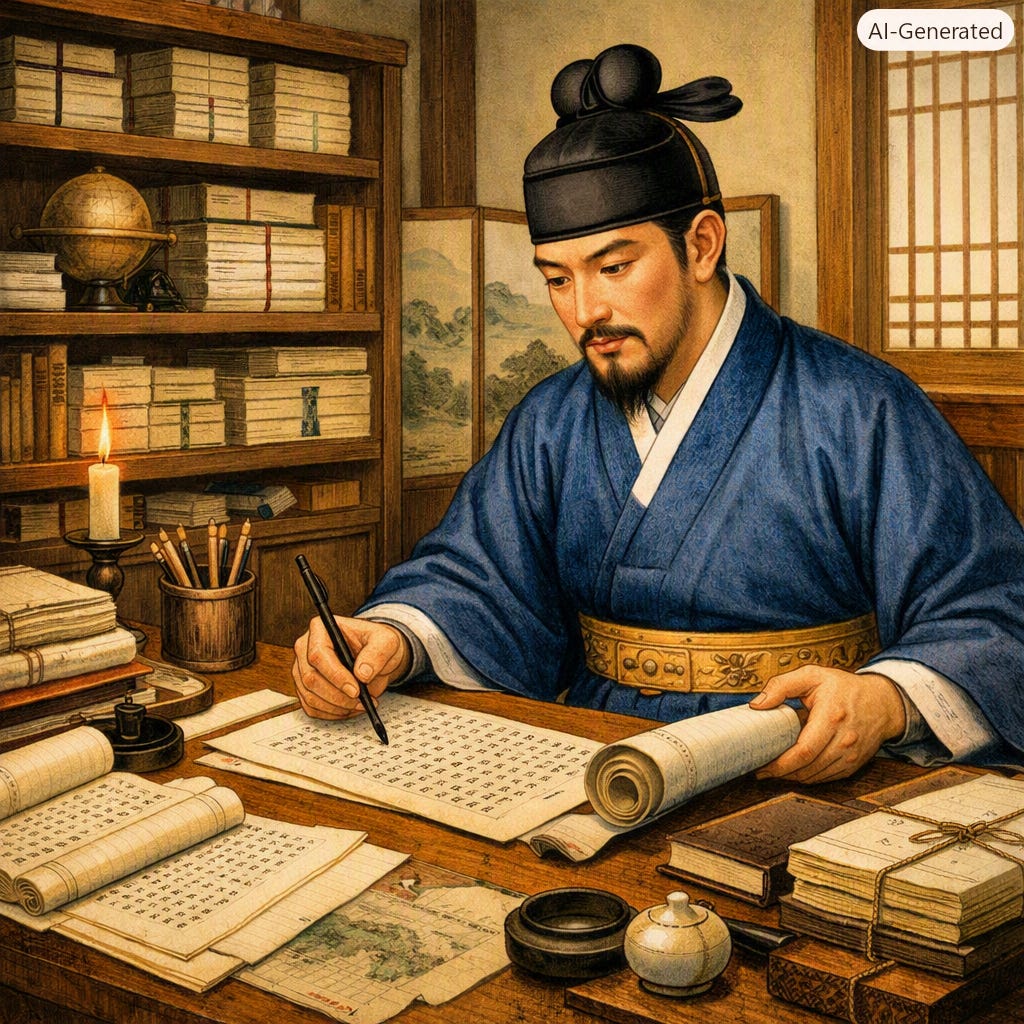
7. Was Choi Rip a “Renaissance Man” of Joseon?
Can Choi Rip appropriately be called a ‘Renaissance man of Joseon?’
I believe the answer is yes—provided that this is understood as a modern interpretive description rather than a historical title.
If a Renaissance man is defined as an intellectual who connects different domains of knowledge and applies them to real-world problems, Choi Rip is an excellent example.
He was:
a poet,
a prose writer,
a diplomatic writer,
an envoy to Ming China,
a cultural intermediary,
a participant in wartime diplomacy, and
an intellectual who documented the world in which he lived.
More importantly, these roles were not isolated.
His literary ability became diplomatic ability.
His diplomatic experiences became literary records.
Those literary records became historical sources for later generations.
This is the distinctive power of Choi Rip.
8. Choi Rip and Generative AI: A Four-Hundred-Year Conversation
Here we encounter a fascinating question:
‘Why should we read Choi Rip again in the age of generative AI?’
The world in which Choi Rip lived, and our own world appear radically different.
In his time, information was scarce.
Today, information is abundant.
In his time, writing a substantial document required considerable time and effort.
Today, generative AI can produce thousands of words within seconds.
Yet the two eras share a fundamental problem.
‘Information alone is never enough.’
How should information be interpreted?
Which facts matter?
How should an argument be constructed?
How should another person or another country be persuaded?
What values should guide the communication?
These are not questions that AI can automatically resolve.
Choi Rip confronted such questions through his own life.
In that sense, his intellectual legacy is surprisingly contemporary.
9. Why AI Cannot Replace Choi Rip
Generative AI can analyze Choi Rip’s writing.
It can digitize the Gani-jip.
It can reconstruct his travel routes.
It can identify people, places, historical events, and textual relationships.
It can translate his classical Chinese writings into modern Korean or English.
It can even imitate aspects of his literary style.
But there is one thing AI cannot simply inherit from Choi Rip:
historical responsibility.
AI can describe the Imjin War, but it did not experience the war.
AI can analyze a diplomatic document, but it does not bear responsibility for the political consequences of the document.
AI can generate language, but it does not automatically possess the historical purpose that gives language its significance.
This leads to an important principle for the age of generative AI:
‘AI can generate language, but humans must provide judgment, context, purpose, values, and responsibility.’
Choi Rip’s career illustrates this principle centuries before artificial intelligence existed.
10. Learning Intellectual Diplomacy from Choi Rip
Contemporary international competition is no longer determined by military power alone.
AI, semiconductors, data, cloud computing, digital platforms, technical standards, education, culture, and knowledge are all components of national power.
This requires a new form of diplomacy.
We might call it ‘AI intellectual diplomacy.’
AI intellectual diplomacy is not simply the export of AI technology.
It is the ability to connect:
Technology + Knowledge + Language + Culture + Ethics + Diplomacy
From this perspective, Choi Rip offers an important historical model.
He used his strongest intellectual asset—’knowledge expressed through language’—for the benefit of his country and its international relationships.
Today, we can add artificial intelligence to that equation.
Choi Rip’s literary intelligence + AI’s information-processing capability
Choi Rip’s diplomatic judgment + AI’s multilingual capability
Choi Rip’s cultural understanding + AI’s knowledge-linking capability
Together, these capabilities could form a new model of intellectual diplomacy.
11. Gani-jip as a Historical Knowledge Asset for the Digital Age
This perspective also invites us to reconsider Gani-jip.
It should not be viewed merely as a private collection of literary works.
It contains evidence concerning:
Joseon–Ming diplomacy,
envoy missions and international relations,
the experience of war,
literary and intellectual exchange,
Joseon intellectuals’ perceptions of China,
literary self-expression,
national legitimacy, and
personal reflection.
In this sense, Gani-jip can be understood as ‘a potential historical-cultural knowledge base for the age of generative AI.’
AI-assisted research could digitize the text, connect people, places, events, and documents, align the original Classical Chinese with modern Korean and English translations, map Choi Rip’s diplomatic journeys, and construct networks showing relationships among Joseon envoys and Ming officials.
Such a project would transform Choi Rip from the subject of a classical literary collection into ‘a major resource for digital humanities and Korean cultural heritage research.’
The ultimate goal would not be to allow AI to replace historical scholarship.
It would be to use AI to make historical knowledge more accessible, interconnected, verifiable, and globally understandable.
12. Choi Rip from a K-GSP Perspective
Choi Rip is particularly meaningful from a K-GSP perspective because he can be interpreted as an early Korean global intellectual who connected different cultural and political worlds.
Today, Korean American scholars and professionals often work across national and cultural boundaries, connecting Korea, the United States, and the broader international community.
Choi Rip operated within a very different historical environment, but he too occupied an intellectual space between cultures.
He explained Joseon’s concerns to Ming officials.
He observed Ming society and conveyed his experiences through writing.
He participated in intellectual and cultural exchange across political boundaries.
In this sense, Choi Rip provides a historical example of what might today be called a ‘global Korean intellectual.’
The historical circumstances are different, but the underlying function is remarkably similar:
to connect knowledge across societies;
to communicate across cultural boundaries;
to preserve one’s intellectual and cultural identity while engaging another civilization;
and
to use knowledge for the benefit of a broader community.
Choi Rip Belonged to the Past, but His Questions Belong to the Future
Choi Rip lived more than four centuries ago.
Yet the questions raised by his life remain remarkably relevant.
What capabilities do human beings need in an age of abundant information?
What does human writing mean when AI can generate language?
What role should intellectuals play in international society?
How can literature, technology, culture, and diplomacy be connected?
Choi Rip offers an important answer.
Knowledge is not merely something to accumulate. It is something to communicate.
Writing is not merely a means of expression. It is a force that can connect people, societies, and civilizations.
And perhaps most importantly:
Intellectual ability acquires its greatest value when it is connected to responsibility.
Choi Rip was a literary writer.
But he did not remain within literature.
He was a diplomat.
But he did not remain within diplomacy.
He transformed his diplomatic experiences into literature, communicated across cultural boundaries, and used his intellectual abilities during a period of national crisis.
For these reasons, Choi Rip can reasonably be regarded as one of the most important scholar-diplomats who combined literature and diplomacy in Joseon’s relations with Ming China. His four missions to Ming China intersected with major developments in Joseon–Ming relations, while his diplomatic writings and envoy poetry provide valuable evidence of how a Joseon intellectual understood international relations, cultural difference, national legitimacy, and personal identity. (KCI)
To read Choi Rip today, therefore, is not simply to remember the past.
It is to ask what should remain uniquely human when artificial intelligence increasingly performs the work of language.
AI can generate sentences.
Humans must still provide judgment.
AI can connect information.
Humans must determine what matters.
AI can translate languages.
Humans must decide what meaning should cross cultural boundaries.
Four centuries ago, Choi Rip performed these functions with a brush.
Today, we can perform them with AI.
But the final responsibility remains human.
From Choi Rip to AI.
From writing to knowledge.
From diplomacy to global communication.
From the wisdom of the past to the intelligence of the future.
That is why we should read Choi Rip again.
References
Han, S. G. (2014). 簡易 崔岦의 사행시에 나타난 對明觀과 현실인식 [A perspective of the Ming Dynasty and recognition of reality shown in Choi Rip’s envoy poetry]. 한국시가문화연구, 33, 401–428. KCI official record
Hwang, H. W. (2022). 최립의 삶과 시문학의 일고찰—조선 문인들의 평가와 송시풍 지향을 중심으로 [A study on Choi Rip’s life and poetry]. 동양한문학연구, 61, 251–271. https://doi.org/10.35374/dyha.61..202202.009 (KCI)
Kim, J. H. (2022). 임진전쟁기 조선 사신의 대명(對明) 외교활동—정유재란 중 대명 사행록을 중심으로 [Joseon envoys’ diplomatic activities toward Ming China during the Imjin War: Focusing on envoy records during the second Japanese invasion]. 온지논총, 72, 113–150. KCI official record
Lee, H. S. (2017). 종계변무(宗系辨誣)와 조선 사신들의 명나라 인식 [Correction of historical records and Joseon envoys’ recognition of Ming China]. 국문학연구, 36, 93–118. KCI official record
Zhang, Y. J. (2025). 崔岦使行詩的情緒書寫 [Emotional expressions in the envoy poetry of Choe Ip]. 중국학논총, 87, 43–59. https://doi.org/10.23004/kchcu.2025..87.003 (KCI) +++
{Solti}
August 1, 2026
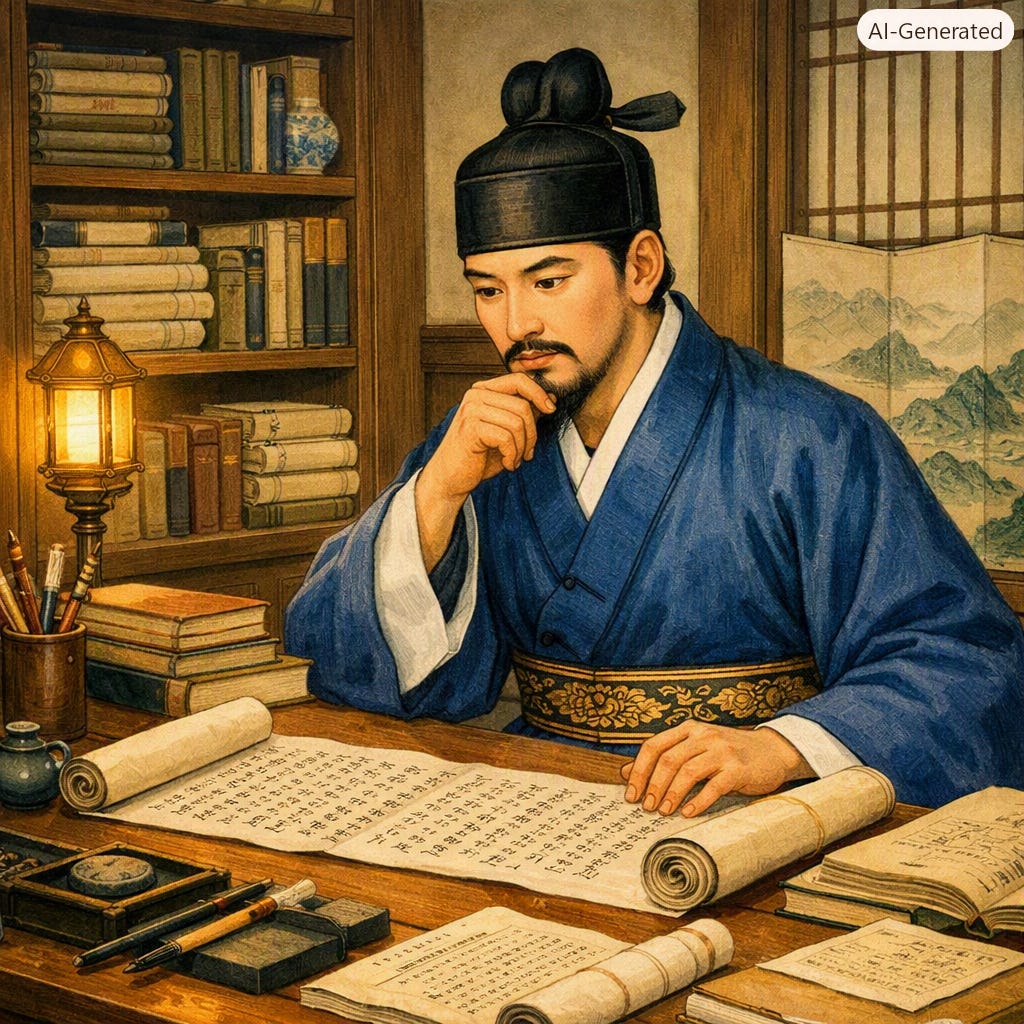
최립, 문학과 외교를 하나로 만든 조선의 르네상스맨
대명외교의 현장에서 다시 만나는 조선의 지식인
Abstract
조선시대의 지식인은 오늘날의 학자와 정치가, 언론인, 외교관처럼 명확하게 분리된 직업 영역에서 활동하지 않았다. 특히 국가 간 관계가 문서와 언어, 의례와 명분을 통해 이루어지던 시대에는 뛰어난 문장력 자체가 중요한 외교적 자산이었다. 이러한 관점에서 간이(簡易) 최립(崔岦, 1539–1612)은 조선 중기의 대표적인 ‘문인 외교관(scholar-diplomat)’으로 재평가할 수 있는 인물이다.
최립은 네 차례 명나라 사행에 참여했으며, 임진왜란 이전에는 종계변무와 관련된 외교 활동을 수행했고, 임진왜란 중에는 명나라에 원병을 요청하고 전황을 전달하는 외교적 임무에 참여하였다 (Han, 2014). 그의 외교문서는 조선 왕실의 정통성과 국가적 명분을 설득하는 중요한 수단이었으며, 종계변무의 마지막 단계에서 최립과 고경명이 명나라 예부 관원들에게 보낸 글은 역사적 사실의 수정뿐 아니라 조선의 군신관계와 윤리적 정당성을 강조하는 방향으로 발전하였다 (Lee, 2017). 또한 그의 시문은 당시 문단의 흐름과 송시풍·진한고문에 대한 독자적 수용을 보여주며, 사행시는 명나라에 대한 인식과 전란 속 지식인의 내면을 함께 보여준다 (Kim, 2018; Hwang, 2022; Zhang, 2025).
이러한 점에서 최립은 단순한 문인이 아니라 문학, 외교, 국제관계, 문화교류를 연결한 지식인이었다. 그의 삶은 오늘날 생성인공지능 시대에도 중요한 질문을 던진다. AI가 문장을 생성할 수 있는 시대에 인간에게 필요한 것은 단순한 문장 생산 능력이 아니라 역사적 맥락을 이해하고, 사실을 판단하며, 공동체의 가치를 지키면서 타인을 설득하는 능력이기 때문이다.
Keywords: Choi Rip, Gani-jip, Joseon Dynasty, Ming China, diplomacy, envoy poetry, scholar-diplomat, intellectual diplomacy, generative AI
1. 우리는 왜 지금 최립을 다시 읽는가
역사를 돌아보면 한 시대를 대표하는 인물은 반드시 정치가나 장군일 필요가 없다.
때로는 한 시대의 가장 중요한 사람이 ‘글을 쓰는 사람’일 수 있다.
글은 생각을 전달하고, 생각은 정책을 만들며, 정책은 국가의 운명을 바꾼다.
조선시대에는 특히 그러했다. 국제관계가 오늘날처럼 전화, 이메일, 국제기구, 실시간 뉴스로 이루어지지 않았던 시대에 외교문서는 국가의 의사와 정당성을 전달하는 핵심 수단이었다. 따라서 뛰어난 문장을 쓰는 능력은 단순한 문학적 재능을 넘어 국가적 자산이었다.
그러한 시대에 최립이 있었다.
최립은 16세기 후반에서 17세기 초에 활동한 뛰어난 문장가이자 시인이었다. 최근 연구는 그를 조선의 중요한 문장가로 평가하면서 그의 삶과 시문학, 문학적 성취를 함께 분석한다 (Hwang, 2022). 특히 그는 네 차례 명나라 사행에 참여한 것으로 연구되어 있으며, 그 가운데 두 차례는 임진왜란 이전의 종계변무와 관련되고, 두 차례는 임진왜란 중 명나라의 군사적 지원과 관련된 외교 활동이었다 (Han, 2014).
따라서 최립의 삶에는 하나의 흥미로운 연결고리가 존재한다.
문학 → 외교 → 국제관계 → 역사 → 문화교류
이 연결고리가 바로 우리가 오늘 최립을 다시 읽어야 하는 이유다.
2. 네 차례의 명나라 사행: 문학가가 국제무대에 서다
최립의 역사적 특징 가운데 가장 중요한 것 중 하나는 네 차례의 명나라 사행이다.
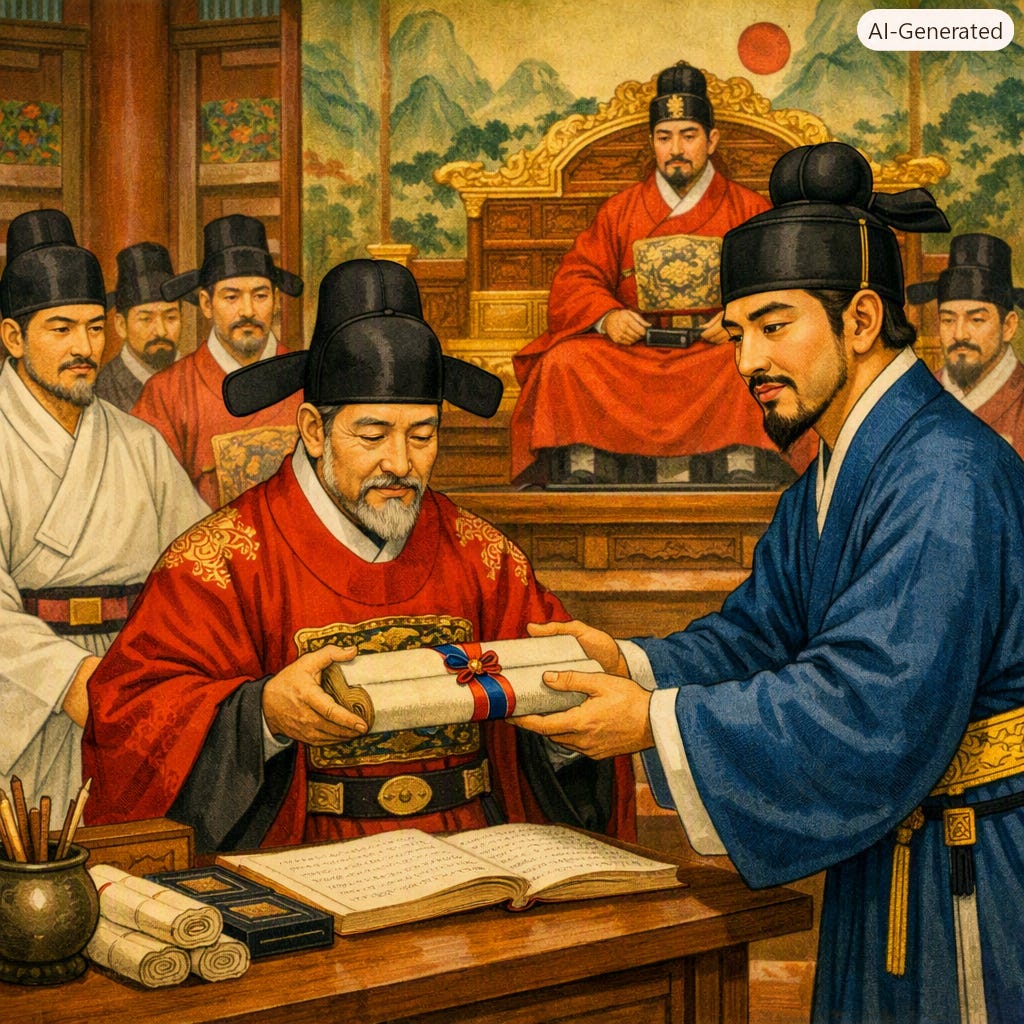
한성금의 연구는 최립을 16세기 대명외교에서 활약한 인물로 규정하면서, 그가 외교문서 작성에 능한 ‘능문자(能文者)’로서 네 차례 명나라에 사행했다고 설명한다. 연구에 따르면 1577년과 1581년의 사행은 임진왜란 이전의 종계변무에 중점을 두었고, 1593년과 1594년의 사행은 임진왜란 중 명나라에 원병을 요청하고 전황을 전달하기 위한 것이었다 (Han, 2014).
이것은 매우 중요한 사실이다.
최립의 네 차례 사행은 단순한 반복적인 외교 방문이 아니었다.
그의 사행은 조선이 직면한 서로 다른 역사적 문제들을 관통한다.
종계변무
→ 조선 왕실의 역사적 정통성 확보
임진왜란
→ 국가의 생존을 위한 군사·외교적 지원 확보
즉, 최립은 조선의 중요한 외교적 전환점들을 직접 경험한 것이다.
이 때문에 최립의 사행문학은 단순한 여행문학으로 볼 수 없다.
그것은 국제관계의 현장에서 생산된 지식의 기록이다.
3. 종계변무와 최립: 문장이 국가를 대표하다
최립을 대명외교의 중요한 인물로 평가하는 데 가장 강력한 근거 가운데 하나는 종계변무(宗系辨誣)와 관련된 그의 활동이다.
종계변무는 명나라의 공식 기록에 조선 왕실의 계보와 관련된 잘못된 내용이 기록된 문제를 바로잡기 위한 조선의 장기간 외교적 노력이다.
이 문제는 단순한 역사 기록의 오류가 아니었다.
조선에게 왕실의 계보와 정통성은 국가의 정체성과 연결되어 있었다. 따라서 잘못된 기록을 수정하는 것은 곧 조선 왕실과 국가의 정당성을 지키는 문제였다.
이혜순의 연구는 종계변무가 여러 단계에 걸쳐 진행되었으며, 그 과정에서 명나라 황제에게 보내는 주청문과 고위 관원들에게 보내는 서신이 핵심적인 역할을 했다고 설명한다. 특히 마지막 단계에서 최립과 고경명은 명나라 예부 관원들에게 보내는 글을 통해 조선 국왕의 정성과 조선의 독특한 군신관계 및 윤리적 질서를 강조하였다 (Lee, 2017). (Korea Journal Central)
여기서 우리는 최립의 외교적 역할을 새롭게 볼 수 있다.
그는 단순히 국가의 지시를 전달하는 사람이 아니었다.
그는 국가의 주장을 설득 가능한 언어로 재구성하는 사람이었다.
오늘날의 표현으로 말하면 그는 일종의 ‘strategic diplomatic communicator,’ 즉 전략적 외교 커뮤니케이터였다.
그의 임무는 단순히 사실을 전달하는 것이 아니었다.
사실 → 논리 → 명분 → 설득
이라는 과정을 문장으로 완성해야 했다.
4. 최립에게 문학과 외교는 서로 다른 세계가 아니었다
오늘날 우리는 문학가와 외교관을 서로 다른 직업으로 생각한다.
그러나 최립의 시대에는 이 두 역할이 상당 부분 연결되어 있었다.
외교문서를 잘 쓰기 위해서는 문학적 능력이 필요했고, 문학적 능력은 외교적 설득력으로 전환될 수 있었다.
최립의 문학적 능력은 당시에도 높은 평가를 받았다.
황현우의 연구는 최립이 16세기 말에서 17세기 초에 활동한 이름난 문장가이자 시인이었으며, 조선의 대표적인 문장가들과 비교될 정도의 명성을 가지고 있었다고 설명한다 (Hwang, 2022). (KCI)
김우정의 연구 역시 선조 연간의 문단 흐름 속에서 최립의 시문이 갖는 독특한 위치를 분석한다. 특히 최립은 진한고문과 한유 등의 문장을 깊이 연구하면서 자신만의 문풍을 형성했으며, 시에서는 강서시파의 영향을 바탕으로 독자적인 시풍을 구축한 것으로 평가된다 (Kim, 2018). (KCI)
이러한 문학적 역량은 외교 현장에서 중요한 자산이 되었다.
따라서 최립에게 문학은 현실과 분리된 예술이 아니었다.
문학은 ‘외교의 언어’였고, 외교는 ‘문학적 설득력의 현실적 적용’이었다.
5. 임진왜란: 문장가가 전쟁외교관이 되다
최립의 역사적 의미는 임진왜란을 통해 더욱 선명해진다.
1592년 일본의 침략으로 조선은 국가적 존립의 위기에 처했다.
이때 명나라의 군사적 지원은 조선의 생존과 직결되는 문제였다.
따라서 명나라에 보내는 외교문서는 단순한 행정문서가 아니었다.
그것은 국가의 생존을 위한 설득의 문서였다.
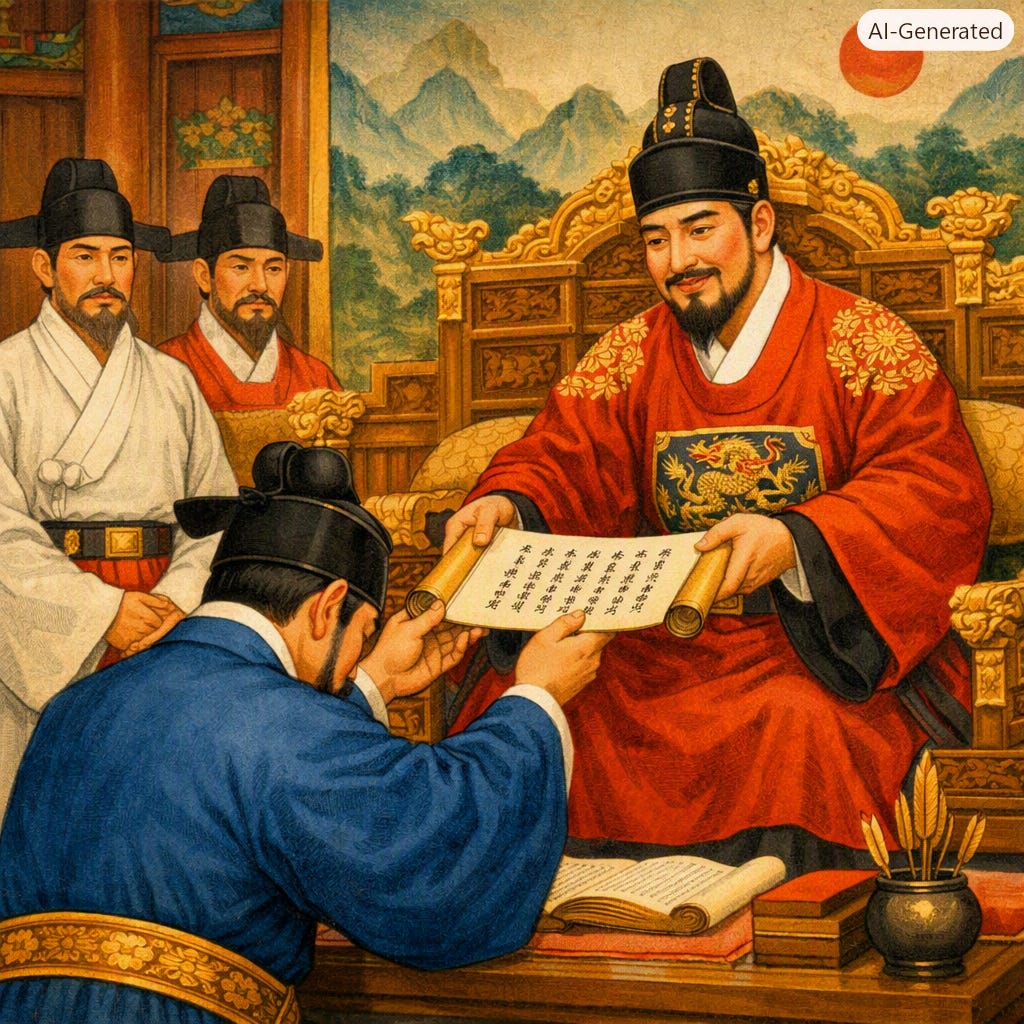
김지현의 연구는 임진전쟁기 조선 사신들이 북경에서 명나라 관원들과 직접 접촉하고 청원 활동을 병행하는 등 실제적인 외교활동을 수행했음을 보여준다. 이 연구에서 최립 역시 임진왜란기의 대명 사행록을 남긴 주요 사신 가운데 한 사람으로 확인된다 (Kim, 2022). (KCI)
따라서 최립의 역할은 다음과 같이 정리할 수 있다.
문장가
↓
외교문서 작성자
↓
명나라 사신
↓
전쟁외교 수행자
↓
문화적 중개자
이것은 오늘날의 관점에서 상당히 현대적인 역할이다.
6. 최립의 사행시는 외교문서 이상의 기록이다
최립의 가치는 외교문서에만 있는 것이 아니다.
그가 남긴 사행시 역시 매우 중요하다.
한성금은 최립의 사행시를 통해 그가 명나라에 대해 가지고 있던 인식이 어떻게 변화했는지를 분석한다. 특히 실제 명나라의 현실을 직접 목격하면서 최립의 대명관과 현실인식이 변화하는 모습을 보여준다 (Han, 2014). (KCI)
최근 장영준의 연구는 한 걸음 더 나아가 최립의 사행시를 감정의 서사라는 관점에서 분석한다. 이 연구에 따르면 최립의 사행시는 단순한 외교 기록이 아니라 부모·형제·군주에 대한 그리움, 사신으로서의 정체성, 시대적 불안과 고뇌 등이 교차하는 공간이었다 (Zhang, 2025). (KCI)
이것은 매우 중요한 발견이다.
외교관 최립과 인간 최립은 분리되어 있지 않았다.
그는 명나라를 관찰하면서 동시에 자신을 관찰했다.
그는 국제관계를 경험하면서 자신의 국가를 생각했고,
국가를 생각하면서 자신의 인간적 운명을 생각했다.
따라서 그의 사행시는
외교문학
이면서 동시에
역사문학
이고,
여행문학
이며,
자기성찰의 문학
이다.
7. 최립은 ‘조선의 르네상스맨’인가?
그렇다면 최립에게 ‘조선의 르네상스맨’이라는 이름을 붙일 수 있을까?
나는 그렇다고 생각한다.
물론 이것은 역사적 공식 명칭이 아니라 현대적 해석이다.
그러나 르네상스맨을 서로 다른 지식 영역을 연결하고 이를 실제 사회적 문제에 적용하는 지식인이라고 정의한다면 최립은 매우 좋은 사례가 된다.
그는
시인이었고,
산문가였으며,
외교문서 작성자였고,
명나라 사신이었으며,
국제적 문화교류자였고,
전쟁 시기의 외교 실무자였으며,
자신의 시대를 기록한 지식인이었다.
더 중요한 것은 이 역할들이 서로 분리되지 않았다는 점이다.
문학적 능력이 외교적 능력이 되었고,
외교 경험이 문학적 기록이 되었으며,
문학적 기록이 오늘날 역사 연구의 자료가 되었다.
이것이 최립의 독특한 힘이다.
8. 최립과 생성AI: 400년을 뛰어넘는 만남
여기에서 흥미로운 질문이 등장한다.
왜 우리는 생성AI 시대에 최립을 다시 읽어야 하는가?
최립이 살았던 시대와 오늘날은 너무나 다르다.
그 시대에는 정보가 부족했다.
오늘날에는 정보가 넘친다.
그 시대에는 문장을 작성하는 데 상당한 시간과 노력이 필요했다.
오늘날에는 생성AI가 몇 초 만에 수천 단어의 글을 만들어낼 수 있다.
그러나 두 시대에는 공통점이 있다.
좋은 정보만으로는 충분하지 않다는 것이다.
정보를 어떻게 해석할 것인가?
어떤 사실을 선택할 것인가?
어떤 논리로 상대를 설득할 것인가?
어떤 가치와 목적을 지킬 것인가?
이것은 AI가 자동으로 해결할 수 있는 문제가 아니다.
최립은 이미 400여 년 전에 이러한 문제를 자신의 삶으로 보여주었다.
9. AI가 문장을 만들 수 있어도 최립을 대신할 수 없는 이유
생성AI는 최립의 문체를 분석할 수 있다.
『간이집』의 문장을 디지털화할 수도 있다.
최립의 사행 경로를 지도 위에 표시할 수도 있다.
그의 작품 속 인물과 장소와 사건을 연결할 수도 있다.
심지어 그의 문체를 모방하여 새로운 글을 만들 수도 있다.
그러나 AI가 할 수 없는 일이 있다.
최립의 시대적 책임을 대신 질 수는 없다.
AI는 임진왜란을 설명할 수 있지만 임진왜란을 경험하지 않았다.
AI는 외교문서를 분석할 수 있지만 국가의 운명을 책임지지 않는다.
AI는 문장을 생성할 수 있지만 그 문장의 역사적 결과를 책임지지 않는다.
따라서 AI 시대에 인간에게 더욱 중요한 것은 문장 생성 능력 자체가 아니라 판단 능력이다.
최립의 사례는 이를 상징적으로 보여준다.
AI can generate language, but humans must provide judgment, context, purpose, and responsibility.
10. 최립에게서 배우는 AI 시대의 지식외교
오늘날 국가 간 경쟁은 군사력만으로 결정되지 않는다.
AI와 반도체, 데이터와 클라우드, 플랫폼과 표준, 교육과 문화가 모두 국가 경쟁력의 일부가 되었다.
따라서 새로운 형태의 외교가 등장하고 있다.
나는 이것을 ‘AI 지식외교(AI Intellectual Diplomacy)’라고 부르고 싶다.
AI 지식외교는 단순히 AI 기술을 다른 나라에 제공하는 것이 아니다.
그것은
Technology + Knowledge + Language + Culture + Ethics + Diplomacy
를 연결하는 능력이다.
이러한 관점에서 최립은 중요한 역사적 모델을 제공한다.
그는 자신의 가장 강력한 자산인 지식과 문장을 국가와 국제사회를 위해 사용했다.
오늘날 우리는 여기에 AI를 더할 수 있다.
최립의 문장력 + AI의 정보처리 능력
최립의 외교적 판단 + AI의 다국어 능력
최립의 문화적 이해 + AI의 지식 연결 능력
이 결합된다면 새로운 형태의 지식외교가 가능하다.
11. 『간이집』은 디지털 시대의 역사적 지식자산이다
이러한 관점에서 『간이집』을 다시 볼 필요가 있다.
『간이집』은 단순한 개인 문집이 아니다.
그 안에는
조선과 명나라의 외교,
사행과 국제관계,
임진왜란의 경험,
문인들의 교류,
조선 지식인의 중국 인식,
문학적 자기표현,
국가적 명분,
인간적 고뇌
가 함께 들어 있다.
따라서 『간이집』은 생성AI 시대에 historical-cultural knowledge base, 즉 역사·문화 지식베이스로 발전할 수 있다.
AI를 활용하여 『간이집』을 디지털화하고,
인물·장소·사건·문헌을 연결하고,
한문 원문과 현대 한국어·영어를 병렬화하고,
사행 경로를 지도화하고,
명나라 관원과 조선 사신 사이의 관계를 그래프로 표현한다면,
최립의 세계는 더 이상 한 권의 고전 문집에 머물지 않는다.
그것은 한국 지식문화유산의 디지털 재발견이 된다.
12. K-GSP 관점에서 본 최립의 교훈
K-GSP의 관점에서 최립이 특별히 중요한 이유는 그가 ‘국경을 넘어 지식을 연결한 한국의 초기 글로벌 지식인’으로 읽힐 수 있기 때문이다.
오늘날 한국계 학자와 전문가들은 미국과 한국, 그리고 세계 각국을 연결하는 역할을 수행하고 있다.
최립 역시 자신의 시대에 조선과 명나라 사이의 지식·문화·외교 공간에서 활동했다.
그는 조선의 문제를 명나라에 설명했고,
명나라의 현실을 조선에 전달했으며,
두 문화권의 언어와 지식을 연결했다.
그런 의미에서 그는 현대적인 의미의 ‘global Korean intellectual’을 연상시키는 역사적 사례가 될 수 있다.
시대는 달랐지만 역할의 본질에는 놀라운 공통점이 있다.
한 사회에서 얻은 지식을 다른 사회와 연결하는 것.
자신의 문화적 정체성을 유지하면서 다른 문명과 대화하는 것.
지식을 개인의 성공만이 아니라 공동체의 발전을 위해 사용하는 것.
이것이 최립과 오늘날의 글로벌 한국인 지식인을 연결하는 중요한 지점이다.
최립은 과거의 사람이지만 질문은 미래의 것이다
최립은 400여 년 전에 살았다.
그러나 그가 남긴 질문은 오늘날에도 살아 있다.
정보가 넘치는 시대에 인간에게 필요한 능력은 무엇인가?
AI가 문장을 만드는 시대에 인간의 문장은 어떤 의미를 가져야 하는가?
국제사회에서 지식인은 어떤 역할을 해야 하는가?
기술과 문학, 문화와 외교를 어떻게 연결할 것인가?
최립의 삶은 하나의 답을 제시한다.
지식은 축적하기 위한 것만이 아니라 세상과 소통하기 위한 것이다.
문장은 표현의 수단만이 아니라 사람과 국가와 문명을 연결하는 힘이다.
그리고 뛰어난 지식인은 자신의 능력을 시대적 책임과 연결해야 한다.
최립은 문인이었다.
그러나 문학에 머물지 않았다.
그는 외교관이었다.
그러나 외교에만 머물지도 않았다.
그는 자신의 경험을 문학으로 기록했고, 다른 문명과 소통했으며, 국가적 위기 속에서 자신의 지식을 국가를 위해 사용했다.
따라서 최립은 조선의 대명외교에서 ‘문학과 외교를 결합한 대표적인 문인 외교관 가운데 한 사람’으로 평가할 수 있다.
더 나아가 그의 네 차례 명나라 사행은 조선의 대명관계에서 중요한 역사적 전환점들을 관통했으며, 그의 외교문서와 사행문학은 조선 지식인이 국제질서를 어떻게 이해하고 국가적 명분을 어떻게 설득했는지를 보여주는 중요한 자료다 (Han, 2014; Lee, 2017).
그리고 오늘날 생성AI 시대에 최립을 다시 읽는다는 것은 과거를 단순히 회고하는 일이 아니다.
그것은 AI가 인간의 언어를 생성하는 시대에 인간에게 무엇이 남아 있어야 하는가를 묻는 일이다.
AI는 문장을 만들 수 있다.
그러나 역사적 책임은 인간에게 있다.
AI는 정보를 연결할 수 있다.
그러나 무엇이 중요한지를 판단하는 것은 인간이다.
AI는 번역할 수 있다.
그러나 서로 다른 문명 사이에서 어떤 의미를 전달할 것인지는 인간이 결정한다.
400년 전 최립은 붓으로 이 일을 했다.
오늘 우리는 AI와 함께 할 수 있다.
그러나 최종적인 판단과 책임은 여전히 인간의 몫이다.
최립에서 AI로.
문장에서 지식으로.
외교에서 글로벌 소통으로.
과거의 지혜에서 미래의 지능으로.
바로 이것이 오늘 우리가 최립을 다시 읽어야 하는 이유다.
References
Han, S. G. (2014). 簡易 崔岦의 사행시에 나타난 對明觀과 현실인식 [A perspective of the Ming Dynasty and recognition of the reality shown in envoy poetry by Choi Lip]. 한국시가문화연구, 33, 401–428. KCI official database. (KCI)
Hwang, H. W. (2022). 최립의 삶과 시문학의 일고찰—조선 문인들의 평가와 송시풍 지향을 중심으로 [A study on Choi Rip’s life and poetry]. 동양한문학연구, 61, 251–271. https://doi.org/10.35374/dyha.61..202202.009 (KCI)
Kim, W. J. (2018). 宣祖 연간 文壇의 推移와 崔岦의 詩文 [The development of the literary world during the reign of King Seonjo and Choi Rip’s poetry and prose]. 한문학논집, 50, 105–136. https://doi.org/10.17260/jklc.2018.50..105 (KCI)
Lee, H. S. (2017). Correction of historical records and Joseon envoys’ recognition of Ming China. Journal of Korean Literature, 36, 93–118. KCI official database; no DOI is listed in the KCI record. (Korea Journal Central)
Zhang, Y. J. (2025). 崔岦使行詩的情緒書寫 [Emotional expressions in the envoy poetry of Choe Ip]. 중국학논총, 87, 43–59. https://doi.org/10.23004/kchcu.2025..87.003 (KCI) +++
2026년 8월 1일
{솔티}

Prof. Dr. Young Choi (Editor in Chief) — Regent University
Young B. Choi is a Professor in the Department of Engineering & Computer Science at Regent University. He published 38 books with ‘Selected Readings in Cybersecurity’ (2018) (over 800 copies archived globally at university/college libraries around the world) and ‘Cybersecurity Applications and Artificial Intelligence’ (2023) available in seven major world languages. He proposed the world’s first global and universal telecommunications “Service Order Handling (SOH)” Model (T-SOH Model) (1995) with Dr. Adrian Tang. With this innovative research work, he received the IEEE NOMS ’96 Best Paper Award and became the first recipient of the Outstanding Contribution Award of the TeleManagement Forum in 1998. His research areas include Natural Language Processing-focused AI, AI-applied cybersecurity, network and telecom service management, and Korean studies on Gani Choi Rip’s Jeonggwan (靜觀: Quiet Contemplation) philosophy and Shilhak ( 實學: Practical Learning).
© K-GSP (K-Global Scholars and Professionals) Forum. All rights reserved. August 2026.