

EXECUTIVE SUMMARY
Responsive K-Culture: Empathy and Human Connection explores how Korean cultural engagement can respond meaningfully to human joy, suffering, inquiry, and social need. The project emphasizes empathy, relational understanding, and participatory connection as essential values for fostering inclusive and compassionate communities in a global society. By promoting responsiveness through cultural expression and interaction, K-Culture can become a transformative force for healing, solidarity, and human flourishing.
Keywords: Responsiveness; Empathy; Human Connection; Solidarity; Human Flourishing
1. Introduction
One of the most noteworthy characteristics of K-Culture is its responsiveness to diverse human needs with remarkable immediacy and care. Whether through music, film, digital communication, food, beauty, community practices, or social engagement, K-Culture has demonstrated a unique ability to recognize human emotions, respond to social concerns, and create meaningful connections across cultural and national boundaries. K-Culture endures not simply because it entertains, but because it recognizes human emotion. It responds to joy, suffering, loneliness, aspiration, and uncertainty in ways that feel personal and relational (Jin, 2016; Kim, 2013; Yim, 2002).
In an increasingly fragmented and isolated world, responsiveness has become an essential human value. People no longer seek consumption alone. They seek recognition, belonging, healing, and human connection. Responsive K-Culture reflects this emerging paradigm by fostering emotional resonance, communal participation, and mutual care through both online and offline interactions.
This study explores how responsiveness functions as a defining feature of K-Culture and examines its role in promoting empathy and human connection. By analyzing cultural practices and social engagement within contemporary Korean influence, the discussion highlights how K-Culture can contribute to a more compassionate, participatory, and interconnected global society. This study adopts a reflective and interdisciplinary approach combining cultural analysis, historical illustration, and social interpretation.
2. Dimensions of Responsive K-Culture
The following dimensions illustrate how responsiveness operates across human experience, business systems, and broader societal transformation within contemporary Korea.
2.1. Responsiveness to Human Conditions
A defining feature of responsive K-Culture is its attentiveness to human suffering, collective crisis, and communal healing. Korean society has repeatedly demonstrated the capacity to mobilize emotional solidarity and practical action in response to social and economic hardship. This responsiveness is rooted not only in institutional systems, but also in shared cultural values of mutual care, sacrifice, and collective responsibility.
One significant example is the Hebei Spirit oil spill on the Taean Peninsula in 2007. Following one of the worst environmental disasters in Korean history, millions of volunteers from across the nation traveled to Taean to clean contaminated coastlines. Students, religious groups, families, soldiers, and civic organizations participated with extraordinary immediacy and compassion, revealing a deeply embedded culture of communal responsiveness to environmental suffering and local need.
Another important illustration is the IMF Gold Collection Movement during the 1997 Asian Financial Crisis. Faced with severe national economic instability, Korean citizens voluntarily donated personal gold possessions to help repay national debt and restore economic confidence. This unprecedented collective action reflected not only patriotism, but also a willingness to share personal sacrifice for the well-being of society as a whole.
These experiences reveal an important feature of Korean society: empathy often becomes action. Human suffering becomes a shared social concern rather than an isolated individual burden (Hong & Hyun, 2025).
2.2. Business Models of Responsiveness
Korean business systems transformed responsiveness into competitive advantage. Korean industries have developed highly adaptive and customer-centered models that prioritize speed, accessibility, convenience, and real-time feedback. This business responsiveness has contributed significantly to the global competitiveness of Korean commerce, technology, and service sectors.
One notable example is Korea’s advanced delivery infrastructure, which emphasizes rapid fulfillment and immediate customer satisfaction. Same-day and overnight delivery services have become normalized in daily life, reshaping consumer expectations and strengthening trust between businesses and customers. Digital platforms, mobile integration, and efficient logistics systems enable Korean companies to respond quickly to changing consumer needs and social trends.
Beyond logistics, Korean businesses actively engage consumer emotions and preferences through interactive communication, personalized marketing, and continuous adaptation. The responsiveness of Korean enterprises reflects a broader cultural orientation toward attentiveness, flexibility, and relational engagement rather than purely transactional exchange. Responsiveness is not merely a cultural virtue. In Korea, it became an operating system for innovation, trust, and economic adaptation in a rapidly changing global environment (Park & Hong, 2024).
2.3. Responsiveness amid Dynamic Social Change
Korean society has undergone remarkably rapid political, technological, economic, and cultural transformation within a relatively short historical period. From postwar reconstruction to digital globalization, Korea has continuously adapted to shifting social realities with resilience and creativity. In Korea, responsiveness became both a survival mechanism and a cultural habit.
The rise of digital communication and participatory media has accelerated social interaction and collective awareness. Korean society responds quickly to emerging issues, public concerns, and global trends through highly connected online and offline networks (Lee & Nornes, 2015; Shin & Moon, 2017). Social movements, public discourse, entertainment industries, and civic participation increasingly operate within real-time environments shaped by immediacy and interconnectivity.
At the same time, rapid change has generated new challenges, including social isolation, generational conflict, economic pressure, and mental health concerns. Responsive K-Culture seeks to address these tensions by creating spaces for empathy, emotional expression, and communal belonging. Through music, storytelling, social media engagement, and public participation, K-Culture provides channels through which individuals can feel heard, connected, and valued.
In this context, responsiveness is not merely reactionary behavior; it becomes a dynamic social ethic that enables adaptation, solidarity, and human-centered transformation in an increasingly complex world.
Societies must first learn to see human suffering clearly.
3. Toward a Culture of Responsiveness
While responsiveness has become a cultural strength, its development has also been shaped through painful failures, institutional reflection, and collective learning processes.
3.1. Trials and Failures
The development of responsive K-Culture has not emerged without painful trials and collective failures. Korea’s rapid industrialization and modernization produced remarkable economic growth, yet they also exposed structural weaknesses, insufficient safety systems, and the consequences of speed-oriented development. Several national tragedies became defining moments that revealed the urgent need for deeper responsibility, accountability, and human-centered responsiveness.
One early example was the collapse of the Wawoo Apartment (와우 아파트) in 1970, which symbolized the dangers of poorly regulated urban expansion and inadequate construction oversight during rapid modernization. The tragedy raised public awareness regarding safety standards and government accountability in urban development.
Another major incident was the collapse of the Seongsu Bridge (성수대교) in 1994. The disaster exposed systemic negligence in infrastructure management, maintenance, and inspection practices. Public shock and grief generated widespread calls for institutional reform and stronger preventive systems to protect human life.
The Sewol Ferry Disaster (세월호 참사) in 2014 became one of the most painful collective traumas in contemporary Korean society. The loss of hundreds of lives, particularly high school students, intensified national reflection on safety culture, crisis response, ethical leadership, and social responsibility. The tragedy revealed not only operational failures but also deeper cultural questions concerning accountability, communication, and the value placed on human life (Hong & Hyun, 2025).
Responsive cultures are rarely formed in comfort. They are shaped through failure, grief, accountability, and correction. National crises became turning points for social reflection and collective transformation.
3.2. Follow-up Corrections for Preventiveness and Mitigation
In response to these tragedies, Korean society pursued various corrective measures aimed at prevention, mitigation, and institutional reform. Safety regulations, inspection systems, emergency response structures, and public accountability mechanisms were strengthened in order to reduce future risks and improve crisis preparedness.
Following infrastructure-related disasters, Korea implemented stricter construction standards, more rigorous maintenance protocols, and expanded public oversight for transportation and urban systems. Technological advancements in monitoring, communication, and disaster management further contributed to preventive responsiveness within both governmental and private sectors.
After the Sewol Ferry Disaster, reforms extended beyond technical systems into educational, political, and social dimensions. Public discourse increasingly emphasized ethical leadership, transparency, civic participation, and the protection of vulnerable populations. Citizens demanded not only faster responses to crises, but also deeper cultural transformation that prioritizes human dignity and collective care.
Preventive responsiveness therefore became an evolving social ethic. Korean society gradually shifted from reactive adaptation toward anticipatory awareness, recognizing that true responsiveness requires preparation, accountability, and continuous learning.
3.3. Mastery and Sustainable Responsiveness
The goal of responsive K-Culture is not speed alone. It is disciplined responsiveness grounded in human responsibility and wisdom. A culture of responsiveness emerges grounded in human responsibility and wisdom into everyday practices, institutions, education, and social consciousness. It reflects the ability to respond thoughtfully, ethically, and sustainably to changing human realities.
Such mastery requires balancing speed with reflection and innovation with responsibility. While Korea’s dynamic society often values immediacy and competitiveness, sustainable development depends on cultivating deeper capacities for empathy, critical self-examination, and collaborative problem-solving. Mastery is not perfection. It is the discipline of continuous correction, learning, and responsibility. Responsive K-Culture points toward a future in which technological advancement, economic growth, and global influence remain rooted in care for human well-being. By transforming past failures into opportunities for collective growth, Korean society can continue developing a mature and compassionate model of responsiveness that contributes meaningfully to global human flourishing.
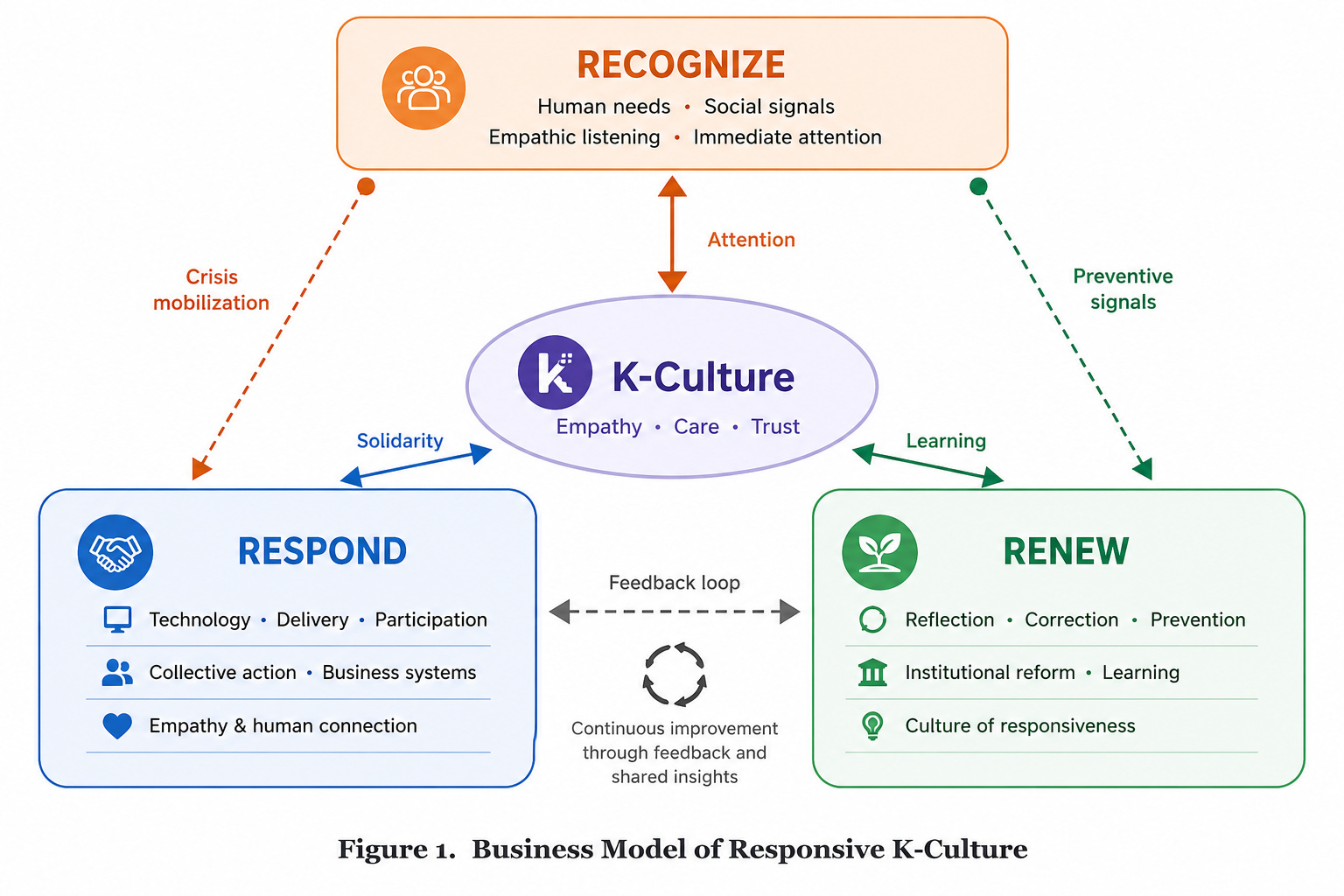
Figure 1. Business Model of Responsive K-Culture
Figure 1 presents the Business Model of Responsive K-Culture as three mutually reinforcing segments — Recognize, Respond, and Renew — organized around a central hub of K-Culture values: empathy, care, and trust. Rather than a fixed sequence, the model reflects a dynamic and non-hierarchical system in which the three segments interact simultaneously and continuously. Recognize captures how Korean society attends to human needs and social signals through empathic listening and immediate attention. Respond encompasses the rapid mobilization of technology, delivery systems, collective action, and human connection in reply to recognized needs. Renew represents the reflective dimension of responsiveness — the processes of feedback, institutional correction, prevention, and sustained learning that transform reactive response into a mature culture of responsiveness. The six interactions between segments — attention, solidarity, learning, crisis mobilization, preventive signals, and the feedback loop — illustrate how each segment both shapes and is shaped by the others, producing a living social system rather than a static model.
The three-segment model reveals that the principled practices sustaining responsive K-Culture are not sequential steps but simultaneous orientations that operate together across social contexts. Empathic listening belongs to Recognize; collective participation drives Respond; and reflective adaptation animates Renew. The following section examines each of these practices in depth, showing how their interaction — rather than their individual expression — produces the distinctive quality of responsiveness that defines K-Culture at its best.
4. Discussions
These historical experiences and social transformations reveal several principled practices that sustain responsive K-Culture in both local and global contexts.
4.1. Empathic Listening as a Principled Practice
One foundational practice of responsive K-Culture is empathic listening. Responsiveness begins with the willingness to hear and recognize the emotional, social, and existential realities of others. In Korean society, this practice appears through communal sensitivity to collective experiences, rapid public engagement during crises, and strong emotional resonance expressed through media, arts, and digital interaction. Empathic listening enables individuals and institutions to respond not merely to data or efficiency demands, but to lived human experiences.
This practice also explains the global appeal of many forms of K-Culture. Audiences often experience Korean cultural content as emotionally accessible and relationally authentic because it reflects themes of struggle, belonging, sacrifice, hope, and healing (Kim, 2013; Yim, 2002). Empathic responsiveness therefore becomes more than communication; it forms the ethical foundation for trust, solidarity, and meaningful human connection across social and cultural boundaries.
4.2. Collective Participation as a Principled Practice
A second principled practice is collective participation. Responsive K-Culture demonstrates that social transformation becomes sustainable when individuals actively participate in shared responsibility rather than remaining passive observers. Historical examples such as the Taean volunteer movement and the IMF Gold Collection Movement illustrate how collective action can mobilize society during moments of crisis and uncertainty (Hong & Hyun, 2025; Park, 2004).
In contemporary Korean society, participatory responsiveness continues through civic engagement, online communities, collaborative digital platforms, and community-centered initiatives. Participation strengthens resilience because people protect what they help build. Rather than relying solely on centralized authority, responsive participation encourages citizens, businesses, and institutions to contribute actively to communal well-being and problem-solving.
4.3. Reflective Adaptation as a Principled Practice
A third principled practice is reflective adaptation. Korean society has repeatedly demonstrated the ability to learn from failures, reassess systems, and implement corrective reforms in response to social challenges and national tragedies. Responsiveness becomes transformative when reflection leads to institutional improvement, ethical awareness, and preventive action rather than temporary reaction alone. Global fandom communities surrounding BTS illustrate how responsive K-Culture creates emotional solidarity, participatory engagement, and transnational empathy among diverse audiences.
Reflective adaptation also supports the development of a culture of mastery. Rapid modernization and technological advancement require societies not only to innovate quickly, but also to evaluate the human consequences of change responsibly. Through continuous learning, self-examination, and corrective adjustment, responsive K-Culture seeks to balance speed with wisdom, efficiency with care, and progress with human dignity (Lee & Nornes, 2015; Shin & Moon, 2017).
Empathy without action cannot sustain human trust.
5. Conclusion
The concluding reflections synthesize the major insights of responsive K-Culture and its implications for empathy, resilience, and human flourishing. The strength of a society is measured not only by technology or global influence, but by how it responds to human need. Through experiences of collective suffering, rapid transformation, participatory engagement, and reflective correction, Korean society has cultivated practices that strengthen human connection and communal resilience. The future of K-Culture therefore depends on sustaining a balance between innovation and care, speed and wisdom, and global expansion and human dignity. In the end, societies are remembered not for their speed, but for how deeply they listen and how responsibly they respond.
References
Hong, P. C., & Hyun, Y. R. (2025). Impact of diverse orientations in human emergency responses: Illustrations of Korean national experiences in modern history. In K. A. Thomas & J. V. Kureethara (Eds.), Education and pedagogical experiences: Coping with human emergencies and exploring resilience strategies (pp. 277–301). Routledge India.
Jin, D. Y. (2016). New Korean wave: Transnational cultural power in the age of social media. University of Illinois Press.
Kim, Y. (Ed.). (2013). The Korean wave: Korean media go global. Routledge.
Lee, S., & Nornes, A. M. (Eds.). (2015). Hallyu 2.0: The Korean wave in the age of social media. University of Michigan Press.
Park, S. J., & Abelmann, N. (2004). Class and cosmopolitan striving: Mothers’ management of English education in South Korea. Anthropological Quarterly, 77(4), 645–672.
Park, Y. W., & Hong, P. (2024). Cosmetics marketing strategy in the era of the digital ecosystem: Revolutionizing beauty in the new market frontier. Springer Nature Singapore. https://doi.org/10.1007/978-981-97-3674-4
Shin, G.-W., & Moon, R. J. (2017). South Korea in 2016: Political leadership in crisis. Asian Survey, 57(1), 103–110.
Yim, H. (2002). Cultural identity and cultural policy in South Korea. The International Journal of Cultural Policy, 8(1), 37–48.
ABOUT THE AUTHOR

Distinguished Professor, Dr. Paul Hong — University of Toledo
Paul C. Hong is a Distinguished University Professor and Chair of Information Systems and Supply Chain Management at the University of Toledo. His work focuses on leadership, governance, and decision-making in the AI era, integrating strategy, technology, and institutional trust. He has published extensively in leading academic journals and writes on how individuals and organizations navigate complexity, disruption, and global transformation.
© K-Global Schoalrs and Professionals Forum. All rights reserved. Content published in the K-GSP Forum may not be reproduced, distributed, or transmitted in any form without prior written permission from the K-GSP Forum, except for brief quotations with full attribution.
Thank you for this meaningful reflection. I was particularly moved by the idea that “societies are remembered not for their speed, but for how deeply they listen and how responsibly they respond.” The article beautifully highlights how empathy becomes action in Korean society and how responsiveness can foster resilience, trust, and human flourishing. The Recognize–Respond–Renew model provides a powerful framework for understanding the enduring influence of K-Culture beyond entertainment and economics. Thank you for sharing this important perspective.
k-gsp.org