

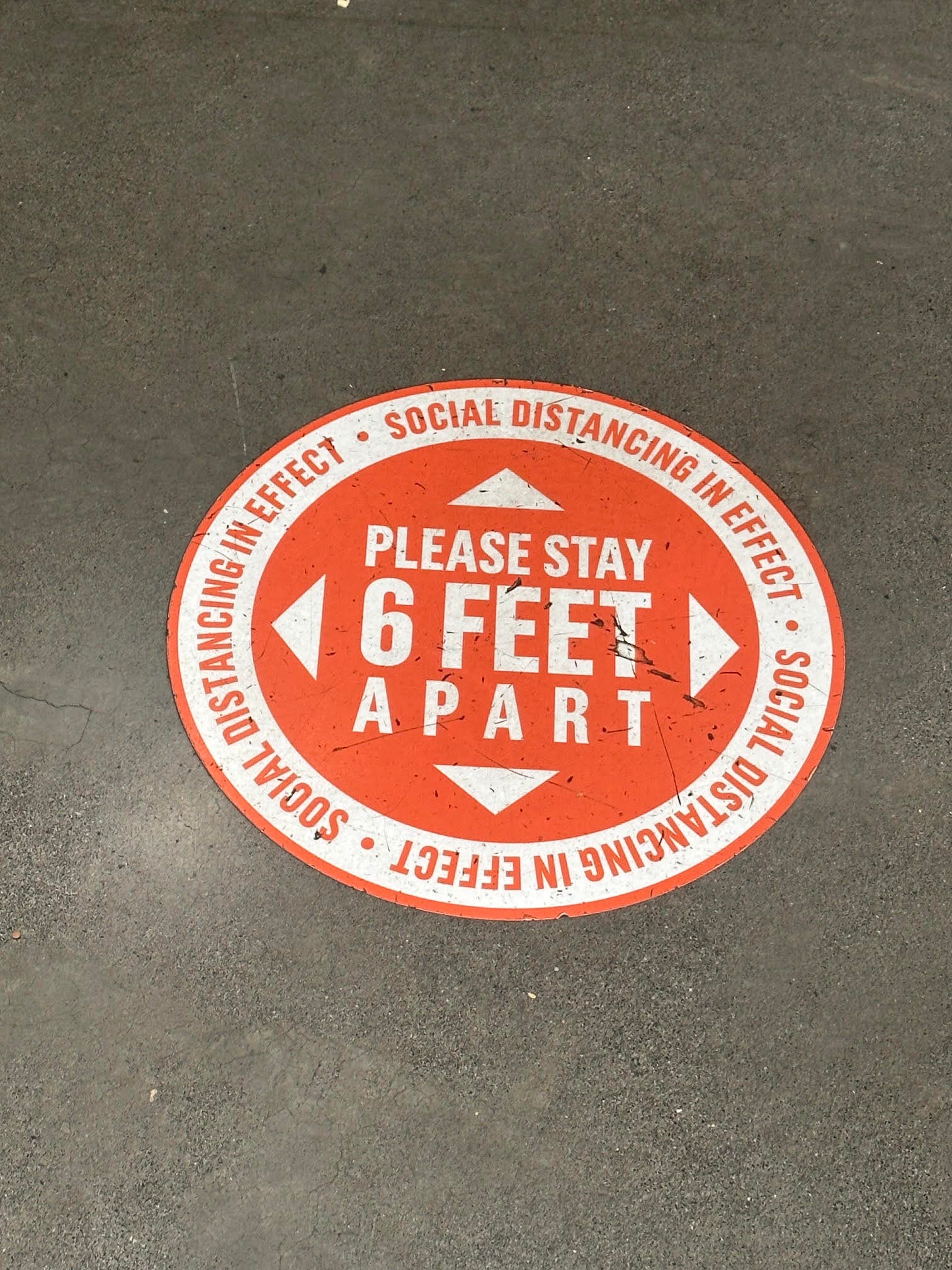
When people hear the phrase social distancing, many immediately think of the COVID-19 pandemic. Yet social distancing is much more than a temporary public health measure. It is a way of showing respect for others, a hallmark of responsible citizenship, and an essential social norm in a multicultural society.
In everyday life, especially in the United States, the importance of social distancing becomes evident in countless situations. Whether shopping at a grocery store on the weekend, waiting in line at a bank, visiting a government office, checking in at an airport, or receiving services at a hospital, maintaining an appropriate distance from others is considered common courtesy. Respecting another person’s personal space is not merely following a rule—it is a reflection of good character and mutual consideration.
The United States is one of the world’s most culturally diverse nations, where people from every continent have come together as immigrants to build new lives. These individuals bring with them different languages, educational backgrounds, customs, and social expectations. Some cultures encourage close physical proximity during conversations, while others value greater personal space. Without an understanding of these cultural differences, even small interactions can easily lead to misunderstandings.
Consider a simple example while waiting in line at a supermarket checkout. If the person behind stands too close, the customer in front may feel uncomfortable or even threatened. Conversely, someone accustomed to maintaining a greater distance may be perceived as unfriendly by individuals from cultures where close interpersonal interaction is common. What appears to be a minor difference in behavior may actually reflect deeply rooted cultural norms.
Social distancing extends beyond physical space. It also includes respecting another person’s privacy, avoiding unnecessary interruptions, refraining from unwanted physical contact, and recognizing appropriate social boundaries. In this broader sense, social distancing quietly communicates a powerful message: “I respect you.”
During my years of living in the United States, I have repeatedly observed how small acts of consideration contribute to a more pleasant and orderly society. People patiently wait their turn, allow others to exit elevators before entering, keep a respectful distance while standing in line, and avoid blocking walkways with shopping carts. These seemingly insignificant habits create an atmosphere of trust and mutual respect. Trust, in turn, forms the foundation of a healthy community.
Today, artificial intelligence and digital technologies are transforming nearly every aspect of our lives. Yet the most important technology for sustaining human society remains kindness and consideration. No matter how advanced our machines become, a society cannot flourish without mutual respect. Social distancing, therefore, is not merely a physical practice but an expression of human dignity and civic responsibility.
For international students, immigrants, and anyone adapting to American society, understanding this cultural norm is especially important. American culture places great value on respecting both individual rights and personal space. Observing appropriate social distance is not simply about following etiquette; it is one of the first steps toward becoming a trusted member of a diverse community.
Ironically, maintaining an appropriate physical distance often brings people emotionally closer. When individuals feel comfortable and respected, trust naturally develops, and trust strengthens relationships. On the other hand, invading another person’s personal space can create discomfort and distance, regardless of how polite one’s words may be.
Ultimately, social distancing is not about separating people—it is about honoring them. Appropriate distance is not a sign of coldness but of thoughtful consideration; it is not indifference but maturity. If each of us practices this simple yet meaningful habit in our daily lives, we can help build communities that are safer, warmer, and more harmonious. In the end, the true purpose of social distancing is not to increase the distance between people, but to deepen the respect that brings them together. +++
{Solti}
July 10, 2026
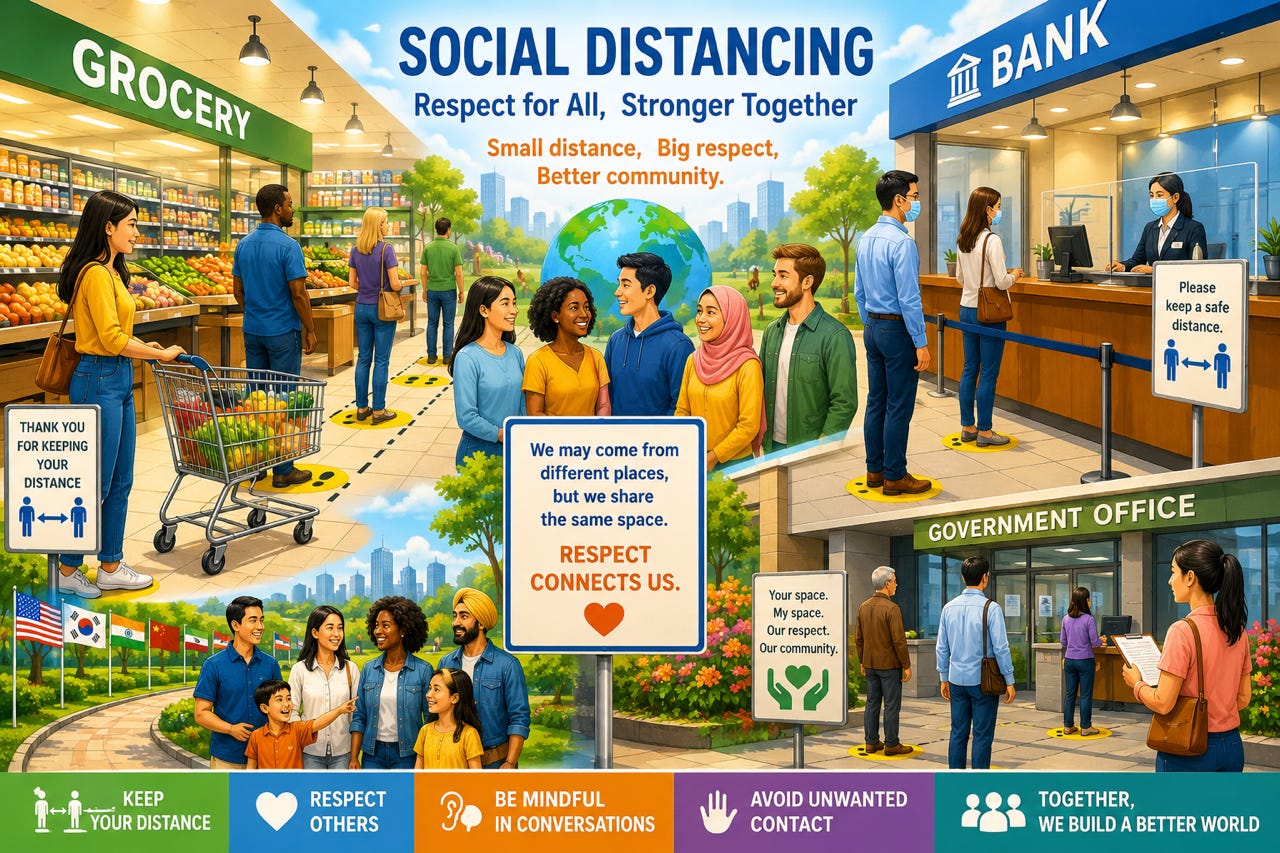
사회적 거리(Social Distancing): 사람을 존중하는 가장 가까운 예절
우리는 흔히 ‘사회적 거리(Social Distancing)’라는 말을 들으면 코로나19 팬데믹을 먼저 떠올린다. 그러나 사회적 거리는 감염병이 있을 때만 필요한 일시적인 규칙이 아니다. 그것은 서로를 존중하며 살아가기 위한 생활문화이자 성숙한 시민의식이며, 다문화 사회를 유지하는 중요한 사회적 약속이다.
미국에서 생활하다 보면 사회적 거리의 중요성을 자연스럽게 느끼게 된다. 주말마다 찾는 대형 식료품점(grocery store), 은행, 우체국, 병원, 공항, 관공서 등에서는 줄을 설 때 앞사람과 적절한 거리를 유지하는 것이 기본적인 예절이다. 상대방의 개인 공간(personal space)을 존중하는 행동은 법으로 강제하지 않아도 대부분의 사람들이 자연스럽게 실천하는 생활습관이 되었다.
특히 미국은 세계 각국에서 온 이민자들이 함께 살아가는 대표적인 다문화 국가이다. 언어도 다르고, 교육 수준도 다양하며, 문화적 배경과 생활방식 또한 매우 다르다. 어떤 사람은 사람들 사이의 거리가 가까운 문화에서 자랐고, 어떤 사람은 일정한 거리를 유지하는 것이 예의라고 배워 왔다. 이러한 차이를 이해하지 못하면 사소한 오해가 생기기도 한다.
예를 들어 계산대에서 줄을 서 있는데 뒤에 있는 사람이 너무 가까이 다가오면 앞사람은 심리적인 불편함을 느낄 수 있다. 반대로 거리를 충분히 두고 서 있는 사람을 보며 “왜 이렇게 멀리 서 있지?”라고 생각하는 사람도 있을 수 있다. 서로의 문화적 차이를 이해하지 못하면 작은 행동 하나가 불쾌감이나 갈등으로 이어질 수 있다.
사회적 거리는 단순히 몸의 거리를 의미하지 않는다. 상대방의 사생활을 존중하고, 대화를 방해하지 않으며, 허락 없이 신체 접촉을 하지 않는 것도 넓은 의미의 사회적 거리이다. 이는 “당신을 존중합니다.”라는 가장 조용하면서도 분명한 메시지이기도 하다.
필자는 미국 생활을 하면서 작은 배려가 사회 전체를 얼마나 편안하게 만드는지를 자주 경험하였다. 쇼핑카트를 밀면서 다른 사람의 동선을 배려하고, 엘리베이터에서는 먼저 내리는 사람을 기다려 주며, 줄을 설 때는 적절한 간격을 유지하는 모습은 누구에게도 불편함을 주지 않는다. 이러한 작은 예절들이 모여 신뢰가 형성되고, 신뢰는 건강한 공동체를 만든다.
오늘날 인공지능과 디지털 기술은 빠르게 발전하고 있지만, 인간 사회를 유지하는 가장 중요한 기술은 여전히 ‘배려’이다. 아무리 첨단 기술이 발전해도 서로를 존중하는 마음이 없다면 건강한 사회는 만들어질 수 없다. 사회적 거리는 인간성과 시민의식을 보여 주는 가장 기본적인 행동 중 하나이다.
특히 대학생이나 새로운 이민자들은 이러한 문화를 이해할 필요가 있다. 미국 사회에서는 자신의 권리만큼 다른 사람의 권리와 공간을 존중하는 태도를 중요하게 생각한다. 사회적 거리를 지키는 것은 단순히 규칙을 따르는 것이 아니라, 공동체의 일원이 되기 위한 첫걸음이라고 할 수 있다.
흥미로운 사실은 사람과 사람 사이의 물리적 거리를 적절히 유지할수록 오히려 심리적인 거리는 가까워진다는 점이다. 서로가 편안함을 느끼기 때문에 신뢰가 생기고, 신뢰는 좋은 인간관계를 만들어 준다. 반대로 상대방의 공간을 침해하면 아무리 친절한 말을 하더라도 마음의 거리는 오히려 멀어질 수 있다.
결국 사회적 거리는 사람을 멀리하는 문화가 아니라 사람을 더욱 존중하는 문화이다. 적절한 거리는 차가움이 아니라 배려이며, 무관심이 아니라 성숙함의 표현이다. 우리가 일상 속에서 조금 더 상대방의 공간을 존중하고 작은 예절을 실천한다면, 미국과 같은 다문화 사회는 물론 우리 모두의 삶은 더욱 안전하고 따뜻하며 품격 있는 공동체로 발전할 것이다. 진정한 사회적 거리는 사람 사이의 거리를 넓히는 것이 아니라 서로에 대한 존중을 더욱 깊게 만드는 지혜인 것이다. +++
{솔티}
2026년 7월 10일

Prof. Dr. Young Choi (Editor in Chief) — Regent University
Young B. Choi is a Professor in the Department of Engineering & Computer Science at Regent University. He published 38 books with ‘Selected Readings in Cybersecurity’ (2018) (over 800 copies archived globally at university/college libraries around the world) and ‘Cybersecurity Applications and Artificial Intelligence’ (2023) available in seven major world languages. He proposed the world’s first global and universal telecommunications “Service Order Handling (SOH)” Model (T-SOH Model) (1995) with Dr. Adrian Tang. With this innovative research work, he received the IEEE NOMS ’96 Best Paper Award and became the first recipient of the Outstanding Contribution Award of the TeleManagement Forum in 1998. His research areas include Natural Language Processing-focused AI, AI-applied cybersecurity, network and telecom service management, and Korean studies on Gani Choi Rip’s Jeonggwan (靜觀: Quiet Contemplation) philosophy and Shilhak ( 實學: Practical Learning).