

Salem and Concord, Massachusetts: Traces of Witch Trials and Transcendentalism
New England—a relatively small region of the United States—is no longer the nation’s cultural center, yet its legacy endures through Puritanism, Transcendentalism, and world-renowned literature. With the completion of America’s westward expansion, New England’s prominence gradually declined, except perhaps in the enduring excellence of its institutions of higher learning and the fame of the New England Patriots and the Boston Red Sox. Still, the American spirit cannot be fully understood without considering the cultural heritage of this region. For someone interested in American literature, visiting Salem and Concord is a particularly meaningful way to encounter some of the people, places, and events that have shaped the nation’s cultural history.
On September 28–30, 2006, I had an opportunity to visit the region. I had submitted a proposal to a cultural studies conference at Gordon College in Wenham, Massachusetts, and my proposal was accepted. I flew into Boston, rented a car at the airport, drove to Gordon College, and gave my presentation. Afterward, I toured several literary and historical sites in Salem and Concord. In those days, driving through cities and towns unfamiliar to me was not a big deal. Today, I would hesitate to do the same.
Exploring Salem and Concord gave me a sense of excitement and anticipation. I had never been to this part of the northeastern United States, but as someone who specializes in American literature, I knew I would have to see it someday. I can imagine how Protestants might feel when they visit the Schlosskirche, or Castle Church, in Wittenberg, where Martin Luther posted his Ninety-five Theses in 1517. (I actually visited the church in 2025.) I can similarly imagine how Roman Catholics might feel when they visit the Vatican or how Anglicans might feel when they visit Canterbury Cathedral in London. Such visitors likely experience a quickened heartbeat as they approach places so deeply connected with their religious traditions. Literary enthusiasts can experience something similar when they approach the homes and haunts of famous writers, even on a second or third visit.
As someone from the Midwest, I found New England somewhat different from the rest of the country. America is a young country, but despite its relatively short history, New England often felt older and more deeply rooted in history than the Midwest. In the Midwest, we often mark the boundaries of houses or farms with fences. In New England, I noticed that some homes and pastures were bordered by low stone walls. When I visited England in May 2026, I saw many homes and farms similarly bordered by low stone walls. In a way, the area of New England I explored seemed more akin to England than to, say, the American Midwest or the Deep South. Robert Frost’s poem “Mending Wall,” published in North of Boston in 1914, is set in rural New England. Part of the poem reads:
I see him [a neighbor] there
Bringing a stone grasped firmly by the top
In each hand, like an old-stone savage armed.
Based on my memory, references to stone walls are much harder to find in Midwestern poetry.
Another thing I noticed during my trip to Greater Boston was the relative lack of open, unobstructed space between towns. As I drove from Boston to Salem, I encountered many intersections and stop signs, which gave me the impression that the population density was considerably higher than in the Midwest. While living in Kansas and Nebraska from 1988 to 1999, I often drove for miles without seeing a community or even a house—and I liked it. Driving on highways in those states requires some planning because there can be long stretches without a rest area, restaurant, or gas station, sometimes for more than fifty miles. Accordingly, visiting New England produced a mild case of culture shock for me.
For an American literature scholar, Salem and Concord are extraordinary places. Salem, located on the northeastern coast near Boston, is forever associated with the Salem Witch Trials of 1692–93, a dark episode in American colonial history later immortalized in Arthur Miller’s The Crucible (1953). Nineteen people were executed during the trials, while others died in jail or suffered other consequences.
Concord, about twenty miles west of Boston, was an important center of American Transcendentalism and home to several of the movement’s most influential writers and thinkers, including Ralph Waldo Emerson and Henry David Thoreau. Nathaniel Hawthorne and Louisa May Alcott also lived and wrote there. Many of their homes, literary landmarks, and graves remain part of Concord’s historic landscape.
Based on my prior research, I also wanted to visit the Longfellow House–Washington’s Headquarters National Historic Site in Cambridge, Massachusetts. As I traveled from Concord to Cambridge, however, I found myself in the late-afternoon rush hour. Traffic moved slowly, and soon I felt overwhelmed by the endless stream of cars in both directions. Anxious about losing my way or getting into an accident, I turned around and headed toward Harvard. I took several pictures of the campus from inside the car before returning to my hotel in the suburbs. I remember thinking that the Harvard Law School sign on the lawn looked quite modest compared with the school’s enormous academic reputation. Later, I learned that driving in Boston is not for the faint of heart, especially for someone from a rural state like me.
Because my visit to Salem and Concord was part of a conference trip, I did not have enough time to see all the sites I wanted to visit. It would take at least two full days to explore the literary and historical landmarks of the two communities. Even a brief visit, however, offers a glimpse into both the celebrated and darker chapters of New England’s past.
NOTE: This photo essay is an expanded version of my photo essay “Salem and Concord, Massachusetts: Discover Traces of Witch Trials and Transcendentalism,” originally published in The Right Words: A Chapbook of Nonfiction, Issue 5, May 2018, pp. 31–37.
MAPS
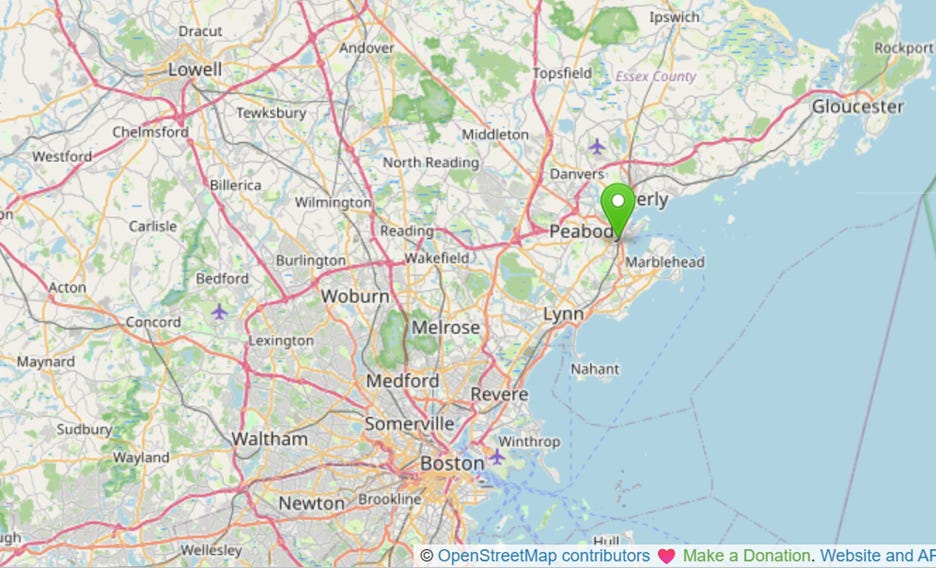
Salem, Massachusetts, lies approximately 16 miles northeast of Boston. Concord is located about 20 miles west of Boston. Composite image based on map data © OpenStreetMap contributors.
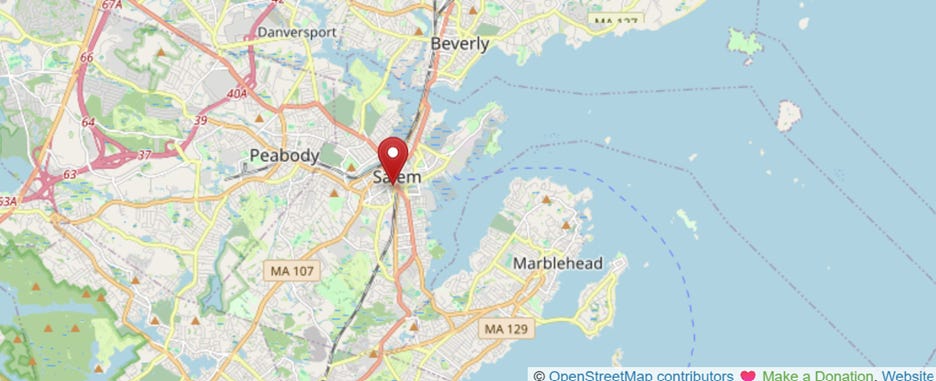
Salem is less than a mile from the Atlantic Ocean. As someone who loves the water, I wish I had taken the time to visit the coastline. Composite image based on map data © OpenStreetMap contributors.
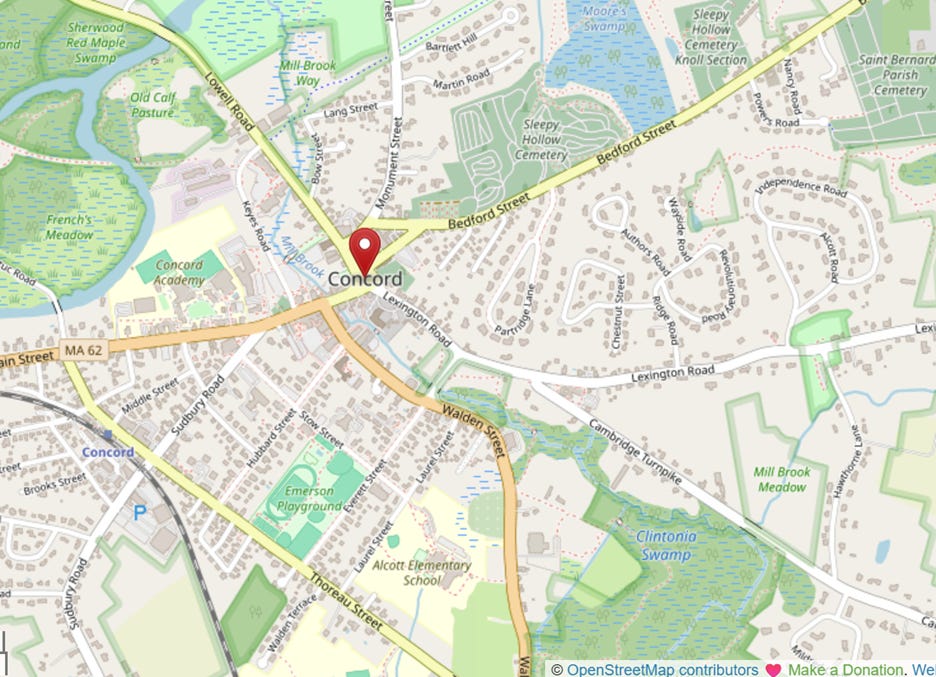
A map of Concord Center. In the north lies Sleepy Hollow Cemetery, where several celebrated writers, poets, and thinkers are buried. From the cemetery, one can look toward downtown Concord. Places such as Alcott Elementary School and Emerson Playground bear the names of two famous authors associated with Concord. Streets such as Thoreau Street and Walden Terrace also recall Henry David Thoreau, whose name and legacy remain closely connected with the town. Composite image based on map data © OpenStreetMap contributors.
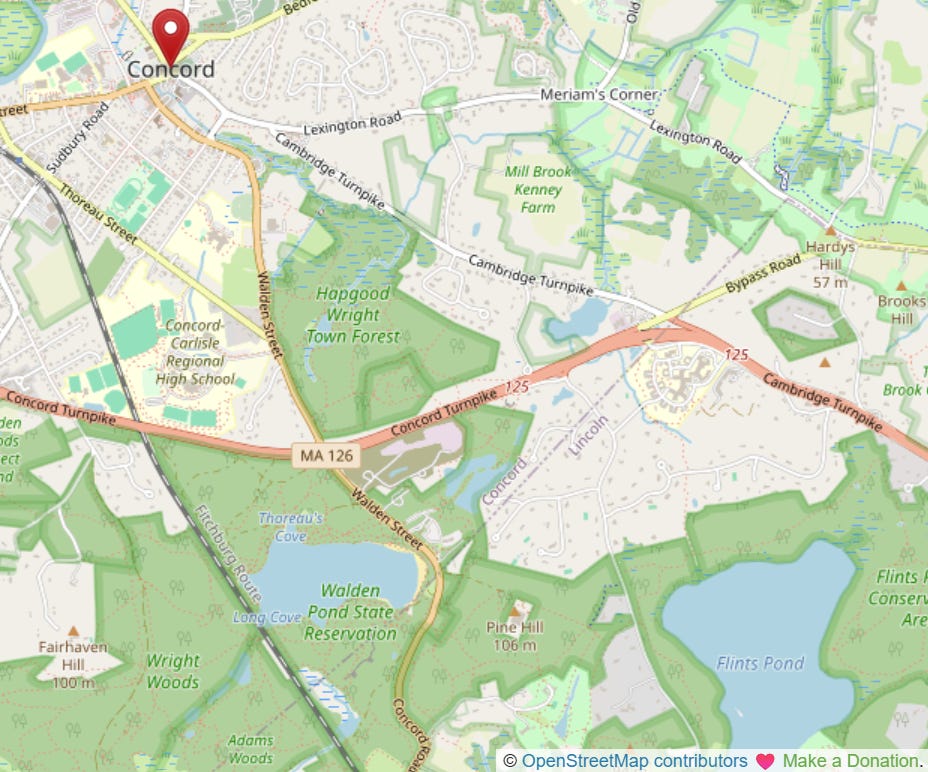
Walden Pond State Reservation is located about 1.5 miles south of Concord Center, Massachusetts. Thoreau’s Cove is located on the northwestern shore of Walden Pond, near the site of Thoreau’s cabin. Walden Street connects Concord Center with Walden Pond, offering a direct route to the reservation. Traffic near the pond can be extremely heavy on busy summer days. However, traffic was light when I drove along the road in late September 2006. Composite image based on map data © OpenStreetMap contributors.
SALEM
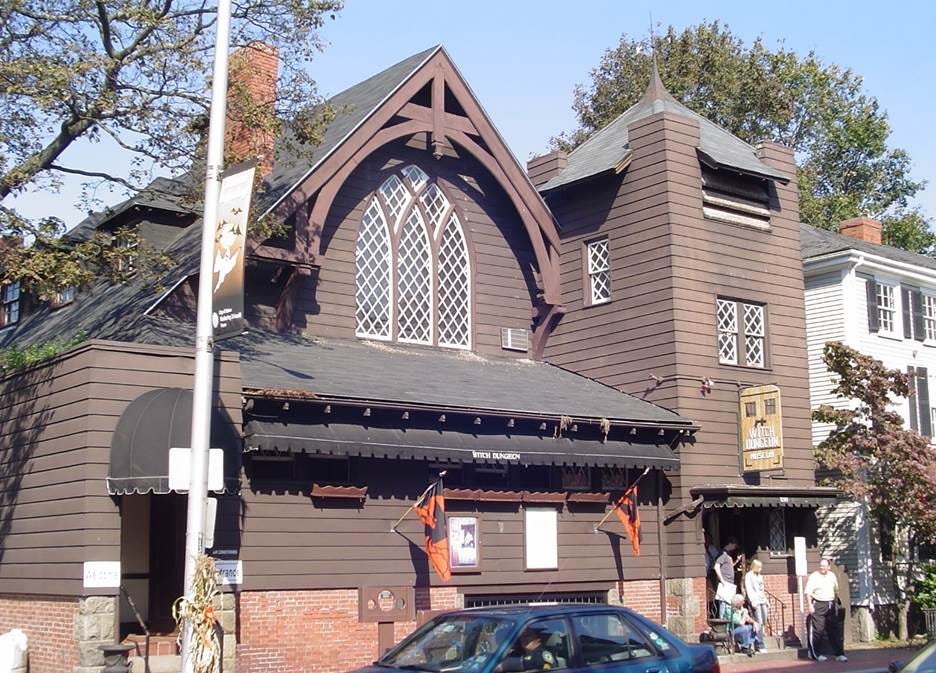
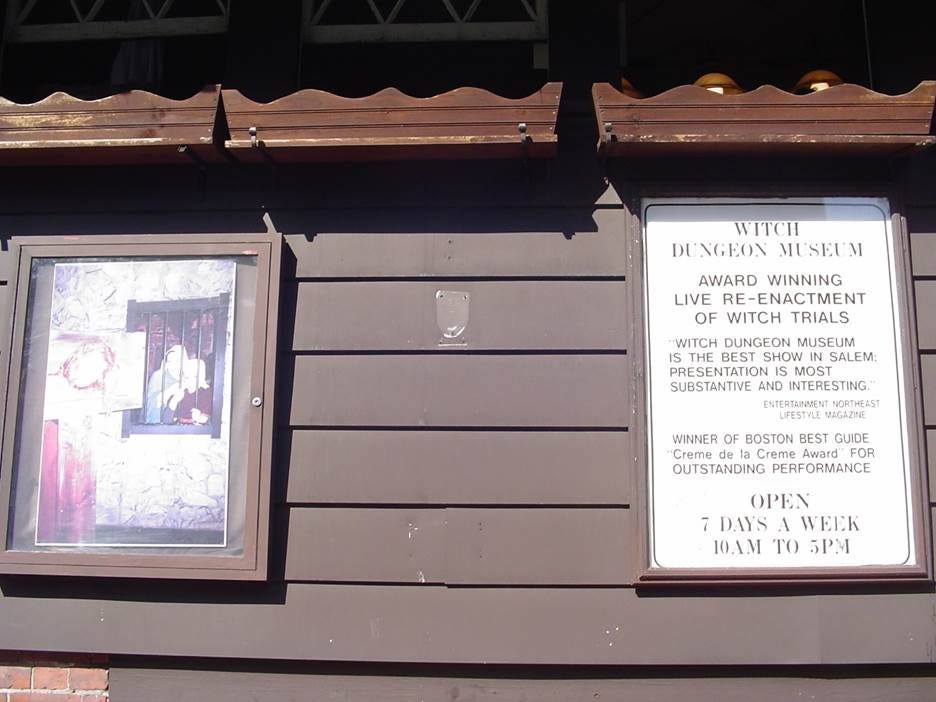
Located near the Witch House, the Salem Witch Dungeon Museum offers live reenactments of the 1692 Salem witch trials and guided tours of a reconstructed dungeon. Visitors can experience the conditions and see the actual size of the prison cells where the accused were held.
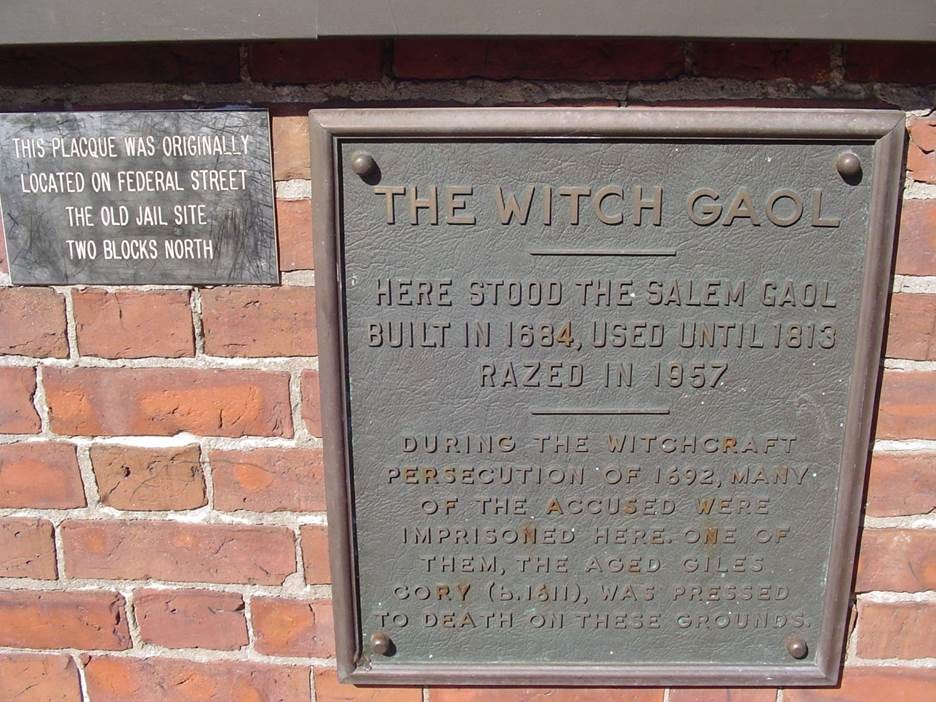
The plaque on the wall reads,
THE WITCH GAOL
Here stood the Salem Gaol built in 1684, used until 1813, [and] razed in 1957. During the witchcraft persecution of 1692, many of the accused were imprisoned here. One of them, the aged Giles [Corey] (b. 1611), was pressed to death on these grounds.
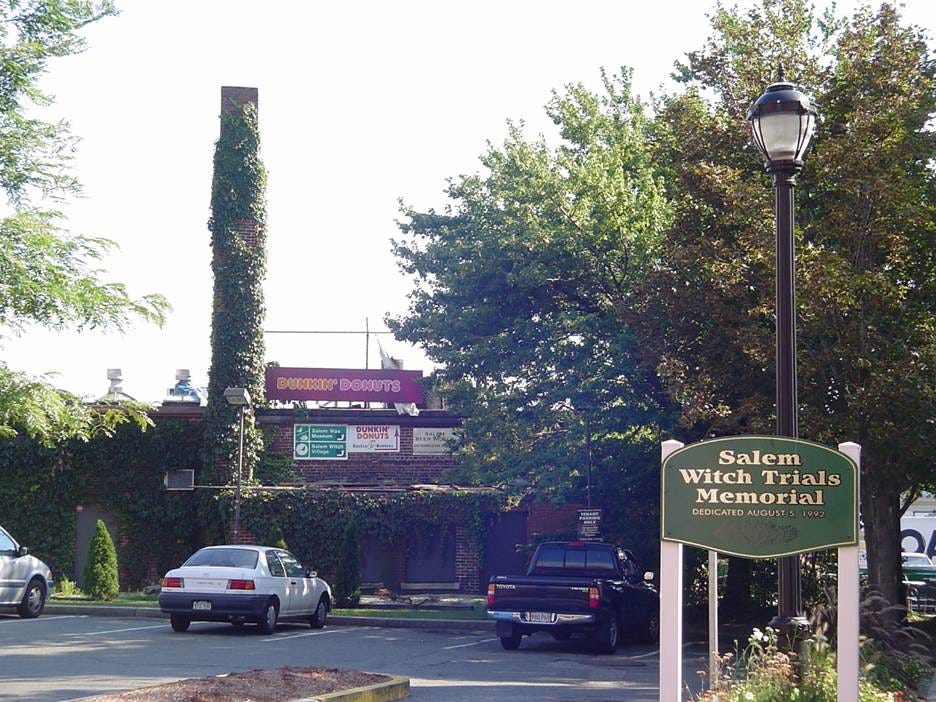
Salem’s Witch Trials Memorial honors the 20 victims of the witch trials of 1692 with granite walls, benches bearing their names, and words of the accused, symbolically cut short.
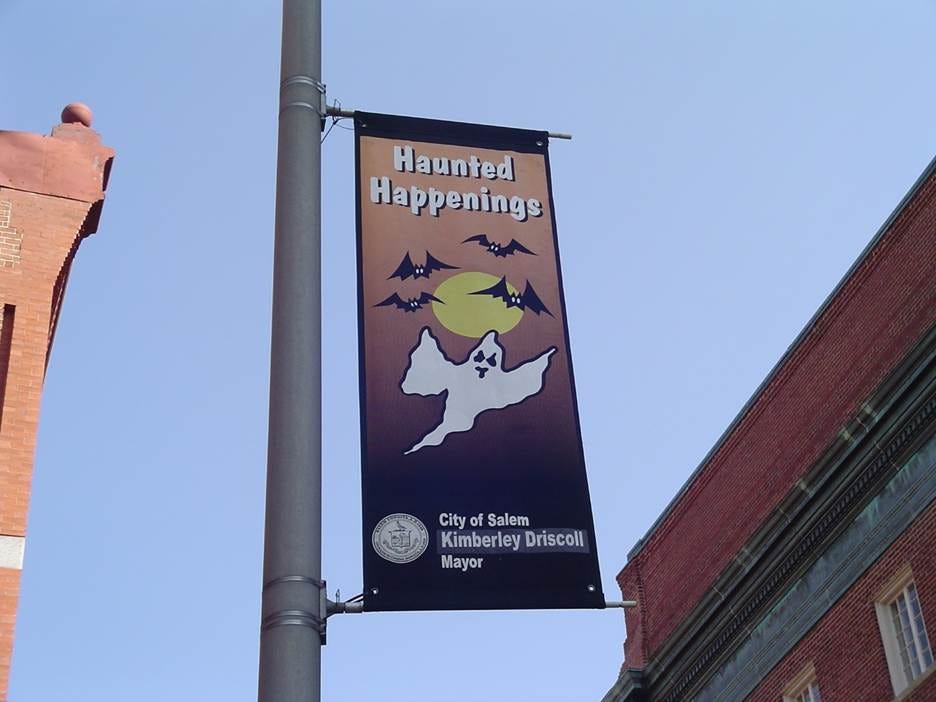
A street banner in Salem titled “Haunted Happenings” reflects the city’s enduring cultural association with the witch trials of the late seventeenth century.
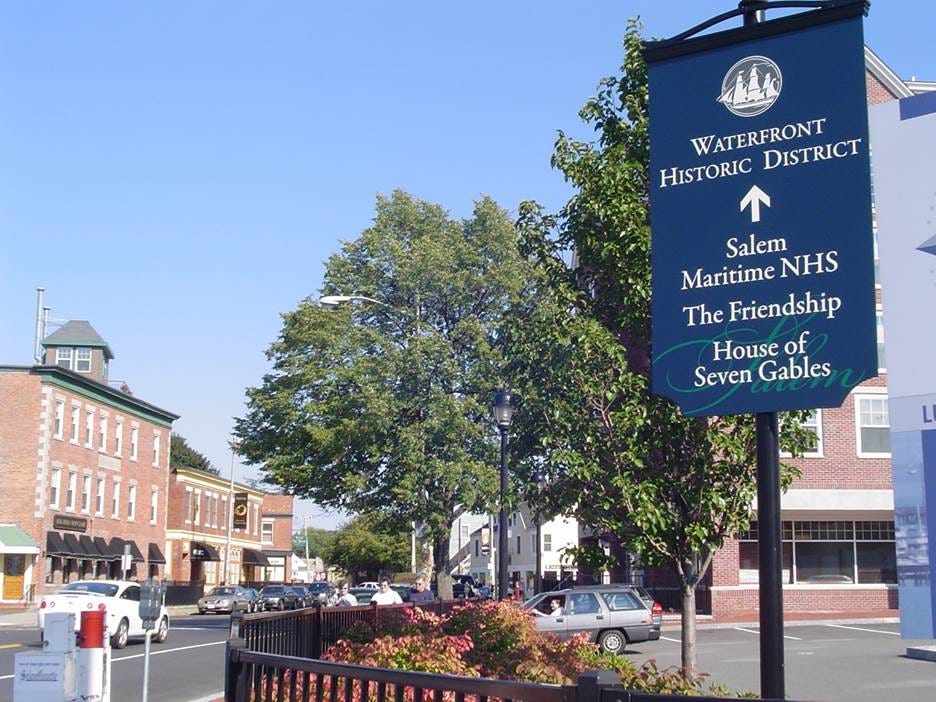
A street sign points the way to the House of the Seven Gables, one of Salem’s best-known landmarks.
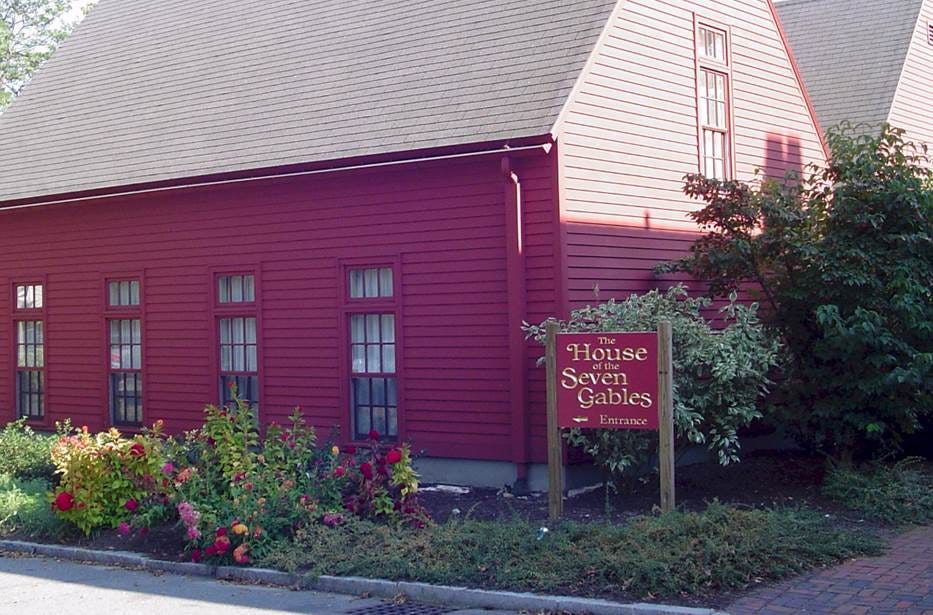
The House of the Seven Gables is a Georgian-style mansion in Salem. The oldest surviving mansion in New England, it was built in 1668 and features a secret staircase. This building inspired Hawthorne to write his famous romance The House of the Seven Gables (1851). Chapter One of the novel begins with this paragraph:
Halfway down a by-street of one of our New England towns stands a rusty wooden house, with seven acutely peaked gables, facing towards various points of the compass, and a huge, clustered chimney in the midst. The street is Pyncheon Street; the house is the old Pyncheon House; and an elm-tree, of wide circumference, rooted before the door, is familiar to every town-born child by the title of the Pyncheon Elm. On my occasional visits to the town aforesaid, I seldom failed to turn down Pyncheon Street, for the sake of passing through the shadow of these two antiquities,—the great elm-tree and the weather-beaten edifice.
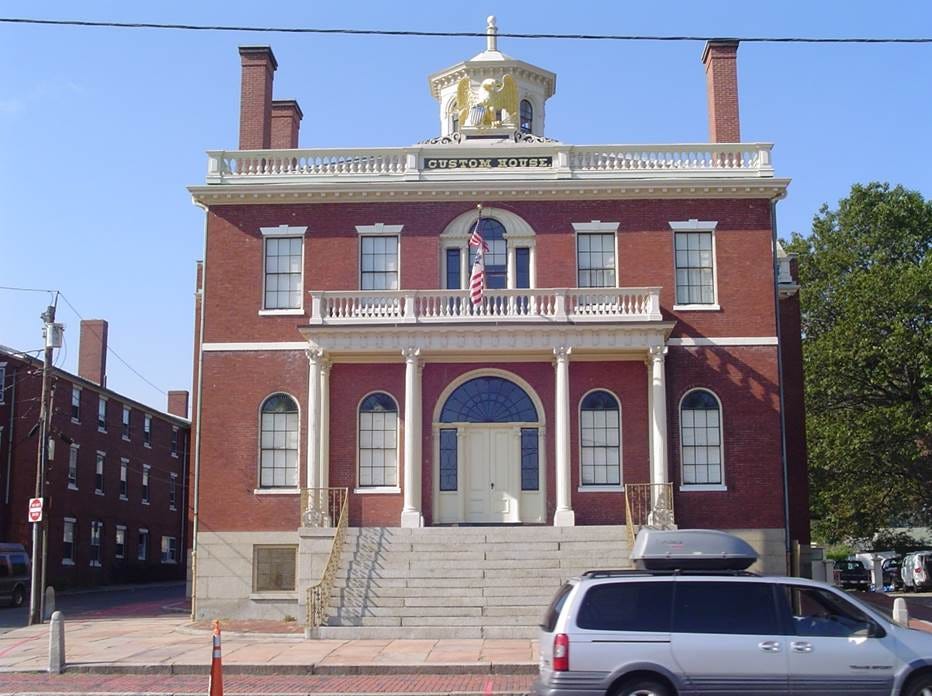
The Salem Custom House, constructed in 1818, was where Nathaniel Hawthorne served as surveyor. This historic building collected between 8 and 12 percent of the nation’s revenues in the early nineteenth century. Its role in his life inspired “The Custom-House,” the introductory chapter of The Scarlet Letter (1850). In the first two paragraphs of the chapter, Hawthorne explains that he is using “The Custom-House” to introduce himself and describe his three years working there. Although he normally avoids talking about himself, he feels justified in sharing this experience because he imagines a sympathetic reader listening to him. He also presents himself primarily as an editor, rather than the author, of the story that follows. He claims that the Custom-House sketch helps explain how he came into possession of the narrative and provides some evidence of its authenticity. At the same time, the autobiographical introduction allows him to portray the people, setting, and way of life surrounding the Custom-House.
CONCORD
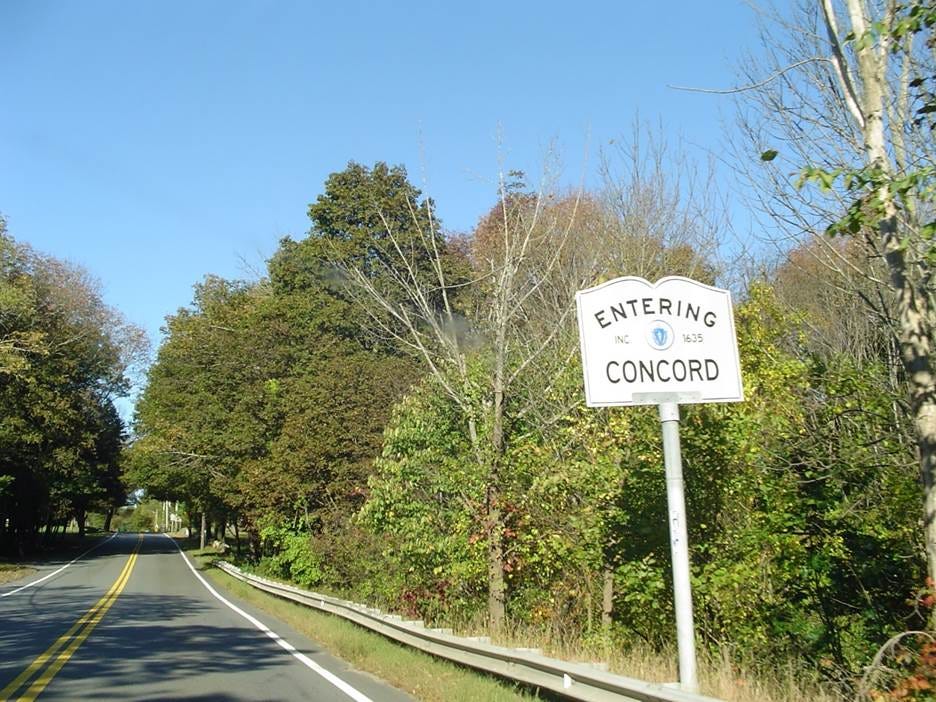
I am entering Concord, a town of about 18,500 people, located 20 miles northwest of Boston. The street sign notes that the town was incorporated in 1635.
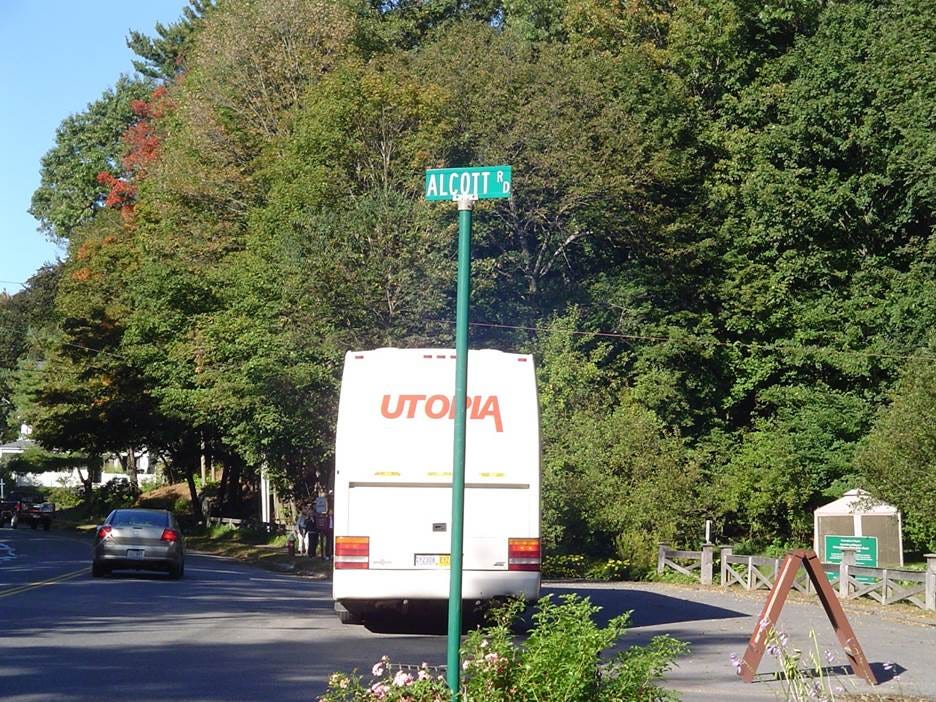
I have reached Alcott Road, named after Louisa May Alcott (1832–88), the novelist and short story writer best known for Little Women (1868).
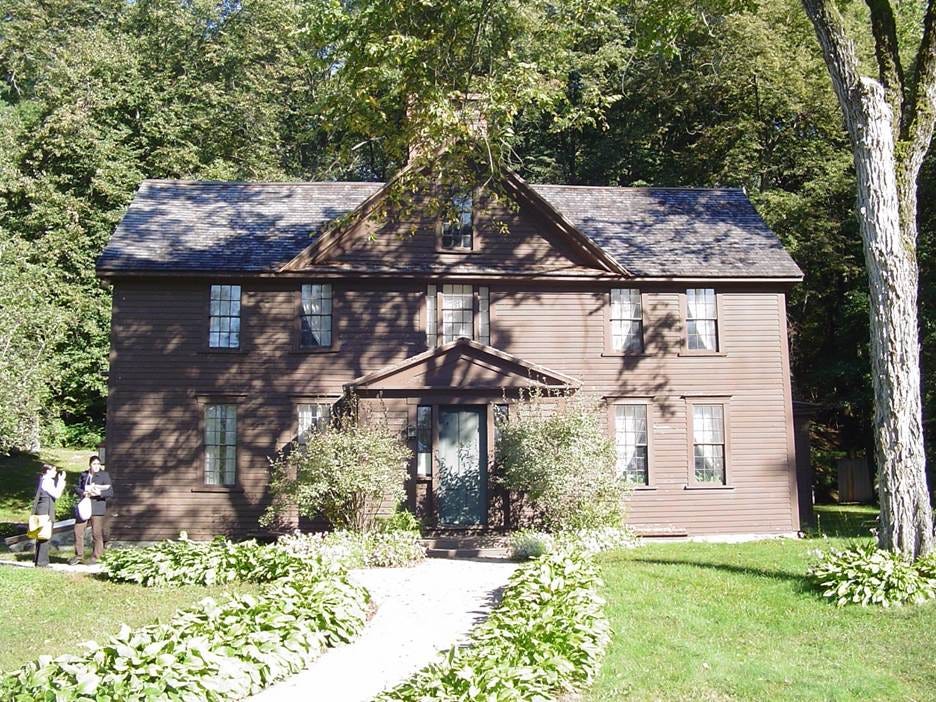
Louisa May Alcott’s Orchard House, located at 399 Lexington Road, was the Alcott family home. Each October, the Louisa May Alcott 5K Walk/10K Run is held to benefit Orchard House.
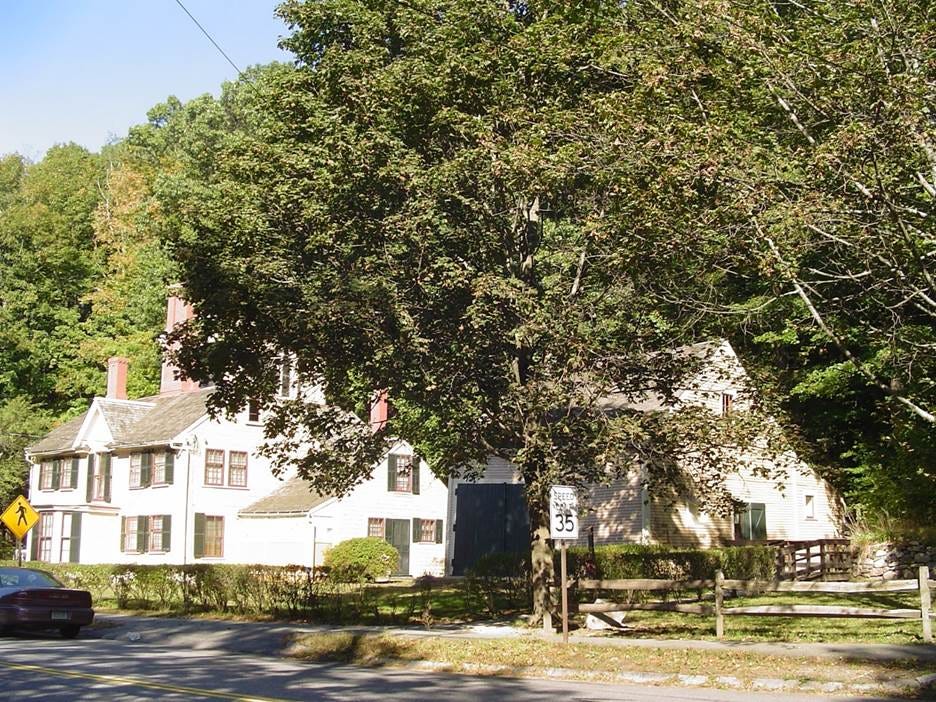
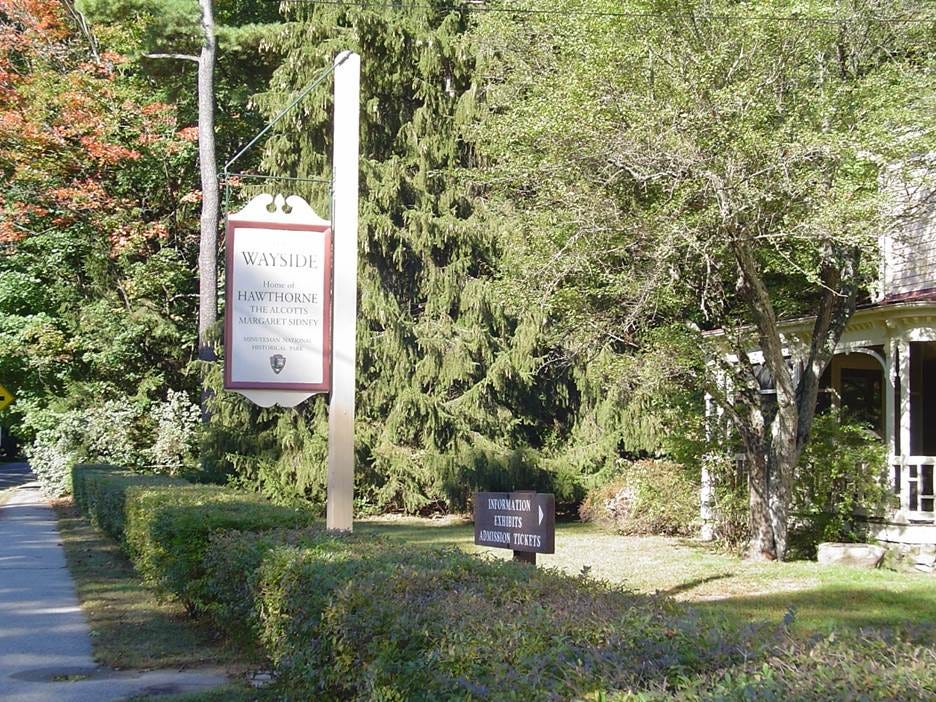
The Wayside, at 455 Lexington Road in Concord, is just a block from Louisa May Alcott’s Orchard House. This historic residence was home to three celebrated authors—Louisa May Alcott, Nathaniel Hawthorne, and Margaret Sidney. Hawthorne wrote some of his fiction here during his years in Concord.
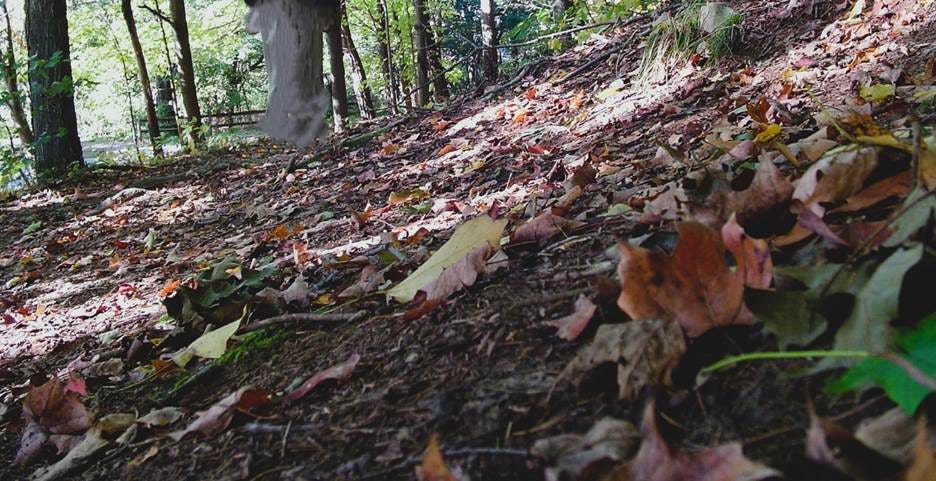
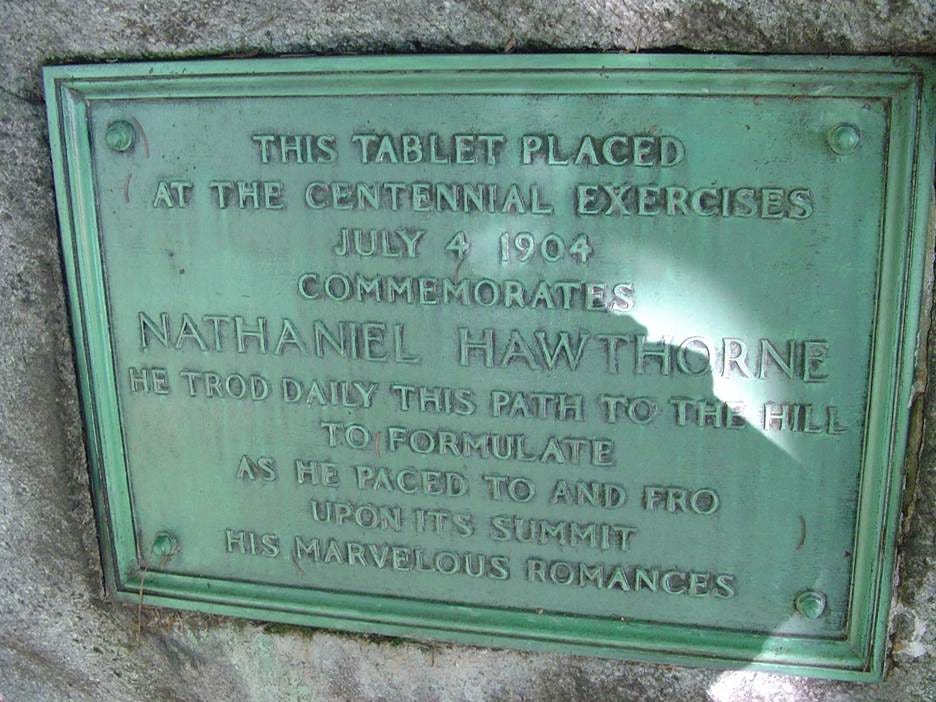
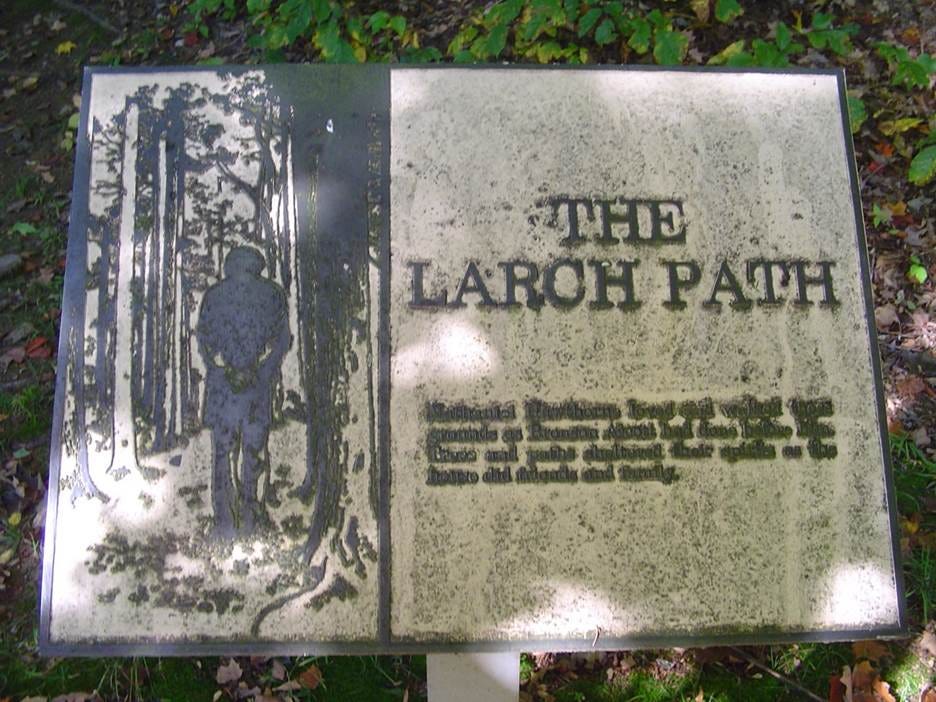
Alongside The Wayside is the Larch Path, a gentle, wooded slope where Nathaniel Hawthorne often strolled and found inspiration for his writing. The quiet path offers a glimpse of the natural surroundings that shaped his imagination during his years in Concord.
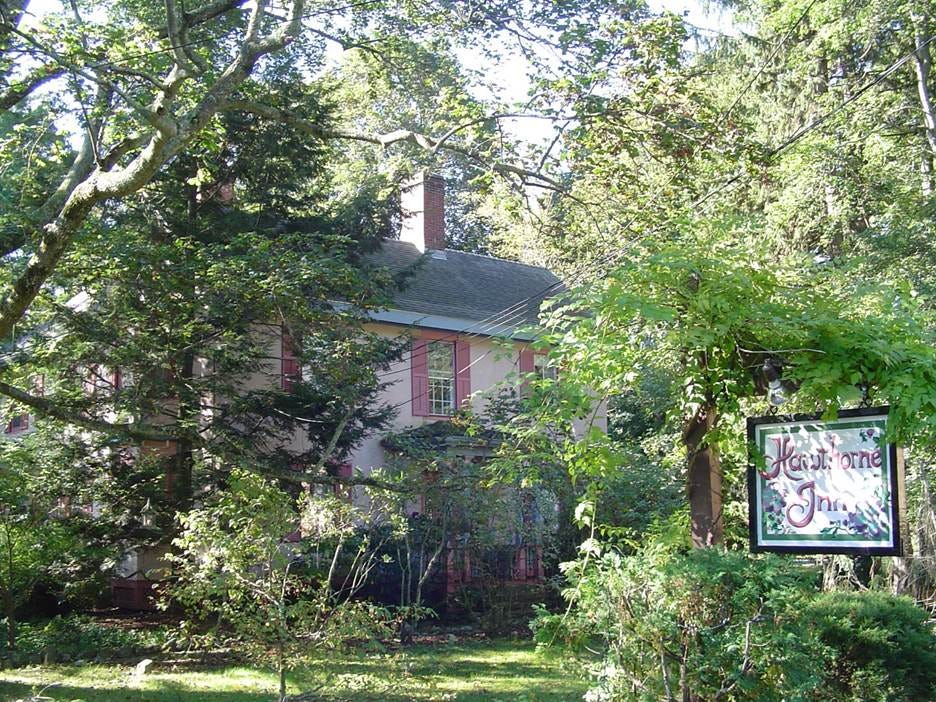
Hawthorne Inn in Concord.
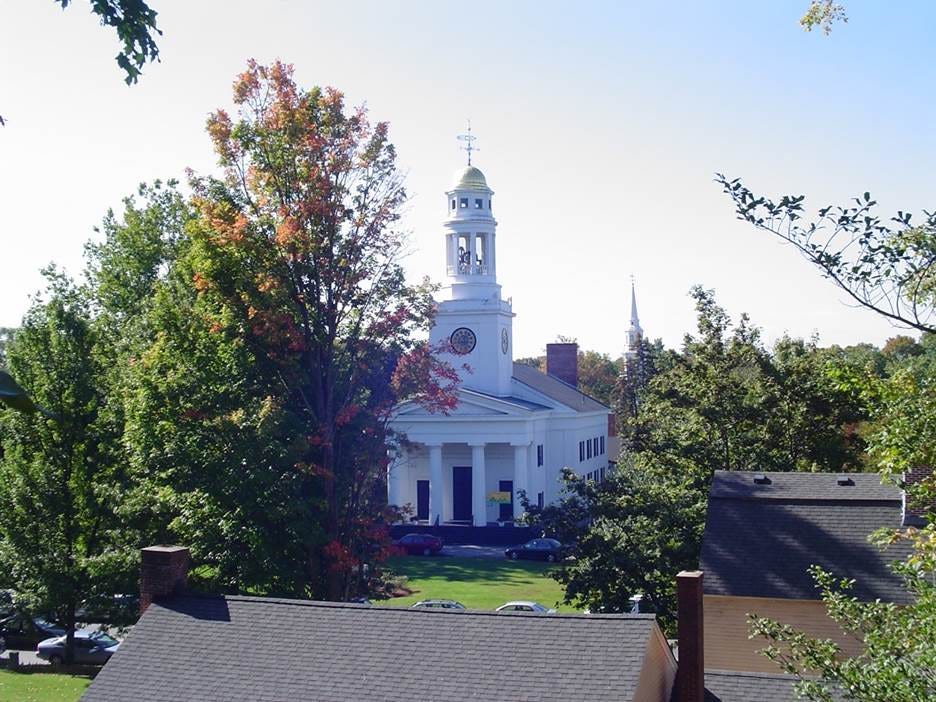
A southward view of downtown Concord from the low hill immediately north of the town center.
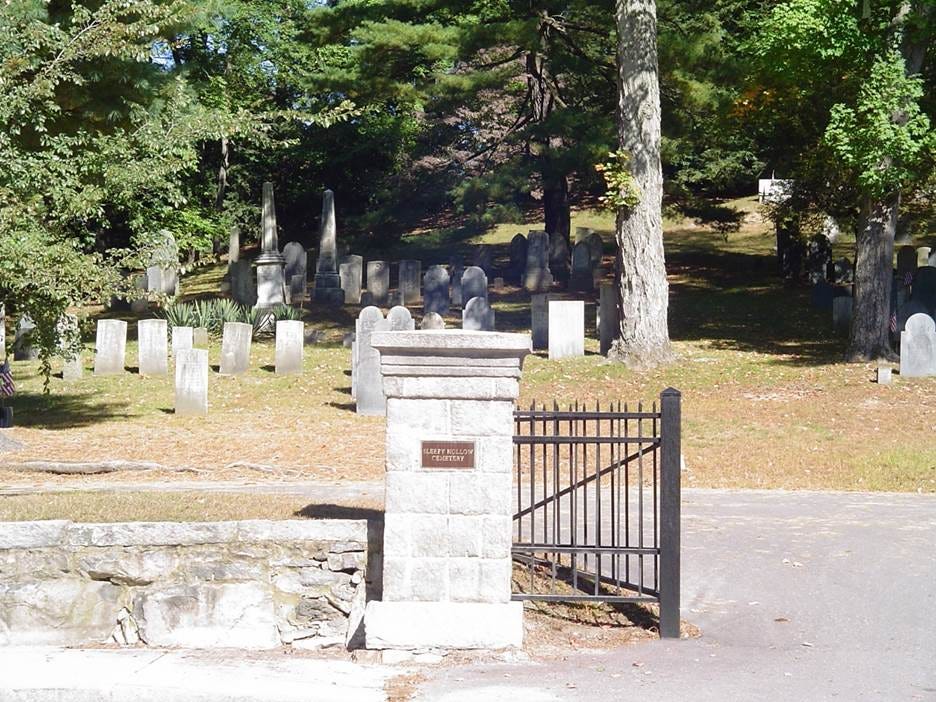
The entrance to Sleepy Hollow Cemetery. Located on Bedford Street, Concord, this historic cemetery is the final resting place for more than 10,000 people. Its most famous section, Authors Ridge, lies on the northeastern side of the cemetery and contains the graves of Henry David Thoreau (1817-62), Nathaniel Hawthorne (1804-64), Ralph Waldo Emerson (1803-82), Louisa May Alcott (1832–88), and Margaret Sidney (the pseudonym of Harriett Lothrop, 1844-1924).
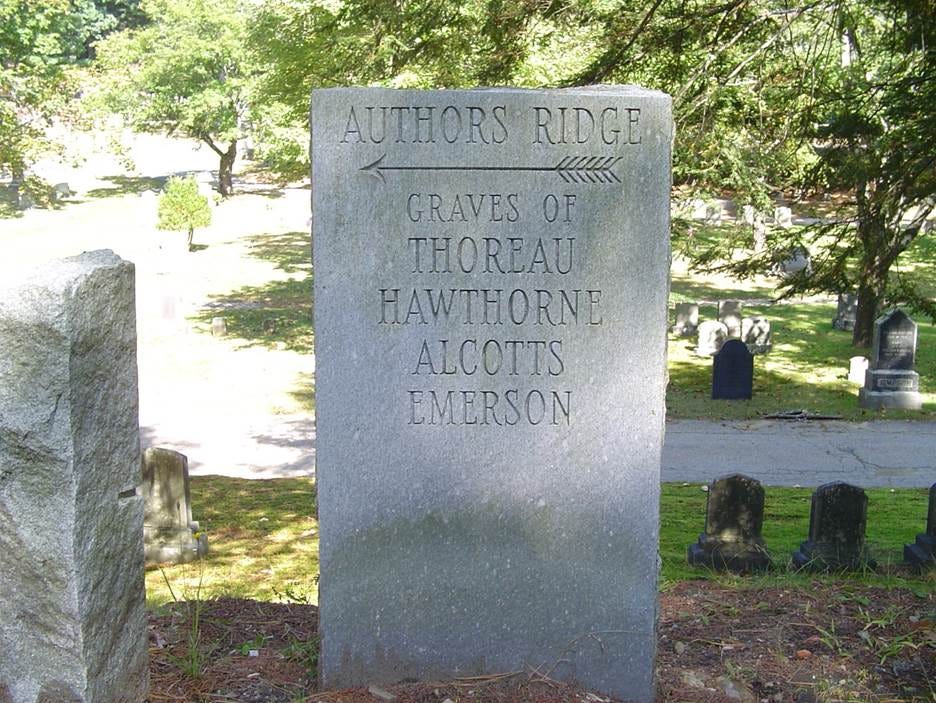
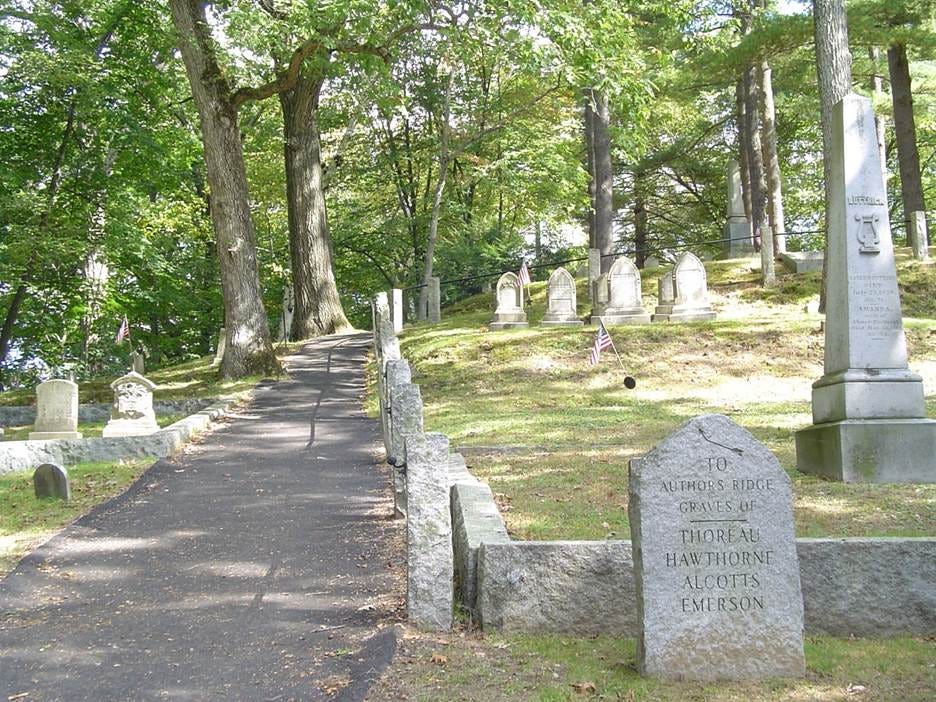
Two stone markers at Sleepy Hollow Cemetery point to the “Authors Ridge,” where Emerson, Hawthorne, Alcott, and Emerson are buried.
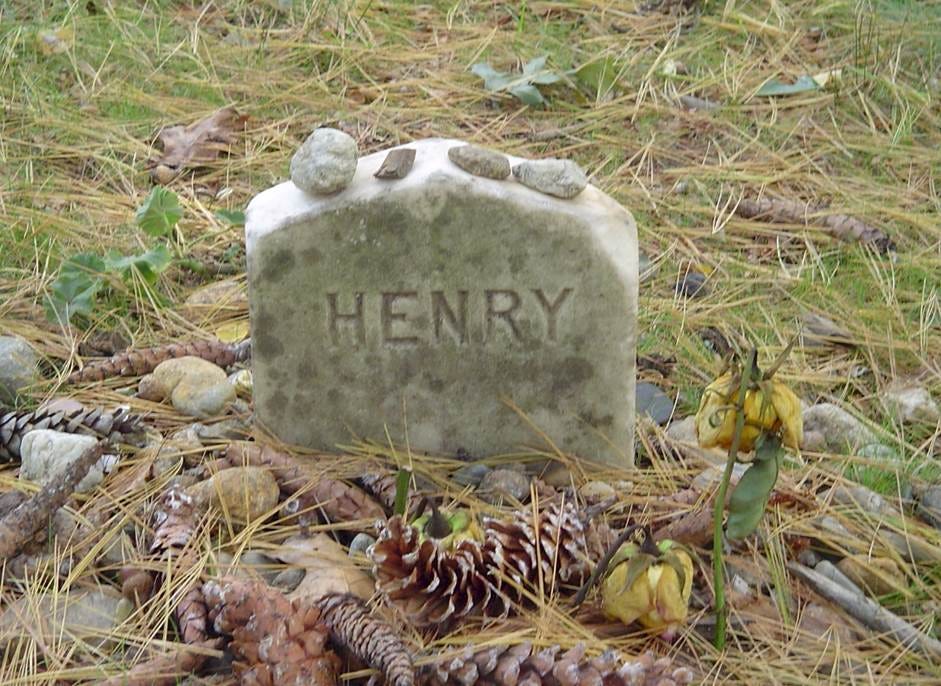
Henry David Thoreau’s tombstone at Sleepy Hollow Cemetery in Concord. It is in the Authors Ridge section of the cemetery.
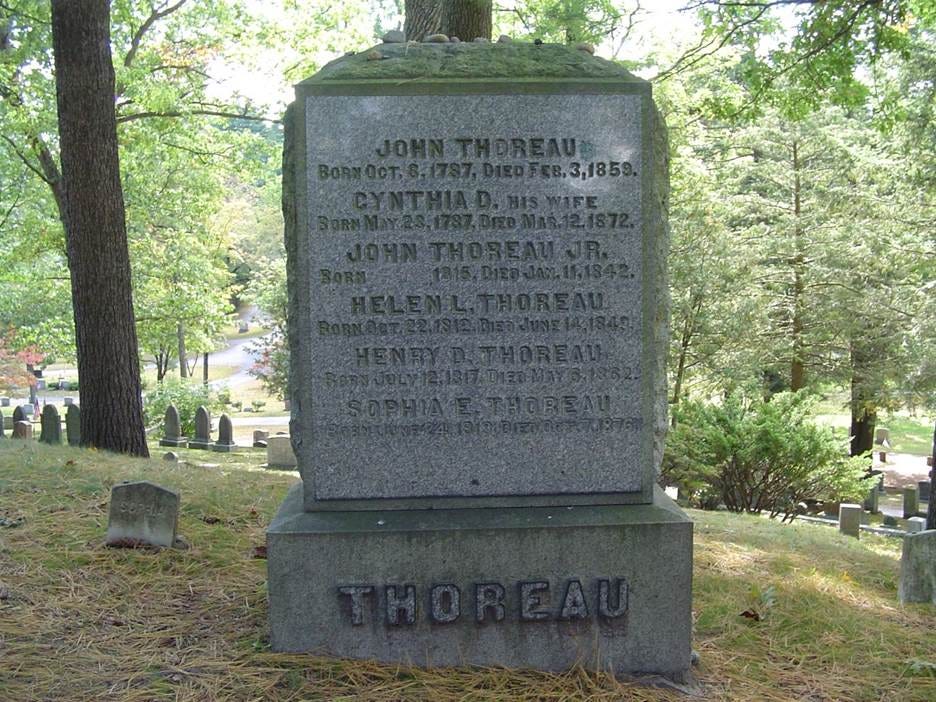
The Thoreau family gravesite at Sleepy Hollow Cemetery. Six names are engraved on the large stone in the center. Henry David Thoreau is the fifth name.
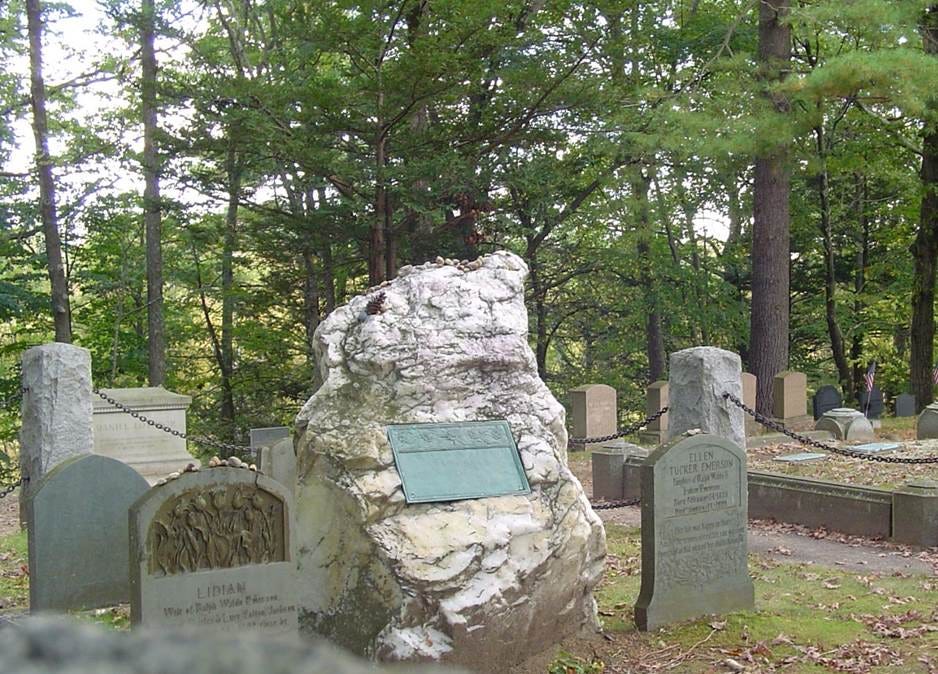
The Emerson family gravesite at Sleepy Hollow Cemetery.
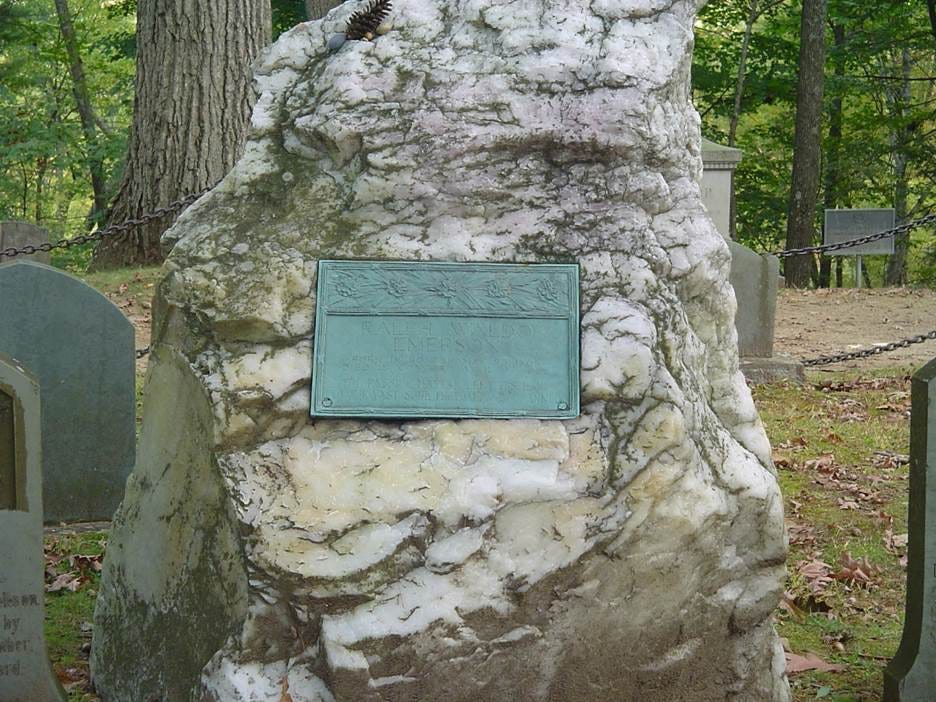
Ralph Waldo Emerson’s gravestone is larger than many others at Sleepy Hollow Cemetery.
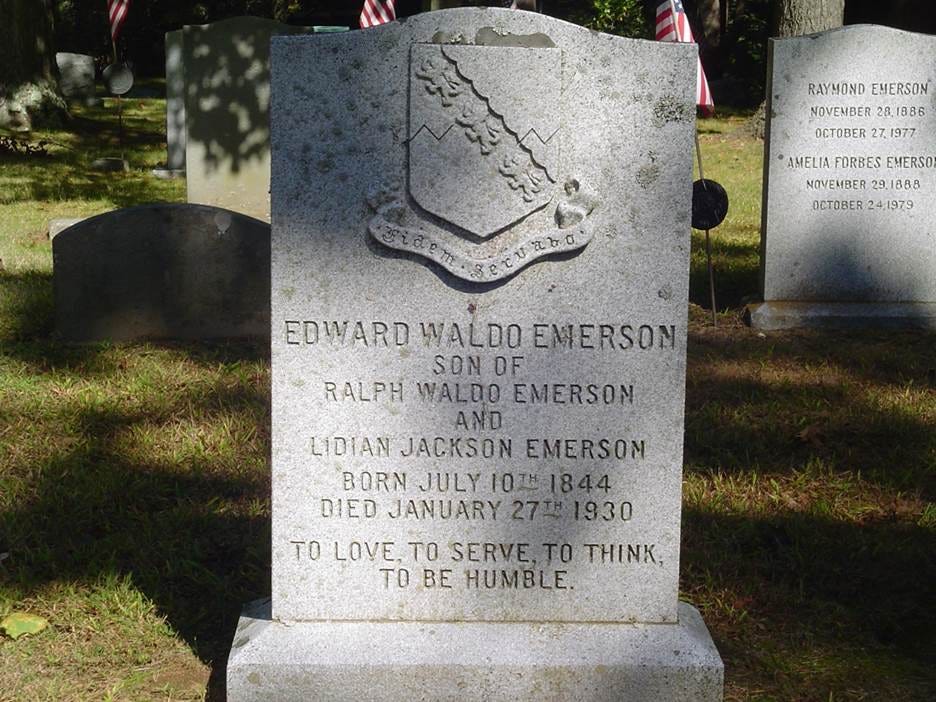
The Emerson family gravesite includes a stone commemorating Emerson’s son, Edward Waldo Emerson (1844–1930).
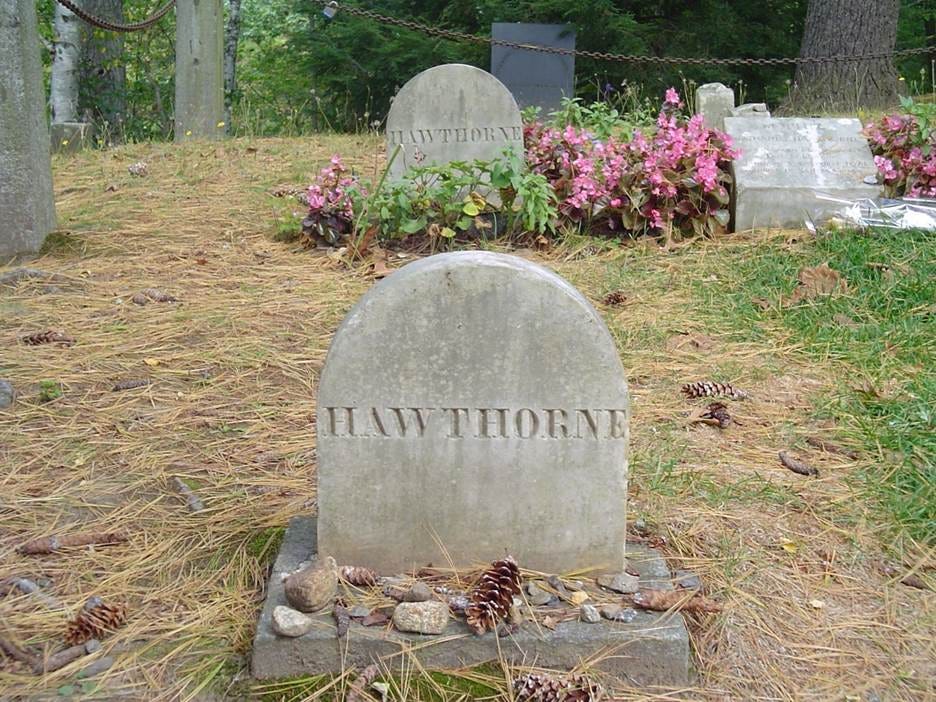
Nathaniel Hawthorne’s gravestone bears only his last name.
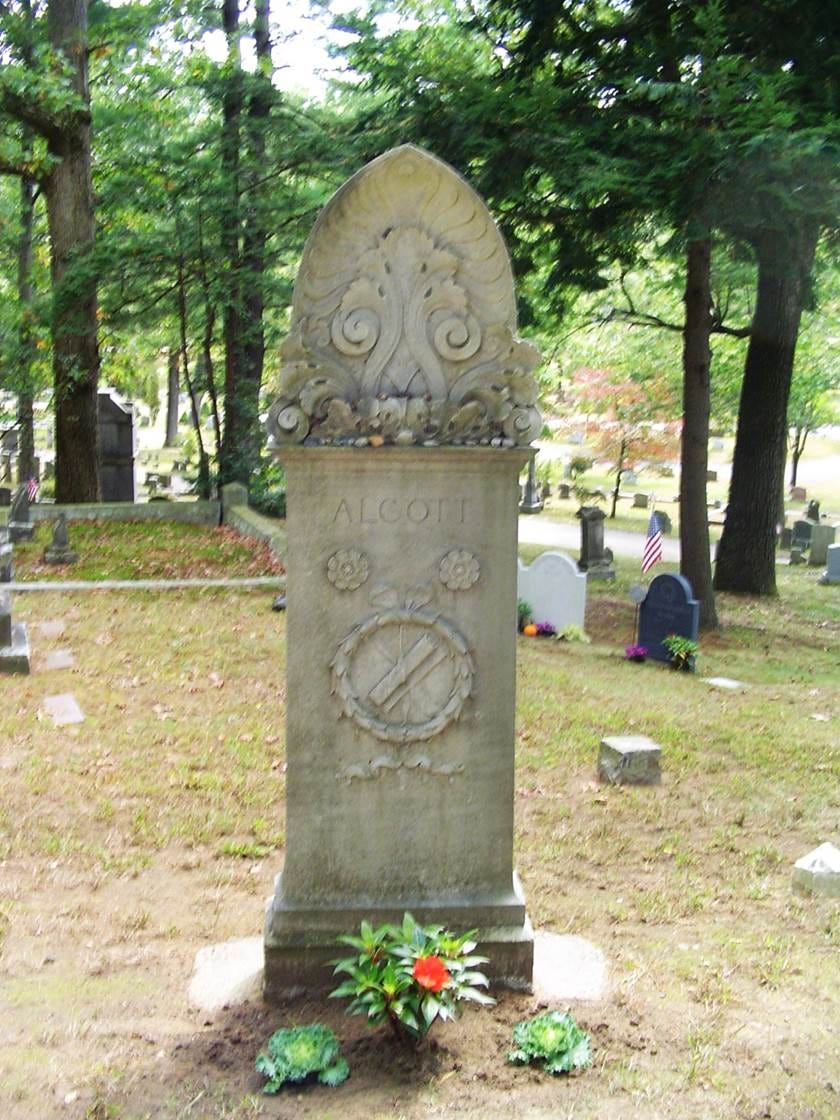
The gravestone of Louisa May Alcott, a novelist, short story writer, and poet. She wrote some books anonymously and others under a pseudonym, but she is best known for Little Women (1868) and its three sequels. Raised in a Transcendentalist family in New England, Alcott grew up among prominent thinkers and writers, such as Emerson, Hawthorne, and Thoreau.
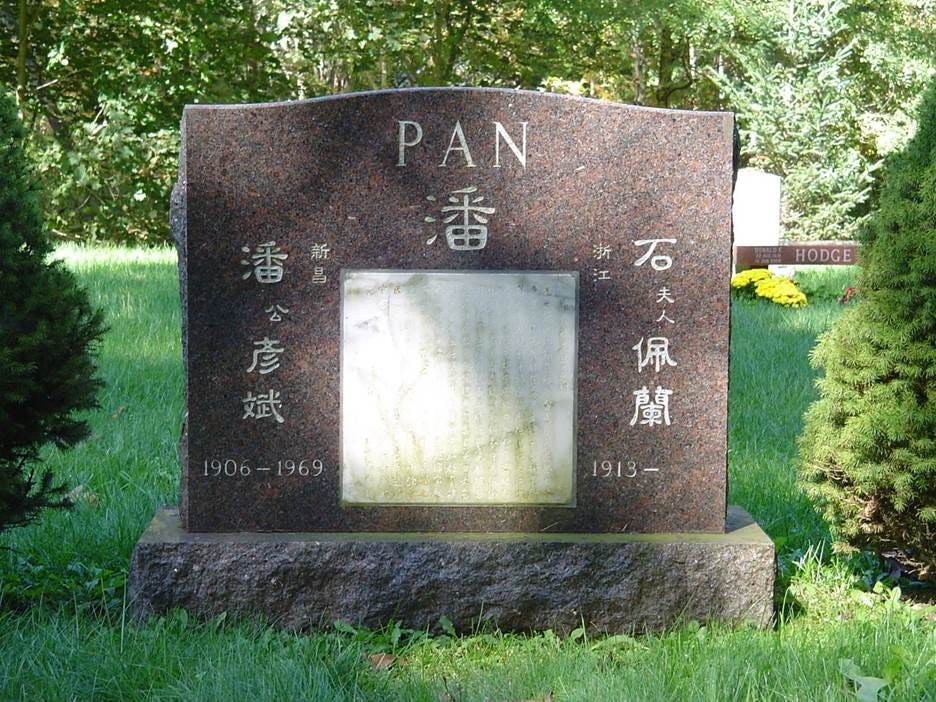
Sleepy Hollow Cemetery is vast, so it took me more than an hour to stroll through the entire cemetery. It was meaningful to see the gravestones of some well-known historical figures, yet the most memorable one for me bore the names of a Chinese couple. The husband’s surname was Pan (Ban in Korean), and his wife’s surname was Shi (Seok in Korean). The husband died in 1969, while the wife was still alive when I visited in 2006. Their attractive gravestone was surrounded by stones bearing predominantly English names. I wondered how this Chinese couple had drifted to New England of all places, rather than to San Francisco or New York, where there are well-established Chinese communities. I lingered at the gravesite for a while, and later I composed a poem about the experience:
On the Plateau: West Plains, Missouri
(A tanka prose)
Despite what its name implies, West Plains is near the heart of the Ozark Mountains, not in the flatlands. The city itself looks relatively flat, but it is surrounded by hills, and its elevation is around 1,000 feet. West Plains is in Howell County, approximately 20 miles from the Arkansas border. Country singers Porter Wagoner (1927–2007) and Jan Howard (1929–2020) were born here. U.S. Route 63 Business is called Porter Wagoner Boulevard in West Plains, and the Harlin Museum of West Plains displays some of his personal memorabilia, including a guitar. Whenever I visit West Plains for the annual Ozarks Studies Symposium, I stay at the West Plains Motel along the boulevard. The motel is reasonably priced, close to the conference site, and the manager is hospitable. West Plains is predominantly white, but one year I noticed the Korean surname Kim displayed in front of a small clinic. I was surprised to learn that a Korean doctor had somehow drifted to this remote place.
Sleepy Hollow Cemetery
amid thousands of
English names
one gravestone bears
Chinese names
[Published in Grist 2023: Anthology of Missouri State Poetry Society, p. 25]
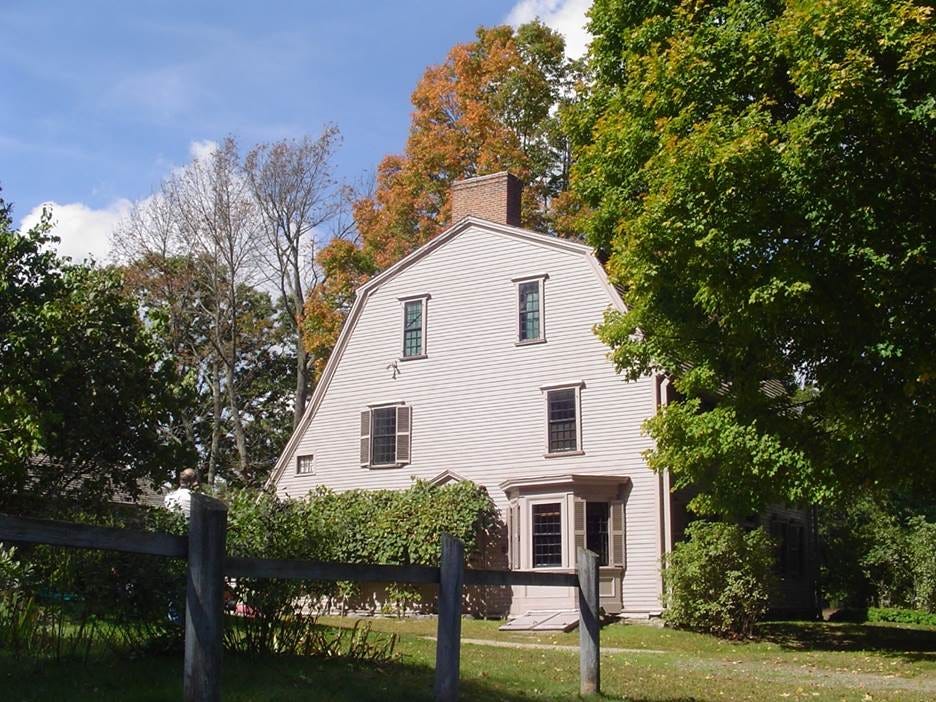
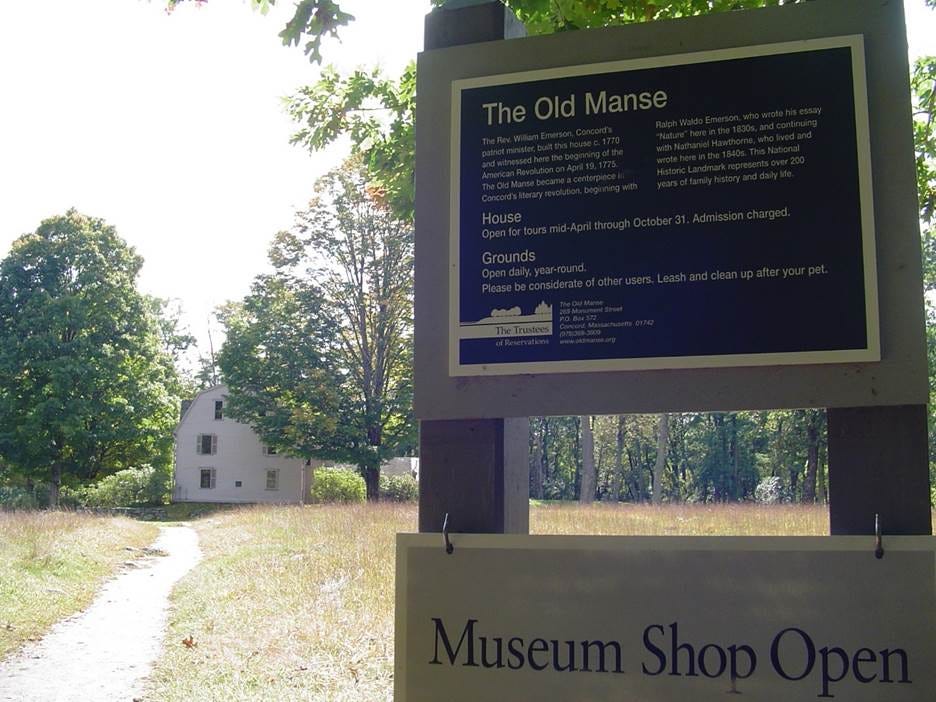
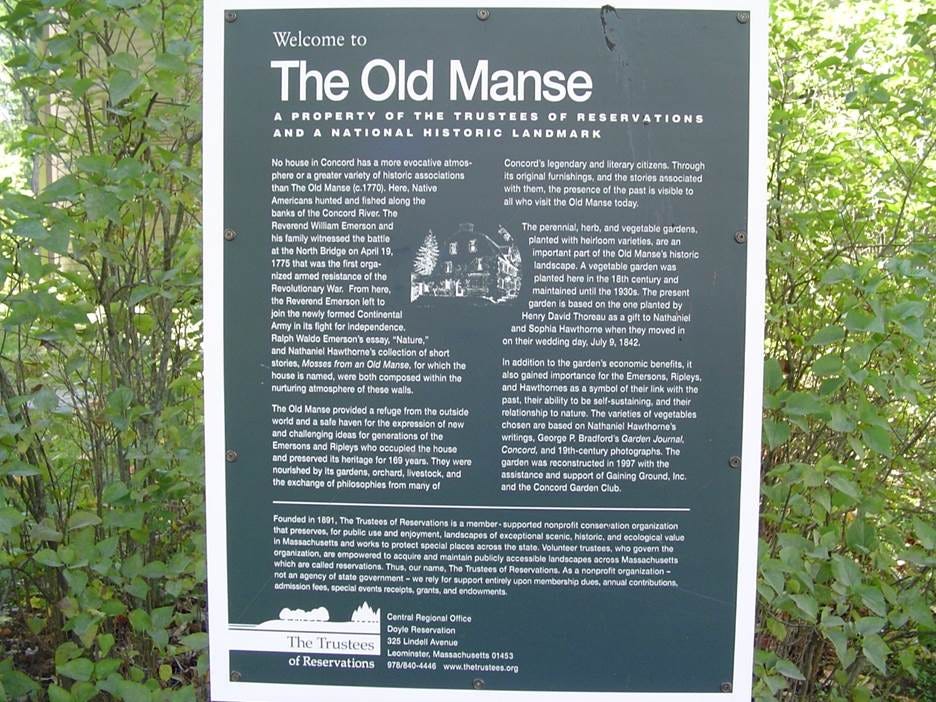
The Old Manse: Built around 1770 by Emerson’s grandfather, this historic house was later home to both Ralph Waldo Emerson and Nathaniel Hawthorne. On the southeastern side lies a garden modeled after the one Thoreau planted as a wedding gift for the Hawthornes. It stands at 269 Monument Street.
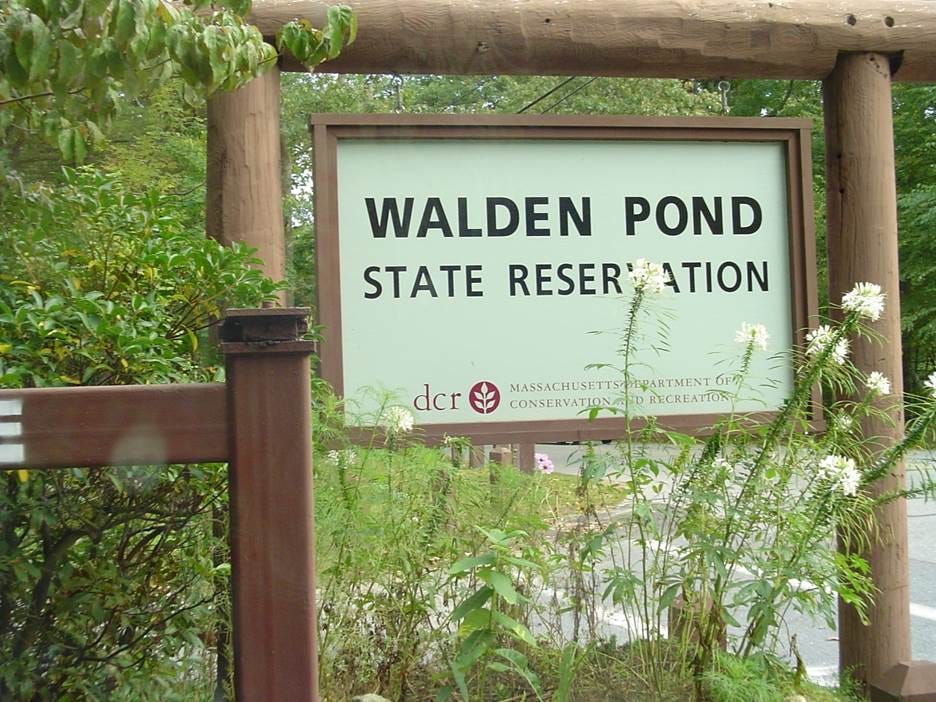
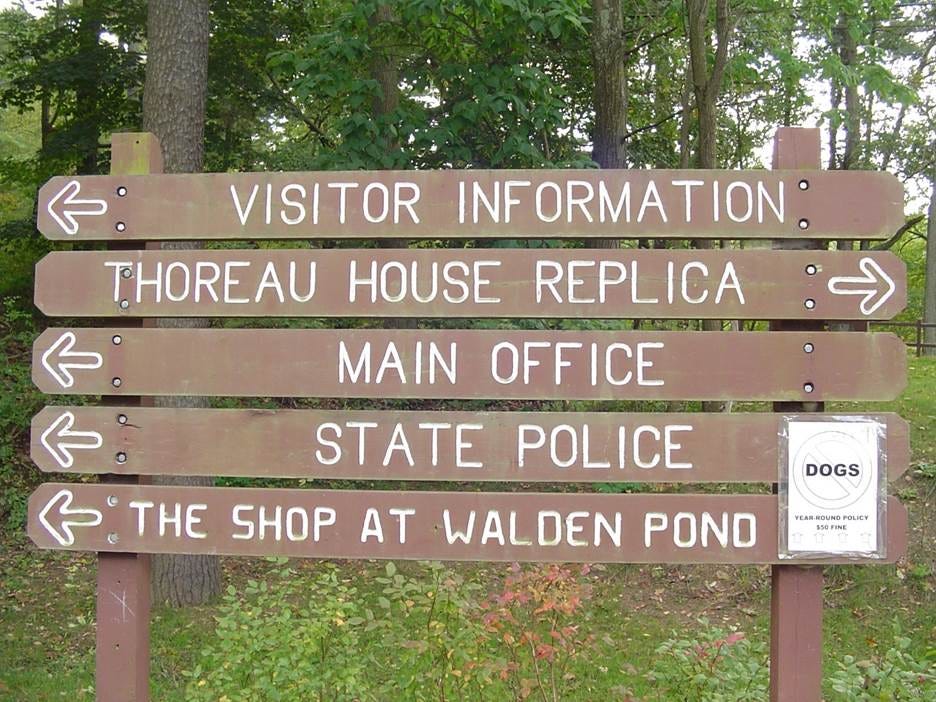
Walden Pond State Reservation: Henry David Thoreau—transcendentalist, pacifist, and author of Civil Disobedience (1849) and Walden; or, Life in the Woods (1854)—built and lived in a one-room cabin on the northeastern side of this pond. Although the original cabin no longer exists, stone markers indicate where it once stood. Near the parking lot, visitors can see a replica of the cabin and a statue of Thoreau. The pond is located at 915 Walden Street (Route 126), and an admission fee is charged.
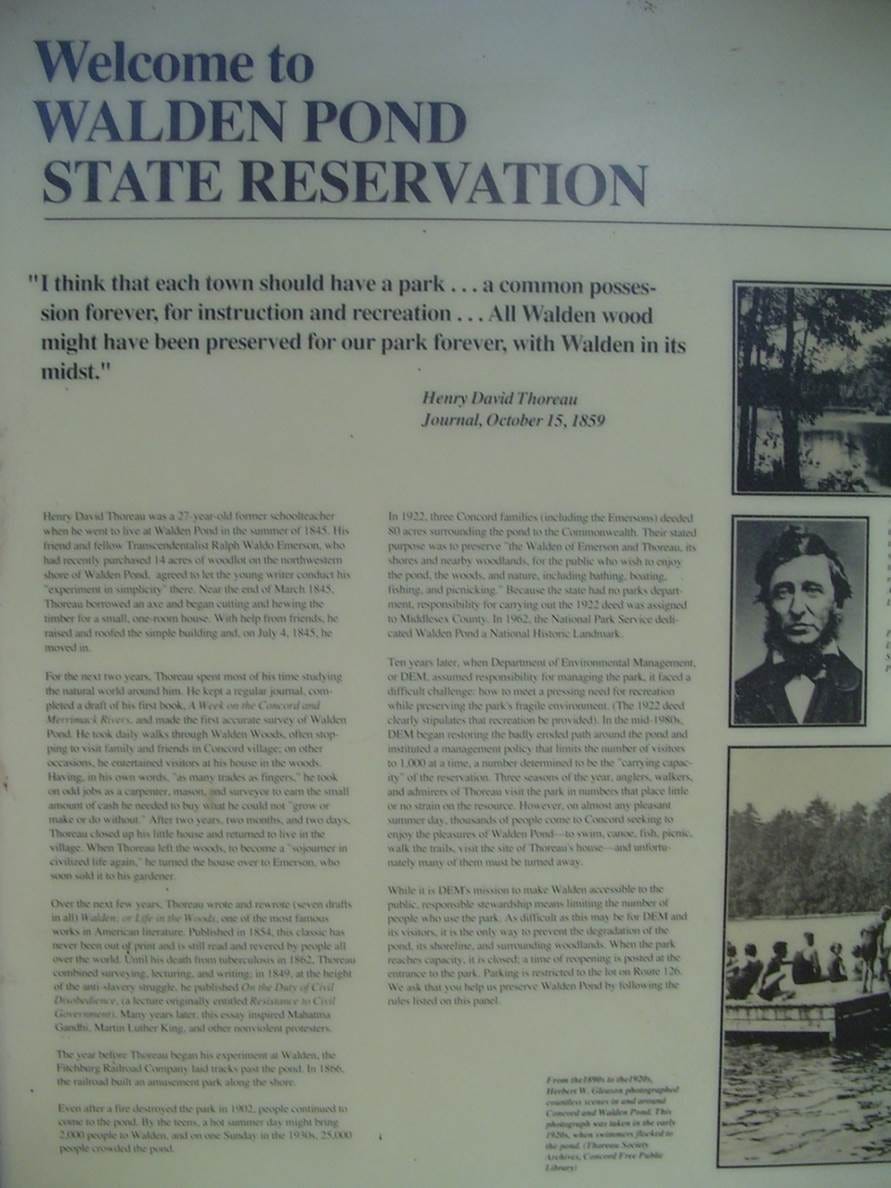
An informational panel at the entrance to Walden Pond State Reservation, Concord, describes Thoreau’s life and his connection to Walden Pond and the surrounding woods.
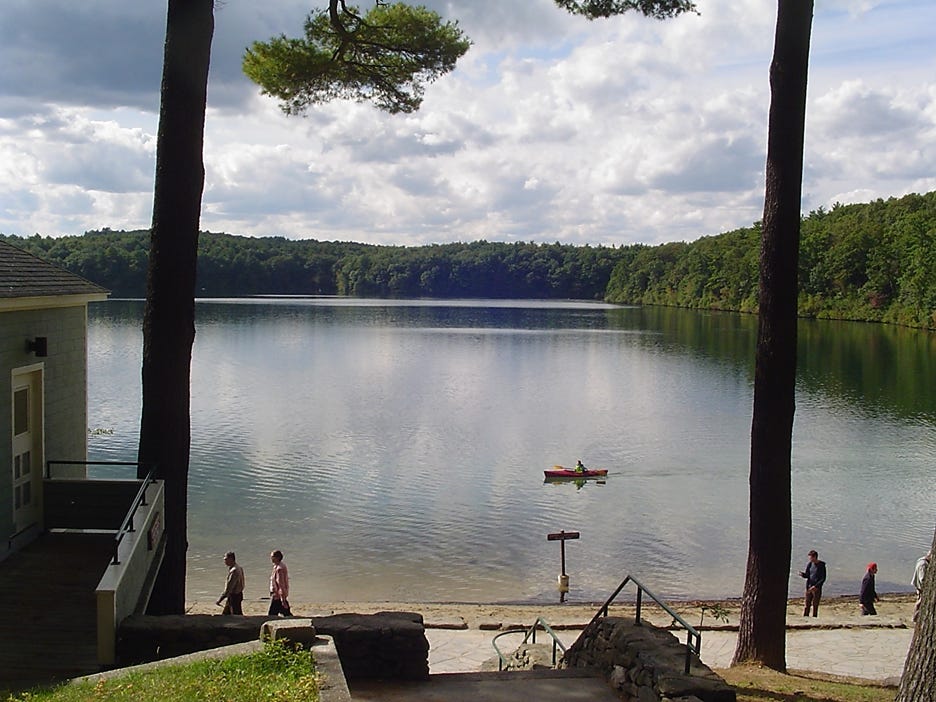
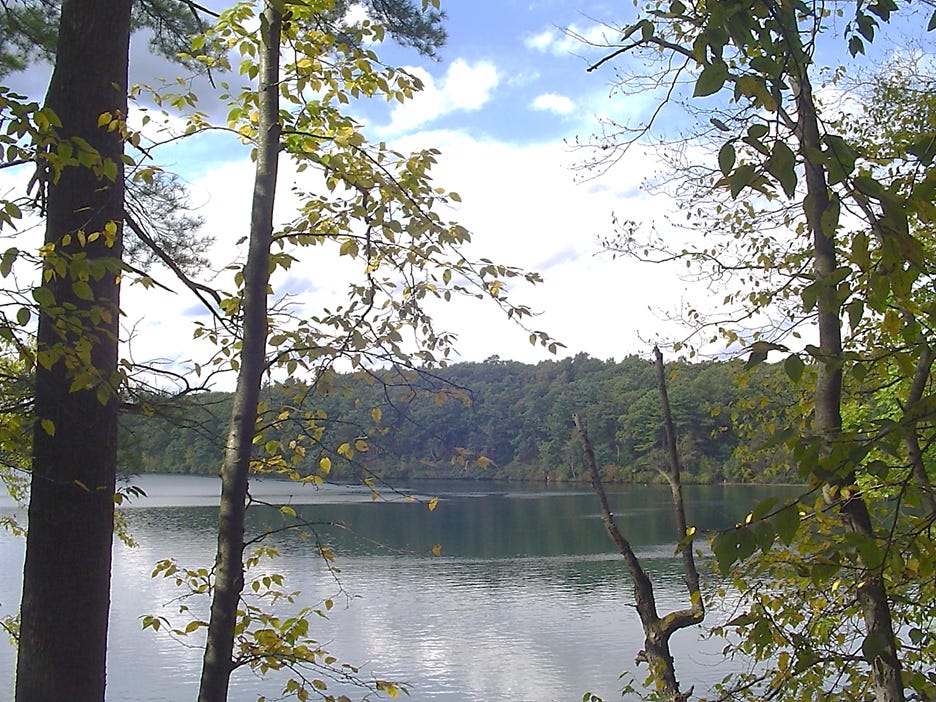
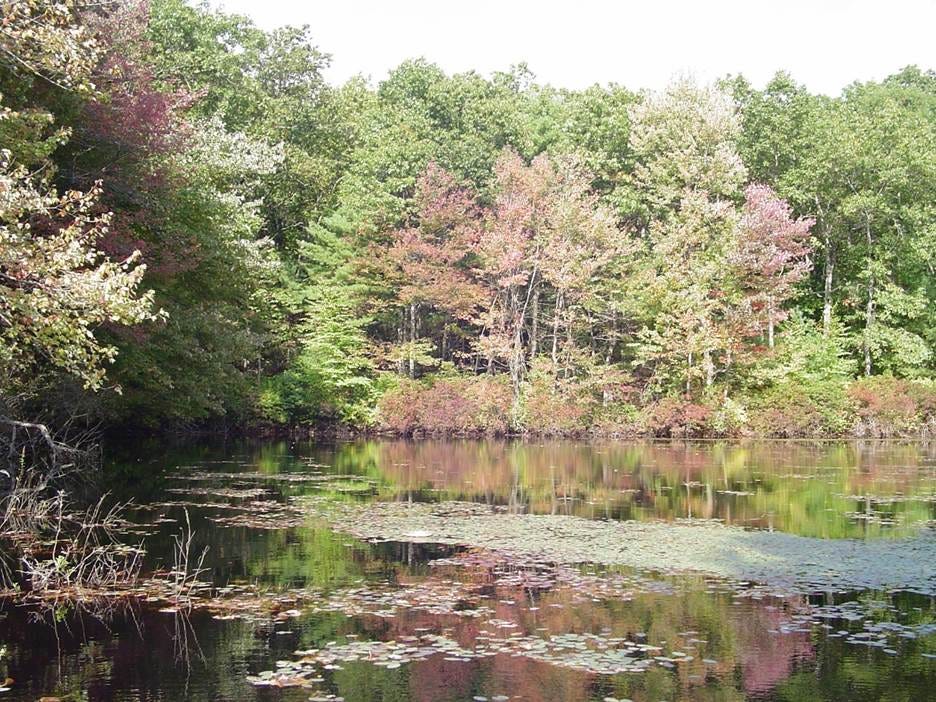
Walden Pond looks tranquil in the autumn sunlight of New England.
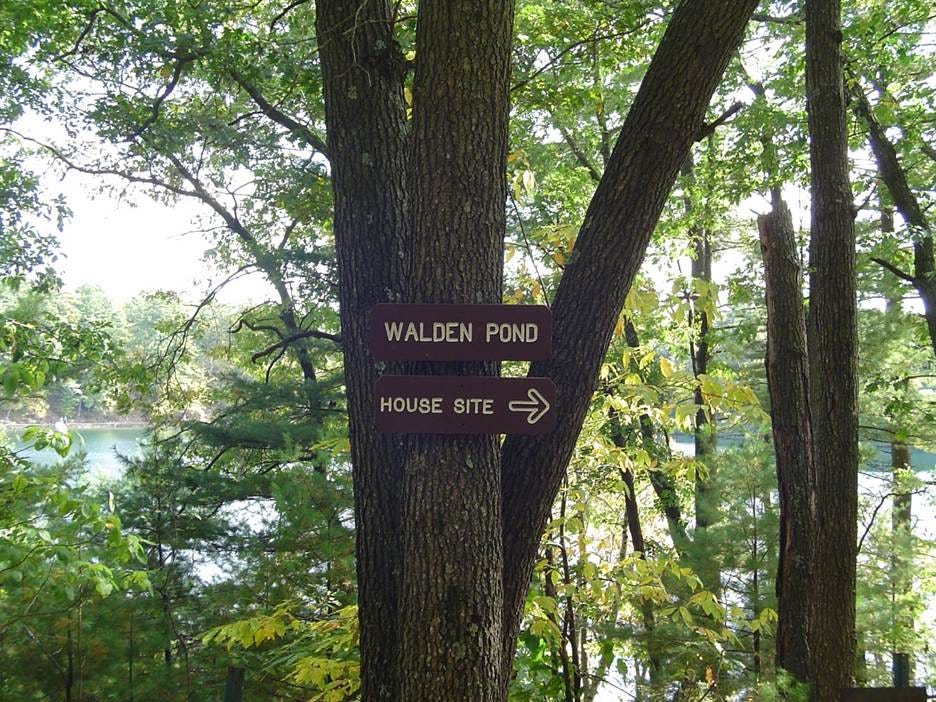
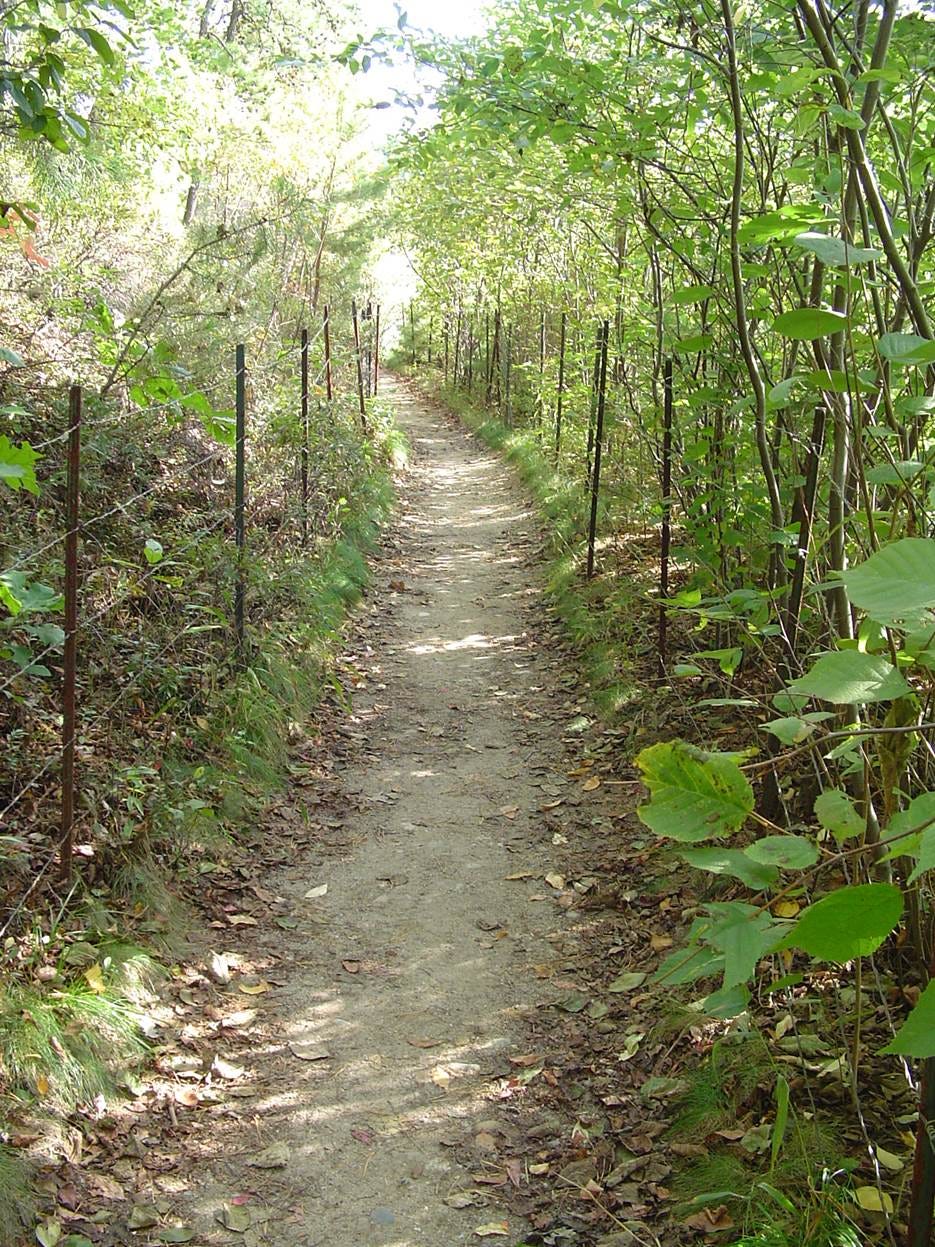
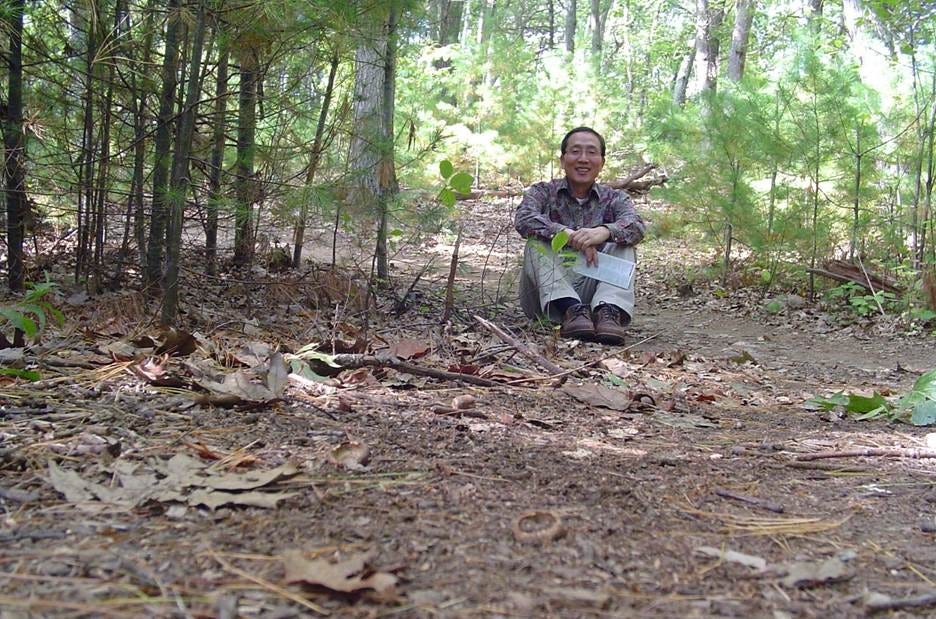
The path from the park entrance to the site of Thoreau’s one-room cabin.

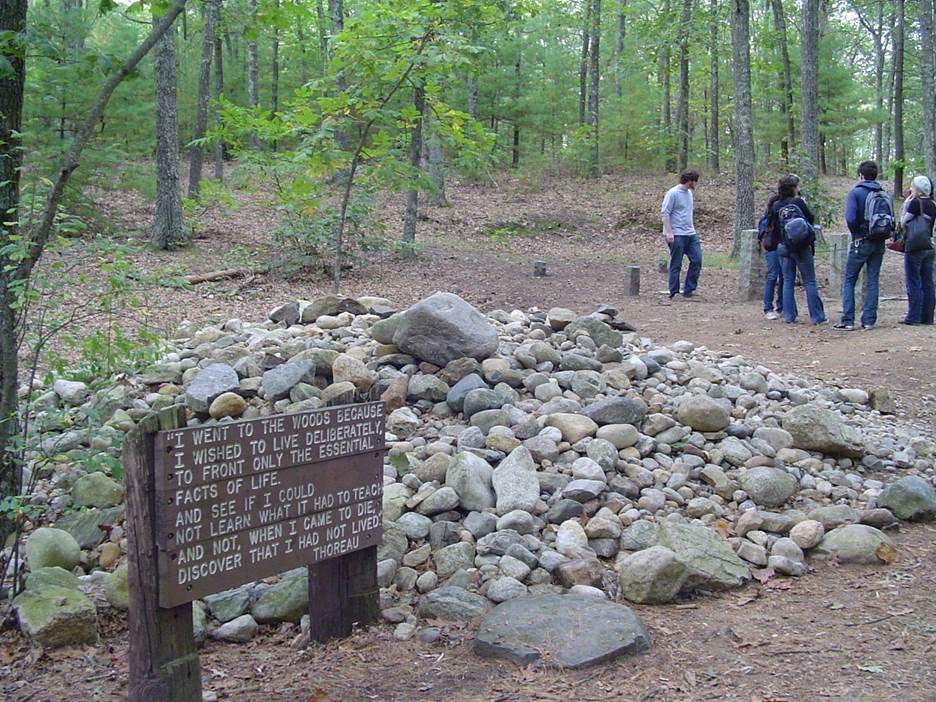
Thoreau’s cabin site features a quotation from his book Walden:
“I went to the woods because I wished to live deliberately, to front only the essential facts of life, and see if I could not learn what it had to teach, and not, when I came to die, discover that I had not lived.”
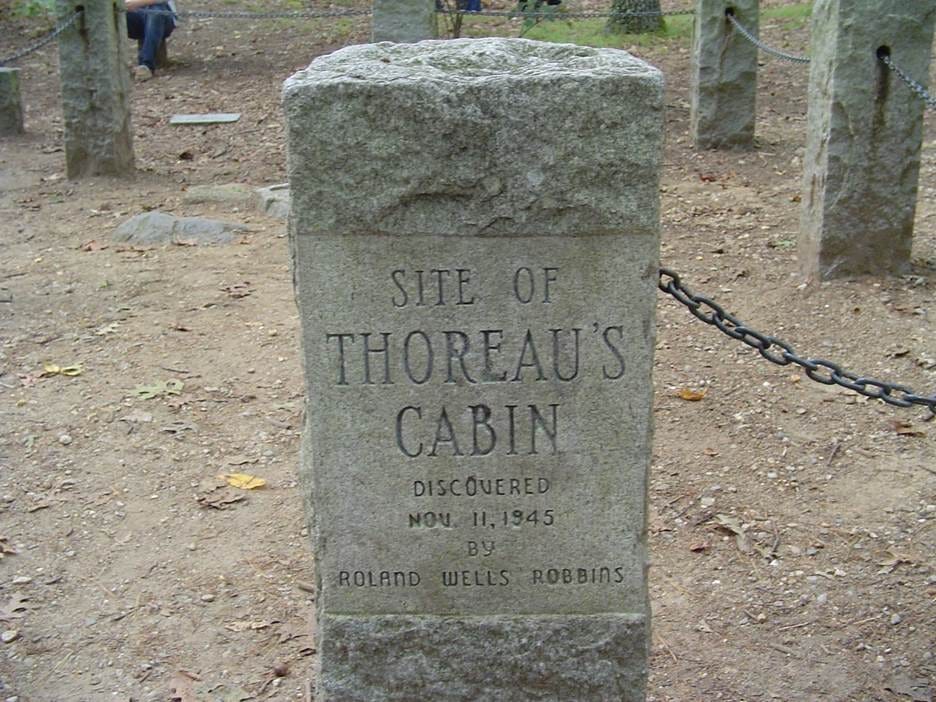
According to the stone marker, Ronald Wells Robbins discovered the site of Thoreau’s cabin on November 11, 1945.
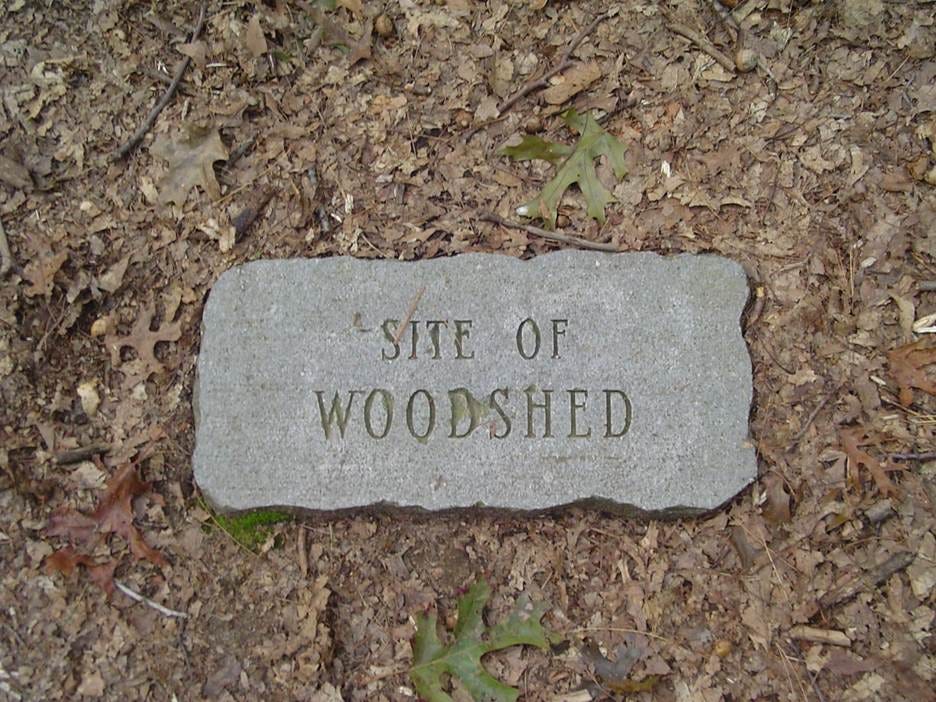
Thoreau’s cabin site includes a ground marker indicating the location of his woodshed.
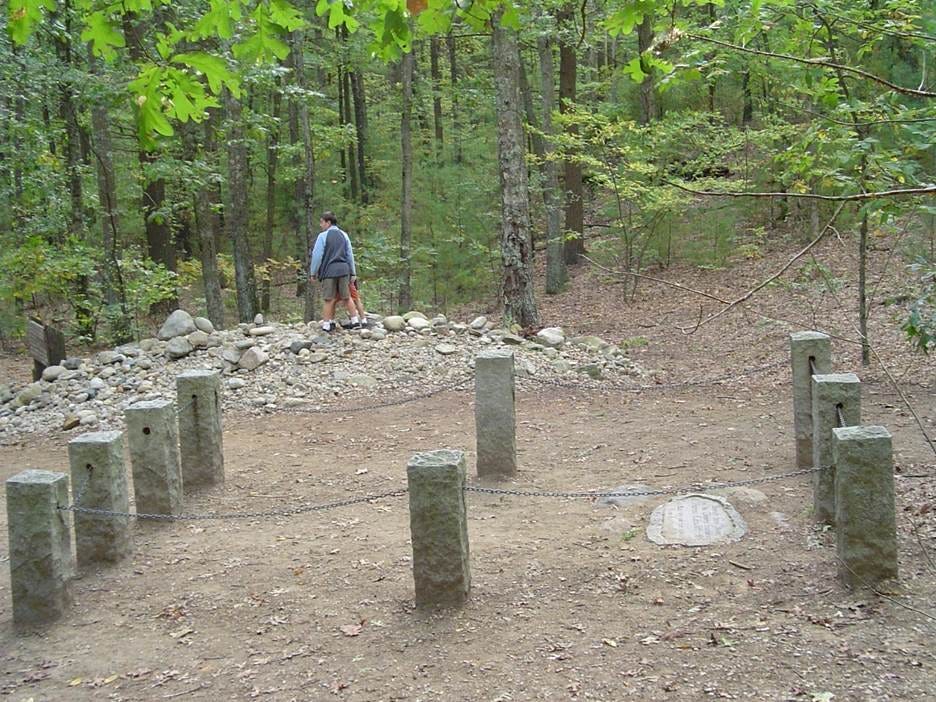
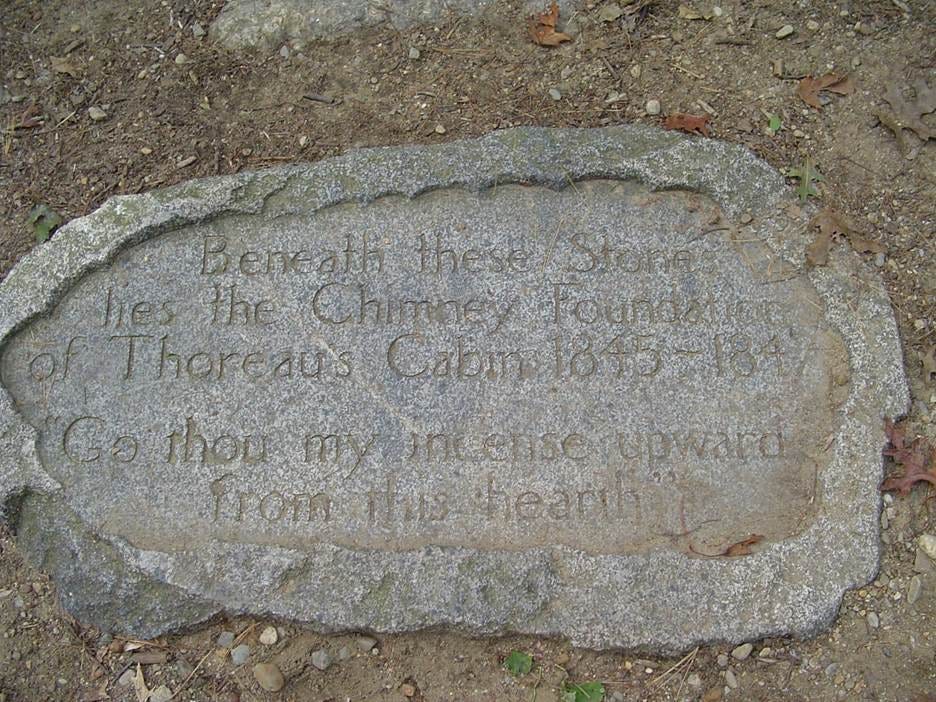
This ground marker bears the following inscription:
Beneath these stones
lies the chimney foundation
of Thoreau’s cabin, 1845–1847
“Go thou my incense upward
from this hearth.”
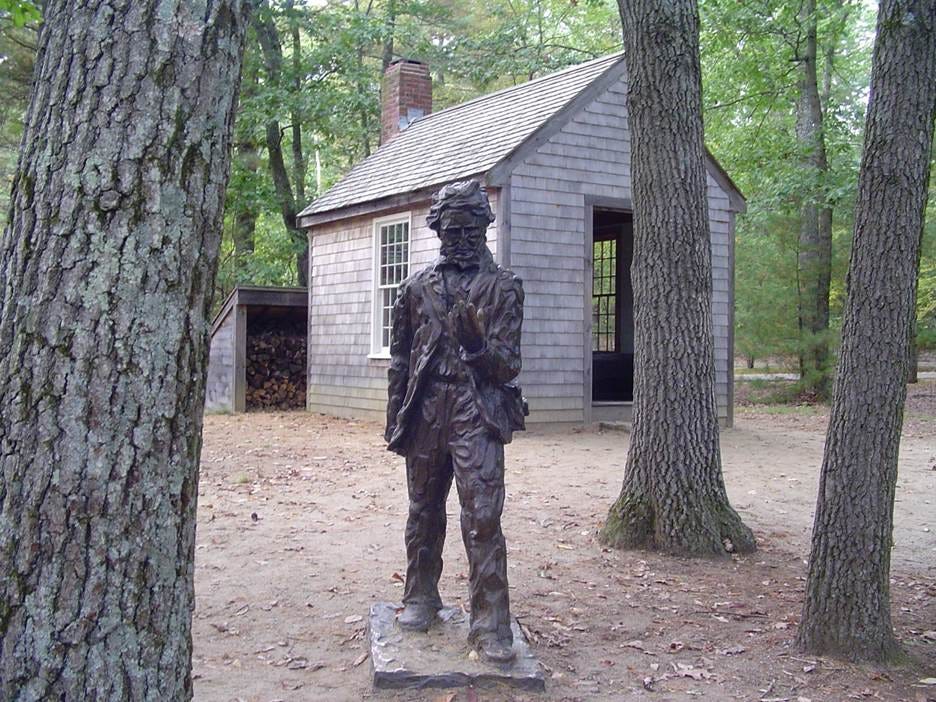
A statue of Henry David Thoreau stands before a replica of his one-room cabin, where he lived from 1845 to 1847. His contemplative posture reflects his effort to live in harmony with nature.
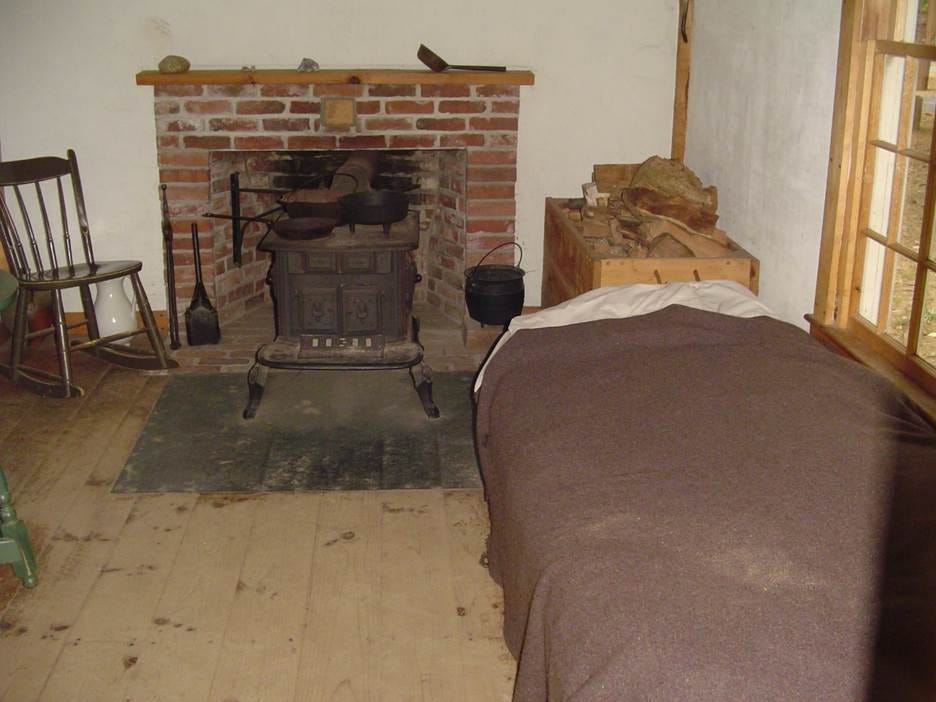
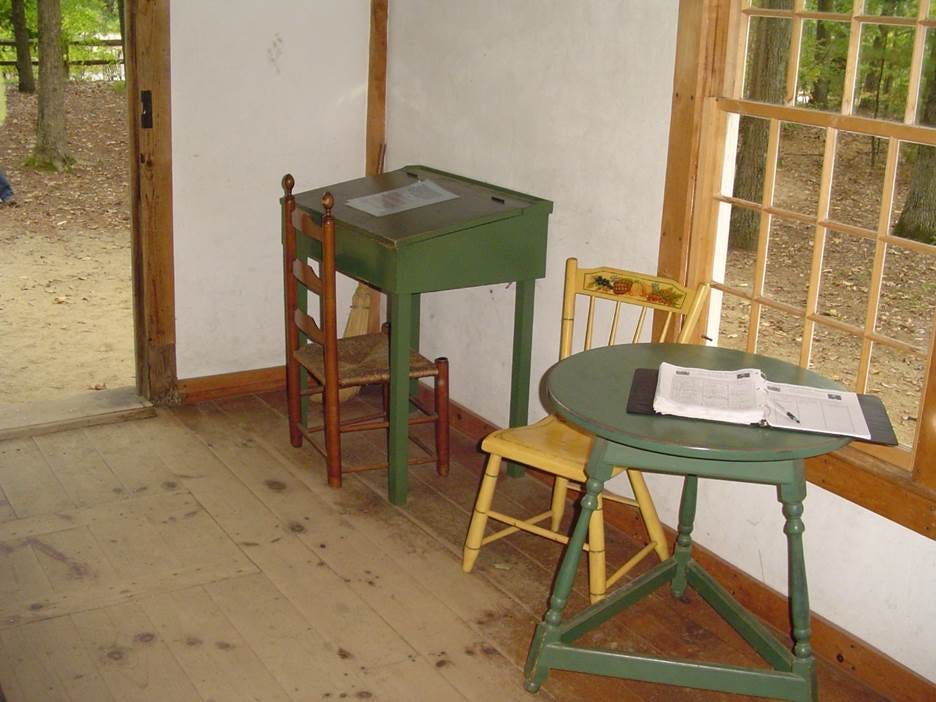
The furnishings inside the replica of Thoreau’s one-room cabin reflect his desire to live a simple and natural life. His way of life somewhat resembles that of the Venerable Beopjeong (1932-2010), who advocated a life of non-possession in Korea.
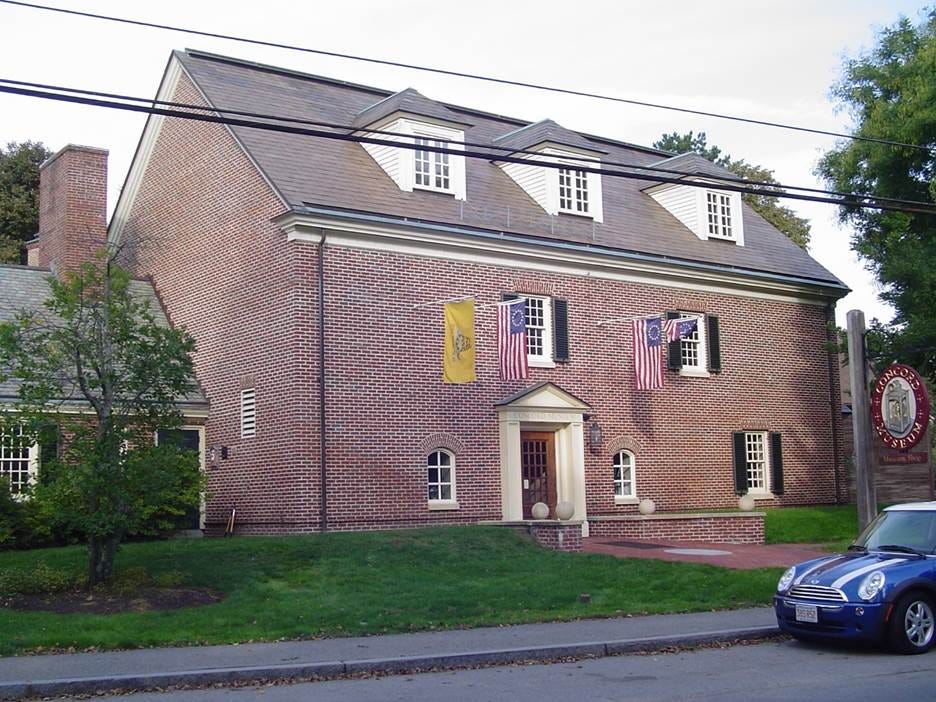
The Concord Museum, founded in 1886, preserves and interprets Concord’s rich cultural history, including its roles in the American Revolution and Transcendentalism, through a collection of more than 45,000 objects. The museum is located across from the Ralph Waldo Emerson Memorial House.
About the Author

Professor of English and Creative Writing and Associate Dean of the School of Humanities and Theology, Missouri Baptist University
John J. Han, PhD, is the author, editor, co-editor, or translator of 38 books published by Rodopi, Peter Lang, McFarland, Bloomsbury Academic, and other presses. He has published hundreds of scholarly articles and more than 3,000 poems, mostly haiku, in journals and anthologies around the world. His forthcoming book, Echoes from the Hills: Critical Essays on Ozarks Literature, co-edited with C. Clark Triplett, will be published by the University of Arkansas Press. He is in his 28th year as a full-time faculty member at Missouri Baptist University, where he has taught since 1999. He has also taught at Kansas State University, the University of Nebraska–Lincoln, Nebraska Wesleyan University, and Washington University in St. Louis. He has served as a visiting scholar at Georgia College & State University and the University of Ljubljana in Slovenia.
© K-Global Scholars and Professionals Forum. All rights reserved. Content published in the K-GSP Forum may not be reproduced, distributed, or transmitted in any form without prior written permission from the K-GSP Forum, except for brief quotations with full attribution.
미국 동북쪽에 가끔 이상한 아주머니(?)들 계시던데 혹시… 😅😁😆