

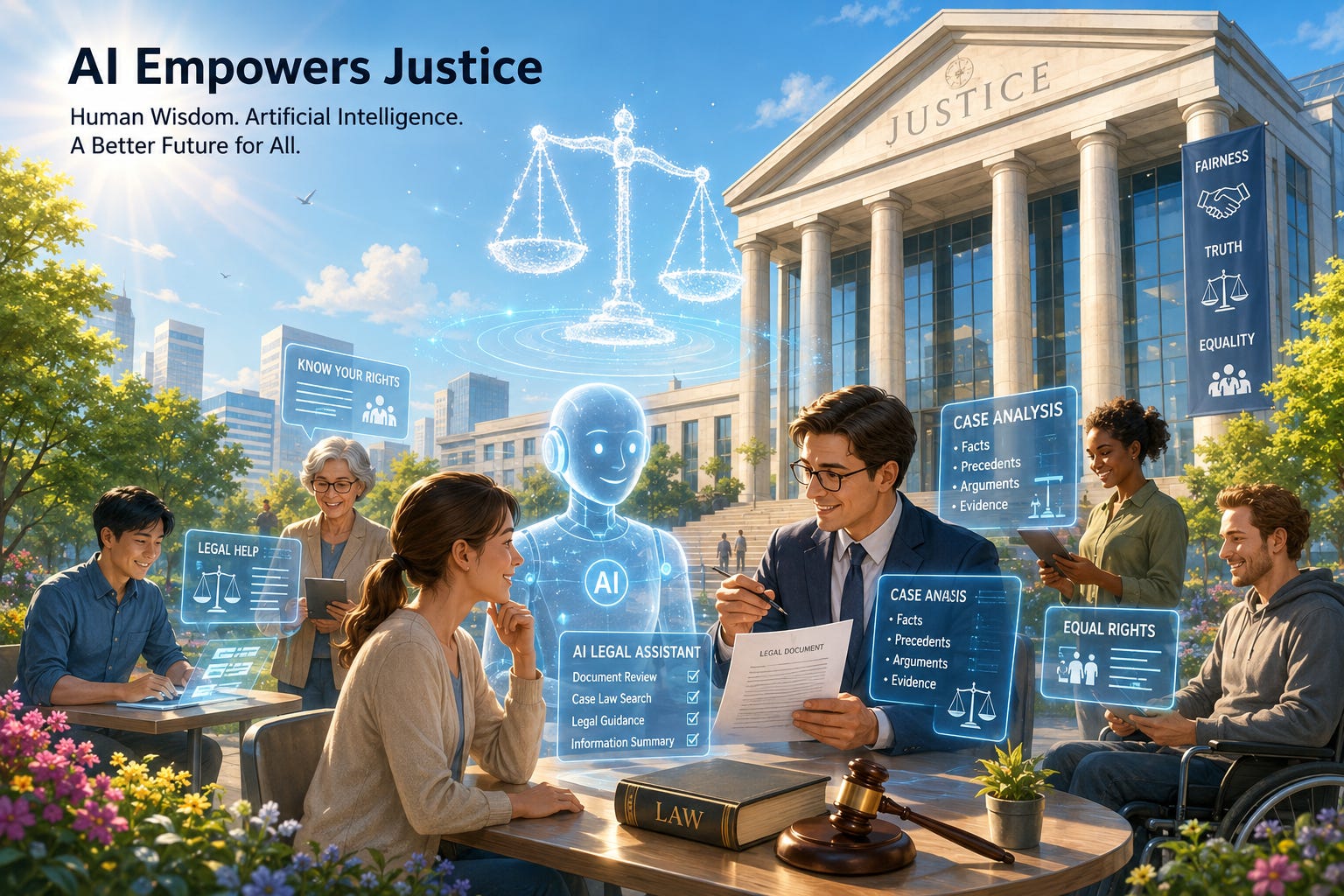
A fascinating transformation is taking place in American courts. In the past, pursuing a lawsuit without hiring an attorney was often an overwhelming task. Today, however, a growing number of people are preparing and managing their own legal cases with the assistance of generative artificial intelligence (AI). Tools such as ChatGPT can help draft legal documents, search for relevant case law, and organize legal arguments, making legal resources more accessible to ordinary citizens. Yet this technological revolution brings both opportunities and challenges. As AI-assisted self-representation becomes increasingly common, courts are beginning to face new concerns, including heavier workloads and the spread of inaccurate legal information.
AI Lowers the Barrier to Legal Services
For generations, legal services have been expensive and difficult for many people to access. The high cost of hiring an attorney often placed justice beyond the reach of those with limited financial resources. AI is helping to break down these barriers. By simply entering questions into an AI system, individuals can learn how to draft legal pleadings, identify relevant precedents, and construct logical arguments. From the perspective of equal access to justice, this represents a significant step toward the democratization of legal knowledge.
The Rise of Self-Representation
Recent studies indicate that the percentage of civil cases handled without attorneys in the United States has increased substantially over the past several years. AI-assisted legal guidance is undoubtedly one factor contributing to this trend. Legal terminology, once a major obstacle for non-lawyers, can now be translated into plain language by AI systems. As a result, ordinary citizens are becoming more confident participants in legal processes that once seemed inaccessible.
A New Era of Legal Accessibility
AI is more than a search engine. It can provide tailored explanations based on a user’s specific situation. In relatively straightforward disputes—such as landlord-tenant disagreements, consumer complaints, or small claims matters—AI can assist with organizing facts, compiling evidence, and outlining arguments. For individuals who cannot afford legal representation, this technology offers a new avenue for pursuing justice and protecting their rights.
Growing Burdens on the Courts
Every innovation carries unintended consequences. Because AI enables users to generate documents quickly and easily, courts are receiving larger volumes of filings than ever before. Some litigants submit hundreds of pages of AI-generated materials in support of their claims. Court personnel must review, process, and archive these submissions, adding to the already substantial workload faced by many judicial systems. What benefits individual litigants may simultaneously strain institutional resources.
The Problem of AI Hallucinations
One of the most serious weaknesses of generative AI is its tendency to produce information that appears credible but is actually false. In the legal field, such errors can have significant consequences. AI systems may cite cases that do not exist, misinterpret statutes, or fabricate legal authorities. Several high-profile incidents have already demonstrated the dangers of relying on AI-generated legal content without verification. In some cases, individuals and attorneys have faced sanctions for submitting documents containing fictitious legal citations.
The Limits of Artificial Intelligence
Law is far more than the retrieval of information. Effective legal practice requires the careful analysis of facts, strategic thinking, negotiation skills, ethical judgment, and an understanding of human behavior. While AI can assist in drafting documents and gathering information, it lacks the nuanced reasoning and professional responsibility required for complex legal decision-making. Viewing AI as a complete substitute for lawyers is therefore both unrealistic and potentially dangerous. AI is a valuable assistant, but not a replacement for professional expertise.
Concerns Among Judges
Many judges have expressed concern about the rapid growth of AI-assisted self-representation. Massive document submissions and unverified legal arguments can slow judicial proceedings and complicate case management. Some judges worry that these developments may undermine the efficiency and reliability of court operations. Their concerns highlight that this issue is not merely technological; it touches the very foundations of the justice system itself.
The Importance of Education
In the age of AI, legal literacy alone is no longer sufficient. Citizens must also develop AI literacy—the ability to understand the strengths, limitations, and risks of artificial intelligence. Users should critically evaluate AI-generated information rather than accepting it unconditionally. In high-stakes areas such as law, medicine, and finance, professional review remains essential. Responsible use of AI requires informed and discerning judgment.
A Model of Human–AI Collaboration
The most promising future may lie in collaboration rather than substitution. AI can handle repetitive and time-consuming tasks such as document organization, research assistance, and information retrieval, allowing legal professionals to focus on strategy, advocacy, and ethical decision-making. Such a partnership can improve efficiency while maintaining the quality and integrity of legal services. Instead of replacing lawyers, AI may enable them to serve clients more effectively.
The Future of the Justice System
Courts themselves are likely to incorporate AI into various administrative and analytical functions. AI tools may assist with case categorization, document summarization, and legal research. However, technological adoption must be accompanied by appropriate safeguards, including standards for AI use, mechanisms for verifying information, and clear rules regarding accountability. The future of justice depends not only on technological innovation but also on wise governance and ethical oversight.
Generative AI has the potential to transform legal services by making legal knowledge more accessible and empowering individuals to engage with the justice system. This development represents a meaningful advancement in democratic access to the law. At the same time, challenges such as misinformation, excessive filings, and limitations in AI reasoning cannot be ignored. The experiences of American courts demonstrate that while AI can amplify human capabilities, it cannot replace human responsibility, wisdom, or ethical judgment.
The real challenge for society is neither to blindly embrace AI nor to reject it out of fear. Instead, we must learn to integrate AI thoughtfully into existing legal institutions while preserving the essential role of human expertise. The courtroom of the future should not be a battleground between humans and machines. Rather, it should be a place where the strengths of both are combined to achieve a justice system that is more accessible, efficient, and fair for all. +++
{Solti}
May 26, 2026

Young Choi, PhD is a Professor at Regent University bringing a rare combination of technical expertise and creative spirit to everything he does. A scholar in AI, cybersecurity, and network & telecommunications service management, he has published 38 books including AI and cybersecurity area books, over 200 refereed articles, and over 20 book chapters. Beyond the academy, Dr. Choi is a passionate poet, essayist, and wooden block laser engraving artist whose reflective writing invites readers to rediscover life’s beauty in quiet contemplation(靜觀). He lives under the motto: “Study hard and give generously without holding back! (열심히 공부해서 아낌없이 남주자 !: 열공아남!)”
Published books: https://www.amazon.com/stores/Young-Choi/author/B0DMZ5S6R7?ref=ap_rdr&shoppingPortalEnabled=true