

EXECUTIVE SUMMARY
This article compares the Battle of Salamis under Themistocles, the Battle of Myeongnyang under Admiral Yi Sun-sin, and the Battle of Trafalgar under Admiral Horatio Nelson to examine how exceptional naval commanders transformed severe constraints into strategic advantage. Across the three cases, victory depended not simply on fleet size or technology but on the commanders’ ability to integrate geography, timing, tactical innovation, disciplined execution, and leadership under uncertainty. The comparison suggests that enduring strategic advantage emerges when commanders reshape the conditions of battle rather than merely compete within conditions imposed by the enemy.
Keywords: Naval strategy; Yi Sun-sin; Themistocles; Horatio Nelson; Strategic leadership
1. Introduction
In the 1960s, many foreigners who came to Korea knew little about the country, its history, or its people. Korea was still widely associated with war, poverty, and destruction, and for some visitors one of the strongest first impressions was simply the vast blue sky above a country they scarcely understood. At that time, Korea occupied only a small place in the global imagination. Its long history, cultural traditions, and repeated struggles for survival remained largely unfamiliar outside East Asia.
As the world came to know Korea more closely, that image changed dramatically. Korea became increasingly recognized for rapid economic development, technological capability, education, popular culture, film, music, and literature. Greater international attention also encouraged deeper interest in Korea’s historical experience, including its repeated exposure to invasion, geopolitical pressure, political upheaval, and national crisis. Behind Korea’s modern achievements lies a long record of resilience—the ability not merely to survive external shocks but to preserve continuity, recover capability, and reconstitute national strength.
Few figures represent this historical resilience more vividly than Admiral Yi Sun-sin. During the Japanese invasions of Korea in the late sixteenth century, Yi repeatedly confronted severe disadvantages in resources, political support, and strategic circumstances. Yet he combined disciplined preparation, intimate knowledge of coastal geography and currents, effective naval technology, careful timing, and extraordinary leadership under pressure. The Battle of Myeongnyang in 1597 became the clearest expression of this capability: with a drastically reduced fleet, Yi transformed geographic constraint and tidal conditions into strategic assets and demonstrated how superior judgment and cohesion could offset overwhelming numerical disadvantage (Bae & Jeong, 2023; Hawley, 2005; Swope, 2009; Yi, 1977, 1981).
Yi Sun-sin’s achievement becomes even more meaningful when compared with other transformative naval commanders. At Salamis in 480 BCE, Themistocles used restricted waters to weaken the advantage of a larger Persian fleet, while at Trafalgar in 1805 Horatio Nelson disrupted conventional battle-line tactics through concentration, penetration, and decentralized initiative. This article compares Themistocles, Yi Sun-sin, and Nelson to examine how exceptional commanders convert constraints into strategic advantage through geography, timing, tactical innovation, disciplined execution, and leadership. The purpose is not to rank the three commanders, but to identify common strategic mechanisms that help explain why certain naval victories become enduring lessons in resilience and command (Adkins, 2004; Rodger, 2004; Strauss, 2004).
2. Contextual Overview
Naval battles are shaped not by fleet size alone but by the interaction of geography, technology, organization, morale, timing, and leadership, requiring commanders to interpret uncertainty, anticipate opponents, coordinate dispersed forces, and sustain cohesion under pressure, as Salamis, Myeongnyang, and Trafalgar demonstrate how technical and human capabilities can transform constraint into strategic leverage.
2.1. Salamis and the Strategic Use of Restricted Waters
The Battle of Salamis in 480 BCE arose during the Greco-Persian Wars as Xerxes sought to extend Persian power into the Greek world, confronting divided Greek city-states with a substantially larger fleet. Recognizing that open-water combat would favor Persian scale and maneuverability, Themistocles advocated fighting in the narrow waters near Salamis, where geography could constrain the enemy’s numerical advantage (Hale, 2009; Strauss, 2004). By drawing the Persian fleet into confined waters, the Greeks increased the relative importance of cohesion, local knowledge, disciplined maneuver, and coordinated action. Salamis therefore became an enduring illustration of a broader strategic principle: a weaker force can improve its prospects by reshaping the environment in which competition occurs rather than confronting superior strength on its preferred terms (Hale, 2009; Strauss, 2004).
2.2. Myeongnyang and Yi Sun-sin’s Leadership Under Extreme Constraint
The Battle of Myeongnyang in 1597 took place during the Japanese invasions of Korea, when Joseon faced intense military and political pressure and Yi Sun-sin returned to command after political conflict, temporary removal, and the devastating defeat at Chilcheollyang had left the Korean navy severely weakened. With only a drastically reduced fleet confronting a much larger Japanese force, Yi relied on geographic intelligence, precise timing, disciplined formation, cannon-based combat, and personal leadership to offset the material imbalance (Bae & Jeong, 2023; Hawley, 2005; Swope, 2009; Yi, 1977, 1981). The narrow Myeongnyang Strait and its powerful tidal currents constrained Japanese maneuver, while Yi worked to restore cohesion, confidence, and operational discipline among his forces. Myeongnyang therefore represents not only a remarkable naval victory but also a case of strategic recovery, showing how a commander can convert environmental knowledge, organizational discipline, and leadership into asymmetric advantage under extreme resource scarcity (Bae & Jeong, 2023; Yi, 1977, 1981).
2.3. Trafalgar and Nelson’s Disruption of Conventional Naval Warfare
The Battle of Trafalgar in 1805 occurred during the Napoleonic Wars, when Britain relied heavily on maritime power to protect its security and global position and Admiral Horatio Nelson confronted the combined French and Spanish fleets. Rather than follow the conventional parallel line of battle, Nelson planned to attack in concentrated columns, penetrate the opposing formation, and divide the enemy fleet, accepting substantial short-term risk in pursuit of systemic disruption (Adkins, 2004; Rodger, 2004; Sugden, 2012). Once the enemy line was broken, British captains were expected to exercise decentralized initiative while remaining aligned with Nelson’s broader strategic intent. Trafalgar therefore illustrates a distinctive form of strategic command in which concentrated force, decentralized execution, and calculated tactical audacity reshaped the pattern of engagement itself rather than relying primarily on geographic advantage (Adkins, 2004; Rodger, 2004; Sugden, 2012).
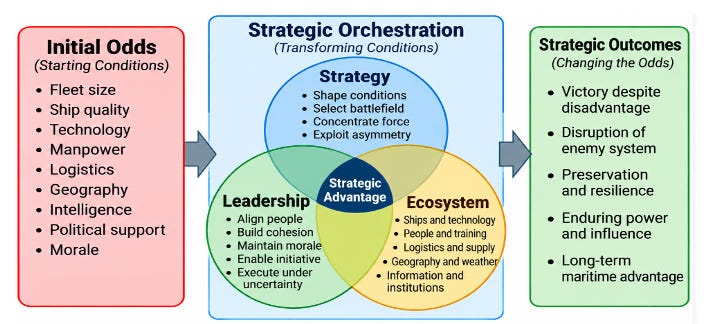
Figure 1. From Initial Odds to Strategic Outcomes
Source: Author’s Own Synthesis
Figure 1 illustrates a conceptual progression from Initial Odds to Strategic Outcomes, showing that starting conditions alone do not determine final results. The left panel identifies initial odds such as fleet size, ship quality, technology, manpower, logistics, geography, intelligence, political support, and morale, while the center panel explains how Strategic Orchestration transforms these conditions through the interaction of strategy, leadership, and ecosystem, which together generate strategic advantage. The right panel shows that this orchestration can produce major outcomes such as victory despite disadvantage, disruption of the enemy system, preservation and resilience, enduring power and influence, and long-term maritime advantage.
3. Three Commanders and Three Strategic Logics
Themistocles, Yi Sun-sin, and Horatio Nelson operated across different eras, technologies, and political systems, yet each transformed uncertainty by looking beyond the immediate balance of forces, with Themistocles reshaping the battlefield, Yi Sun-sin integrating geography, discipline, technology, and morale into asymmetric strength, and Nelson disrupting the enemy through concentrated offensive action, showing that strategic greatness lies not in individual genius alone but in adapting resources, organization, and judgment to redefine the conditions of competition.
3.1. Themistocles: Shaping the Battlefield Before the Battle
Themistocles understood that strategic advantage begins before direct combat, and he recognized that confronting the larger Persian fleet in open waters would allow its numerical strength and maneuverability to dominate. He therefore sought to channel the Persian forces into the restricted waters of Salamis, where geography could reduce the practical value of their superior numbers and change the conditions under which power was expressed (Hale, 2009; Strauss, 2004). This logic can be understood as battlefield shaping, because Themistocles did not try to match Persian strength ship for ship but instead altered the environment in which that strength could be used. His leadership shows how a disadvantaged force can improve its position by selecting favorable terrain, constraining enemy options, and increasing the relative importance of coordination, local knowledge, and disciplined maneuver over raw scale (Hale, 2009; Strauss, 2004).
3.2. Yi Sun-sin: Integrating Geography, Technology, Discipline, and Morale
Yi Sun-sin represents a broader form of strategic integration because his effectiveness depended not on a single advantage but on the combination of naval technology, disciplined training, intelligence, knowledge of tides and coastlines, command credibility, and careful preparation. At Myeongnyang, these capabilities became especially important because his fleet had been drastically reduced and the psychological balance initially favored the much larger Japanese force (Bae & Jeong, 2023; Hawley, 2005; Swope, 2009; Yi, 1977, 1981). His distinctive strategic logic can therefore be described as asymmetric orchestration, through which narrow waters, tidal currents, cannon fire, disciplined formations, and visible leadership were combined into a mutually reinforcing system. Yi’s achievement demonstrates that resilience is not passive endurance but the active recombination of limited capabilities under pressure to create strategic advantage (Bae & Jeong, 2023; Yi, 1977, 1981).
3.3. Nelson: Breaking the Enemy’s System Through Concentrated Action
Nelson’s strategic approach at Trafalgar differed from Salamis and Myeongnyang because his primary objective was to disrupt the organizational coherence of the combined French-Spanish fleet rather than rely mainly on geographic advantage. Instead of maintaining a conventional parallel battle line, he planned to drive concentrated columns into the opposing formation, divide it, and create close-range engagements in which British training and initiative could become decisive (Adkins, 2004; Rodger, 2004; Sugden, 2012). This logic can be described as system disruption through concentration and decentralized execution, combining clear strategic intent with substantial freedom for subordinate captains to act independently once battle became chaotic. Trafalgar therefore illustrates how calculated risk, concentrated force, organizational trust, and adaptive execution can create strategic advantage by breaking established patterns of engagement and accelerating decision-making relative to the opponent (Adkins, 2004; Rodger, 2004; Sugden, 2012).
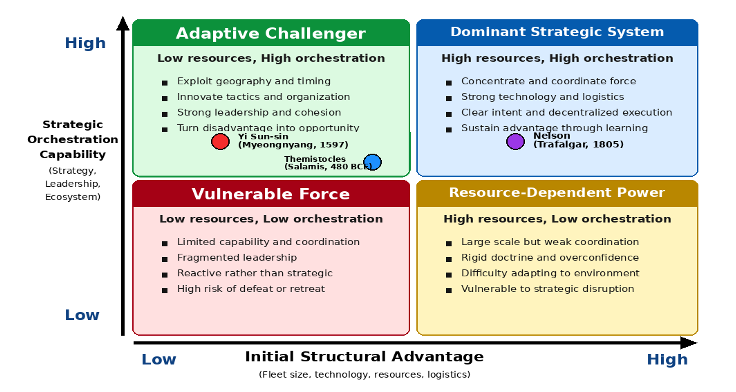
Figure 2. Strategic Odds—Orchestration Matrix
Source: Author’s Own Synthesis
Figure 2 presents a Strategic Odds–Orchestration Matrix that compares initial structural advantage with strategic orchestration capability, showing how resource conditions and organizational effectiveness combine to shape competitive position. The horizontal axis ranges from low to high initial structural advantage—including fleet size, technology, resources, and logistics—while the vertical axis ranges from low to high strategic orchestration capability based on strategy, leadership, and ecosystem alignment, producing four patterns: Adaptive Challenger, Dominant Strategic System, Vulnerable Force, and Resource-Dependent Power. The matrix emphasizes that success depends not only on material resources but also on how effectively leaders coordinate strategy and supporting systems, as illustrated by examples such as Yi Sun-sin and Themistocles in the high-orchestration challenger quadrant and Nelson in the high-resource, high-orchestration quadrant.

4. Strategic Orchestration: From Initial Odds to Enduring Advantage
The three naval battles suggest a common mechanism: commanders convert structural conditions into effective power by aligning strategic choices, leadership, and their operating ecosystem. Fleet size, technology, logistics, geography, intelligence, and political support establish initial advantages or constraints, but they do not determine outcomes. The illustrative expression—Strategic Success ≈ Initial Conditions × Strategy × Leadership × Ecosystem Fit—captures these interdependencies. It is a conceptual heuristic, not an estimated probability model or a formula for calculating historical success. Figure 2 maps the interaction of initial structural advantage and strategic orchestration capability into four analytically distinct configurations.
4.1. Initial Conditions and Strategic Choice
Starting positions differ substantially: the Greek coalition faced Persian numerical superiority at Salamis; Yi Sun-sin rebuilt an extremely depleted Joseon force at Myeongnyang; and Nelson led an experienced British fleet against a larger Franco-Spanish battle line at Trafalgar. Material comparisons alone conceal how navigable space, current, ship handling, morale, and coordination shaped the usable strength of each force. Themistocles selected constrained waters, Yi exploited a narrow tidal strait, and Nelson penetrated the opposing line to disrupt its formation. In each case, strategic design altered the conditions under which resources could be employed (Adkins, 2004; Bae & Jeong, 2023; Hawley, 2005; Strauss, 2004).
4.2. Leadership and Ecosystem Alignment
A sound plan requires collective execution. Themistocles helped mobilize a divided Greek alliance around a favorable engagement; Yi combined personal presence, restored confidence, trained crews, artillery, coastal intelligence, and tidal knowledge; and Nelson paired a concentrated attack with a naval command culture that permitted initiative by subordinate captains (Hale, 2009; Rodger, 2004; Sugden, 2012; Yi, 1977, 1981). Here ecosystem means the mutually dependent system of ships, people, geography, information, logistics, institutions, and support. Its elements should be assessed for their operational fit, not merely counted as assets. Comparable interdependencies also matter in modern maritime competitiveness, although modern industrial evidence is not direct proof about historical battles (Hong et al., 2024).
4.3. Four Strategic Configurations and Their Propositions
Figure 2 distinguishes two dimensions: initial structural advantage (low versus high) and strategic orchestration capability (low versus high). The following propositions describe conceptual tendencies and boundary conditions; the three victorious battles illustrate selected configurations rather than constitute a statistical test of the framework.
Vulnerable Force: Low Advantage × Low Orchestration
Where scarce resources coincide with fragmented leadership and weak coordination, a force lacks both material power and the means to offset its shortage. Scarcity itself does not create adaptability, and none of the three victorious commanders should be assigned to this quadrant.
Proposition 1. When structural resources and strategic orchestration are both weak, resource scarcity is more likely to reinforce vulnerability than stimulate successful adaptation.
Resource-Dependent Power: High Advantage × Low Orchestration
A numerically strong force may lose practical advantage when confined waters, poor coordination, rigid formation, or organizational friction impede effective deployment. The Persian fleet at Salamis and parts of the Japanese force at Myeongnyang illustrate the limits of material superiority under restricted operating conditions (Hawley, 2005; Strauss, 2004; Swope, 2009). These comparisons do not imply that every opponent lacked overall leadership ability.
Proposition 2. Structural superiority yields diminishing strategic returns when geography, rigid routines, or poor coordination prevent resources from being effectively concentrated and employed.
Adaptive Challenger: Low Advantage × High Orchestration
Themistocles and especially Yi Sun-sin exemplify how a disadvantaged force can generate disproportionate effects. Salamis depended on the strategic use of restricted waters and coalition coordination; Myeongnyang combined tides, gunnery, formation, morale, and visible command under exceptionally severe constraints (Bae & Jeong, 2023; Hale, 2009; Hawley, 2005; Strauss, 2004; Yi, 1977, 1981).
Proposition 3. Under material disadvantage, high strategic orchestration improves the prospect of asymmetric success by focusing limited capabilities where they have disproportionate effects.
Dominant Strategic System: High Advantage × High Orchestration
Nelson’s Royal Navy most closely approximates this quadrant in organizational experience, gunnery, command routines, and effective coordination, even though the British battle line had fewer ships than its opponent at Trafalgar. Thus high structural advantage here refers to the quality and usable capability of the system, not merely a larger ship count (Adkins, 2004; Rodger, 2004; Sugden, 2012).
Proposition 4. Durable strategic advantage is more likely when strong usable resources are combined with high orchestration, sustained learning, and adaptive execution.
4.4. Comparative Evidence and Strategic Implications
The battles of Salamis, Myeongnyang, and Trafalgar demonstrate how initial structural conditions interact with strategy, leadership, and ecosystem capabilities to shape military outcomes and enduring strategic advantages. Themistocles exploited geographic constraints, Yi Sun-sin orchestrated limited resources under extreme adversity, and Nelson combined concentrated offensive tactics with decentralized execution, illustrating three distinct pathways to strategic success. Together, these cases reveal that lasting strategic advantage depends less on numerical superiority than on the ability to align available resources, adapt to changing conditions, and translate strategic judgment into coordinated action.
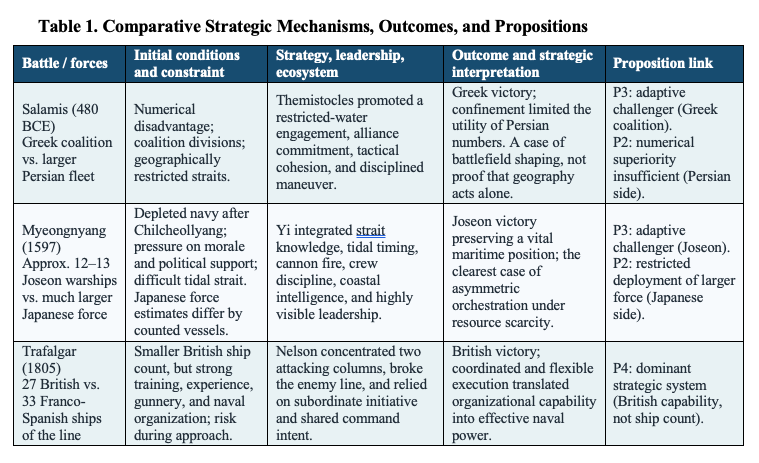
Table 1. Comparative Strategic Mechanisms, Outcomes, and Propositions
Source: Author’s conceptual synthesis from Adkins (2004), Bae and Jeong (2023), Hale (2009), Hawley (2005), Rodger (2004), Strauss (2004), Sugden (2012), Swope (2009), and Yi (1977, 1981).
Table 1 brings the historical cases and four propositions together. The three victories do not prove a universal relationship: fleet definitions vary, the battles differed in technology and political context, and their outcomes reflect additional contingencies. Their comparative value lies in revealing different paths from initial conditions to coordinated action—battlefield shaping at Salamis, asymmetric orchestration at Myeongnyang, and system disruption at Trafalgar. Fleet counts depend on vessel categories; Japanese fleet totals at Myeongnyang are especially contested. P1 concerns the low-resource/low-orchestration boundary case and is not presented as an observed outcome in these three victories. Quadrant assignments are interpretive, not empirically validated.

5. Conclusion
The battles of Salamis, Myeongnyang, and Trafalgar demonstrate that numerical strength establishes only the starting conditions of conflict, because geography, timing, tactical design, organizational discipline, and leadership can substantially alter how resources are converted into effective power. Themistocles reshaped the battlefield, Yi Sun-sin integrated geography, technology, morale, and disciplined execution under extreme resource constraints, and Nelson combined concentrated attack with a command culture that enabled subordinate initiative, illustrating three distinctive pathways through which strategy can change seemingly unfavorable or uncertain odds. The deeper lesson is that extraordinary outcomes are best understood not as products of individual heroism alone but as the interaction of strategy × leadership × ecosystem, through which commanders align people, technology, information, geography, institutions, and timing around a coherent purpose. From this perspective, Yi Sun-sin’s enduring significance extends beyond Korean naval history: his experience at Myeongnyang exemplifies how resilience becomes strategically consequential when leaders do more than endure disadvantage—they reorganize limited capabilities so effectively that the meaning of the initial odds themselves is changed.
References
Adkins, R. (2004). Trafalgar: The biography of a battle. Little, Brown.
Bae, I. S., & Jeong, H. T. (2023). A study on Yi Sun-sin’s deeds and military thought in war. Military History, 127, 77–141. https://doi.org/10.29212/mh.2023..127.77
Hale, J. R. (2009). Lords of the sea: The epic story of the Athenian navy and the birth of democracy. Viking.
Hawley, S. (2005). The Imjin War: Japan’s sixteenth-century invasion of Korea and attempt to conquer China. Royal Asiatic Society, Korea Branch.
Hong, P. C., Park, Y. S., Hwang, D. W., & Sepehr, M. J. (2024). A growth theory perspective on the competitive landscape of shipbuilding: A comparative study of Japan, Korea, and China. Maritime Economics & Logistics, 26(3), 462–489. https://doi.org/10.1057/s41278-023-00279-5
Rodger, N. A. M. (2004). The command of the ocean: A naval history of Britain, 1649–1815. Allen Lane.
Strauss, B. S. (2004). The Battle of Salamis: The naval encounter that saved Greece—and Western civilization. Simon & Schuster.
Sugden, J. (2012). Nelson: The sword of Albion. The Bodley Head.
Swope, K. M. (2009). A dragon’s head and a serpent’s tail: Ming China and the first great East Asian war, 1592–1598. University of Oklahoma Press.
Yi, S.-S. (1977). Nanjung ilgi: War diary of Admiral Yi Sun-sin (T. H. Ha, Trans.; P.-k. Sohn, Ed.). Yonsei University Press. (Original work written 1592–1598)
Yi, S.-S. (1981). Imjin changch’o: Admiral Yi Sun-sin’s memorials to court (T. H. Ha, Trans.; C.-y. Lee, Ed.). Yonsei University Press. (Original work written 1592–1598)
About the Author

Paul C. Hong (Editor-in-Chief) - Distinguished University Professor, University of Toledo
Full list of his K-GSP columns:
Paul C. Hong is a Distinguished University Professor at the University of Toledo whose academic background integrates economics, manufacturing management, engineering, and global supply chain strategy. He earned a B.A. in Economics from Yonsei University, an M.A. in Economics from Bowling Green State University, and a Ph.D. in Manufacturing Management and Engineering from the University of Toledo. His research focuses on global supply chain management, strategic benchmarking, manufacturing competitiveness, resilience, industrial policy, and geo-economics, with particular interest in how trade policy, technological change, economic security, and geopolitical competition reshape international production networks and national competitiveness. His current work increasingly examines the intersection of global supply chains, strategic industries, AI-enabled transformation, and geo-economic relations among major economies, emphasizing how firms and nations can balance efficiency, resilience, strategic autonomy, and international cooperation in an increasingly complex global environment.
Suggested Citation
October 13, 2026
Paul C. Hong (2026, October 13). Turning the Sea into Strategy: Yi Sun-sin, Themistocles, and Nelson in Three Decisive Naval Battles. pp. 1–11. K-GSP Forum.
Original Article:

한글요약
바다를 전략으로 바꾸다: 이순신, 테미스토클레스, 넬슨과 세 번의 결정적 해전
이 글은 기원전 480년 살라미스 해전의 테미스토클레스(Themistocles), 1597년 명량해전의 이순신, 그리고 1805년 트라팔가르 해전의 호레이쇼 넬슨(Horatio Nelson)을 비교하여, 뛰어난 지휘관들이 불리하거나 불확실한 조건을 어떻게 전략적 우위로 전환했는지를 분석한다. 세 전투는 시대와 기술, 정치체제와 해양환경이 크게 달랐지만, 승패가 단순한 함선 수나 물질적 자원의 크기로 결정되지 않았다는 공통점을 보여준다. 지리적 조건, 시점의 선택, 전술적 혁신, 조직적 규율, 사기, 정보, 그리고 지휘관의 판단이 결합될 때 초기의 열세는 전혀 다른 전략적 결과로 전환될 수 있었다. 이 글은 따라서 해전의 승리를 개인적 영웅주의만으로 설명하기보다 초기 조건(initial conditions)과 전략적 조율(strategic orchestration)의 상호작용으로 이해한다.
테미스토클레스는 더 큰 페르시아 함대와 넓은 바다에서 정면으로 경쟁하기보다 살라미스의 좁은 수역으로 전투 공간을 제한함으로써 상대의 수적 우위를 약화시켰다. 넬슨은 트라팔가르에서 전통적인 평행 전열을 그대로 따르지 않고 적 함대를 집중적으로 돌파하여 분리시키는 공격방식을 선택했으며, 전투가 혼란에 빠진 이후에는 부하 함장들이 자신의 전략적 의도를 이해하고 자율적으로 행동하도록 하였다. 이에 비해 이순신은 명량에서 지리, 조류, 화포, 함선 운용, 훈련된 수군, 사기와 지휘 신뢰를 하나의 체계로 결합하였다. 따라서 테미스토클레스가 전장의 조건을 바꾸는 전략, 넬슨이 적의 체계를 붕괴시키는 전략을 보여주었다면, 이순신은 제한된 자원을 서로 강화시키는 비대칭적 전략 조율(asymmetric orchestration)의 대표적 사례를 보여준다. 이 글은 이러한 역사적 사례를 “전략적 성공 ≈ 초기 조건 × 전략 × 리더십 × 생태계 적합성”이라는 개념적 틀로 설명한다. 여기서 초기 조건은 함대 규모, 무기, 기술, 인력과 같은 출발점을 의미하지만, 실제 결과는 지리, 날씨, 조류, 정보, 사기, 조직적 응집력과 리더십에 따라 달라질 수 있다. 특히 명량해전은 수적 열세가 곧 패배를 의미하지 않는다는 점을 가장 극적으로 보여준다. 이순신은 좁은 해협과 급격한 조류를 활용하고, 화포 중심의 전투방식과 통제된 대형, 지휘관의 가시적 리더십을 결합하여 일본군이 압도적인 함선 수를 실제 전투력으로 전환하지 못하도록 만들었다. 따라서 통계적 ‘확률’은 출발조건을 설명할 수는 있어도 최종결과를 결정하지 않으며, 전략과 리더십은 그 확률구조 자체를 변화시킬 수 있다. 이 곱셈식은 통계적으로 추정된 확률모형이 아니라 전략·리더십·생태계의 상호작용을 설명하기 위한 개념적 비유이다.
마지막으로 이 글은 초기 구조적 우위와 전략적 조율 능력을 두 축으로 하여 네 가지 유형—취약한 세력(Vulnerable Force), 자원의존형 강자(Resource-Dependent Power), 적응형 도전자(Adaptive Challenger), 지배적 전략시스템(Dominant Strategic System)—을 제시한다. 이 틀에서 테미스토클레스의 살라미스와 이순신의 명량해전은 모두 적은 자원과 높은 전략적 조율이 결합된 적응형 도전자에 해당하며, 특히 이순신은 그 가장 선명한 사례이다. 넬슨의 트라팔가르는 풍부한 자원과 높은 조율 역량이 결합된 지배적 전략시스템에 가깝다. 세 해전이 주는 공통적인 교훈은 자원 그 자체가 전략적 우위를 보장하지 않는다는 것이다. 지속적인 우위는 사람, 기술, 지리, 정보, 제도, 조직학습과 리더십을 일관된 목적 아래 연결할 때 형성되며, 특히 이순신은 불리한 상황을 단순히 견뎌낸 것이 아니라 제한된 역량을 재조직하여 초기 확률의 의미 자체를 바꾸었다는 점에서 오늘날에도 중요한 전략적 교훈을 제공한다. 본문의 네 가지 명제는 취약한 세력(P1), 자원의존형 강자(P2), 적응형 도전자(P3), 지배적 전략시스템(P4)에 대한 개념적 예측이며, 세 해전만으로 통계적으로 검증된 결론은 아니다.
© K-Global Scholars and Professionals Forum. All rights reserved. Content published in the K-GSP Forum may not be reproduced, distributed, or transmitted in any form without prior written permission from the K-GSP Forum, except for brief quotations with full attribution.